Calanques boat tours with swimming: what actually stops, water reality, and kids
Marseille: iconic Calanques boat tour with swimming
Duration: 3-4.5 hours
Do all Calanques boat tours include swimming?
No — verify before booking. Standard 3–4h tours with swim stops explicitly include them. Some scenic cruises pass the calanques without anchoring. Look for 'swim stop,' 'baignade,' or 'swimming included' in the description. Group size matters: smaller boats deliver better swim-stop quality.
Not all boat tours stop for swimming
The single most common misconception about Calanques boat tours is that they all include a swim stop. They do not. The distinction between a tour that anchors inside a calanque for 40–60 minutes so passengers can swim, versus a scenic cruise that passes the calanques at slow speed for viewing, is significant and not always obvious from the booking description.
A “Calanques boat tour” is a category description, not a guarantee of swimming access. The swimming versions are sometimes listed as “tour with baignade” (swimming), “with swim stop,” or simply specify “anchoring in the calanques.” The non-swimming versions describe “discovering the calanques by sea” or “panoramic tour.”
How to verify before booking:
The description should explicitly state:
- “Swim stop” or “swim stops” (plural)
- Minimum time at anchor (ideally 30–45 minutes per stop)
- Number of swim stops in the tour (2 stops is standard for a 3–4h tour)
If the description does not mention swimming at all, assume it is a scenic circuit without stops.
At a glance
| Typical cost | Varies by operator and format — half-day swim-stop tours generally cost less than full-day lunch-included versions |
| Time needed | Around 3-4.5h for a standard swim-stop tour; 6-7h for a full-day version with lunch |
| Best months to swim | June to September (sea around 20-27°C); May and October are refreshing rather than warm |
| Departure point | Mostly the Vieux-Port area or nearby marinas — confirm on your booking |
| Getting there | Walkable from central Marseille or a short RTM tram/bus ride to the departure marina |
| Book ahead | Yes in July-August — swim-stop slots on the popular formats fill days in advance |
Which itineraries actually stop for swimming
Standard 3–4.5h Marseille-side tour with 2 swim stops
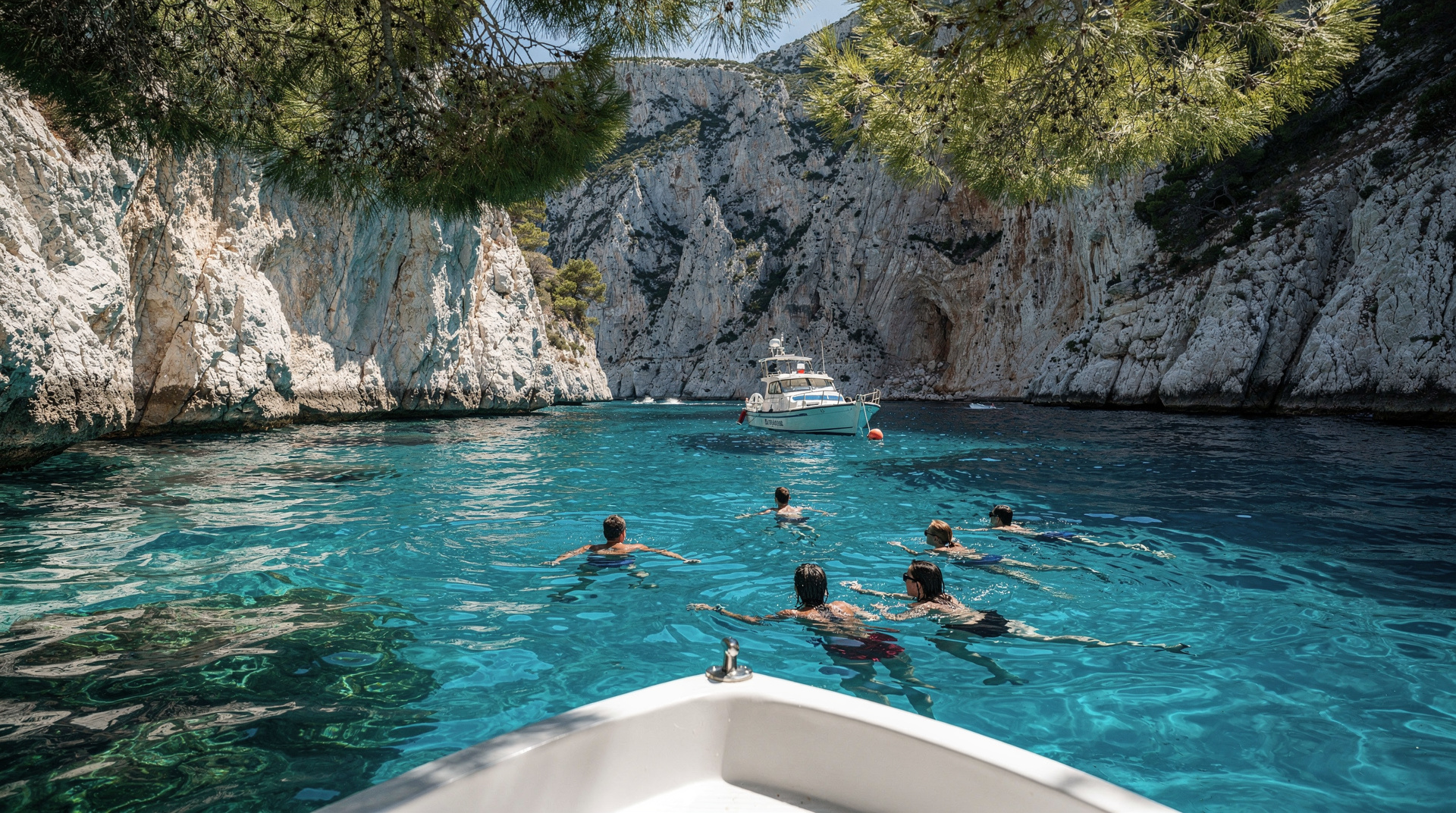
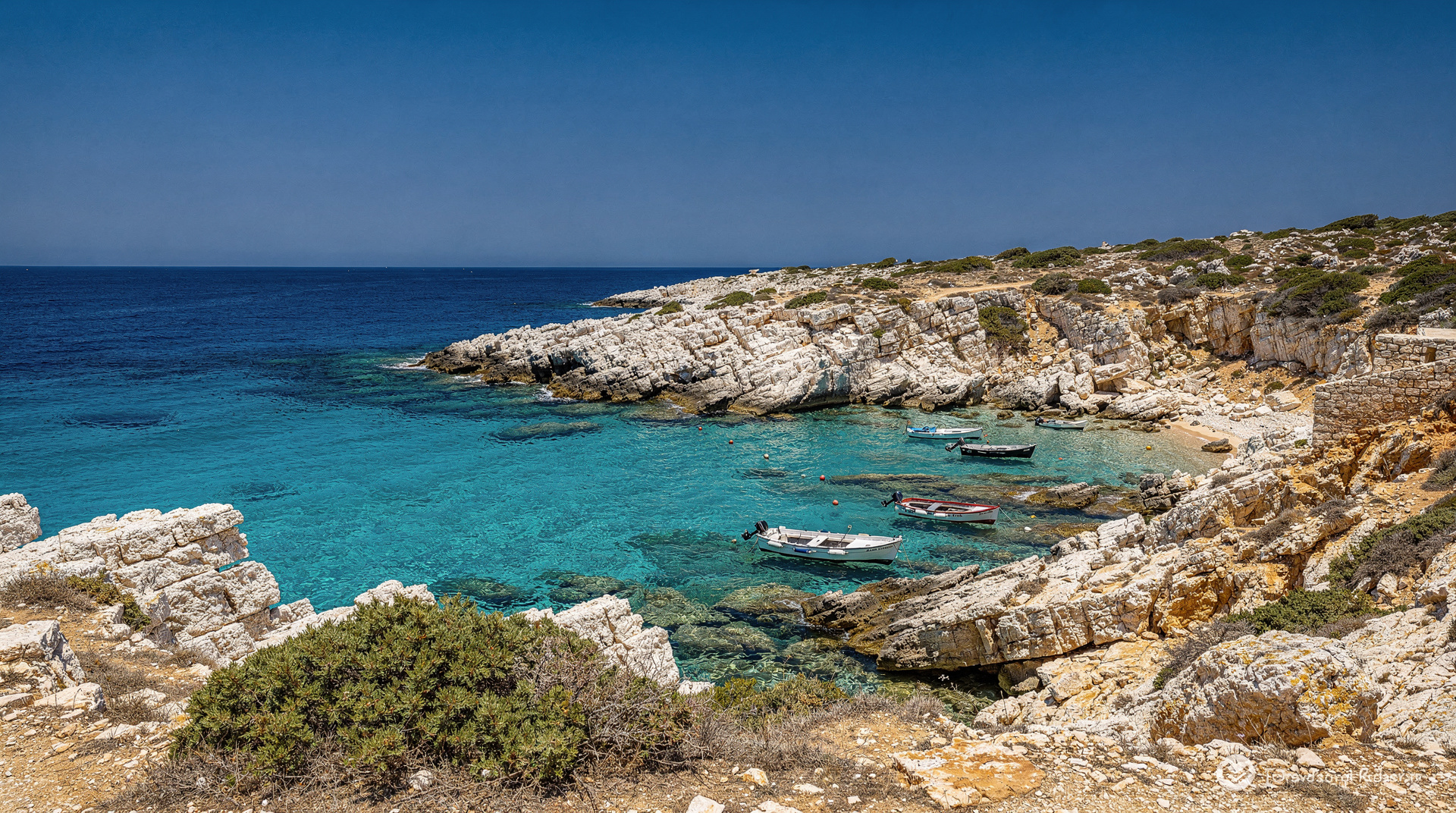
The most common format. Typically visits Sormiou, Morgiou, or Sugiton range, anchoring for 30–45 minutes at each swim stop. Passengers enter the water from a swim ladder or by jumping. Water temperature in summer (24–26°C) is comfortable. This format consistently includes swimming as a core feature.
Look for: “Iconic Calanques boat tour with swimming,” “Calanques boat trip with swimming,” and similar descriptions that put swimming in the title.
Full-day tour (6–7h) with lunch and swim stops
Multiple swim stops — typically 3 or 4 different calanques with extended time at 2 of them. Lunch served at anchor, sometimes inside a calanque cove. The best full-day versions give you an hour or more in the water at the main calanque. This format consistently includes swimming.
Eco boat tours
Electric eco-boat operators typically include swim stops — the slow pace of the tour is designed around extended time at anchor rather than covering distance. Usually 1–2 swim stops in closer Marseille-side calanques.
Sunset cruises
Usually no swim stop — the timing (evening) and the atmospheric focus (the light on the water) mean swimming is not the core feature. Some sunset tours with afternoon departure include a late-afternoon swim before the sunset portion. Verify before booking if swimming is important.
Frioul Islands ferry
The public Frioul-If Express ferry is not a swim-stop boat tour — it is a ferry service. Swimming on the Frioul Islands is from shore after the ferry deposits you on the island. This is an excellent swim-on-your-own option, but the ferry itself does not anchor for swimming.
Mediterranean water temperature by month
The sea temperature around the Calanques follows the Mediterranean seasonal pattern:
| Month | Approximate sea temp |
|---|---|
| January–February | 12–14°C |
| March–April | 14–16°C |
| May | 17–19°C |
| June | 20–22°C |
| July | 23–25°C |
| August | 25–27°C |
| September | 23–25°C |
| October | 20–22°C |
| November | 16–18°C |
| December | 13–15°C |
Practical implications:
- May and early June: refreshing rather than warm — most adults find it comfortable, children and those sensitive to cold may find it cold
- July–August: genuinely warm and comfortable for extended swimming
- September–October: excellent — still warm, fewer boats at anchor, calmer conditions
- November–March: very cold for most recreational swimmers; snorkelling and diving (in wetsuit) remain viable
Snorkel gear rental
Most operators providing swim stops offer snorkelling equipment for rent or loan:
- Mask and snorkel: Usually included in the tour or available for a small supplement (EUR 3–8)
- Fins: Available on most larger catamaran tours; less common on smaller zodiacs — check before the tour
- Wetsuit: Rarely available on commercial tours; relevant for cold-water swimming in shoulder seasons
The case for bringing your own: A properly fitted mask is significantly more comfortable than a rental. For those who snorkel regularly, bringing a personal mask makes a meaningful difference in the underwater experience. Fins also improve the experience at rocky calanque entries (sea urchin protection and better underwater movement).
What snorkelling in the Calanques shows you: The Calanques marine reserve has exceptionally clear water. Visibility on a calm day: 10–15 metres. The underwater landscape varies by calanque:
- Rocky cliff faces with shadowed crevices (grouper, octopus, sea bass)
- Seagrass meadows (Posidonia) on sandy sections — protected and an indicator of clean water
- Shallow rocky areas with sea urchins, wrasse, bream
- Mid-water schooling fish (garfish, mullet, anchovies) visible in open water
The snorkelling quality at the Calanques is significantly above what you find at most developed Mediterranean beach resorts. The marine reserve protections have maintained biodiversity that requires wetsuit diving to find elsewhere.
Sea sickness: honest assessment
The Bay of Marseille in summer is generally calm in the morning but can develop chop in the afternoon, particularly after a mistral. Some factors:
When sea sickness risk is higher:
- Post-mistral conditions (12–24 hours after a strong wind, residual swell remains)
- Small fast boats (zodiac-type) bounce more than catamarans in any chop
- Afternoon departures (later in the day, more thermal wind, more developed sea state)
- Choppy return leg after a calm morning departure
When sea sickness risk is lower:
- Morning departures on calm days (before the afternoon breeze develops)
- Larger catamarans or sailing vessels with two hulls (more stable)
- Keeping eyes on the horizon during transit (the standard advice; it works)
Medication: Standard over-the-counter anti-nausea medication (available at any Marseille pharmacie) taken 1 hour before departure is effective for most people. The active ingredients (cyclizine or meclizine-based) cause mild drowsiness in some people — not a problem during a boat swim tour, but worth knowing. Scopolamine patches (prescription in France) are more powerful for serious sea sickness history.
If you get sea sickness: Sit in the fresh air at the stern or middle of the boat (not below deck). Focus on the horizon. Request that the boat reduce speed in chop. The swim stop itself (when the boat is stationary at anchor) eliminates the motion entirely — this is the moment of relief in any sea sickness experience.
Children and swimming on boat tours
Calanques boat tours with swim stops are among the most child-friendly water activities in the Marseille area. Specific considerations:
Age: Most operators accept children aged 3 and above. Under 3 requires judgment about the boat stability and child’s swimming ability.
Swimming confidence: The swim stops at the Calanques involve open water with depth dropping quickly from the rocky or pebble entry. Children who cannot swim independently require a flotation device. Most operators have children’s life jackets available on request.
Sea urchins: The primary child-specific water hazard. Fins or water shoes prevent contact at rocky entries. Emphasise to children not to stand on the rocky bottom — this is where urchins concentrate.
Duration: A 3–4h boat tour is within comfortable attention span for most children aged 5 and above. The swim stop breaks the transit sections. Full-day tours (6–7h) with children require more planning — a good book or activity for the longer transit sections.
Jellyfish: Occasional in July–August (particularly Pelagia noctiluca, the purple jellyfish). Not an every-year event, but when they appear in the bay, swim stops may be modified. Operators monitor and adjust — the guide will tell you if jellyfish are present at an anchor point.
The underwater Calanques: what snorkelling shows you
The case for bringing snorkelling equipment — or using the rental gear provided — is stronger in the Calanques than at most Mediterranean swim stops. The combination of the national park marine reserve protections and the clear limestone-filtered water creates visibility and biodiversity that is rare on the developed Mediterranean coast.
What you will see at a standard calanque swim stop:
At the rocky sections near the cliff base: sea urchins in abundance (the primary reason for water shoes), wrasse (the small striped fish that pick parasites off larger fish — watch for them working around the rocks), bream, and mullet. In shaded crevices: octopus (look carefully into any dark horizontal crack larger than your fist — they compress themselves remarkably flat). In open water above the sandy sections: garfish (the long, slender surface fish), anchovies in small schools.
What you might see on a good day:
Grouper in the deeper shadowed areas — they require patience to spot, as they move little and their colouration matches the rock. Mediterranean barracuda (smaller and more slender than tropical species, harmless). Sea bass holding position in the current channels at the calanque entrance.
What you will see if you look down:
The Posidonia seagrass meadows cover the sandy sections between rock outcrops. These protected beds are among the most important in the western Mediterranean. The seagrass forms a continuous carpet at 3–10 metres depth; the long, brown leaf blades move in the current. The presence of healthy Posidonia is the clearest indicator of water quality.
What you will not see:
Coral reefs (not part of this ecosystem — Posidonia and rocky reef, not coral). Significant whale or dolphin sightings within the Calanques (these are open-water species that occasionally visit the bay, but are not reliably present). Sharks (several species are present in the western Mediterranean, but sightings close to shore in the Calanques are essentially non-existent — the rare shark encounters in the bay are in open water).
When swim stops are cancelled or modified
Even on tours that include swim stops as a core feature, specific conditions can modify or cancel them:
Jellyfish presence: When Pelagia noctiluca (the small purple jellyfish that stings) appears in the bay in numbers, responsible operators suspend swim stops or move to a different calanque where the jellyfish are absent. This typically occurs in late summer (August–September) in some years, not all. Operators monitor daily and should inform passengers before departure if jellyfish are expected.
Sea swell: After a mistral, residual swell can make the water at an open calanque too rough for comfortable swimming — particularly for non-swimmers or children. The boat may anchor in a more sheltered position or shorten the swim stop duration.
Fire risk landing restrictions: In red-alert fire conditions, the national park may prohibit landing at the calanques from boats. Operators typically continue the cruise as a visual tour (no swim stops or landing) rather than cancelling — check refund policy for reduced-format tours.
Operator’s discretion: In any conditions that the guide or skipper judges unsafe for passengers in the water, they will cancel or modify the swim stop. This decision is final and appropriate — do not pressure an operator to allow swimming in conditions they have assessed as unsafe.
The gear that makes the difference
A mask that fits your face is the single most impactful piece of personal gear for the swimming experience. Rental masks are typically loose-fitting, fog easily, and allow water in when you look sideways. A personal mask (EUR 20–40 for a decent one) provides an airtight seal, fog-prevention coating, and the ability to see clearly without constant clearing.
Fins (EUR 30–50 for basic open-heel) extend your range significantly and protect your feet from sea urchins. The propulsive efficiency of fins means you can cover three times the distance in the same time as swimming without fins, which opens up more of the calanque for exploration during a 45-minute swim stop.
A small waterproof case for your phone (EUR 8–15) allows underwater photography. Modern smartphones at 30 cm depth take reasonable quality photographs of sea life — the underwater rock faces, the Posidonia, the fish — without requiring a dedicated underwater camera.
For the full boat tour selection, see best Calanques boat tours and the boat tour master guide. For the catamaran format specifically, see Marseille catamaran cruises. For the Cassis-side swimming opportunities, see Cassis vs Marseille comparison.
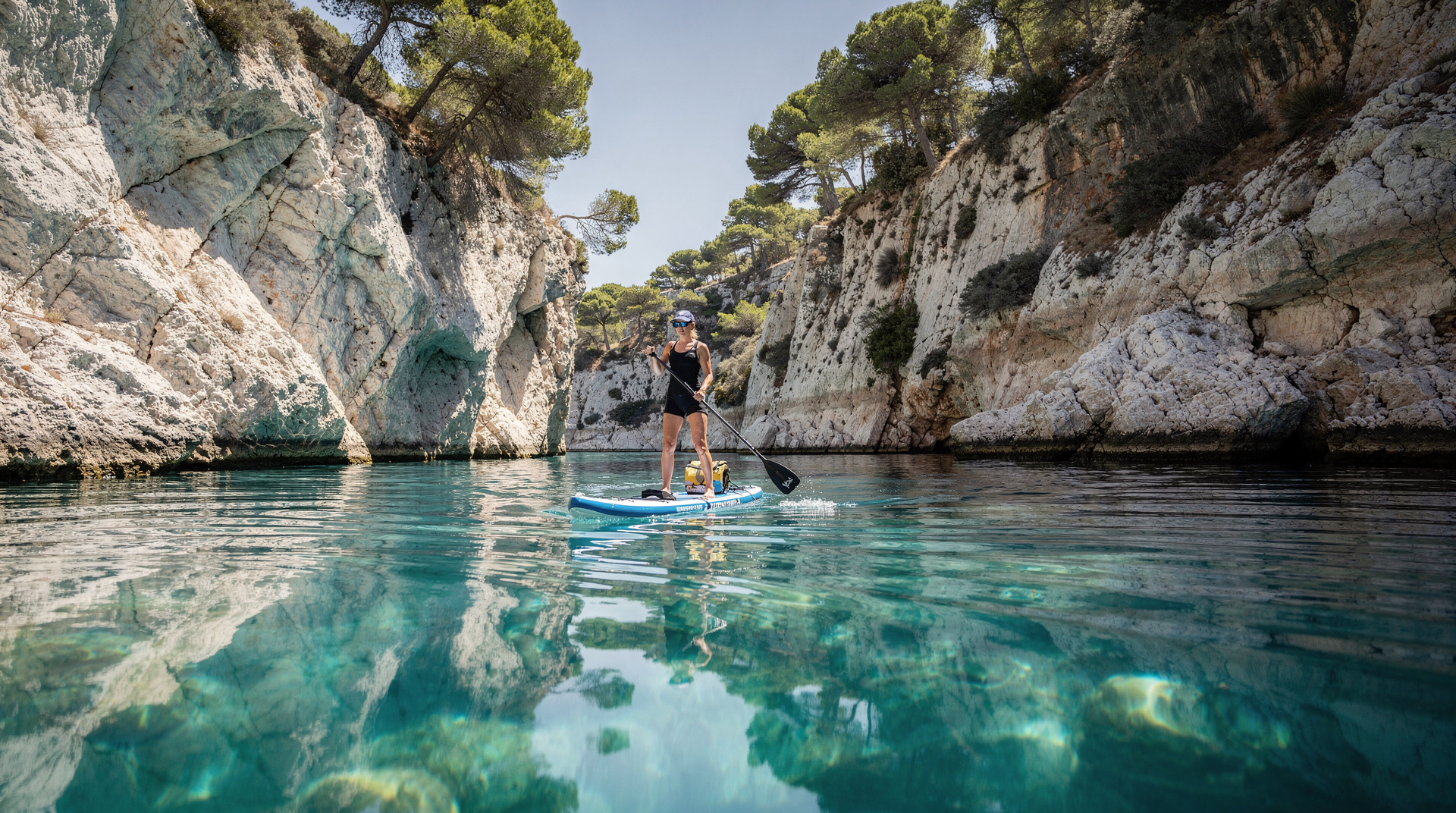
For the kayak/SUP alternatives to boat tours, see kayaking the Calanques and SUP in the Calanques. For the full Calanques marine environment, see the Calanques National Park guide.
Boat swimming vs. hiking to a calanque
If your main question is whether to book a boat with a swim stop or hike in and swim on your own, our boat vs hike comparison lays out the trade-offs in more detail — access, effort, and which calanques suit each approach. For hikers checking whether trails are open on a given date, see Calanques summer access rules and avoiding crowds in the Calanques. And if timing your whole trip around good swimming and open access, our best time to visit Marseille guide covers the month-by-month picture.
Frequently asked questions about Calanques boat tours with swimming
Can non-swimmers join a Calanques boat tour with swim stops? Yes — operators do not require swimming ability to board. Non-swimmers can stay on the boat during swim stops, or wear a provided life jacket to float safely near the boat. Tell the crew in advance so they can offer a flotation device.
Do I need my own snorkel gear, or is it provided? Most swim-stop tours include basic mask and snorkel, or offer it for a small supplement (around EUR 3-8). Fins are less commonly included. If you snorkel often, bringing a personal mask is worth it for comfort and fit, as covered above.
Top experiences
Bookable activities with verified prices and instant confirmation on GetYourGuide.