Cassis vs Marseille Calanques boat tours: honest comparison
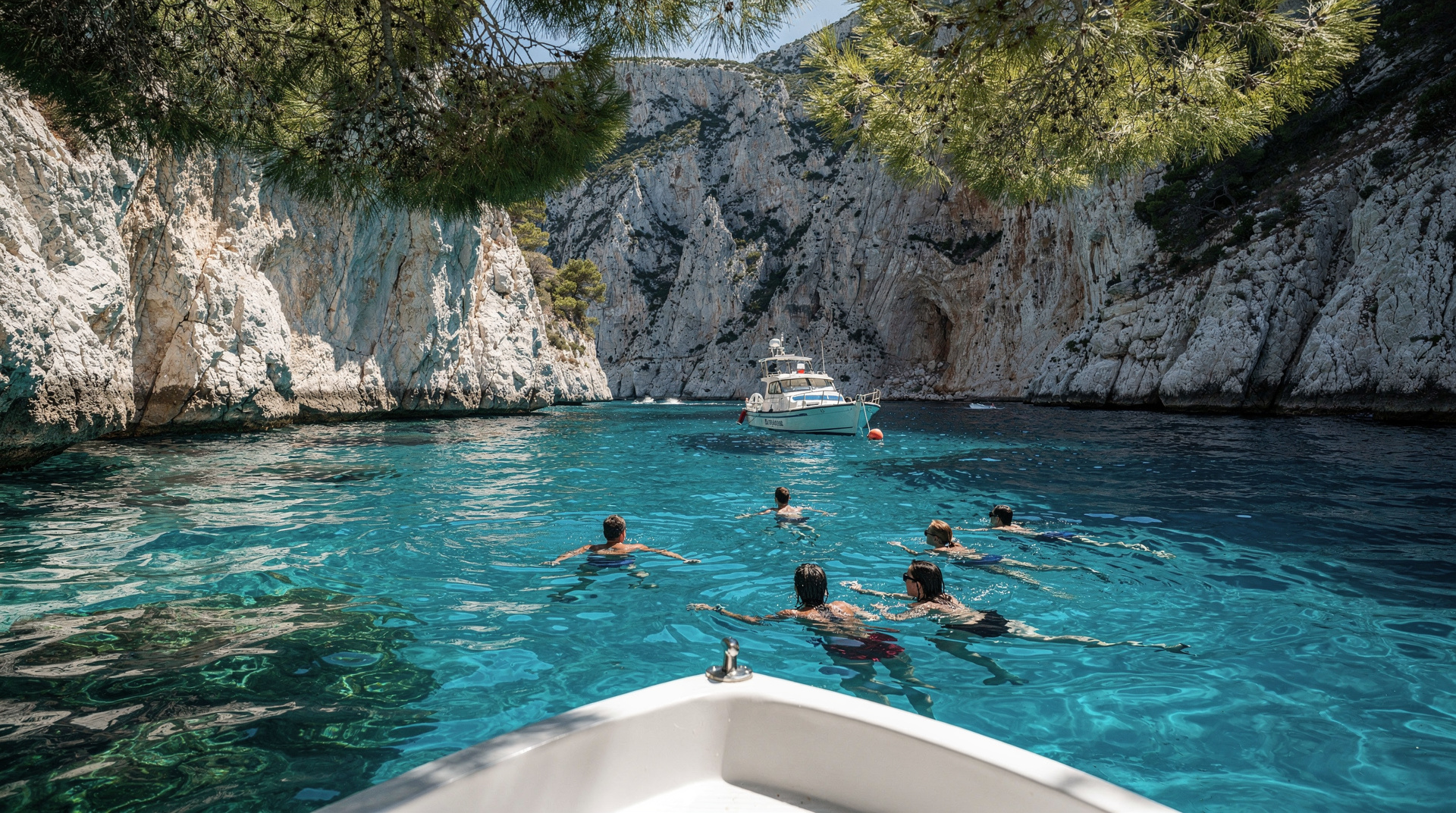
Marseille: iconic Calanques boat tour with swimming
Duration: 3-4.5 hours
Should I take a Calanques boat tour from Marseille or Cassis?
From Cassis you reach En-Vau and Port-Pin — the most dramatic individual calanques. From Marseille you cover Sormiou, Morgiou, and Sugiton — more calanques per trip but less individual drama. For a first visit and the best single calanque, Cassis. For the broadest coverage, Marseille.
| At a glance | |
|---|---|
| Where | Depart from Marseille Vieux-Port or Cassis port, around 30 minutes apart by TER train |
| Cost | Around EUR 50–95 per person for either departure, similar range |
| Time needed | 3–4.5 hours for a standard tour; half a day with transit and swim stops |
| Getting there | Marseille: walk to the Vieux-Port quai. Cassis: TER train from Saint-Charles, then a short taxi or walk to the port |
| Best time | June–September for swimming; September–October for calmer crowds and warm water |
The question most Calanques visitors face
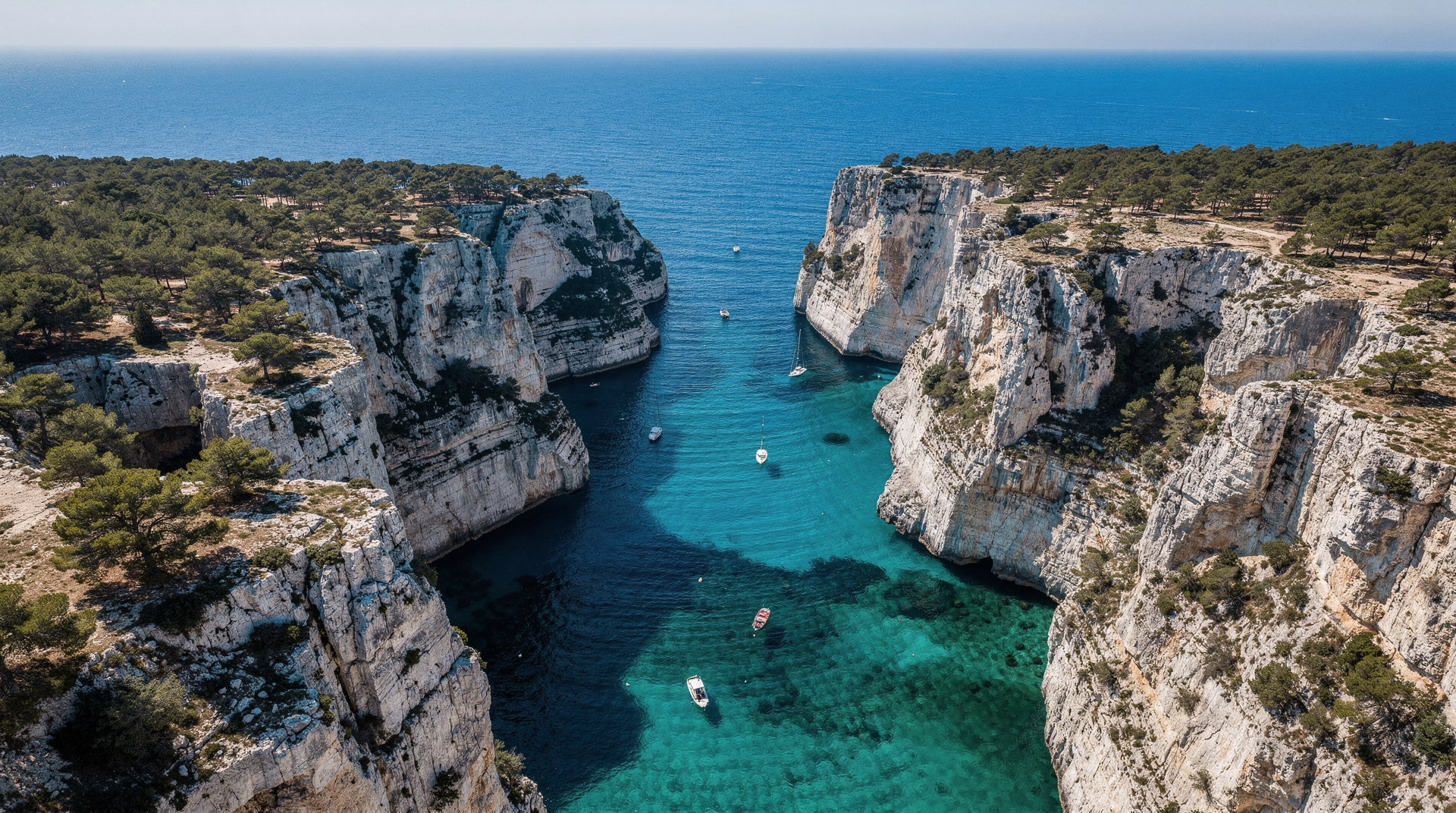
The Calanques National Park stretches 20 kilometres between the southern edge of Marseille and the port of Cassis. Boat tours access it from both ends, but they are not accessing the same calanques. A Marseille departure gives you the Marseille-side calanques (Sormiou, Morgiou, Sugiton, the Île Maïre area). A Cassis departure gives you the Cassis-side calanques (Port-Miou, Port-Pin, En-Vau). The two sets of calanques are different in character, in accessibility, and in visual drama.
Most visitors have time for one boat tour. This guide helps you pick the right departure point for your specific priorities.
The calanques each side offers
From Marseille Vieux-Port
Boats from Marseille typically visit 2–4 of the following in a 3–4.5 hour tour:
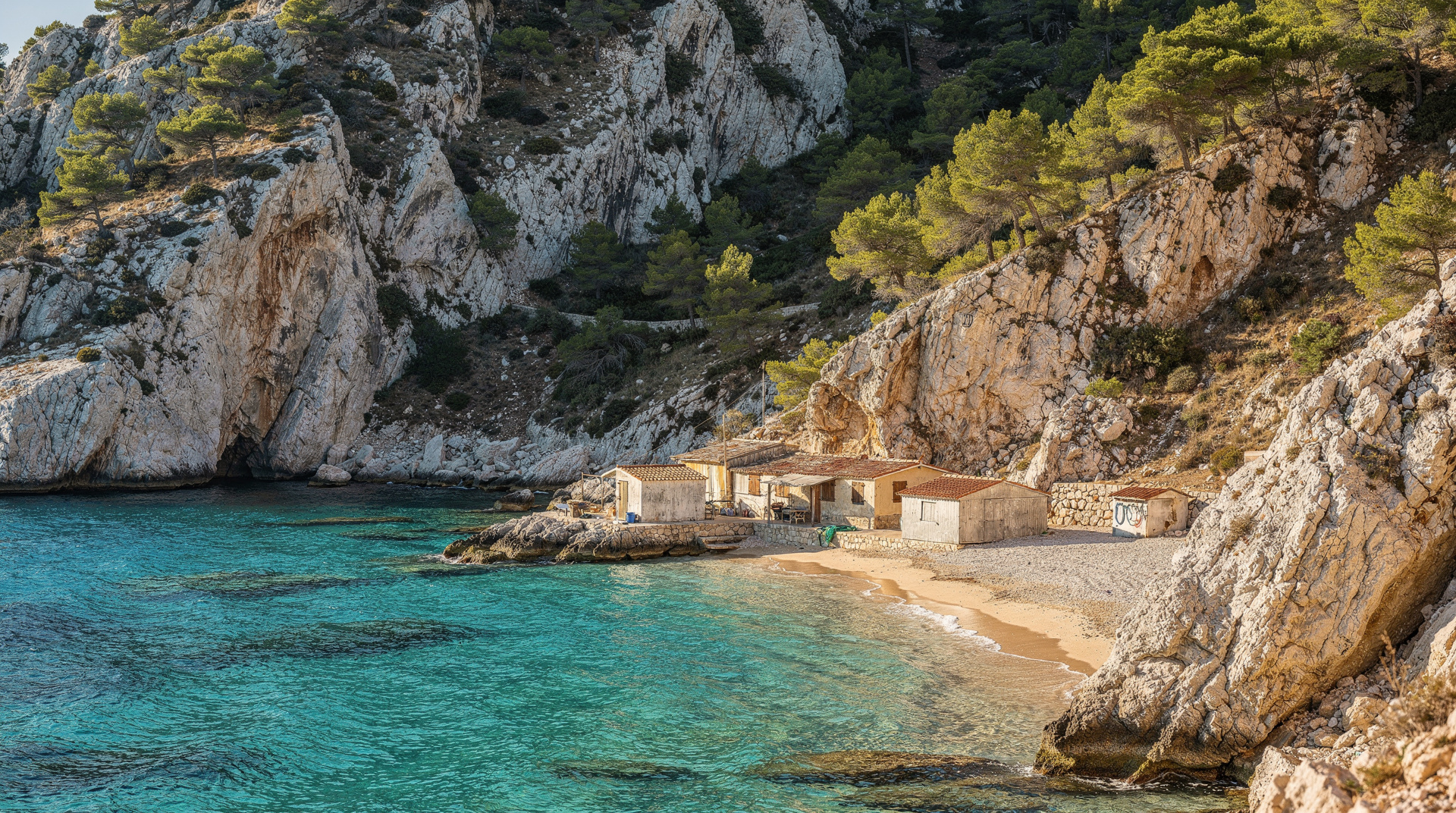
Sormiou: The widest Marseille-side calanque, with a recognisable community of traditional cabanon fishing huts along the waterfront. The beach is wide and the bay open. Sormiou is the most characterful calanque on the Marseille side — the cabanon community visible from the water gives it a human dimension that the more remote calanques lack.
Morgiou: Smaller, more enclosed, and quieter than Sormiou. The cliff walls are more vertical, the cove more intimate. The fishing harbour at Morgiou is tiny and authentic.
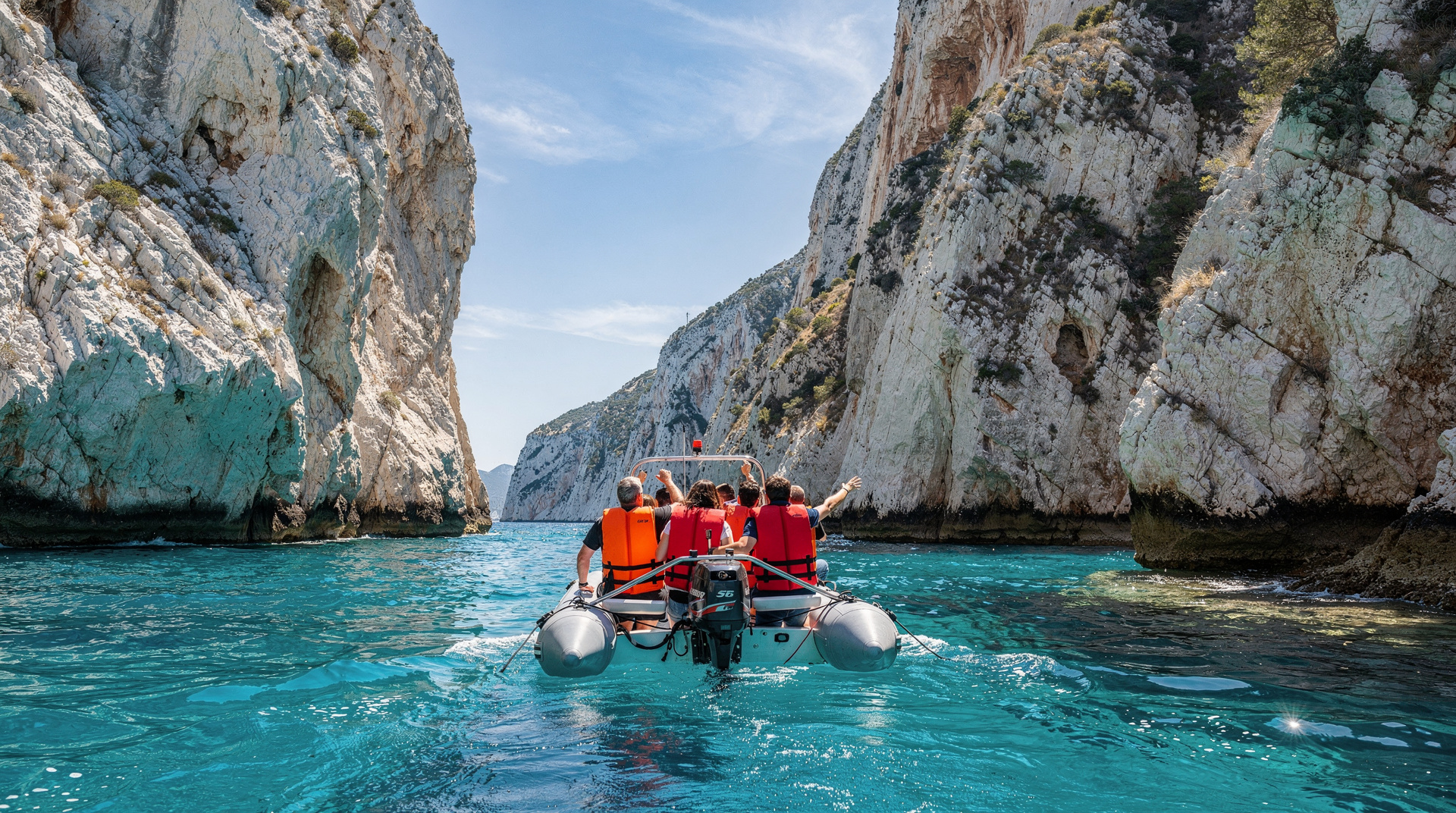
Sugiton: The narrowest of the three main Marseille-side calanques — a tight slot between white cliffs, similar in geometry to En-Vau but smaller. The enclosed water is the most intensely turquoise of any Marseille-side calanque on a sunny day.
Île Maïre and Tiboulen de Maïre: The rocky islets closest to the Marseille shore, often included as a first stop on the outward leg. The water around the Île Maïre is among the clearest in the bay.
From Cassis port
Boats from Cassis typically visit 1–3 of the following:
Port-Miou: The large navigable inlet immediately east of Cassis — a long, sheltered calanque used as a marina. Least visually dramatic of the three but provides immediate national park atmosphere. Typically a transit stop rather than a swim destination.
Port-Pin: The middle calanque from Cassis. Broader than En-Vau, better beach, calmer conditions. Good swim stop for families and those who find En-Vau’s geometry intimidating. The pines overhanging the western cliff give it a different aesthetic from the stark white limestone dominant elsewhere.
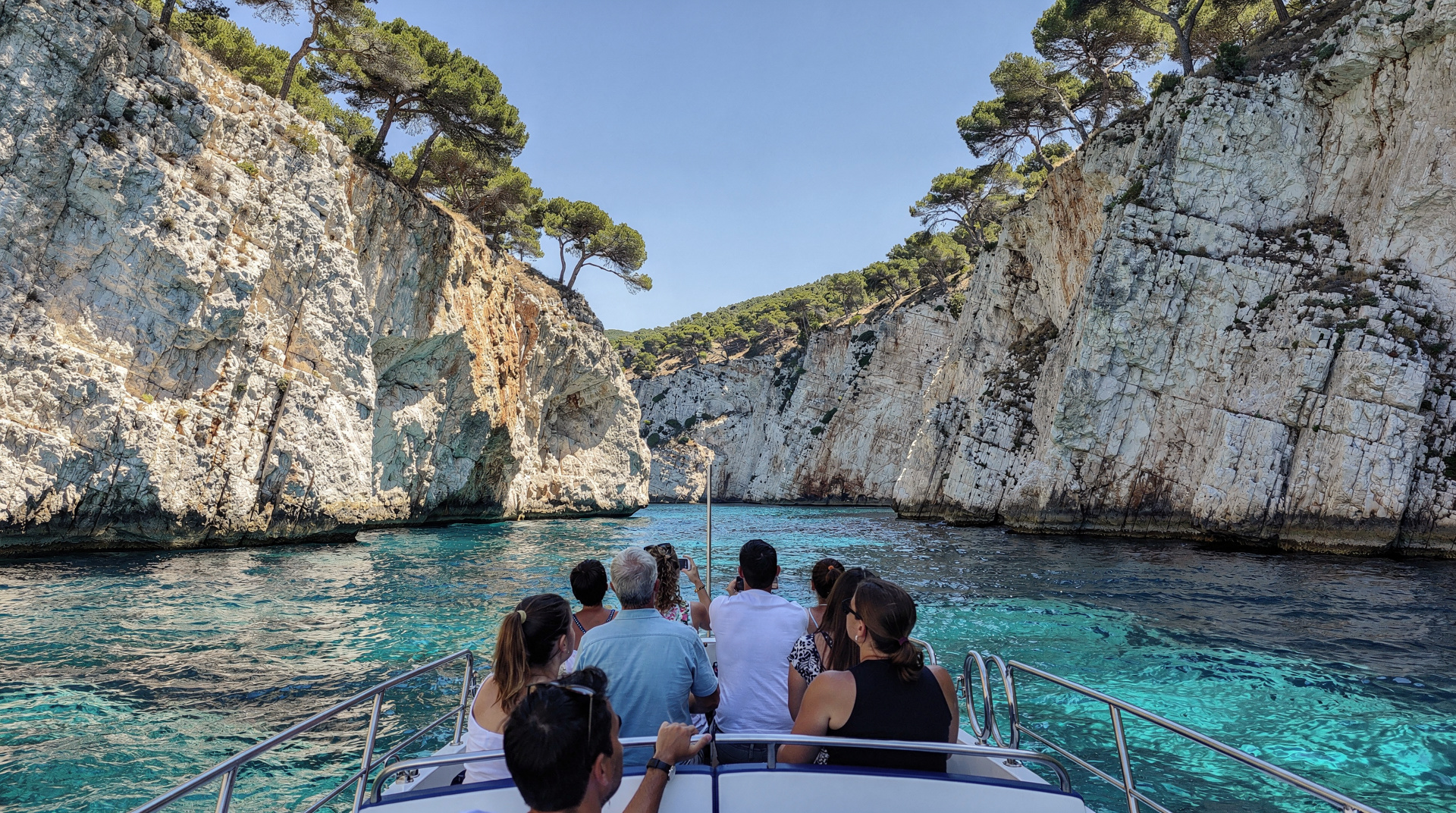
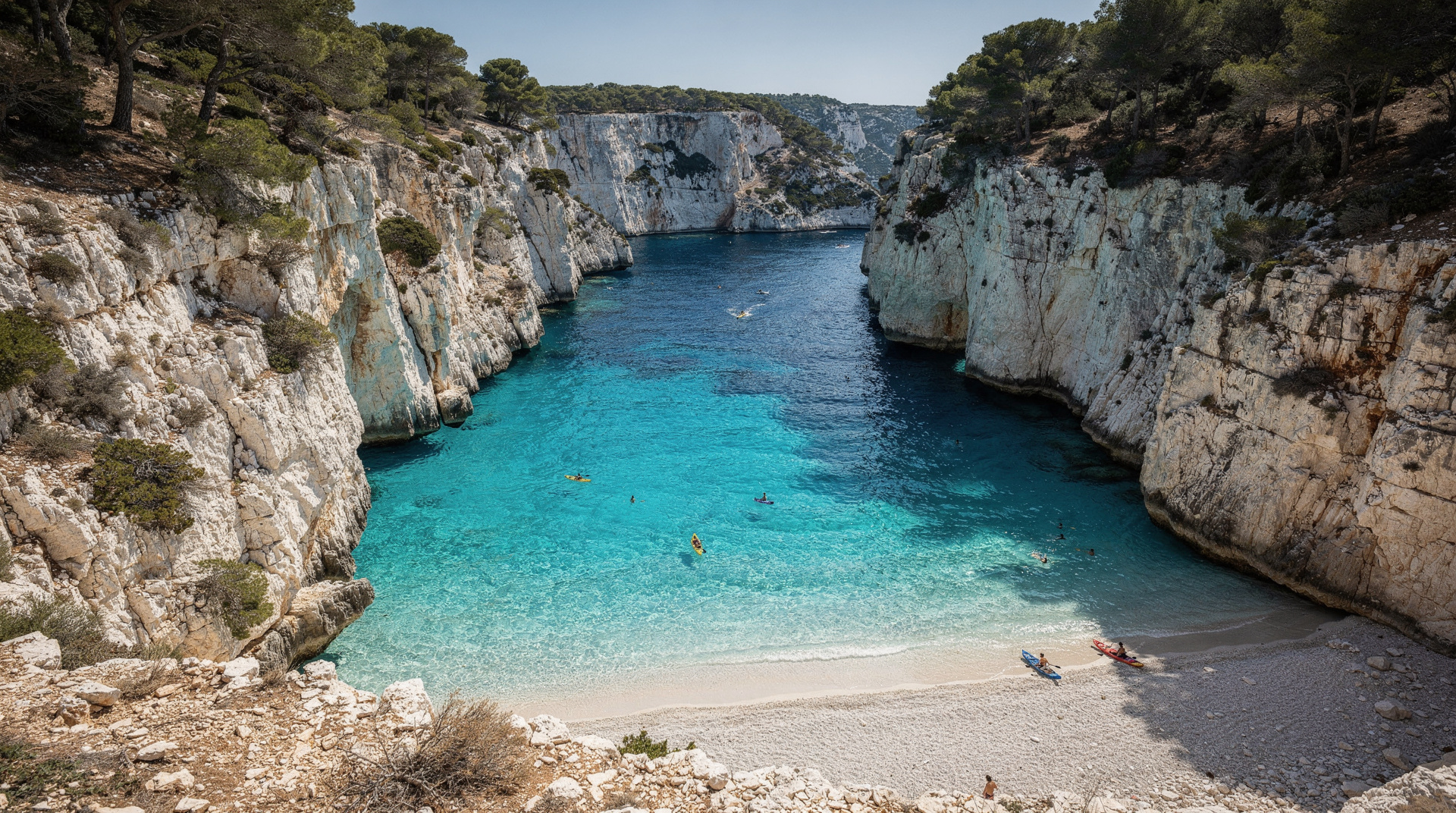
En-Vau: The headline calanque of the park — a narrow slot between 120–150 metre vertical white cliffs, with an enclosed emerald-green cove at the bottom. The geometry is extreme: from the water inside En-Vau, you look up at a sliver of sky between the cliff tops. No boat from Marseille reaches this calanque in a standard tour. This is the Cassis-specific experience.
The transit time difference
This is the structural advantage of Cassis and the reason it matters:
- From Marseille Vieux-Port to Sormiou: 35–45 minutes travel each way
- From Marseille Vieux-Port to En-Vau: 65–75 minutes travel each way
- From Cassis port to En-Vau: 20–30 minutes travel each way
On a 3.5-hour tour from Marseille, you spend 1h10–1h30 in transit. On a 3.5-hour tour from Cassis visiting En-Vau and Port-Pin, you spend 40–60 minutes in transit. Cassis tours deliver proportionally more time at the calanques.
This transit difference is why Cassis boats do not simply “add En-Vau” to their Marseille-side route — En-Vau is simply too far from Marseille for a half-day boat tour to justify the round trip.
Photography: which side is better?
The visual character of the two sides is genuinely different:
Cassis-side photography: Extreme vertical geometry. The slot at En-Vau creates the highest cliff-to-width ratio of any calanque — the photographs that define the Calanques internationally are almost all of En-Vau or Port-Pin. The cliff faces reflect blue-green water onto the rock above the waterline in a way that does not occur in the more open Marseille-side calanques. For dramatic cliff photography, Cassis side.
Marseille-side photography: More varied composition. Sormiou with its cabanon community and wide bay offers human-scale interest that En-Vau’s pure geology doesn’t. The approach from the Vieux-Port, with Notre-Dame de la Garde visible on the hill behind the city as you leave the port, is a specifically Marseille composition. The Frioul Islands and Château d’If are in frame for the first part of the journey. For city-and-sea compositions and the widest variety of subjects, Marseille side.
Price comparison
The prices are broadly similar, which makes the comparison simpler:
- Marseille 3–4.5h tour with swim stops: EUR 50–95 per person
- Cassis 3–4h tour with swim stops: EUR 50–90 per person (guided sea kayak to En-Vau runs EUR 55–90)
The price difference is not significant. Cassis boat tours are not notably cheaper or more expensive than Marseille equivalents for comparable formats. The decision should be made on calanque quality, not price.
Duration comparison
Typical tour durations from each departure point:
| Format | From Marseille | From Cassis |
|---|---|---|
| Short (2h) | 1–2 calanques, limited swim time | Port-Miou + Port-Pin, 1 swim |
| Standard (3–4.5h) | 2–4 calanques, 2 swim stops | En-Vau + Port-Pin, 2 swim stops |
| Full day (6–7h) | 3–5 calanques, lunch included | En-Vau + Port-Pin + Port-Miou + lunch |
Verdict by traveller profile
If this is your only visit to the Calanques, ever
Go from Cassis. En-Vau is the calanque that has made this landscape world-famous. Visiting it from the sea — entering the narrow slot with the cliffs above — is the defining Calanques experience. The 35-minute TER train from Marseille makes Cassis completely accessible without a car.
If you are already in Marseille and staying centrally
Go from Marseille. The logistics of a Vieux-Port departure are seamless from a central Marseille hotel — no train journey, no transfer, just walk to the quai. Sormiou and Morgiou are genuine calanques with excellent water and their own distinctive character. You are not missing out; you are choosing the logistically simpler option.
If you want to combine hiking and boat in the same area
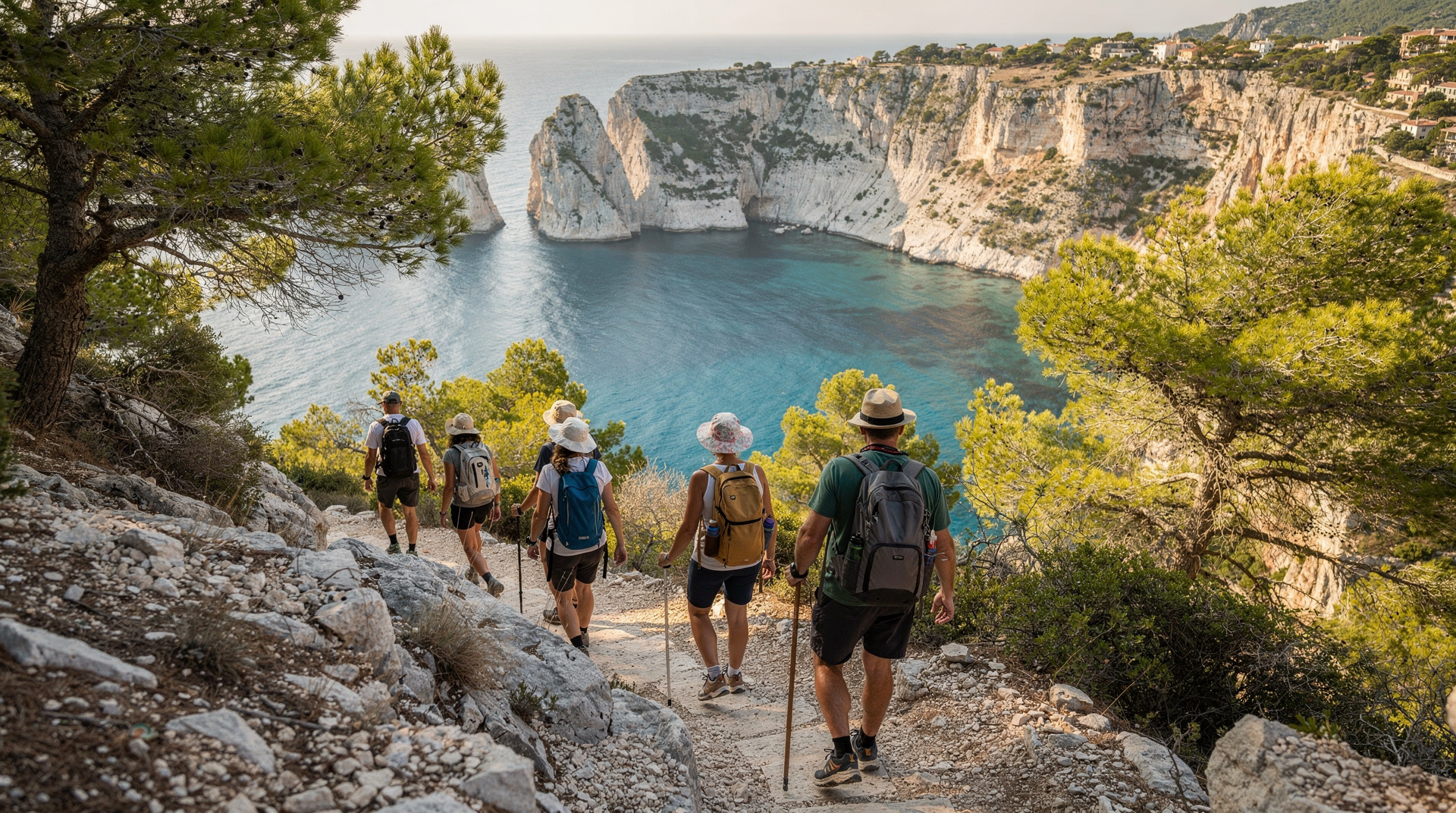
Choose Cassis. In the morning, hike from Cassis to Port-Pin (45–60 min one way). Return by boat tour from Cassis port that afternoon, seeing En-Vau from the water. Same day, two different modes of access, two different calanques. The TER back to Marseille at the end.
If you want the most calanques in one day
Go from Marseille (full-day format). A 6–7 hour tour from the Vieux-Port can cover Sormiou, Morgiou, Sugiton, and the Île Maïre area — four distinct calanques plus the bay. Cassis-side full-day tours cover 2–3 calanques but with more time at each.
If you are visiting in summer (July–August) and hiking is closed
Either works. Boat access is unaffected by fire-risk trail closures. Both Marseille and Cassis operators continue running during fire risk periods. The Cassis-side advantage (En-Vau access) holds regardless of trail status.
Getting from Marseille to Cassis for a boat tour
By TER train: Saint-Charles station to Cassis station (approximately 35 minutes). Cassis station is 3 km from the port — taxi costs around EUR 10–12. Frequency varies; check SNCF for the day’s schedule.
By car: 30 minutes on the A50 autoroute. Summer car restrictions in Cassis village (late June–August) mean parking outside the restricted zone and using the shuttle bus, or arriving before 09:00.
By organised tour from Marseille: Some operators run combined Marseille–Cassis day trips that handle transport and include the boat tour. Simpler logistics but less flexibility.
Frequently asked questions about Cassis vs Marseille Calanques boat tours
Do Marseille boat tours ever go to En-Vau?
Full-day tours (6–7 hours) from Marseille sometimes include an En-Vau approach — the boat passes the entrance of the calanque and stops outside for viewing. Landing inside En-Vau from a Marseille departure is uncommon in standard tours due to the transit time. If En-Vau is your specific goal, depart from Cassis.
Is the water quality different on each side?
Not meaningfully. Both sides of the Calanques are within the same national park marine reserve. Visibility in calm conditions is typically 10–15 metres throughout. The Cassis-side enclosed calanques (particularly En-Vau) may feel slightly more pristine due to their narrow geometry limiting circulation, but both sides offer excellent Mediterranean water quality.
Can I take a boat from Marseille to Cassis or vice versa as a scenic transfer?
No scheduled boat service connects Marseille and Cassis as a transfer — the ferry from Marseille Vieux-Port goes to Frioul and Château d’If, not Cassis. The TER train is the transport connection between the two towns.
Which Calanques boat tour is better value — Cassis or Marseille?
At similar prices, Cassis delivers better value for a first visit because you get En-Vau — the most dramatic calanque in the park — with less transit time. Marseille delivers better value if you want to see the most calanques in one session, as the Marseille-side calanques are closer together and a standard tour can cover three or four.
Is En-Vau visible from Marseille boat tours?
No. En-Vau is on the Cassis side of the park, and the geometry of the Calanques massif means there is no line of sight from the Marseille-side sea approach. You cannot see En-Vau from any Marseille-side boat tour position.
Can I combine both sides in one day?
Theoretically yes — morning Marseille-side boat tour, train to Cassis, afternoon Cassis kayak. In practice, this is a very full day and requires early starts. It is more comfortable spread over two days.
Do I need to book in advance for either departure?
Yes, in July and August. Marseille has more daily departures than Cassis, so same-day availability is slightly more likely from the Vieux-Port, but both fill up on clear-weather days. In shoulder season (May, June, September, October) booking a day or two ahead is usually enough for either side. See Calanques summer access rules for how the fire-risk period affects planning.
Which departure is better for families with young children?
Cassis, generally. The transit time to Port-Pin is shorter (20–30 minutes versus 35–75 minutes to Marseille-side calanques), which matters more with restless kids, and Port-Pin’s calmer, broader cove is gentler than Sormiou or Morgiou for young swimmers. See kid-friendly Calanques for a fuller breakdown by age.
The Cassis experience beyond the boat
If you are going to Cassis specifically for the boat tour, it is worth understanding what the departure point adds to the experience — and why a Cassis day trip from Marseille is almost always worthwhile regardless of the boat.
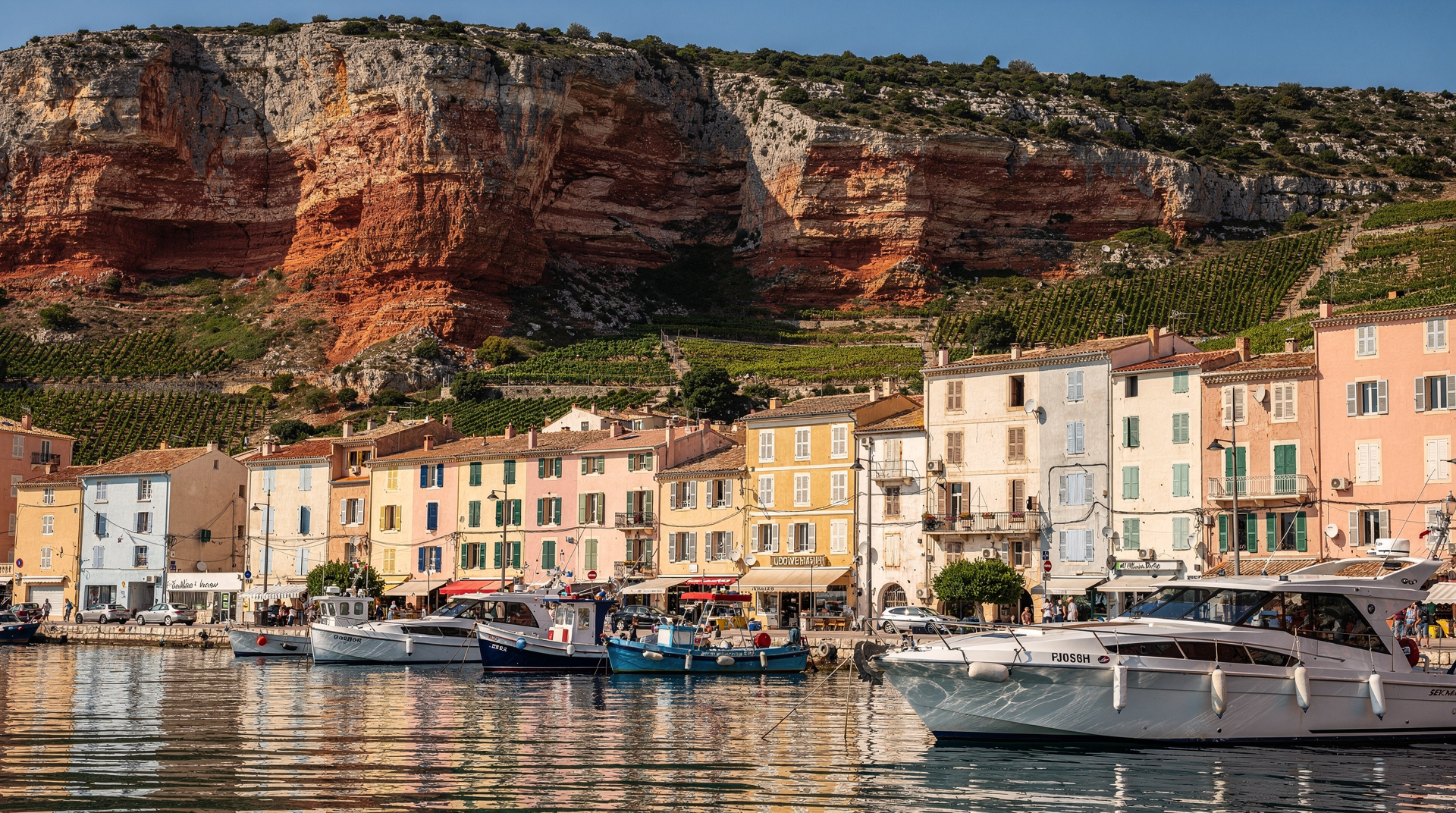
The port itself: Cassis port has a specific character that the Vieux-Port in Marseille does not. It is smaller, more intimate, and dominated by pleasure craft and fishing boats rather than commercial traffic. The restaurants along the quai are better than their equivalents in a larger port — the village is small enough that reputation matters and bad food doesn’t survive. The local white wine (AOC Cassis — Marsanne, Clairette, and Ugni Blanc from the limestone terraces above the village) is the natural accompaniment to grilled fish.
Before or after the boat tour: Arriving in Cassis the evening before a morning departure — by TER from Marseille, taxi from the station to the port — allows a leisurely dinner at the port, a good night’s sleep, and an early morning start for the boat or hike without the transit pressure of a same-day trip. For the most rewarding version of the Cassis-side calanques, overnight is the structure that works best.
The wine tasting addition: Several AOC Cassis domaines are accessible by taxi from the village for wine tasting. Adding a 1.5-hour wine tasting (either before a late morning boat tour or after an early return) transforms a boat excursion into a more complete day. The AOC Cassis appellation (12 estates, approximately 1 million bottles per year, established 1936) produces whites that are genuinely worth tasting at source. See the Cassis guide for the wine context.
Cap Canaille from Cassis: The Route des Crêtes viewpoint above the village gives the panoramic view of both the Calanques (west) and the coast toward La Ciotat (east). The drive from the port to the summit viewpoint is 15 minutes. Adding it after a morning boat tour makes a full day with little overlap. See the Cap Canaille guide for the full options.
Seasonal differences between the two departure points
The seasonal patterns differ slightly between Marseille and Cassis boat tours:
In June: Both departure points are good. The Cassis hiking trails are still open (no reservation required for the coastal calanques), allowing the option of hiking one day and taking a boat tour the next.
In July–August: Marseille boats are the highest-volume option — operators run multiple daily departures. Cassis boats are less numerous but more focused on the kayak and small-boat format. The trail closures mean sea access is mandatory for both sides; the advantage of Cassis (En-Vau access) is unchanged.
In September–October: The best months for both. Trails reopen, crowds drop, water temperature remains comfortable. The Cassis wine harvest (typically late September) adds an activity that doesn’t exist in the Marseille urban context. This is the period when combining the Cassis boat tour with a domaine visit makes most seasonal sense.
In spring (April–May): The hiking option returns, and the combination of hiking and boat tour at the same departure point is easiest from Cassis — you can hike one morning and kayak the next without any additional transport. From Marseille, hiking and boat tours access the same side of the park, with less dramatic individual calanques for both.
For the boat tour options in detail, see best Calanques boat tours and the boat tour master guide. For En-Vau specifically, see En-Vau and Port-Pin. For the Marseille-side calanques, see Sormiou and Morgiou. For the Cassis destination, see Cassis.
Booking logistics and seasonal availability
Neither departure point requires a car, but the booking rhythm differs. Marseille operators run more frequent departures throughout the day in peak season, which gives more flexibility if your first-choice time slot is full. Cassis operators run fewer daily departures but the smaller-boat and kayak formats mean groups are more intimate.
In practice, the busiest booking pressure on both sides falls on weekends between mid-June and late August, and on any clear-weather day after a stretch of mistral wind (when everyone books at once to catch the calm). If your travel dates are fixed and fall in this window, book 3–5 days ahead rather than relying on same-day availability. Outside these peak windows, walking up to the kiosk on the morning of your visit is usually workable at both departure points.
Top experiences
Bookable activities with verified prices and instant confirmation on GetYourGuide.