Best Calanques boat tours: shortlist, what to verify, and what to avoid
Marseille: iconic Calanques boat tour with swimming
Duration: 3-4.5 hours
How do I choose a good Calanques boat tour?
Verify: swim stops included (not just views), group size under 30, free cancellation policy, departure time before 10:00. Avoid: tours with no swim guarantee, large ferry-style vessels over 50 passengers, and vague itineraries that 'may include' specific calanques.
Why the boat tour market needs filtering
The Calanques boat tour market in Marseille ranges from outstanding — small zodiac tours led by passionate guides who have known these waters for years — to deeply mediocre — overcrowded large ferries doing a visual circuit of the calanques without stopping, calling themselves a “discovery cruise.” The price spread between these two poles is surprisingly small: EUR 50–80 covers both ends of the quality range.
| At a glance | |
|---|---|
| Where | Departs Marseille Vieux-Port or Cassis port |
| Cost | Around EUR 40–130 depending on format and duration |
| Time needed | 2–3h (eco-boat) up to a full day (6–7h with lunch) |
| Getting there | Board at Quai du Port (Marseille) or Cassis port; see the Marseille–Cassis transport guide |
| Best time | Morning departures (before 10:00), April–June or September–October |
The difference is not random. It comes down to specific, identifiable variables that you can check before booking. This guide gives you the shortlist of what to look for and what to avoid — with enough specificity to make a confident booking decision.
The non-negotiable questions before booking
1. Are swim stops included and guaranteed?
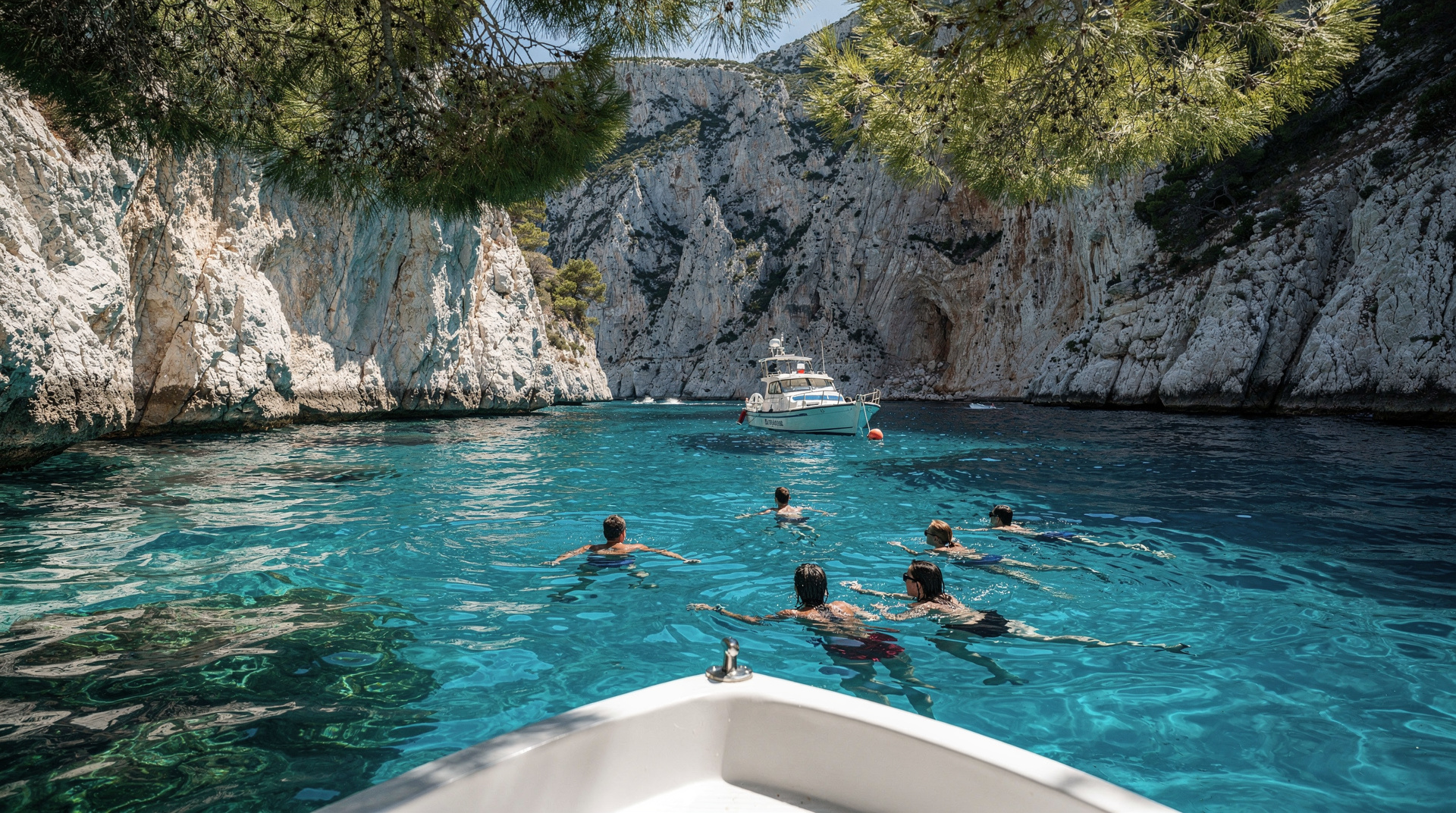
The most important question. “Calanques boat tour” covers everything from a visual circuit where you observe the calanques from the deck (looking into the inlets as the boat passes outside) to a tour with multiple swim stops where the boat anchors inside a calanque and you jump in.
The visual circuit version is legitimately sold as a “boat tour of the Calanques.” It shows you the calanques. It does not give you the experience of swimming in them.
What to verify: Does the booking description say “swim stop” or “swim stops” (plural)? Does it specify minimum time at anchor (at least 30 minutes per swim stop)? Are swim stops “weather permitting” (acceptable) or simply “may include swimming” (vague and sometimes misleading)? A reputable operator specifies swim stops as a core feature of the tour, not an optional bonus.
2. What is the maximum group size?
The group size affects the experience in multiple ways:
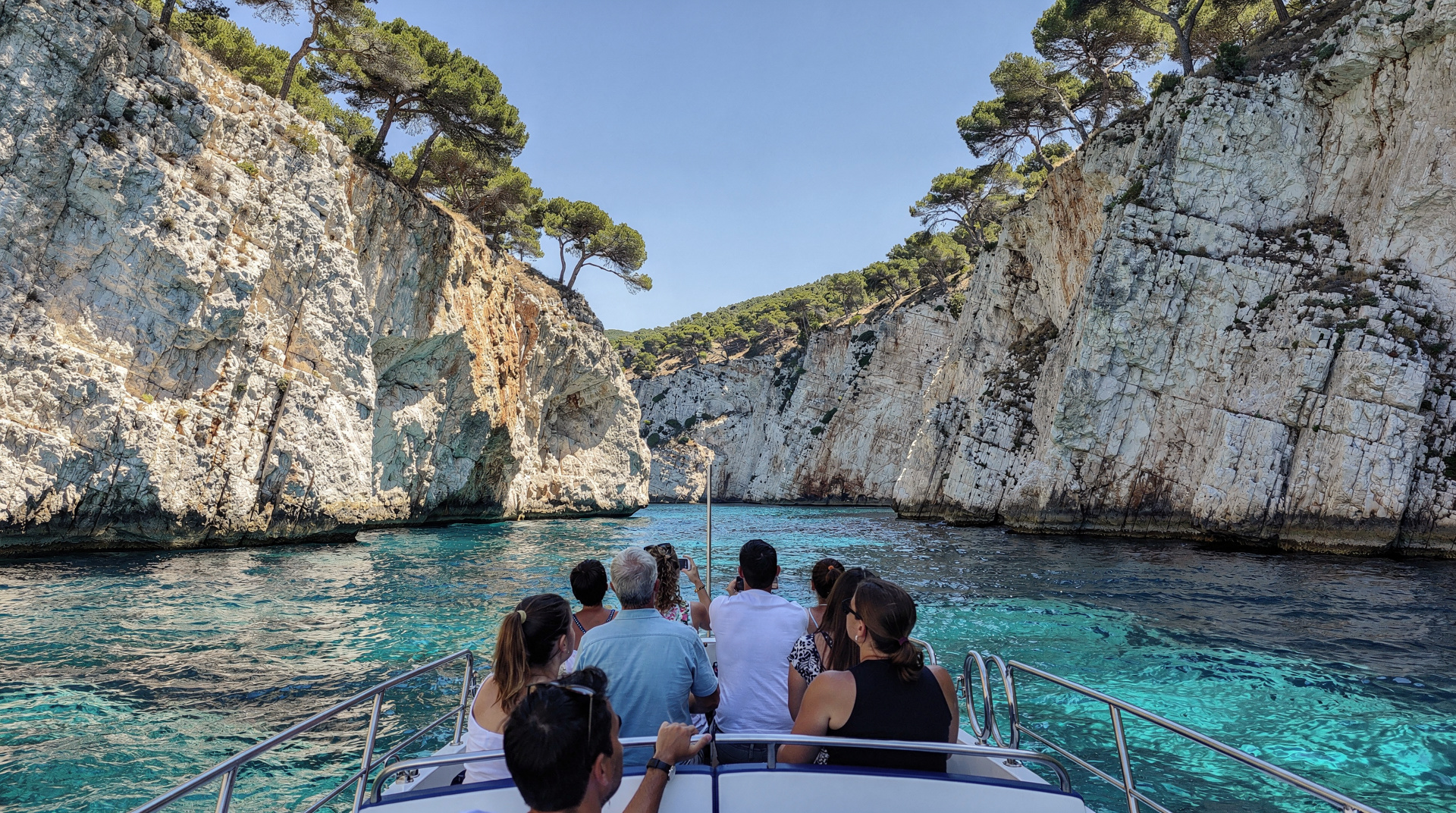
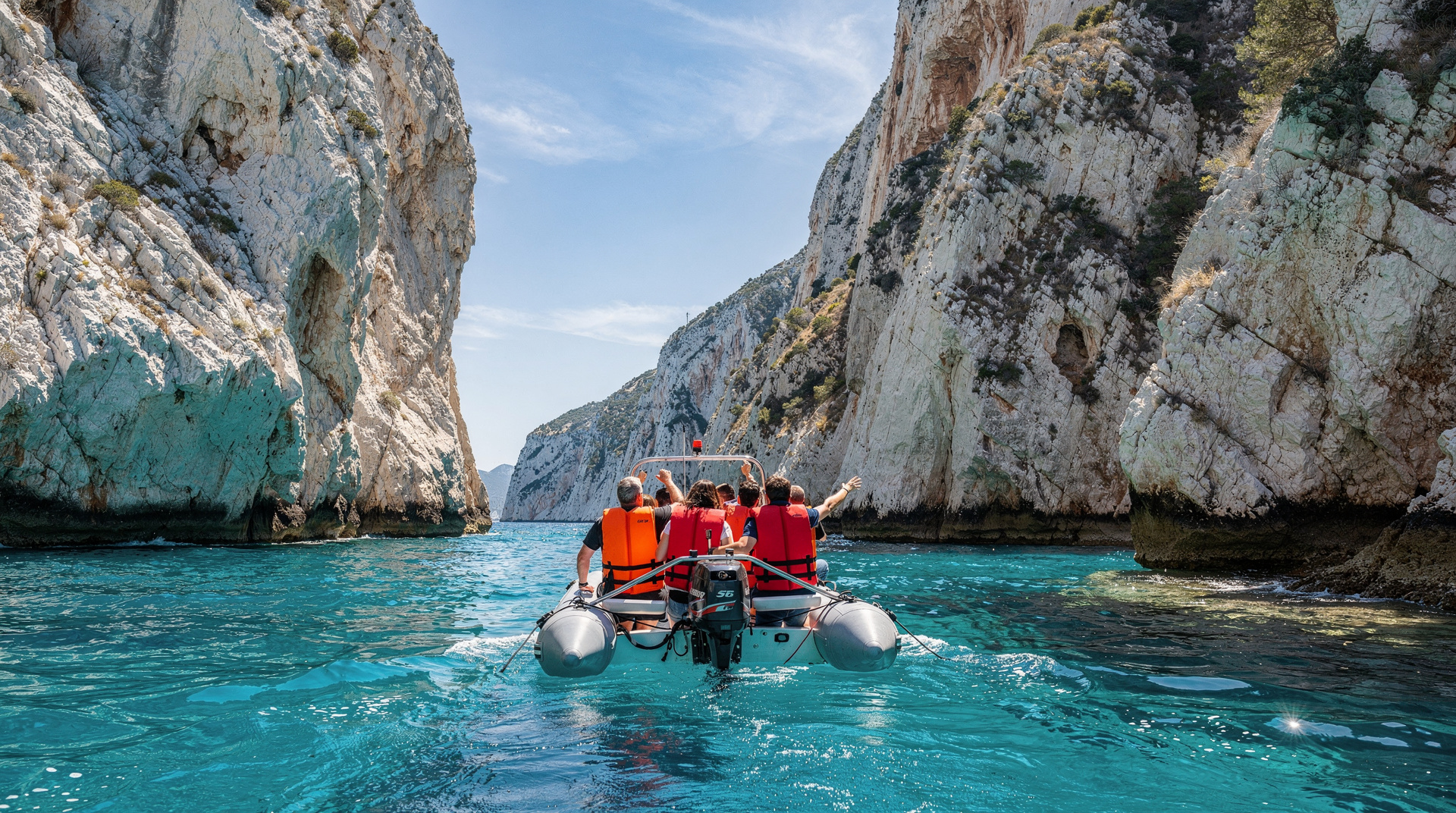
- Smaller boats (6–15 passengers) can anchor closer to cliff walls, enter narrower calanques, and create a less managed atmosphere
- Larger boats (30–50 passengers) are more stable and often more comfortable but the swim stop becomes a managed production rather than a natural water experience
- Very large vessels (50+ passengers) are essentially ferries — functional but impersonal
What to look for: Operators who specify maximum group size in their booking description. Small group tours (under 20 passengers) consistently generate better reviews for the quality of experience, at a modest price premium.
3. What is the refund/cancellation policy?
Calanques boat tours are weather-dependent. Mistral wind, rough sea conditions, or fire-risk restrictions (which can prevent boat landing at calanques in red-alert conditions) can change the tour significantly or cancel it entirely. A reputable operator has a clear, fair cancellation policy:
- Full refund if the operator cancels due to weather
- Free cancellation by the passenger 24–48 hours in advance
- No “credit only” policy for operator-side cancellations — a cash refund is appropriate if the tour is cancelled
What to avoid: Operators with non-refundable bookings and no specified cancellation policy. This is a red flag particularly for summer bookings, when the chance of a weather or fire-risk disruption is meaningful.
4. What time does it depart?
The morning advantage is real. The 9:00–9:30 departure arrives at the calanques before the second wave of boats. By 11:30 in July, the most popular calanques have 10–20 boats anchored simultaneously; the swim stops feel like a managed crowd rather than a natural experience. The early departure costs the same as a 11:00 departure and delivers a significantly better experience.
What to look for: Departure before 10:00 for the best calanque conditions. For a sunset cruise, departure timing relative to actual sunset time (see the sunset cruise guide).
5. In which language is the guide commentary?
Most tours offer commentary in French and English. Some tours add Spanish, Italian, or German. This is more relevant than it sounds — the ecology and geology commentary a good bilingual guide provides makes the difference between a pleasant boat trip and a genuinely educational experience. Tours conducted entirely in French without English commentary are common and appropriate for French speakers, but are a potential mismatch for English-only visitors.
What to verify: Booking pages should specify languages clearly. If they do not, contact the operator before booking.
Tour formats by departure point
From Marseille Vieux-Port
Standard 3–4h tour with swim stops is the most common format and the best starting point for first-time Calanques visitors. Covers 2–4 Marseille-side calanques (typically Sormiou, Morgiou, and Sugiton range) with 2 swim stops. Price EUR 50–95 depending on boat type.
Full-day tour with lunch (6–7h) covers more calanques and is the best format for those who want the Calanques as their primary day activity. Includes lunch and wine aboard. Price EUR 80–130.
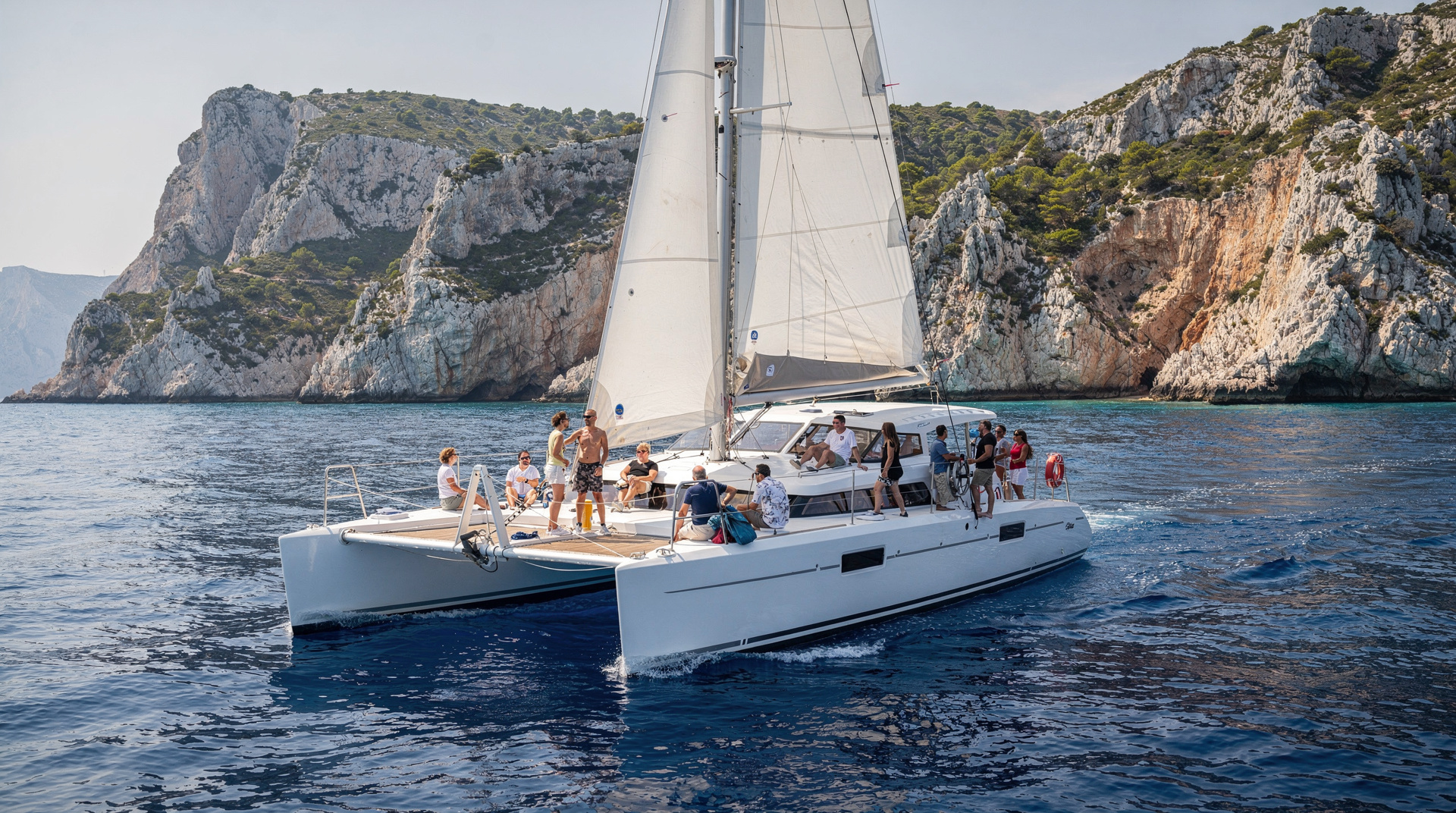
Sailing catamaran tour is the premium format — smaller groups, the sailing experience (when wind allows), and more intimate access. Price EUR 60–100.
Electric eco-boat (2–3h) is the quietest option — no engine noise in the calanques, limited to closer calanques from Marseille but a distinctly different sensory experience. Price EUR 40–70.
From Cassis port
Sea kayak guided tour (3–7h) is not a boat tour in the conventional sense, but it is the best way to reach En-Vau and Port-Pin in the most immersive format. Price EUR 55–90 guided. See the kayaking guide for detail.
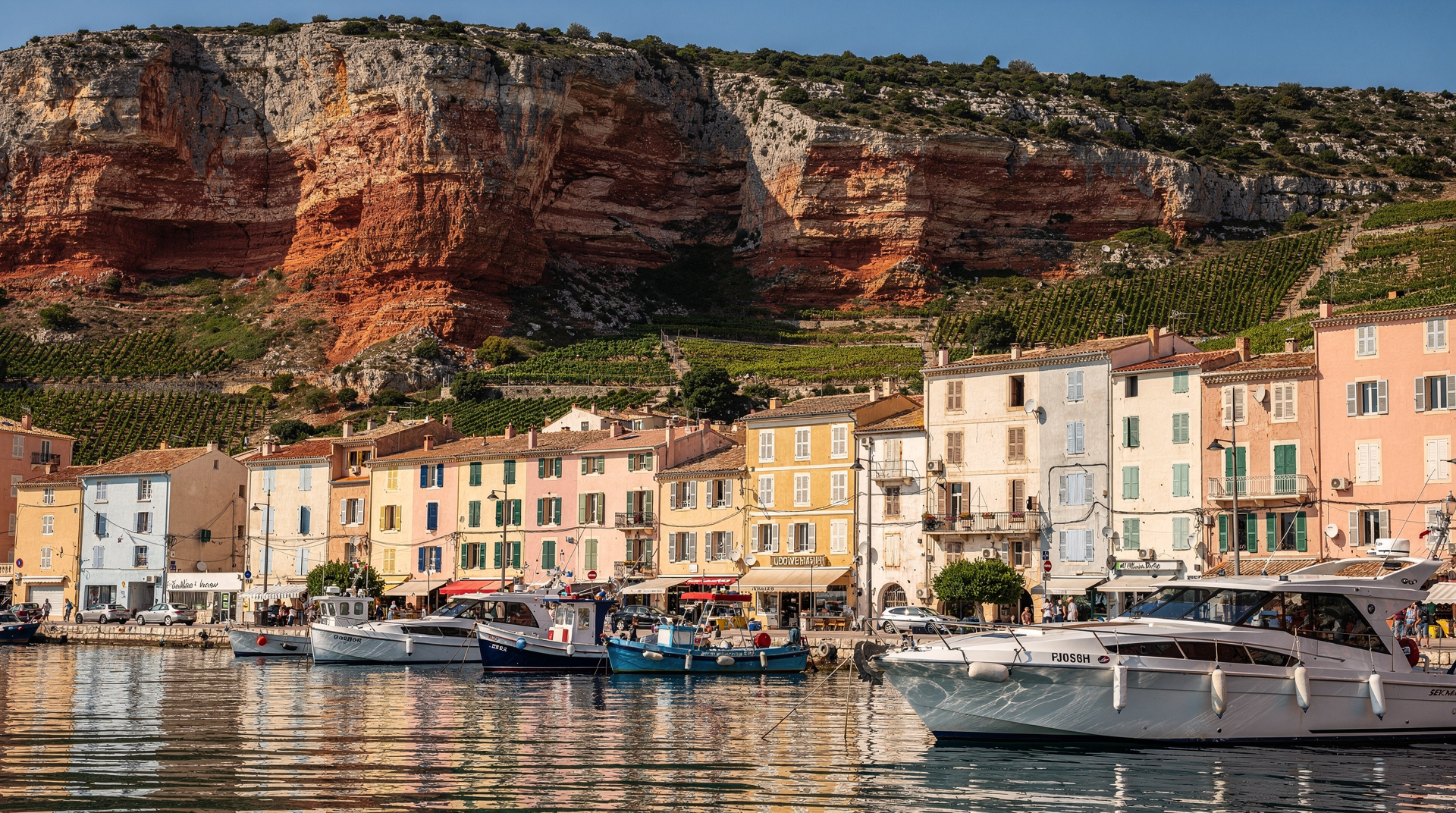
Half-day boat tour from Cassis typically covers Port-Miou, Port-Pin, and an approach to En-Vau. Price EUR 30–60 depending on format.
What the experience actually looks like: step by step
Most standard 3.5-hour Vieux-Port departures follow a similar pattern:
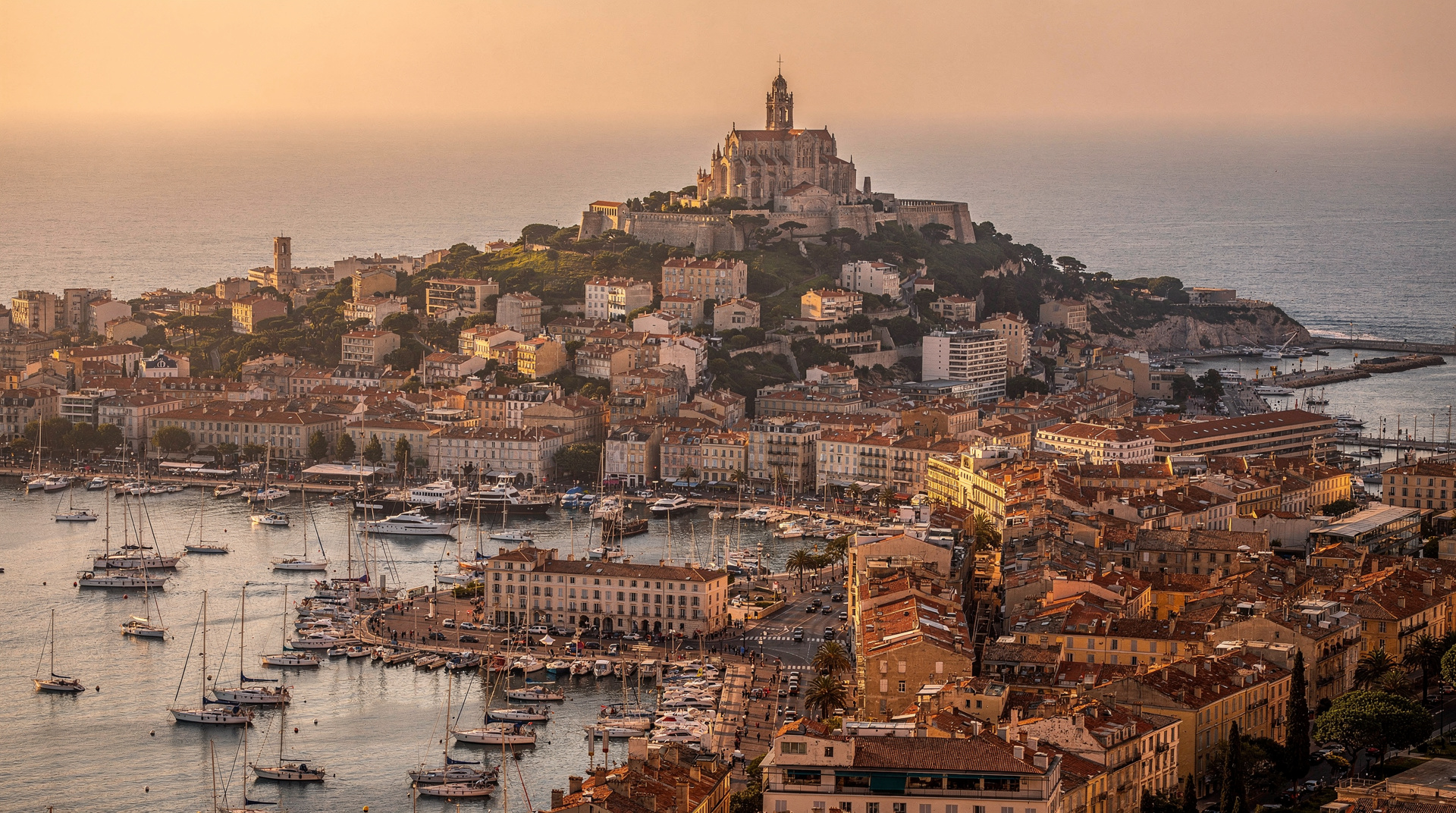
Departure (0:00–0:40): Leave the Vieux-Port, pass the Fort Saint-Jean and Fort Saint-Nicolas at the port entrance, cross the bay toward the southern Marseille coastline. The city recedes; Notre-Dame de la Garde is visible on the hill. The boat passes the Île Maïre and Tiboulen de Maïre (first possible brief stop for photographs).
First calanque approach (0:40–1:00): The boat slows and enters or approaches the first calanque. Commentary begins on the geology, the park history, and the marine environment. The boat anchors (or moores to a buoy — the park limits anchoring in some zones to protect seagrass).
Swim stop 1 (1:00–1:45): Swim ladder down, passengers enter the water. 30–45 minutes in the calanque. The guide may provide additional commentary during the swim stop — the better guides enter the water and point out marine life.
Transit to second calanque (1:45–2:15): 20–30 minutes between calanques.
Swim stop 2 (2:15–3:00): Second calanque swim stop. Some operators add a third calanque visual (no swim) before the return.
Return to Vieux-Port (3:00–3:30): 30–45 minutes return. Refreshments typically served on the return leg on longer tours.
What to avoid
Large “shuttle” ferries: Some large vessels run regular Calanques circuits carrying 50+ passengers with commentary but no swim stops. These are described as “boat tours” but function as scenic transfers. They are not what most visitors want. The telltale signs: scheduled departures every hour or two, fixed-price single entry without a group minimum, no mention of swim stops.
Operators without specific itinerary information: The better operators specify which calanques they visit. “Calanques National Park boat tour” with no named destinations is a red flag — the operator is preserving flexibility to show you whatever is nearest that day. This may be fine, or it may mean the tour covers only the Île Maïre and part of the Sormiou entrance.
Overcrowded peak-season departures: In July–August, some popular Marseille operators are effectively running assembly-line tours with back-to-back departures. Twenty boats anchored simultaneously at Sormiou is a real summer phenomenon. The quality of the swim stop experience in these conditions is significantly below what the same tour provides in May or September.
Validating freshness: how to check current reviews
The Calanques boat tour market changes annually — operators improve, decline, change format, or disappear. A review from 2023 describes a boat that may now have different ownership, a different guide, or a different vessel.
How to validate: Look for reviews within the past 3–6 months. Read specifically for swim stop quality, guide engagement, and weather-related cancellation handling — not just “beautiful views” (the views are always beautiful; the question is how the operator manages the experience). GetYourGuide and TripAdvisor both show review dates prominently.
The tour experience timeline: what to expect hour by hour
Understanding the typical experience flow of a standard 3.5-hour Calanques boat tour (the most common format from the Vieux-Port) helps set realistic expectations:
08:45–09:00: Boarding at the Quai du Port. The guide takes names from a list, distributes any rental snorkelling equipment, and gives a brief orientation. The boat typically departs on time — unlike many Mediterranean tour operations. Late arrivals are occasionally left behind.
09:00–09:40: Transit from the Vieux-Port through the bay toward the Calanques. Commentary on the city panorama, the Frioul Islands visible to the west, the geology of the coastline as it transitions from urban to national park. The limestone cliff faces of the massif become visible from the water around the 20-minute mark.
09:40–10:30: First calanque — typically Sormiou or Morgiou. Approach, anchoring (5–10 minutes), then swim stop (40 minutes). The guide may be in the water or on deck. Most passengers swim; a minority stay on deck in the shade.
10:30–10:50: Transit between calanques. The inter-calanque passage is the transit section where the boat accelerates and conditions are least comfortable for seasick-prone passengers.
10:50–11:40: Second calanque — typically Morgiou or Sugiton. Second swim stop, same pattern. By 11:30, other boats begin arriving at the same calanques — this is one reason why the early morning departure window (9:00) is superior to any later slot.
11:40–12:20: Return transit to the Vieux-Port. Drinks served on larger boats. Some operators include a brief circuit past the Île Maïre and Tiboulen de Maïre on the return leg for additional photographs.
12:20–12:30: Docking at the Quai du Port. Equipment return. Guides typically take questions about the ecology or marine environment after docking — this is a good moment to ask anything the commentary didn’t cover.
Operators who specify what they offer vs those who don’t
The clearest predictor of a quality Calanques boat tour is how specifically the operator describes their itinerary, guide qualifications, and included features. High-quality operators:
- Name specific calanques (not just “the Calanques”)
- State the number of swim stops and minimum duration
- Mention their guide’s qualifications and background
- Specify the maximum group size
- Provide exact departure and return times, not approximate ranges
- List what is included (equipment, snacks, water) explicitly
Lower-quality operators use vague language:
- “Discover the most beautiful calanques” (no specifics)
- “Swimming possible depending on conditions” (non-commitment to the core feature)
- “Visit the Calanques National Park” (no indication of what this means in practice)
- No mention of group size
- “Departure approximately 9:00” with no commitment to return time
This pattern is observable across booking platforms. Before committing to a booking, read the operator’s description for specificity. Vague language is not always a sign of a bad operator, but specific language is a strong signal of a good one.
How to check if an operator is still active and consistent
The Calanques boat tour market has turnover. Operators change ownership, change format, occasionally close. A highly rated operator from 2022 reviews may have changed significantly by 2026.
Current validation checks:
- Reviews dated within the last 3–6 months — look specifically for the current season
- The operator’s own website or social media — recent posts (last 30 days) indicate active operation
- GetYourGuide availability calendar — if the next 2 weeks of dates are bookable, the operator is active
- A quick email or WhatsApp to the operator — responsiveness and the quality of the reply is itself informative
For the boat type comparison, see the boat tour master guide. For Cassis-side tours and the En-Vau experience, see Cassis vs Marseille. For tours including swim stops specifically, see boat tours with swimming. For the sunset cruise format, see sunset cruises.
Comparing the main formats
| Format | Duration | Price (EUR) | Swim stops | Best for |
|---|---|---|---|---|
| Standard 3–4h (Vieux-Port) | 3–4h | 50–95 | 2 | First-time visitors, best overall value |
| Full-day with lunch | 6–7h | 80–130 | 2–3 | Calanques as the day’s main activity |
| Sailing catamaran | 3–4h | 60–100 | 1–2 | Smaller groups, quieter experience |
| Electric eco-boat | 2–3h | 40–70 | 1–2 | Quiet, closer calanques, shorter time budget |
| Half-day from Cassis | 3–4h | 30–60 | Variable | En-Vau approach, pairing with a Cassis day |
| Sea kayak from Cassis | 3–7h | 55–90 | N/A (self-directed) | Reaching En-Vau and Port-Pin most immersively |
If you’re deciding between the Marseille and Cassis departure points more generally, the Cassis vs Marseille comparison covers the trade-off in more depth, and boat vs hike addresses the alternative of reaching the calanques on foot instead — see the hikes by difficulty guide for that option.
Frequently asked questions about Best Calanques boat tours
How far in advance should I book a Calanques boat tour?
In April–May and September–October: 2–3 days in advance is usually sufficient, though popular morning slots on small boats fill faster. In July–August: book 1–2 weeks in advance for specific dates, especially weekends. Morning departures and small-group tours sell out first.
Is it worth paying more for a private boat charter?
For groups of 4 or more, a private charter often costs little more per person than a group tour and gives you a completely different experience — no schedule, your own guide, flexibility to stay longer at a calanque you love. Private half-day charters from Marseille typically start around EUR 400–600 for the boat, split across the group.
What if I get seasick on boat tours?
The Bay of Marseille is generally calm in summer mornings. The most likely rough conditions are post-mistral afternoons (24 hours after a strong wind) and autumn/winter/spring passages. Standard over-the-counter sea sickness medication (available at any pharmacie in Marseille) taken 1 hour before departure is effective. A catamaran or large vessel is more stable than a zodiac in any chop.
Do boat tours run in winter?
Some do, with reduced frequency. The winter Calanques — empty, dramatic, cold light — are beautiful from the water. Sea temperature is 12–15°C (too cold for most people to swim). Check with specific operators for their November–March schedules. The Frioul-If Express ferry to Frioul runs year-round (weather permitting) as an accessible boat option in winter.
Top experiences
Bookable activities with verified prices and instant confirmation on GetYourGuide.