Stand-up paddleboarding in the Calanques: SUP guide for Marseille and Cassis
Marseille: stand-up paddle tour — Les Goudes to the Calanques
Duration: 2 hours
Is stand-up paddleboarding suitable for beginners in the Calanques?
Yes — in sheltered conditions. Les Goudes and the inner calanques offer calm, protected water ideal for beginners. Exposed headlands and windy afternoons are for experienced paddlers only. Always check forecasts before launching, and go with a guide if in doubt.
SUP and the Calanques: a good match — with conditions
| Where | Les Goudes (Marseille), Cassis, or La Ciotat |
| Cost | Guided: around EUR 47–90; independent rental: around EUR 20–35/hour |
| Time needed | 2–3 hours (guided) up to a full day for the longer Cassis/La Ciotat tours |
| Getting there | Bus 20 for Les Goudes; TER train for Cassis and La Ciotat |
| Best time | Early morning (before 10:00) for calm water; July–September for warm sea temperatures |
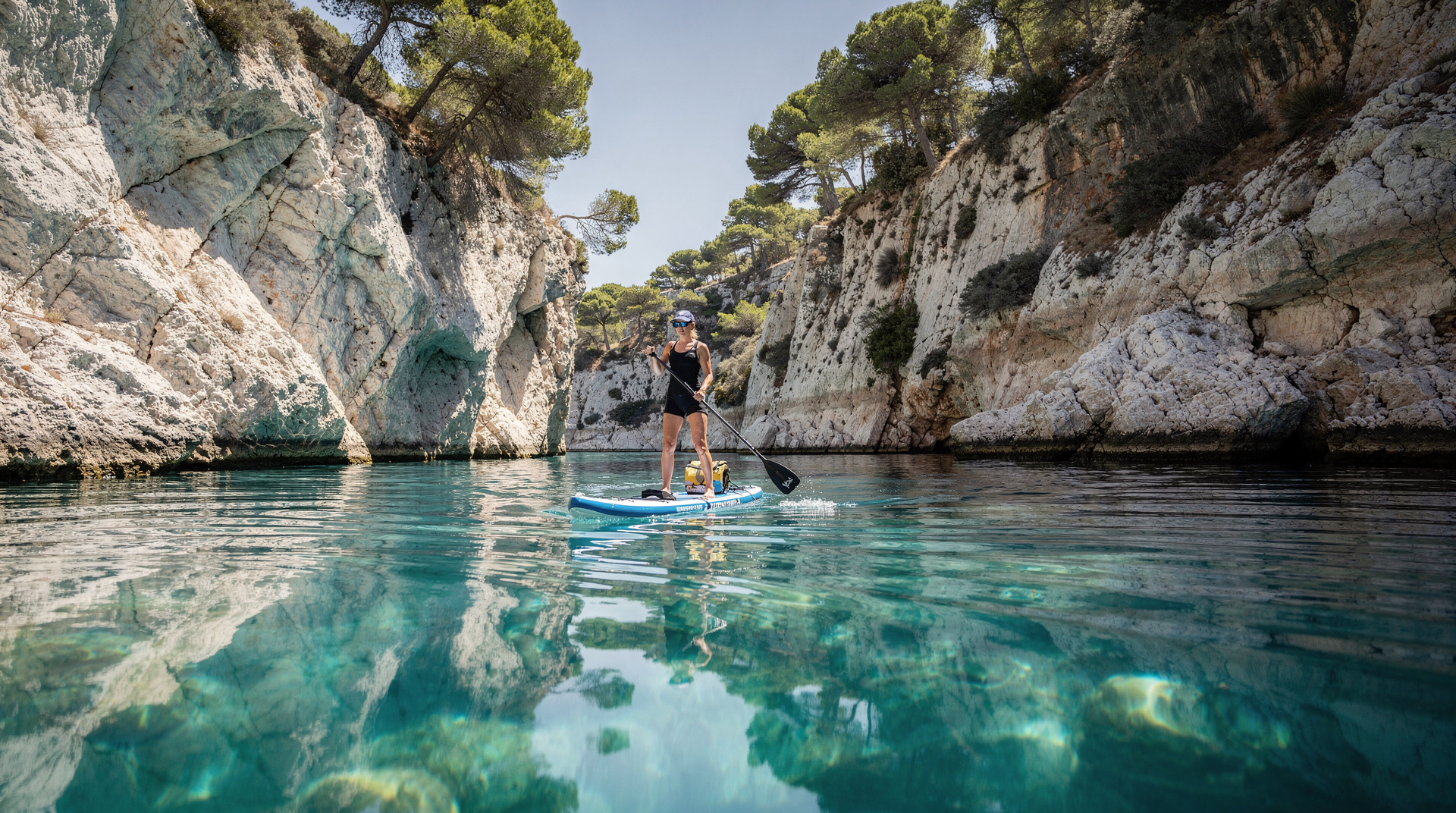
Stand-up paddleboarding (SUP) offers one of the most intimate ways to experience the Calanques coastline. You are high enough above the water to see clearly into the rock formations and small inlets, close enough to the surface to feel the sea, and moving quietly enough not to disturb the underwater environment below. In calm conditions — and the Calanques offer calm conditions often — it is outstanding.
The honest caveat is the wind. The Calanques are exposed to the Mistral (a northwest wind capable of reaching 80+ kph) and to summer sea breezes that develop predictably between 10:00 and 14:00. SUP is significantly more affected by wind than kayaking: the paddler stands upright, presenting a sail-like surface area, and a board that feels stable in flat water becomes an exercise in balance management in 20 kph wind chop. This does not mean SUP is unsuitable for the Calanques — it means timing and launch point selection are everything.
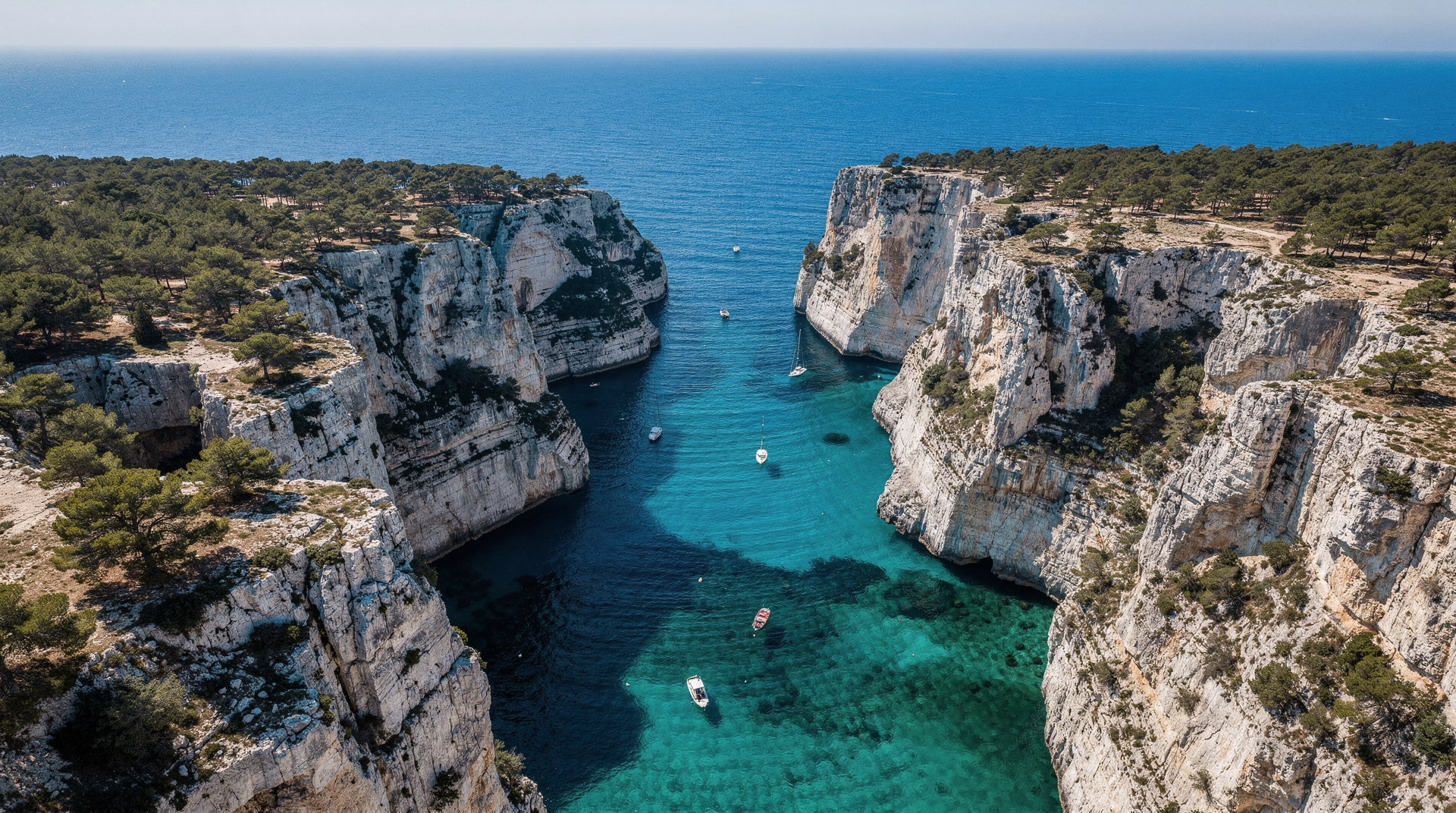
The three main departure points are Les Goudes (Marseille), Cassis, and La Ciotat. Each offers different water conditions, scenery, and suitable routes.
Les Goudes: the Marseille SUP base
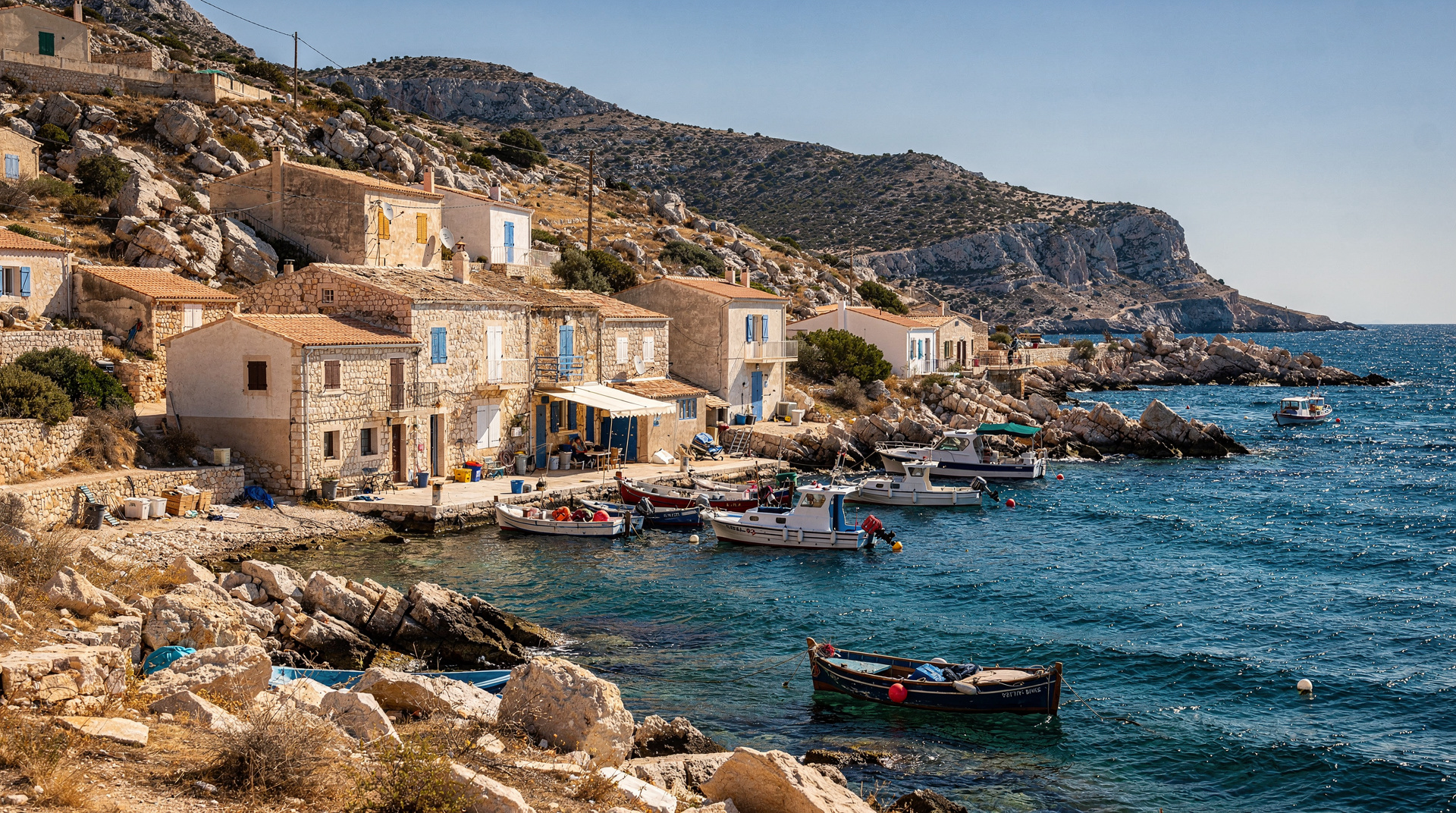
Les Goudes is the most accessible SUP base from Marseille city. The small harbour at the southern edge of the city sits at the beginning of the Calanques coastline, with sheltered rocky coves immediately accessible by paddle. Bus 20 from Rond-Point du Prado reaches Callelongue at the end of the line (30–40 minutes, about 3 km beyond Les Goudes). The Vieux-Port area SUP tours use Les Goudes as a midpoint, paddling south from the city and back.
The guided SUP tour from Les Goudes to the Calanques runs roughly 2 hours, departing from the area and paddling along the coastal section toward the first accessible inlets. This is beginner-territory — the instructor leads the group at a pace that everyone can manage, the water inside the coves is sheltered from swell, and the limestone scenery is immediately impressive from the first paddle stroke.
What you see: From the water between Les Goudes and Callelongue, the transition from urban Marseille to wild national park happens within 200 metres of the harbour. The cliffs appear, the city noise fades, and the only sound is the paddle and the sea. Small rocky inlets not accessible on foot become obvious from the SUP board — and since swell rarely exceeds 30 cm in summer in sheltered sections, landing on smooth limestone rocks for a swim is practical.
Limitations: The road to Les Goudes is narrow and parking is very limited in summer. Uber and ride-share services are unreliable for this destination — drivers frequently cancel when they see the address. Bus 20 is genuinely the recommended option. For those who want to avoid the transport issue, the guided tour that departs from a Vieux-Port area base and travels to Les Goudes by sea is the more seamless experience.
Cassis: SUP in the shadow of Cap Canaille
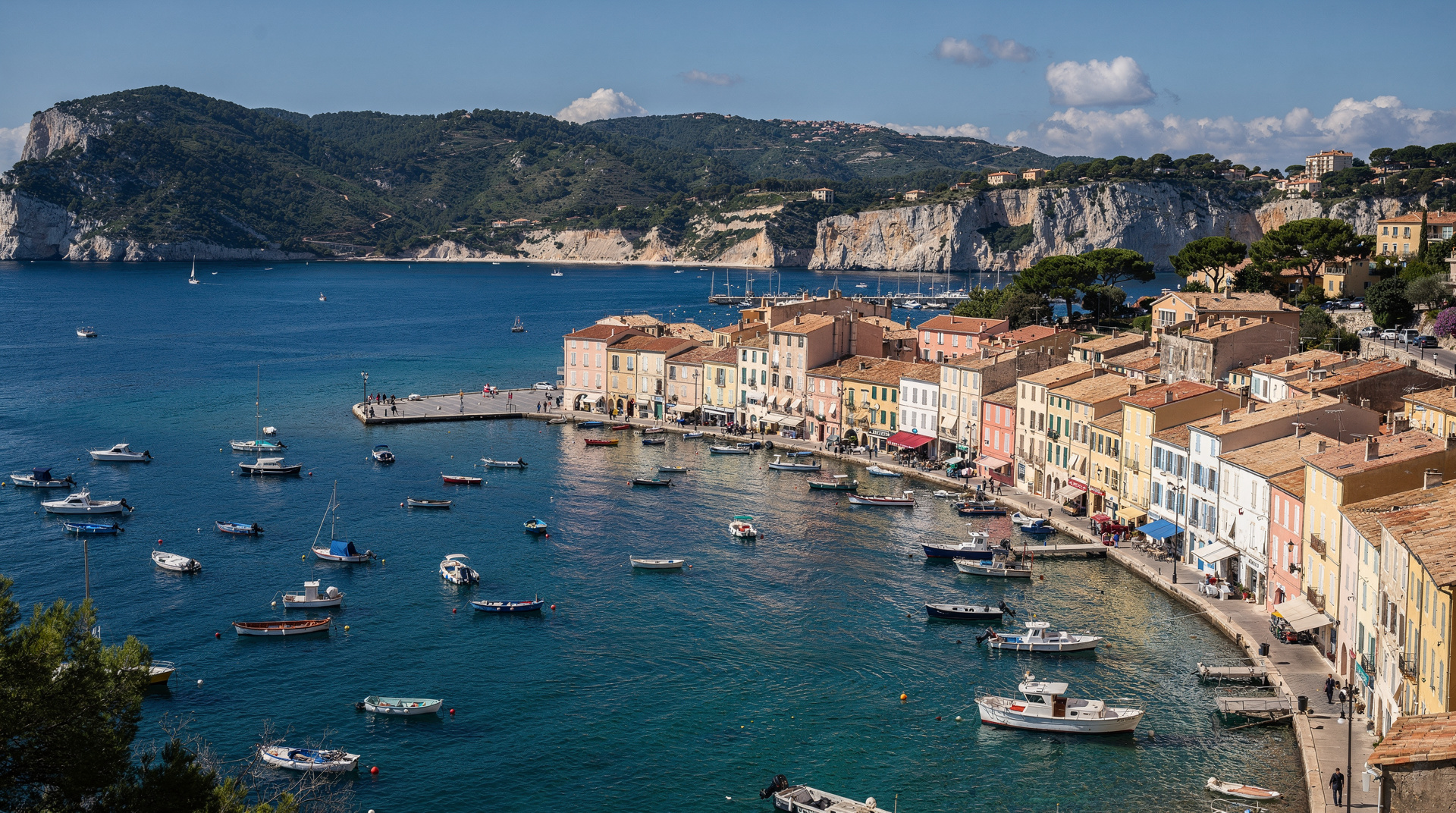
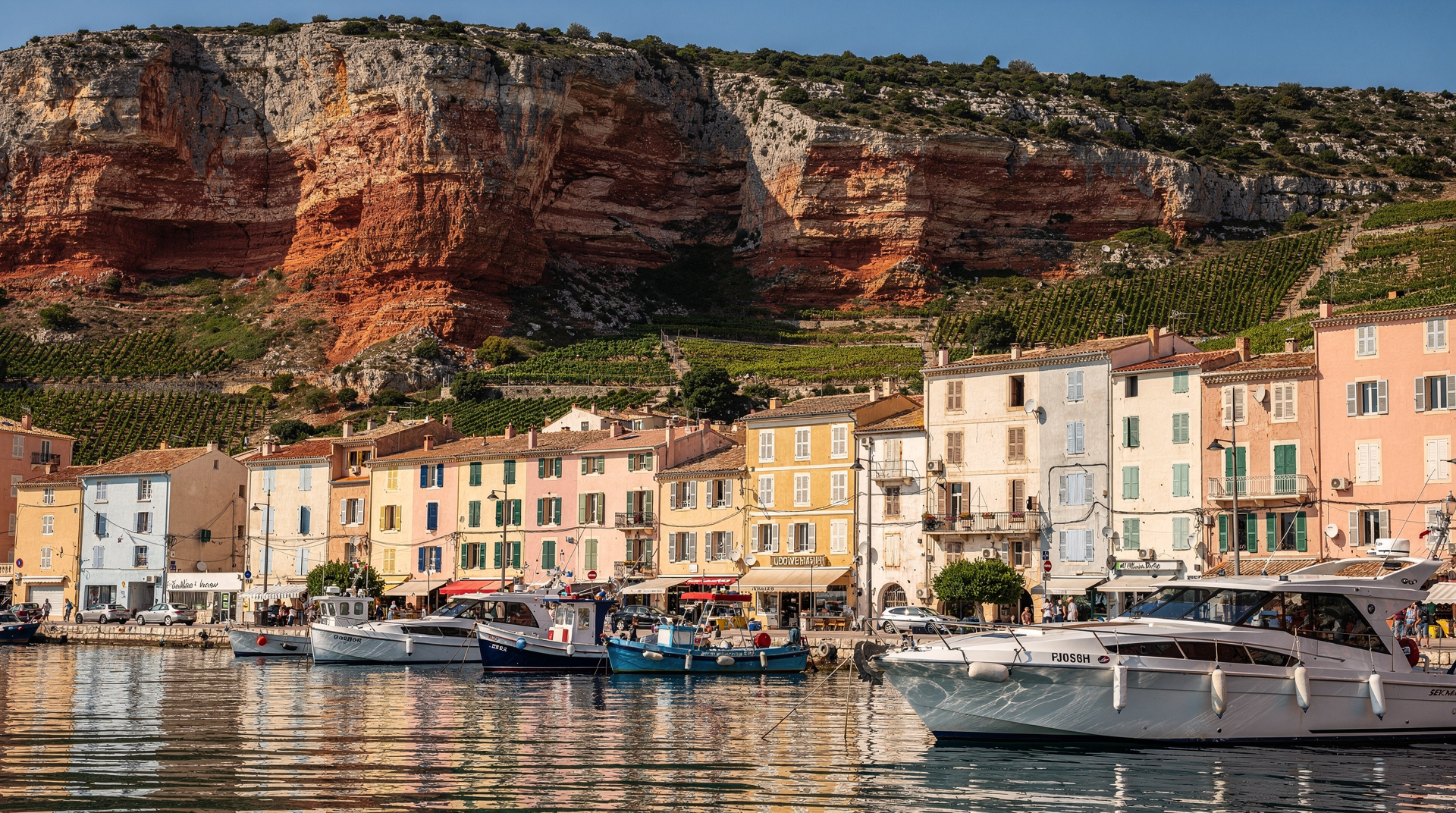
Cassis offers SUP from the main beach adjacent to the port, with access to the first calanques (Port-Miou immediately, Port-Pin within a 30-minute paddle) in calm conditions. The standout feature of the Cassis SUP experience is paddling east toward Cap Canaille — the 394-metre orange-red cliff face visible from the beach, which looms larger and more impressive the closer you approach by water.
Beginner-friendly routes from Cassis: The bay immediately west of the port is sheltered and shallow — good for first-timers to find their balance before heading along the coast. The Port-Miou inlet is navigable by SUP with care (watch for motorboat traffic from the marina), and the first rocky section of Port-Pin is a worthwhile 20–30 minute paddle in calm conditions.
Calanques SUP tour from Cassis: The guided standup paddleboard tour runs 3–7 hours (the range reflects different tour lengths offered). The shorter format covers Port-Miou and the initial calanque section; the longer day extends toward Port-Pin and beyond. Price starts around 58 EUR. Equipment and instruction included.
Wind reality at Cassis: The Cassis bay has a reasonable amount of natural shelter from the dominant northwest Mistral — the village sits tucked into a valley between Cap Canaille and the limestone massif, and the bay faces roughly south. However, easterly winds (Levant) push directly into the bay and can make conditions choppy quickly. Summer sea breezes are the main concern — check the morning forecast and launch early.
La Ciotat: less-visited, calm waters
La Ciotat sits 8 km east of Cassis along the Route des Crêtes. Less visited than Cassis, it has a broader bay with calmer, shallower water that is particularly suitable for beginners and families. The guided SUP tour from La Ciotat runs the same format as Cassis — 3–7 hours, price around 58 EUR — and heads west toward the Cap Canaille coastline and the Calanques.
Advantages of La Ciotat for SUP: The bay at La Ciotat is wider and the approach to the open coast gentler than at Cassis. Less boat traffic than the Cassis marina section. Slightly fewer tourists than Cassis, which translates to less competition for calm early-morning launch windows.
The La Ciotat SUP tour is the same operator as the Cassis SUP tour (same partner in the GYG catalog), so the quality of equipment and guiding is consistent.
Summer wind: the honest guide to SUP timing
The Calanques SUP experience divides into two completely different activities depending on when you go:
Early morning (07:00–10:00): Usually flat calm. The night’s cooling has settled the sea, the Mistral (if present) is at its lowest intensity before any warming begins, and the sea breeze has not yet developed. This is the SUP window — genuinely enjoyable for all experience levels, the water surface reflects the limestone cliffs clearly, and conditions allow confident beginners to concentrate on the paddling rather than the balance.
Late morning (10:00–13:00): Sea breeze development begins. On days without Mistral, this is a light offshore-to-onshore rotation that creates small ripples. Still manageable for most guided groups, though less enjoyable for beginners than the flat morning.
Afternoon (13:00 onward): Sea breeze typically at its strongest — 15–25 kph on most summer days, occasionally gusting higher. On exposed sections between calanques, standing on a SUP board in 20 kph wind with chop is a workout, not a sightseeing experience. The sheltered interior of the calanques remains calm even when the open sea is choppy. Guided tours plan their routes accordingly.
Mistral days: All SUP activities on the open coast are dangerous in strong Mistral. In the sheltered harbour at Cassis or the Les Goudes bay, light Mistral is manageable, but any exposed section is not safe for SUP without significant experience. Operators cancel tours in strong Mistral, typically defined as sustained winds above 30 kph.
The practical advice: book morning departure times (before 09:00), ask operators explicitly about their cancellation policy for wind, and choose a guided tour over independent rental for your first time on this coast.
Rental vs guided: the tradeoff
Guided SUP tours are appropriate for everyone unfamiliar with the Calanques coast. The guide handles weather monitoring, route selection, safety management, and equipment. The paddle technique instruction provided at the start of a guided tour typically gets a complete beginner to a functional level within 20 minutes. Price: 47–65 EUR for 2–3 hours; 80–90 EUR for longer guided days.
SUP rental is available at some points on the Cassis and Marseille coast — prices typically 20–35 EUR per hour, 50–70 EUR per half day. Independent rental requires that you have paddling experience, weather awareness, and self-rescue skills. The Calanques open coast is not a suitable environment for an independent rental session if you have never paddled a SUP board before.
Hybrid option: take a guided session first (2–3 hours), demonstrate competence to the instructor, and then rent independently on a subsequent day. Many operators support this approach.
Water temperature and swimming stops
One of the genuine pleasures of Calanques SUP is the combination of paddling and swimming. You stop, lower yourself into the water from the board, swim, pull yourself back up. In sheltered calanques with no swell, this is easy — the board floats stably alongside you. In any chop, re-boarding a SUP without a ladder or assistance requires technique.
Water temperature: May averages 17°C — cold without a wetsuit, manageable with one. June: 20°C. July–August: 23–24°C — comfortable for extended swimming without a wetsuit. September: 22–23°C, often the best combination of warm water and reduced tourist pressure.
Snorkelling from a SUP board: Possible but awkward with a mask and fins in place before or after boarding. The approach: anchor the board to yourself with the ankle leash, put on mask and fins in the water, snorkel, return to the board, fins off in the water before boarding again. The alternative is to simply swim without gear. For dedicated snorkelling combined with paddleboarding, see our snorkelling guide for the operator-run snorkel boat options that combine better.
Getting to the departure points
Les Goudes from Marseille city: Bus 20 from Rond-Point du Prado, approximately 30–40 minutes. This is the recommended option in summer. Driving: 14 km from Vieux-Port, 20–25 minutes in normal traffic, significantly longer in July–August traffic. Parking: extremely limited, arrive before 09:00 or expect to park at Pointe Rouge and walk (25 minutes) or take the bus.
Cassis from Marseille: TER train from Saint-Charles, 35 minutes, around EUR 8 return. From Cassis station, 3 km to the port (taxi EUR 8–12, occasional bus in summer). This is the cleanest option for Cassis SUP tours.
La Ciotat from Marseille: TER train to La Ciotat station, approximately 45 minutes. The station is somewhat distant from the beach; local bus or taxi to the seafront (EUR 10–15 by taxi). Alternatively, from Cassis by bus (route D1) or taxi — 20 minutes.
For the complete coastal picture, see the Calanques National Park guide for access methods and summer rules. For kayaking as an alternative paddle experience, see the kayaking guide. The Les Goudes guide covers the village and its access logistics in full.
For boat-based access to the same calanques, the boat tour guide and the Cassis vs Marseille comparison are useful references.
SUP technique basics: what to expect if you have never done it
Most people who have never stood on a SUP board underestimate how quickly they adapt and overestimate the difficulty. The fundamentals take 10–15 minutes to establish:
Starting position: Begin kneeling on the board, paddle in both hands, moving with short strokes on alternating sides. Once the board is moving and feels stable beneath you, rise one foot at a time to the standing position. Most beginners are standing within 5–10 minutes.
Falling: You will fall off — particularly when a boat wake arrives unexpectedly or when you turn. The fall into Mediterranean water at 23°C in summer is not unpleasant. The skill is in falling away from the board rather than onto it, and in re-mounting efficiently. The guide demonstrates both before the session begins.
Paddle technique: The most common beginner error is paddling with the blade angle reversed. The bend in the paddle should angle forward (away from you when you are standing), not toward you. The guide corrects this within the first few strokes.
Turning: The J-stroke (forward stroke angled outward at the end) turns the board gently. Sweeping the paddle in a wide arc beside the board turns it faster. Stepping back on the board (tail) raises the nose and allows sharper pivot turns — a technique the guide introduces when the group is comfortable.
None of this requires strength or athleticism. The balance required is not gymnastics — it is more like standing on a slow-moving bus than balancing on a tightrope. Children and adults in their sixties and seventies regularly complete guided SUP sessions successfully. The main variable is comfort with water, not physical fitness.
SUP vs kayak vs boat tour: which fits your trip?
All three reach the same coastline; the difference is effort, pace, and what you see.
- SUP rewards balance and gives the most intimate, close-to-water perspective, but tires you faster and is the most wind-sensitive of the three — see the kayaking guide for the lower-effort paddling alternative.
- Kayak covers more distance for less physical effort and sits lower, so wind affects it less than SUP.
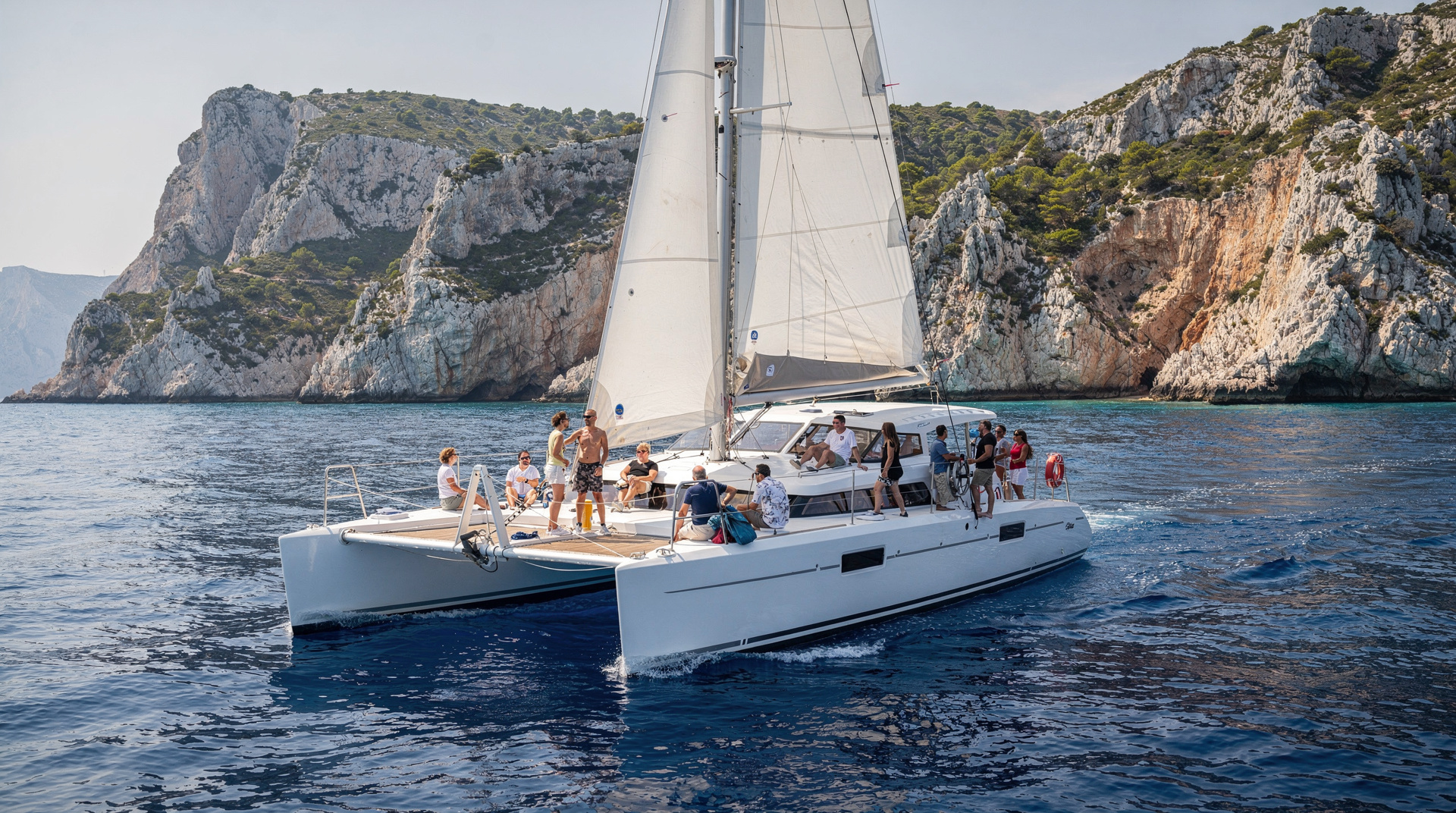
- Boat tour covers the most ground with zero physical effort and works in conditions that would cancel a SUP session — see the boat tour guide and the boat vs hike comparison.
For a first-timer unsure which to pick, a guided SUP session in the calm morning window at Les Goudes is the easiest entry point, with the boat tour as the reliable fallback on a windy day.
Frequently asked questions about Stand-up paddleboarding in the Calanques
Do I need to know how to swim to try SUP in the Calanques?
Yes — you should be a confident swimmer. You will fall in at some point, and while the water is calm in sheltered coves, open-water conditions can change. Guides provide a buoyancy aid (leash, sometimes a vest on request) but this is not a substitute for basic swimming ability.
What should I bring on a SUP tour?
Swimwear under quick-dry clothing, a hat, reef-safe sunscreen, water shoes for rocky entries, and a dry bag or waterproof phone case (most guided tours provide one, but check). Bring more water than you think you need — there’s no shade on the water.
Top experiences
Bookable activities with verified prices and instant confirmation on GetYourGuide.