Van Gogh pilgrimage in Arles — walking his sites with his letters
Arles: walking tour in Vincent Van Gogh's footsteps
Duration: 2-3 hours
At a glance
| Where | Arles old town, around 1 hour from Marseille by TGV/TER |
| Cost | Free to walk the streets and squares; Fondation Vincent Van Gogh entry is ticketed (around EUR 8–10); the Espace Van Gogh courtyard is free |
| Time needed | A full day for the main circuit; half a day for the essentials |
| Getting there | TGV or TER from Marseille Saint-Charles to Arles, then walk (old town is 15 minutes on foot from the station) |
| Best time | Early morning or shoulder season (spring/autumn), before the tour groups and midday heat |
The letters as a guide
The best guide to Van Gogh’s Arles is not a guidebook. It is the letters — the extraordinary correspondence with his brother Theo that he maintained throughout his time in the city, from February 1888 to May 1889. The letters describe, in particular detail, the paintings as he was making them: the location, the light, the time of day, what he was trying to achieve, what he thought he had failed at. Reading them before walking the city produces a different experience from arriving with a map.
We prepared badly for our first visit to Arles and well for the second. The first visit — March 2020, just before everything closed — was with a standard printed guide, moving from one numbered plaque to the next in the sequence the tourist office had established. The sequence was logical but the experience was essentially archaeological: here is where a painting was made; here is a reproduction of it; here is what remains.
The second visit, which we are describing here, was with the letters read in advance. The difference was significant.
What survives in Arles
Less than you might hope; more than you might fear. The Yellow House — the Maison Jaune where Van Gogh lived and which he painted in autumn 1888 — was destroyed by Allied bombing in 1944 and nothing of it survives. The site is now an unremarkable street corner near the Gare d’Arles. There is a plaque.
The Café de la Gare, which he painted as Café Terrace at Night (one of his most immediately recognisable paintings), has been identified with the café on the Place du Forum — the square with the Roman columns embedded in a hotel facade on the north side. The café on the square has been repainted to match the painting, which is a kind of tourist-service that sits somewhere between thoughtful recreation and crude literalism. The space is real: the terrace, the square, the night sky above. In March, in the early evening, with the square mostly empty and the lights of the café creating exactly the pool of warm light that Van Gogh painted, the experience is more powerful than the setup suggests.
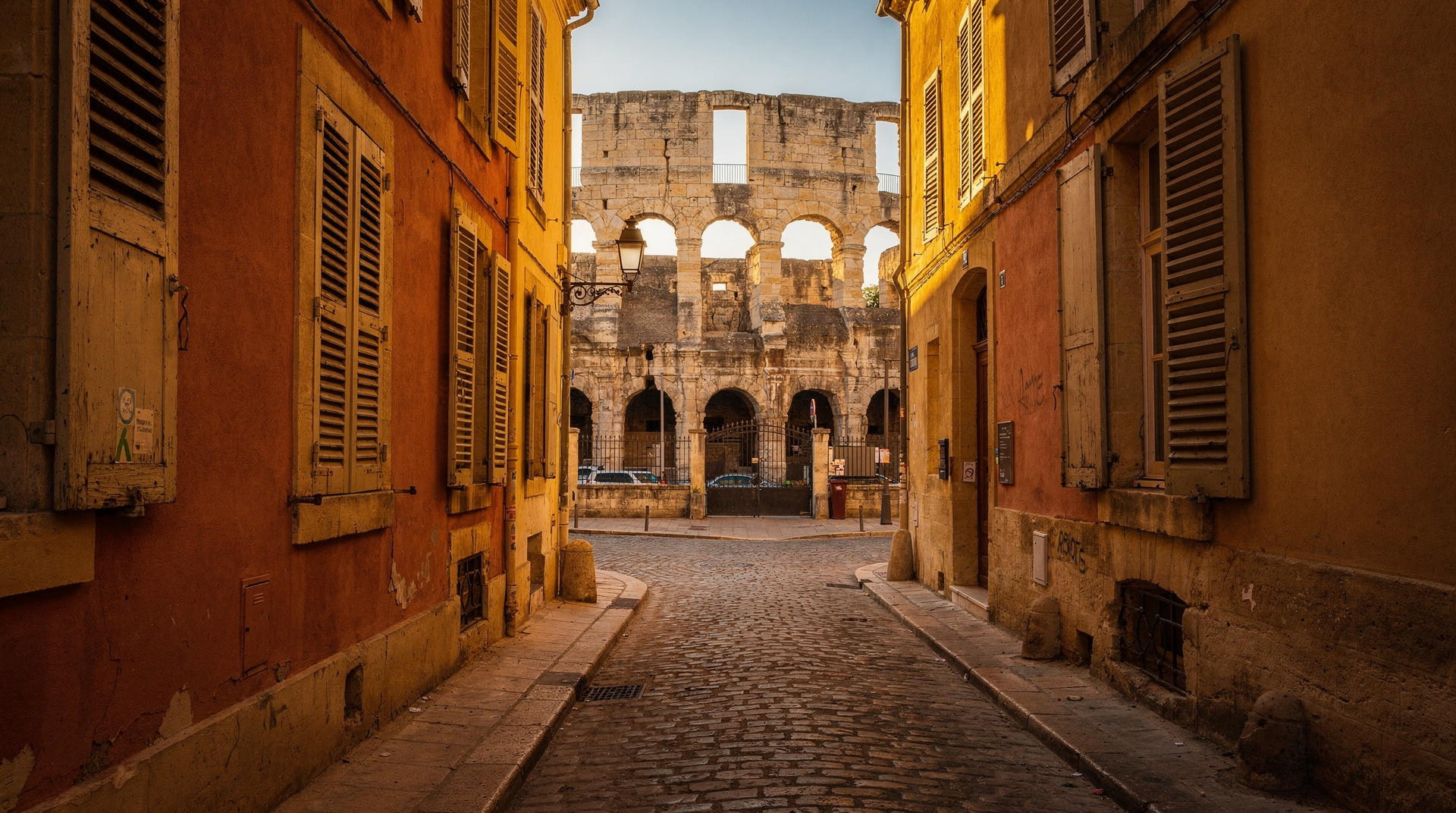
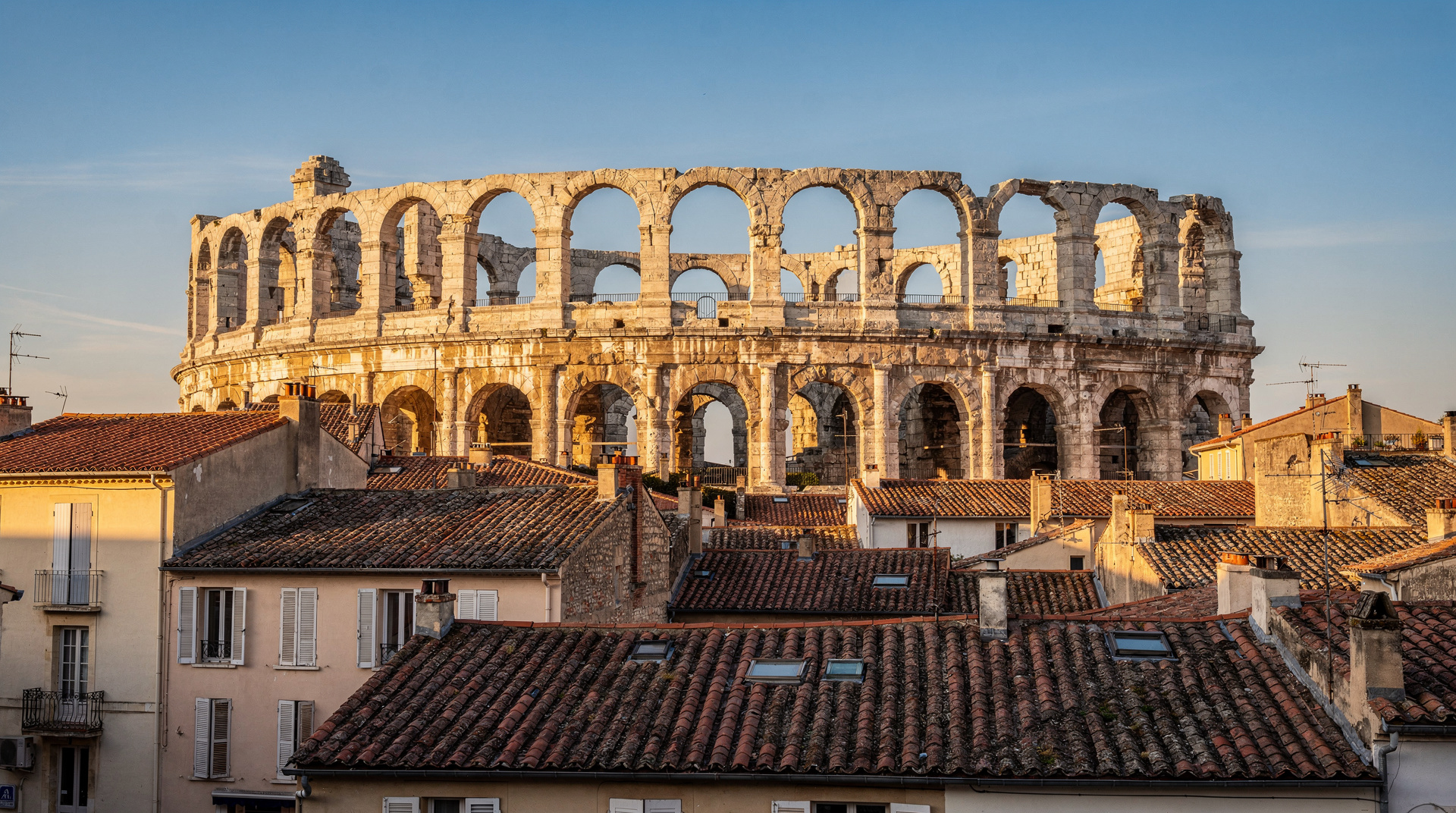
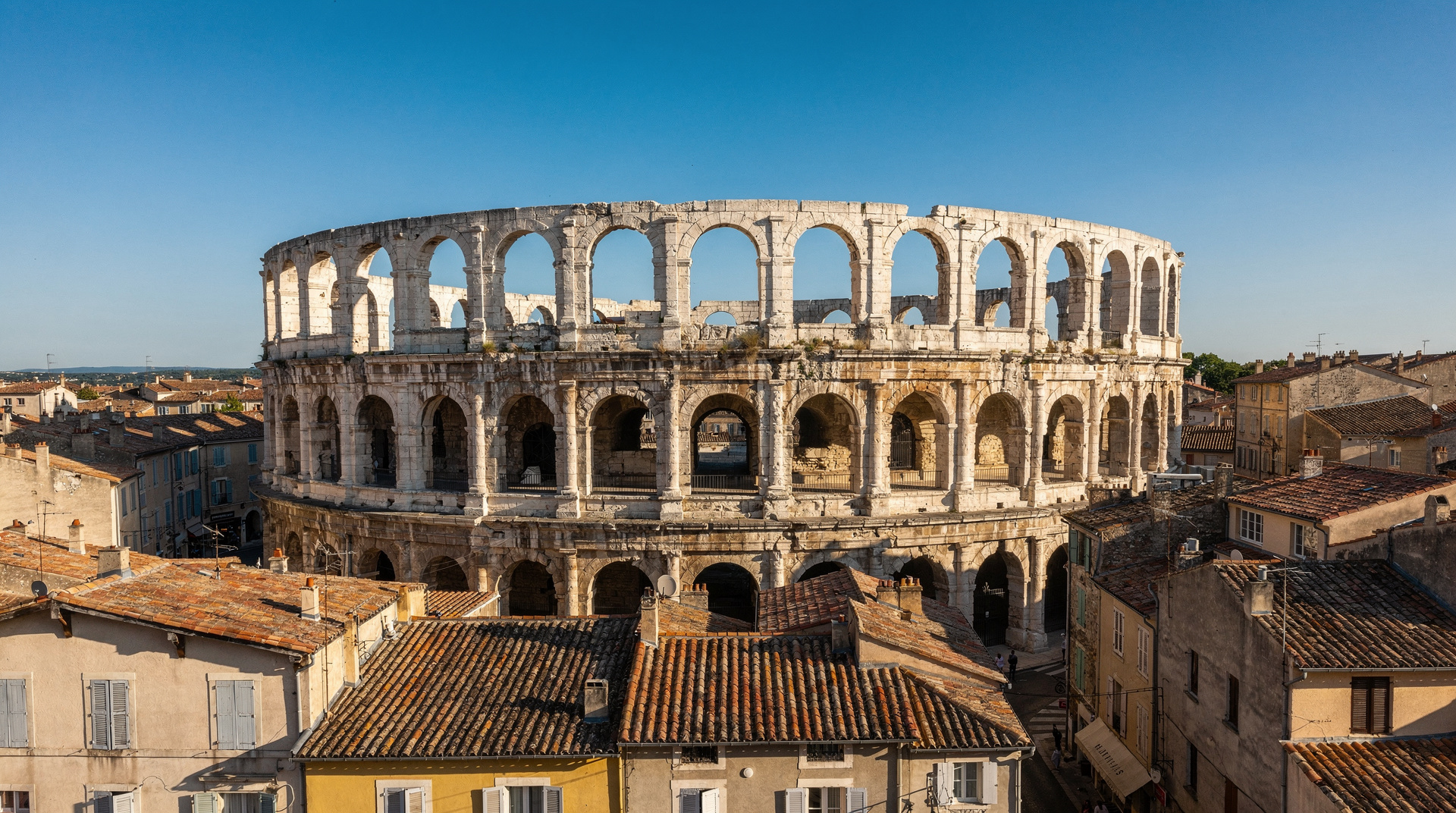
The Roman arena (the Amphithéâtre) is where he painted the bullfights. The arena is still in use — bullfighting continues in Arles, which is either tradition or cruelty depending on your position, but either way produces the continuing legitimacy of the venue he painted. Standing in the arena in March 2020, before any crowds (we arrived at opening), the structure of the space was exactly as his paintings suggest: the oval, the sand, the tiers of stone seats, the light coming from the eastern sky.
The hospital garden
The Hospital Saint-Paul, where Van Gogh was admitted after the incident with his ear in December 1888, is now known as the Espace Van Gogh and contains a courtyard garden that has been restored to approximately the state he painted it — the central fountain, the formal flower beds around it, the loggia with arched windows on each side. This is the most successfully restored Van Gogh site in Arles, and it works because the garden itself still functions: the flowers are real, the proportions are right, the fountain still runs.
In his letter to Theo describing the garden, Van Gogh writes about the colours of the flowers against the gravel, the light through the arched loggia, the way the enclosed garden had its own specific climate — warmer than the street, more still. Standing in the courtyard in March, with the spring beginning in the flower beds, the letter and the space aligned in a way that produced something we were not expecting: not emotion exactly, but a very strong sense of presence. The sense that the space held something of the person who had been there.
The Alyscamps
The Alyscamps — the Roman necropolis south of the old city, a long avenue of sarcophagi under a row of ancient trees — was painted several times during his Arles period, often with his friend Gauguin, who was visiting in autumn 1888. The paintings show the avenue as it actually is: the stone coffins lined up on either side, the trees in autumn gold, the solitary figures walking through.
The Alyscamps in March is quiet — not the autumn gold of the paintings, but the bare branches of early spring and the first green beginning. The avenue is longer than it appears in the paintings, and at the far end the Romanesque church of Saint-Honorat rises above the tombs. This is a functioning if modest place of pilgrimage; the sarcophagi were used for Christian burials after the Roman period and the site has been continuously treated as significant for seventeen centuries.
We walked it twice — once in the direction of the church, once back — and stopped at the spot where his and Gauguin’s autumn painting vantage would have been. The perspective in the paintings, the way the avenue contracts toward the church towers in the distance, is accurate.
The Fondation Vincent Van Gogh Arles
The Fondation, opened in 2014 in a converted 15th-century palace in the old city, does not have Van Gogh paintings — they are all in major institutions elsewhere — but shows contemporary art in dialogue with Van Gogh’s legacy. The building is beautiful; the exhibitions are genuinely good; and the lack of original Van Gogh works is oddly appropriate in a city that has everything of his except the paintings.
Walking the city with the letters
Practical advice for the letter-guided approach: the correspondence is available online at vangoghletters.org — fully translated, dated, linked to the paintings they describe. Reading the letters from Arles before visiting means you arrive with a mental map of what he was looking at and what he was trying to do. The result is that the experience of walking the city becomes a kind of temporal overlay: the present city seen through his descriptions of it.
What he was looking at: the light. The specific quality of Arles light — Mediterranean and hard and with an intensity that he found overwhelming and thrilling in roughly equal measure — runs through every Arles letter. He writes about it in the same terms that painters write about Provence light generally, but with a specificity that is diagnostic: the mistral, the white walls of Arles amplifying the light, the way the light changed the colour of everything in the landscape. The landscape he was seeing was the same one we were walking through in March. That continuity is the thing the letters make concrete.
Getting to Arles
Arles is approximately one hour by TGV or TER from Marseille Saint-Charles — a straightforward day trip. The old city is walkable from the Gare d’Arles in 15 minutes on foot. The Van Gogh sites, the Roman monuments, and the Fondation all sit within a 20-minute walking radius. Allow a full day for the combination.
The guided Van Gogh walking tour available in Arles follows the main painting locations with local expertise. For the independent version, the plaques follow the tourist-office circuit reasonably well, and the letters provide the deeper layer.
Extending the trip
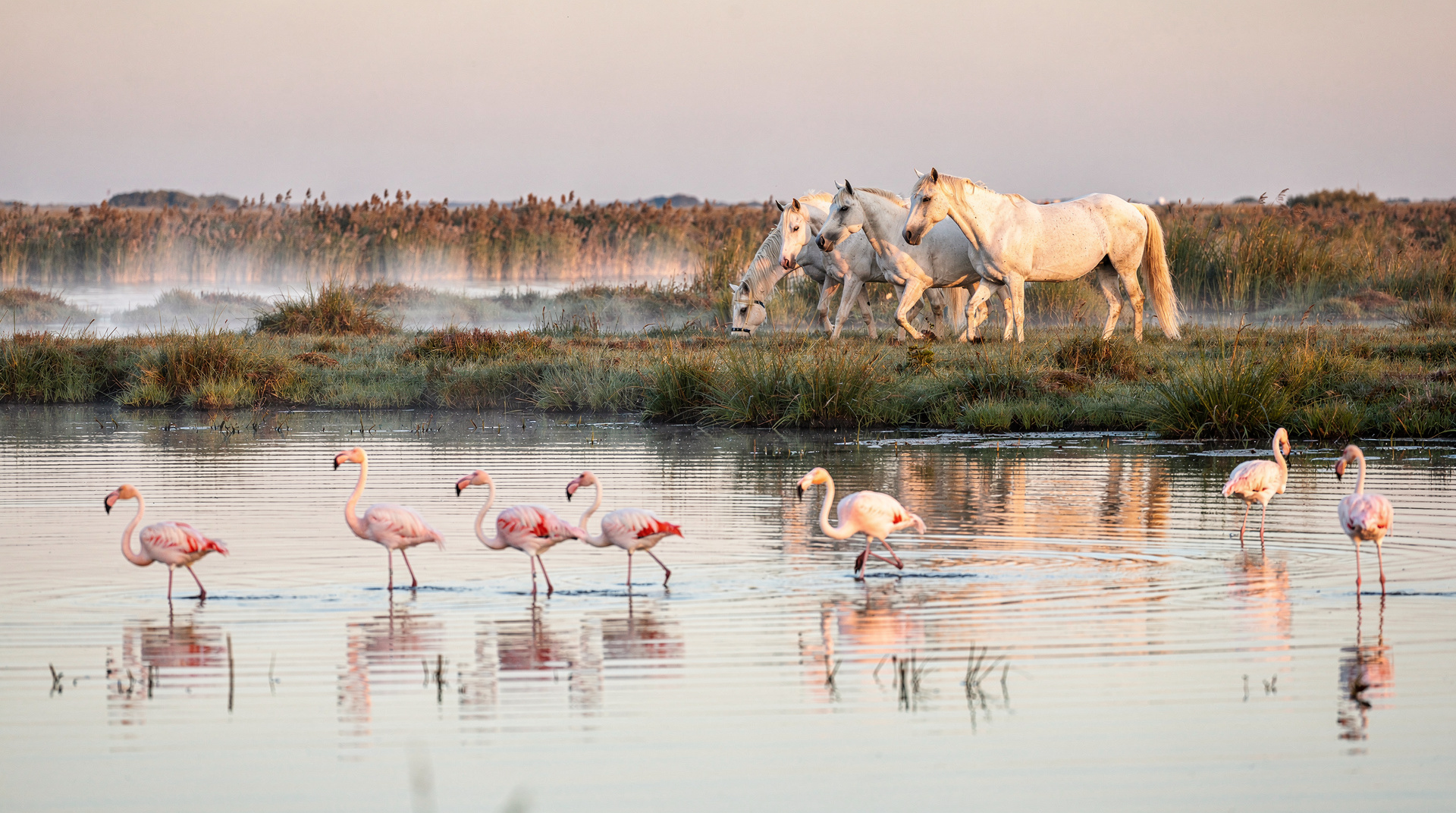
Arles pairs naturally with the Camargue, which starts just south of the city and shares the same rail and road access point — several visitors combine a Van Gogh morning with a Camargue afternoon, though this compresses both. If you have the time, our essay on why Provence deserves more than a day makes the case for staying overnight in Arles rather than day-tripping through.
The Roman monuments guide covers the Amphithéâtre and the other antique sites in more depth than we go into here, and the Pont du Gard piece is a reasonable add-on if you have a car and a second day in the area.
Pairing the letters with what you see
The value of the letters is not that they explain the paintings — it is that they slow you down at each site long enough to actually look. At the Place du Forum in the evening, at the Hospital Saint-Paul garden, at the Alyscamps avenue, the temptation is to photograph and move on within a few minutes. Reading the relevant letter passage on site, rather than in advance only, adds ten or fifteen minutes at each stop and changes what you notice — the specific colour Van Gogh names, the direction of the light he describes, the detail he singles out that a passing glance would miss.
Our Arles destination guide covers the Roman monuments, the Fondation, and the Camargue access point logistics. Day trip timing from Marseille is in our day trips guide. If Arles is one stop on a longer Provence run, our Avignon day trip guide covers the other major TGV-accessible town in the region.
Top experiences
Bookable activities with verified prices and instant confirmation on GetYourGuide.