Camargue horseback day — a reflective afternoon in the marshes
Camargue: horseback ride from Saintes-Maries-de-la-Mer
| At a glance | |
|---|---|
| Where | Saintes-Maries-de-la-Mer, Camargue delta, around 90 minutes from Marseille |
| Cost | Guided horseback rides typically run from around EUR 20-25 per hour |
| Time needed | Minimum 2 hours for a ride that reaches the interior marsh; half a day with the evening light |
| Getting there | Car recommended; train to Arles then onward transport otherwise |
| Best time | May for maximum flamingos and spring bird migration; September as a quieter alternative |
The wrong way to think about the Camargue
The Camargue looks, on paper, like a detour. It sits between the two arms of the Rhône delta, roughly 90 minutes west of Marseille by car, and its primary appeal — vast wetland, salt flats, marshes, flamingos, white horses, black bulls — is not the kind of thing that fits easily into a city-based travel itinerary. You cannot do it on a metro pass. It does not combine naturally with an afternoon at the MuCEM.
We came to it, in May 2021, because we had spent the preceding days in Arles and the delta landscape was directly south of us and the spring had been warm enough that the marshes were alive in a way that happens only in May and early June. We had intended a half-day. We stayed through the afternoon and into the early evening.
Saintes-Maries-de-la-Mer as a base
The town of Saintes-Maries-de-la-Mer, at the heart of the Camargue, is something to be clear-eyed about. It is a resort town with a specific tourist character — the white horses for tourists, the cowboys’ hats, the flamingo refrigerator magnets — and in May the tourist season is just starting, which means it is manageable. In August it is, by reliable account, extremely full.
The church of Saintes-Maries is worth a visit: a Romanesque fortress-church from the 9th century that has been a site of Romani pilgrimage for centuries, the interior layered with votive offerings and the compressed heat of faith. The annual Romani pilgrimage in late May fills the town in a way that is either something to witness or something to avoid, depending on your disposition.
For the horseback ride, we booked through one of the riding centres on the road north of town. This is the correct approach — the Camargue has several manadiers (the ranches that breed the white Camargue horses) that offer guided rides into the marshes, ranging from one hour to a full day. The minimum useful ride is two hours; shorter than that and you have barely reached the interesting terrain before you are turning back.
The horses themselves
The Camargue horse is a specific breed — small, stocky, born dark and turning white by age four or five — that has been semi-wild in the delta for centuries. They live in herds in the open marsh, managed loosely by the gardians (Camargue cowboys) but not confined. The horses used for tourist rides are domesticated and reliable; the wild herds you sometimes see in the distance, grey shapes in the marsh grass, are a different proposition.
Our horse was patient with the kind of patience that comes from having carried novice riders for several years. The guide — a young woman who communicated mostly through body language and whose horse appeared to function as a satellite positioning system for the marsh tracks — set a pace that was walking-fast, the horses choosing their lines through the shallow water with a confidence we did not share.
What the Camargue looks like from horseback
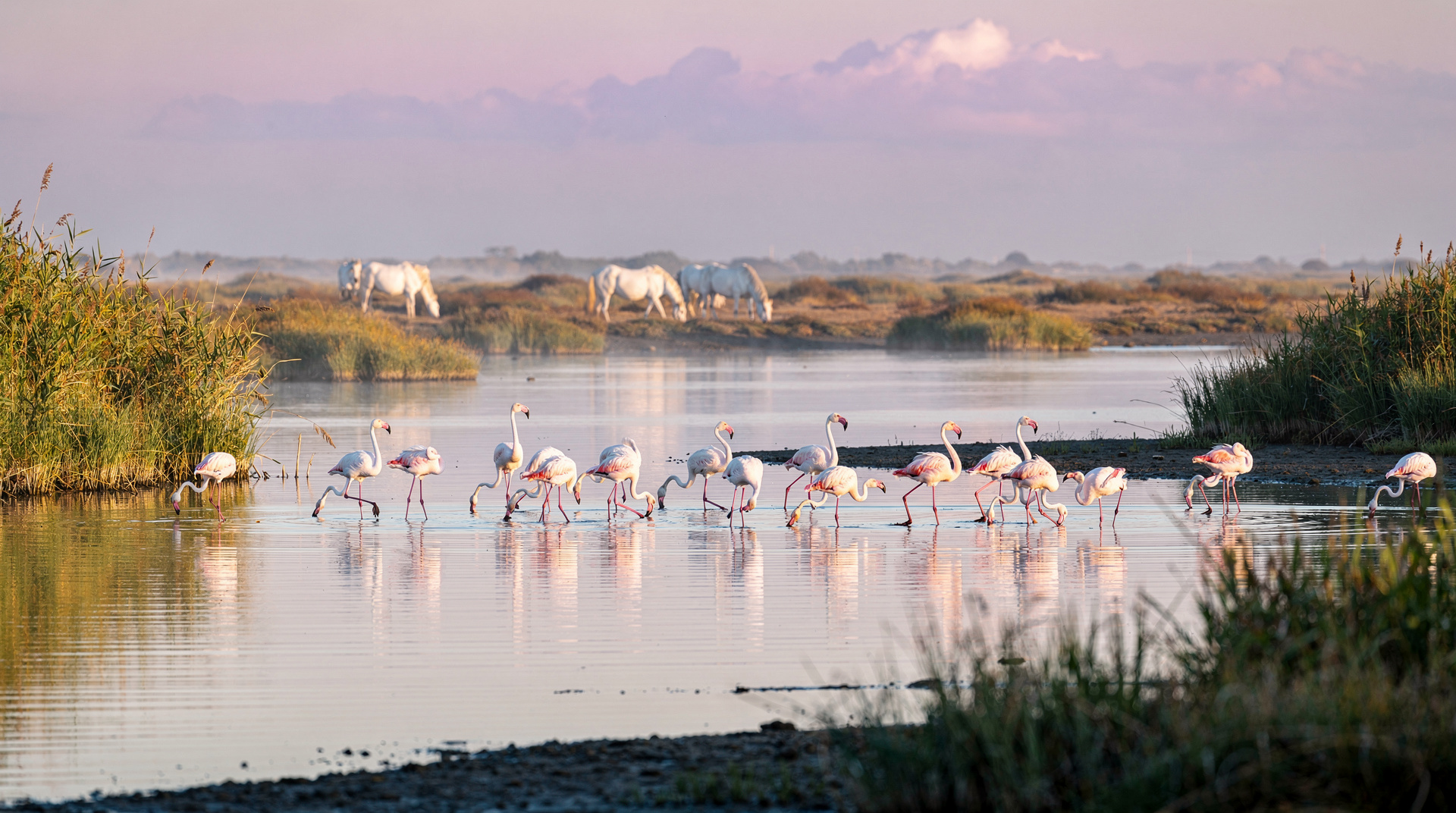
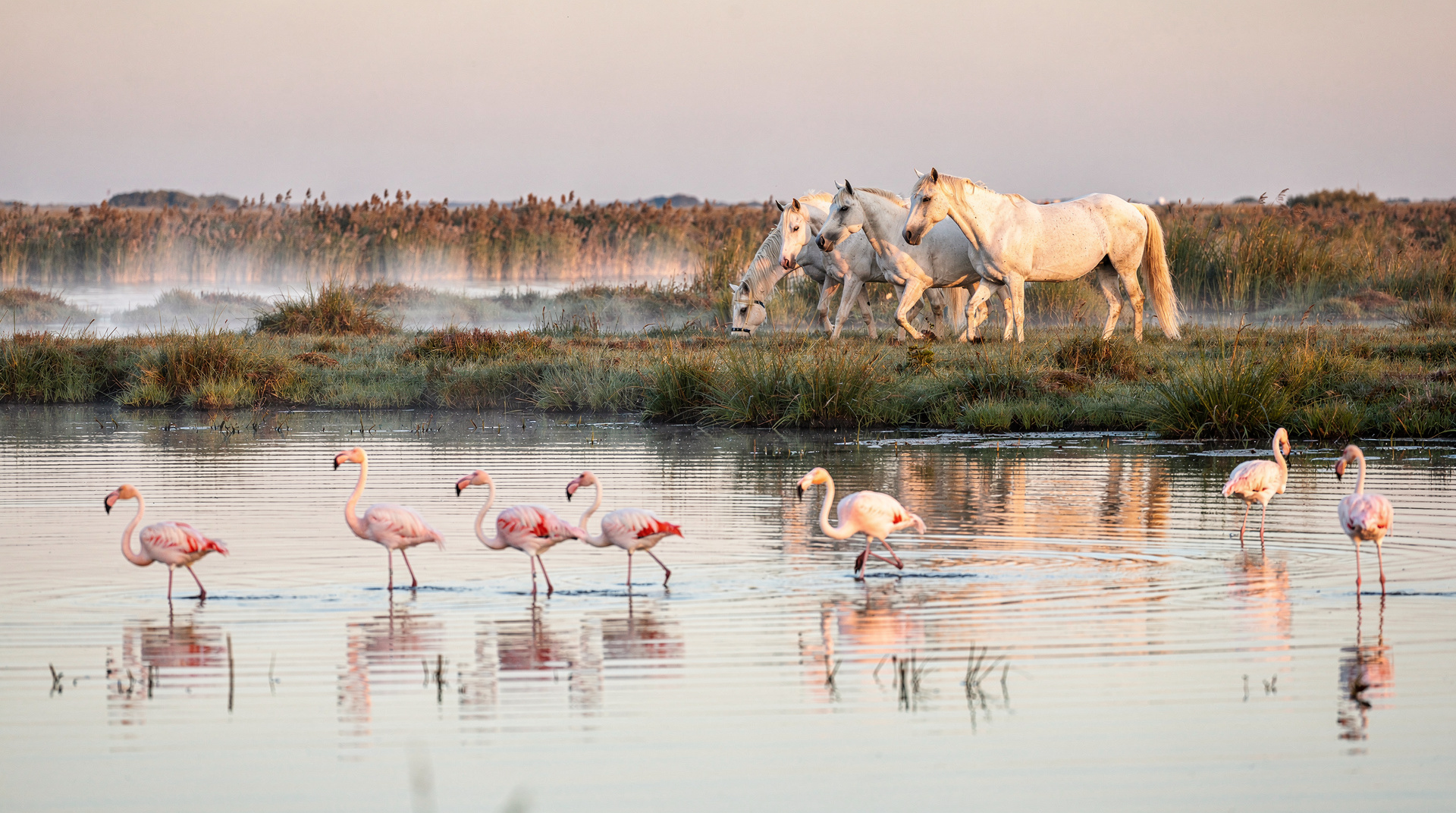
The landscape at ground level, from horseback, is not what photographs suggest. The photographs make the Camargue look horizontal and empty — infinite flatness, sky, the geometric lines of irrigation channels. From horseback, the perspective changes. The marsh grass is taller than it looks. The channels hide in the vegetation. The flamingos, which from a car window look like pink dots on a lake, are from horseback actual birds: astonishing ones, their crooked legs and downward-curved bills visible, their flight — when a group lifts suddenly, startled by something in the reeds — making a sound like fabric tearing.
We crossed several water channels during the ride, the horses walking through without breaking stride. The water came up to their knees. We lifted our feet instinctively, found this unnecessary, put them back down. The horizon in every direction was flat and immense.
The silence and what fills it
The Camargue is not silent. The specific quality of its sound — which we have not found anywhere else in the region — is a layering of wind, water, bird call, and insect noise that produces something close to white noise, a kind of aural haze that blankets the marsh. The flamingos make a sound like low hoarse honking. The reed warblers in the marsh grass run through their phrases continuously. The hooves of the horses in the shallow water make a soft rhythmic percussion.
The silence we describe is the absence of human sound. No traffic, no voices, no machinery in the middle sections of the marsh. This is noticeable, in May 2021, because we had spent the preceding months in urban environments under various restrictions and the absence of urban sound was almost physically perceptible.
The evening light
We were back at the ranch by 17:30, which put us in time for the evening light over the étangs — the shallow lagoons where the flamingos congregate at dusk. We drove to one of the viewpoints (there are several signposted on the road north toward Arles) and watched the light change for an hour.
The Camargue evening light is a particular shade of gold that photographers know about and everyone else discovers for the first time. The flamingos in the lagoon catch the light; their pink deepens toward orange as the sun descends. The mirror surface of the water doubles everything. The gardians, if any are present, ride back toward the manade on the elevated paths above the marsh, the silhouettes of man and horse against the gold sky producing an image that seems too composed to be real.
It is real. The Camargue is like that.
What else the Camargue offers
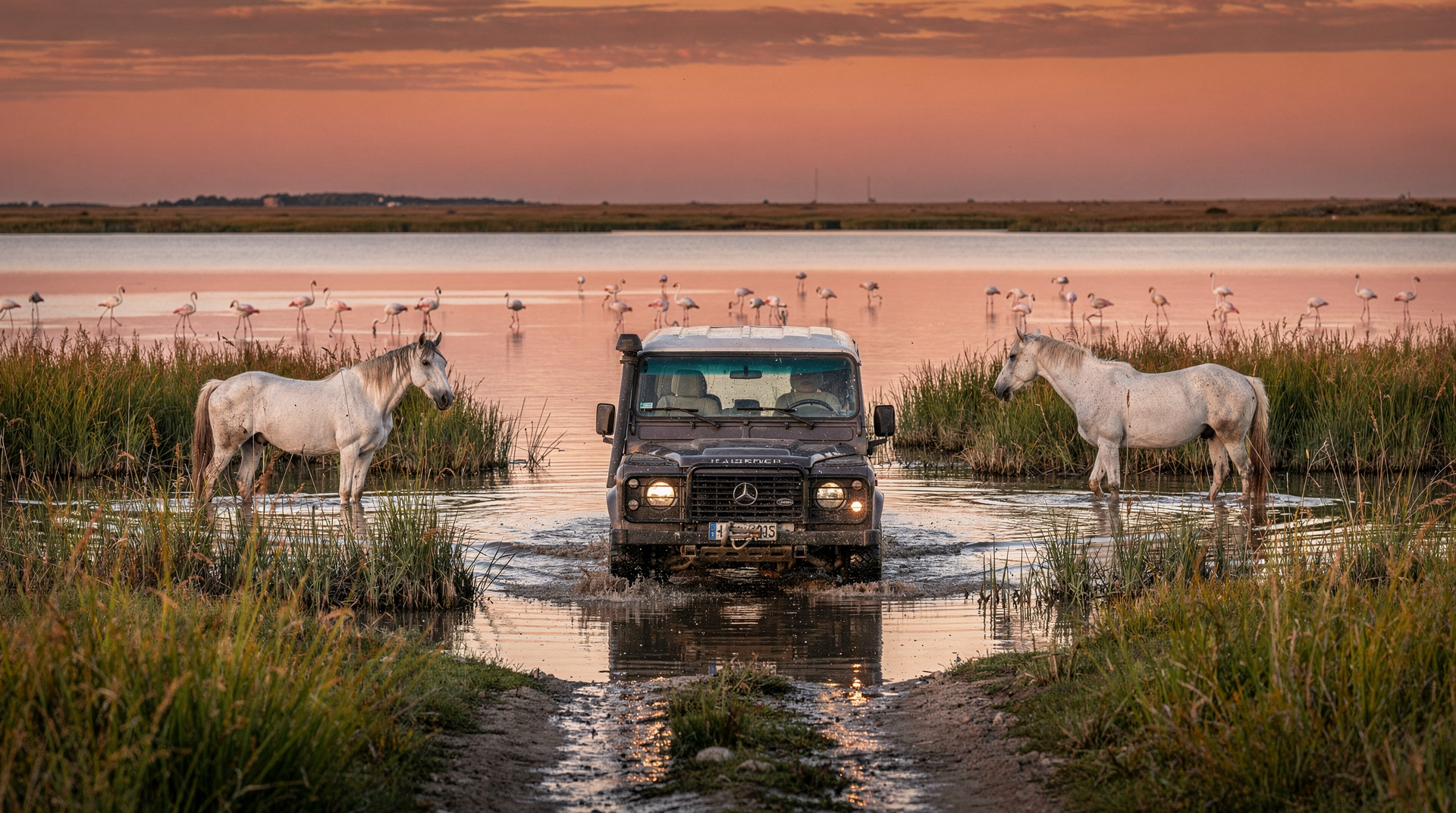
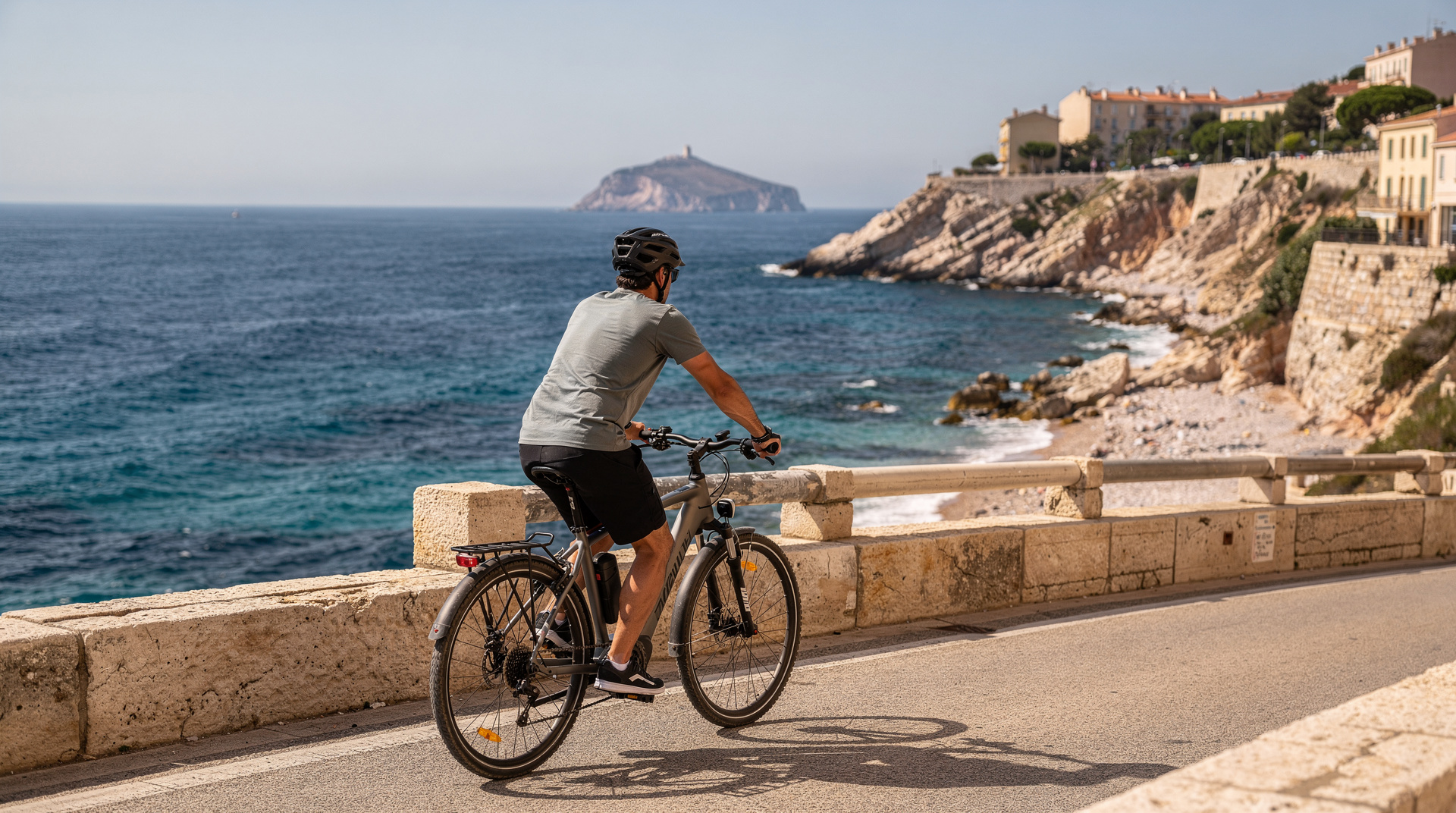
The horseback ride is the most atmospheric access to the interior of the Camargue, but it is not the only one. The 4x4 safari tours from Saintes-Maries-de-la-Mer reach the flamingo lagoons and the bull herds in a different way — faster, more ground covered, more comfortable for people for whom horses are not an option. The electric-bike safaris through the marsh paths accessible from Aigues-Mortes on the western edge give a different perspective still: quieter than the 4x4, more ground than the horse, with the ability to stop wherever the flamingos are that morning without a programme.
The Pont de Gau bird park, on the road between Arles and Saintes-Maries, is a different register entirely — an enclosed bird reserve where flamingos, herons, egrets, and the extraordinary variety of Camargue migrant species are observable at close range from wooden hides. If bird observation is the primary motivation, the bird park is more reliably productive than open marsh wandering. If the landscape and the experience of the wetland itself is the point, go into the marsh.
May is the best month for the Camargue. The flamingos are in maximum number, the spring migration brings extraordinary bird diversity, the flowers are out on the marsh edges, and the heat is not yet oppressive. September is the next best: the summer visitors have left, the flamingos are still present, and the light in the evening over the étangs is extraordinary.
The verdict on the detour
The Camargue as a half-day detour from an Arles stay: fully worth it. The Camargue as a day trip from Marseille: achievable but a long day — allow 1 hour 30 minutes each way and a full day on the ground. The train to Arles takes about 1 hour from Marseille; from Arles, a hire car or an organised tour is required to reach Saintes-Maries.
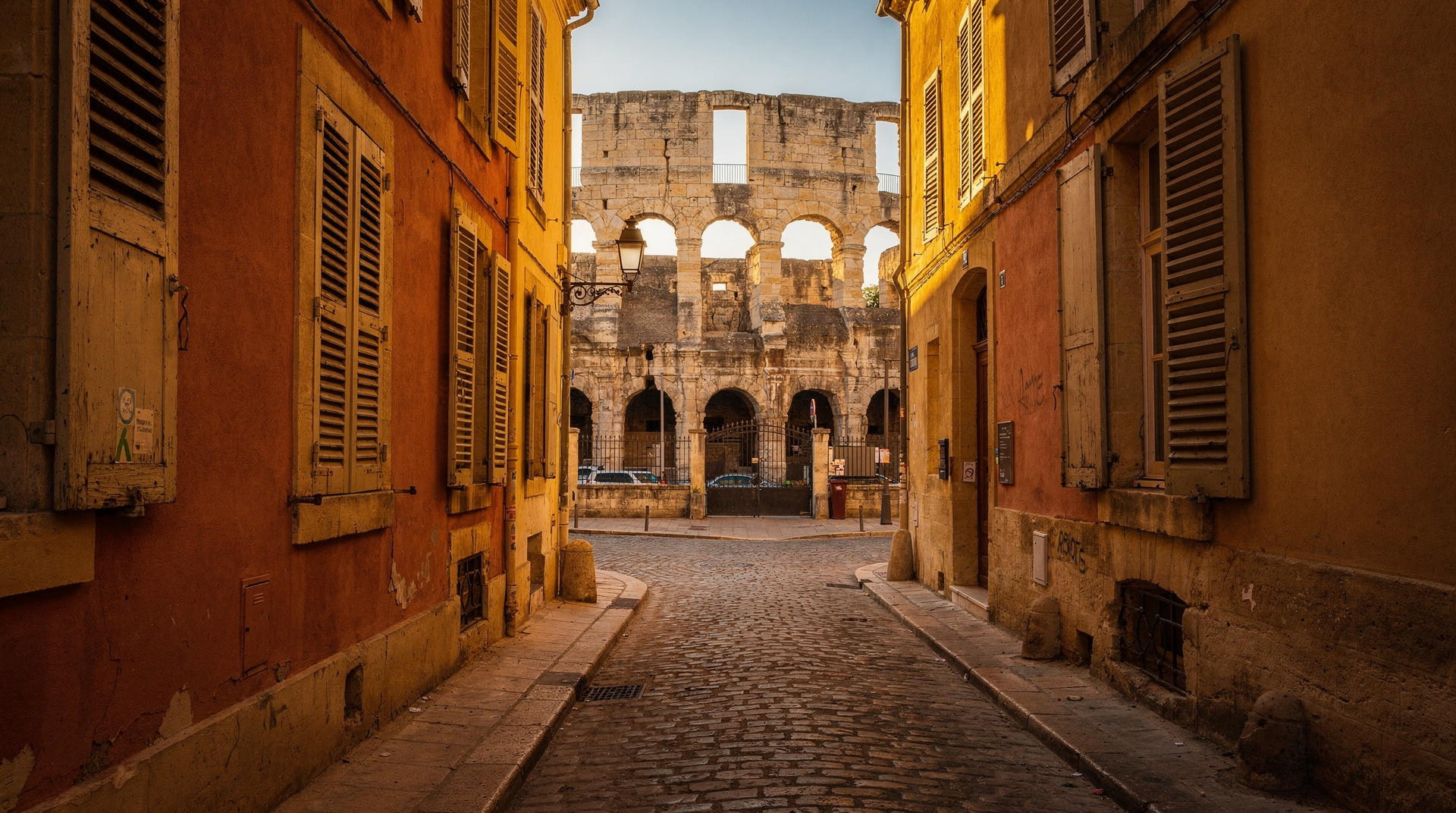
For people visiting the Camargue as part of a wider Provence trip, two nights in Arles followed by a Camargue day is the logical structure. Arles has enough to fill two days (the Roman monuments, the Fondation Vincent van Gogh, the Saturday market) and the Camargue adds a natural counterpoint to the urban archaeology.
For practical planning, the Camargue destination guide covers the full range of access options, seasonal timing, and nature site information. Day trips from Marseille to the Camargue are discussed in the day trips guide with honest timing.
Choosing between horseback, 4x4 and bike
| Option | Ground covered | Pace | Best for |
|---|---|---|---|
| Horseback | Moderate, deep into marsh interior | Slow, atmospheric | Immersion, photography from a low vantage |
| 4x4 safari | Wide, multiple lagoons in one trip | Fast, comfortable | Time-limited visitors, less mobile travellers |
| Electric bike | Moderate, flexible stopping | Self-paced | Independent exploration, quieter than 4x4 |
None of the three is objectively better — the horseback ride gives the specific low, slow perspective described above, while the 4x4 and bike options trade some of that atmosphere for coverage and flexibility.
Booking practicalities
Riding centres north of Saintes-Maries-de-la-Mer generally accept walk-up bookings outside peak season (roughly May and the Romani pilgrimage weeks), but a same-day or next-day reservation by phone is safer in high summer. Bring closed shoes, sun protection, and water — the marsh offers no shade. Most centres provide helmets on request; ask if none is offered, since it is not always volunteered.
Fitting the Camargue into a wider Provence trip
If you are still deciding how the delta fits with everything else, the Camargue day trip guide lays out the logistics from the Marseille side, and the Arles day trip guide covers the town that makes the most natural stopover on the way. Arles rewards a slower look: the Roman monuments and the Van Gogh trail are the two threads most visitors follow, and we wrote about the second one in our own Van Gogh pilgrimage story.
The question of wheels comes up on every Provence trip. Our guide on whether you need a car in Provence is blunt about it, and the Camargue is one of the places where the answer leans clearly toward yes. If you would rather build the delta into a longer loop, the seven-day Provence road trip and the five-day Marseille and Provence itinerary both leave room for it, and the Les Baux and Saint-Rémy day trip pairs well with the same base in Arles.
A horseback afternoon also sits comfortably next to a more urban stay. Our reflections in why Provence needs more than a day explain why we stopped trying to squeeze the delta between two city visits, and the best time to visit Marseille page helps you decide which season to aim for if the marsh is the priority rather than the coast.
Frequently asked questions about Camargue horseback day — a reflective afternoon in the marshes
Do you need riding experience for a Camargue horseback ride? No. The rides are designed for novices, with calm, experienced horses and guides who set a manageable pace. Basic instructions are given before setting off.
Is the Camargue worth visiting without a car? It is possible via train to Arles and onward transport, but a car makes the delta’s spread-out sites (riding centres, bird park, viewpoints) far more practical for a single day.
Top experiences
Bookable activities with verified prices and instant confirmation on GetYourGuide.