Marseille hop-on hop-off bus tour: our honest review
Marseille: city sightseeing hop-on hop-off bus tour
A useful tool — if you use it correctly
The hop-on hop-off bus tour is the most misunderstood category of city tour: too many visitors buy a pass and ride the whole loop without hopping off anywhere, then conclude it was a waste of money. Used correctly — as a transportation tool that also provides audio commentary — the Marseille hop-on hop-off solves a specific problem: Marseille is geographically spread out, the metro only covers two lines, and walking between the Vieux-Port and Notre-Dame de la Garde or the Prado beaches in midsummer heat is genuinely tiring.
Verdict: Worth the cost if you plan to use 3–4 stops purposefully across a day. Not worth it if you want to stay within the Vieux-Port, Le Panier, and MuCEM triangle — that area is walkable. Best used in combination with the metro for visits to the outer neighbourhoods.
What this tour includes
A day pass on the City Sightseeing Marseille hop-on hop-off bus, covering the full route of approximately 12 stops with audio commentary in multiple languages (French, English, Spanish, German, and others depending on the season).
What is included:
- Unlimited hop-on hop-off use for the duration of your ticket (1 day standard)
- Audio commentary at each stop in your chosen language
- Free reboarding at any point on the route
What is not included:
- Entry tickets to attractions along the route (MuCEM, Notre-Dame de la Garde, Château d’If — all have separate entry fees or are free)
- Transfers to locations not on the route (Calanques, Cassis, Frioul Islands)
- Meals or refreshments
Route highlights:
- Vieux-Port (main departure point)
- Notre-Dame de la Garde (the hilltop basilica — the key hop-off point)
- Corniche Kennedy (the coastal road, city’s best sea views)
- Prado beaches
- Stade Vélodrome area
- Joliette/MuCEM (the contemporary cultural district)
Loop duration (without hopping off): Approximately 90 minutes.
Why we recommend it — and when
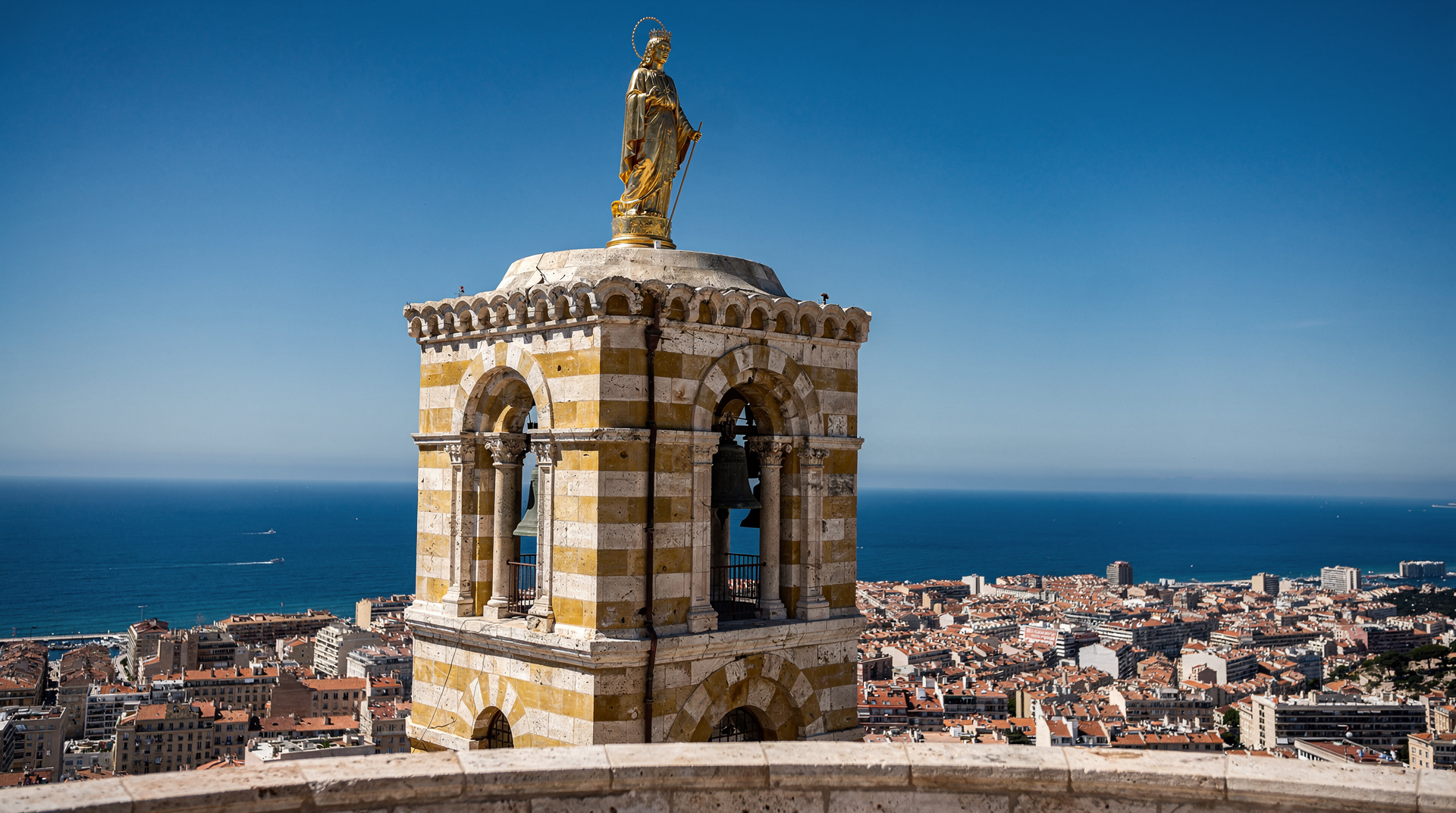
The Notre-Dame de la Garde stop is genuinely useful. The basilica sits on Marseille’s highest hill — 154 metres — with a 360-degree view of the city, the islands, and the coast. Getting there without a vehicle means either a steep uphill walk (20–25 minutes from the Vieux-Port in summer heat) or the hop-on hop-off bus. The bus makes it effortless and the descent, if you walk down, is pleasant through the Saint-Victor neighbourhood.
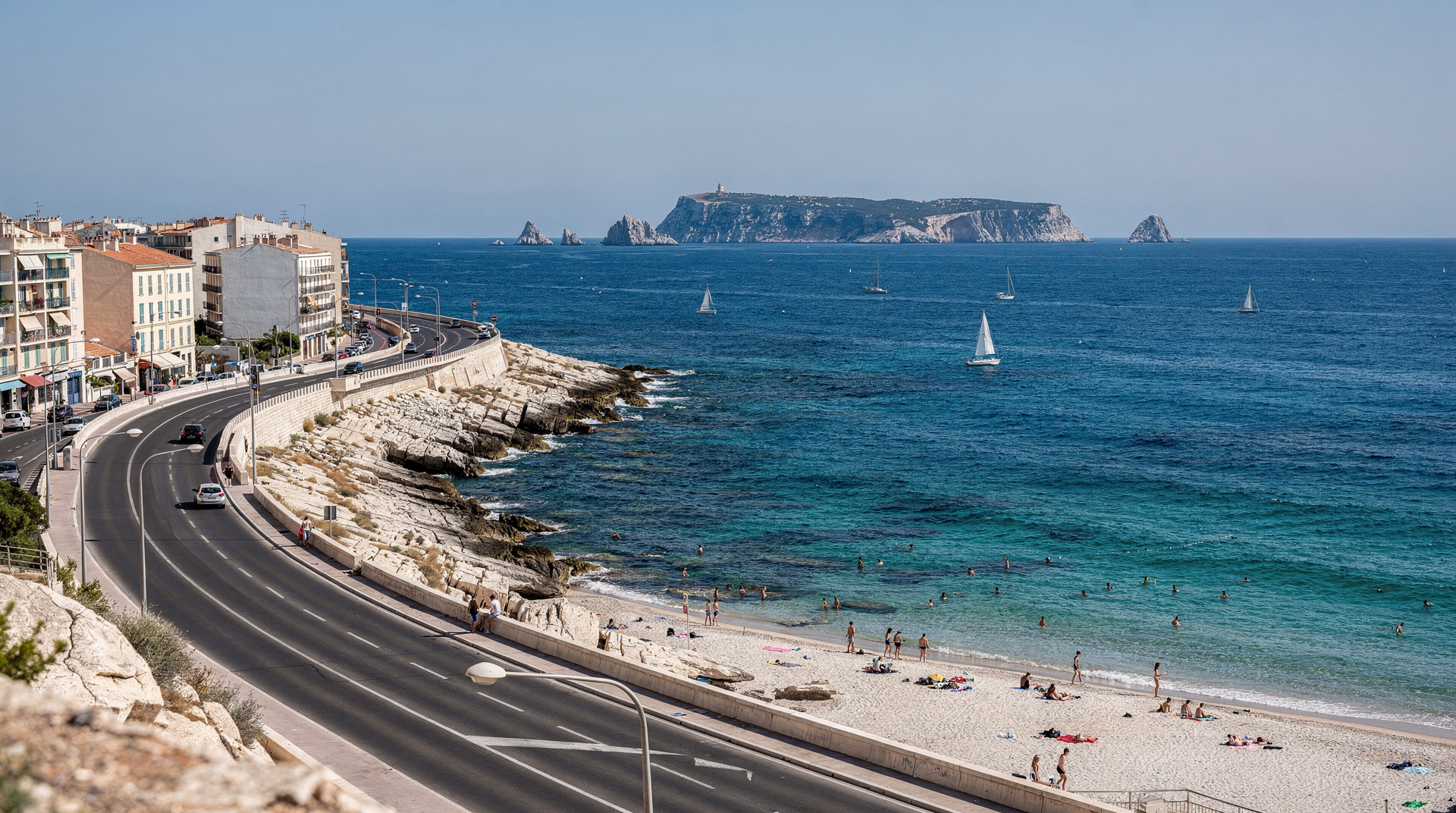
The Corniche Kennedy section covers the 5-km coastal road that locals use for evening walks. The audio commentary contextualises the landscape — the vallon des Auffes fishing village, the monument to the dead, the view across to the Frioul islands. Walking this stretch is excellent; riding it with commentary first helps you understand what you are looking at.
For cruise passengers with a half-day port call, the hop-on hop-off solves the orientation problem quickly. You can get the geographical overview in 90 minutes and then hop off at the one or two stops that interest you most. This is the tour’s strongest use case.
For visitors with mobility issues, the bus provides access to elevated sites (Notre-Dame de la Garde) and distant beaches (Prado) that are impractical on foot or require taxi coordination.
How it compares to alternatives
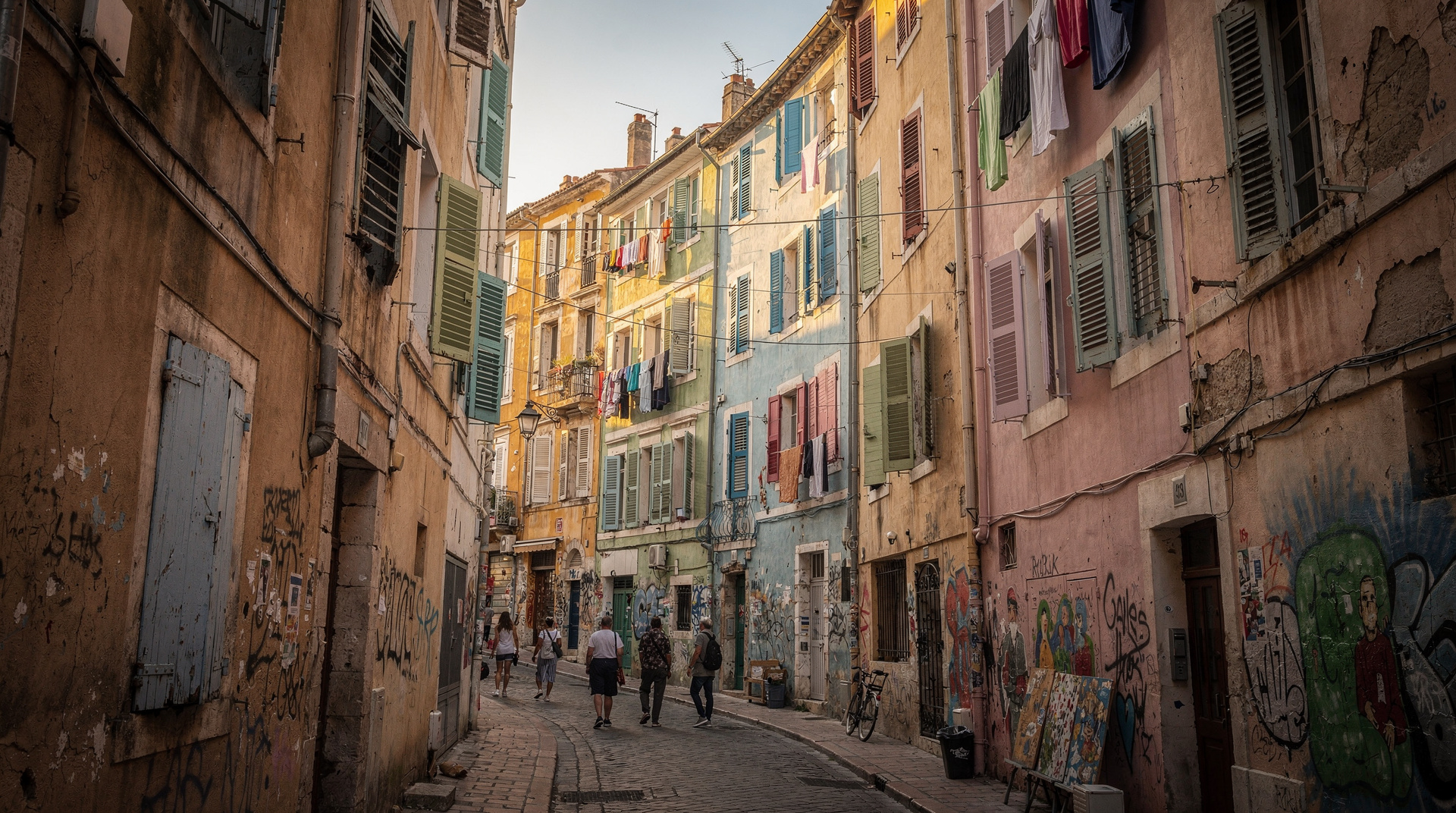
Hop-on hop-off with secret Panier walking tour adds a guided walk through Le Panier neighbourhood with a local guide — the narrow lanes, the history of the oldest district in Marseille, the street art, and the Saint-Jean quarter. If you plan to spend meaningful time in Le Panier anyway, this combined ticket extracts more value from the bus pass by adding depth in the neighbourhood the audio commentary covers least effectively.
Walking the same route yourself is entirely feasible in mild weather. Marseille’s highlights are not that dispersed: the Vieux-Port, MuCEM, and Le Panier are walkable from each other (15–20 minutes). Notre-Dame de la Garde is the main argument for the bus. The Prado beaches are 4 km from the Vieux-Port — walkable but hot in summer.
Metro and city bus combination covers the outer districts more flexibly and costs less. Bus line 83 runs the length of the Corniche — it is the local route that parallels the hop-on hop-off Corniche section and costs EUR 2 per journey. See our getting around Marseille guide for specific routes.
Private guided city tour gives you a human guide who can answer questions and adapt to your pace — something the audio commentary cannot do. The cost is higher (group walking tours from EUR 20–30 per person), but the experience is richer for first-time visitors. The hop-on hop-off suits independent travellers who prefer self-navigation.
Practical info
Best use strategy: Board at the Vieux-Port in the morning. Take the loop to Notre-Dame de la Garde (hop off, visit the basilica, walk down). Reboard at a Corniche stop for the coastal section. Hop off at MuCEM for the afternoon (free exterior, entry ticket for exhibitions). Return to Vieux-Port by metro or on foot.
What to bring:
- Water and sun protection (upper deck of the bus is open-air)
- Your phone with the audio commentary app or earphones (some buses provide headsets, some do not)
- Museum entry tickets booked in advance if visiting MuCEM
Booking lead time: No advance booking required — you can buy at the Vieux-Port point. Booking online in advance confirms your price and avoids queuing during peak season.
Honest caveat: The audio commentary quality varies. Some commentary is genuinely informative about Marseille’s history and architecture; some sections are thin. Do not buy the pass expecting the depth of a walking tour guide — use it as orientation and transport, and supplement with our neighbourhoods guide for context.
Compare alternative tours
Frequently asked questions about Marseille hop-on hop-off bus tour
How many stops does the Marseille hop-on hop-off bus have?
The City Sightseeing Marseille route covers around 12 stops, linking the Vieux-Port to Notre-Dame de la Garde, the Corniche Kennedy, the Prado beaches, the Stade Vélodrome area, and the Joliette/MuCEM district. The route is a loop and takes roughly 90 minutes to complete without hopping off.Is the hop-on hop-off bus worth it in Marseille?
It depends on your itinerary. The hop-off at Notre-Dame de la Garde (avoiding the uphill walk) and the Corniche stop are genuinely useful. If you have 2–3 days in Marseille and plan to visit multiple sites, the bus saves legwork. If you have one day, a mix of metro and taxi is often more efficient. The bus is especially useful for cruise passengers and those with limited mobility.How often does the hop-on hop-off bus run in Marseille?
Buses run every 30–45 minutes depending on the season. In summer (July–August), frequency increases to every 20–30 minutes. The first departure is usually around 9:30 am and the last return is around 6 pm. Check the current timetable at the Vieux-Port boarding point.Does the hop-on hop-off bus go to the Calanques?
No — the hop-on hop-off bus stays within urban Marseille. It does not go to the Calanques, Cassis, or the Frioul Islands. For the Calanques, you need a dedicated boat or hiking tour. See our Calanques boat tour review.Where does the Marseille hop-on hop-off bus depart from?
The main boarding point is at the Vieux-Port. You can also board at other stops along the route if a bus is there when you arrive. Tickets can be purchased at the Vieux-Port boarding point or online in advance.Is there a combined ticket with the Panier walking tour?
Yes — the hop-on hop-off with secret Panier walking tour combines the bus pass with a guided walking tour of the Le Panier neighbourhood led by a local guide. This is the better-value option if you want both an overview of the city geography and a close-up look at the historic old town.How long should I spend at Notre-Dame de la Garde?
Allow 30–45 minutes. The basilica interior is worth 15 minutes (the votive offerings left by sailors are extraordinary — model ships, baby shoes, photographs). The terrace takes another 15 minutes for a proper look at the panorama. The walk down through the Saint-Victor neighbourhood adds 20 minutes but is pleasant.Can I use the bus to get to the Calanques?
No. The hop-on hop-off bus stays within urban Marseille. For the Calanques, see our Calanques boat tour review or the kayak tour review.Is the upper deck of the bus worth it?
Yes, if the weather is good. The upper deck gives unobstructed views — essential for the Corniche section. In hot summer sun, the upper deck is very exposed. Bring a hat and sunscreen if you plan to sit up there for the full loop.Are MuCEM entry tickets included?
No. The bus stops at the Joliette/MuCEM area but entry to MuCEM exhibitions requires a separate ticket (EUR 11–13 standard, free on the first Sunday of each month). The Fort Saint-Jean walk is free — the MuCEM exterior and terraces are accessible without payment.Is there a discount for children?
Most hop-on hop-off operators offer reduced or free tickets for children under 12. Check the current pricing when booking — policies change seasonally. Two adults with one child typically saves EUR 10–15 on the family rate vs individual tickets.