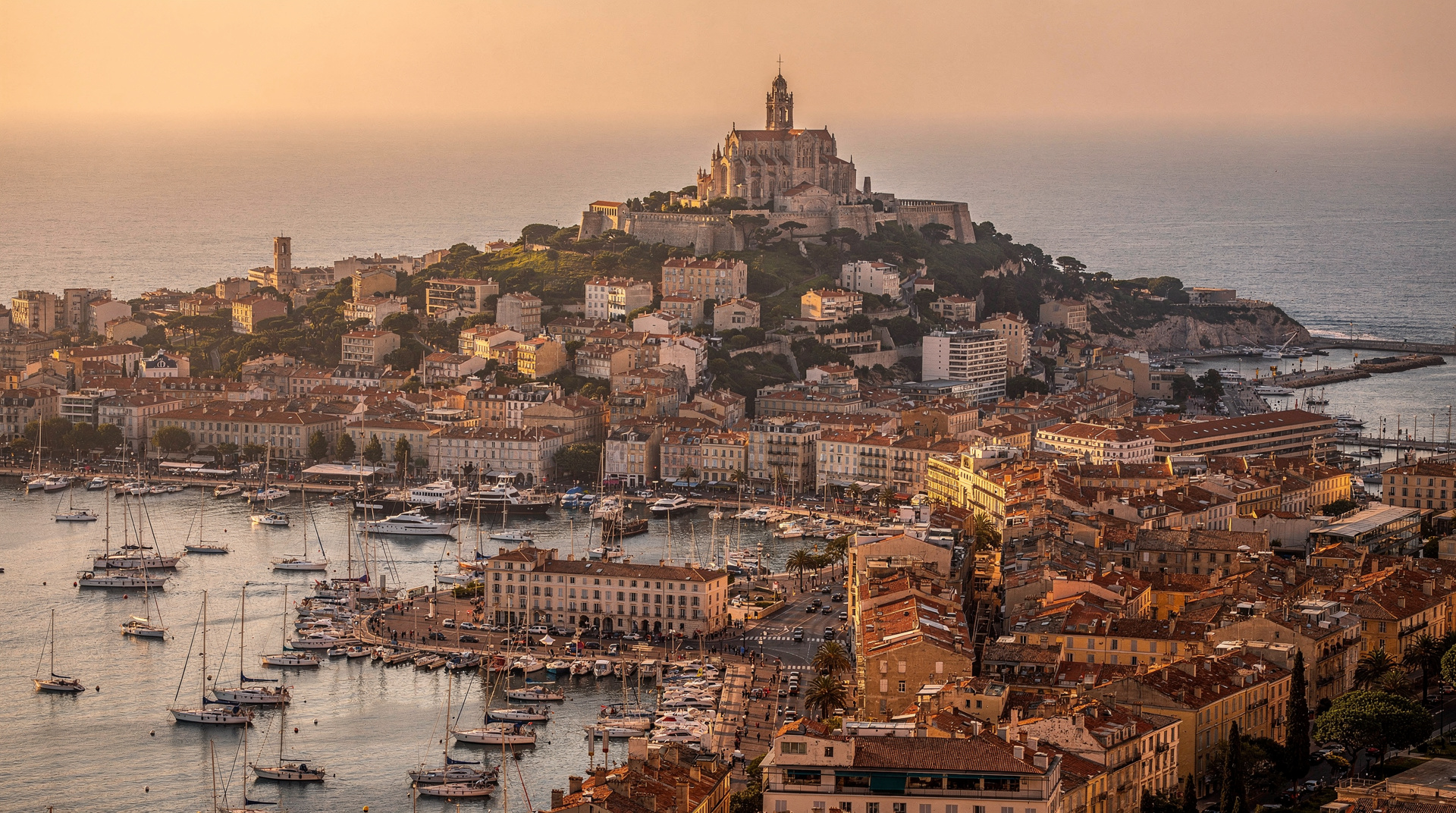
La Ciotat
La Ciotat is where pétanque was born and cinema was first shown — a quieter alternative to Cassis with its own Calanques access and fewer crowds.
La Ciotat: Calanques National Park guided kayak tour
Duration: 3-7 hours
Quick facts
- Distance from Marseille
- ~50 min by car; 45 min by bus/train via Cassis
- Population
- ~35,000
- Cinema claim
- First public screening of the Lumière cinematograph, September 21, 1895
- Pétanque
- Invented here in 1908 by Jules Lenoir
- Best comparison
- Less visited than Cassis; similar Calanques access
The eastern alternative
La Ciotat sits 8 kilometres east of Cassis at the base of the Cap Canaille promontory, where the Calanques coast transitions toward the more developed Côte d’Azur. It is a town of 35,000 residents — significantly larger than Cassis but almost completely absent from the standard travel narrative of this stretch of coast. For visitors, that asymmetry is an opportunity.
The town has two origin stories that matter: it is where the Lumière brothers publicly demonstrated the cinematograph for the first time (21 September 1895), making La Ciotat a legitimate claim for the birthplace of cinema. And it is where Jules Lenoir, a boules player suffering from arthritis, invented pétanque in 1908 by throwing from a standing position rather than running. Two of France’s great cultural exports — cinema and pétanque — in one small town.
The practical reason to come, however, is the Calanques. La Ciotat has direct access to the eastern section of the Calanques National Park, with guided kayak, SUP, and morning boat tours that operate with a fraction of the passenger numbers of the Cassis and Marseille equivalents.
At a glance
| Where | 8 km east of Cassis, edge of the Calanques National Park |
| Cost | Free to walk the town and beaches; kayak/SUP tours roughly €35–60; bouillabaisse around €40–60pp |
| Time needed | Half a day for the town; a full day with a kayak or boat tour |
| Getting there | ~50 min by car from Marseille via A50; train to Cassis + bus, or direct TER (less frequent) |
| Best time | May–June and September–October for water sports and fewer crowds |
The cinema connection
The Lumière brothers — Louis and Auguste — spent summers at their family property in La Ciotat and used the town as a testing ground for the cinematograph they had developed in Lyon. The film “L’Arrivée d’un train en gare de La Ciotat” (Arrival of a Train at La Ciotat Station) was among the very first moving images ever shot and publicly shown.
The Éden Cinema in La Ciotat, built in 1889, is where these early screenings took place. Restored in 2013, it is recognised as the oldest operational cinema in the world and regularly hosts screenings and film events. If you are in La Ciotat, a visit to the Éden is worth the hour — it is a genuinely unusual heritage site rather than a glossy tourist attraction.
The cinema is typically open for visits and occasional screenings; check the local schedule.
Pétanque: the birthplace
The narrow strip of ground along the Esplanade des Poilus in the old town centre is where pétanque as a formal game was first played. The distinction from boules is precise: in traditional Provençal boules, the player takes a running approach. Jules Lenoir, who found running painful due to arthritis, threw from a fixed standing position — “pieds tanqués” (feet planted) — which became the defining characteristic of pétanque. The game spread rapidly through the region and eventually the world.
The local pétanque culture is active and visible. On summer evenings, the esplanades and squares of La Ciotat have regular games in progress — this is participatory local life rather than a heritage display.
Calanques access from La Ciotat
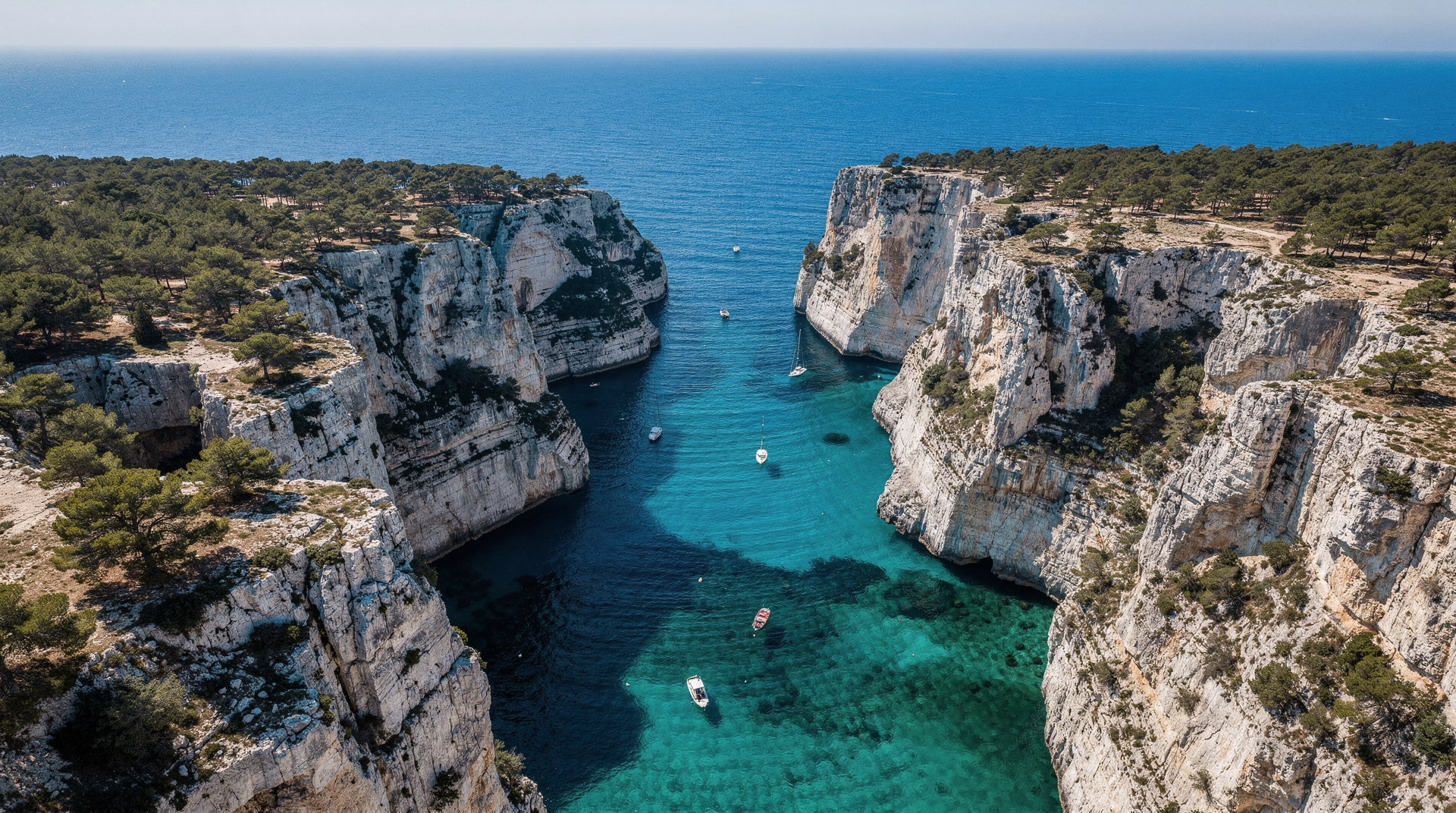
La Ciotat sits at the eastern edge of the Calanques National Park marine reserve, with a stretch of limestone coastline that runs west from the town toward Cassis. The access by water — kayak, SUP, or small boat — reaches sections of the coast that are quieter than the calanques accessible from Cassis or Marseille.
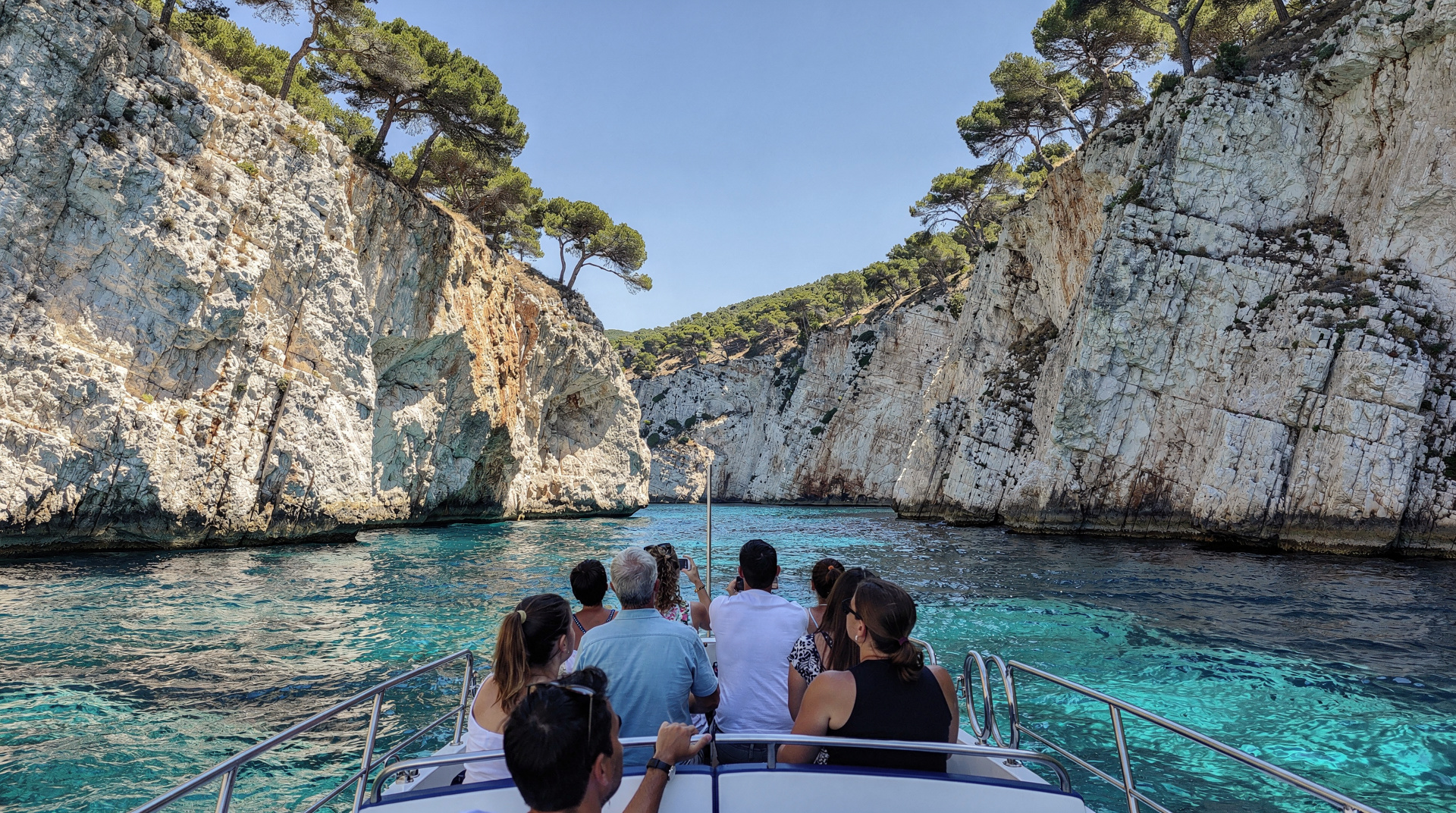
Morning boat tours with snorkelling depart from the La Ciotat harbour and reach the calanques and rocky coastline in about 15–20 minutes. These typically combine a short cruise along the cliff base with a snorkelling stop in clear water over rocky bottom. Guides are bilingual (French/English) and the participant numbers are consistently lower than equivalent tours from Cassis.
Guided kayak tours from La Ciotat run along the rocky coastline toward the Calanques. The typical half-day tour (3 hours) covers several small calanques and coves not accessible from Cassis due to the distance. A full-day option reaches further into the park. No prior kayak experience required.
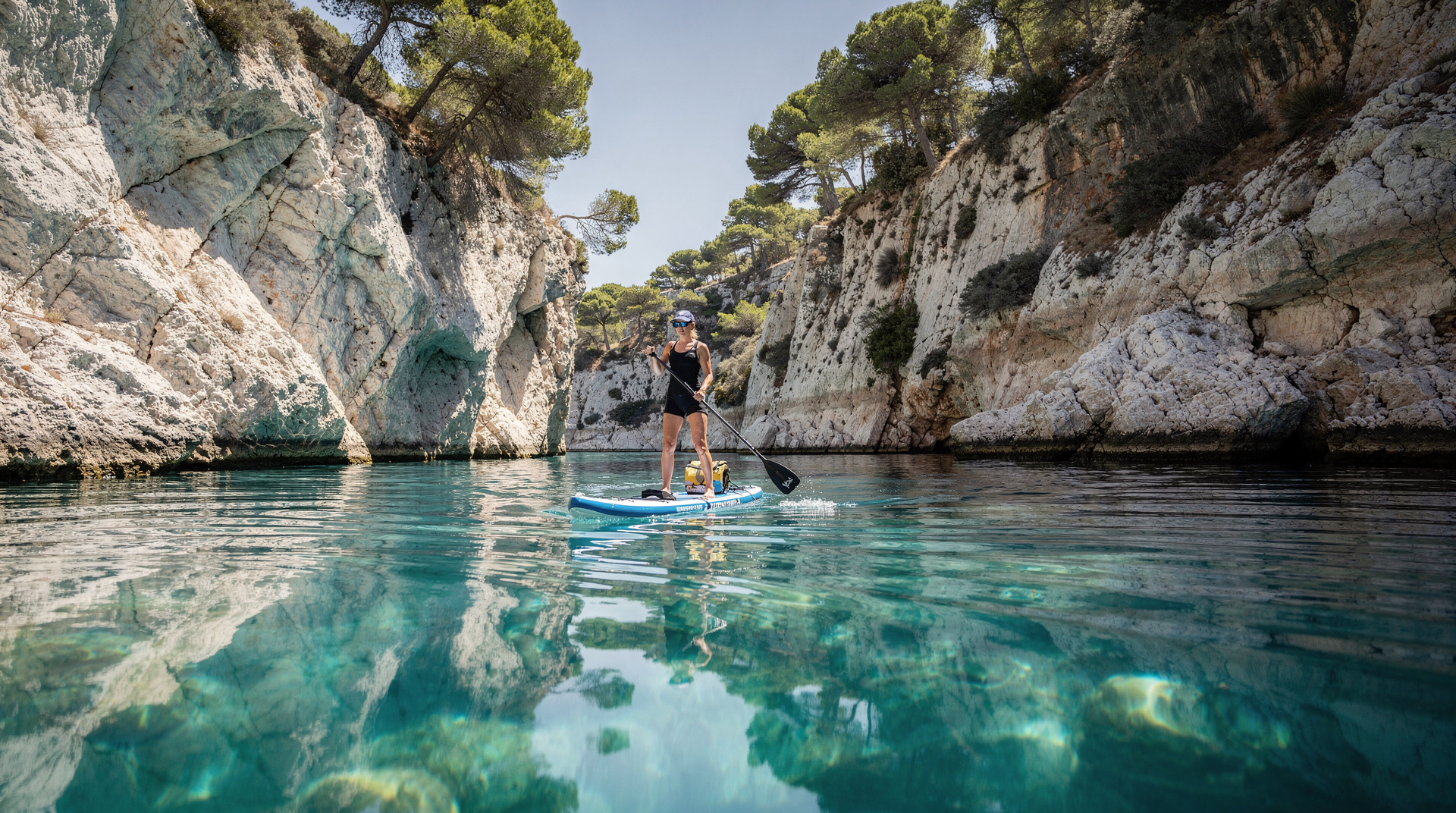
Stand-up paddleboarding on calmer days is a gentler option for exploring the immediate coastline. The water along this section is clear, the sea floor interesting, and the wind protection from the limestone headlands generally adequate in spring and early autumn.
The town and beaches
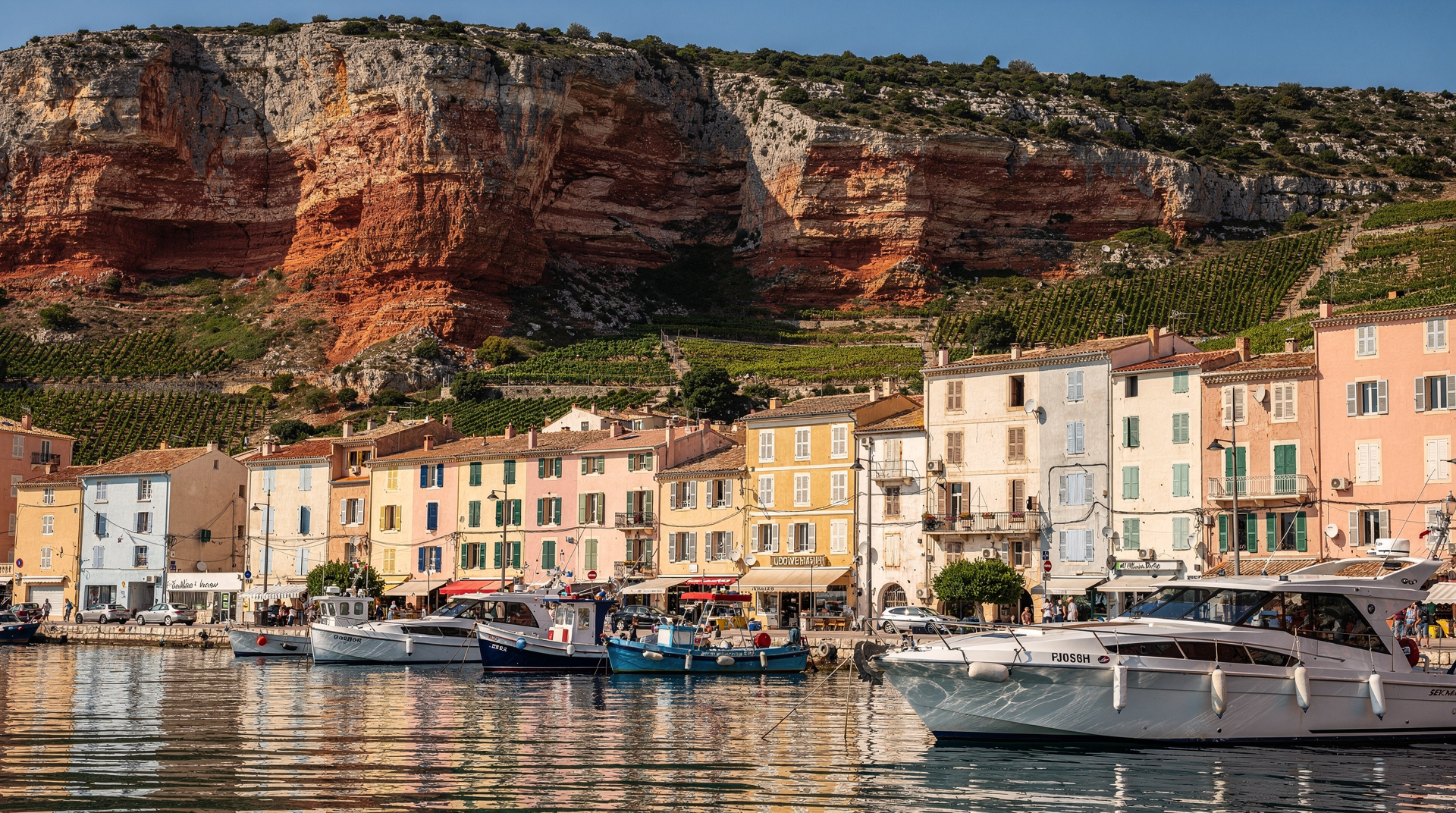
La Ciotat’s old port is smaller than Cassis’s and less photographed, but has its own charm — a working fishing harbour with a few café terraces rather than a full tourist restaurant circuit. The Vieux Port area is worth 30 minutes of walking.
The town has two main beaches: Grande Plage is the central sandy beach, long and wide, with lifeguards in summer and all the facilities (cafés, showers, sports areas). It is genuinely family-friendly. Mugel beach is smaller and more protected, at the base of the Mugel park headland — rocky approaches, clear water, and a popular family spot for swimming away from the crowds.
The Mugel park (Espace naturel de la Presqu’île du Mugel) is a good short walk — a rocky headland with coastal paths, picnic spots, and views back toward Cap Canaille and west along the Calanques coast. Free access; about 45 minutes to walk the circuit.
La Ciotat vs Cassis: the honest comparison
Cassis has a more photogenic port, more restaurant options, a world-class wine appellation, and the most visited calanques in the park (Port-Miou, Port-Pin, En-Vau). It deserves its popularity.
La Ciotat has fewer crowds, equivalent (if less dramatic) Calanques access from the water, a more authentic local atmosphere, the world’s oldest cinema, the birthplace of pétanque, and a large beach. It is the better choice if Cassis crowds in July–August are the deterrent, or if you are staying multiple days on this stretch of coast and want variety.
For our full comparison, see the Cassis vs La Ciotat guide.
Getting to La Ciotat
By car from Marseille: About 45–50 minutes via A50. Parking is easier than Cassis in most seasons.
By public transport: The most practical route is train to Gare de Cassis (35 min from Marseille) then bus (Zou! regional network) the 8 km to La Ciotat, or a taxi/shared ride. A direct TER stop at La Ciotat exists but trains are less frequent. Check schedules on mtickets.sncf.com.
Within a Cassis + La Ciotat day: The Route des Crêtes (Cap Canaille road) connects the two towns in 15 minutes by car. Walking the coastal path between them takes about 3 hours and is a legitimate option for serious walkers in spring or autumn.
What to eat and drink in La Ciotat
The town has a good local restaurant circuit without the tourist pricing premium of Cassis. The port area has the most options; the old town (behind the Éden Cinema and Place Evariste Gras) has several smaller and less expensive places.
Seafood: The daily catch is sold at the small fish market at the port on Tuesday, Thursday, and Saturday mornings. Several restaurants cook it fresh for lunch. Bouillabaisse is available at a few establishments; expect 40–60 EUR per person for a proper version.
Rosé de Provence: La Ciotat sits in the Côtes de Provence appellation zone. Several local wineries are accessible by car or bike from the town — the Bandol appellation begins just 10 km to the east, and several estate tastings are available.
Pastry and bread: The boulangeries in the old town are excellent — the Provençal tradition of quality bread and pastry at reasonable prices holds here.
When to visit La Ciotat
May and June: The best months. The Calanques marine life is active for snorkelling, the kayak sea conditions are calm, the beaches are warm but not crowded, and the wildflowers are still present on the coastal paths.
July and August: Busy but manageable — La Ciotat does not have the same summer saturation as Cassis. The beaches fill by mid-morning but there is always space. Water temperature peaks at 25–26°C. Fire risk may affect coastal path walking.
September and October: Excellent for an alternative summer extension — the sea remains warm through October (21–23°C), the crowds drop sharply after 15 August, and the autumn light is particularly good for photography along the Calanques coastline.
Winter: Quiet, with most water sport operators closed. The Éden Cinema and the pétanque culture are active year-round. The walk over Cap Canaille from La Ciotat to Cassis in winter has a dramatic quality.
The Éden Cinema: how to visit
The Éden is open for visits as a heritage site and for film screenings. The building itself — a narrow, low-ceilinged early cinema with its original screen proportions and raked seating — is unlike any other cinema you will see. The acoustics, the proportions, and the painted plaster decoration reflect the earliest period of cinema architecture, before the medium developed its own monumental building typology.
Visit during programming periods when the cinema is functioning — a screening in the oldest cinema in the world is more interesting than a static visit. Film selections tend toward classic cinema and events connected to the Lumière legacy. Check the programme at the La Ciotat tourism office or the Éden’s own communication. The cinema is approximately 10 minutes on foot from the port.
Connecting La Ciotat to the wider area
La Ciotat is logically combined with Cassis for a two-day itinerary on the eastern edge of the Calanques. From here, the coast continues east toward Bandol — the next wine appellation — and eventually toward the Côte d’Azur. For details on Calanques access including summer fire-risk closures, see the Calanques National Park guide.
For a direct comparison between Cassis and La Ciotat to help decide which suits your trip, see our Cassis vs La Ciotat comparison guide.
Walking the coastal path between La Ciotat and Cassis
The GR98 coastal trail links La Ciotat to Cassis via the Route des Crêtes and Cap Canaille, France’s highest maritime cliff. It is a serious walk — around 3 hours one way, exposed to sun and wind, with real elevation change — not a casual stroll. Spring and autumn are the only sensible seasons; summer heat and fire-risk closures rule it out most years. See the GR98 Marseille to Cassis guide and the Cap Canaille hike guide for route details, and check current access rules in the Calanques summer access rules guide before setting out.
Choosing a water activity from La Ciotat
If you are deciding between a kayak tour, a SUP session, or a snorkelling boat trip, the honest breakdown: kayaking covers the most coastline and suits anyone reasonably fit; SUP is gentler but weather-dependent and better on calm mornings; a guided snorkel boat is the least physically demanding and the best option for families or anyone who just wants to be in the water rather than paddling toward it. For the wider Calanques boat-tour landscape including operators from Cassis and Marseille, see the best Calanques boat tours guide and the Calanques boat vs hike guide.
Frequently asked questions about La Ciotat
Is La Ciotat worth visiting if you have already been to Cassis? Yes, if you have more than a day on this stretch of coast. The town offers the same Calanques access from the water with far fewer people, plus the Éden Cinema and pétanque history that Cassis does not have. If you only have one day total, Cassis’s port and calanques remain the higher-priority stop — see the Cassis vs La Ciotat guide for the full trade-off.
How do I get from La Ciotat to Bandol for wine tasting? Bandol’s appellation begins about 10 km east of La Ciotat by road, roughly 15–20 minutes by car. There is no direct train; a car or taxi is the practical option. See the Bandol wine guide for tasting recommendations.
Top experiences
Bookable activities with verified prices and instant confirmation on GetYourGuide.