Provençal cuisine explained: olive oil, garlic, herbs, and the table
Marseille: cooking class meal in a luxury château
Duration: 4 hours
What defines Provençal cuisine and what should I order?
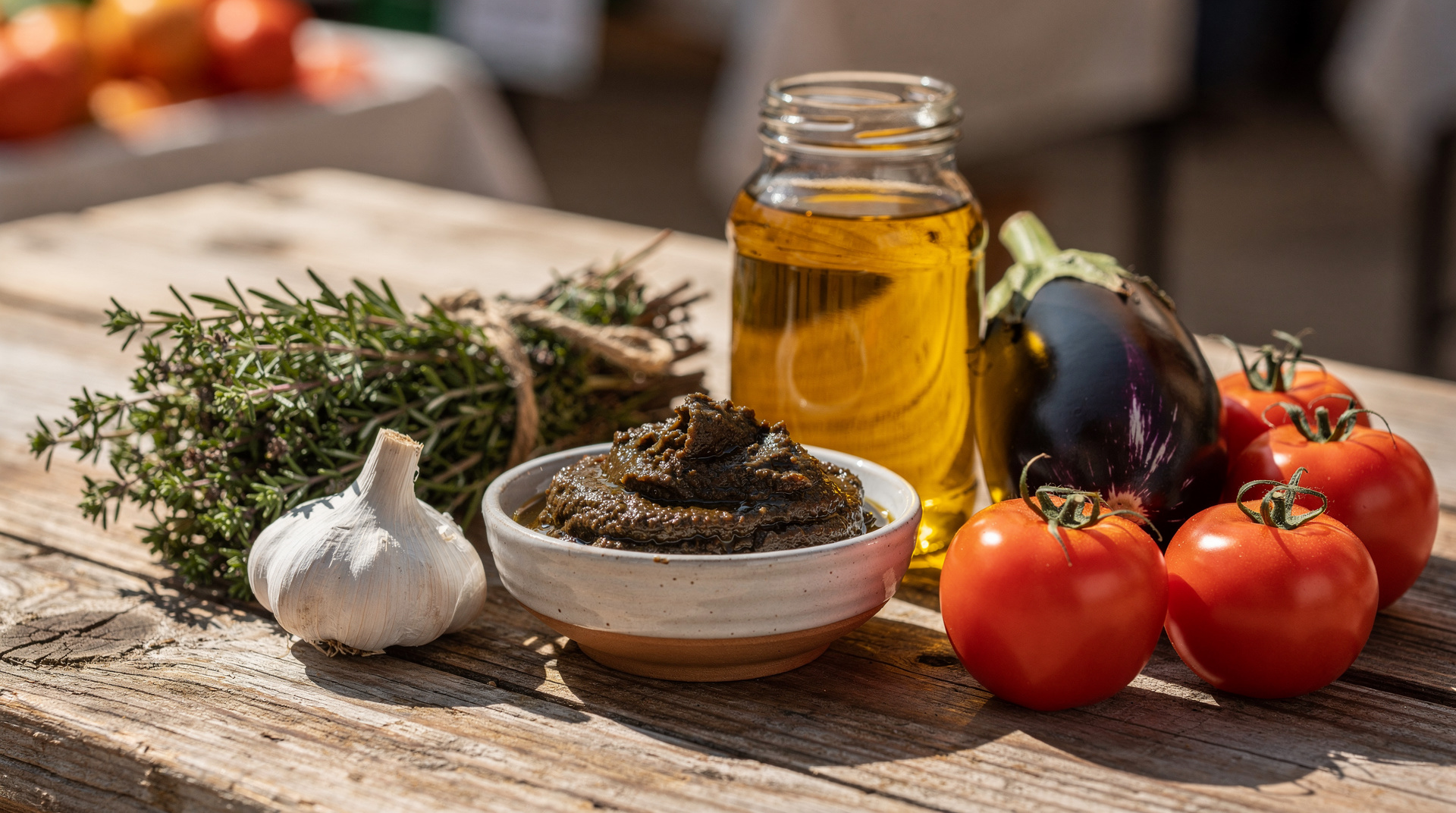
Olive oil (not butter), garlic, and the herbs of the garrigue — thyme, rosemary, fennel, bay — form the base. Order tapenade, aioli, soupe au pistou in summer, daube in winter, and any dish described as 'à la provençale'. Marseille specifically adds bouillabaisse, pieds-paquets, and panisses to this canon.
| At a glance | |
|---|---|
| Where to eat it | Traditional restaurants in Le Panier, market stalls, and traiteurs across Marseille and Aix |
| Cost | Around EUR 15–25 for a market lunch, EUR 30–50 for a sit-down Provençal restaurant meal |
| Best introduction | A market visit followed by a cooking class (around 3–4 hours) |
| Season to know | Soupe au pistou in summer, daube in winter — the dishes genuinely change with the calendar |
| Where to shop | Noailles market and the Cours Julien organic market — see the markets guide |
The olive oil civilisation
Provençal cuisine is built on a single primary fat: olive oil. This is not merely a culinary preference — it is a geographical and cultural marker that separates Provence from the butter-using north of France as decisively as the Rhône valley separates the Mediterranean from the Atlantic world.
The olive tree reaches its northern natural limit approximately at the Drôme valley — beyond which the winters are too severe for reliable cultivation. Provence, warmed by the Mediterranean and protected from the north by the Alps and the Massif Central, is olive territory. The oil pressed from Provençal olives (primarily Aglandau, Salonenque, and Picholine varieties) is fruitier and less pungent than Italian extra-virgin, with a characteristic green-herb freshness that reflects the garrigue landscape the trees grow in.
Every significant Provençal dish begins with olive oil. Tapenade is olive oil. Aioli is olive oil. Ratatouille starts with olive oil. Even the bread at a Provençal table is more likely to arrive with olive oil for dipping than with butter.
Herbes de Provence: the aromatic foundation
The phrase “herbes de Provence” on a supermarket spice blend obscures the fact that these herbs grow wild across the limestone hillsides of Provence and have been the flavour foundation of regional cooking since before agriculture was formalised. The garrigue — the scrubby, fragrant lowland heath characteristic of Mediterranean Provence — is composed almost entirely of the herbs that go into this canon.
Thyme (thym): The most fundamental. Wild thyme (Thymus vulgaris) grows on every south-facing limestone hillside in Provence. Its flavour is more concentrated than cultivated thyme — earthier, with a medicinal resin note in the dried form. It goes into every slow-cooked Provençal dish without exception.
Rosemary (romarin): The evergreen shrub with needle-like leaves that grows along the Provence coast and inland hillsides. More assertive than thyme; used in grilled meat, daubes, and with roasted vegetables. The fresh form is less suitable for long cooking than thyme (it can turn resinous) — Provençal cooks add rosemary early in braises and remove it before serving.
Fennel (fenouil): Both the cultivated vegetable (the bulb, used in cooking) and the wild herb (the fronds and seeds, used as flavouring). Wild fennel grows along roadsides and near the coast throughout Provence. The seeds go into bouillabaisse and fish preparations; the fronds pair with grilled fish. The anise flavour of fennel is the bridge between the savoury herbal character of Provençal cooking and the anise of pastis — both express the same garrigue aromatic.
Savory (sarriette): Less well known than thyme or rosemary but arguably the most characteristically Provençal herb. Mountain savory (Satureja montana) has a pepper-like warmth and a camphor note. Used in daubes, grills, and with beans. Sometimes described as “poivre d’âne” (donkey pepper) in Provence.
Bay laurel (laurier): Standard across European cuisines but particularly important in Provençal braises. The bay leaf from the cultivated Laurus nobilis is less distinctive than the wild variety growing on Provence’s hillsides, which has a more intense eucalyptus-camphor character.
Lavender (lavande): Not traditionally part of herbes de Provence cooking despite its visual dominance in the landscape. Modern Provençal chefs use lavender flowers sparingly — in honey, in desserts, occasionally with lamb. The tourist-market version of lavender in food (lavender salt, lavender everything) is a commercial invention rather than an ancient tradition.
Tapenade: the starting point
Tapenade is the essential Provençal condiment — a thick paste of black olives, capers (tapenat in Occitan, hence the name), anchovy fillets, and olive oil, blended to a smooth or coarse consistency and served with bread. It appears on almost every table in Provence as an automatic starter, and the quality ranges from excellent (made that morning with good Niçoises olives) to indifferent (commercial jar, sat on the table for hours).
The real version: Good tapenade has a dominant olive character with the sharpness of capers cutting through, the salt of anchovy providing depth rather than fishiness, and olive oil binding rather than drowning. The colour is deep purple-black. The texture can be smooth (blended) or rough-chopped (more rustic). It should not taste primarily of salt or primarily of oil.
Anchoïade: The related preparation that uses anchovies as the dominant ingredient rather than olives — a paste of anchovy fillets, garlic, and olive oil, served similarly with bread and crudités. Less common than tapenade but more intensely savoury.
Green tapenade: Made from green olives (typically Picholine), with capers and olive oil. A lighter, more acidic version of the standard preparation. Less traditional than the black version but increasingly common in Provençal restaurants.
Aioli: the Provençal emulsion
Aioli (from aïl — garlic — and oli — oil) is an emulsion of garlic and olive oil, made without egg yolk (which distinguishes it from mayonnaise). The traditional technique pounds garlic cloves in a mortar, then adds olive oil drop by drop while working the mixture to build an emulsion through the natural lecithin in the garlic. The result is thicker and more intense than any garlic mayonnaise made with egg.
Grand Aïoli: The classic Provençal communal dish — a large bowl of aioli at the centre of a table surrounded by boiled vegetables (potatoes, carrots, green beans, beets), salt cod (morue), hard-boiled eggs, and sometimes snails or octopus. This is a Friday-tradition dish (the salt cod connection) and a celebration-table format. It appears at village festivals throughout Provence and on the menus of traditional Provençal restaurants, particularly on Fridays. The aioli is the point — everything else is a vehicle for it.
What to look for: Real aioli should have a stiff, not runny, consistency — it should hold its shape on a spoon. If it pours like a sauce, it has been made with egg yolk or has been extended with something. The garlic flavour should be raw and assertive (this is not a dish for people who dislike garlic) with the olive oil providing body.
Soupe au pistou: the summer soup
Pistou is Provence’s answer to Genoa’s pesto — a paste of fresh basil, garlic, and olive oil (no pine nuts, no cheese in the Provençal original, though both are now common additions). Soupe au pistou is a thick vegetable soup of beans, courgettes, tomatoes, and pasta, served with a generous spoonful of pistou stirred in at the table.
Season: A summer dish, made when fresh basil and courgettes are abundant — typically July through September. Ordering it in winter is possible at restaurants that prepare it from preserved or frozen ingredients, but the point of the dish is the freshness of the summer vegetables and the fragrant raw basil.
Where to find it: On menus at traditional Provençal restaurants throughout the region during summer. In Aix-en-Provence, it appears on almost every traditional lunch menu from June through September. In Marseille, it is less ubiquitous than in the Aix/Luberon area but available at good Provençal restaurants.
Ratatouille: not what the film suggested
Ratatouille is a braised summer vegetable dish — courgettes, aubergine, tomatoes, peppers, garlic, and olive oil — cooked slowly until the vegetables collapse into each other and their juices concentrate into a deep, slightly jammy consistency. The name comes from the Occitan ratatolha.
The real thing vs the version: The film Ratatouille introduced the tian version — thin-sliced vegetables arranged in overlapping circles and baked. This is a related but different preparation (called a tian in Provence, after the earthenware dish it is cooked in). Traditional ratatouille is browned in batches and then braised together — messy in appearance, complex in flavour.
At home vs at a restaurant: Ratatouille is a better home-cooked or take-away dish than a restaurant experience. Many traiteurs in Provence sell it ready-made; it is one of the best things to buy and eat cold with bread and cheese as a picnic component. At a restaurant, look for versions described as confit or confite — slow-cooked with enough olive oil that the vegetables are essentially preserved in the fat, which produces a richer result.
Daube: the winter braise
Daube provençale is a slow-braised beef stew — typically cooked in red wine (often from Châteauneuf-du-Pape or Côtes du Rhône), with olives, orange peel, thyme, bay, and sometimes lardons. The essential difference from a standard beef stew is the marination (overnight in wine with aromatics) and the presence of olives, which add a briny counterpoint to the deep richness of the braised meat.
Season: A winter dish — October through March, when the slow oven and the rich flavours are appropriate. Summer daube is an anachronism.
What to look for: Good daube is dark, glossy, and thick — the wine has reduced to a concentrated sauce and the collagen from the beef has given the liquid a slight body. The olives should be black Niçoises or Provençal, not green or commercial. The orange peel should be discernible in the aroma without dominating.
Calissons: the sweet canon of Aix
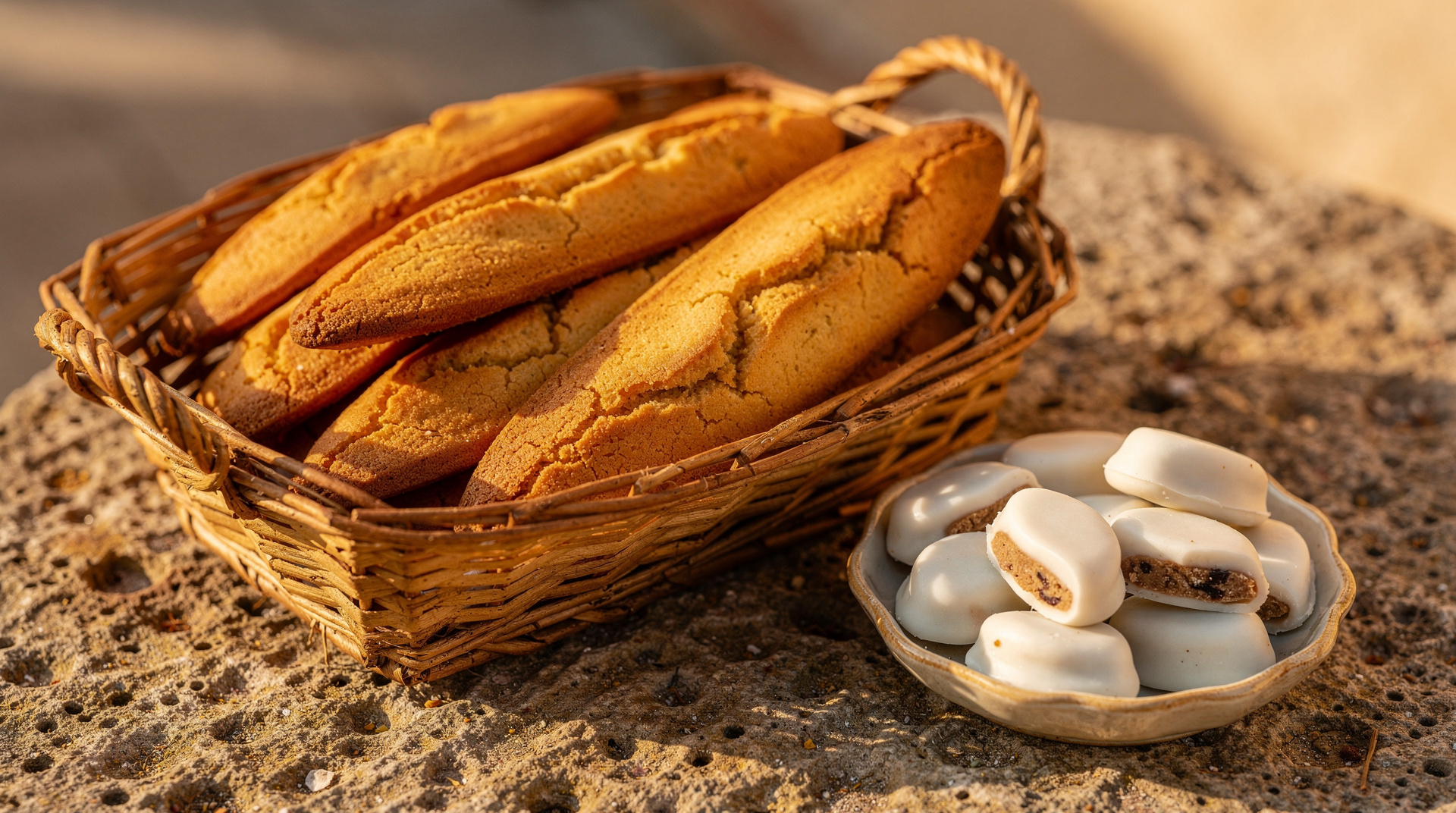
Calissons are the signature confection of Aix-en-Provence — a diamond-shaped sweet made from a paste of ground almonds and candied melon (both traditional Provence products), iced with a thin layer of royal icing. They have been made in Aix since at least the 15th century.
Where to buy: In Aix itself, from the makers who have been producing them for generations. The most established producers include Confiserie Brémond Père et Fils and Roy René — both have shops in central Aix. In Marseille, they are available at good confiseries and at some market stalls.
The authentic version: Should be soft in the centre (the almond paste is moist, not dry) with a thin, firm icing layer. Should taste primarily of almond with the melon providing sweetness and slight floral character. Should not taste of artificial almond flavouring.
Price: EUR 1.50–3 per calisson; sold in boxes from EUR 15–30.
The market cycle
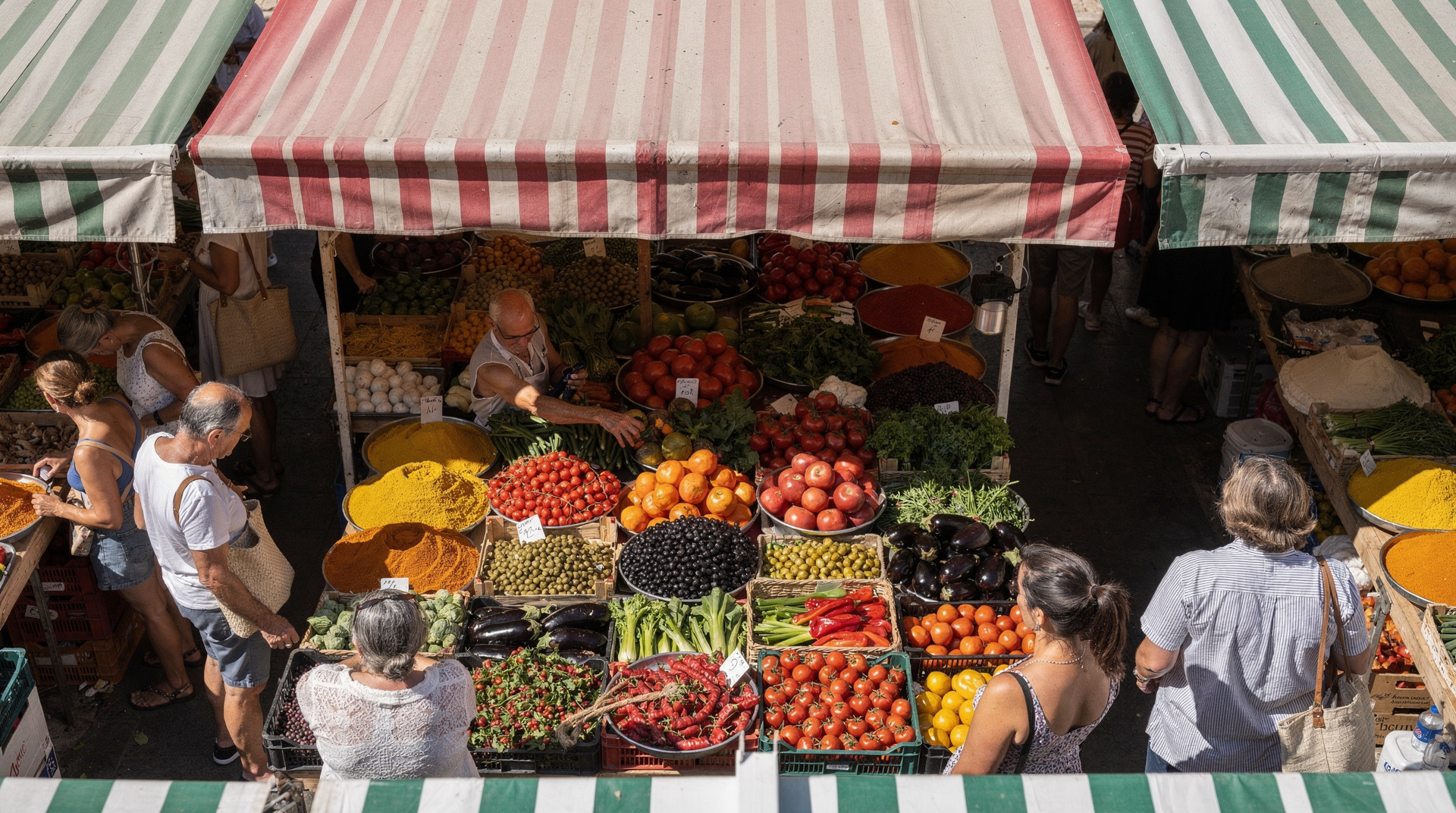
Provençal cuisine is inseparable from market culture. The daily rhythm of Provençal cooking — buy the vegetable or fish today, cook it today — is enabled by a regional market infrastructure that remains one of the most functional in Europe despite 40 years of supermarket competition.
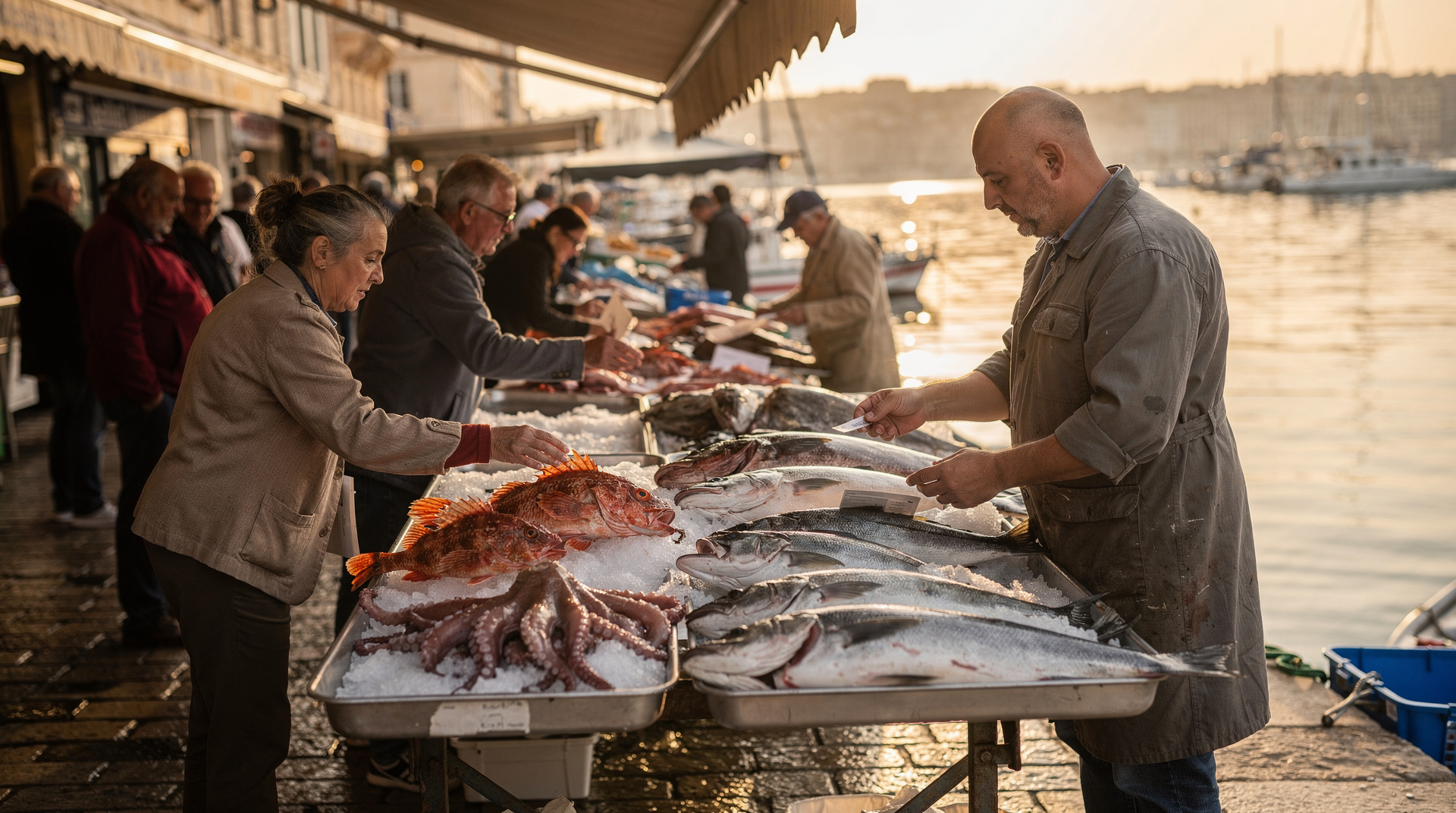
In Marseille, this market culture is expressed through the fish market (daily, Quai des Belges), the Noailles market (Mon–Sat), the Cours Julien organic market (Wednesday), and the Marché de la Plaine (Tue, Wed, Thu, Sat). See our markets guide for timing and character details.
In Aix-en-Provence, the daily market at Place Richelme and the Tuesday/Thursday/Saturday market at Place de la Madeleine maintain the highest quality in the region. See the Aix guide for the full market picture.
What the market signals: A restaurant that writes “according to market” or “du marché” next to a dish is telling you the ingredient was purchased that day rather than from a refrigerated supply chain. This is a signal worth noticing — and a question worth asking if it is not on the menu.
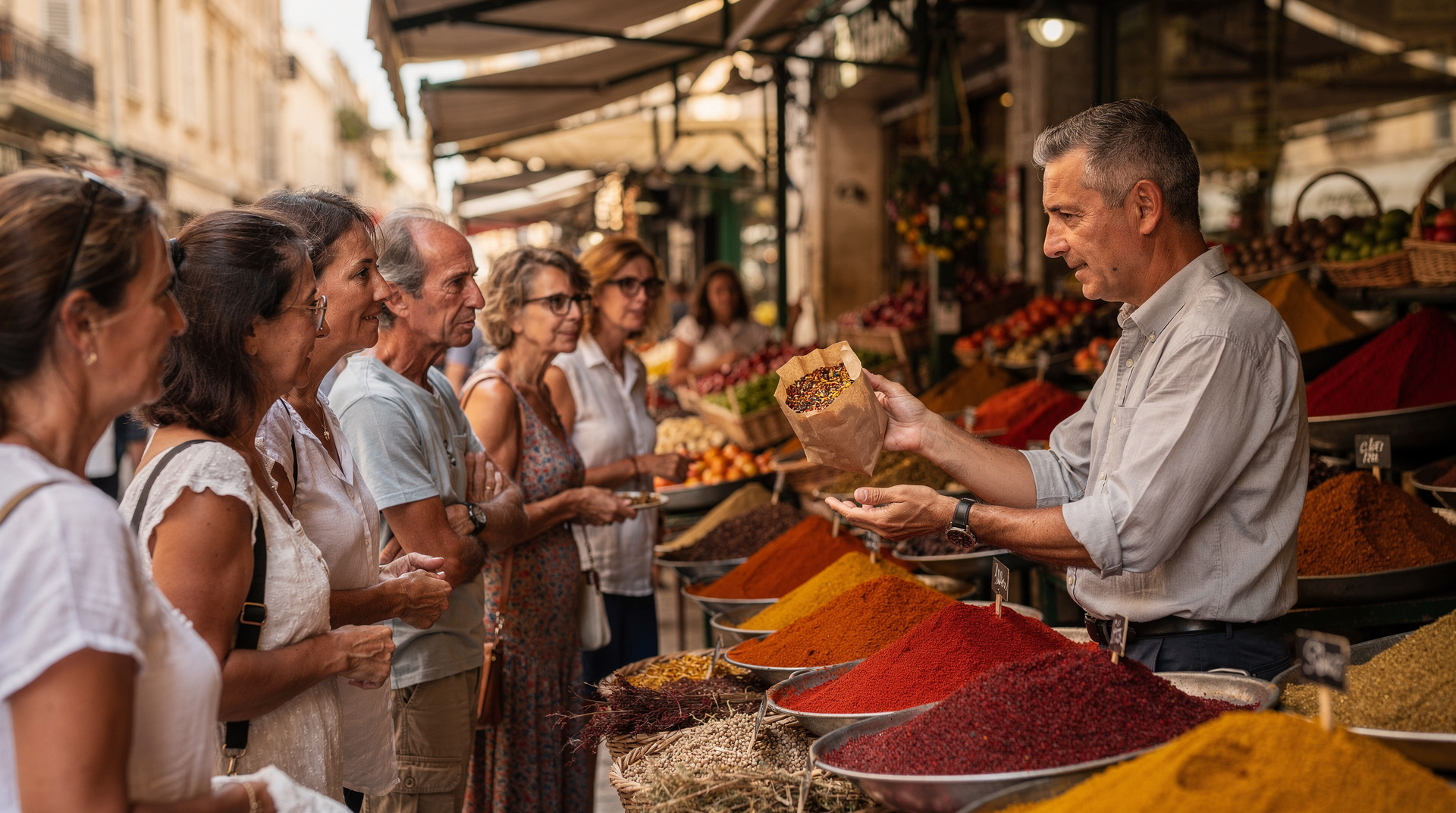
For a hands-on introduction to Provençal cooking, the château cooking class (bookable via GetYourGuide) combines a market visit and cooking session with an experienced Provençal chef. See the food tour guide for alternatives at various price points.
Marseille’s own additions to the canon
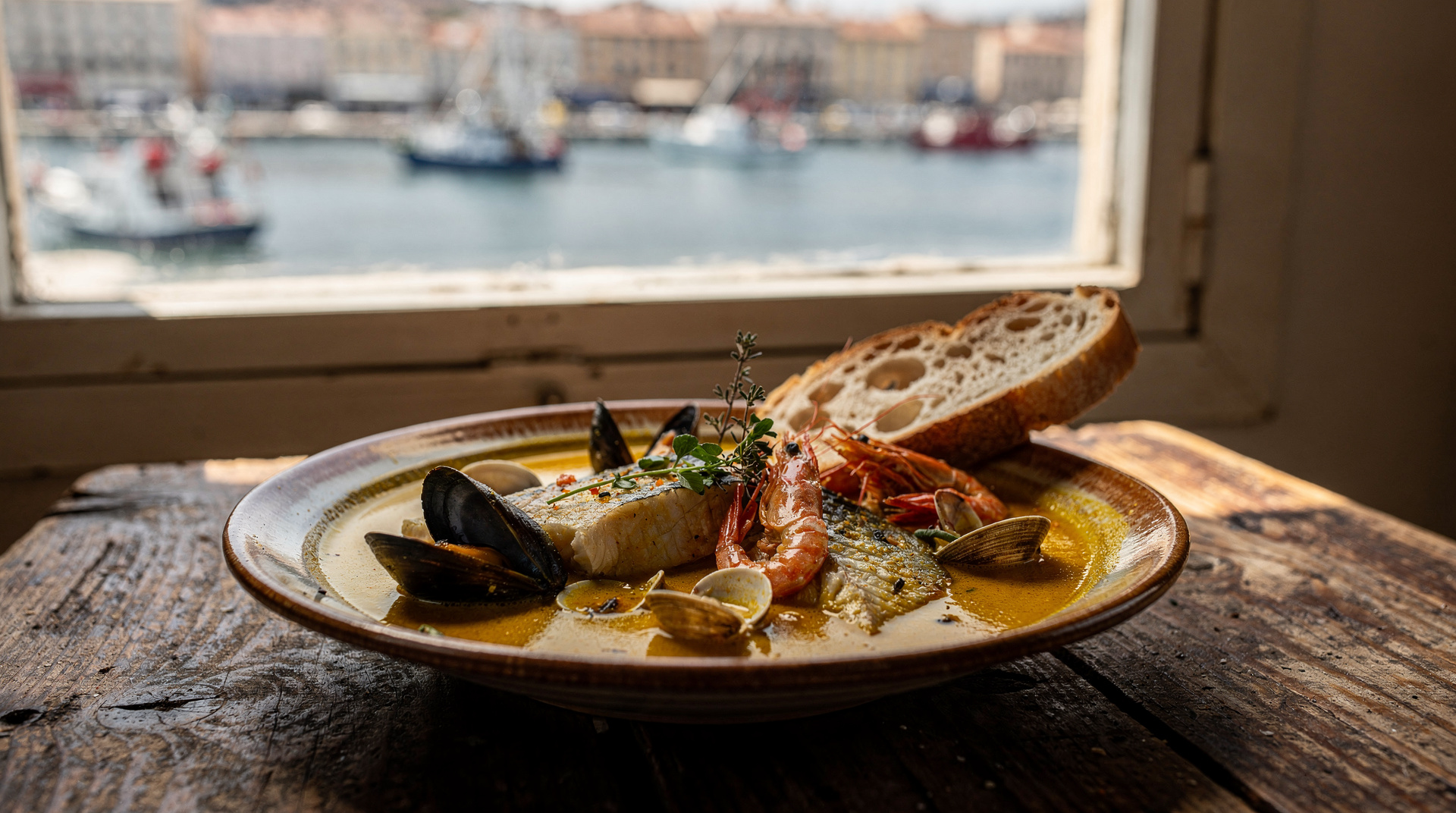
Marseille sits within the Provençal cuisine tradition but adds a handful of dishes that are specific to the port city rather than the wider region. Bouillabaisse — the fish stew built on rockfish, saffron, fennel, and orange peel, served with rouille and croutons — is the most famous; see the bouillabaisse guide for where to eat a genuine version and the tourist-trap guide for how to avoid a bad one.
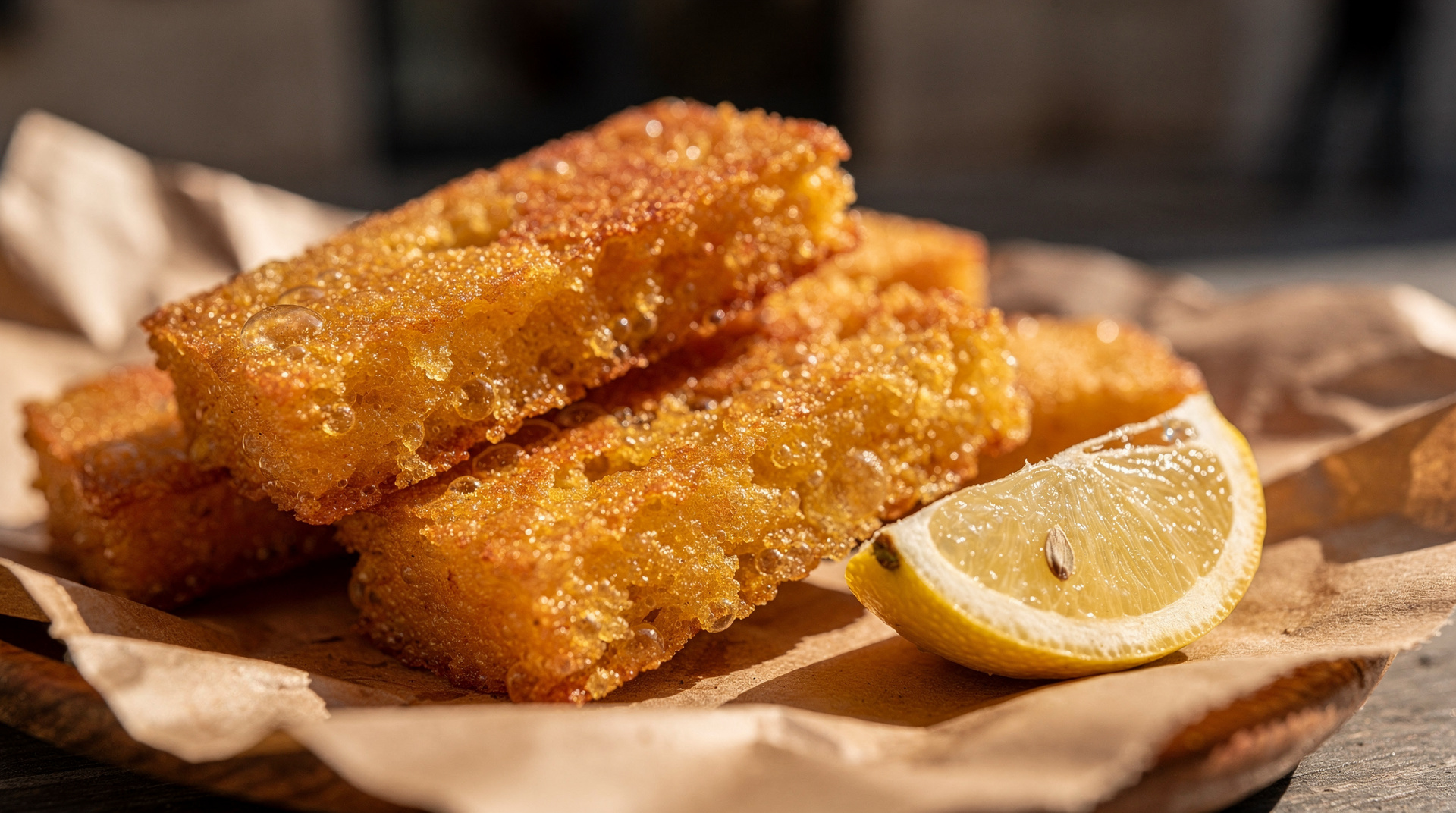
Pieds-paquets (stuffed sheep’s tripe and trotters, slow-braised) is a working-class Marseille classic rarely found outside the city. Panisses — fried chickpea-flour discs, crisp outside and soft inside — are a Marseille street-food staple sold from beachfront stands, distinct from the flatter Niçois socca despite the shared chickpea base.
Pastis and the aperitif ritual: No account of Provençal table culture is complete without pastis, the anise-flavoured aperitif diluted with water until it clouds. It is less a drink than a daily ritual — the early-evening pastis on a café terrace, ice cubes added last, is as characteristically Marseille as the food itself.
Frequently asked questions about Provençal cuisine explained
What is the difference between Provençal cuisine and Marseille cuisine?
Marseille cuisine is Provençal cuisine plus the port city's own additions - bouillabaisse, pieds-paquets, and panisses - shaped by centuries as a Mediterranean trading city. The olive oil, garlic, and herb foundation is shared across the whole region.Is Provençal food generally vegetarian-friendly?
Very much so. Ratatouille, soupe au pistou, tapenade, and most market vegetable dishes are naturally vegetarian, and many use no animal products at all beyond honey. Aioli is traditionally served with fish or salt cod, but a vegetable-only Grand Aioli plate is easy to request.
Top experiences
Bookable activities with verified prices and instant confirmation on GetYourGuide.