Marseille seafood guide: beyond bouillabaisse
Marseille: walking food tour with tastings
What seafood should I eat in Marseille beyond bouillabaisse?
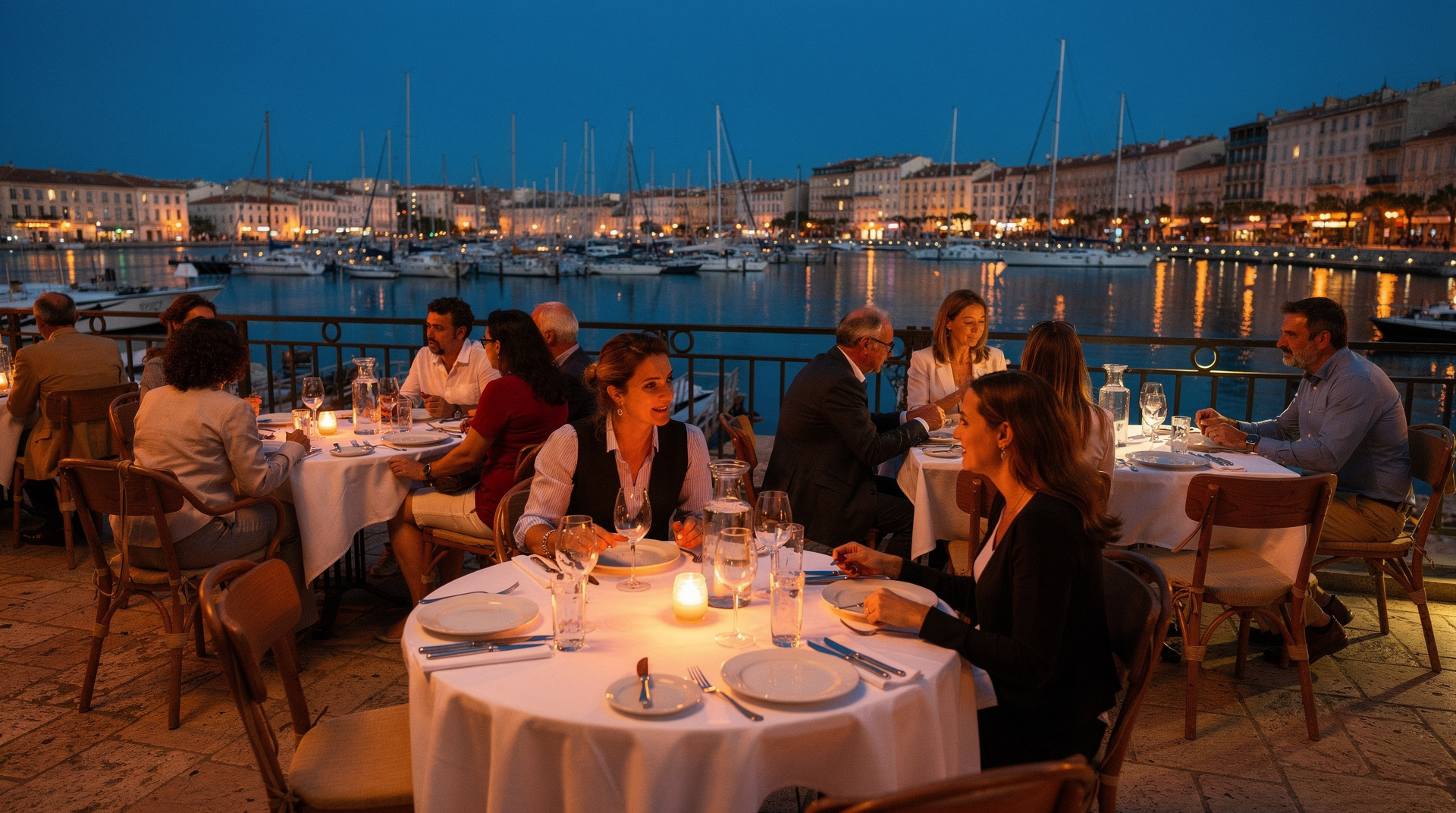
Sea urchins (oursins) in season (Sept–Apr), tellines (small clams), supions (small cuttlefish), whole grilled daurade, and loup de mer (sea bass). For the best seafood, go to the Vallon des Auffes or the restaurants facing the Plage des Catalans — not the Vieux-Port tourist strip.
The Mediterranean table beyond the famous stew
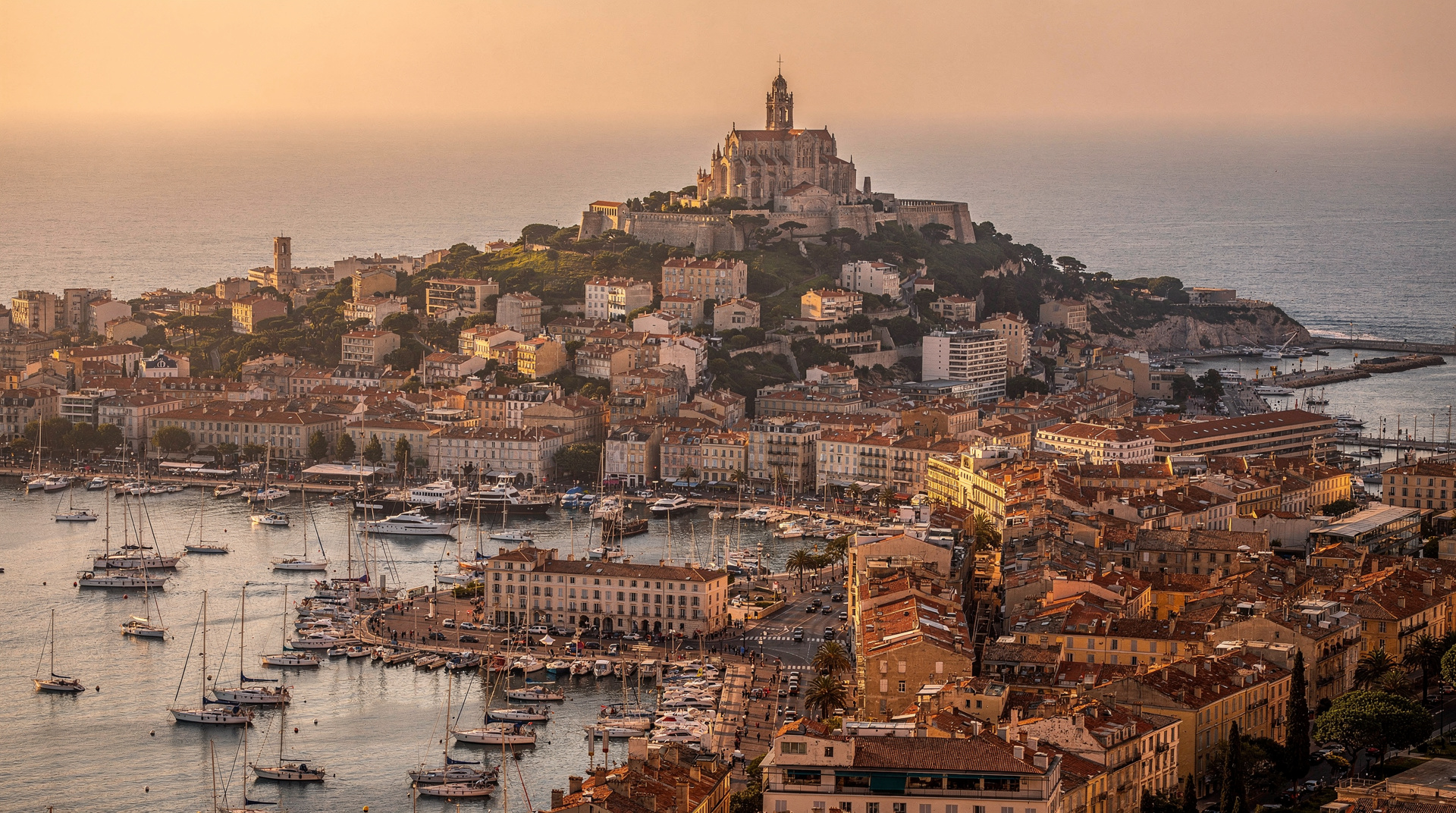
Bouillabaisse gets all the attention, and rightly — it is the most complex, the most ritual, and the most specifically Marseillais dish in existence. But the seafood culture of Marseille extends well beyond it, shaped by a daily fish market that supplies some of France’s best Mediterranean catch and by a restaurant scene that, at its honest best, serves fish with the confidence of proximity.
This guide covers what else to eat, when to eat it, and where the honest seafood is found.
At a glance
| Where | Vallon des Auffes and around Plage des Catalans for the most reliably sourced seafood; Quai des Belges fish market for the source itself |
| Cost | Around EUR 8–18 for a starter, EUR 20–35 for a whole grilled fish, EUR 35–65 per person for a plateau de fruits de mer |
| Time needed | An hour for the morning fish market; a full sit-down meal for the restaurant dishes |
| Getting there | Vallon des Auffes and Catalans are on the Corniche, reachable by bus or a scenic walk from the Vieux-Port |
| Best time | Morning (before noon) for the fish market; September–April specifically for sea urchins |
Sea urchins (oursins): the seasonal prize
Sea urchins are the most strongly seasonal seafood experience in Marseille, and arguably the most worth seeking out for a visitor who has not encountered them fresh.
Season: September through April. The sea urchin fishery is closed during the summer months (May through August) to allow reproduction. Any restaurant serving oursins in July has either frozen them or is sourcing them from outside France’s Mediterranean coast — both are legally possible but a shadow of the real thing.
What they are: The edible part of a sea urchin is the roe — the golden-orange lobes inside the spiny shell, which have a flavour that is intensely marine, faintly sweet, and faintly metallic in a way that tastes like the sea itself. Fresh sea urchins from the Mediterranean are richer and more complex than the Japanese uni served at sushi restaurants (which is typically from a different species) and completely unlike anything that comes from a tin.
How they are served: The traditional Marseille service is simple — cracked open at the table, six lobes of roe visible inside the half-shell, eaten with a small spoon and a piece of bread. Lemon is sometimes offered; olive oil occasionally. No elaborate sauce or garnish is appropriate.
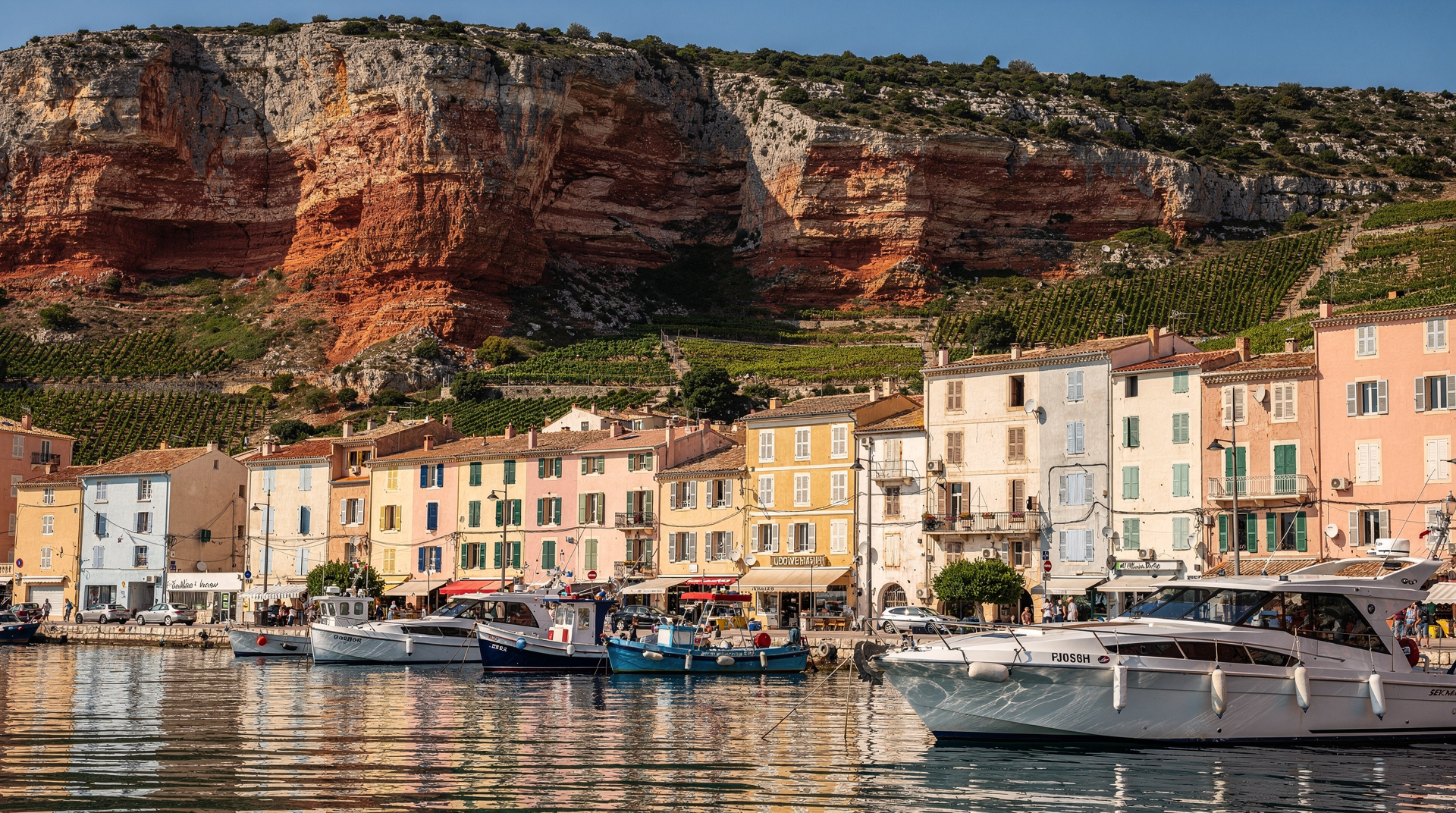
Where to find them: The Quai des Belges fish market (mornings, during season) has vendors selling oursins fresh from the catch. Several seafood restaurants near the Vieux-Port and at the Vallon des Auffes offer them as a starter during the season. Some Cassis port restaurants serve them particularly well in October–November.
Price: EUR 2–4 per sea urchin at market stalls; EUR 8–18 for a starter portion (3–6) at a restaurant.
The honest caution: The sea urchin experience depends entirely on freshness. A sea urchin that was caught two days ago and refrigerated is a pale version of one caught this morning. At the fish market, you see what you are buying. At a restaurant, ask when they were received.
Tellines: the small clam of Provence
Tellines (Donax trunculus) are small, pointed bivalves — no larger than a thumbnail — that live in the sandy shallows of Provence’s Mediterranean coastline. They have an intensely sweet, marine flavour and a texture that is best described as a more tender version of Manila clams.
How they are served: The traditional preparation is simple: a hot pan with olive oil, garlic, and flat-leaf parsley, then the tellines added and cooked just until they open (30–60 seconds). The result is a small bowl of open shells in a fragrant oil-garlic broth, eaten by scooping the flesh from each shell and mopping up the broth with bread. Salt is rarely needed — the tellines provide their own seasoning.
Season: Available year-round but at their best in spring and autumn. Summer tellines tend to be smaller and less flavourful; the spring run brings larger, fatter specimens.
Where to find them: Good seafood restaurants and traiteurs in Marseille and Cassis. Also available from the Quai des Belges fish market when vendors have them (not always — ask). The Vallon des Auffes restaurants reliably serve tellines when in season.
Price: EUR 10–18 for a starter portion at a restaurant; EUR 6–12 per kilo at market.
Supions: small cuttlefish at their finest
Supions is the local name for small cuttlefish (Sepia officinalis) of around 6–12 centimetres — too small for the large cuttlefish preparations of Spanish cuisine, but exactly the right size for the Provençal approach of cooking them whole, quickly, in olive oil with garlic and herbs.
Supions have a slight brininess and a delicate sweetness when fresh, with a texture that is firm but not rubbery when cooked correctly (the cuttlefish cooking error, almost universal, is overcooking until they are like pencil erasers). The ink can also be used in a separate preparation — supions en sauce noire, with their own ink creating a striking black sauce that is deep and savoury in a way that has no equivalent.
Where to find them: On menus at serious seafood restaurants from spring through autumn. Ask specifically — they are not always listed prominently. The Vallon des Auffes restaurants and several of the better places around the Catalans beach area are reliable sources.
Price: EUR 15–25 as a starter or small main.
Daurade and loup de mer: the everyday aristocrats
Daurade royale (gilt-head bream) and loup de mer (European sea bass) are the two fish that Marseille’s restaurant scene treats as the everyday benchmark of quality — not as special occasion fish but as the basis for a straightforward, honest lunch.
Whole grilled daurade: The preparation is simple: the fish split and grilled over charcoal or on a plancha, dressed with olive oil, lemon, and fennel fronds. Served with the bones intact (French diners are comfortable with this; the flesh comes away cleanly). A 400-gram daurade serves one person as a main course.
Loup de mer en croûte de sel: Sea bass baked in a salt crust is a classic Provençal presentation — the fish is packed in coarse sea salt and baked whole, then the crust cracked at the table and the fish revealed inside. The salt crust seals in moisture and concentrates flavour without making the fish salty. This preparation requires advance planning at a restaurant (it cannot be done quickly) and is worth requesting specifically.
Quality indicator: Fresh daurade or loup at a good Marseille restaurant will have eyes that are clear and bright, not clouded, and flesh that springs back when pressed. At the fish market, these are visible indicators to check before buying.
Price: EUR 20–35 for a whole grilled daurade as a main at a sit-down restaurant; EUR 15–25 per kilo at market.
Plateau de fruits de mer: the honest assessment
The plateau de fruits de mer — the tower of crushed ice loaded with oysters, langoustines, prawns, sea snails (bigorneaux), periwinkles, crab, and clam — is a visual spectacle and a genuine test of whether a restaurant is serious about its seafood sourcing.
What a good plateau contains: The oysters should be from a named specific source (Normandie fine de claire, Marennes-Oléron, or occasionally Corsican). Langoustines should be fresh, not frozen. The sea snails and periwinkles should smell of the sea, not of nothing. The crab should be Mediterranean spider crab (araignée) rather than frozen Norwegian king crab.
The tourist-trap version: Plateaux at restaurants along the Vieux-Port tourist strip frequently contain frozen langoustines, shellfish from unspecified origins, and oysters from industrial Pacific sources (Crassostrea gigas, the most common oyster in French restaurants — fine, but not the same as flat native oysters). The price (EUR 35–65 per person) does not necessarily correspond to sourcing quality.
Where to get a good one: Restaurants near the Vallon des Auffes, the Catalans beach, and some of the better addresses in Le Panier (which is physically close to the fish market supply chain) are more reliably sourced. Ask where the oysters are from before ordering.
The honest decision: A plateau de fruits de mer is a better value at lunch, where restaurants often have a fixed-price formule including a half-plateau and a glass of white wine for EUR 25–35. At dinner, the plateau expands and the price rises significantly for the same product.
Oysters from the Bandol bay area
The Bay of Bandol and the waters around La Ciotat and Cassis produce oysters (as well as mussels) that are sold at the fish markets and served at some restaurants in the area. These are not the famous Marennes-Oléron oysters of the Atlantic coast — they are Pacific oysters (Crassostrea gigas) farmed in the sheltered bays of the Provence coast, with a flavour profile that is less briny and more creamy than their Atlantic counterparts.
Where to find them: The Cassis fish market and the La Ciotat port area are the most reliable sources. In Marseille, they appear at the Quai des Belges fish market when local suppliers have stock.
The Bandol rosé pairing: Local oysters with a glass of Bandol rosé is a specific and locally appropriate combination — the wine’s structure (from the Mourvèdre content) pairs unusually well with the oyster’s mineral salinity in a way that a lighter Provence rosé does not replicate. Try this at a Bandol port restaurant if you are making the Bandol day trip.
The fish market as a seafood education
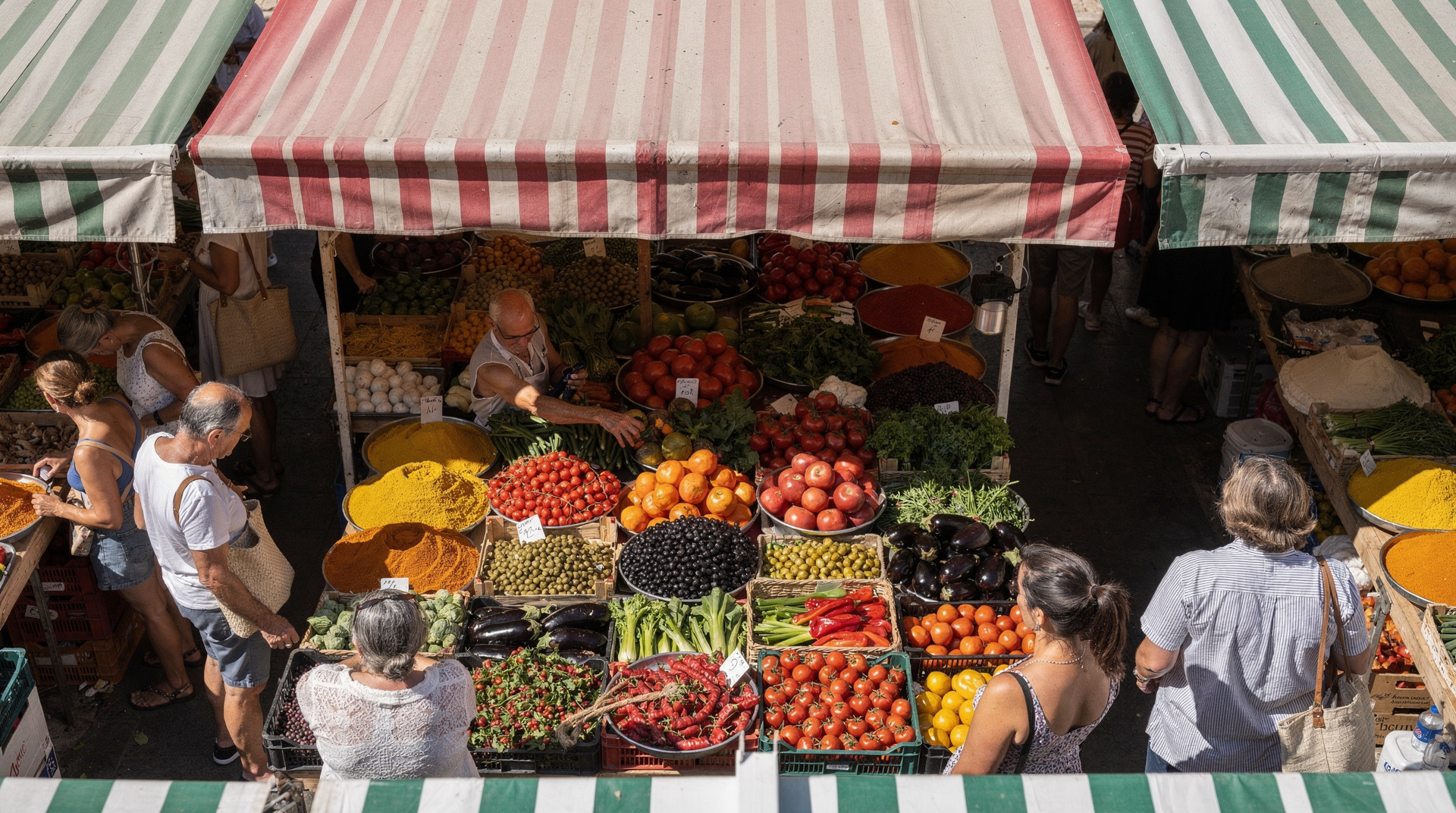
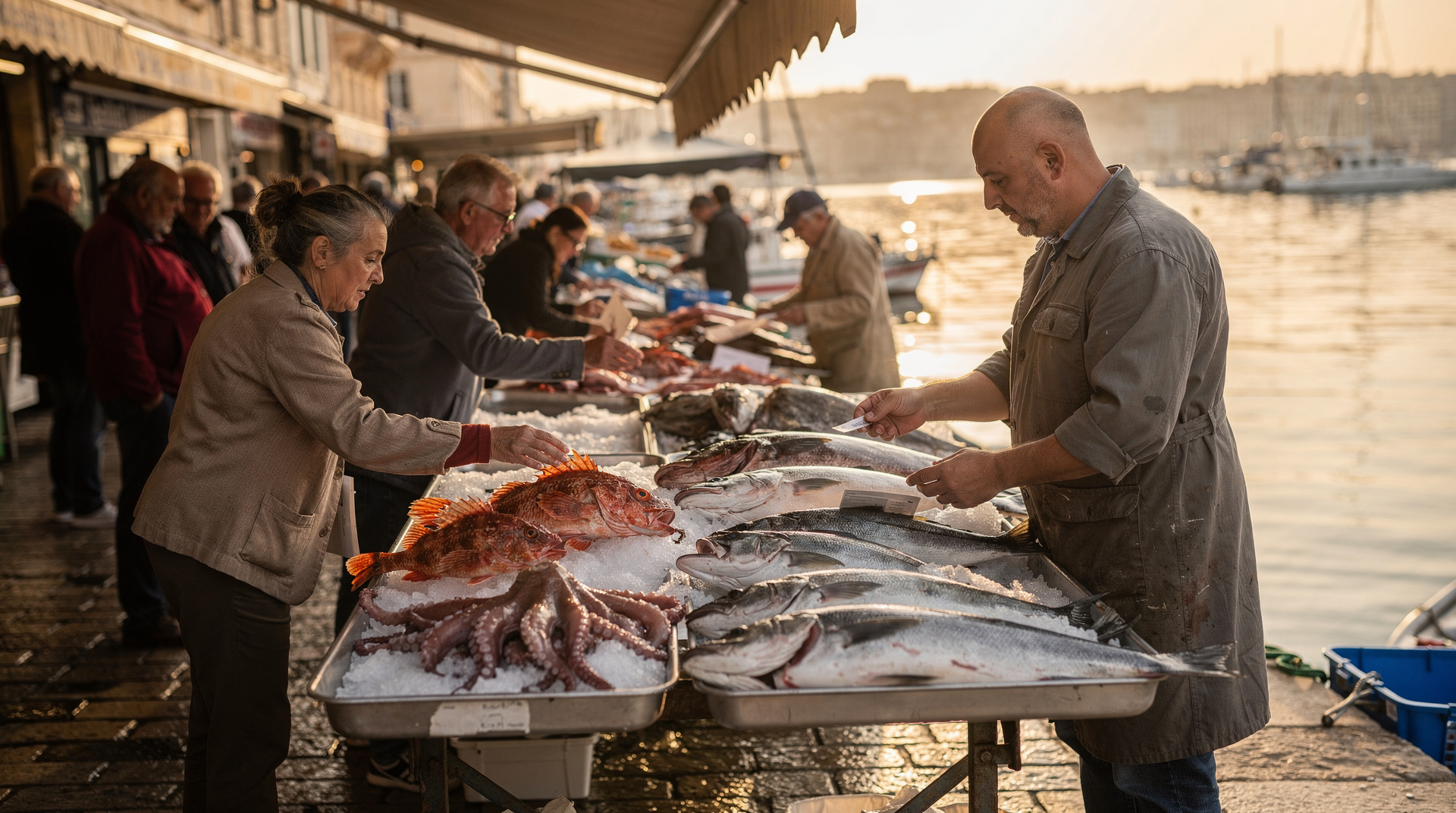
The Quai des Belges morning market is worth visiting even if you have no intention of cooking. Seeing what the Mediterranean actually produces at the source — the variety of rockfish, the seasonal appearance of sea urchins, the occasional creature that has no common English name — is an education in the local seafood culture that no restaurant menu provides.
What to look for: Rascasse (scorpionfish) — ugly, spiny, essential. Vive (weever) — slender and dangerous to handle due to venomous spines; the vendor will have removed them. Pageot (sea bream) — the most common everyday fish. Sar (white bream) — similar to daurade but leaner. And in season, the oursins (see above) that are arguably the most worth buying if you can eat them on the spot.
For eating logistics around the fish market, see the markets guide. For the Charter bouillabaisse restaurants where much of this fish ends up, see the bouillabaisse guide. For a guided food and seafood tour that covers the market and its related eating culture, see the food tour guide.
Seafood by season
| Season | What’s at its best | Notes |
|---|---|---|
| September–April | Sea urchins (oursins) | Fishery closed May–August; anything served in summer is frozen or non-local |
| Spring (Apr–Jun) | Tellines, supions | Larger, fatter tellines than the summer run |
| Summer (Jul–Aug) | Daurade, loup de mer, plateaux | Peak tourist season — sourcing quality varies most in this window; ask before ordering |
| Autumn (Sep–Nov) | Tellines, oysters, early oursins | Cassis and Bandol oysters at their best; good month for the Vallon des Auffes restaurants |
Where sourcing actually matters
The honest pattern across Marseille’s seafood scene is that proximity to the Vieux-Port tourist strip correlates inversely with sourcing quality. Restaurants a short walk or bus ride away — Vallon des Auffes, the Catalans beach area, parts of Le Panier — depend on repeat local custom rather than one-time tourist footfall, which tends to keep standards higher. If you’re planning a broader food itinerary around this pattern, our best restaurants guide and tourist traps guide cover the same dynamic for Marseille dining generally, not just seafood.
Building a seafood day around the Corniche
The easiest way to put this guide into practice is to follow the coast. Start at the market in the morning, then head along the Corniche for a long lunch at the Vallon des Auffes, where the small harbour setting is part of the pleasure. The Vallon des Auffes destination page explains the setting, and the Vieux-Port area guide helps you see where the market sits relative to the tourist strip you are avoiding for the meal itself. If you prefer sand and a view over a plate of grilled fish, the Les Catalans beach guide covers the neighbourhood where several of the restaurants mentioned above are found.
Getting between these places is part of the experience. The Marseille destination page gives the wider picture of the city, and the getting around Marseille guide covers the bus and walking options along the coast road, so you can arrive hungry rather than hot and flustered.
Pairing seafood with the rest of the table
Fish in Marseille rarely arrives alone. Starters, bread, olive oil and a glass of something cold shape the meal as much as the catch itself. For the wider culinary context, the Provençal cuisine explained guide shows how the sea fits alongside vegetables, herbs and olive oil, and the rosé explained guide helps you choose a bottle that suits grilled fish. A weekend that puts all of this together is laid out in the food and wine weekend itinerary, which is a good template if you want several seafood meals without repeating yourself.
If you would rather read about a meal than plan one, our team’s account of the best bouillabaisse we ever had gives a first-hand sense of what a good fish meal feels like in practice, and the Cassis day trip guide is the natural next step for harbour-side seafood outside the city.
Frequently asked questions about Marseille seafood guide
Is sea urchin (oursin) safe to eat raw? Yes — it’s eaten raw at room-fresh temperature straight from the shell, which is the traditional and only real way to have it. The quality risk is freshness, not food safety, at any reputable market stall or restaurant.
Can I buy fresh seafood at the market and cook it myself? Yes, if you have kitchen access — the Quai des Belges fish market sells directly to the public, and prices are noticeably lower than restaurant prices for the same fish. Ask vendors when the catch came in; most are happy to explain what’s freshest that morning.
Top experiences
Bookable activities with verified prices and instant confirmation on GetYourGuide.