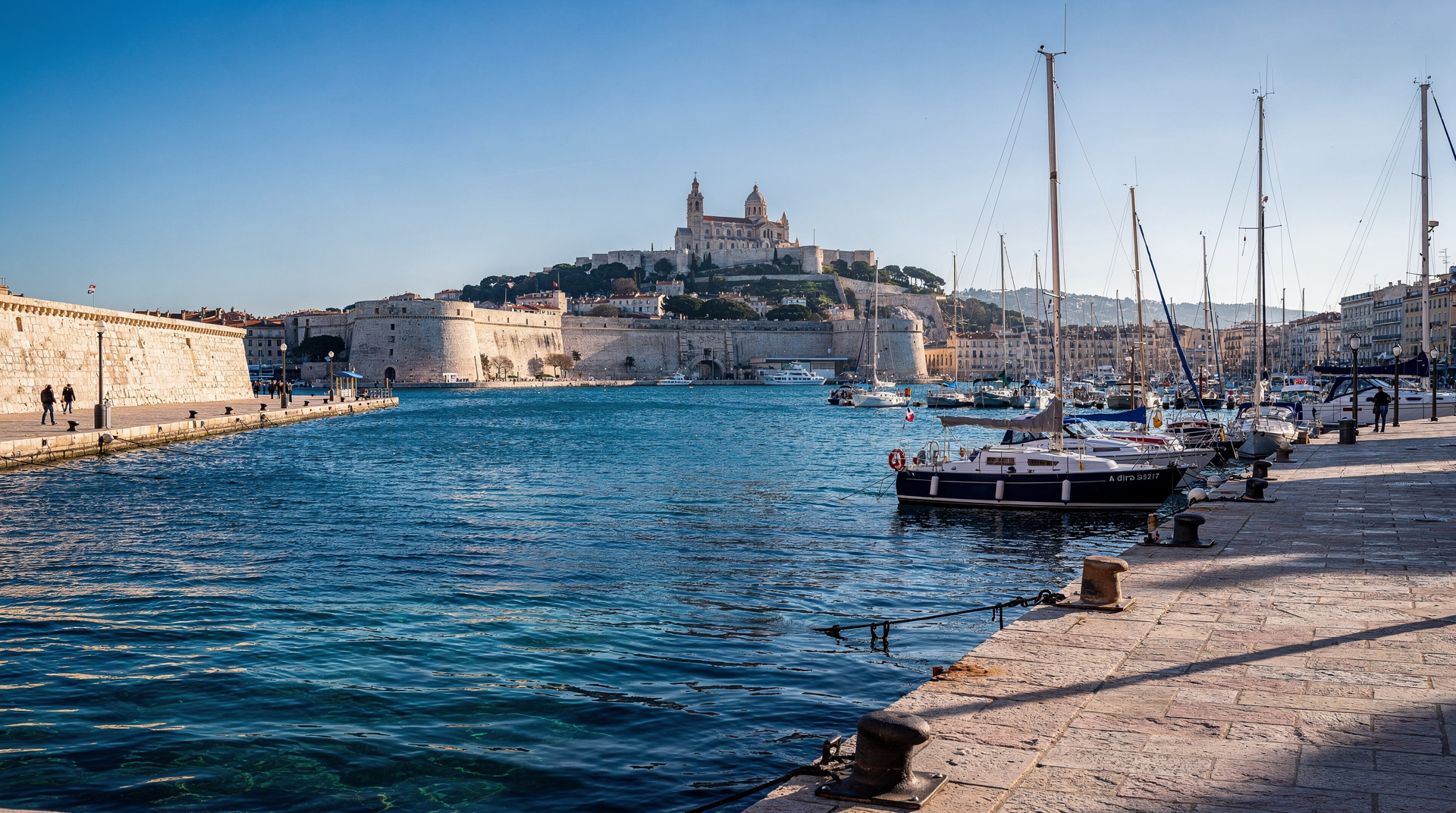
Marseille festivals and events guide: what's on year-round
Marseille: guided pétanque game with local aperitif
What are the best festivals and events in Marseille?
Marseille Jazz des Cinq Continents (1–12 July 2026) is the standout cultural festival. The Mondial la Marseillaise pétanque (3–8 July 2026) at Parc Borély is the world's largest pétanque competition and genuinely unmissable. The Foire aux Santons on La Canebière (late November to January) is France's best santon fair.
Marseille’s events calendar: an overview
Marseille’s event culture is shaped by its character: it is not a festival city in the way that Avignon (theatre) or Nice (Carnival) have built their identities around a single major event. Marseille has multiple events that reflect different aspects of the city — its Mediterranean fishing heritage, its North African and Corsican cultural mix, its international music connections, and its obsessive relationship with Olympique de Marseille.
This guide covers the events that are genuinely worth planning your trip around, and explains what each one actually delivers.
| Where | Venues across the city — Palais Longchamp, Parc Borély, La Vieille Charité, La Canebière, Vallon des Auffes, Orange Vélodrome |
| Cost | Free (pétanque as spectator, Fête de la Musique, Foire aux Santons) to around EUR 25-55 for ticketed jazz headliners |
| Time needed | A single festival fits an afternoon or evening; the July cluster rewards a dedicated week |
| Getting there | Central venues are walkable from the Vieux-Port; Parc Borély and the Vélodrome need a short bus or tram ride |
| Best time to catch the calendar at its peak | First two weeks of July |
Marseille Jazz des Cinq Continents (1–12 July 2026)
The 26th edition of Marseille’s premier jazz festival takes place from 1 to 12 July 2026, spanning 12 days across multiple venues in the city. The 2026 edition is dedicated to the centenary of Miles Davis (born 26 May 1926).
What it is: A jazz festival in the broad, pluralist sense — the five continents of the title reflect a programming philosophy that includes not only European and American jazz but African, Asian, Latin American, and Middle Eastern musical traditions. In practice, this means the festival programme ranges from mainstream jazz headliners to world music crossovers, making it accessible to people who do not consider themselves jazz enthusiasts.
Venues for 2026:
- The gardens of the Palais Longchamp — the festival’s historic main stage, an outdoor amphitheatre in the grounds of a 19th-century museum. Evening concerts under the open sky with the Longchamp palace as backdrop.
- La Vieille Charité — the 17th-century baroque charity hospital in Le Panier, now a cultural centre, used for smaller and more intimate concerts.
- Friche la Belle de Mai — the arts complex in a former tobacco factory, used for the more experimental and electronic-leaning programme.
- Conservatoire Pierre Barbizet and Parc Henri Fabre (new venue for 2026).
2026 headliners include: Marcus Miller (the Miles Davis centenary connection makes this particularly relevant), Ezra Collective, Israel Galvan and Michael Leonhart, Gogo Penguin, Kyoto Jazz Massive, Abdullah Miniawy, and Awa Ly.
Tickets: Headliner concerts at the Palais Longchamp require tickets (EUR 25–55); some events at other venues are free or lower-priced. Check the festival website (marseillejazz.com) for the full programme and booking — popular shows sell out.
Practical note: The festival overlaps with the Mondial pétanque (3–8 July), making the first week of July one of the best single weeks to visit Marseille if you want to experience the city at its most festive and culturally active.
Mondial la Marseillaise à Pétanque (3–8 July 2026)
The Mondial la Marseillaise is, simply, the largest pétanque competition in the world. The 65th edition takes place 3–8 July 2026, primarily at Parc Borély (the large park in the south of the city, 20 minutes by bus from the Vieux-Port) and across around 30 other playing areas throughout the city.
The scale: More than 16,000 players are expected, competing in triplette format (three-player teams). The competition is open to licensed and unlicensed players worldwide, in masculine, feminine, and mixed categories. This is not an elite-only event — it is open to anyone who can play pétanque, and the spectacle of 16,000 people simultaneously playing boules across the city’s parks and public spaces is one of the most distinctively Marseillais experiences available.
For spectators: The Parc Borély main competition area is free to enter as a spectator. The atmosphere is festive — pétanque at this level is watched with the same passionate commentary that football attracts in this city. There are food and drink vendors, music between rounds, and a general atmosphere of convivial competition.
Practical note: Parc Borély is 20 minutes by bus (number 19) from the Vieux-Port. Early afternoon (13:00–17:00) is the best spectator time — the main competition rounds are in full swing. The event does not require any booking or ticket to watch.
Fête de la Saint-Pierre — end of June
Saint-Pierre (29 June) is the feast day of the patron saint of fishermen. In Marseille, this is celebrated with particular warmth at the Vallon des Auffes — the small fishing inlet below the Corniche Kennedy where traditional fishing culture has survived in the form of working cabanons and a small community of boat owners.
The celebration takes various forms: a blessing of the boats, shared meals between the cabanon residents and newcomers, and informal music and pétanque. The Vallon des Auffes is worth visiting at any time (it is one of the most picturesque corners of Marseille and the location of Chez Fonfon, one of the bouillabaisse Charter restaurants), but around 29 June it has an additional layer of local festivity.
Not a large public event: The Vallon des Auffes Saint-Pierre is not a ticketed festival or a major public programme — it is a neighbourhood celebration. Arrive in the early evening around 29 June, walk down into the Vallon, and observe. Similar fishing community celebrations take place along the coast at Martigues and Port-de-Bouc on or around the same date.
Marseille Pride — June
Marseille Pride (Marche des Fiertés) takes place annually in June, typically in the latter half of the month. The march uses the Vieux-Port and the central streets as its route. In recent years it has grown significantly in both attendance and visibility, and it is one of the more festive events in the June calendar.
The evening following the march typically has organised events at bars and venues in and around Cours Julien. Check local event listings (available via the Marseille tourism office website) for the specific date in any given year, as it varies.
OM home matches — throughout the season
Watching Olympique de Marseille play at home in the Orange Vélodrome is one of the most culturally specific Marseille experiences available. OM’s relationship with the city is not a sports metaphor — it is a genuine social institution. The Vélodrome on match day is one of the loudest stadiums in Europe, and the pre-match gathering on the Vieux-Port and the collective intensity of 65,000 people in the stadium are experiences that require no prior football interest to find compelling.
Practical notes:
- Tickets for OM home matches should be booked well in advance for high-profile games (European matches, OM vs PSG, OM vs Lyon). Standard league matches have more availability.
- The Orange Vélodrome is in the 8th arrondissement, accessible by RTM bus or tram. Parking is not recommended for match days — use public transport.
- The Vieux-Port fills with supporters in the hours before the match — this is a spectacle worth experiencing even if you do not attend the game.
- The stadium tour (separate from match attendance) is available most days and covers dressing rooms, tunnel, and pitch. EUR 13–22; book in advance.
The OM season runs September–May, with European competition adding additional match dates if OM qualifies.
Foire aux Santons (late November–early January)
The Foire aux Santons is one of France’s most important fairs dedicated to the santon — the small painted clay figures used to create Provençal nativity scenes (crèches). Marseille’s santon tradition is the oldest in France; the first santon figures were created here after the Revolution when churches were closed and families created their own nativity scenes at home.
The fair takes place annually along La Canebière, Marseille’s main boulevard, from late November through early January. Several hundred artisan producers and shops display and sell santons ranging from simple painted clay figures for EUR 3–8 to elaborate hand-painted collectors’ pieces at EUR 50–200+.
Why it matters beyond Christmas decoration: The santon tradition has extended Provençal nativity scenes into full depictions of village life — the santon catalogue includes not only religious figures but the baker, the fisherman, the tambourine player, the garlic seller, the butcher, and dozens of other characters representing 19th-century Provence. Collecting these figures is a long-standing tradition in Provençal families. The fair is the best place in France to understand and acquire them.
Practical: Free to attend; the fair is entirely open-air along La Canebière. Saturday mornings are the busiest. The fair is generally cold — this is the Marseille winter, with mistral wind possible.
Year-round event calendar at a glance
| Month | Event |
|---|---|
| January | Foire aux Santons (end of fair) |
| March–April | OM spring league matches |
| May | OM end-of-season (if qualifying, European matches possible) |
| June | Fête de la Saint-Pierre (~29 June); Marseille Pride |
| July 1–12 | Marseille Jazz des Cinq Continents |
| July 3–8 | Mondial la Marseillaise à Pétanque |
| July–August | Beach clubs operating; Calanques boat season peak |
| September | OM season begins; Jazz residual events |
| October | Off-season Calanques (best for hikers) |
| November | Foire aux Santons begins (late November) |
| December | Foire aux Santons; Christmas markets |
OM and the city: context for the non-football visitor
Olympique de Marseille is not simply a sports club that Marseille happens to host. It is woven into the city’s identity in ways that have no equivalent in most European cities outside Glasgow or Liverpool. OM won the UEFA Champions League in 1993 — the only French club ever to do so — and the emotional weight of that achievement, over three decades later, is still very present in how the city talks about itself.
The stadium at the Orange Vélodrome (capacity around 67,000) is one of the loudest in Europe. Visiting for a home match — even as someone with no prior football interest — is a sociological experience: you are inside one of the clearest expressions of Marseille’s collective identity. The pre-match Vieux-Port gathering, where supporters congregate for hours before a big game, is a spectacle in its own right. The sound level inside the stadium during the supporter chants is extraordinary.
If attending a match is not possible (schedule, ticket availability), the stadium tour is available most non-match days and gives access to spaces that are off-limits during games: the player dressing rooms, the tunnel to the pitch, and the press areas. For visitors with any interest in how a major stadium functions, it is a well-executed 90-minute experience.
The santon tradition: more than Christmas decoration
The Foire aux Santons deserves more explanation than the event description above, because the santon tradition is genuinely one of the more interesting pieces of Provençal cultural history.
In 1793, during the Revolutionary period when churches were closed by the Republic, Marseille artisan Jean-Louis Lagnel began making small clay figures — “santons” from the Provençal “santoun,” meaning little saint — so that families could create nativity scenes at home without church access. The innovation was to extend the nativity beyond the standard religious figures: Lagnel created village characters — the baker, the fisherman, the hunter, the tambourine player — that placed the birth of Christ in a Provençal village setting.
This creative extension became a tradition. By the 19th century, Provençal nativity scenes routinely included not only the Holy Family, the Magi, and the angels but the full cast of village life — dozens of figures representing the artisans, merchants, and ordinary people of a 19th-century Provençal community. Today, specialist santon makers (santonniers) produce catalogues of hundreds of figures, from the classical religious set to figures representing specific local trades that have since disappeared.
The best santonniers at the Foire aux Santons are genuine artisans working in a tradition that has not fundamentally changed since Lagnel’s time. The figures are made from baked clay, hand-painted in fine detail, and signed by the maker. Prices reflect the quality of the work: from a few euros for simple mass-produced figures to EUR 100–300 for hand-made premium work. The Fair is the best place in France to understand this tradition and acquire pieces from established santonniers whose work will still be valued in 50 years.
Events that did not make this guide
A note on what is not here: Marseille has a significant number of smaller neighbourhood festivals, cultural events at the Friche la Belle de Mai, and temporary exhibitions at MuCEM and the Musée d’Histoire de Marseille that are worth checking as you plan your specific travel dates. The most useful resources are the Marseille Tourism office website (marseille-tourisme.com) and the local event listings at jds.fr for current-year specifics.
The Fiesta des Suds — a world music festival that was historically one of Marseille’s most significant annual cultural events — has been on hiatus in recent years. Check current status before planning around it.
For the full seasonal picture including best times to visit for weather and activities, see our best time to visit guide. For events in the context of summer planning, see Marseille in summer.
How the festivals compare for a first-time visitor
Not every festival deserves equal priority if you can only build a trip around one. The Mondial pétanque is the most accessible and requires zero planning — turn up at Parc Borély any afternoon during the week and you will see the spectacle for free. The Jazz des Cinq Continents rewards advance booking and appeals most to visitors who already like live music; it is not a casual walk-by event in the way the pétanque is. The Foire aux Santons is a strong choice for visitors travelling in the quieter winter months who want a genuinely local cultural experience rather than a generic Christmas market — see our Marseille in winter guide for what else that season offers.
For visitors deciding when to travel in the first place, our Marseille events calendar lays out the full year month by month, which is the better starting point if you have not yet fixed your dates. And if festivals are not your priority at all, the how many days in Marseille guide and first-timers guide both cover how to build a satisfying trip with no event dependency whatsoever.
Making the most of a festival visit
A festival gives your day a focus, but the rest of the city still needs planning around it. Getting from one venue to another is easiest with a clear idea of the network, so our Marseille metro guide and getting around Marseille are worth a read before you arrive. Parc Borély sits along the southern seafront, and the Prado beaches guide shows how to combine a pétanque afternoon with time by the water.
The Palais Longchamp concerts and the Fête de la Saint-Pierre bring you to very different corners of the city. For the fishing inlet, our Vallon des Auffes destination page explains what to look at once you arrive. For the Vélodrome and match days, see the Stade Vélodrome page, and for the bars around Cours Julien after Pride, the Cours Julien guide covers the neighbourhood.
If the santon fair has whetted your appetite for local crafts, the Marseille markets guide and the savon de Marseille shopping guide point to more places to buy something made in the city. To fit a festival into a longer stay, the Marseille in one day itinerary and the Marseille in three days itinerary leave room for an evening concert or an afternoon at the boules.
Frequently asked questions about Marseille festivals and events guide
Which Marseille festival is worth planning a trip around?
The Mondial la Marseillaise pétanque (3-8 July) is the single most distinctively Marseillais event and free to watch. The Jazz des Cinq Continents (1-12 July) overlaps it and adds a genuinely high-calibre music programme, making the first week of July the strongest single window for festival travel.Do I need to book tickets in advance for Marseille festivals?
For Jazz des Cinq Continents headline concerts, yes — popular shows sell out, so book at marseillejazz.com as soon as the programme is announced. The Mondial pétanque, Fête de la Musique, Fête de la Saint-Pierre, and the Foire aux Santons require no ticket at all.
Top experiences
Bookable activities with verified prices and instant confirmation on GetYourGuide.