Bouillabaisse in Marseille: tourist trap or worth the price?
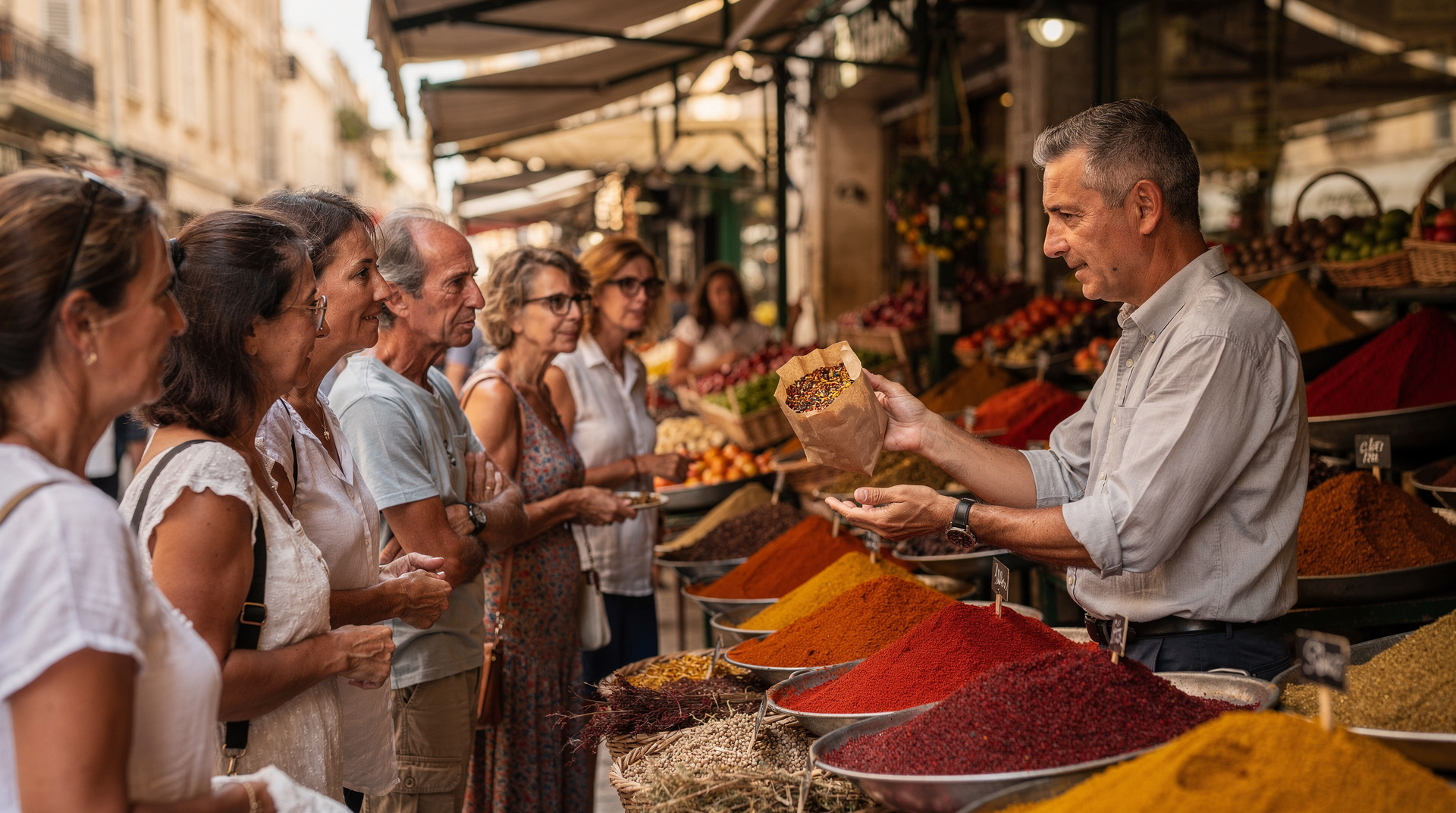
Marseille: walking food tour with tastings
Is bouillabaisse in Marseille a tourist trap?
The EUR 25–40 'bouillabaisse' menus along the Vieux-Port are largely poor imitations — fish soup with rouille, not the real dish. Authentic bouillabaisse at a Charter signatory costs EUR 65–90 per person, requires 24-hour advance ordering, and serves 2+ people. It is genuinely excellent. The tourist version is not.
What bouillabaisse actually is
Before talking about the trap, it is worth understanding the dish — because most of the confusion stems from tourists not knowing what they should be ordering in the first place.
Bouillabaisse began as a poor fisherman’s dish. The fish that could not be sold at market — the bony, scaleless, odd-looking species that had no buyers — went into a large pot with olive oil, garlic, tomato, fennel, and saffron. The broth was eaten with bread by the fishermen; the fish came out later. Over several centuries, as the dish moved from the fishing villages of the Côte Bleue and the Lacydon into Marseille restaurants, it became more elaborate, more expensive, and more subject to imitation.
By the 1970s, the word “bouillabaisse” had been appropriated so widely — applied to fish soups of every quality level and composition — that the original dish was becoming illegible. In 1980, eleven Marseille restaurateurs collaborated to write the Bouillabaisse Charter, a document that codified exactly what the dish must contain and how it must be served.
At a glance
| Real bouillabaisse costs | Around EUR 65-90 per person at a Charter signatory |
| Tourist-strip version | Around EUR 25-40 — a different, single-bowl dish, not the real ritual |
| Time needed | 1.5-2 hours for the full two-course service |
| Book ahead | Yes — 24 hours minimum, 48 hours preferable |
| Minimum diners | Two people — bouillabaisse is not scaled to a solo portion |
| For a full restaurant list | See our dedicated bouillabaisse in Marseille guide |
The Bouillabaisse Charter of 1980
The charter is a short, precise document. Its key requirements:
Fish composition: At least five species of local Mediterranean fish, mandatory species including rascasse (scorpionfish, the essential), grondin (gurnard), saint-pierre (John Dory), and vive (weever). Each species has a different texture and contributes a different element to the broth. The rascasse is non-negotiable — its bones and head are what give the broth its specific character.
The broth: Made with the fish frames and heads, olive oil, tomatoes, onion, leek, fennel, garlic, saffron, and orange peel. It is cooked at a rolling boil (bouillir-abaisser, the verb that gives the dish its name). Nothing is blended — this is not a bisque or a velouté.
The service: Two courses. The broth arrives in a tureen at the table, poured over toasted bread that has been rubbed with garlic and spread with rouille (a saffron-and-garlic mayonnaise made from scratch, not from a jar). Then the fish — whole pieces or large portions — arrives separately and is plated at the table by the waiter or the cook.
The minimum: At least two people. One cannot eat authentic bouillabaisse alone — the preparation is not scaled to a single portion and the fish selection requires a minimum quantity.
The charter was originally signed by eleven restaurants in the Bouches-du-Rhône department, ranging from Cassis to Martigues. The signatory list has changed over the decades as restaurants have opened, closed, or dropped their membership. The current verifiable signatories include Chez Fonfon, Le Miramar, and Le Rhul — all three long-established names that have been part of the charter since its founding period.
The tourist trap: what you actually get for EUR 25–40
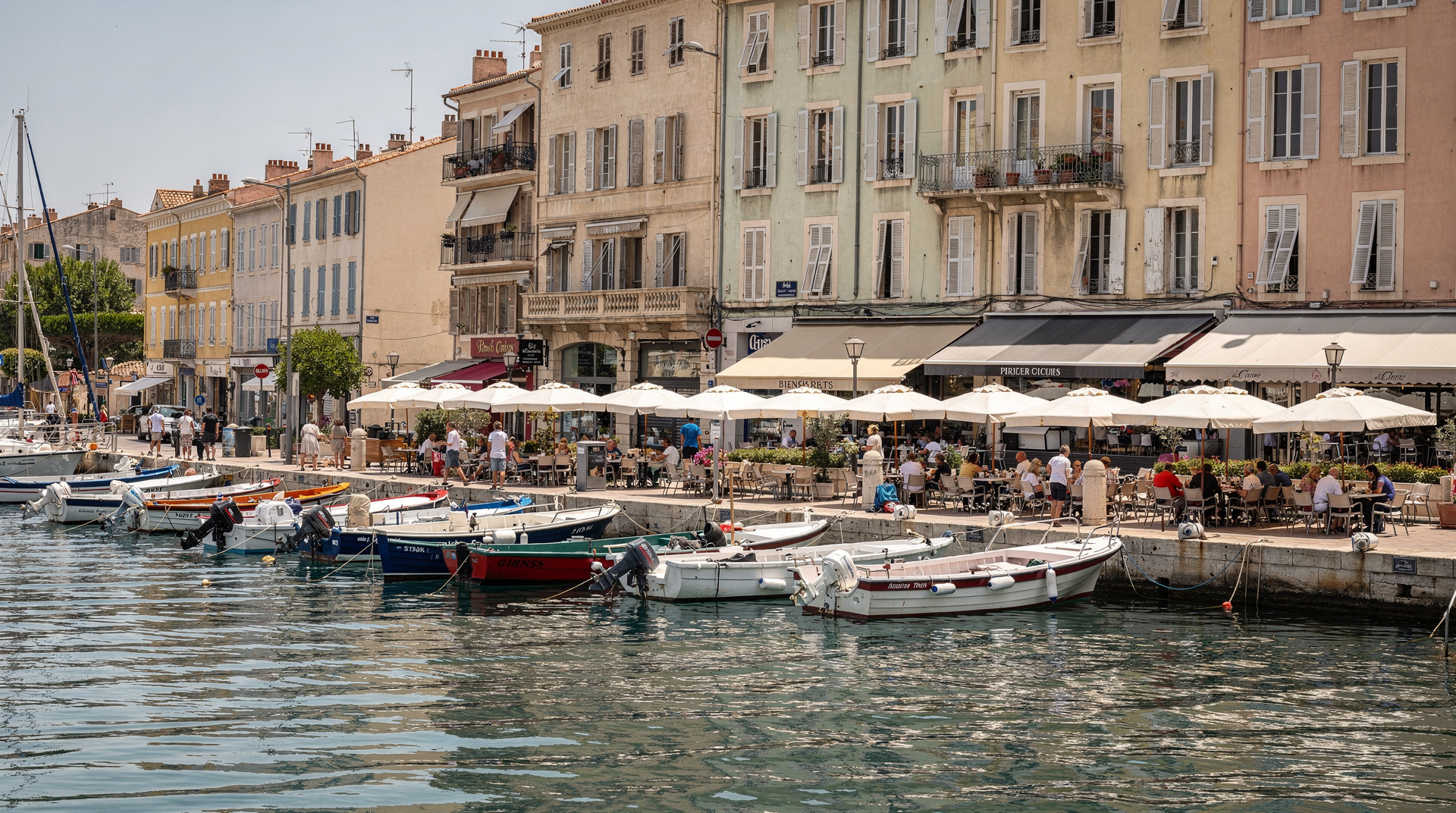
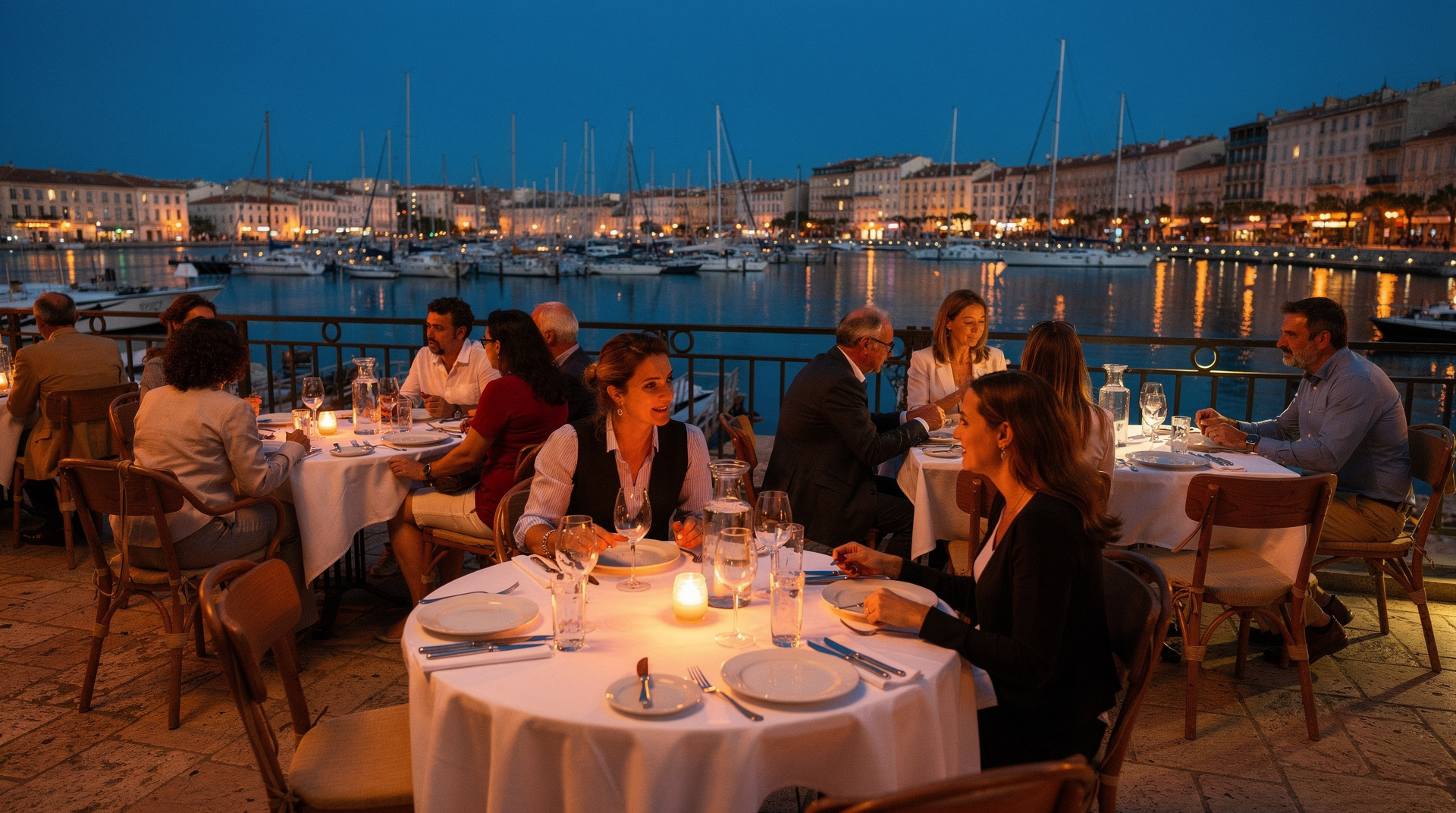
Walk along the Quai du Port or the Quai de Rive Neuve in the Vieux-Port and you will see chalkboards and laminated menus offering “bouillabaisse” for EUR 25, EUR 30, EUR 35, sometimes EUR 40. These dishes are not bouillabaisse.
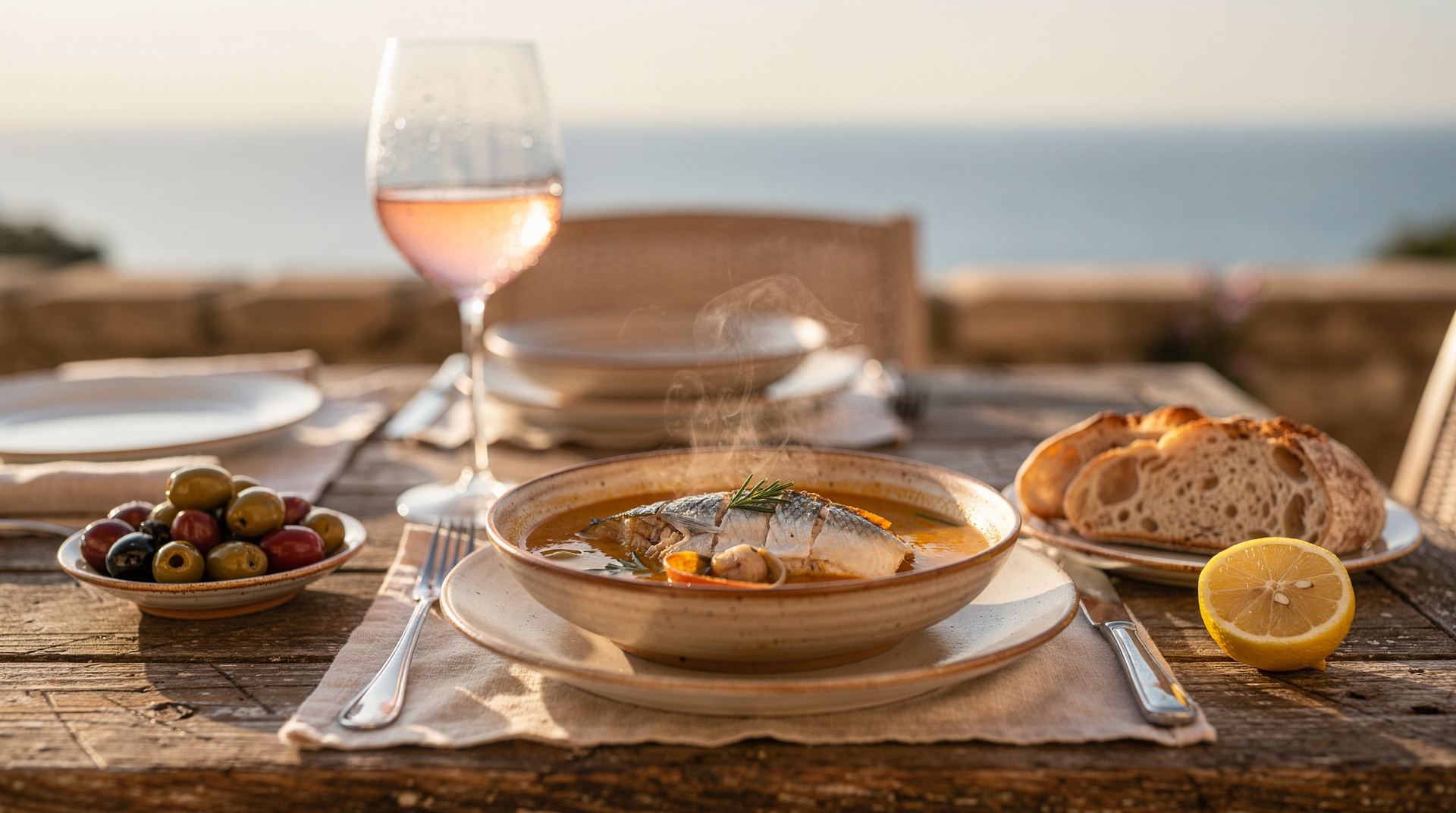
What they typically are: fish soup — sometimes decent, sometimes made from frozen fish concentrate — served in a single bowl with a small ramekin of rouille and some bread on the side. This is a perfectly legitimate dish. In Marseille it is sometimes called soupe de poisson (fish soup) or, in slightly more honest establishments, “soupe de poisson à la marseillaise.” When it is labelled “bouillabaisse” on a tourist-zone menu, it is a misrepresentation, and you are paying EUR 25–40 for something that bears almost no resemblance to the dish you are imagining.
The specific reasons this cannot be real bouillabaisse:
- It is available without 24-hour advance ordering
- It is priced at a fraction of what the fish cost to purchase at the morning market
- It is served as a single bowl rather than the two-service ritual
- At that price point and turnover rate, the fish used are typically not the five specified species but whatever is cheap and available
The Vieux-Port restaurant strip exists to feed a large number of tourists quickly. There is nothing wrong with eating there — but eating “bouillabaisse” there is paying premium tourist-zone prices for a mediocre version of a dish that exists in its genuine form a short taxi ride away.
What authentic bouillabaisse actually costs — and why
At a Charter signatory restaurant, expect EUR 65–90 per person for the bouillabaisse service. This is the real price, and understanding why it costs this much is part of understanding the dish.
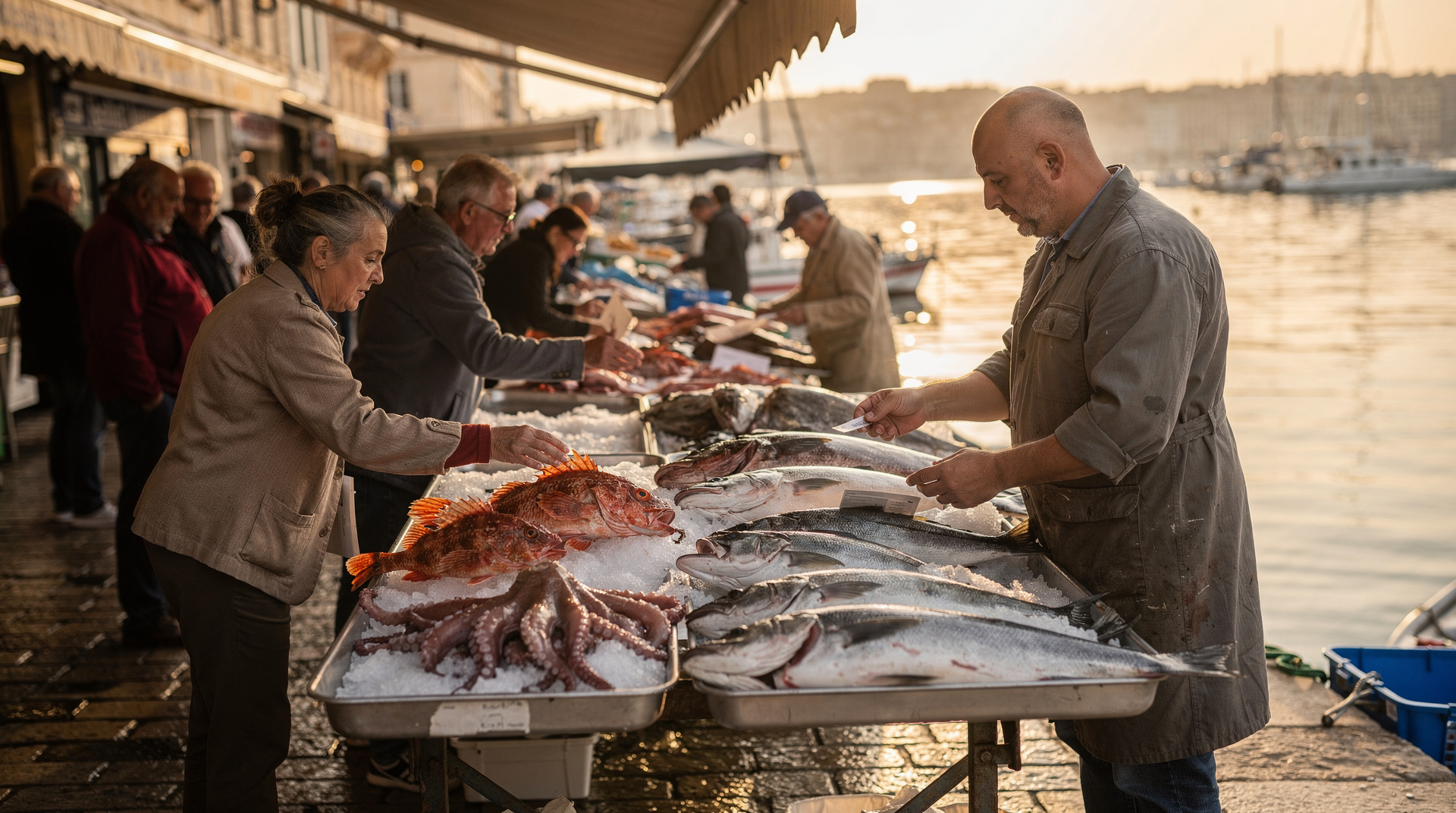
The fish cost. Rascasse, saint-pierre, and vive are not cheap fish. They are not farmed. They come from the local Mediterranean fleet and are purchased at the Vieux-Port fish market or directly from fishermen that morning. A proper bouillabaisse for two people requires significant quantities of multiple species.
The labour. The broth preparation alone takes several hours. The rouille is made from scratch. The fish must be prepped, timed, and served in the correct sequence. A table ordering bouillabaisse takes considerably more kitchen and front-of-house time than a table ordering à la carte dishes.
The advance booking. Because of the sourcing and preparation requirements, Charter restaurants require orders 24 hours in advance — sometimes 48 hours. If you call on the day and ask for bouillabaisse tonight, the answer will be no. This is not a bureaucratic inconvenience; it is the only way the dish can be made properly.
The three established Charter restaurants
Chez Fonfon at the Vallon des Auffes — a small inlet below the Corniche Kennedy — is probably the most atmospheric setting for bouillabaisse in the city. The restaurant has operated continuously since 1952, is family-run, and sits literally at the waterline of a miniature fishing port. The bouillabaisse here is made with fish from the boats that fish out of the Vallon itself. Book well in advance; this is a sought-after table.
Le Miramar on the Quai du Port faces the Vieux-Port directly and has been a charter signatory since the founding. It has diversified over the years — including bouillabaisse cooking classes in multiple languages — but the traditional service remains. Location-wise it sits in the tourist zone but operates with a different register.
Le Rhul on the Corniche Kennedy has offered bouillabaisse since 1948 and is explicitly described in its own materials as a founding member of the charter. The Corniche setting is less central but provides views over the bay.
All three require advance reservations for bouillabaisse; call or email the day before at minimum. None of them is cheap; all of them represent the dish honestly.
When to skip bouillabaisse entirely
If you are visiting Marseille for two days or fewer, are on a tight budget, or are not a fish eater, do not feel obligated to eat bouillabaisse. The dish has been elevated to a tourist obligation that it should not be — it is a specific, expensive, time-consuming experience that rewards people who want that specific experience. If your trip does not include the right dinner slot, the right budget, and the right advance planning, skip it without guilt.
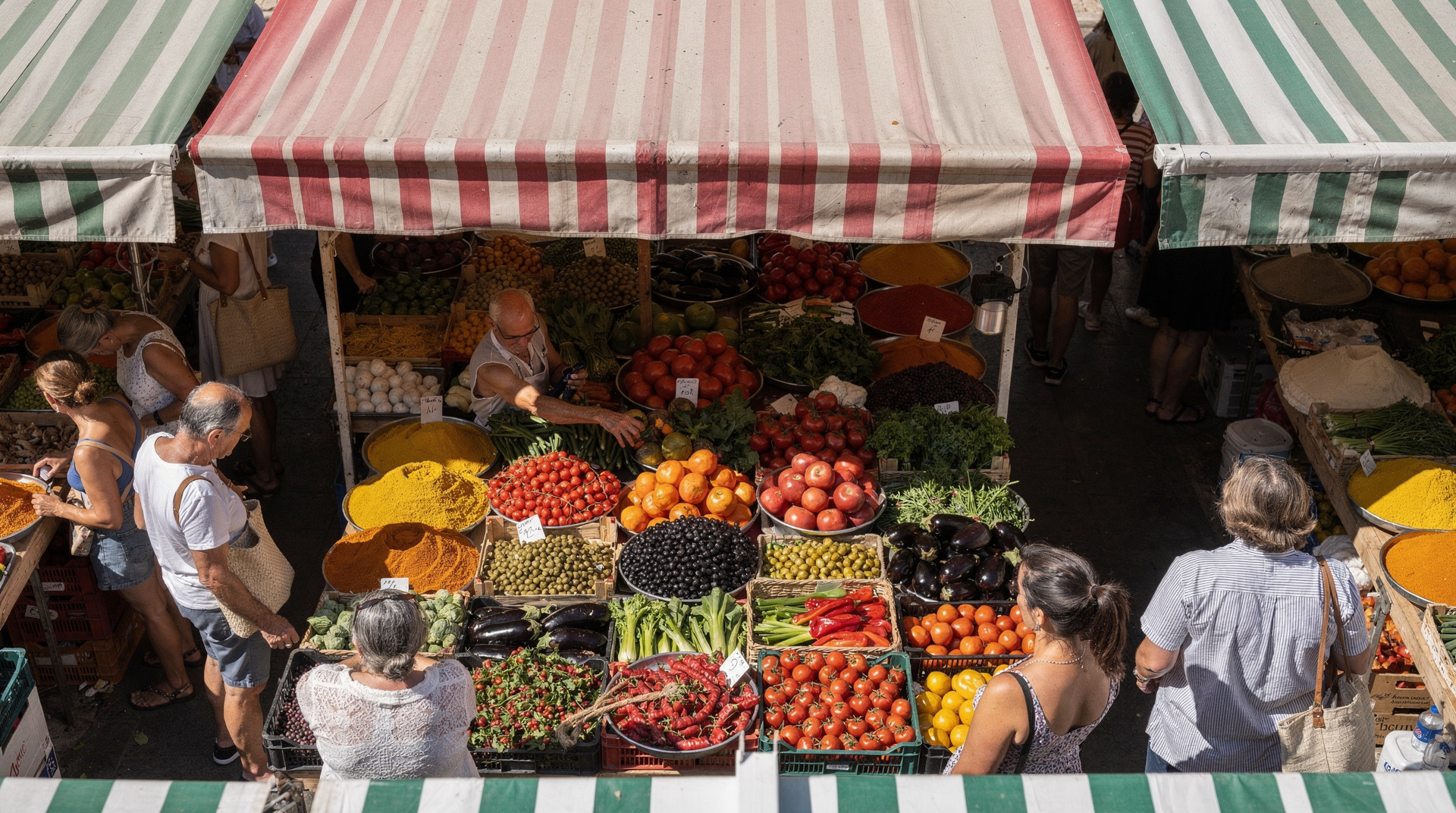
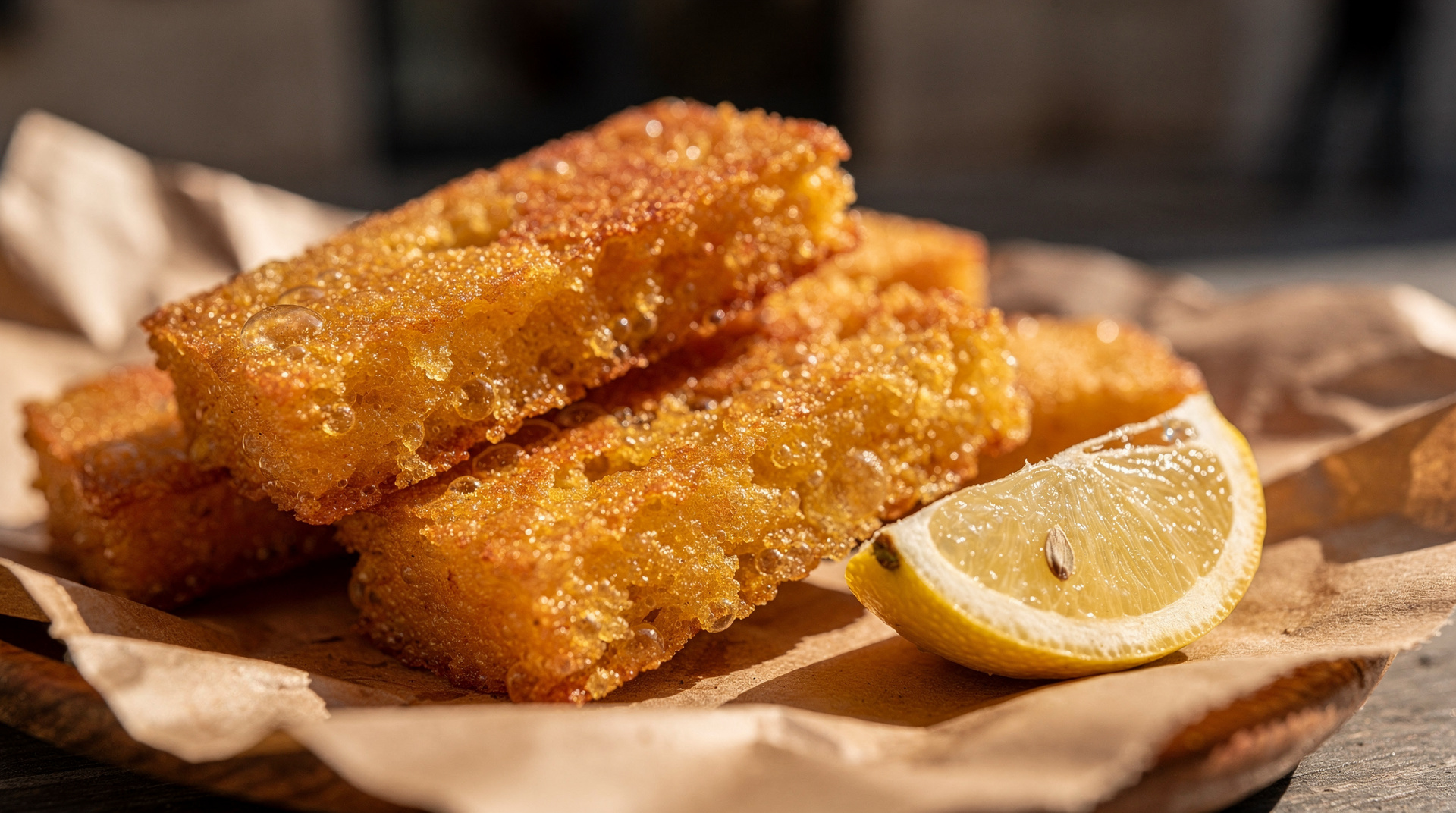
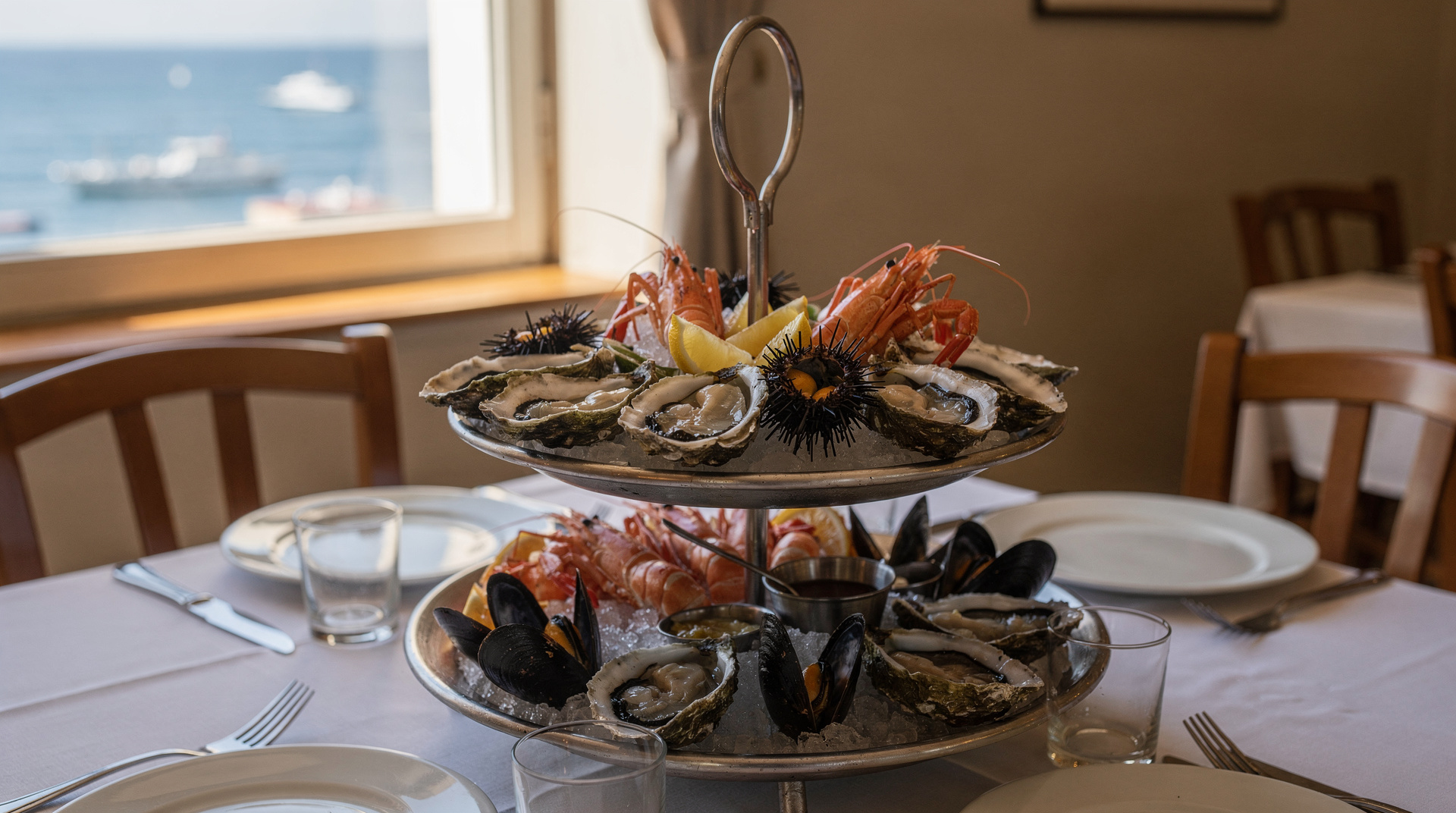
What to eat instead: The fish counters and restaurants around the Vieux-Port fish market serve grilled fish, raw shellfish, sea urchin (oursins) when in season, and simple plates of the morning’s catch that are much more honest value for money. The Noailles market and the streets around it offer excellent North African and Provençal street food. A plate of grilled rouget (red mullet) with aioli at a reasonable restaurant near the market is a better Marseille food experience than EUR 35 tourist bouillabaisse.
What bouillabaisse contains — the specific fish
Understanding why bouillabaisse cannot be cheap requires understanding the fish. The Charte de la Bouillabaisse Marseillaise specifies that the dish must contain fish from the Provençal coast, caught locally. The mandatory species include:
Rascasse (scorpionfish): The non-negotiable centre of bouillabaisse. The rascasse is a bony, red-skinned fish of no great size or visual appeal, but its bones and head are what give the broth its specific, unreplicable flavour. Without rascasse, the dish is not bouillabaisse. The rascasse cannot be farmed and cannot be imported from a distant sea without losing its character.
Saint-pierre (John Dory): A large flat fish with a distinctive black spot (the legend says it is Saint Peter’s thumbprint) and a firm, flavourful flesh that holds together in the broth. Expensive at the market.
Grondin (gurnard): Contributes to the broth with a different flavour profile from the rascasse. Several varieties exist; the grondin rouge is the preferred form.
Vive (weever fish): A small, bony, sharp-finned fish (the spines are toxic — the fishermen who handle them are careful) that is essential to the traditional formulation. Not decorative; its contribution is flavour to the broth.
Plus additional species — typically congre (conger eel), merlan (whiting), and in some formulations fielas (dogfish) — to reach the minimum of five required species.
This is not an ingredient list that a restaurant can approximate with frozen sea bass and tinned fish stock. The species are specific, local, and expensive. When you eat genuine bouillabaisse, you are eating the specific flavour profile of the western Mediterranean’s inshore fish — an ingredient list that cannot be faked.
The rouille: a note on what it should be
The rouille that accompanies bouillabaisse is a specific preparation: saffron, garlic, olive oil, and egg yolk, with a little bread crumb, pounded or blended to a thick rust-coloured mayonnaise (rouille means “rust” in Provençal). It is served alongside the broth, spread on the toasted bread that goes into the bowl.
The jarred rouille sold in French supermarkets is not rouille in the bouillabaisse sense — it is a generic garlic condiment. Charter restaurants make rouille from scratch, coloured and flavoured by real saffron. If the rouille is pale or odourless, it was not made with quality saffron; if it is from a jar, it is not the real thing.
The 24-hour rule: why it matters
The requirement to order bouillabaisse 24 hours in advance is not a service inconvenience or a restaurant convention designed to discourage casual orders. It is a culinary necessity.
The base broth (the court-bouillon built from fish frames, vegetables, and aromatics) needs several hours of cooking. The specific fish must be sourced from the morning market — this means the restaurateur needs to know two days before how many portions are required so they can specify the fish to their supplier or select the right quantity at the Quai des Belges. Saffron must be bloomed properly; the rouille made fresh. A two-service table requires dedicated time from the service staff.
No serious kitchen can do all of this in the 45 minutes between a walk-in table ordering bouillabaisse and expecting to eat it. If a restaurant offers to serve it the same day, it is either using pre-made base (common in the tourist strip) or grossly misrepresenting the preparation time.
The etiquette of eating it
For the uninitiated: when the broth arrives in the tureen, you pour a ladleful over your toasted bread in the bowl, adding a spoonful of rouille on top of the bread. You eat the broth and bread first, as a first course. Then the fish arrives on a platter, presented whole or in large pieces, and the waiter plates it for you alongside the remaining broth. The fish is eaten as a second course. The total meal at a Charter restaurant runs 1.5–2 hours.
This is not a meal for people in a hurry. It is not a meal for solo diners, for people who dislike bony fish, or for children under 10. It is a specific ritual that has been refined over decades by the restaurants that have dedicated themselves to it. When it works — when the broth is properly saffron-deep and the rascasse is perfectly timed — it is one of the great fish dishes of France.
For the broader picture of tourist food traps and genuine alternatives, see our tourist traps guide. For restaurant recommendations across all price points, see the best restaurants guide.
Fitting a bouillabaisse dinner into your trip
Because the dish needs planning, it works best when you decide early and build the rest of the day around it. Book the table as soon as your dates are fixed, then keep the afternoon light so you arrive hungry and unhurried. A long lunch or dinner of this kind suits a slower day: a morning wandering Le Panier or the Vieux-Port area, then a walk to the table.
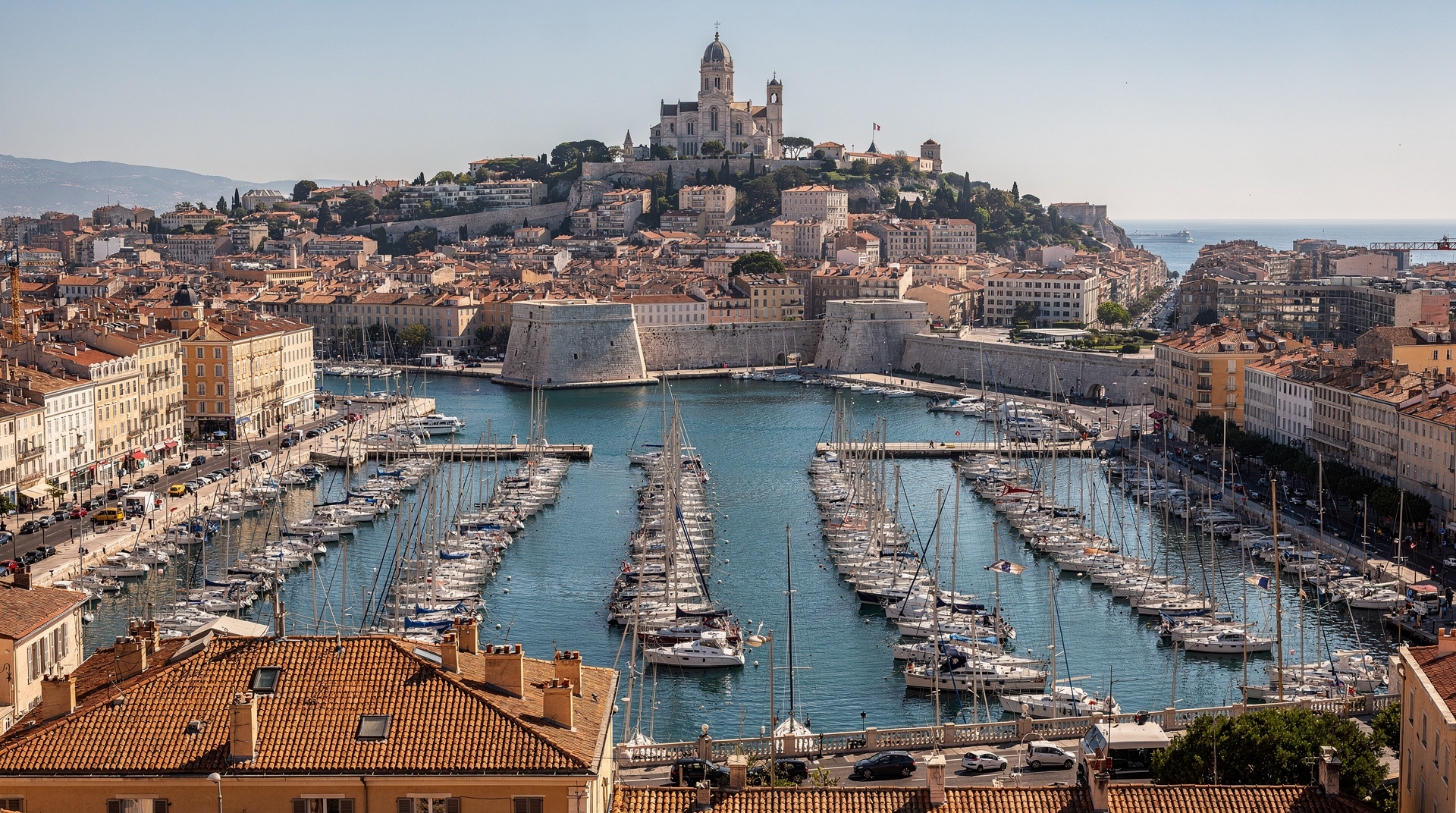
If you are choosing a setting, the little harbour at Vallon des Auffes pairs naturally with a sunset stroll afterwards, while the Vieux-Port puts you close to the fish market that supplies the kitchens. Travellers who want the full picture of the city’s tables can compare the options in our Marseille food tour guide before committing to one expensive meal.
Pacing matters too. A two-service meal is heavy, so plan something gentle afterwards rather than a hike or an early start. If your days are already packed, the Marseille in three days and Marseille in two days itineraries show where a long meal can sit without squeezing everything else. For wider context on the regional cooking behind the dish, read Provençal cuisine explained.
Finally, if you would rather spread your food budget across several tastings, the Marseille street food guide and the best restaurants guide offer honest alternatives that do not depend on a booking made the day before.
Where to go deeper
For the complete Charter restaurant roster, the four-course service breakdown, and current booking details, see our dedicated bouillabaisse in Marseille guide. For the fish market that supplies both the tourist-strip soup and the Charter kitchens, see the Marseille markets guide.
For the wider seafood scene beyond this one dish, see our seafood guide, and for planning your first visit around food and other classic experiences, see Marseille for first-timers. One traveller’s account of finally finding the real thing is in best bouillabaisse we ever had.
Frequently asked questions about Bouillabaisse in Marseille
How much does real bouillabaisse cost in Marseille?
At a Bouillabaisse Charter signatory restaurant, expect EUR 65–90 per person. The price reflects the minimum five fish species required (including rascasse, grondin, and saint-pierre), the slow preparation time, the rouille made from scratch, and the bread. It cannot be produced cheaply and served the same day — genuine bouillabaisse requires ordering 24 hours in advance.What restaurants serve authentic bouillabaisse in Marseille?
The original 1980 Bouillabaisse Charter was signed by 11 Marseille-area restaurateurs. Current signatory restaurants verifiable at time of writing include Chez Fonfon (Vallon des Auffes), Le Miramar (Quai du Port), and Le Rhul (Corniche Kennedy). The Charte de la Bouillabaisse Marseillaise is publicly available and the current signatory list can be verified at marseille-tourisme.com.What is the difference between real bouillabaisse and tourist versions?
Real bouillabaisse is a two-service ritual: the broth arrives first in a tureen with toasted bread and rouille, then the fish is presented separately and plated at the table. The fish must include at least rascasse (scorpionfish), grondin (gurnard), saint-pierre (John Dory), and two other specified local species. Tourist versions are typically a single bowl of fish soup — sometimes good fish soup, but not bouillabaisse.Do I need to book bouillabaisse in advance?
Yes, at Charter restaurants — 24 hours minimum is standard, 48 hours preferable. This is not a restaurant convention; it is a culinary necessity. Bouillabaisse cannot be cooked to order in a normal service window — it requires slow preparation of the base, sourcing specific fish from the morning market, and timing the service properly. If a restaurant offers bouillabaisse without advance booking, it is not making it to Charter standards.Is it worth eating bouillabaisse at all in Marseille?
Yes — if you go to a Charter signatory and order properly in advance. No — if you pick the EUR 35 'bouillabaisse' written on a chalkboard outside a Vieux-Port restaurant. The authentic experience is genuinely memorable. The tourist version gives you expensive mediocre fish soup and a misimpression of a dish that is, done properly, one of the great fish dishes of France.
Top experiences
Bookable activities with verified prices and instant confirmation on GetYourGuide.