Marseille food tour: our top pick reviewed
Marseille: walking food tour with tastings
Eating your way through France’s most underrated food city
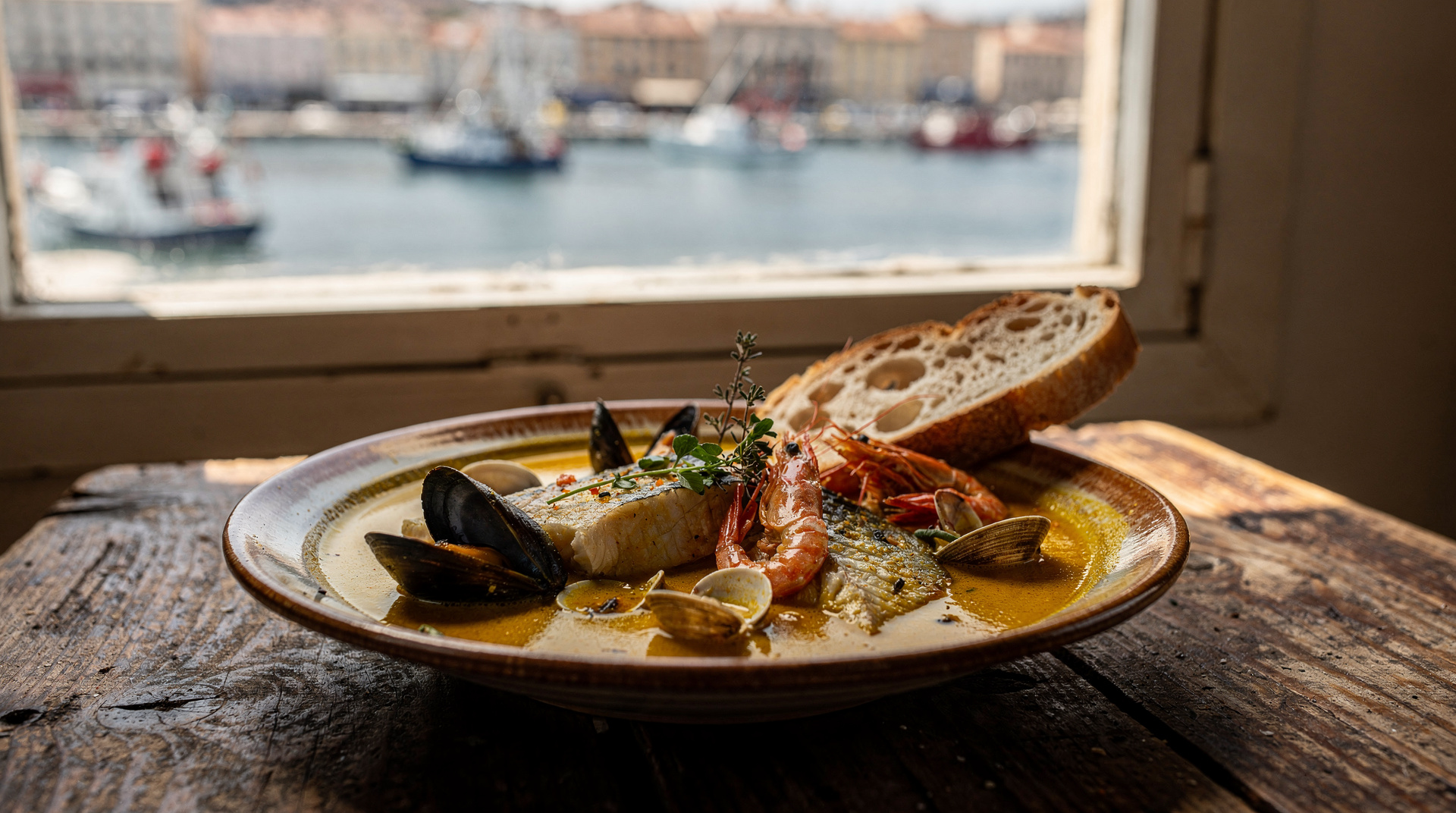
Marseille is not usually the first French city that comes to mind for food tourism — but it should be. The city’s position at the crossroads of Provençal, North African, and Mediterranean traditions produces a street food culture unlike anywhere else in France: panisses fried to order, Tunisian brik pastries, saffron-heavy bouillabaisse broth, and the city’s own navette biscuits from a bakery that has not changed its recipe since 1781.
Verdict: An excellent orientation to Marseille’s food culture that goes beyond the tourist-strip restaurants. The best food tours here combine the Noailles market district (where locals actually shop) with the Vieux-Port and Le Panier — covering three distinct food personalities in a single morning or afternoon.
What this tour includes
The walking food tour covers a curated route through Marseille’s food neighbourhoods, stopping at markets, specialist shops, and local producers for guided tastings at each point. The tour runs approximately 3 hours and includes around 8–12 tasting portions.
Duration: Around 3 hours.
What is included:
- Guided walk with English-speaking local guide
- All tastings and food included in the price
- Contextual explanation of each food’s cultural significance
- Recommendations for follow-up restaurants and market stalls
What is not included:
- Alcoholic drinks (available to purchase at some stops)
- Sit-down restaurant meal
- Transport to/from the meeting point
Group size: Most food tours cap at 10–14 participants to allow guides to manage stop logistics. Smaller groups allow for more flexible conversation and customisation.
Departure point: Typically the Vieux-Port or Cours Julien area. Exact meeting point confirmed at booking.
Why we recommend it
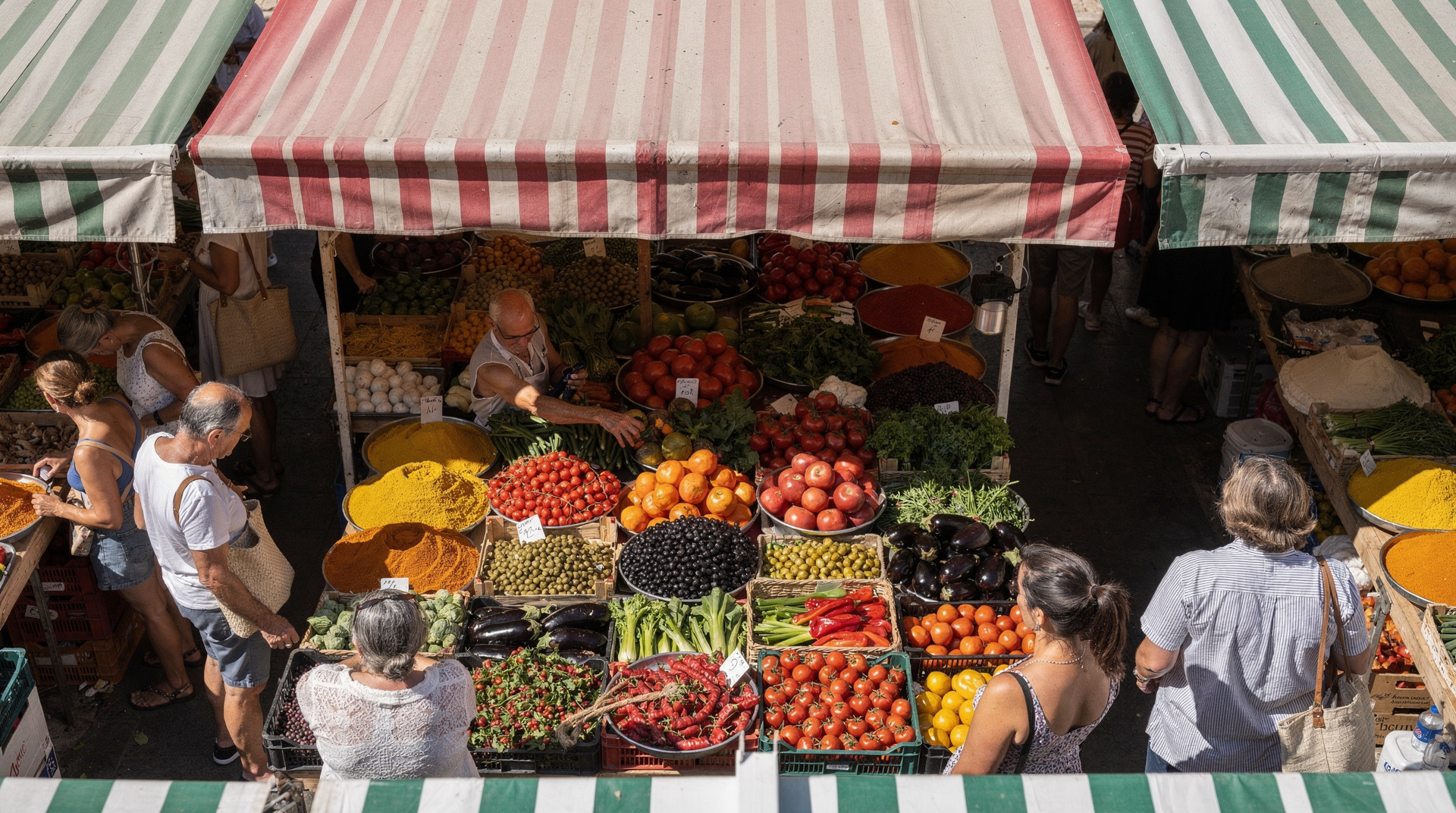
1. Noailles is the real Marseille market. Every food tour should spend time in Noailles — the densely packed market district behind the Canebière that sells everything from fresh spices to North African pastries to live poultry. This is where Marseille’s 35% population of North African heritage meets Provençal culinary tradition, and the result is unlike any other market in France. A guide who knows which stalls are worth stopping at transforms a confusing experience into an education.
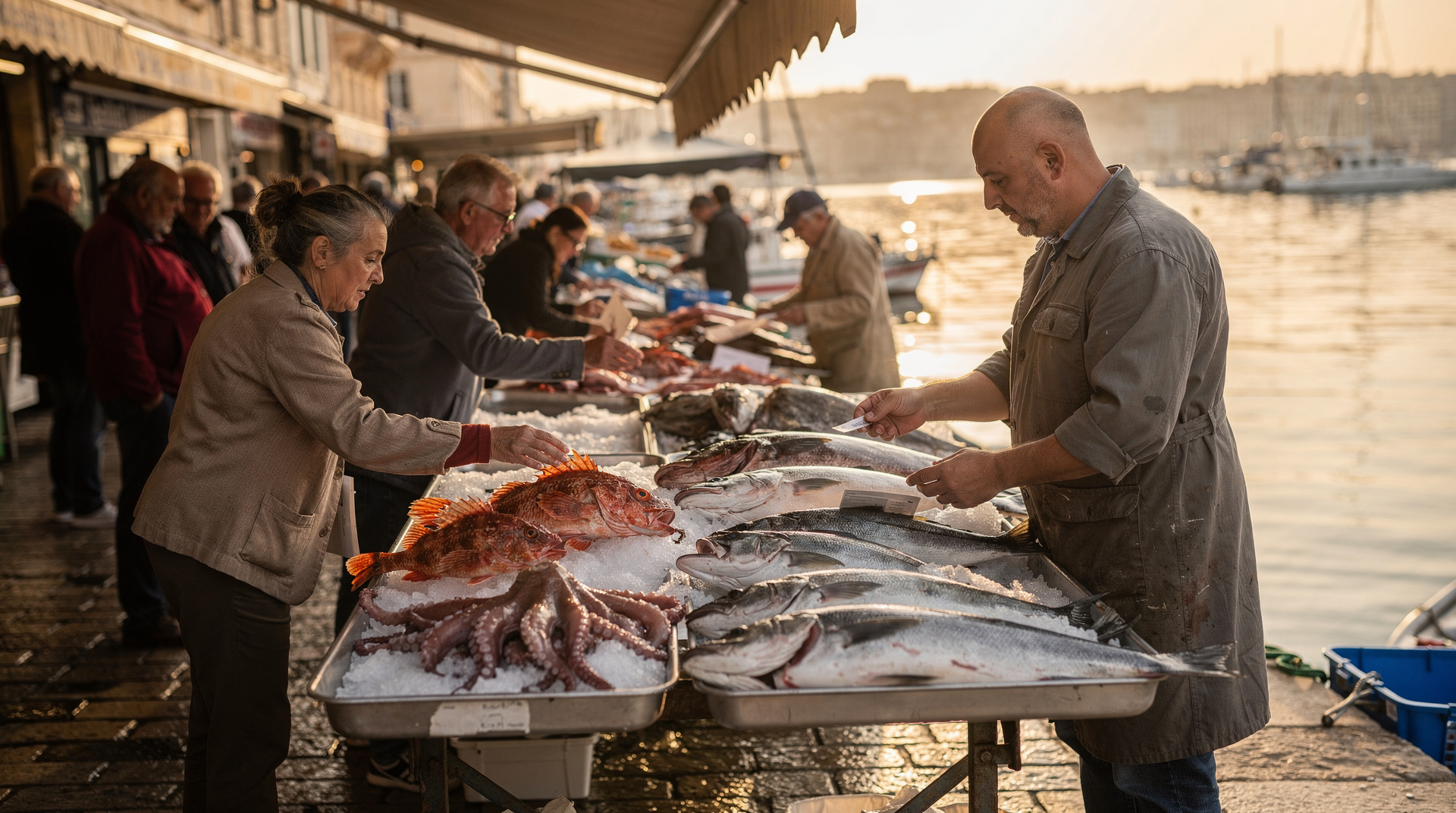
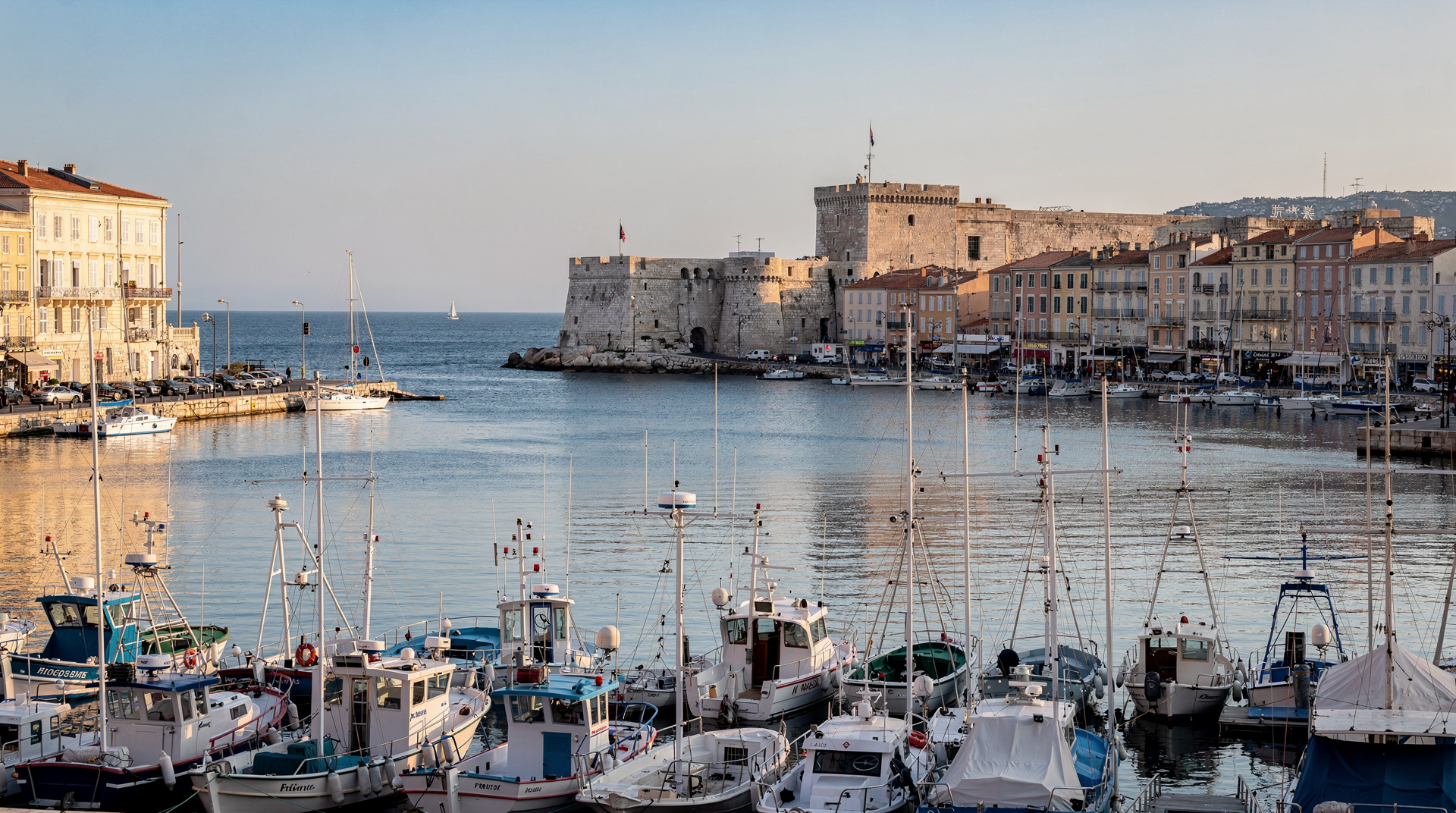
2. The Vieux-Port fish market. On morning tours, the guide will take you to the small fish market at the head of the Old Port, where fishermen from Les Goudes sell their overnight catch directly. This is a disappearing institution — fewer than 20 vendors operate it most mornings — and worth seeing before it vanishes entirely.
3. Historical depth behind every bite. The navette from Four des Navettes is not just a biscuit — it has a documented recipe history stretching back to 1781 and is linked to a specific religious festival (La Chandeleur). A good guide turns a pastry tasting into a history lesson without making it feel like homework.
4. Beyond the bouillabaisse cliché. Most visitors come to Marseille knowing about bouillabaisse and little else. The food tour introduces the full breadth of the cuisine: panisses, tapenade, pastis, socca (chickpea flatbread), merguez, and the extraordinary variety of Provençal produce that arrives daily at the central markets. Our full food tour guide expands on all of these.
5. Honest about the tourist traps. The best guides on this tour will tell you which Vieux-Port restaurants to avoid (overpriced bouillabaisse aimed at cruise passengers) and where the real quality lives. This kind of navigation guidance is worth the tour price on its own.
How it compares to alternatives
Shore excursion food walk (3 hours) is specifically designed for cruise passengers with limited time. It covers similar ground but at a faster pace and is priced for the cruise excursion market. Good if you have 3 hours at port; the full walking food tour is better for independent travellers with a half-day.
Sunset street food tour takes place in the early evening and focuses on the street food scene after dark — the Cours Julien bar district, the Noailles street vendors, and evening market stalls. Different atmosphere, different food selections. The daytime tour gives you the fish market and morning produce; the sunset tour gives you the evening street culture. Both are legitimate choices — pick based on time of day preference.
E-bike and food tour combines cycling around Marseille’s neighbourhoods with food stops — covering more geographical ground than the walking tour, including the Corniche and coastal districts. The cycling format means you spend less time at each stop. Best for those who want a hybrid activity rather than a dedicated food experience.
For context on what you are eating, see our guide to Marseille street food before the tour.
Practical info
Best time for the tour: Morning departures give you the fish market and the Noailles morning rush. Afternoon and evening tours have a different character — quieter markets but more street food vendors and a more social atmosphere. Both are valid; morning is better for seafood and produce, evening for street culture.
What to bring:
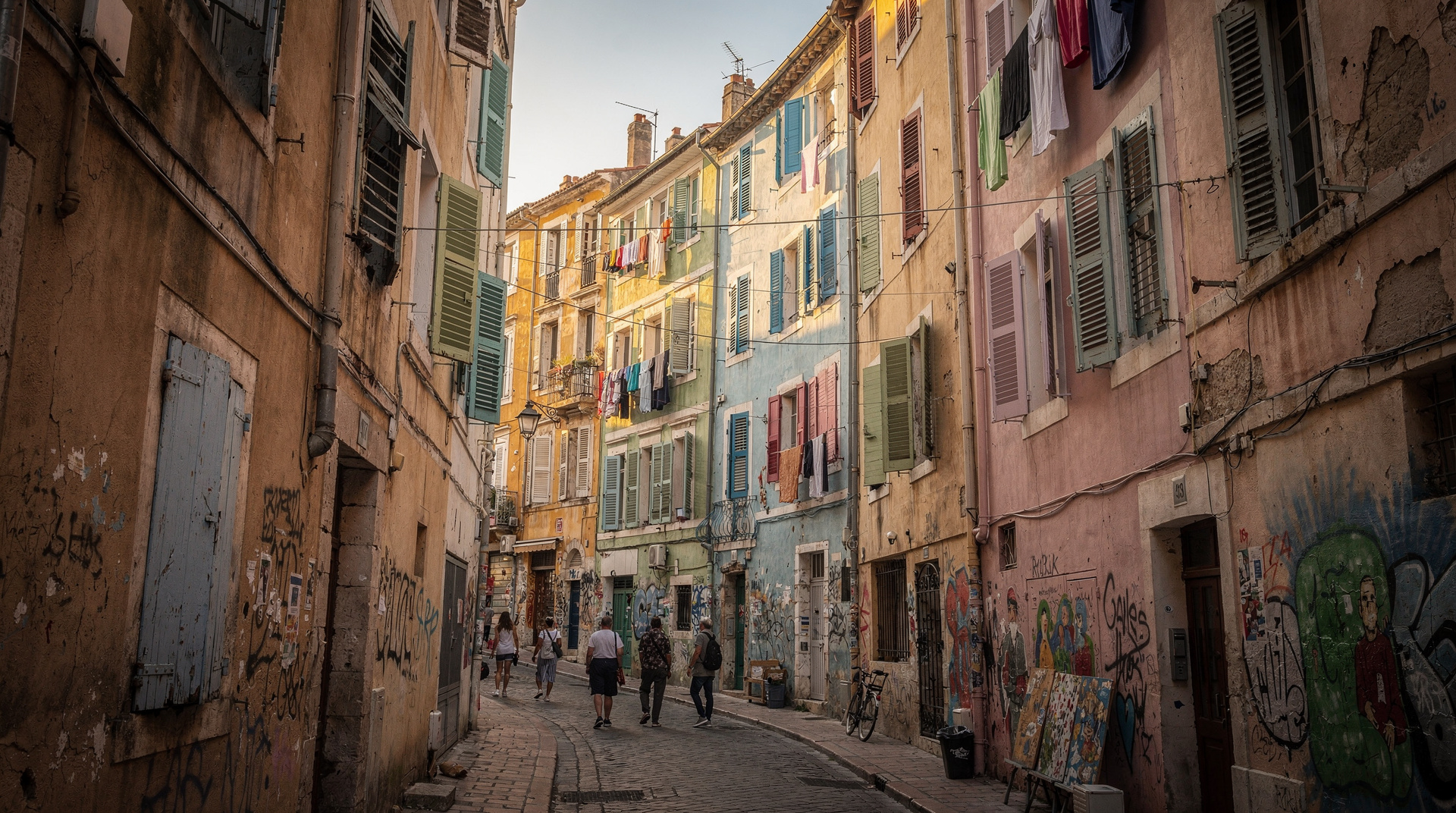
- Comfortable walking shoes (cobblestones in Le Panier)
- Small cash for any extra purchases (some market stalls are cash only)
- Water bottle — tastings are generous but thirst-inducing
- Appetite — eat a light breakfast before a morning tour
Dietary restrictions: Declare at booking. Most operators can accommodate vegetarians with notice. Shellfish, pork, and dairy feature prominently in traditional Provençal tasting; be specific about what you cannot eat.
Booking lead time: 24–48 hours is typically sufficient. Weekend morning tours book up faster — 3–5 days ahead for Friday and Saturday departures.
For deeper context: Our guide to bouillabaisse in Marseille covers the dish that defines the city’s food reputation — including which restaurants serve the authentic version and which are tourist traps.
Compare alternative tours
Frequently asked questions about Marseille food tour
What food do you eat on the Marseille food tour?
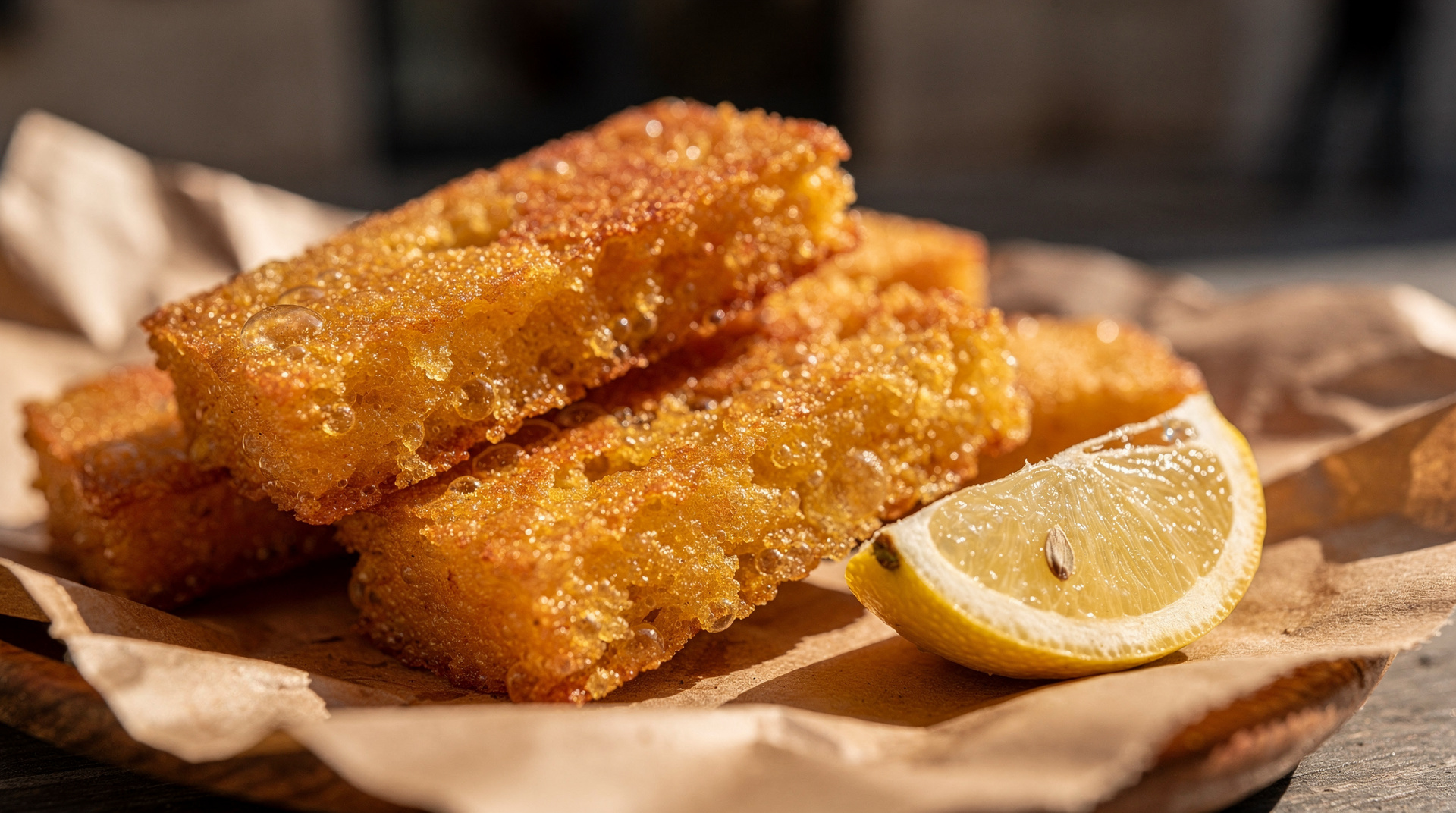
Typical stops include navettes (the city's traditional orange-blossom biscuits), panisses (crispy chickpea fritters), pastis and local aperitif drinks, charcuterie and cheese from a local cave, fresh seafood from the Vieux-Port market, and at least one Provençal speciality such as tapenade or pissaladière. The exact stops depend on the guide and the day — the best tours adjust to what is seasonal and fresh.How much walking is involved in the Marseille food tour?
Most food tours cover 2–4 km on foot, visiting 6–10 stops across the Old Town, Noailles market district, and the Vieux-Port. The pace is leisurely — this is a walking-and-eating tour, not a fitness exercise. Comfortable flat shoes are recommended; most routes are on flat or gently sloping streets.Is the food tour suitable for people with dietary restrictions?
Notify the operator at booking of any allergies or dietary requirements. Most guides can adapt some stops for vegetarians. Gluten-free is harder — the traditional pastry stops (navettes, panisses) typically cannot be avoided if you want the full experience. Strict vegans will find the tour difficult to navigate without significant substitution.Do I need to eat a meal before the food tour?
Come hungry but not starving. The tour typically involves 8–12 tastings across 3 hours — enough to replace a light lunch or a substantial breakfast. Most participants do not need a sit-down meal immediately after. The tasting portions are generous but it is not a full restaurant meal.Which neighbourhoods does the food tour cover?
Most Marseille food tours cover the Noailles district (the 'belly of Marseille' — a sprawling north-African and Provençal market), the Old Port fish market (morning tours only), Le Panier (the old town above the port), and the Cours Julien area. The exact route varies by tour and departure time.What is a navette and why does it matter in Marseille?
A navette is a dry, elongated orange-blossom biscuit baked in the distinctive boat shape (navette means 'small boat' in French). The Four des Navettes bakery in Marseille has made them continuously since 1781, making this one of the oldest biscuit recipes in continuous production in France. It is Marseille's culinary signature in the way that cannelés are Bordeaux's.How is the Marseille food tour different from a restaurant meal?
The food tour is about breadth and context — tasting 8–12 different things in three hours across different locations, each explained by a guide. A restaurant meal goes deeper on fewer dishes. The tour is the better choice for orientation to the city's food culture; a restaurant is better once you know what you want to focus on.Are children welcome on the food tour?
Most operators welcome children over 8. Younger children can struggle with the pace and the 3-hour duration. The tastings are varied — some children will love the sweet stops (navettes, pastries) and be less enthusiastic about charcuterie or strong cheese. Operators can usually arrange smaller or simpler portions for children.Is the food safe for people with shellfish allergies?
Shellfish features at some stops — particularly near the Vieux-Port fish market. Declare your allergy at booking and the guide will navigate around those stops or offer alternatives. Do not rely on the guide to catch every hidden shellfish ingredient in prepared foods; bring your medication and be explicit about the severity of your allergy.Can I buy food to take away from the market stops?
Yes — most guides build in time for this. The Noailles market is a genuinely excellent place to buy North African spices, olives, preserved lemons, and Provençal products to bring home. Budget an extra EUR 15–30 if you plan to shop.What if it rains?
Most stops are either under market canopies or inside shops. The walking sections between stops get wet. The tour typically runs in light rain — Marseille gets very little rain from June to September. Heavy rain (rare in summer) may cause rerouting or rescheduling at the operator's discretion.Is there a private food tour option?
Yes — most operators offer private group bookings. A private tour allows the guide to customise the stops, pace, and focus for your group's preferences. Relevant if you have specific dietary requirements or food interests (wine pairing, seafood focus, patisserie) that go beyond the standard tasting route. Price typically 3–4x the group rate.