Vegetarian and vegan eating in Marseille
Marseille: walking food tour with tastings
Is Marseille good for vegetarians and vegans?
Yes, particularly around Cours Julien, which has the most diverse dietary scene. Provençal cuisine has natural vegetarian depth — ratatouille, panisses, soupe au pistou, tapenade, pissaladière. The challenge is the seafood-centric food culture and the lack of explicit vegetarian marking on traditional restaurant menus.
Marseille for plant-based eaters: the honest picture
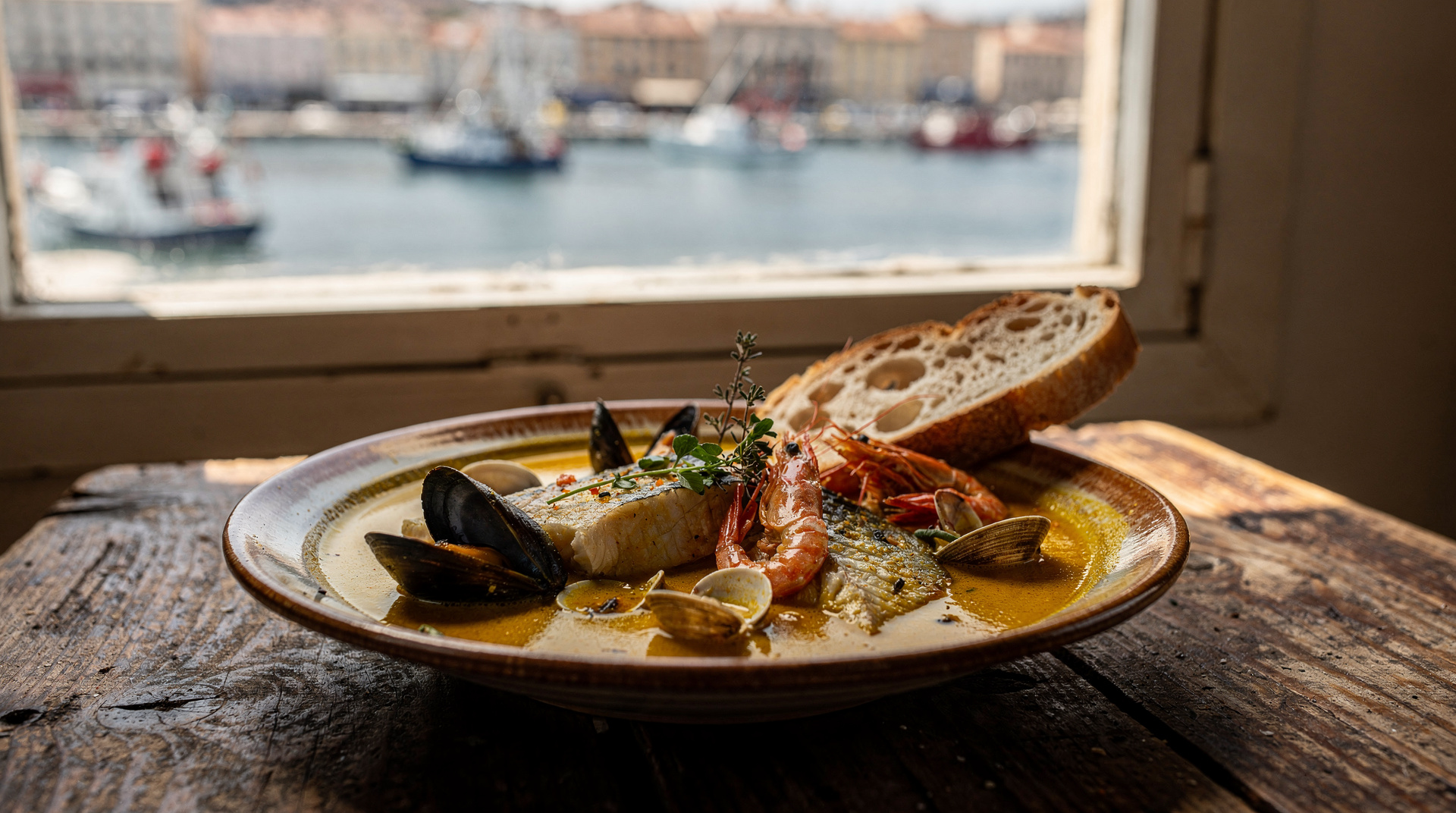
Marseille is a seafood city. Its most famous dish is a fish stew. Its morning market culture centres on the catch from the Mediterranean. Its restaurant history is built around bouillabaisse, tellines, oursins, and grilled daurade.
None of this means vegetarians and vegans eat poorly here. It means they need to know where the food culture intersects with plant-based eating and where it does not.
The good news: Provençal cuisine has genuine depth in vegetables and legumes that predates the modern vegetarian restaurant scene by centuries. The challenge: traditional Provençal restaurants do not always label their vegetarian options explicitly, and the seafood culture means that fish stock (fumet) and anchovies appear in dishes that appear vegetarian on paper.
This guide is honest about both sides.
| Best area | Cours Julien for the most reliable vegetarian and vegan menus |
| Cost | A full market-assembled plant-based lunch runs around EUR 10–15 |
| Watch for | Anchovies and fish stock (fumet) hidden in dishes that look vegetarian |
| Best season | Summer (July–August) for peak Provençal vegetable dishes |
| Useful phrase | ”Il y a du poisson dedans?” (Is there fish in it?) |
Naturally vegetarian Provençal dishes
The Mediterranean diet is inherently plant-forward, and Provençal cooking reflects this before any deliberate vegetarian design.
Ratatouille: The braised summer vegetable dish — courgettes, aubergine, tomatoes, peppers, garlic, olive oil — is naturally vegan. See the Provençal cuisine guide for detail on the traditional preparation. Available at traiteurs year-round and on restaurant menus from June through September.
Soupe au pistou: The summer vegetable soup (beans, courgettes, tomatoes, pasta) served with basil-garlic-olive oil pistou is vegan as traditionally made, though some restaurant versions add parmesan to the pistou. Ask before ordering if strict vegan status matters.
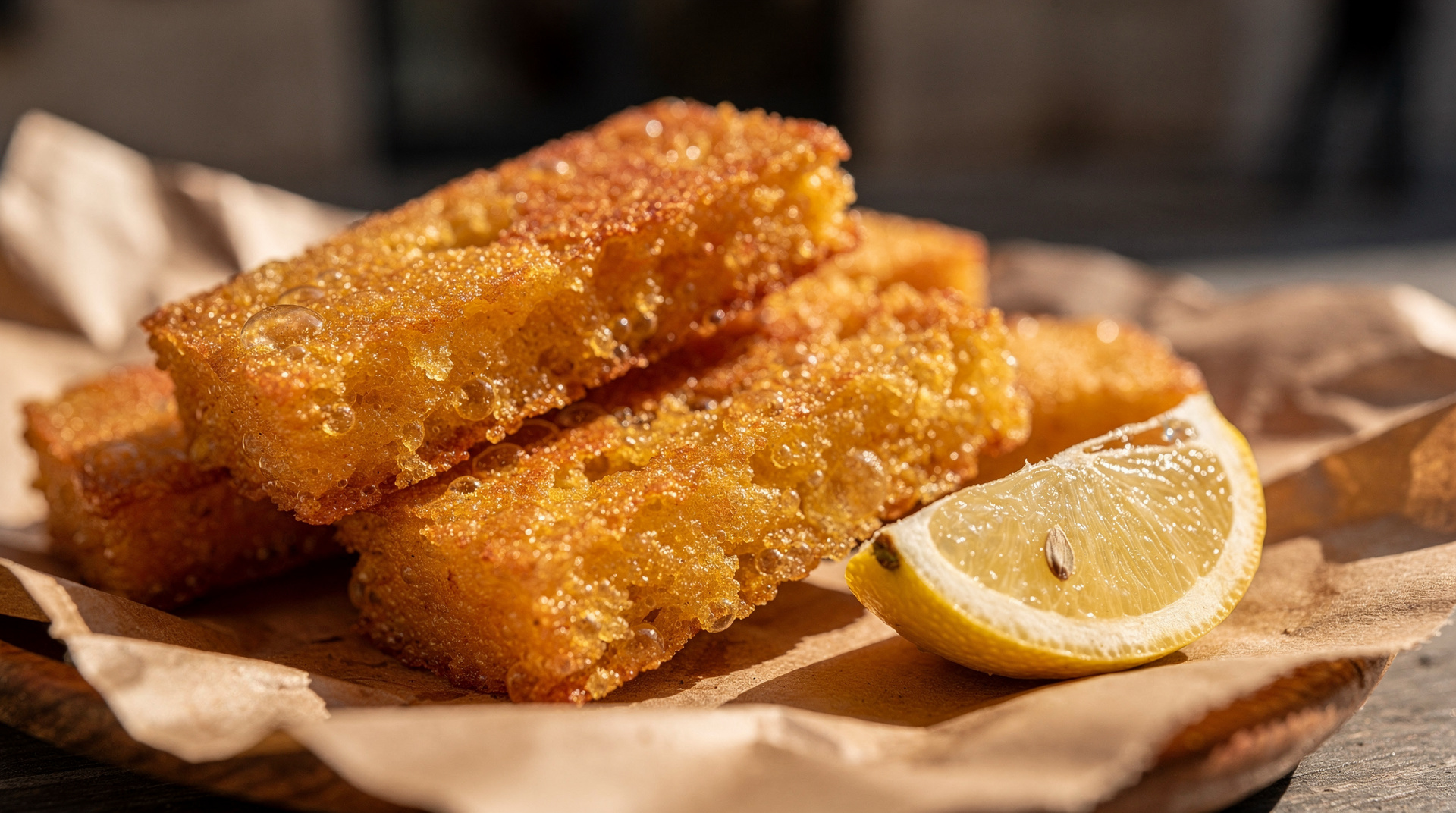
Panisses: The fried chickpea fritters are vegan — chickpea flour, water, olive oil, salt. One of the best street food options for plant-based eaters and genuinely excellent in their own right. See the street food guide for where to find them.
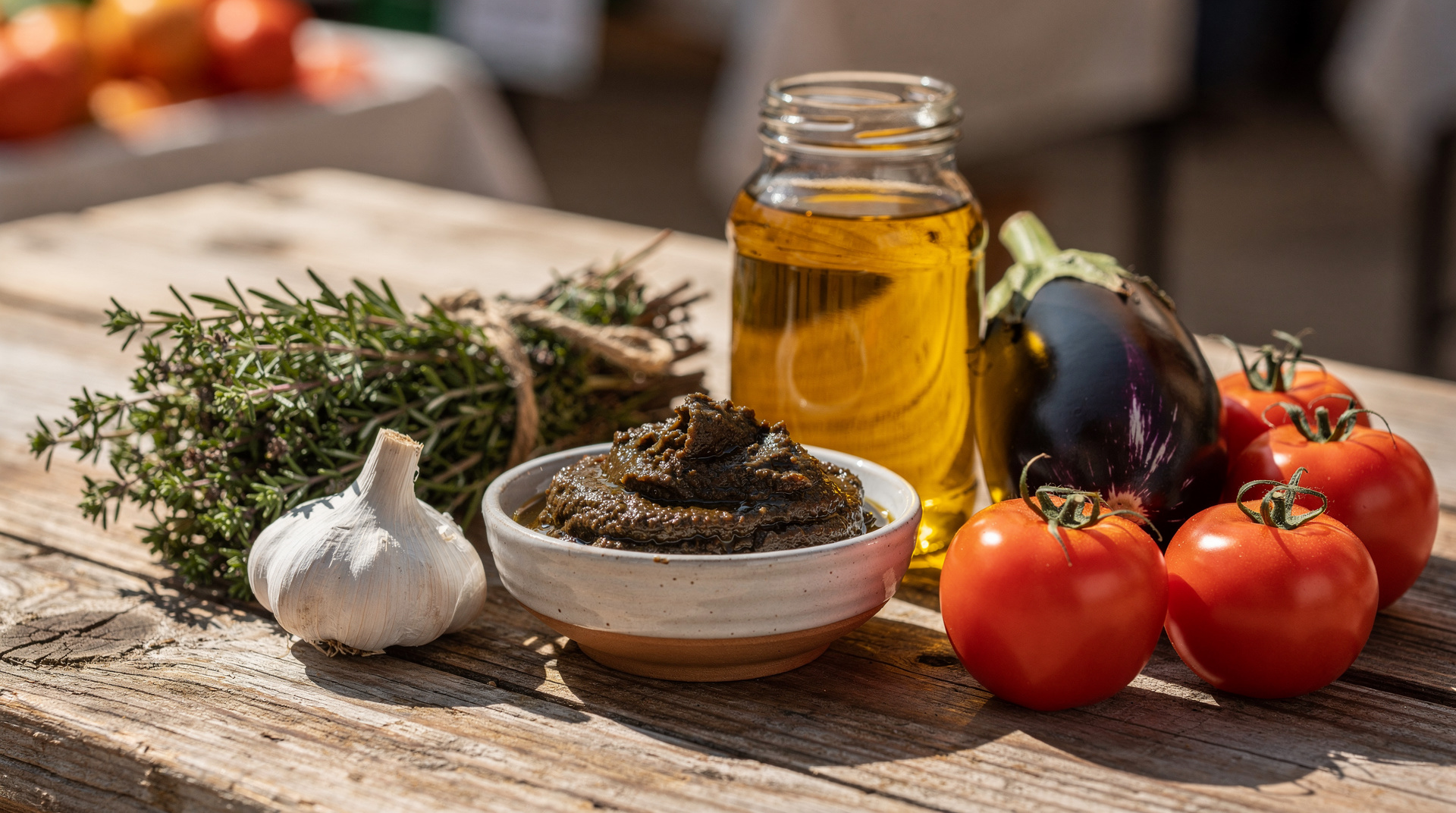
Tapenade: Made from black olives, capers, and olive oil — vegan, intensely flavoured, served with bread at most traditional Provençal restaurants. The anchovy version (anchoïade) is not vegetarian; the standard black olive tapenade usually is, but anchovy fillets are sometimes included in Provençal tapenade recipes. Ask specifically.
Pissaladière vegetarian version: The traditional Provençal onion tart from Nice — slow-caramelised onions on bread dough with black Niçoise olives — is often listed with anchovy (the traditional garnish). The anchovy can be omitted; ask in advance at any pizza or bread baker that makes it.
Socca: The Niçoise chickpea flour crêpe, now found at some Marseille markets and street food spots. Similar to the Marseille panisse in its base ingredient. Naturally vegan.
Fresh produce dishes: A market visit to Noailles or the Cours Julien organic market (see the markets guide) provides the ingredients for serious plant-based cooking — Provençal tomatoes in season, courgettes, peppers, aubergines, and the full range of Mediterranean herbs.
The anchovy and fish stock caution
Anchovies and fish stock appear in more Provençal dishes than you would expect from reading menus. Specific examples:
Anchovies: In pissaladière (the onion tart), in some tapenade preparations, occasionally in ratatouille at restaurants trying to add depth, and commonly in traditional Provençal sauces. Ask specifically whether a dish contains anchovy if this matters.
Fish stock (fumet): Used in soups, in some vegetable braises, and occasionally in rice dishes at traditional restaurants. Restaurants that are not accustomed to vegetarian customers may not realise this is relevant — a direct question (“ce plat contient du poisson ou du bouillon de poisson?”) is more reliable than reading the menu.
Lard and pork fat: Traditional Provençal cooking uses lard in bean preparations and occasionally in vegetable braises. Less common than in northern French cuisine but not absent.
Cours Julien: the best neighbourhood for vegetarians
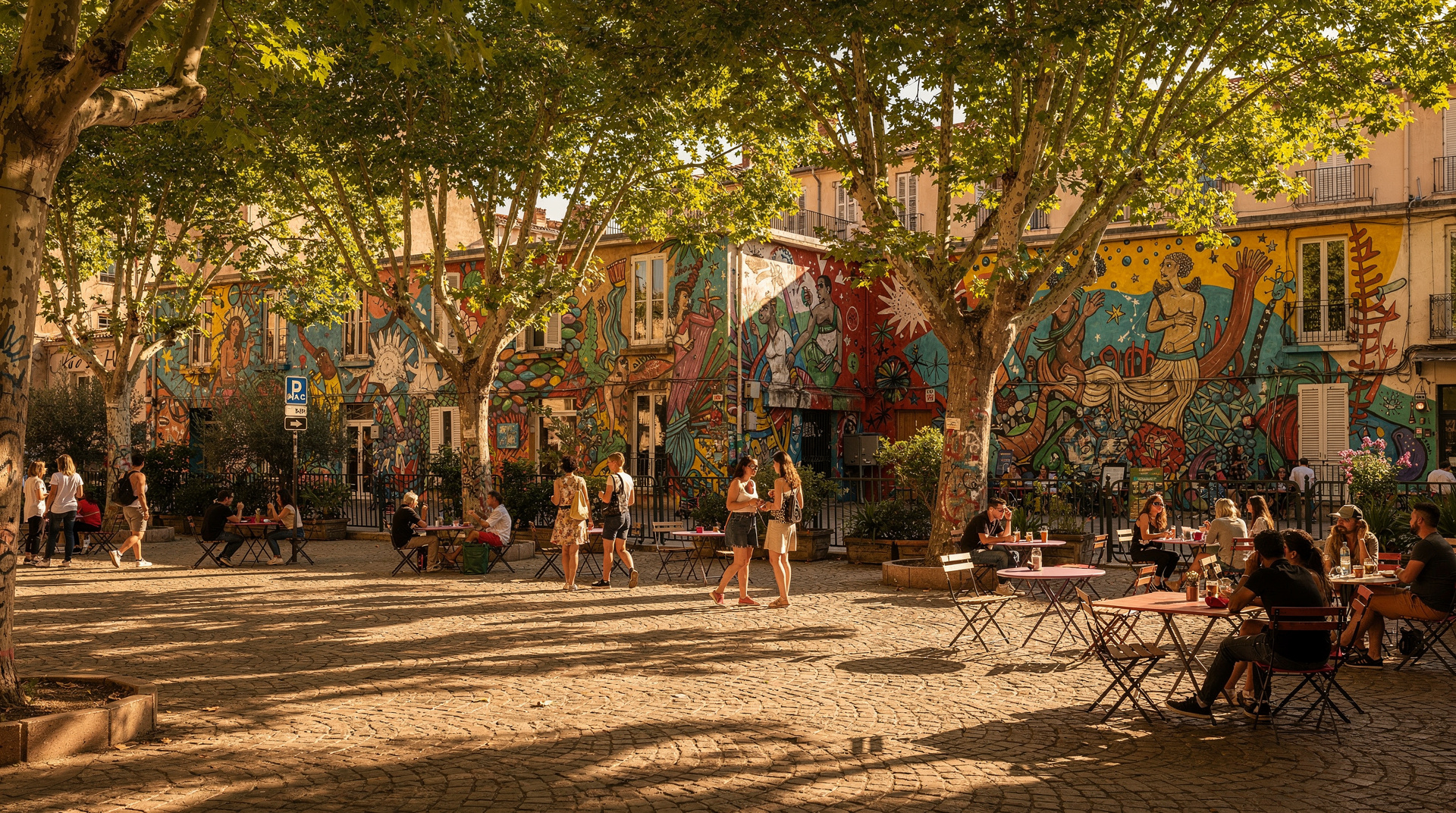
Cours Julien is the most reliable neighbourhood for vegetarian and vegan eating in Marseille. The character of the food scene here — Mediterranean-creative, market-driven, influenced by multiple food cultures — produces menus that are naturally more accommodating of plant-based eating than traditional Provençal restaurants.
Why Cours Julien works: The neighbourhood’s food culture reflects a younger, more diverse population that treats dietary diversity as normal rather than exceptional. Restaurants in the area frequently offer fully vegetarian and vegan options without requiring special requests or menu modifications.
What to look for: Restaurants listing daily specials based on market produce often have strong vegetarian options built in — when the market delivers good tomatoes and courgettes, the natural outcome is a vegetable-forward dish. Look for blackboard menus that change daily rather than fixed menus with five meat and fish options.
The natural wine bar scene: Several wine bars and café-restaurants around Cours Julien have food menus that are genuinely plant-forward — boards of vegetables, cheeses, olives, and charcuterie where the vegetarian elements are the stars rather than afterthoughts. This format suits plant-based eaters well.
Noailles: North African vegetarian options
The Noailles market quarter has a stronger vegetarian track than it first appears. North African cuisine — which dominates the area — has significant vegetable and legume depth: couscous with seven vegetables (a fully vegan dish when served without meat), harira soup (chickpea and tomato, sometimes with lamb, but available vegetarian on request), and the pastry tradition which is predominantly plant-based.
What to order: Vegetable couscous (couscous aux légumes) at Noailles lunch counters. Msemen and batbout (flatbreads) with honey or harissa. North African pastries (baklava, makroud — made with nuts, honey, and semolina). Most are fully vegan.
The honest caution: At traditional Noailles couscous restaurants, the broth used to steam the couscous grain and cook the vegetables is typically made from lamb or chicken stock. If strict veganism matters, ask specifically — the vegetable couscous may be cooked in meat broth despite containing no meat.
Le Panier: lighter options
Le Panier’s small cafés and neighbourhood restaurants are less explicitly vegetarian-friendly than Cours Julien, but the character of the food (light salads, simple cheese plates, bread and tapenade) creates natural options for plant-based eating. The neighbourhood is good for a light vegetarian lunch; less reliable for a full vegetarian dinner.
Practical strategies
Ask about the dish: “C’est végétarien?” (Is this vegetarian?) and “Il y a du poisson dedans?” (Is there fish in it?) are the two most useful questions at traditional restaurants. Most staff will answer honestly; the uncertainty is genuine rather than evasive — in kitchens that do not regularly accommodate vegetarian requests, the cook may not have considered whether the stock counts.
Boulangeries and traiteurs: Excellent options for plant-based eating. Fresh bread, ratatouille from the counter, olive tapenade, and seasonal vegetable preparations from a quality traiteur can compose a complete and satisfying meal without requiring restaurant menus. The Noailles market, the Cours Julien organic market, and good boulangeries throughout the city all provide these components.
Supermarkets: Monoprix and Casino supermarkets in central Marseille carry a reasonable range of vegetarian and vegan products — Provençal specialities (tapenade, olive oil, preserved lemons), fresh produce, and some prepared options. Not the primary source, but useful for self-catering.
Time the visit: Summer (July–August) is the strongest season for vegetarian Provençal eating — ratatouille, soupe au pistou, grilled vegetable dishes, and fresh produce are all at their best. Winter menus are more heavily meat- and fish-oriented; the traditional Provençal winter repertoire (daube, pieds-paquets) is not vegetarian.
Vegetarian eating beyond Marseille: Aix and the Luberon
The plant-based picture shifts once you leave Marseille. Aix-en-Provence, covered in the Aix day trip guide, has a market culture (Cours Mirabeau and the daily produce market) that is arguably even stronger for vegetarian self-catering than Marseille’s, thanks to its proximity to Luberon farms. If a Provence loop includes the Luberon villages — see the Luberon villages guide — expect excellent seasonal vegetable markets but fewer explicitly vegan restaurant menus than in central Marseille; rural Provençal restaurants lean more traditional and less likely to flag dietary options on the menu.
The vegan challenge at formal restaurants
Strict vegan eating at traditional Provençal restaurants (those emphasising the classic regional repertoire) requires advance communication. French restaurants are generally accommodating when given notice — calling ahead to explain dietary requirements and asking whether the kitchen can prepare something appropriate is both accepted and effective.
At informal restaurants, cafés, and food stalls, vegan options are often available without advance notice — particularly around Cours Julien and at market food operations. The formal restaurant environment is where advance communication matters most.
The market route for plant-based eating
The most reliable plant-based eating in Marseille comes not from restaurants but from the market circuit. Each major market offers components that assemble naturally into vegetarian and vegan meals:
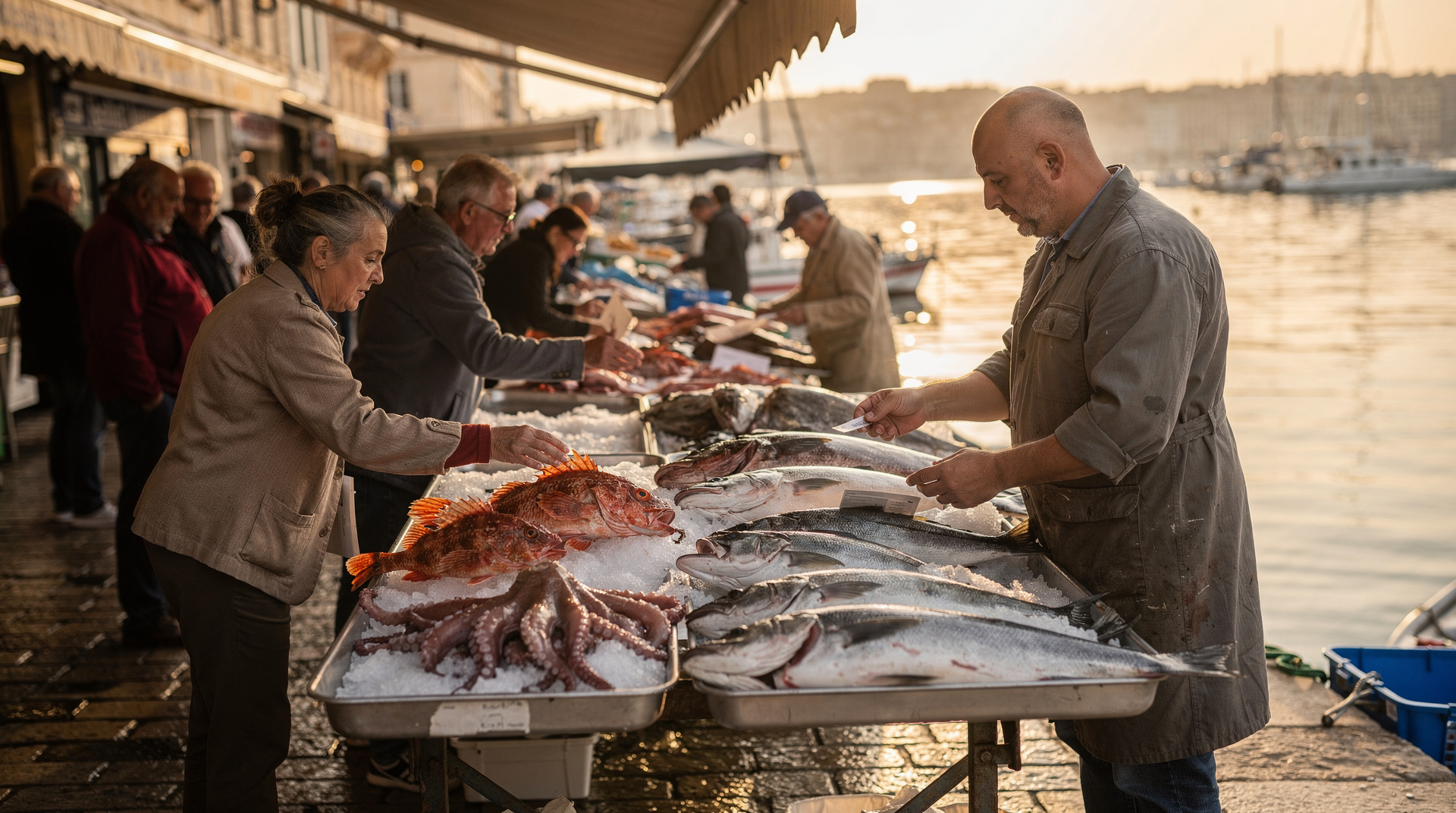
Fish market (Quai des Belges, mornings): Primarily for fish, but the surrounding stalls sometimes carry olives, tapenade, and seasonal produce. Skip in favour of the markets below for plant-based focus.
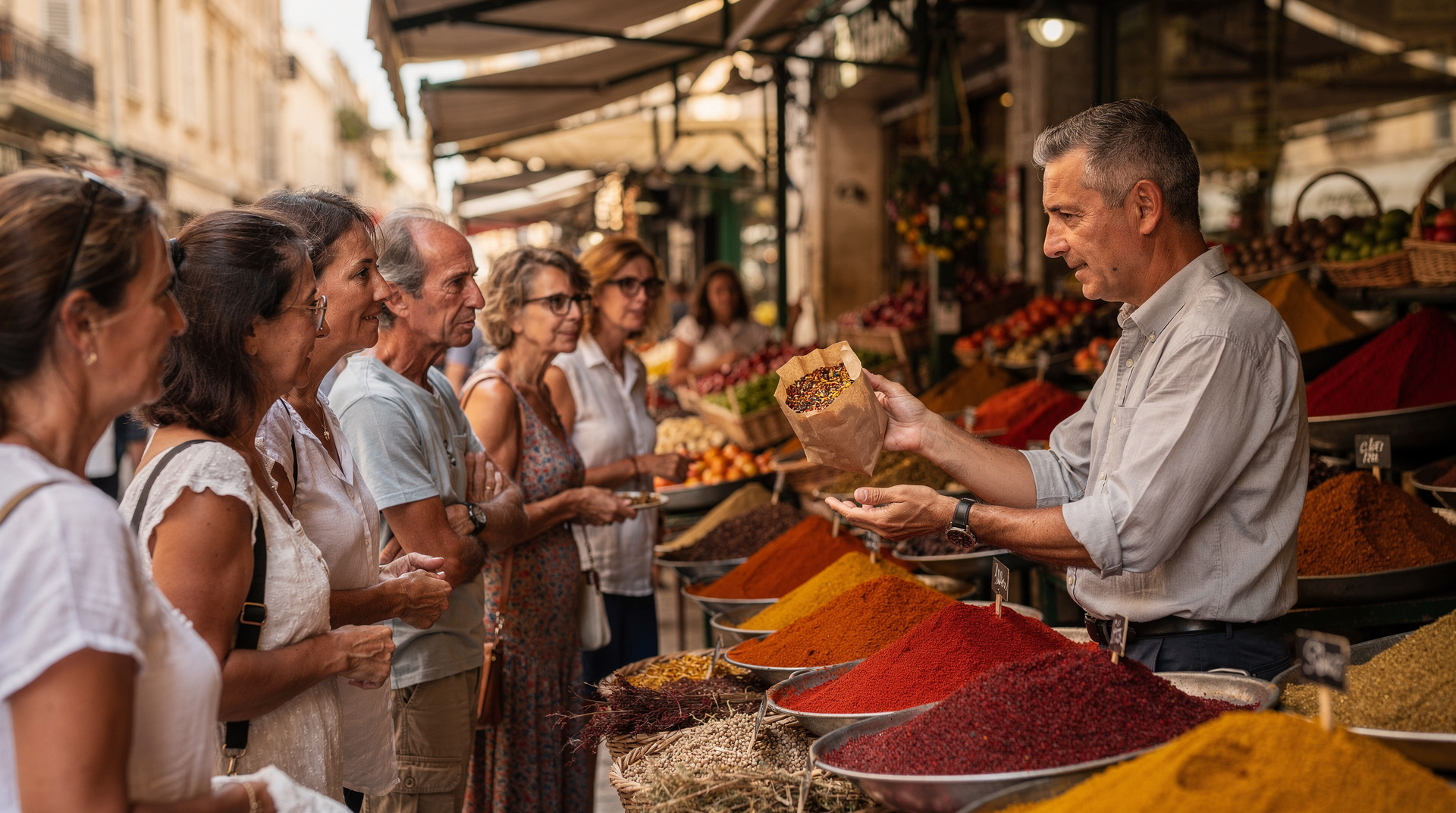
Noailles market (Mon–Sat, 8:00–19:00): The strongest market for plant-based eating — fresh produce at low prices, dried legumes (lentils, chickpeas, white beans) in bulk, spices, preserved lemons, fresh herbs, and an enormous selection of North African pastries and breads that are predominantly plant-based.
Cours Julien organic market (Wednesday, 8:00–13:00): Local producers with seasonal vegetables, honey, artisan cheese (non-vegan, but vegetarian), and occasional prepared plant-based products. The best source for quality seasonal produce in the city.
Marché de la Plaine (Tue, Wed, Thu, Sat, 7:30–13:30): Comprehensive general market with abundant fresh produce at residential pricing. Good for the basics of a Provençal vegetable-forward picnic.
Assembling a market lunch: A typical Noailles + Cours Julien market visit, aimed at plant-based eating, might include: fresh flatbread from a Noailles baker (EUR 1.50), hummus or chickpea dip from a North African stall (EUR 2–4), a selection of marinated olives (EUR 2–3 per 100g), seasonal fruit (EUR 1–3), and a piece of baklava or makroud for sweetness (EUR 1–2). Total: EUR 10–15 for a full and genuinely good lunch.
Useful French phrases for vegetarian and vegan eating
Knowing a few phrases makes ordering significantly easier:
- Je suis végétarien(ne): I am vegetarian (add -ne for feminine).
- Je suis végétalien(ne) / vegan: I am vegan.
- Est-ce qu’il y a de la viande ou du poisson dans ce plat? Is there meat or fish in this dish?
- Est-ce qu’il y a des anchois? Are there anchovies?
- Sans produits laitiers, s’il vous plaît: Without dairy, please.
- Est-ce que vous pouvez adapter ce plat pour moi? Can you adapt this dish for me?
These are standard phrases that any Marseille restaurant with attentive staff will understand. The response will be honest rather than evasive — French kitchen culture does not routinely hide ingredients if asked directly.
The breakfast picture
Breakfast in Marseille is an area where plant-based eating is relatively uncomplicated. Most cafés serve:
- Café with plant milk: Increasingly available at specialty coffee shops (Deep Coffee, Möka) and some mainstream cafés. Oat milk is the most common alternative.
- Croissant or bread: Made with butter, not suitable for vegans. However, most boulangeries also carry pain au levain (sourdough-style bread) and ficelles that are naturally vegan.
- Fruit: Some cafés offer fresh fruit or freshly pressed juice alongside the coffee.
- Jam (confiture): Standard on bread and toast; always vegan.
For a more substantial vegan breakfast, the specialty cafés around Cours Julien are the most reliable — 7VB and Deep Coffee both work with plant-based options in their food menus.
For broader Marseille eating context, see the restaurant guide and the Provençal cuisine guide. For market-based eating and self-assembly options, the markets guide covers all the venues. For street food options including panisses, see the street food guide.
Frequently asked questions about Vegetarian and vegan eating in Marseille
Are French fries and bread always vegan in Marseille?
Bread is nearly always vegan (baguette, pain de campagne), but croissants and other viennoiserie are made with butter. Fries are usually vegan unless cooked in animal fat, which is uncommon but worth a quick check at traditional bistros.
Is Marseille easier or harder for vegans than Nice or Aix?
Roughly comparable to Aix, and somewhat easier than smaller Provençal towns, thanks to Cours Julien’s dedicated plant-based scene. See the Marseille vs Aix-en-Provence guide for a fuller comparison of the two cities.
Top experiences
Bookable activities with verified prices and instant confirmation on GetYourGuide.