Pastis guide: Marseille's anise spirit explained
Marseille: discover the secrets of pastis
What is pastis and how do you drink it properly?
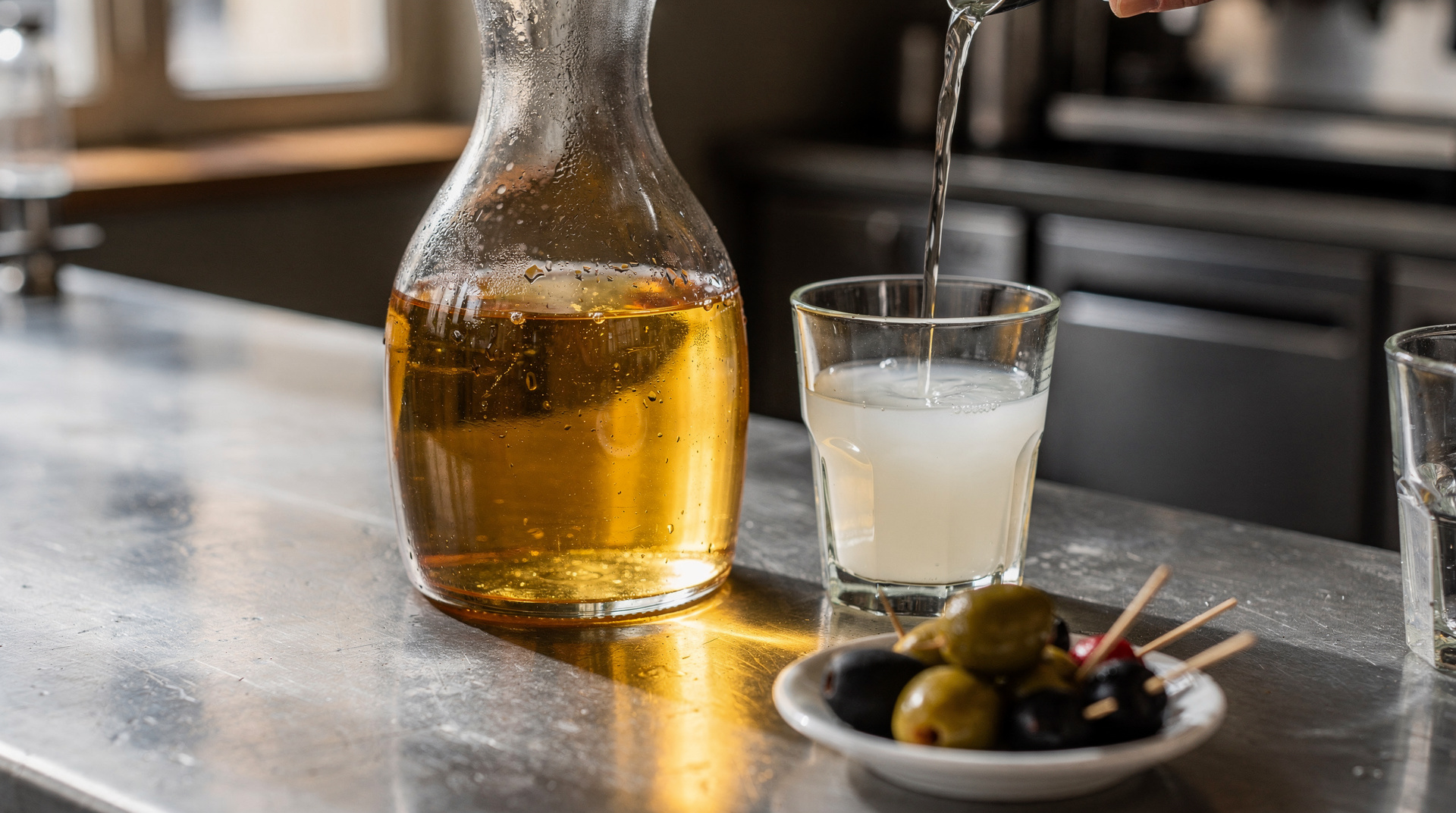
Pastis is an anise-flavoured liqueur (not absinthe) made from star anise, licorice, and Provençal herbs. Drink it 5 parts cold water to 1 part pastis — pour the spirit first, then add the water and watch it cloud. No ice in the glass before the water, or the anise oils crystallise incorrectly.
| At a glance | |
|---|---|
| Where | Any bar or terrace in Marseille; Cours Julien and Vieux-Port are the classic settings |
| Cost | Around EUR 3–6 at a standard bar; EUR 5–8 for artisan brands; EUR 18–40 for a bottle to take home |
| Time needed | A single drink takes minutes; the l’heure de l’apéro ritual is best given 30–60 min |
| Getting there | No booking needed — walk into any bar with a terrace |
| Best time | Late afternoon, around 18:00, before dinner |
What pastis actually is
The single most common misconception about pastis is that it is absinthe. It is not. The distinction matters, historically and in terms of what you are drinking.
Absinthe — the green spirit that was the obsession of late 19th-century Paris — contains wormwood (Artemisia absinthium), a herb that was blamed (incorrectly, as subsequent research has confirmed) for hallucinations and mental instability. France banned absinthe in 1915.
Pastis was developed as a response to that ban, though it took until 1932 for Paul Ricard to formalise and commercialise the recipe. Pastis contains star anise and licorice root as its primary flavour agents, plus a blend of Provençal herbs depending on the producer. It does not contain wormwood. The clouding effect when water is added (called the louche) comes from anise oils that are soluble in alcohol but not in water — as water dilutes the spirit, the oils precipitate as a white-opaque suspension. This is the same chemistry as pastis’s Mediterranean relatives: Greek ouzo, Turkish rakı, Italian sambuca, Lebanese arak.
Pastis is not a hallucination risk. It is an aperitif with 40–45% alcohol content and a strong anise flavour that divides opinion. Either it suits your palate or it does not, but the decision should be based on taste preference rather than mythology.
The Marseille origin
Paul Ricard was born in Marseille in 1909 and launched his pastis formula in 1932 — selling it illegally in Marseille bars before the production company was formally established. His origin story involves being introduced to home-made pastis by a local shepherd, then refining the recipe in his own laboratory to produce a more consistent and commercially viable version.
The Ricard company became the dominant pastis producer in France within two decades. In 1975, Ricard merged with Pernod Fils — the absinthe manufacturer whose distillery dated to 1805 — to form Pernod Ricard. Today Pernod Ricard is one of the world’s largest spirits companies, but the Ricard pastis brand remains headquartered in Marseille and is still marketed as “Pastis de Marseille.”
Pastis 51 is the other major Pernod Ricard pastis brand, launched in 1951 (the name refers to the year). It is slightly lighter in anise character than Ricard and is the brand more associated with the northern French market. In Marseille, Ricard is the default.
How to drink it correctly
The ritual of pastis service is specific and not optional if you want the drink to work as intended.
The ratio: 5 parts cold water to 1 part pastis. This is non-negotiable for flavour — too little water and the anise is overwhelming; too much and the character disappears. The louche (the clouding) happens at approximately the 3:1 point, intensifies as you approach 5:1, and remains stable beyond that.
The order: Pour the pastis first (approximately 25ml in a tall glass), then add cold water. The water triggers the louche immediately as it hits the spirit. Watching the clouding happen is part of the experience — this is not theatre for tourists, it is the natural chemistry of the drink.
Ice: Controversial. The traditional service in southern France is pastis plus cold water, period — no ice. Ice can be added after the water, but never before (adding ice before water causes the anise oils to crystallise on the ice rather than disperse evenly, which affects both texture and appearance). Some bars serve pastis with a separate ice bucket on the side; others serve it straight cold water and consider ice an unnecessary complication.
The glass: A tall, narrow glass (sometimes called a verre à pastis) is the traditional format. The shape concentrates the anise aroma at the rim. Short glasses are acceptable but less correct.
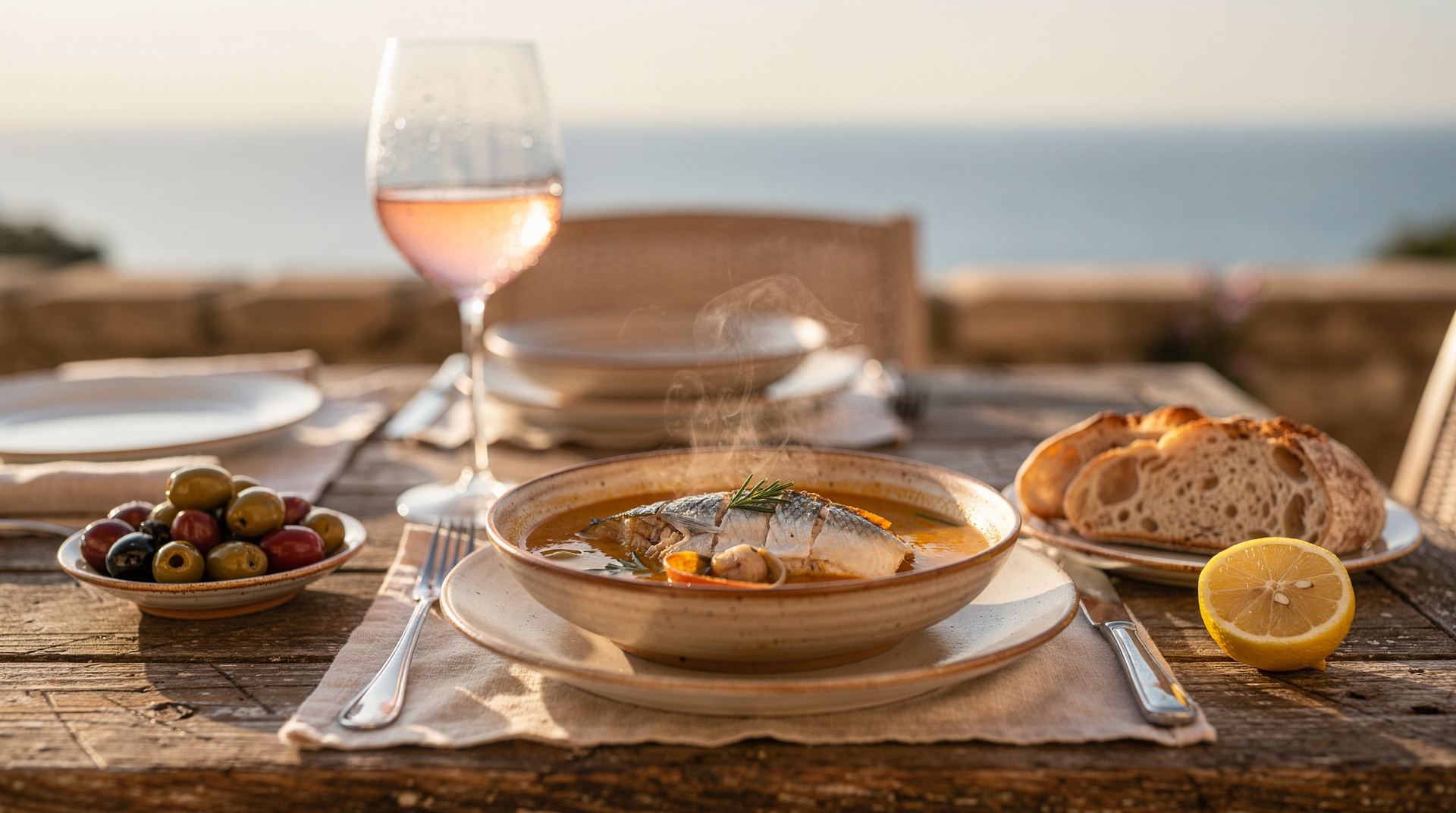
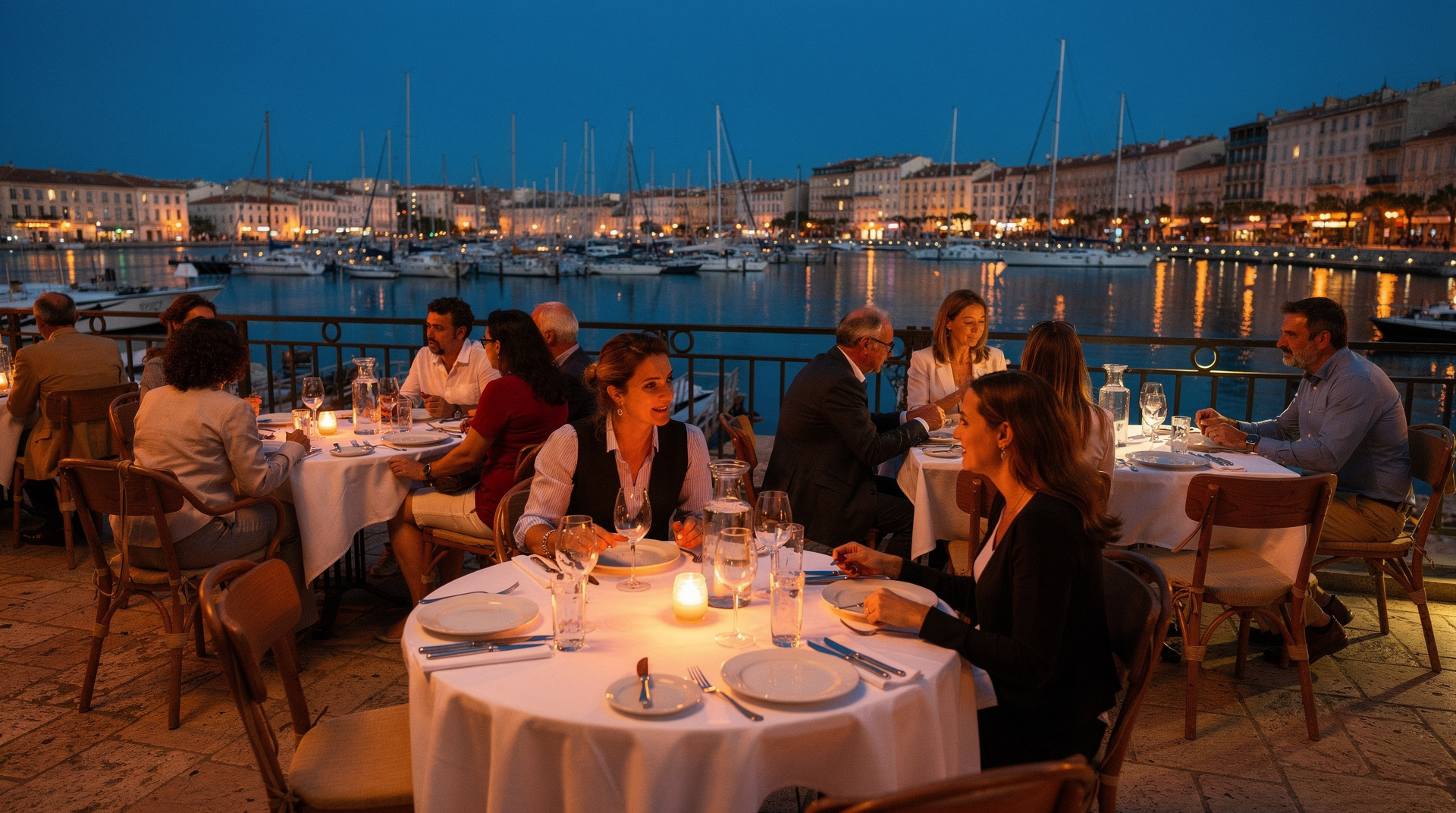
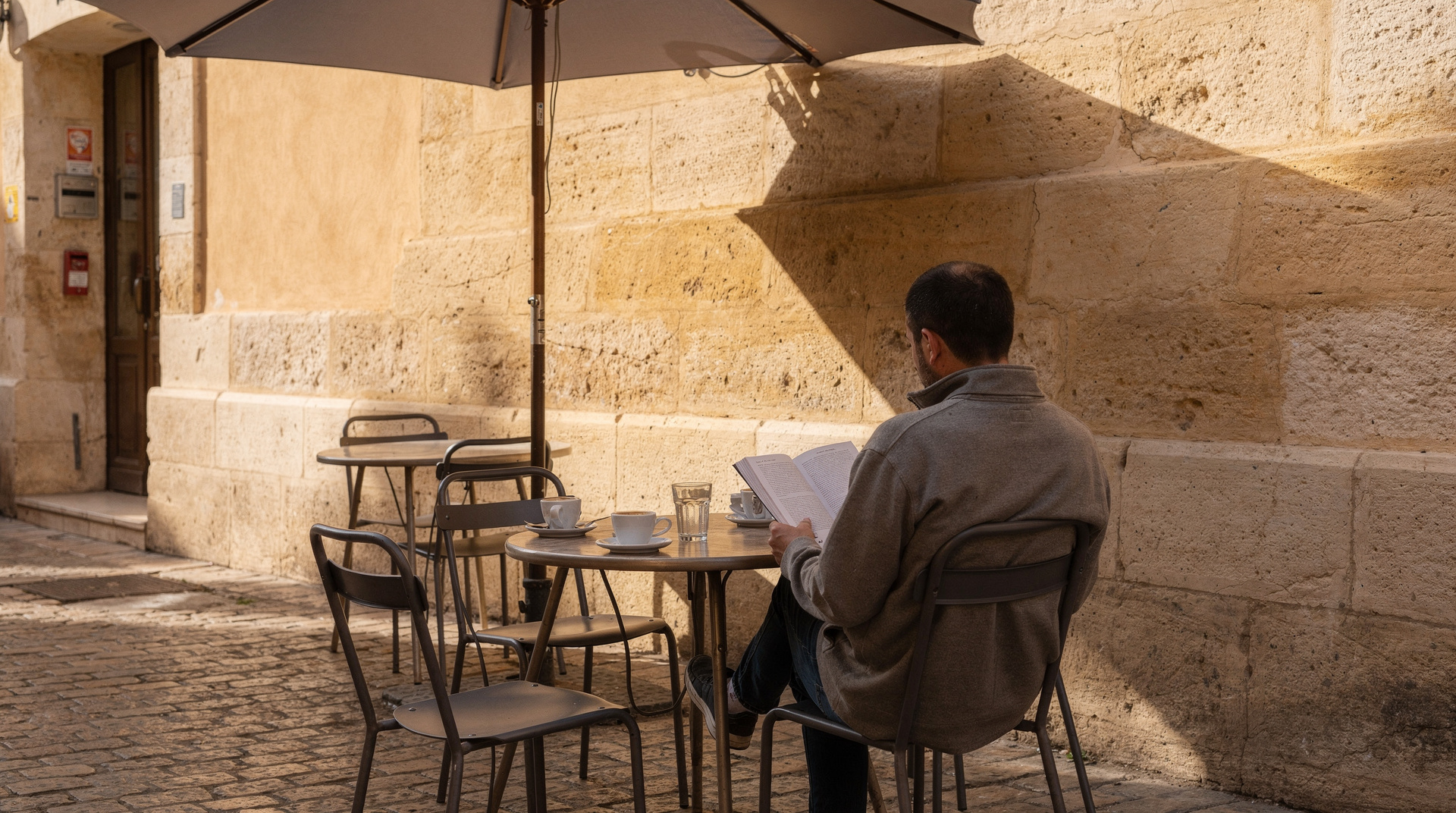
The timing: Pastis is an aperitif — before a meal, not with it. The anise flavour is assertive enough to interfere with most food pairings. The ideal moment: late afternoon, around 18:00, on a terrace, with a small dish of olives. This is called l’heure de l’apéro, and Marseille takes it seriously.
Price: EUR 3–6 for a pastis at a standard Marseille bar. Artisan brands (Henri Bardouin, Janot) are priced slightly higher — EUR 5–8. Tourist terrace prices at the Vieux-Port add a location premium.
The brands: what you are choosing between
Ricard: The default. 45% ABV, star anise and licorice as primary flavour, with the clean commercial profile that has made it France’s best-selling spirit for decades. If you have never tasted pastis, start here — it is the reference point for the style.
Pastis 51: Slightly lighter anise character than Ricard. Popular in the north of France; in Marseille it is more of a secondary option. Same parent company.
Henri Bardouin: The artisan reference point. Made by Distilleries et Domaines de Provence in Forcalquier (Alpes de Haute Provence, about 2 hours north of Marseille). The recipe uses over 65 plant species and spices — including anise, licorice, thyme, rosemary, sage, verbena, star anise from China, cinnamon from Vietnam, and cardamom from Sri Lanka. The result is noticeably more complex than industrial pastis: more herbal, more layered, with a warmth in the finish that Ricard does not have. 45% ABV. Available at good bars and wine shops in Marseille; EUR 30–40 for a bottle.
Janot: A smaller Provençal artisan producer. Less international profile than Henri Bardouin but genuine quality. Made in Aubagne (near Marseille); the recipe emphasises local garrigue herbs (thyme, fennel, rosemary). Available at some Marseille specialty shops.
Prado: Another regional producer, less widely distributed but available in Marseille. The style is traditional and the price point is accessible.
Discovering the secrets of pastis
For visitors who want more than a single bar experience, the food tour circuit includes pastis tastings at specialist bars. The GetYourGuide-bookable “Discover the Secrets of Pastis” experience covers the history, the production process, and a comparative tasting of several brands — a 90-minute format that gives the full picture without requiring a journey to a distillery.
Alternatively: buy a bottle of Henri Bardouin at a Marseille wine shop (most good wine shops stock it), compare it with a bottle of Ricard, and conduct the tasting at your accommodation or on a terrace. The difference between an artisan pastis and the commercial brand is worth understanding directly.
The pétanque connection
Pastis and pétanque are the two inseparable elements of the Provençal aperitif culture, and both are most Marseillais when combined. A game of pétanque (the boules game played on gravel in town squares) with a glass of pastis is the official afternoon activity of southern France. The guided pétanque and aperitif experience on GetYourGuide pairs the game with a pastis introduction — a genuine local experience rather than a tourist recreation.
The squares around Noailles, Le Panier, and the Cours Julien area have pétanque terrains (piste de pétanque) where locals play in the late afternoon. Watching — or being invited to join — is part of the Marseille experience.
Pastis versus similar Mediterranean spirits
For visitors who have drunk ouzo in Greece or rakı in Turkey, pastis is a recognizable family member with its own character:
Ouzo (Greece): 37.5–40% ABV, purely grape-based spirit, anise-dominant flavour with little else. Cloudier louche than pastis. Sweeter in profile.
Rakı (Turkey): 40–50% ABV, anise-flavoured grape spirit, served with cold water and ice, often called “lion’s milk.” More alcoholic and drier than most pastis.
Pastis: 40–45% ABV, grain or beet alcohol base, anise plus licorice plus herbal complexity. The louche is white-opaque. The flavour profile is broader than ouzo and less austere than rakı.
All three are aperitifs in their cultural contexts. All three cloud when water is added. None are absinthe.
What to eat with pastis
The traditional accompaniment is simple: olives, radishes with butter and salt, small cubes of cheese, or chips (crisps). The anise flavour is dominant enough that anything more elaborate competes rather than complements. The purpose of the aperitif snack is to prepare the appetite for dinner, not to provide it.
At Marseille bars, a pastis will often arrive with a small dish of olives automatically. This is the correct pairing and requires no further elaboration.
Where to drink pastis in Marseille
The honest answer: Almost anywhere with a terrace and a view. Pastis is a democratic drink; its quality does not vary dramatically by establishment (Ricard is Ricard whether served at a tourist café or a neighbourhood bar). What varies is the atmosphere.
Best atmospheres for a first pastis: A terrace at the Vieux-Port watching the ferries (expensive, worth it once), a pétanque square in Le Panier (free, genuinely local), a Cours Julien wine bar that stocks Henri Bardouin (more interesting), or the Vallon des Auffes harbour in the late afternoon sun (the best visual context for understanding why this drink exists).
Best for pastis variety: Wine shops and specialty spirit shops in the Cours Julien area sometimes offer brief tastings of artisan pastis brands alongside purchases. Ask specifically — this is not always advertised.
For the broader Marseille aperitif culture and bar scene, see our cafés guide. For the food that goes with the aperitif ritual, see the street food guide for panisses and other snacking options.
The production process: how pastis is made
Pastis is not distilled in the manner of spirits like cognac or whisky. It is a macerate — an infused spirit, where alcohol is combined with plant material and left to steep before filtration and blending.
The base: Most commercial pastis uses neutral grain alcohol or beet spirit as its base. Artisan producers sometimes use a better-quality base — Henri Bardouin, for example, uses a grape-based spirit that contributes additional complexity.
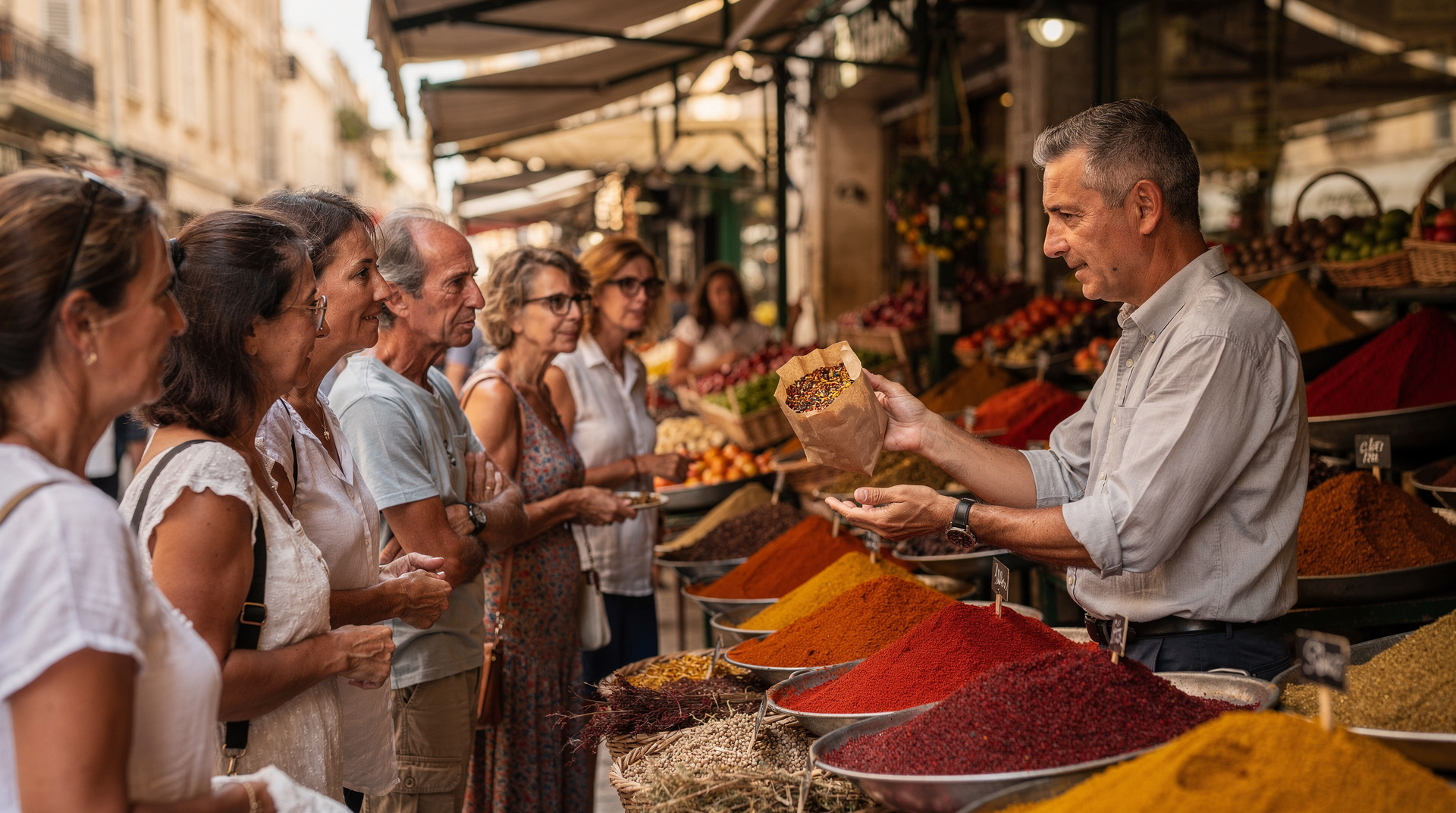
The maceration: Star anise, licorice root, and the producer’s specific blend of herbs and spices are macerated in the alcohol for days to weeks depending on the recipe. The star anise provides the dominant flavour; the licorice adds sweetness and depth; the additional herbs (which can number in the dozens at artisan producers) add the complexity that distinguishes one pastis from another.
The sugar and water: After maceration and filtration, the pastis is blended with water to reduce it to bottling strength (typically 40–45% ABV) and a small amount of sugar is added to round the flavour. Commercial pastis contains approximately 100g of sugar per litre — this sweetness is not prominent on the palate but affects the texture and the way the flavour integrates.
The colour: The amber-yellow colour of bottled pastis comes from the plant extracts in the maceration. When water is added, the louche (the clouding) happens because anethole — the primary aromatic compound in both star anise and licorice — is soluble in alcohol but insoluble in water. The white opacity that appears when you add water is literally the anethole precipitating as microscopic droplets suspended in the liquid.
Regional variations: pastis beyond Provence
Pastis became a national rather than purely regional drink during the second half of the 20th century, but the strong regional variations are still present and worth knowing:
In Marseille: Ricard, served in the traditional format (5:1 water, tall glass, no ice before the water). The city that invented the commercial product maintains the strictest conventions about how it should be served.
In the broader Provence: Henri Bardouin from Forcalquier is the premium alternative; Janot from Aubagne is the local artisan option. Wine bars in Aix-en-Provence and Avignon increasingly stock artisan pastis alongside their natural wine lists.
In Paris: A growing craft spirits movement has produced several Paris-based pastis brands. These tend toward contemporary interpretations — lighter anise, more citrus, different herb blends. In Marseille, these are considered curiosities rather than serious alternatives.
In bars outside France: Pastis in French restaurants abroad is almost always Ricard or Pernod (Pernod Fils produces its own anise spirit under the Pernod brand, slightly different from Ricard in character). Henri Bardouin is occasionally available at specialist wine bars with good French spirits selections.
The pastis negotium: buying a bottle to take home
A bottle of Ricard is available at almost any supermarket or wine shop in Marseille for EUR 18–25 (70cl). This is the practical and useful souvenir — it travels well, it lasts (pastis does not deteriorate quickly once opened, unlike wine), and it is genuinely unavailable at similar prices in most export markets.
What to buy for the best representation of Marseille pastis:
- Henri Bardouin (EUR 28–35 for 70cl at a Marseille spirits shop or online) — the artisan benchmark.
- Ricard (EUR 18–25) — the essential reference point.
- Janot (EUR 22–28 when available) — the local artisan option.
Where to buy in Marseille: Wine shops in the Cours Julien area and the Noailles market area stock both commercial and artisan pastis. Nicolas wine shops (nationwide chain) carry Ricard reliably; artisan brands require a specialist spirits shop or the distillery’s own sales channel.
The miniature option: Small bottles (5cl miniatures) of several pastis brands are available at Marseille airport and at wine shops in the city. These work for people who want to taste without committing to a full bottle.
Pastis in the context of Marseille drinking culture
The aperitif ritual — pastis before the meal, wine with the meal, perhaps a café afterward — is the structural backbone of Marseille social eating. Understanding where pastis fits helps contextualise what can otherwise seem like a very specific regional quirk.
Marseille bars see their highest pastis volume between 18:00 and 20:00 — the apéro window before dinner. At this hour, the Vieux-Port terraces are at their most animated, the Cours Julien bars have a social energy that is genuinely welcoming, and the neighbourhood pétanque games in Le Panier are reaching their afternoon peak. Joining this rhythm — finding a terrace, ordering a pastis, watching the city transition from afternoon to evening — is the correct way to spend one’s first evening in Marseille.
The drink itself is secondary to the social context it structures. Ricard understood this; his marketing from the 1930s onward sold the lifestyle of the south of France as much as the drink. The formula still works because the lifestyle in question is genuinely enjoyable — warm evenings, animated company, the smell of anise and the sound of boules on gravel.
Pastis brands compared
| Brand | Style | ABV | Price (70cl) | Notes |
|---|---|---|---|---|
| Ricard | Commercial reference | 45% | EUR 18–25 | The default; start here if new to pastis |
| Pastis 51 | Lighter anise | 45% | Similar to Ricard | More popular in northern France |
| Henri Bardouin | Artisan, complex | 45% | EUR 28–35 | Over 65 botanicals, made in Forcalquier |
| Janot | Artisan, local | Around 45% | EUR 22–28 | Made in Aubagne, garrigue herb emphasis |
| Prado | Traditional, regional | Around 45% | Accessible | Less widely distributed |
Where the ritual fits into a Marseille day
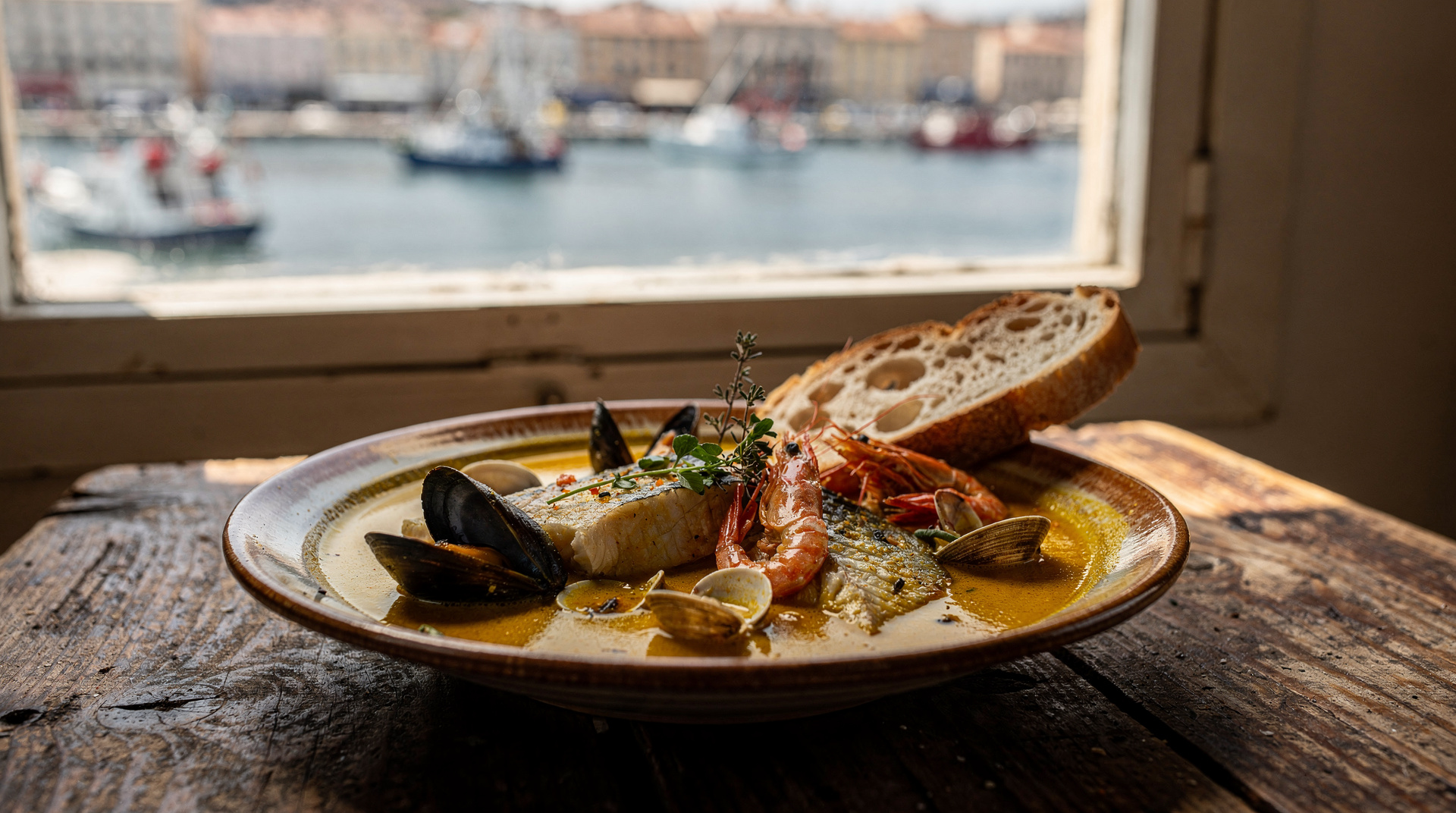
The apéro hour pairs naturally with the rest of a Marseille evening. A terrace near the Vieux-Port or the Vallon des Auffes gives the classic waterside setting, while the Cours Julien squares offer the more local, pétanque-adjacent version of the same ritual. If you’re building out a full food-and-drink day, our best restaurants guide and markets guide both work well either side of an apéro stop, and the bouillabaisse guide pairs naturally with a pre-dinner pastis.
Frequently asked questions about Pastis guide
Is pastis served the same way outside Marseille and Provence? The 5:1 water ratio and no-ice-before-water rule are generally consistent across France, but strictness varies — Marseille bars tend to follow the traditional service most closely, while bars in Paris or abroad may be more casual about the ritual.
Can I bring a bottle of pastis home on a flight? Yes, as checked luggage, since pastis is typically 40–45% ABV, which is within most airlines’ alcohol limits (usually up to 70% ABV, with quantity limits for the 24–70% range) — check your specific airline and destination country’s duty-free allowance before buying multiple bottles.
Top experiences
Bookable activities with verified prices and instant confirmation on GetYourGuide.