Best cafés in Marseille: from Vieux-Port classics to Cours Julien specialty coffee
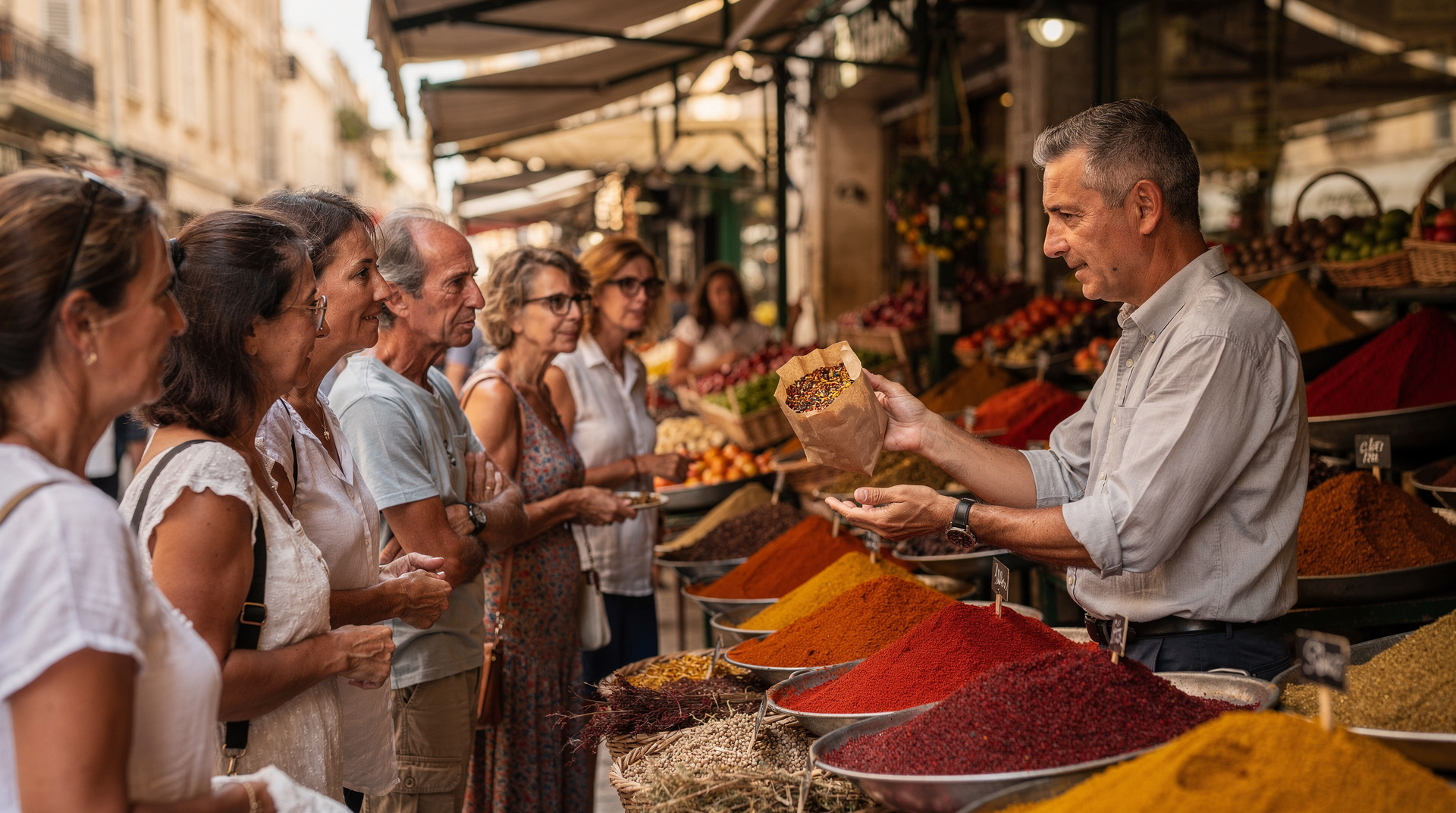
Marseille: walking food tour with tastings
Where is the best coffee in Marseille?
For specialty coffee, Deep Coffee Roasters and Brûlerie Möka (both near Cours Julien) are the reference points. For the classic terrace experience, the Vieux-Port cafés deliver the atmosphere at a premium. 7VB is a strong all-rounder between the two styles.
A city that takes its coffee seriously (if you know where to look)
Marseille’s café culture operates on two parallel tracks. The first is the classic terrace café — espresso, croissant, harbour view, EUR 6–8, perfectly fine, primarily there for the setting. The second is a specialty coffee scene that has emerged around Cours Julien over the past decade and now rivals cities twice the size for the quality of what is in the cup.
Both tracks have their logic. Understanding which you want determines where you should sit down.
| At a glance | |
|---|---|
| Where | Vieux-Port terraces, Le Panier lanes, Cours Julien (specialty), Noailles |
| Cost | Around EUR 1.50–2.50 au comptoir; EUR 3.50–6 for specialty drinks en terrasse |
| Time needed | 30 min for an espresso stop; a leisurely morning (1.5–2h) at a specialty café |
| Getting there | Walkable between Vieux-Port and Cours Julien (around 20 min); see the getting around guide |
| Best time | Morning for Le Panier’s light; late afternoon for Cours Julien’s aperitif shift |
The Vieux-Port classics: atmosphere over coffee quality
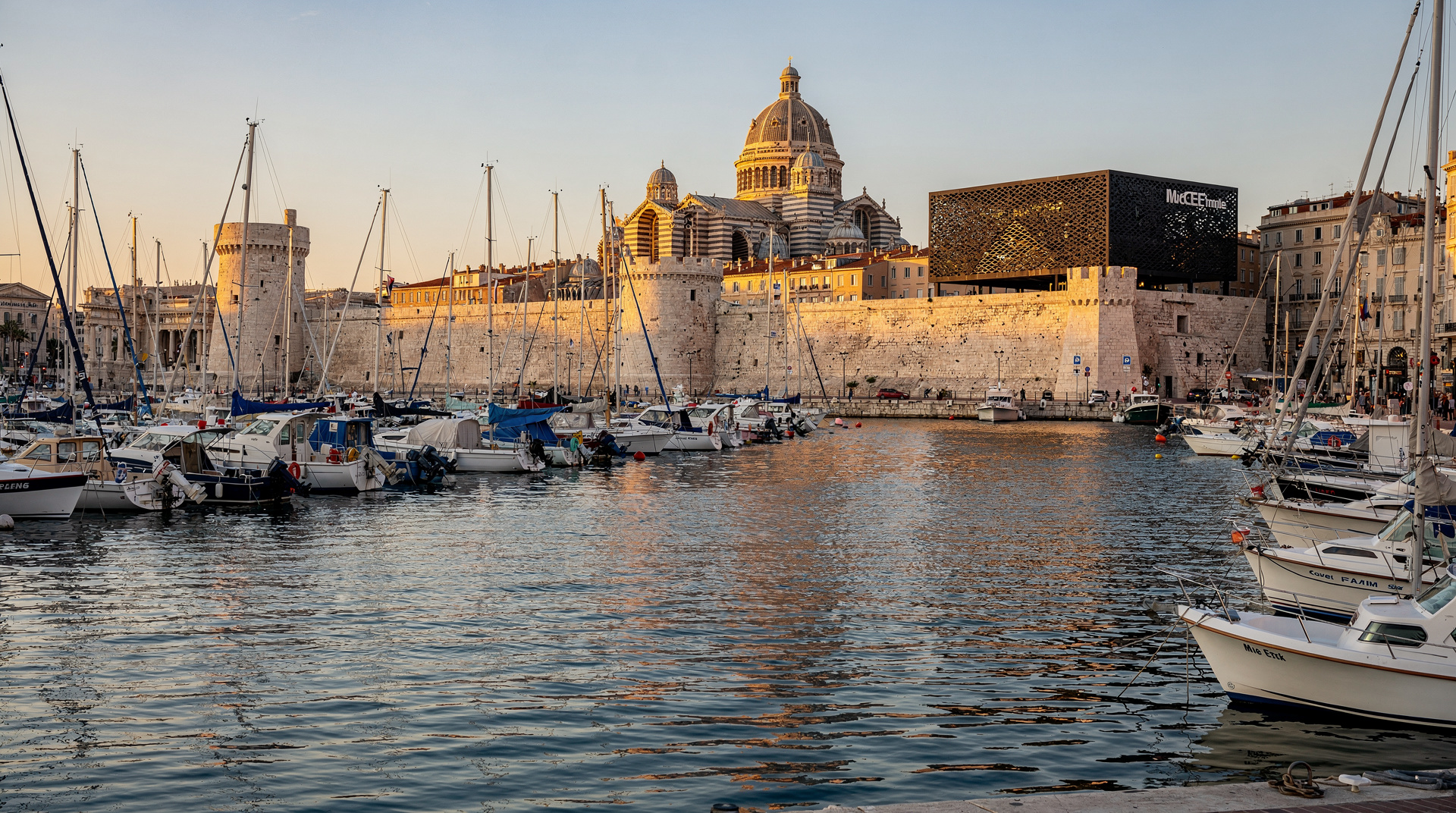
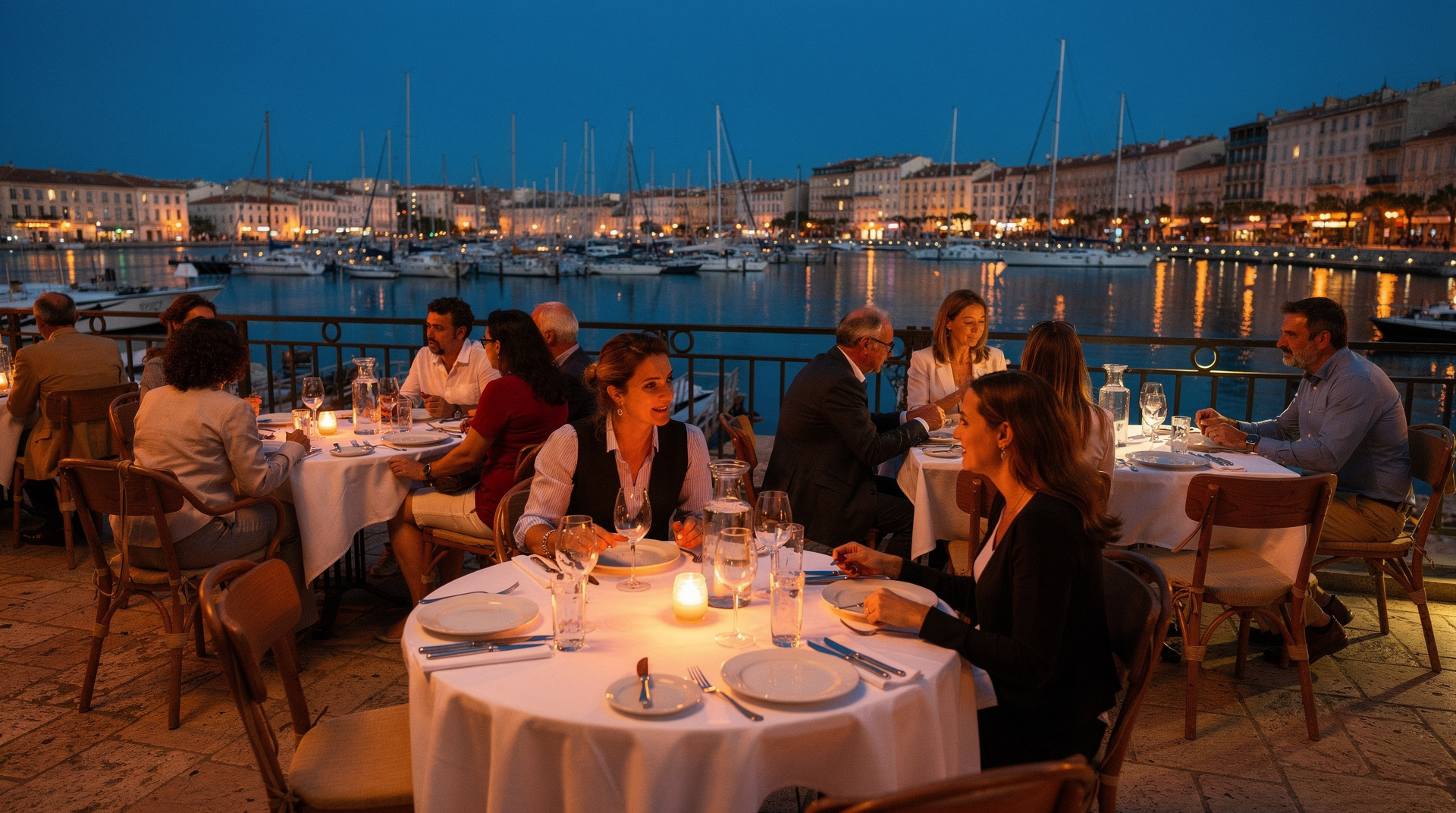
The cafés facing the Vieux-Port harbour — particularly along the Quai de Rive Neuve and the western end near the Mairie — are the most photogenic café settings in Marseille. Tiled floors, cane-backed chairs, parasols in summer, the sound of seagulls, the sight of the two forts framing the harbour mouth. These places deliver atmosphere reliably.
The coffee itself is typically commercial espresso — fine by French brasserie standards (which means acceptable, with no particular character or precision). The croissants range from acceptable to below-average; boulangeries in Le Panier or Cours Julien produce significantly better pastry at lower prices.
When the Vieux-Port café makes sense: First morning in Marseille, before the tourist numbers arrive (before 9:00 is ideal), with time to sit and absorb the city. This is a reasonable once-per-visit expenditure. Repeating it daily when there is better coffee and more interesting atmosphere elsewhere is not the best use of the café budget.
Price expectations: EUR 2.50–4 for an espresso; EUR 4–7 for a café au lait or cappuccino; EUR 3–5 for a croissant. Terraces with direct harbour views charge at the top of these ranges. Coffee taken at the bar (standing) is cheaper by 20–30%, as is standard French practice.
Le Panier: neighbourhood café culture
Le Panier’s café scene is smaller and less curated than Cours Julien’s, but more genuinely residential — these are the cafés where Le Panier inhabitants start their day rather than where visitors congregate.
What to look for: The streets around Place des Pistoles and the lanes between Rue du Panier and Rue Caisserie have several small neighbourhood cafés — typically with a few tables, unremarkable interiors, and solid espresso from mid-range commercial beans. Not destination coffee, but honest and priced at local rather than tourist rates (EUR 1.50–2.50 for an espresso at the bar, which is the normal French café price).
The Vieille Charité area: Around the museum and the surrounding square, several more curated café-restaurant operations serve coffee alongside a full food menu. These are pleasant for a late-morning break during a Le Panier walk and typically offer slightly better quality than the purely residential neighbourhood cafés.
Morning light advantage: Le Panier’s eastern exposure means the lanes receive good light in the morning — this is the best time to sit outside on a fine day. By midday, the narrow streets are in shadow.
Cours Julien: the specialty coffee hub
The emergence of a serious specialty coffee culture in Marseille is concentrated around the Cours Julien quarter. Three addresses in particular have changed what coffee means in the city.
Deep Coffee Roasters: Widely cited as the reference point for specialty coffee in Marseille. Deep roasts its own beans on the premises and serves both espresso and filter coffee at a level of precision that is genuinely unusual in the south of France. The small bites menu (salads, toasts, pastries) and the attached épicerie fine (deli counter) make it a full morning destination rather than a coffee stop. The terrace is modest; the interior is the main event. Expect a short queue on weekend mornings. EUR 3.50–6 for a specialty espresso drink; filter coffee in a similar range.
Brûlerie Möka: A tiny café and roastery on a quiet corner, with a shadowed terrace well suited to the Marseille heat. Founded and led by a single roaster (Iris), the team is small and the quality control is correspondingly high. The selection is more limited than Deep in terms of food options, but the coffee itself — whether espresso or a pourover — is excellent. Open Tuesday to Saturday. EUR 3–5.50 for espresso drinks.
7VB (Sept-Vie-est-Belle): The name translates roughly as “This Life is Beautiful” — which captures the atmosphere of a café that feels genuinely local without being exclusionary. Specialty coffee, fine teas, a small savoury menu, and pastries including cinnamon rolls that have acquired a local reputation. The space is comfortable and not designed to turn over tables quickly. EUR 3–5.50.
The specialty coffee geography: These three addresses and several smaller operations cluster between the Vieux-Port and Cours Julien. Walking north from the Vieux-Port along Rue d’Aubagne (the colourful Noailles market street) takes you past several coffee-capable options before reaching the Cours Julien concentration.
Cours Julien terraces: the outdoor culture
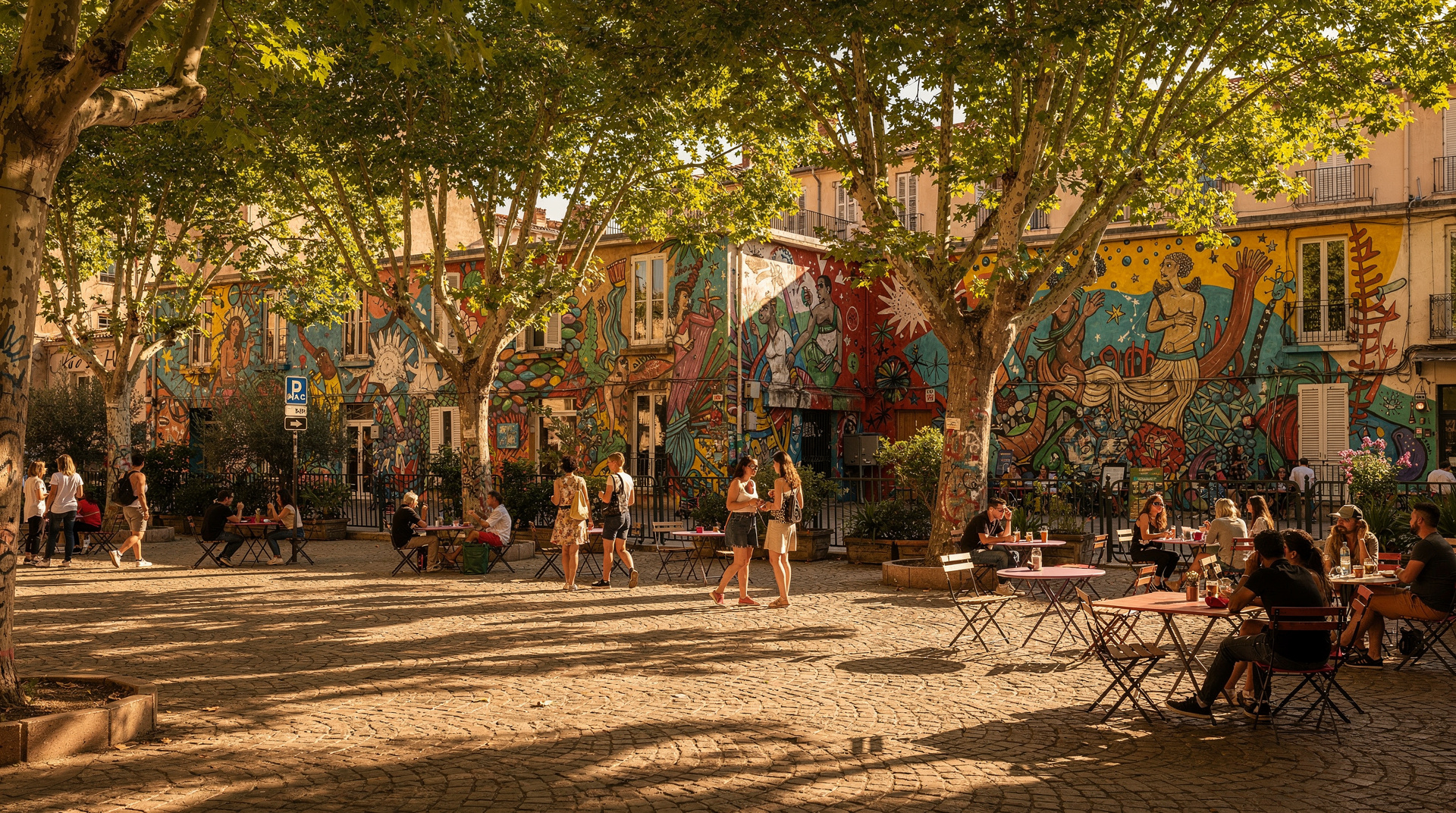
Beyond the specialty roasters, the Cours Julien square itself has several terraced café-bars that function as social centres in the afternoon and evening. These are not specialty coffee destinations — they serve commercial espresso alongside natural wine and cocktails — but they represent Marseille’s outdoor café culture at its most comfortable.
The plane trees on the Cours Julien square provide shade that makes outdoor sitting viable even in July and August. The Wednesday and Saturday morning markets use the same space (see the markets guide), so the terrace experience on those days overlaps with market browsing.
Evening at Cours Julien: From around 18:00 onward, the terrace bars shift from coffee service to aperitif — pastis, natural wine by the glass, local beers. This is where the Cours Julien social life is most visible and most easily joined as a visitor. See our Cours Julien guide for the full evening picture.
Practical café logistics
Bar vs table: In France, ordering at the bar (debout — standing) costs significantly less than ordering at a table on a terrace (in salle or en terrasse). The price difference at a tourist-area café can be EUR 1.50–2 per drink. At a neighbourhood café, the difference is smaller but still present. Standing at the bar with a café and a croissant is the most authentically French way to consume the experience.
Opening hours: Most Marseille cafés open between 7:00 and 8:00 for the morning rush and close between 18:00 and 22:00 depending on their evening function (some serve as bars). Specialty coffee shops typically open at 8:00–9:00 and close earlier (17:00–18:00). Sunday hours are more variable — many smaller places close or open late.
The espresso-to-milk ratio question: A French espresso (café or café simple) is a short, strong shot. A café allongé is the same with additional hot water — closer to an American-style coffee. A café au lait is espresso with steamed milk. A cappuccino exists and is served, but is considered a breakfast drink rather than an all-day option by French convention. A noisette is an espresso with a dash of milk. Order accordingly.
Pastry with coffee: The best pastry in Marseille comes from standalone boulangeries rather than café kitchens. If the café serves pastry that looks mass-produced (uniform croissants in a display case), it almost certainly is. Specialty cafés like Deep and Möka source from or produce better alternatives.
The Noailles café culture
The area around Noailles and the Canebière has a different café style — more utilitarian, often serving both French espresso and North African mint tea in the same establishment. These cafés are frequented by the local Maghrebi community and offer a useful fuel stop during a Noailles market visit at prices well below the tourist-area rates (EUR 1–2 for a café).
Mint tea (thé à la menthe) at these cafés is typically sweet and poured from height in the traditional North African style. EUR 2–4. Worth trying if you have not had the fresh-mint version, which is very different from the teabag approximation available elsewhere.
For a complete picture of the eating culture around which the café scene is embedded, see the Marseille restaurants guide and the street food guide.
Natural wine bars with coffee: the Cours Julien overlap
Several Cours Julien addresses operate as natural wine bars in the evening and as specialty coffee spaces during the day, without the two functions conflicting. This format is common in Lyon and Paris but less well established in other French cities; Marseille has adopted it naturally through the character of the Cours Julien food scene.
What to expect at these hybrid spaces: A compact menu of coffees in the morning, a small selection of natural wines by the glass from late morning onward, light food (charcuterie boards, cheese, seasonal toast) available through lunch and into the afternoon. The clientele shifts from coffee-oriented in the morning to wine-oriented in the afternoon — the same space, different function.
This format suits visitors who want to spend several hours in one place — arriving for a coffee at 9:00, staying for a second coffee and some reading, transitioning to a glass of wine at noon alongside a simple lunch. No obligation to leave between services.
The aperitif café: from coffee to pastis
Marseille’s café culture does not separate cleanly between coffee establishments and bar establishments. Many cafés that open at 7:00 for morning espresso are the same places that serve pastis at 18:00, natural wine at 19:00, and close at midnight. The French terminology — café-bar — describes this continuity accurately.
The practical implication: you can sit at many Marseille cafés for the entirety of a long afternoon, transitioning from coffee to mineral water to wine to aperitif as the hours pass, and no one will encourage you to leave or clear your table. This is both a cultural fact and a significant quality-of-life feature of café culture in the south of France. The table you occupy at 10:00 for an espresso can still be yours at 20:00 for the second glass of rosé, provided you continue to order at reasonable intervals.
Practical guide to coffee ordering in French
Navigating a French café counter in a city that takes its coffee seriously benefits from knowing the vocabulary:
Un café: A single espresso, short and strong. The default when you say “un café, s’il vous plaît.” This is what most Marseille café-goers drink, standing at the bar.
Un café allongé: The same espresso extraction but with additional hot water added to the cup afterward — longer, less concentrated. Approximates American-style drip coffee in strength if not in character.
Un noisette: An espresso with a small dash of hot milk. Named for the hazelnut (noisette) colour the milk produces. Popular in the south of France as a less austere alternative to the straight espresso.
Un café au lait: Espresso with hot steamed milk, served in a larger cup. More common at breakfast than at any other time of day. After 11:00, ordering a café au lait in a traditional French café marks you as a tourist (or someone who simply prefers it, which is entirely acceptable).
Un cappuccino: Available and served at most establishments including specialty shops, but considered a breakfast drink rather than an all-day option by French convention. At specialty coffee shops like Deep Coffee and Möka, the cappuccino is executed with proper attention to the espresso-to-milk ratio.
Un double: Two shots in one cup. Not commonly ordered in France; if you want more caffeine, a second café is the conventional approach.
Café glacé: Iced coffee. Not traditional but increasingly available at specialty shops during summer. At Deep Coffee and 7VB, iced coffee options appear on the summer menu.
Reading the café prices
French café pricing has a structural quirk that visitors sometimes discover by accident. The same drink in the same establishment costs different amounts depending on where you consume it:
Au comptoir (at the bar, standing): The lowest price, typically 20–40% below table service. En salle (at a table inside): Mid-price. En terrasse (at a table outside on the terrace): The highest price.
This is not a service charge in the British sense — it is a deliberate pricing structure that reflects the differing costs (real estate, waiting staff, table turnover) of the three formats. The price is typically posted on a board at the bar showing all three levels.
At a Vieux-Port café with a sea view, the terrasse price for an espresso might be EUR 4–4.50 versus EUR 2.50 au comptoir. At a neighbourhood café in Le Panier, the difference might be EUR 1.80 au comptoir versus EUR 2.20 en terrasse. The mechanism is the same; the magnitude varies by location and tourist footfall.
The practical advice: If you want atmosphere (terrace, view, lingering), budget for the terrasse price. If you want the coffee, drink it at the bar. Both are correct; knowing which you want in advance avoids the surprise when the bill arrives.
Pairing a café stop with the rest of your morning
A coffee stop rarely stands alone in a Marseille itinerary — it slots into a walking route. Starting at the Vieux-Port for an early espresso, then walking up into Le Panier for a second stop and a look at the street art, then finishing at Cours Julien for a proper specialty coffee, covers most of the café geography described above in a single morning of around 2.5–3 hours on foot. This route also works well combined with the Noailles market on a Wednesday, Friday, or Saturday morning, since the market lies directly on the path between Le Panier and Cours Julien.
For visitors basing themselves near the water, see where to stay in Marseille — proximity to the Vieux-Port or Cours Julien materially changes how many café stops fit naturally into a day without extra transit.
Frequently asked questions about Best cafés in Marseille
Is tipping expected at Marseille cafés?
No, not in the way it works in North America. A service charge is already included in the price by French law. Rounding up a euro or leaving small change for table service is appreciated but not expected, particularly at the bar.
Can I get a decent coffee near the Vieux-Port if I don’t want to walk to Cours Julien?
7VB and a handful of smaller specialty-adjacent spots sit on the walking route between the two, so you don’t have to choose one or the other — see the geography note above. If you truly cannot leave the immediate harbour area, expect competent commercial espresso rather than specialty-grade coffee.
Top experiences
Bookable activities with verified prices and instant confirmation on GetYourGuide.