Marseille vs Nice: which Mediterranean city is right for you?
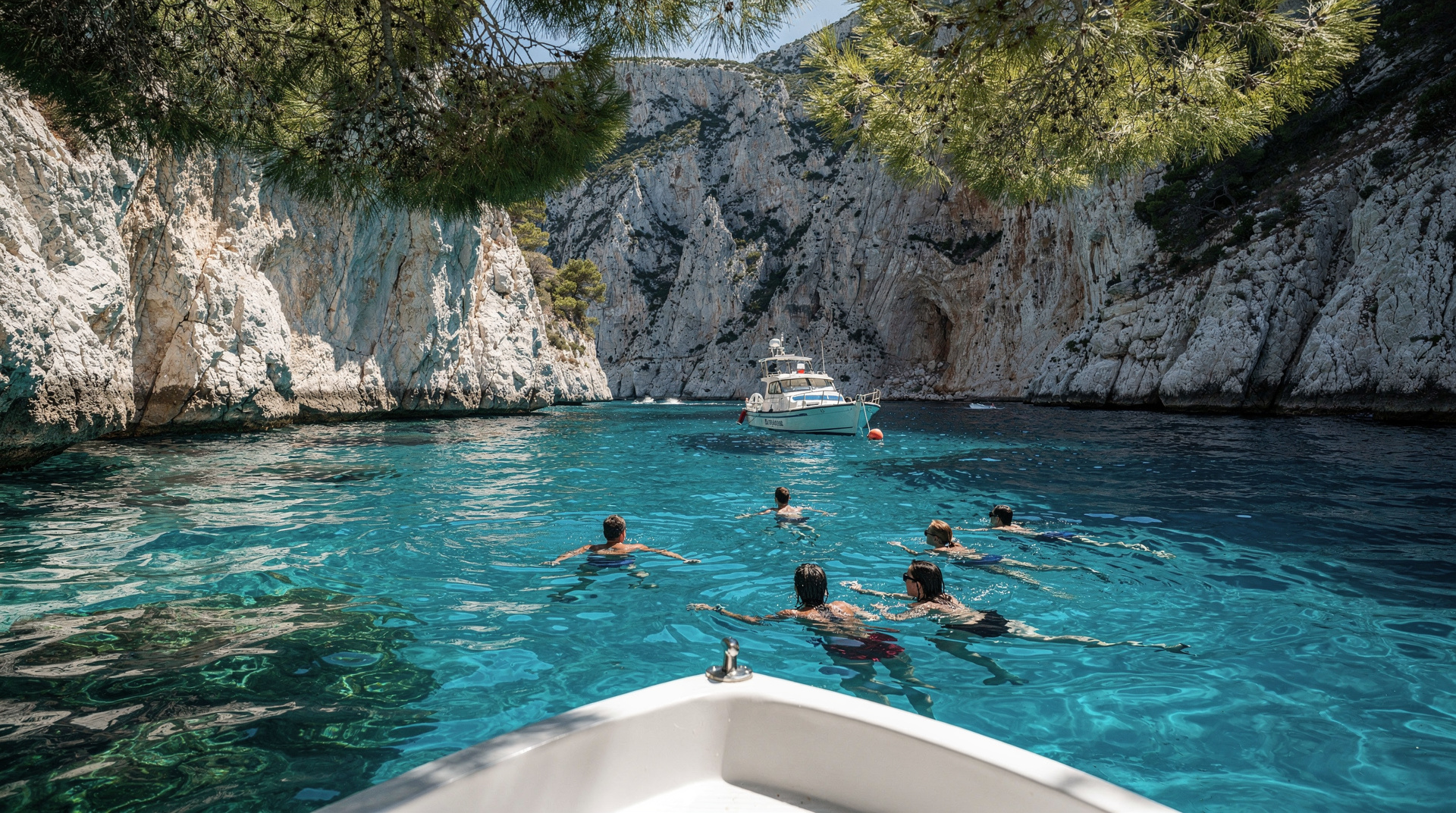
Marseille: iconic Calanques boat tour with swimming
Duration: 3-4.5 hours
Should I visit Marseille or Nice?
Marseille if you want an unpolished, genuinely complex city with the Calanques and authentic working-port character. Nice if you want the Côte d'Azur Riviera experience — the Promenade des Anglais, Belle Époque architecture, and a more conventionally glamorous Mediterranean setting.
The Mediterranean’s two faces
| At a glance | Marseille | Nice |
|---|---|---|
| TGV from Paris | Around 3h15 | Around 5h30 |
| TGV between the two | Around 2h30 direct | Around 2h30 direct |
| Mid-range couple, per day | Around EUR 130–180 | Around EUR 170–230 |
| Best for | Calanques, history, value | Riviera glamour, Promenade, Monaco day trips |
| Airport | Marseille-Provence (MRS) | Nice Côte d’Azur (NCE), more long-haul routes |
France’s Mediterranean coast produces two cities that are superficially similar — both large, both sun-drenched, both built around a harbour — and deeply different in almost every other respect. Marseille (population around 900,000) and Nice (around 340,000) are the two poles of the French Mediterranean experience, and the choice between them is more revealing about a traveller’s preferences than almost any other destination decision in France.
This is not a comparison where one city is better. It is a comparison where they are genuinely different things, and understanding which you want is the more useful exercise.
Three thousand years vs two centuries of glamour
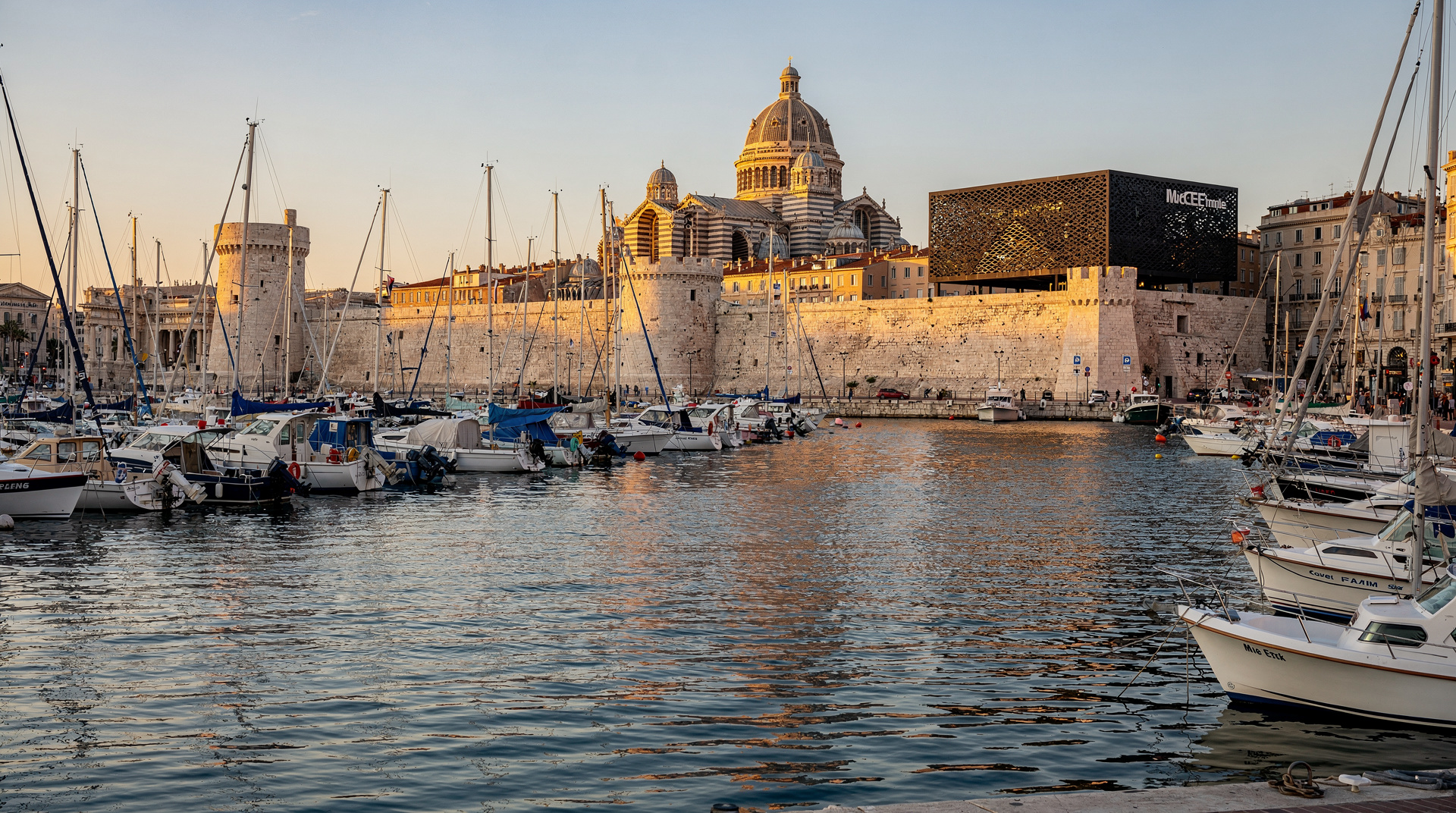
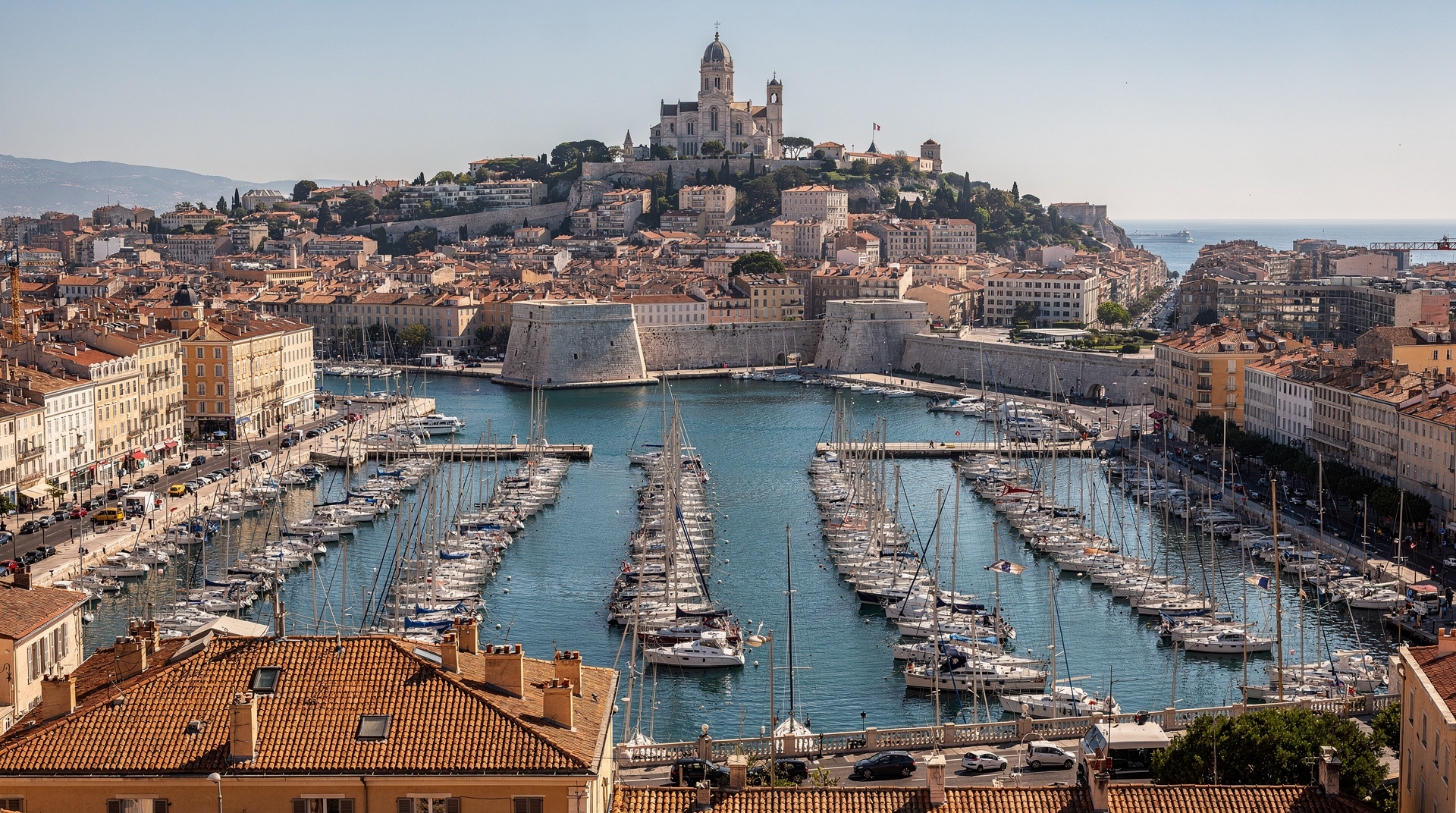
Marseille was founded by Greek settlers from Phocaea around 600 BC — making it France’s oldest city by several centuries, and one of the oldest continuously inhabited ports in the western Mediterranean. The city’s history is visible in layers: the ancient Greek and Roman remains beneath the Bourse shopping centre (now the Musée d’Histoire de Marseille), the medieval Le Panier district on its hill, the Baroque churches of the 17th and 18th centuries, and the post-war reconstruction of the Vieux-Port area after wartime destruction. This history is not performed for tourists; it is embedded in the urban fabric and often difficult to read without prior knowledge.
Nice’s international reputation was largely constructed in the 19th century. The city was part of the Kingdom of Sardinia until 1860 — a fact that gives the old town (Vieux-Nice) its Italian character, its ochre and terracotta facades, and its market culture. The Belle Époque transformation came with the arrival of English and Russian aristocracy seeking winter sun: the Promenade des Anglais was built, the grand hotels rose, and Nice became the defining image of Riviera glamour. It is a carefully constructed elegance — and a very successful one.
The practical implication: Marseille rewards visitors who want to understand a complex, sometimes difficult city that has been shaped by centuries of immigration, trade, and port life. Nice offers a more legible, prettier surface — the Promenade is genuinely magnificent, the Vieux-Nice is delightful — but less historical depth below that surface.
The beaches: Calanques vs Côte d’Azur
This is the comparison that most concretely illustrates the difference in character.
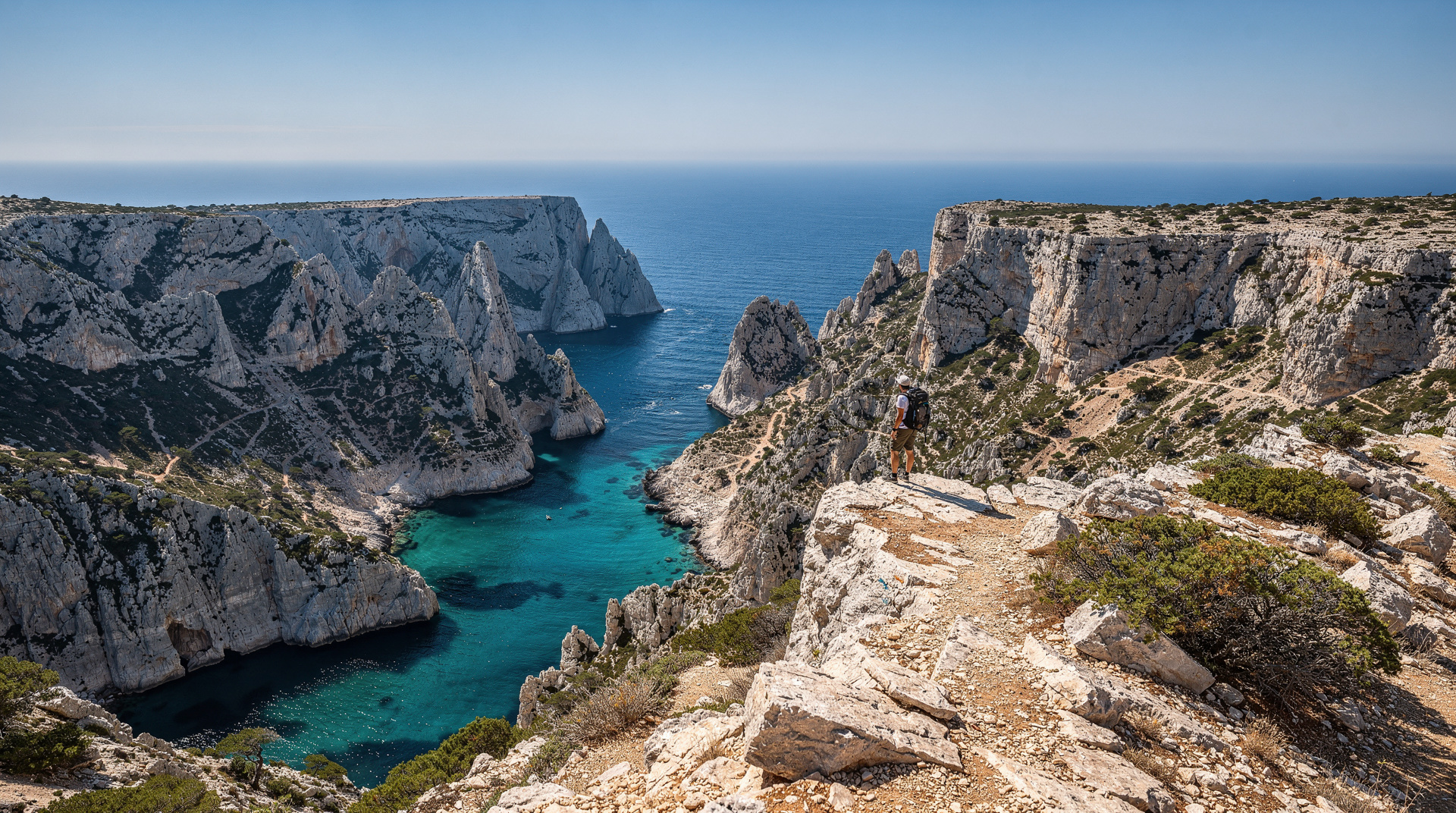
Marseille’s coast: The Calanques National Park — 20 kilometres of white limestone fjords with turquoise water, beginning at the city’s southern edge — is a genuinely extraordinary piece of coastal geography. There is nothing else like it in France. The Prado beaches are free, sandy, and accessible by bus from the centre. Cassis (35 minutes by train) adds a postcard port with excellent wine and more accessible Calanques from the other side.
Nice’s coast: The Promenade des Anglais runs 7 kilometres along the Bay of Angels, flanked by the city’s landmark hotels. It is beautiful, especially at dawn and sunset. The beaches themselves, however, are predominantly pebble — uncomfortable for lying on without a hired mat, and requiring water shoes for comfortable entry. The private beach clubs charge EUR 20–30+ per day for a sun lounger. The swimming is good but the physical beach experience requires investment.
Honest verdict: for spectacular swimming in genuinely extraordinary natural settings, Marseille’s Calanques are in a different category from anything on the Côte d’Azur. Nice’s coast is elegant and the promenade walk is world-class. For lying on a beach comfortably without hiking, Nice’s private clubs are easier (though expensive). For wild coastline and free swimming in dramatic coves, Marseille is unmatched.
Food: socca vs bouillabaisse
Both cities have strong food traditions that are specific to their geography and history.
Nice: Socca (chickpea flour pancake, eaten hot with black pepper), pissaladière (onion tart with anchovies and olives), salade niçoise (which is not what you think it is — in Nice it contains raw vegetables, no cooked potatoes or beans), pan bagnat (the salade niçoise sandwich). The Cours Saleya market is one of the best food markets in France. The cuisine reflects the Italian-Provençal border cuisine that shaped the city before 1860. It is excellent.
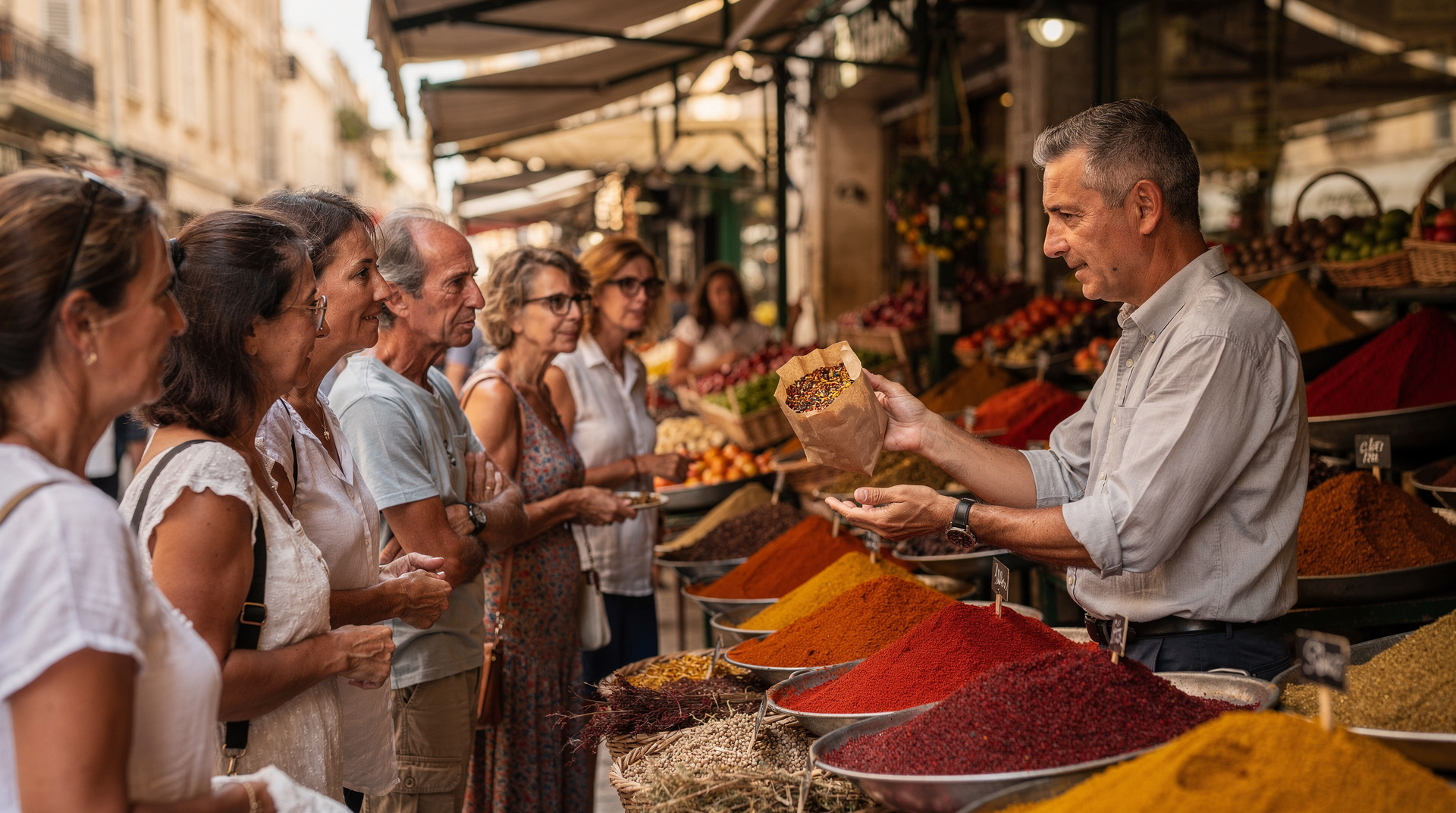
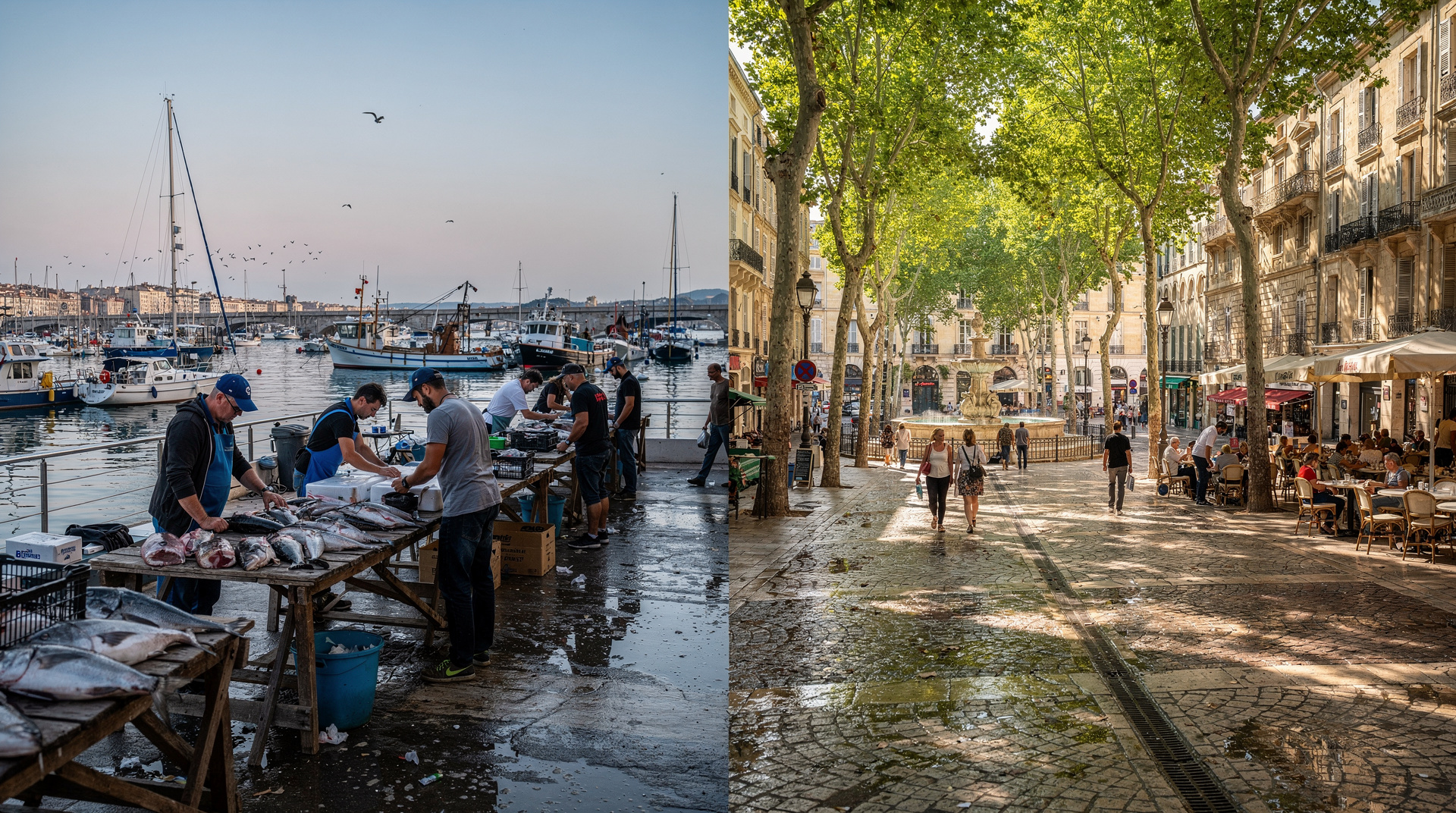
Marseille: Bouillabaisse (the real Charter version, not the tourist-strip version — see our full guide), the fish market (best in France), the North African food of Noailles, the pastis culture, the navettes (boat-shaped fennel biscuits from the Four des Navettes bakery, operating since 1781). The food scene is less coherent but more diverse — Marseille’s multicultural character produces a wider range of genuinely authentic non-French cuisine than Nice.
Prices
Nice is significantly more expensive than Marseille for most categories of visitor spending. Hotel prices on or near the Promenade des Anglais are at Paris levels. Restaurant prices in the tourist zone are higher. The general cost of being a visitor in the Riviera resort economy is higher.
Marseille has a wider price range. Its tourist-zone restaurant strip on the Vieux-Port is expensive and not especially good. But the neighbourhood restaurants of Cours Julien, the Noailles market food, and the boulangeries throughout the city offer genuinely affordable eating that Nice’s tourist core does not. Budget accommodation is easier in Marseille.
A reasonable comparison: mid-range couple dining and accommodation in Marseille runs EUR 130–180 per day including activities; in Nice the same profile runs EUR 170–230, and significantly more if the Promenade hotel zone is included. For a fuller breakdown of what a Marseille trip actually costs, see our trip cost guide.
Getting there and moving around
Both cities have international airports: Marseille-Provence (MRS) and Nice Côte d’Azur (NCE). Nice’s airport is one of the busiest in France with a much wider range of international routes, including direct connections from North America. Marseille’s airport has good European connectivity. For visitors coming from outside Europe, Nice is often the easier arrival point.
By TGV from Paris: Marseille is around 3 hours 15 minutes; Nice is around 5 hours 30 minutes (or slightly less on some services). Marseille is more accessible for a long weekend from Paris.
Between the two cities: TGV takes 2 hours 30 minutes direct. The scenic coastal route by TER (regional train) via Toulon and Cannes is 3–4 hours but passes through attractive coastal terrain.
Getting around: Marseille has a metro (M1 and M2), trams, and buses — adequate for a tourist trip. Nice has a good tram network (T1, T2, T3) and a reasonable bus system. Both cities are bikeable along the waterfront; both are difficult to drive in the centre.
Excursions: Calanques vs Monaco and the Riviera towns
From Marseille: Cassis (35 minutes), La Ciotat (50 minutes), Aix-en-Provence (40 minutes), Arles (1 hour), Avignon (1 hour TGV), the entire Calanques National Park.
From Nice: Monaco (25 minutes by train), Cannes (35 minutes), Antibes (20 minutes), Eze (bus, 30 minutes), Menton (30 minutes), the Gorges du Verdon (2.5 hours by car). The Riviera town-hopping circuit — Monaco, Menton, Èze, Villefranche-sur-Mer — is highly developed from Nice and takes in some very beautiful coastal towns.
The pattern: from Marseille, day trips are mostly larger cities and wild coast. From Nice, day trips are mostly smaller glamorous coastal towns and Monaco. The choice reflects a broader travel preference.
Weather and when to go for each
Both cities share a Mediterranean climate, but the practical experience differs by season.
| Season | Marseille | Nice |
|---|---|---|
| Spring (Apr–Jun) | Warm, mistral possible, Calanques trails open | Mild, fewer crowds, good for the Promenade |
| Summer (Jul–Aug) | Hot, dry, Calanques hiking trails often closed for fire risk (boat tours still run) | Hot, very crowded, beach clubs at peak price |
| Autumn (Sep–Oct) | Warm sea, trails reopen, arguably the best month | Mild, good value, sea still swimmable |
| Winter (Dec–Feb) | Mild but can be windy (mistral), quiet | Milder than most of France, popular with retirees |
For a fuller seasonal breakdown, see our guide to the best time to visit Marseille.
Nightlife and evenings
Marseille’s evening scene centres on Cours Julien and Cours d’Estienne d’Orves — bars, small live-music venues, and a younger, more bohemian crowd than the Vieux-Port tourist strip. It is less polished than Nice’s evening offer but has more genuine local energy. Nice’s evenings lean toward the Promenade des Anglais casinos, hotel bars, and a smarter, more resort-oriented crowd, with Vieux-Nice offering a livelier, more affordable alternative after dark.
For visitors weighing up how long to stay in either city before deciding, our guide on how many days in Marseille and our comparison of Marseille vs Aix-en-Provence cover the adjacent decisions most travellers also face.
Who each city suits
Marseille suits: Travellers who want depth and complexity in a city, not surface elegance. People who want the Calanques as the centrepiece of their trip. Those interested in Mediterranean history, multicultural food culture, and a city that has not been curated for visitors. Visitors on a moderate budget who want good value. Those connecting to Provence and the Calanques coast — see our roundup of day trips from Marseille for what that connection unlocks.
Nice suits: Travellers who want the full Côte d’Azur experience — the Promenade, the private beach clubs, the proximity to Monaco and the Riviera towns. Those seeking a more comfortable, visually consistent Mediterranean resort atmosphere. Visitors arriving from outside Europe (better airport connections). Travellers who prefer a shorter city with a very high-quality old town and market over a larger, more complex city.
Both: On a 10-day trip to the south of France, there is no reason to choose. Marseille and Nice are 2.5 hours apart by TGV. Basing yourself in Marseille for the western end of a trip and Nice for the eastern end — or vice versa, with a one-way TGV — is a natural trip structure that captures both the Calanques and the Riviera without redundancy.
Safety: reputation vs reality
Both cities have reputations for crime that exceed what most tourists actually experience.
Marseille: The city has a genuinely higher crime index than Nice (and most French cities), driven primarily by gang-related violence in northern arrondissements that tourists do not visit. Pickpocketing is the actual tourist risk, concentrated in specific zones (Vieux-Port fish market, Saint-Charles station, Noailles market, metro). See our honest safety guide for the specific picture.
Nice: Nice has its own petty crime problem, concentrated on the Promenade des Anglais and the beach clubs where wallets and phones left unattended are an obvious opportunity. The Promenade des Anglais has additional resonance given the 2016 terrorist attack, though the area has since been heavily secured and the risk profile for tourists is now primarily opportunistic theft.
In practice: both cities require standard urban awareness (bag security, phone awareness in crowds). Neither requires a fundamentally different level of caution than any other large French city.
Old towns compared: Vieux-Nice vs Le Panier
Both cities have historic old quarters that are genuinely interesting to walk through, but they are different in character.
Vieux-Nice is the most coherent and visually consistent old town in the south of France. The street grid dates largely from the medieval period (13th–15th century), and the baroque facades — terracotta, ochre, pale yellow, rose — were added in the 17th and 18th centuries when Nice was part of the Duchy of Savoy. The Place Masséna and the Cours Saleya market are the architectural set pieces. The whole quarter is pedestrianised and well-maintained. The Cours Saleya flower and food market (mornings except Monday, when it becomes an antiques market) is one of the best in France.
Le Panier in Marseille is older (the city’s founding location, inhabited since 600 BC), more layered, and less immediately legible. It was not comprehensively rebuilt like Vieux-Nice — it accumulated its current fabric over centuries. There are streets of genuine 17th-century buildings alongside social housing from various periods, street art on every available surface, working-class residents alongside galleries and designer boutiques. The Centre de la Vieille Charité — a 17th-century almshouse with a baroque chapel, now an exhibition centre and archaeology museum — is the Panier’s architectural showpiece.
The practical difference for visitors: Vieux-Nice is easier to appreciate immediately — it looks like what it is: a beautiful old town with clear visual coherence. Le Panier requires more context to understand and more time to appreciate. It rewards slower, more curious walking but does not produce the instant “wow” of the Cours Saleya on a sunny morning.
Museums: Nice vs Marseille
Nice’s museums: The Musée Matisse (in a 17th-century Genoese villa in the Cimiez neighbourhood) is one of the best single-artist museums in France — a strong permanent collection in an excellent building. The Musée d’Art Moderne et d’Art Contemporain (MAMAC) covers French and American avant-garde from the 1950s onward. The Musée National Marc Chagall has the largest collection of Chagall’s work in a public institution.
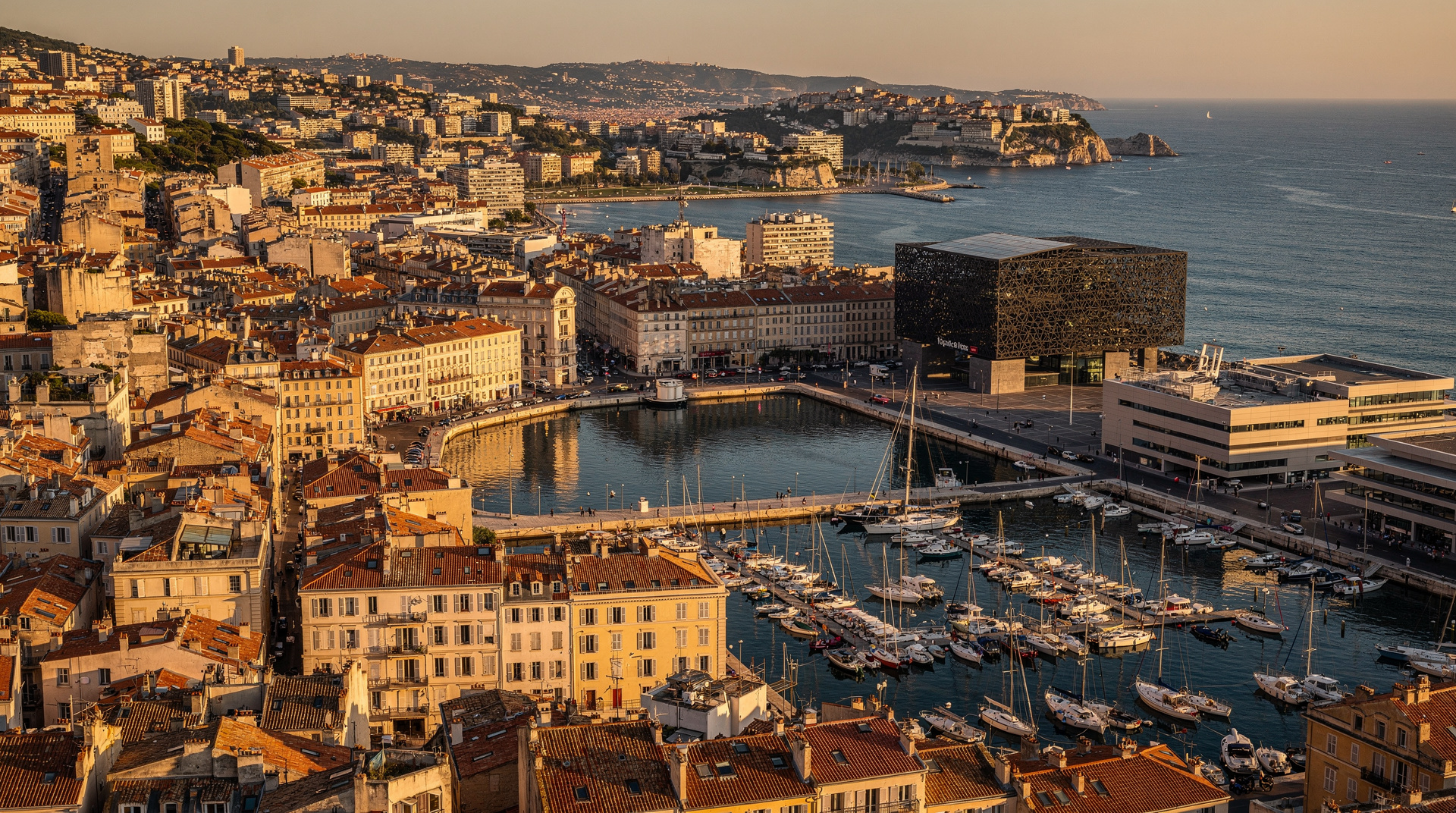
Marseille’s museums: The MuCEM is in a different category from Nice’s museums — a major national museum with the budget and scope to mount world-class exhibitions. The permanent collection covers Mediterranean civilisations; the temporary exhibitions are internationally significant. The Musée d’Histoire de Marseille (Roman Marseille, including a preserved 3rd-century ship in situ) is excellent for its specific subject. The Cosquer Cave replica at the Villa Méditerranée is the best prehistoric art presentation in France outside the Dordogne.
Both cities are strong for museums. Nice’s advantage is in modern art (Matisse, Chagall, MAMAC). Marseille’s advantage is in the MuCEM and in the depth of its historically specific collections.
The cultural contrast in one sentence
Marseille is a Mediterranean port that happens to be in France. Nice is a French city that happens to be on the Mediterranean. The difference is felt immediately and defines everything else about the comparison.
Marseille’s identity comes from the sea, from the Calanques, from the centuries of Greek, Roman, Corsican, North African, Armenian, and Provençal cultures that have passed through its port. It is cosmopolitan in the original sense — a city shaped by the world coming through it. Its food, its music, its architecture, and its social texture all reflect this.
Nice’s identity is more constructed. The Belle Époque hotels, the Promenade, the careful preservation of the old town, the proximity to Monaco and Cannes — all of this is a deliberate production of the Côte d’Azur myth. That myth is beautiful and has been successfully maintained for over 150 years. But it is, at its core, a destination designed to be visited rather than a city that evolved to be lived in.
This is not a criticism of Nice — it does what it does extraordinarily well. It is simply a way of understanding why the same Mediterranean sun, the same turquoise water, and the same French language produce two cities that feel fundamentally different to visit.
For Marseille’s specific neighbourhoods and how to navigate the city, see our neighbourhood guide. For the Calanques in detail, see which Calanque to visit.
Top experiences
Bookable activities with verified prices and instant confirmation on GetYourGuide.