Bandol
Bandol guide — AOC Mourvèdre-based rosé and red wine, seaside town between Marseille and Toulon, Île de Bendor, and Domaine Tempier.
Bandol: visit the vineyards and discover Bandol wines
Quick facts
- Distance from Marseille
- ~45 min by car; ~50 min by TER train
- AOC status
- AOC since 1941; Mourvèdre minimum 50% for reds, 20% for rosé
- Production
- 8 communes; red, rosé, and white
- Île de Bendor
- 10-min boat from Bandol port; pedestrian island with hotel and wine museum
The appellation on the coast
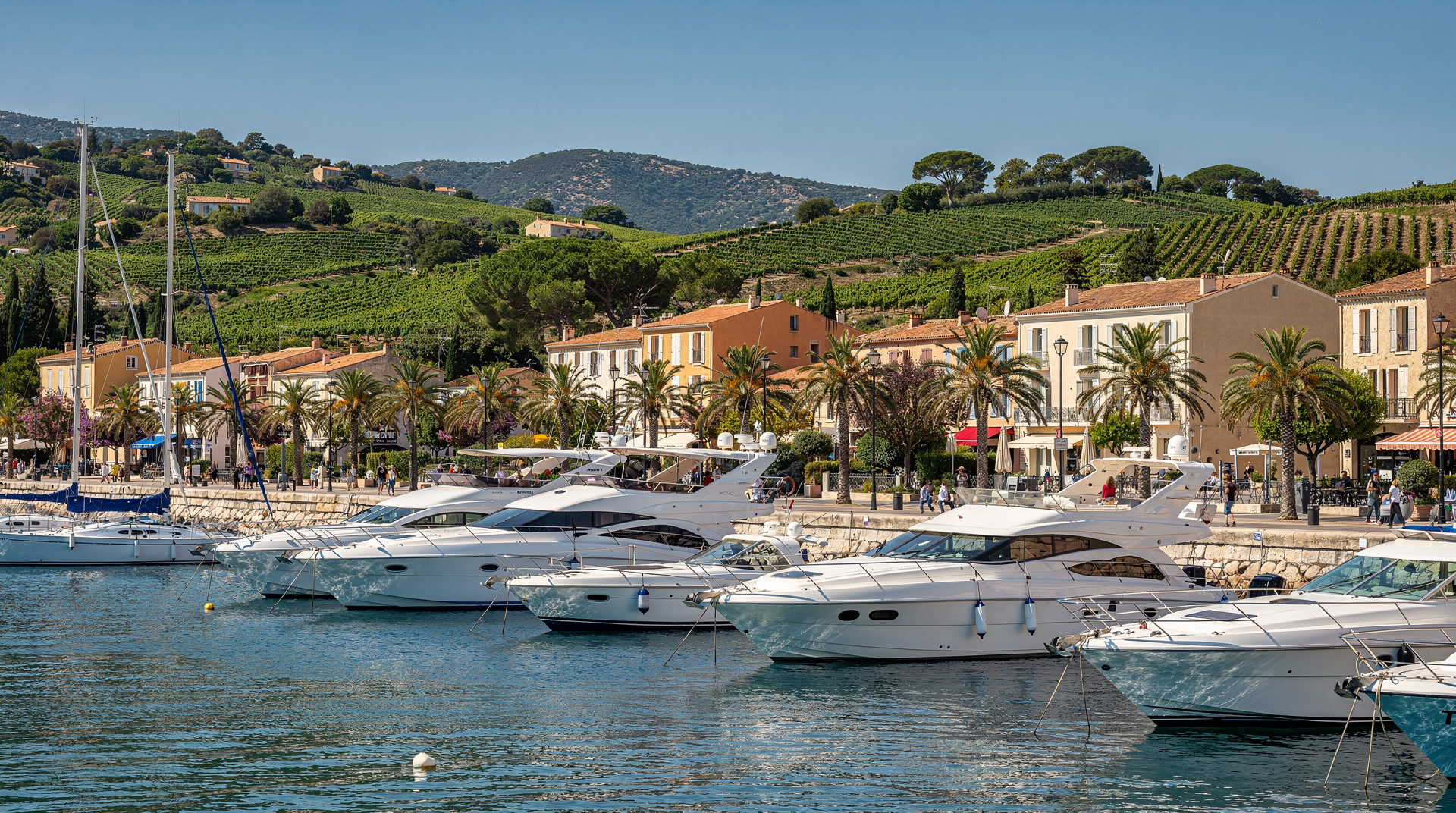
Bandol sits halfway between Marseille and Toulon, 45 kilometres from each — a seaside town with a working port, a marina, pine-shaded promenades, and a wine appellation that is small, proud, and increasingly well known outside France.
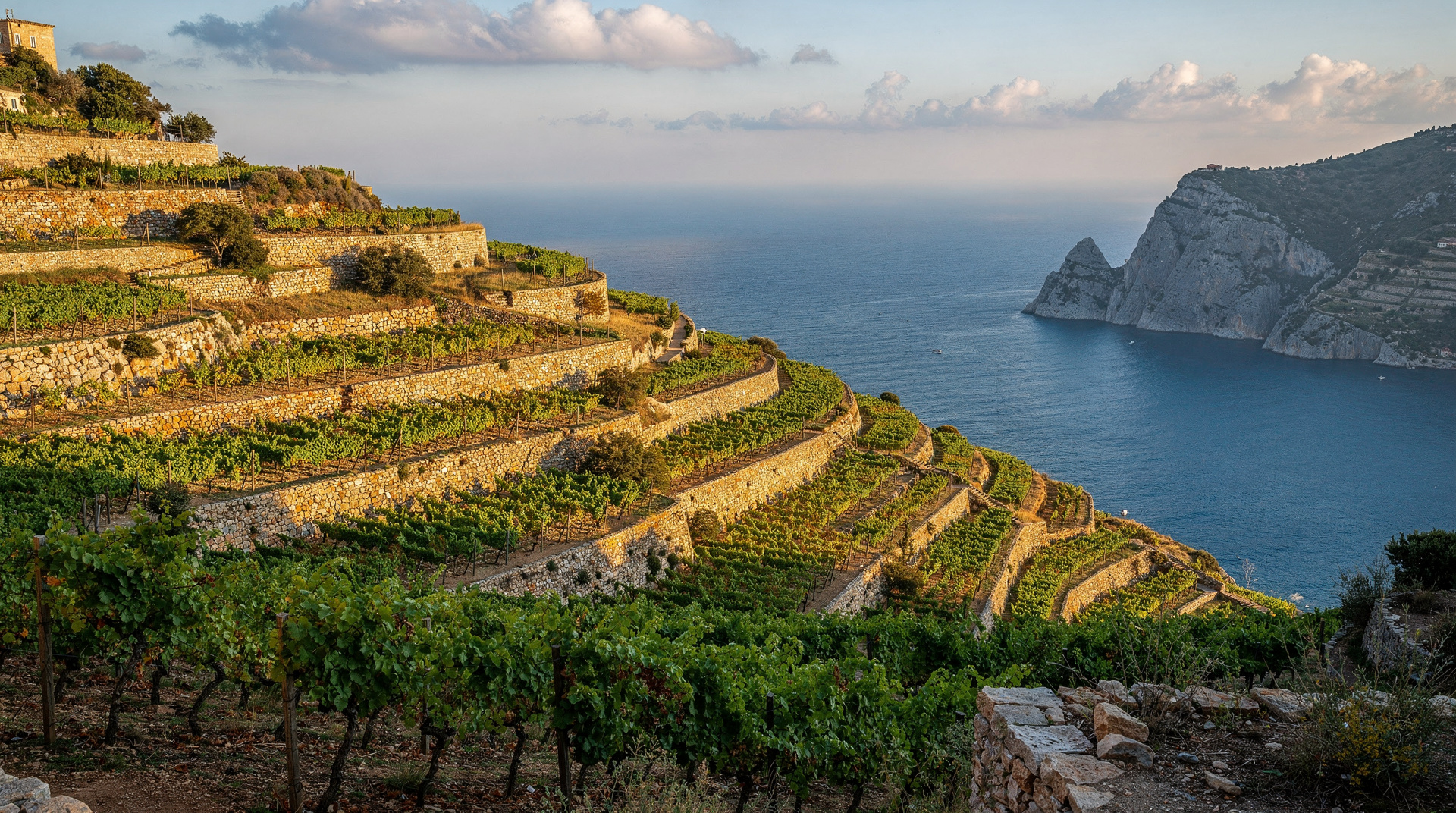
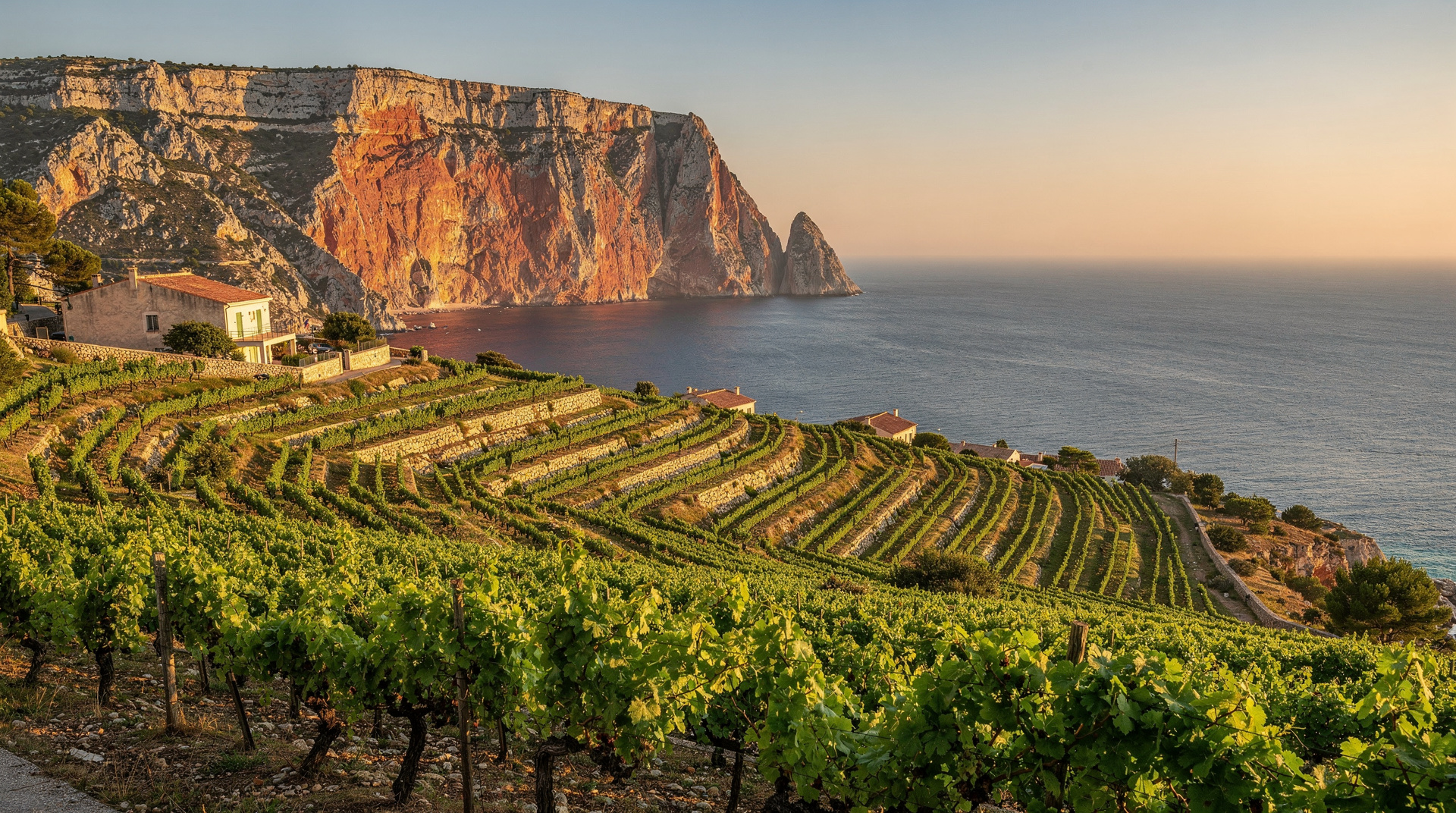
The town itself is pleasant and unassuming: a curved bay, a pedestrian port promenade, a modest beach, and the surrounding terraced hillside vineyards that give the wine its distinct character. It is not a destination that competes with Cassis for visual drama. What makes Bandol interesting is the wine — specifically, the Mourvèdre grape, which the appellation is built around in a way that no other French AOC replicates.
The AOC and Mourvèdre
Bandol received its AOC status in 1941. The appellation covers 8 communes on a south-facing coastal strip of approximately 1,600 hectares — protected from the Mistral by the hills behind, exposed to the Mediterranean sun, and planted on limestone and clay soils with a schist base that gives the wines their mineral character.
The Mourvèdre requirement:
- Reds: minimum 50% Mourvèdre in the blend (most serious producers use 70–95%). The remainder is typically Grenache and Cinsault.
- Rosés: minimum 20% Mourvèdre (most producers use more, which is why Bandol rosé has more structure and tannin than typical Provençal rosé).
- Whites: Clairette, Ugni Blanc, Bourboulenc, Sauvignon Blanc — a small part of production, dry and mineral.
Mourvèdre is a difficult grape: late-ripening, sensitive to cold, requiring the specific combination of maritime warmth and mineral soil that Bandol provides. It produces wines with a distinctive character — dark fruit, garrigue herbs, leather, olive tapenade — that improve significantly with age. A Bandol red at 5–10 years develops in a way that no other Provençal wine does.
Domaine Tempier in Le Plan-du-Castellet is the most celebrated estate — the domaine most responsible for the modern reputation of Bandol reds internationally, known particularly in the United States through the food writer Richard Olney and the influence of Kermit Lynch’s wine imports. The estate wines are not cheap, but they are the reference point for understanding what Bandol red can do.
AOC rules also require reds to be aged in oak for a minimum of 18 months. Machine harvesting is forbidden. The combination of Mourvèdre’s natural late-ripening and these production constraints makes Bandol one of the more seriously produced appellations in France.
The town and the port
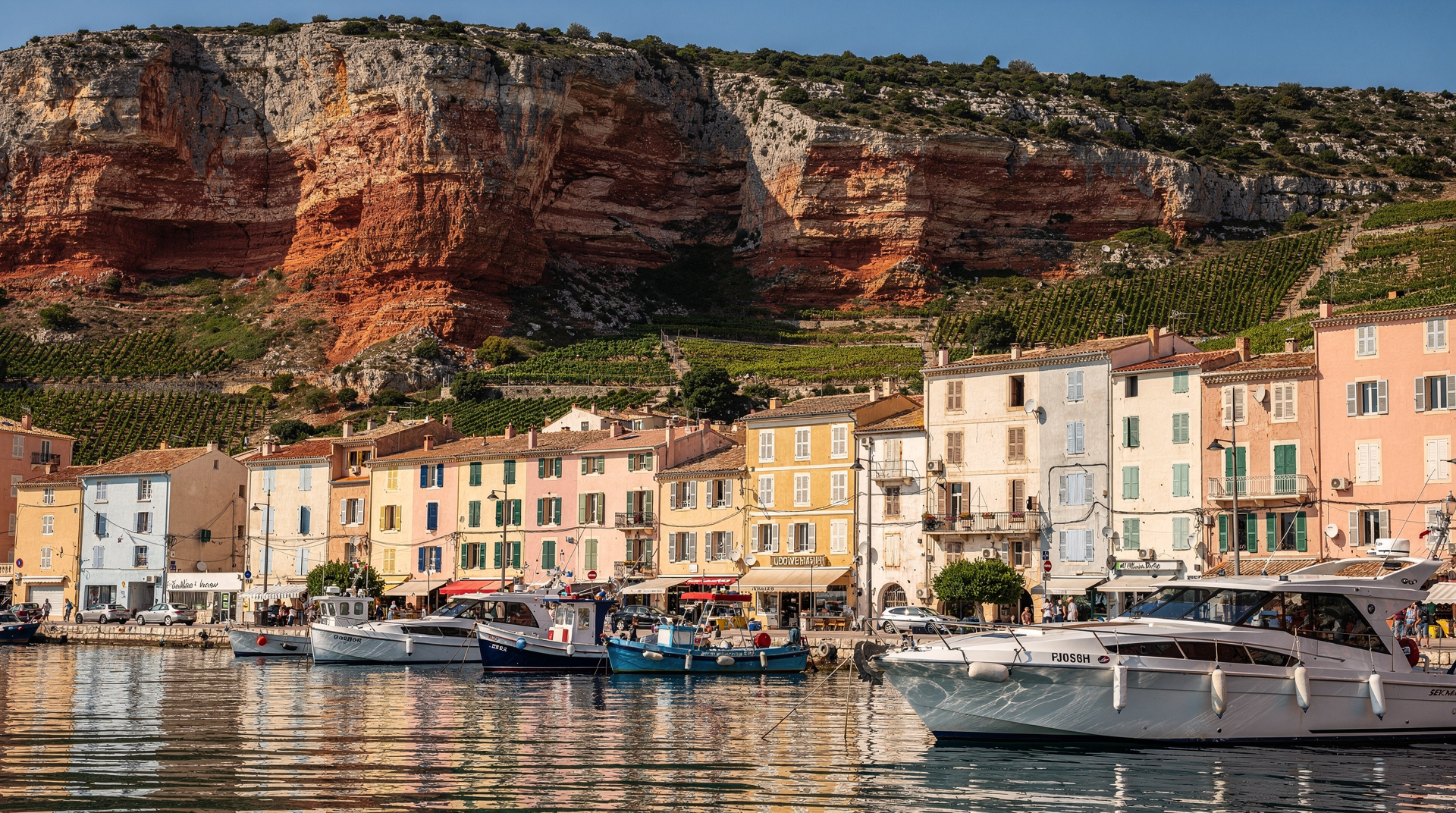
Bandol’s port is the commercial and social centre — fishing boats in the morning, pleasure craft filling in by midday, restaurant terraces facing the water for lunch and dinner. The atmosphere is relaxed Mediterranean rather than resort-commercial; the town has a working life beyond tourism.
The Casino de Bandol at the western end of the promenade is a period building; the promenade itself (Allées Alfred-Vivien) is well-planted with plane trees and palms and leads from the port eastward to the main beach. The beach (plage de Bandol) is sandy, sheltered by the bay, and adequate if not exceptional by Provence coast standards.
The town has a handful of wine shops, several restaurants, and the practical services of a small coastal city (around 10,000 permanent residents). It functions well as a half-day stop on a coast wine itinerary.
Île de Bendor
A 10-minute boat trip from the Bandol port (boats leave regularly from the port quai, approximately EUR 8–10 round trip) reaches the Île de Bendor — a small island of around 7 hectares that the pastis manufacturer Paul Ricard bought in 1950 and developed as a leisure resort. The island is now managed by his estate and contains a hotel, a diving centre, a sailing school, and the Espace Culturel Paul Ricard.
The cultural space includes a permanent display of wine and spirits bottles from around the world (over 8,000 bottles and decanters) and occasional exhibitions. The island is pedestrian, small, and pleasant — more of a curiosity than a destination in its own right, but a good 30-minute excursion if you are spending a half-day in Bandol.
Visiting the domaines
Several Bandol estates are open for tastings with or without appointment. The key domaines to consider visiting:
Domaine Tempier (Le Plan-du-Castellet): the benchmark estate. Open for visits; call or email in advance. The wines are expensive by appellation standards; the visit is worthwhile for context.
Château de Pibarnon (La Cadière-d’Azur): one of the highest vineyards in the appellation (up to 300 metres), producing structured reds with notable aging potential. Open for visits.
Domaine de la Suffrène and Moulin de la Roque: both in the Bandol commune itself, both open for visits.
Most estates request an appointment, particularly in harvest season (September). Drop-in tastings are possible at the cave shops in the town centre.
Combining Bandol with Cassis
The natural wine route on this stretch of coast is Bandol to Cassis — 10 kilometres east by the coastal D559 or the Route des Crêtes inland. The two appellations represent a genuine contrast: Bandol’s Mourvèdre-heavy reds and rosés against Cassis’s mineral Marsanne-based whites. A morning in Bandol (domaine visit or port breakfast) followed by an afternoon in Cassis (wine tasting at a domaine, walk to Port-Miou) is a coherent coast wine day. The coast road between the two passes through La Ciotat.
Several tour operators run Bandol + Cassis wine day tours from Marseille. See the tour options above for organised itineraries.
Getting here from Marseille
By train: TER from Marseille Saint-Charles to Bandol takes approximately 50 minutes. Services run regularly. The station is about 1 km from the port — a pleasant walk downhill through the town.
By car: 45 minutes via the A50 toward Toulon, exit Bandol. Easy parking available near the port in the morning; the town’s ring road has public parking areas.
The train is the most relaxed option for a half-day focused on wine tasting (no driving concerns). A car gives flexibility for visiting the domaines in the surrounding hills (Castellet, La Cadière-d’Azur) that are not walkable from the port.
The Castellet wine district
The hilltop village of Le Castellet, 8 km north of Bandol in the hills above the appellation, contains several of the most important Bandol estates and a medieval village that many visitors find more attractive than Bandol town itself. The village circuit walls, the Renaissance and medieval architecture, and the view south toward the coast and the islands make it a worthwhile stop.
Domaine Tempier’s vineyards are around Le Castellet; several other estates (Château La Rouvière, Domaine Castell Reynoard) are accessible from the village approach roads.
Le Castellet circuit racing: The Circuit Paul Ricard (named for the pastis manufacturer whose family owns it) is located in the Castellet plateau and hosts Formula 1 testing and other major motorsport events. The circuit is visible from the D26 approach road. It has no direct connection to the wine appellation but is frequently mentioned by visitors who notice the infrastructure.
Bandol rosé vs Provençal rosé
Bandol rosé is the most structured rosé in Provence and deserves a brief explanation for visitors accustomed to the pale, delicate style of most Côtes de Provence rosés.
The Mourvèdre minimum (20% of the blend, often 40–60% in serious cuvées) gives Bandol rosé more body, colour, and tannin than its neighbours. Bandol rosé is often deeper in colour (salmon to light pink rather than the pale onion-skin of a generic Provence rosé), has a more complex aromatic profile (red fruits, spice, garrigue), and can age 2–4 years in bottle. It is a wine for food — grilled fish, lamb, charcuterie — rather than a pure aperitif rosé.
At a tasting, ask for the domaine’s rosé alongside their red: the aromatic continuity between the two (similar Mourvèdre character, different extraction) illustrates why Bandol is considered the most serious red-wine appellation in Provence.
Getting the most from a Bandol visit
Focus on one or two domaines, not the town shopping: The cave shops in the port area sell the wines but do not give you the vineyard context. Requesting a visit at Château de Pibarnon (30 minutes from the port, hillside vineyard with views) or another estate gives the full picture — the terrace geology, the sea air reaching the vines, the reasons the appellation exists where it does.
Morning at the market: The Tuesday and Saturday mornings bring a small market to the port area — local produce, cheese from the surrounding hinterland, and a good cross-section of the regional food supply. This is the honest Bandol context alongside the wine.
Île de Bendor timing: The boat to Île de Bendor takes 10 minutes and runs regularly from the port. The island closes in the early evening; plan a visit in the mid-afternoon for the wine and spirits display and a walk around the island before the last boat back.
Eating and drinking around the tasting
A tasting works better with food in the glass’s company, and Bandol reds and rosés are built for the table. Our guide to Provençal cuisine explains the dishes that suit Mourvèdre best: grilled fish, lamb, olive-based preparations and herb-heavy stews. If the seafood on the port terraces tempts you, the Marseille seafood guide helps you tell a careful kitchen from a menu aimed at passing trade. The island’s founder made his name in aniseed spirits, so the pastis guide is a fun companion read before the boat to Bendor.
Planning Bandol into a wider trip
Bandol rarely fills a trip on its own, and that is its strength: it slots into a longer stay without much effort. The day trips from Marseille overview shows where it sits next to the other options, and the Marseille food and wine weekend itinerary threads several tastings into a relaxed two days. If Cassis is your other stop, the Marseille and Cassis in two days plan and the Marseille to Cassis transport guide cover the practical side.
The question of wheels matters here more than almost anywhere on the coast. Our guide on whether you need a car in Provence is worth a read before you decide: the train suits the town, but the hillside estates reward a driver or a guided tour. For a broader sense of the wine landscape, the Provence wine routes guide and wine tasting near Marseille place Bandol among its neighbours, while the Provence rosé explained guide is the best primer for understanding why the local rosé tastes so different from the pale bottles sold everywhere else.
Elsewhere along this coast
Heading back toward the city, La Ciotat is a natural stop, and the wilder Côte Bleue offers a different kind of seaside day. If the wine has sparked an interest in the wider region, the Marseille destination page is the place to start planning the rest of your stay, and the Calanques National Park pairs well with a wine day when you want something more physical on the next one.
Take your time at the table, ask questions at each estate, and let the tasting set the pace of the day rather than the other way round. A slower visit with fewer stops almost always leaves a better memory than a rushed circuit of many.
Honest assessment
Bandol as a town does not demand a full day. As a wine destination — particularly if you visit a domaine in the hills above the coast — it rewards the time invested. The train access from Marseille makes it one of the easiest half-day excursions on the coast, and combining it with Cassis (see our Cassis wine guide) creates a genuinely interesting contrast in two very different southern French wine styles. See also our Bandol wine guide for estate recommendations and vintage notes.
Frequently asked questions about Bandol
Is Bandol worth visiting without a car?
Yes, for the town and port. The TER train from Marseille Saint-Charles drops you within a 1 km walk of the port, and the cave shops in town let you taste without a domaine appointment. Reaching the hillside estates (Château de Pibarnon, Domaine Tempier around Le Castellet) without a car means relying on an organised wine tour or taxi — the domaines are not walkable from the station.
How does Bandol wine compare to Cassis or Côtes de Provence?
Bandol is built around Mourvèdre and produces the most structured, age-worthy reds and rosés on the Provence coast. Cassis, 10 km east, is known instead for mineral Marsanne-based whites. Generic Côtes de Provence rosé is paler and lighter than Bandol’s Mourvèdre-driven style. The three make a coherent one-day wine comparison if you have a car and a designated driver.
Top experiences
Bookable activities with verified prices and instant confirmation on GetYourGuide.