E-bike tours in Marseille: city, Corniche, and the Calanques by electric bike
Marseille: guided e-bike tour to Calanque de Sormiou
Are e-bike tours in Marseille suitable for non-cyclists?
Mostly yes — the city and Corniche routes are flat or gently rolling and accessible to any adult who can ride a bicycle. The Calanques route to Sormiou involves a steep, rough descent on a dirt track that requires some bike-handling confidence. Check which route the tour covers before booking if you are not an experienced cyclist.
E-bike touring in Marseille: a genuine way to see the city
Marseille is not a flat city. The topography — hills, valleys, the limestone massif dropping directly to the sea — makes cycling on a standard bicycle a significant workout for anything beyond the seafront promenade. An electric bike changes this equation completely. The motor handles the climbs; you handle the direction and the pace. The result is a touring experience that covers significantly more ground than walking and delivers a more direct connection to the city than a bus or car.
E-bike tours in Marseille run three broad route types: city and cultural highlights (flat to gently rolling, accessible to everyone), Corniche and coastal (seafront and Prado, accessible to all), and the Calanques route reaching Sormiou (a different physical proposition that deserves honest description). A full-day tour combines city highlights with the coastal and Calanques sections.
At a glance
| City/Corniche tour length | Around 4 hours |
| Full-day coast + Calanques tour | Around 6-7 hours |
| Fitness needed (city route) | Basic bike control only — motor handles hills |
| Fitness needed (Sormiou route) | Some off-road/hilly cycling experience |
| Best months for Calanques route | April-June, September-October |
| What’s provided | E-bike, mandatory helmet, guide, basic repair kit |
The city and Corniche routes: what you cover
The city highlights e-bike tour (approximately 4 hours) moves through the core of Marseille with a guide who provides historical and cultural context en route. Typical waypoints include the Vieux-Port, Notre-Dame de la Garde (with an electric climb that would be brutal without assistance), Le Panier district, MuCEM, the Joliette waterfront redevelopment, and the Corniche Kennedy running south from the city toward the Prado.
The route combines urban streets (with designated cycle lanes for much of the Corniche section) and quieter residential roads. Traffic varies by time of day — morning departures are calmer than afternoon. The guide leads the group and manages intersections, pace, and stops.
City route suitability: Any adult who can ride a bicycle in a straight line. The electric assist makes all hills effortless. Children aged approximately 10–12 can join on a separate child bike (check with operator); younger children ride in seats or trailers if offered. The main requirement is basic bicycle control — not cycling fitness.
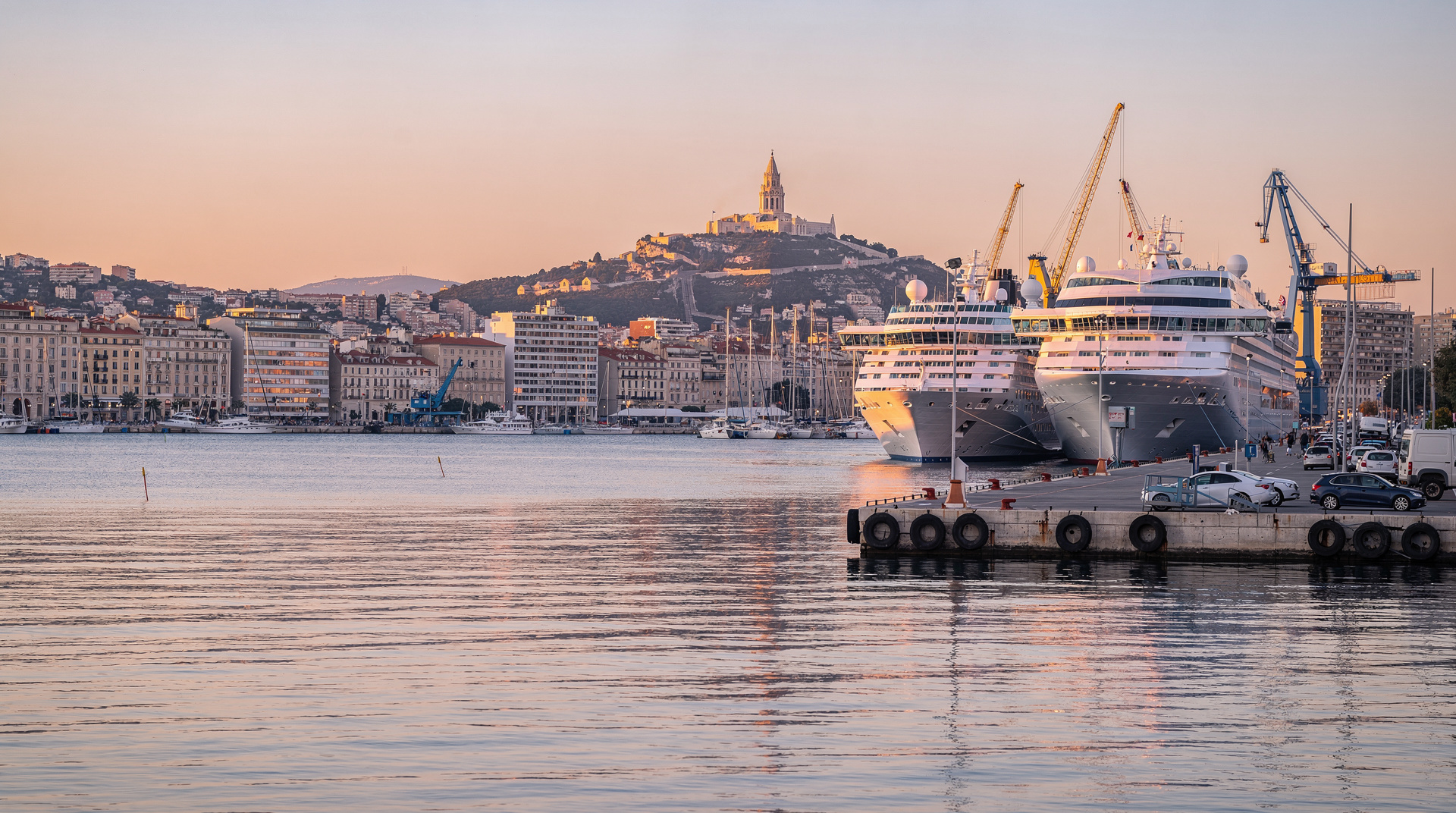
Half-day from cruise port: A specific 4-hour tour format designed for cruise ship passengers disembarking at the Joliette terminal. Covers city highlights, the Corniche, and returns before the ship’s departure window. A sensible way to see significant Marseille geography in limited time.
The Calanques route to Sormiou: honest description
The guided e-bike tour to Calanque de Sormiou is a different physical and technical proposition from the city routes. It is worth understanding what it involves before booking.
The route: From Marseille, the tour heads south through the Prado area, continues through Mazargues, and climbs to the plateau above the calanques on paved road (the electric assist handles this well). From the plateau, the road descends to the Sormiou calanque — and this descent is the defining characteristic of the tour.
The Sormiou descent: The road to the calanque is steep, narrow, and unpaved for the lower section. It is the kind of road that, on a standard bike, would have most recreational cyclists off and walking. On an e-bike, you have motor assistance on the way up but full gravity on the way down. The descent requires active use of the brakes on both wheels, confidence in the bike’s handling, and body positioning for steep descents. It is not dangerous for someone with reasonable bike-handling experience, but it is not a passive tourist experience.
This is worth knowing because the tour is sometimes marketed with emphasis on the Calanques scenery rather than the technical nature of the descent. If you have not ridden a bicycle down a rough steep slope before, this will be an unexpectedly demanding section. If you cycle regularly and have experience on varied terrain, it is enjoyable.
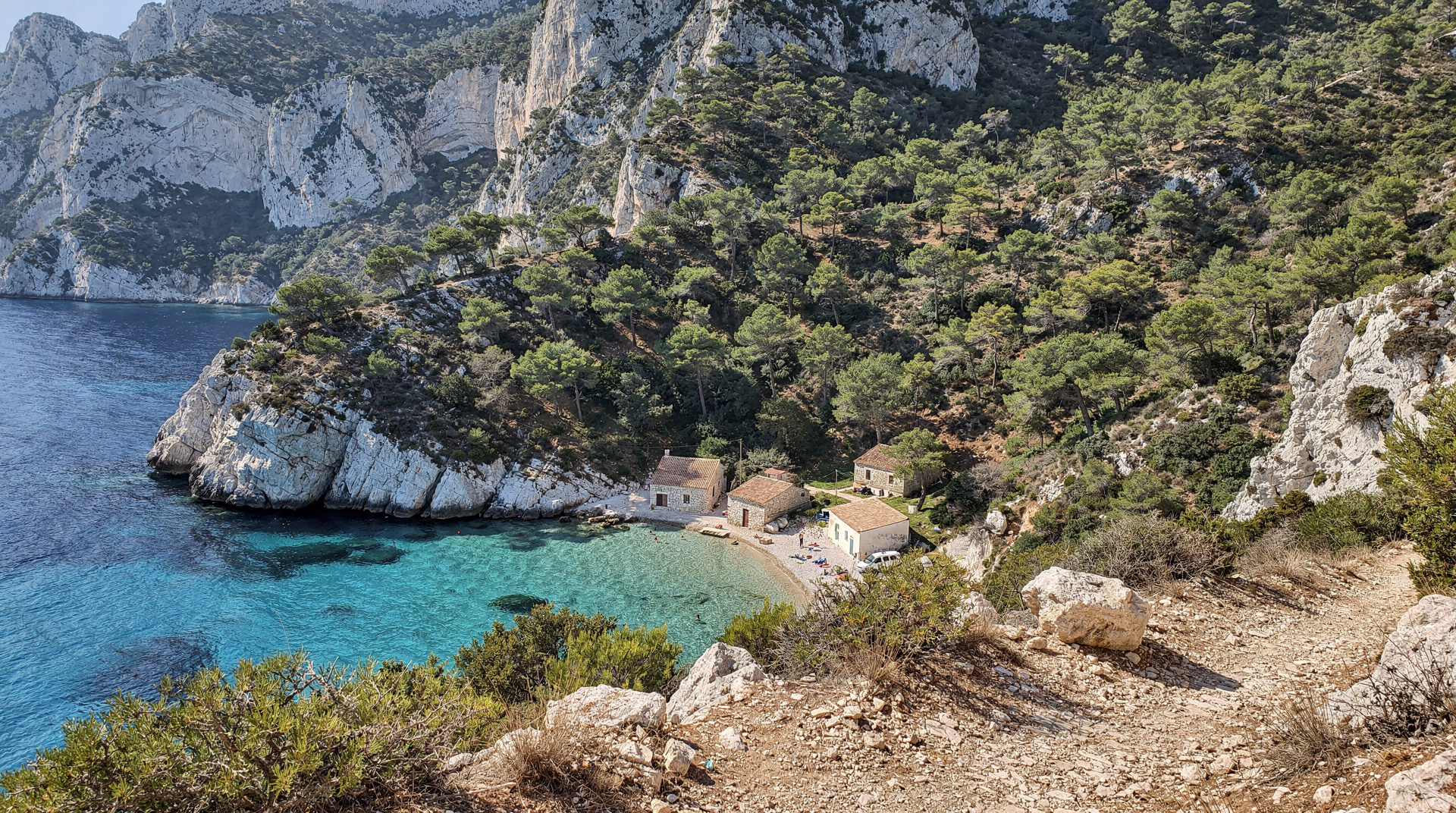
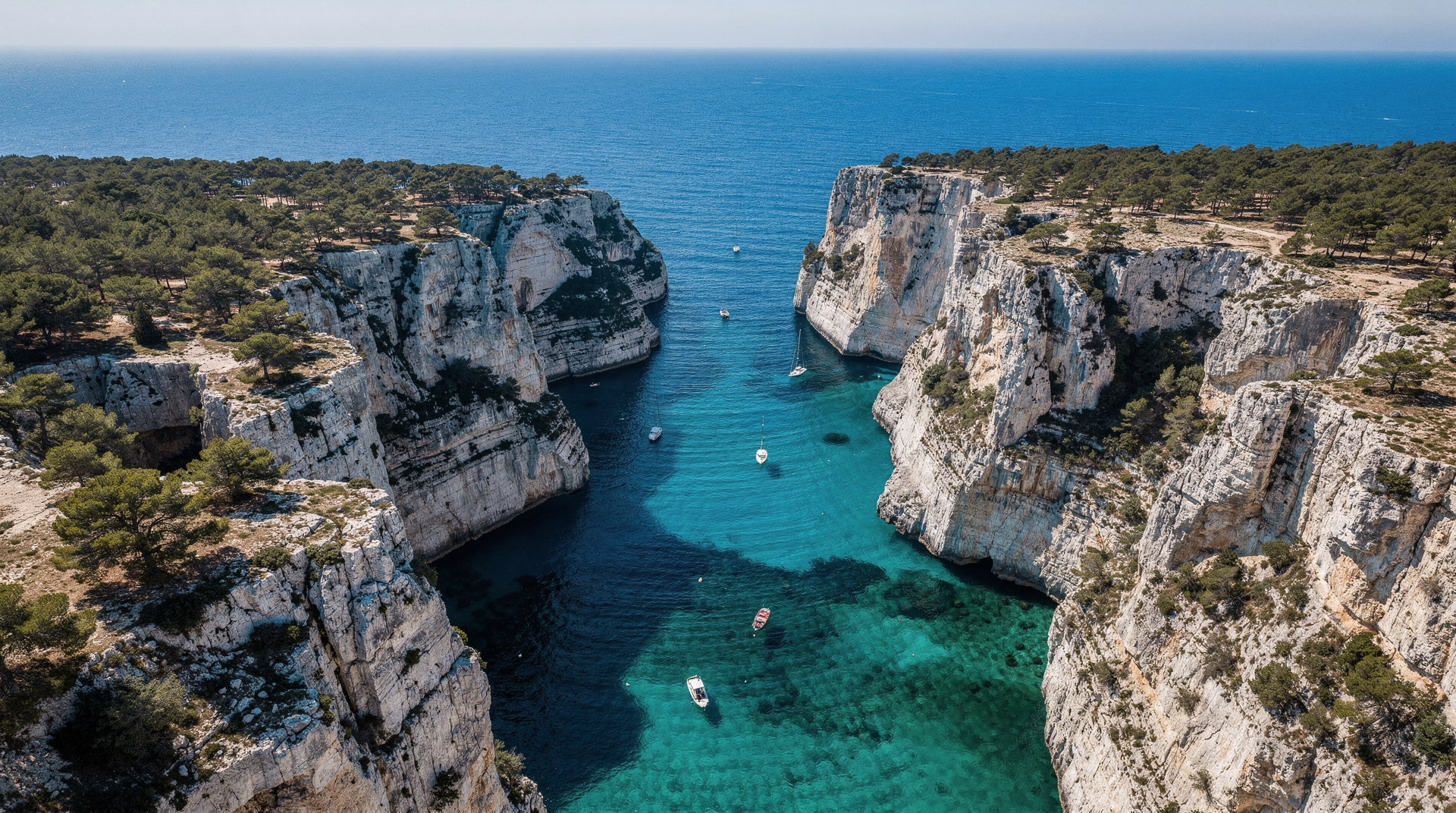
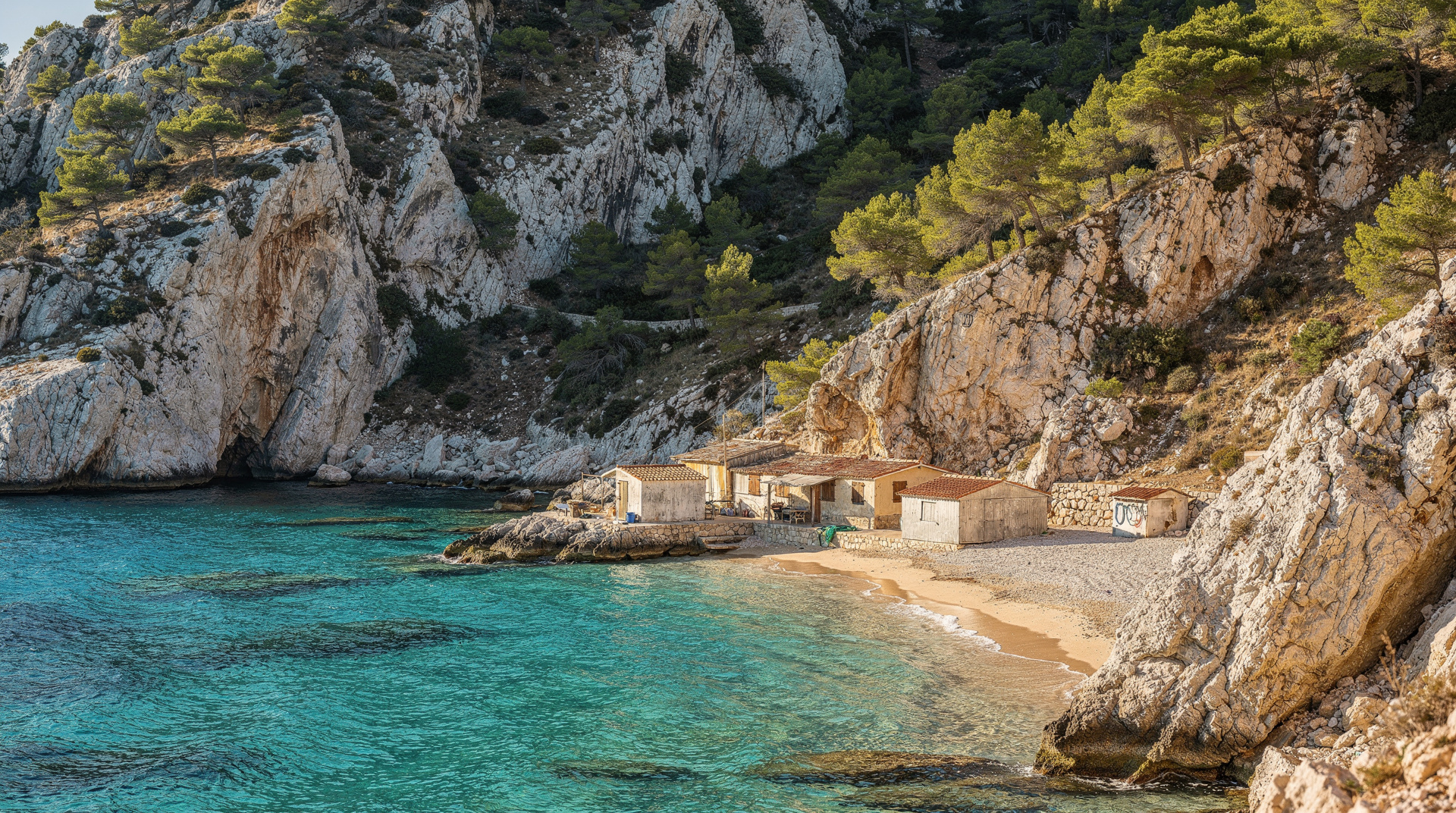
At Sormiou: The arrival at the calanque is the reward — a limestone cove with turquoise water, a handful of restaurants and cabanons, and a very strong sense of having earned the view. The water is excellent for swimming if the tour schedule allows time at the calanque. Return is the same route, with the steep unpaved section now an uphill that the motor handles.
Suitability: Regular cyclists with some off-road or hilly terrain experience. Not suitable for those who have never cycled on rough descents or who are uncomfortable with speed on a bicycle. Children under 14 should not attempt this route. The guided format provides safety management but cannot eliminate the physical demands of the terrain.
Full-day coast and Calanques tour
The full-day guided e-bike tour combines the coastal Corniche section with the Calanques descent to Sormiou. This is the maximum scope option — covering city, coast, and calanque in a single day (typically 6–7 hours). It is a worthwhile day for active participants who want to see multiple faces of Marseille’s geography by bike.
The e-mountain bike variant (the Calanques National Park e-mountain-bike tour) uses more capable off-road bikes for the Calanques section and covers additional terrain in the massif. This is appropriate for mountain bikers who want a more technical experience within the park.
Practical logistics
Meeting points: City tours typically meet near the Vieux-Port. Cruise port tours meet at the Joliette terminal. Calanques tours usually meet at a point in southern Marseille convenient for the route. Confirm the meeting point at booking.
Equipment provided: E-bike, helmet (mandatory), basic repair kit carried by guide. Bring water, sunscreen, and comfortable cycling or athletic clothing. Closed-toe shoes are required — sandals are inadequate for any of these routes.
Group size: Ask at booking. City tours may accommodate up to 10–12; the Calanques route is better with smaller groups (6–8) for the descent management. Smaller groups allow the guide to check on each participant more effectively on technical sections.
Weather: E-bike tours in rain are unpleasant and the Sormiou descent becomes significantly more dangerous on wet road and track. Most operators will reschedule for heavy rain. Check operator cancellation policy before booking.
Best months: April–June and September–October for the Calanques tour. July–August is feasible but hot — starting early (08:00–09:00) is essential. The Sormiou descent involves direct sun exposure with no shade on the rocky sections.
E-bike vs walking vs boat for the Calanques
The e-bike is the only access method that gets you to Sormiou from Marseille without a car (the road restrictions make private vehicle access difficult in summer) and without taking a full-day boat tour. It combines the physical engagement of arriving under your own power with the range that electric assist provides.
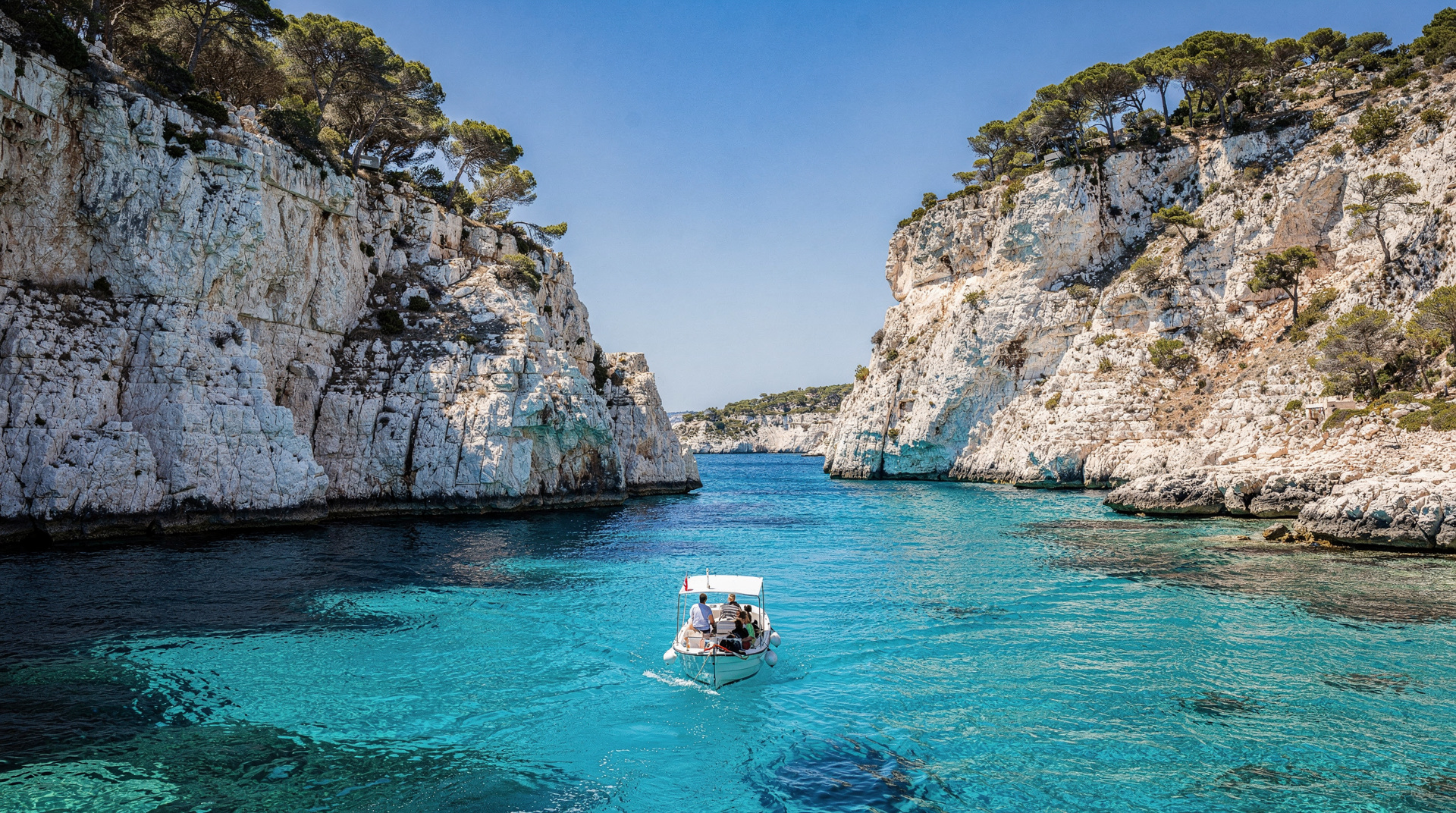
Compared with hiking: the e-bike covers the distance faster with less aerobic effort, but the descent requires bike control. Hiking is more accessible to those without cycling experience. Compared with boat tour: the e-bike gives you the approach from land (with the landscape visible at human pace) rather than the sea approach. Neither is better — they are different experiences.
The city highlights e-bike: what you actually see
For visitors who choose the city and Corniche route rather than the Calanques, the e-bike covers significantly more ground than walking while maintaining the pace needed to notice detail. The guide stops at viewpoints and explains context — Marseille’s history is layered visually in the transition from the Le Panier medieval grid to the Haussmannian boulevard system to the Joliette waterfront redevelopment.
Notre-Dame de la Garde on e-bike: The hill that supports the basilica is one of the steeper ascents in the city. On foot, it is a 30-minute climb that most visitors make once and remember with their calves. On an e-bike, the motor handles the gradient and you arrive at the basilica fresh enough to actually look at the view rather than recovering from the climb. The panorama from the esplanade — all of Marseille, the bay, the Frioul Islands, the Calanques headland — is the definitive orientation point for anyone arriving in the city for the first time.
Le Panier from the saddle: Cycling through Le Panier’s narrow lanes is not entirely comfortable — the streets are pedestrianised in sections and the cobbles are rough. Guided tours typically approach by bike from the Joliette side and walk the bikes through the narrowest sections. The e-bike is parked and the guide does a short walking segment through the most photogenic passages.
MuCEM and the J4: The waterfront area around MuCEM (the Museum of European and Mediterranean Civilisations, with its distinctive black mesh facade and the Fort Saint-Jean footbridge) is one of the best cycling sections in the tour — a broad esplanade along the harbour wall with views across to the Vieux-Port and the city hills. The guide provides architectural and historical context for the post-2013 Joliette redevelopment that transformed this former dockland into the city’s most photographed public space.
If the e-bike route leaves you wanting more of the old city on foot, the Le Panier guide and the Vieux-Port area guide cover the districts the tour only passes through. The MuCEM guide is worth reading beforehand if you want to go inside the museum after the ride rather than just cycling past its facade.
Sightseeing e-bike: the lower-intensity option
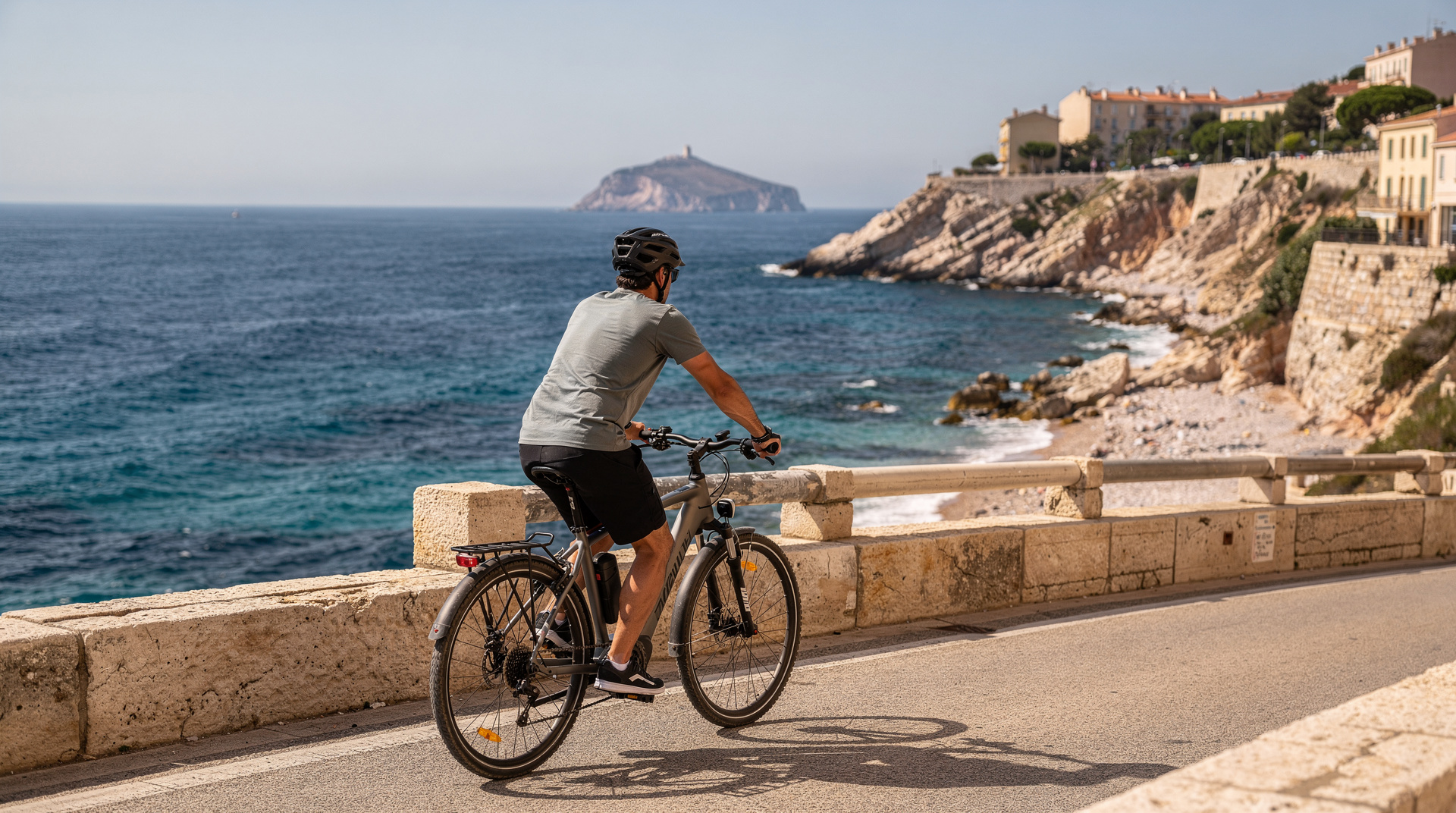
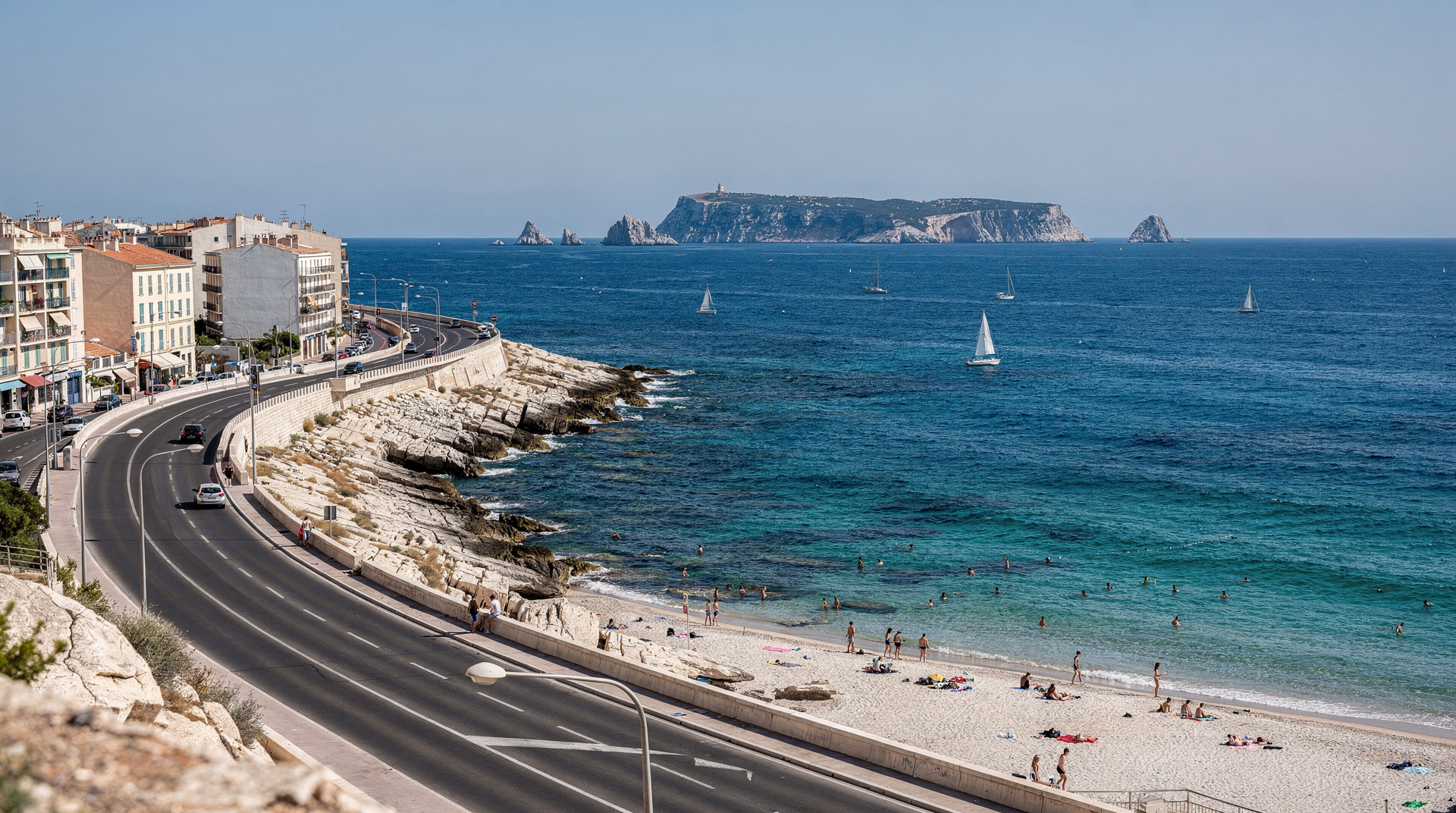
For visitors who want the e-bike experience without the Calanques or a full guided tour, the sightseeing e-bike rental allows self-guided exploration. The city’s cycle network — particularly the Corniche Kennedy path from the Vieux-Port south to Pointe Rouge — is well-signed and largely car-free. A 2-hour self-guided circuit covers the Corniche, the Prado beaches, and the return via the Parc Borély area.
This is a lower-effort version of the same geography: useful for cruise ship passengers with a few hours in port who want mobility rather than a structured tour, or for independent travellers who prefer to explore at their own pace.
For boat access to Sormiou and the other calanques, see the Calanques boat tour guide. For hiking approaches to the same area, see the hiking guide. For the Calanques access picture in full (summer closures, fire risk, season-by-season reality), the Calanques National Park guide is the essential reference.
For the urban cycling context — the Corniche promenade and Prado beach circuit — see the Corniche and Prado beaches guide. For the Les Goudes end-point context, see the Les Goudes guide.
Choosing between e-bike, hiking, and boat for Sormiou
| Method | Time to Sormiou | Physical demand | Best for |
|---|---|---|---|
| Guided e-bike | ~1-1.5 hours from the city | Moderate (steep descent/climb) | Active visitors without a car who want the landscape at pace |
| Hiking from Les Goudes | ~1-1.5 hours one way | Moderate-high (heat, uneven trail) | Hikers, no cycling experience needed |
| Boat tour | Direct, no walking | Low | Families, anyone avoiding the descent entirely |
None of these is objectively best — the e-bike sits between hiking and the boat in physical demand, and gives you the specific satisfaction of arriving under partial self-power without the full aerobic cost of the hike. For the full picture of Sormiou and its neighbouring calanque, see the Sormiou and Morgiou guide.
Where the e-bike fits in a longer stay
An e-bike tour works best as one active day among several, not as the whole trip. Cruise passengers with limited time can pair the half-day format with the Marseille cruise port guide, while visitors staying longer can slot a ride into the Marseille and the Calanques weekend itinerary. If you are still deciding which calanque is worth the effort, the which Calanque to visit guide helps you weigh Sormiou against the others, and the getting around Marseille guide explains how the bike compares with the metro, tram and ferry for everyday movement.
Booking ahead: does it matter?
E-bike tours in Marseille run in small groups (city tours up to 10-12, Calanques tours 6-8), and departures are not unlimited. In the June-September peak, popular time slots — particularly early-morning Calanques departures that beat the midday heat — can sell out a few days ahead. Booking 3-5 days in advance in peak season is a sensible margin; outside July-August, booking 1-2 days ahead is usually enough.
Frequently asked questions about E-bike tours in Marseille
Do I need cycling experience for a Marseille e-bike tour?
For the city and Corniche routes, no — basic bicycle control is enough, since the electric motor removes the effort of hills. For the Sormiou/Calanques route, some experience with hilly or off-road terrain is genuinely useful, because the final descent to the calanque is steep, narrow, and partly unpaved. If you have never cycled downhill on a rough surface before, expect that section to be demanding rather than relaxing.
What happens if it rains on the day of an e-bike tour?
Most operators reschedule or offer a different route for heavy rain, since the Sormiou descent becomes significantly more hazardous when wet. City and Corniche routes are more tolerant of light rain but still less enjoyable. Check the specific operator’s cancellation and rescheduling policy at booking — it varies between tour providers.
Top experiences
Bookable activities with verified prices and instant confirmation on GetYourGuide.