Château d'If guide: the island fortress and Count of Monte-Cristo
Marseille: Château d'If and Frioul Calanques sailing cruise
Is Château d'If worth visiting and how do I get there?
Yes, for the ferry crossing, the island views, and the literary mythology — but manage expectations: the fortress interior is modest. Ferry from the Vieux-Port costs around EUR 11 return; château entry is EUR 7. Open Tue–Sun 10:00–18:00. Combine with the Frioul Islands for a better day.
| At a glance | |
|---|---|
| Where | Île d’If, about 1.5 km off the Vieux-Port, Marseille |
| Cost | Ferry around EUR 11 return; château entry around EUR 7 |
| Time needed | Around 2–3 hours door to door (1 hour on the island alone) |
| Getting there | Ferry from Quai des Belges, Vieux-Port; roughly 25 minutes each way |
| Best time | Morning departure, calm-sea days; combine with the Frioul for the afternoon |
A fortress with a famous fictional prisoner
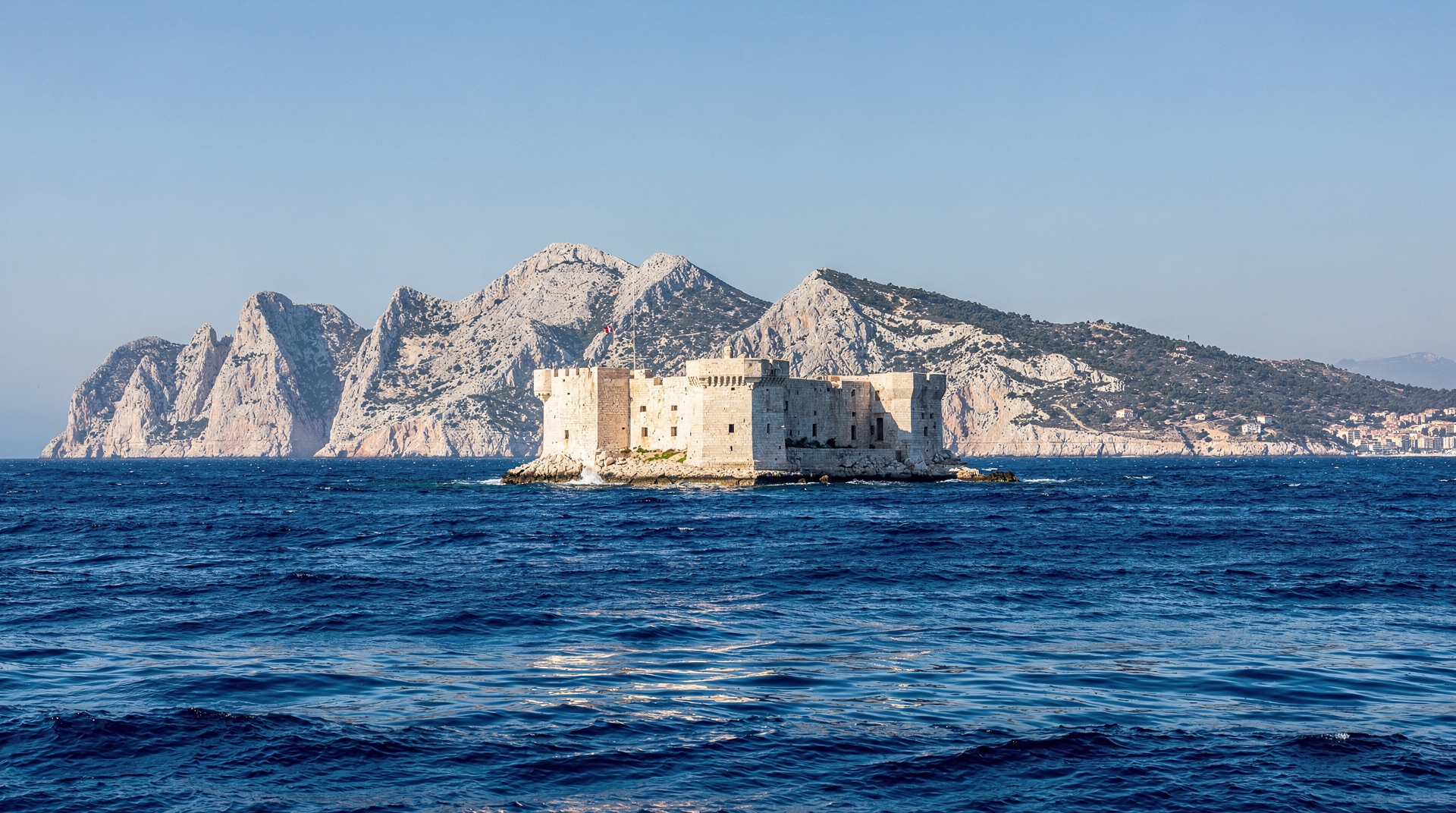
The Château d’If stands on a small rocky island about 1.5 kilometres from the Vieux-Port, visible from the Notre-Dame de la Garde terrace and from most points along the Marseille waterfront. It was built between 1524 and 1531 on the orders of King François I — not primarily as a prison but as a defensive fortification to protect the harbour from Spanish naval power.
It became a prison almost immediately. Its first famous inmate was a rhinoceros — a gift from the King of Portugal to François I, which was held on the island while awaiting transport to Rome and died there in 1516 (before the château was built) — but the political prisoners who followed over the next three centuries gave the fortress its enduring reputation. Protestants after the Edict of Fontainebleau (1685), Revolutionaries on the wrong side of successive coups, and one count from the island of Monte-Cristo.
Except that last one is fiction. Edmond Dantès, the wrongly imprisoned sailor who escapes the Château d’If and returns as the Count of Monte-Cristo, is the invention of Alexandre Dumas, who published the novel in 1844. The fortress was real; the escape was literary. The visitor experience of the Château d’If is a real historical fortress into which a fictional prisoner has been retrospectively installed, and both the real and the invented deserve attention in their own right.
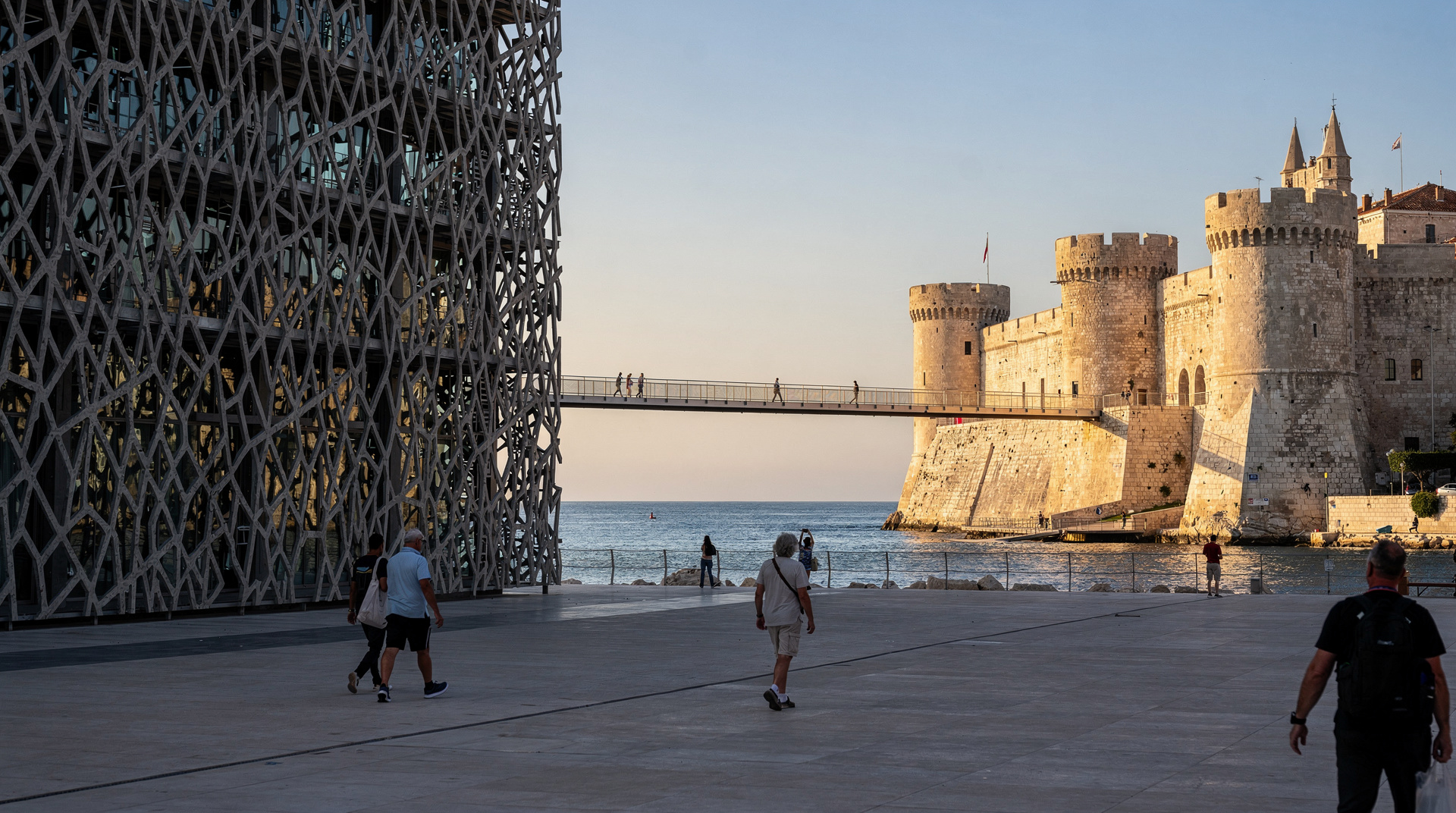
If the fortress sparks an appetite for the wider story of the city, the Marseille history guide and the Marseille museums guide are the natural next steps, and the MuCEM guide covers the waterfront museum that faces the island across the water.
The real history of the fortress
The Château d’If is architecturally simple — a square keep with a round tower at each corner, surrounded by a curtain wall. It lacks the complexity of a major fortification like Fort Saint-Jean or Fort Saint-Nicolas. This simplicity is part of the point: it was built for a specific defensive purpose and never needed to be more than it is.
The actual prisoners held here over the centuries were typically political rather than criminal: Huguenots imprisoned after the revocation of the Edict of Nantes (1685) were held in the underground cells in significant numbers. The Comte de Mirabeau — the orator and nobleman who would become one of the key figures of the early Revolution — was briefly imprisoned here in 1774 on his father’s orders (a lettres de cachet allowing imprisonment without trial). The iron cage in which the Man in the Iron Mask was allegedly transported (a separate, different historical myth) is sometimes mentioned in connection with the fortress, though the actual identification of that prisoner remains disputed.
The château was used as a prison until 1890, then decommissioned. It is now managed by the Centre des Monuments Nationaux.
The fictional Dantès and what you will actually see
The Count of Monte-Cristo is one of the most-read novels in the world, and the scene in which Dantès is thrown into the Château d’If and eventually escapes through the tunnel dug by the Abbé Faria is among the most vivid in adventure fiction. Visitors who have read the novel arrive expecting something specific.
What they find is a fortress that has leaned into the mythology. There is a “Dantès cell” — a room identified as the one described in the novel — and an “Abbé Faria cell” below it, connected by a hole cut in the floor that represents the tunnel from the story. These are theatrical interpretations rather than historical facts, but they serve the literary experience adequately.
The cells themselves are small, damp, and atmospheric. The graffiti carved into the walls by real prisoners over centuries is more genuinely moving than the Dumas installation — actual names, dates, and languages from people who were actually held here, whose situations bore no relationship to the romantic adventure of the novel.
Honest assessment of the interior: The château is architecturally modest and the interior is sparse. Visitors expecting a rich museum experience will be mildly disappointed. The interest is historical and literary rather than visual. Budget 45 minutes to 1 hour for the interior.
The views and the island
The real arguments for visiting are above ground: the views from the fortress walls and the island experience itself.
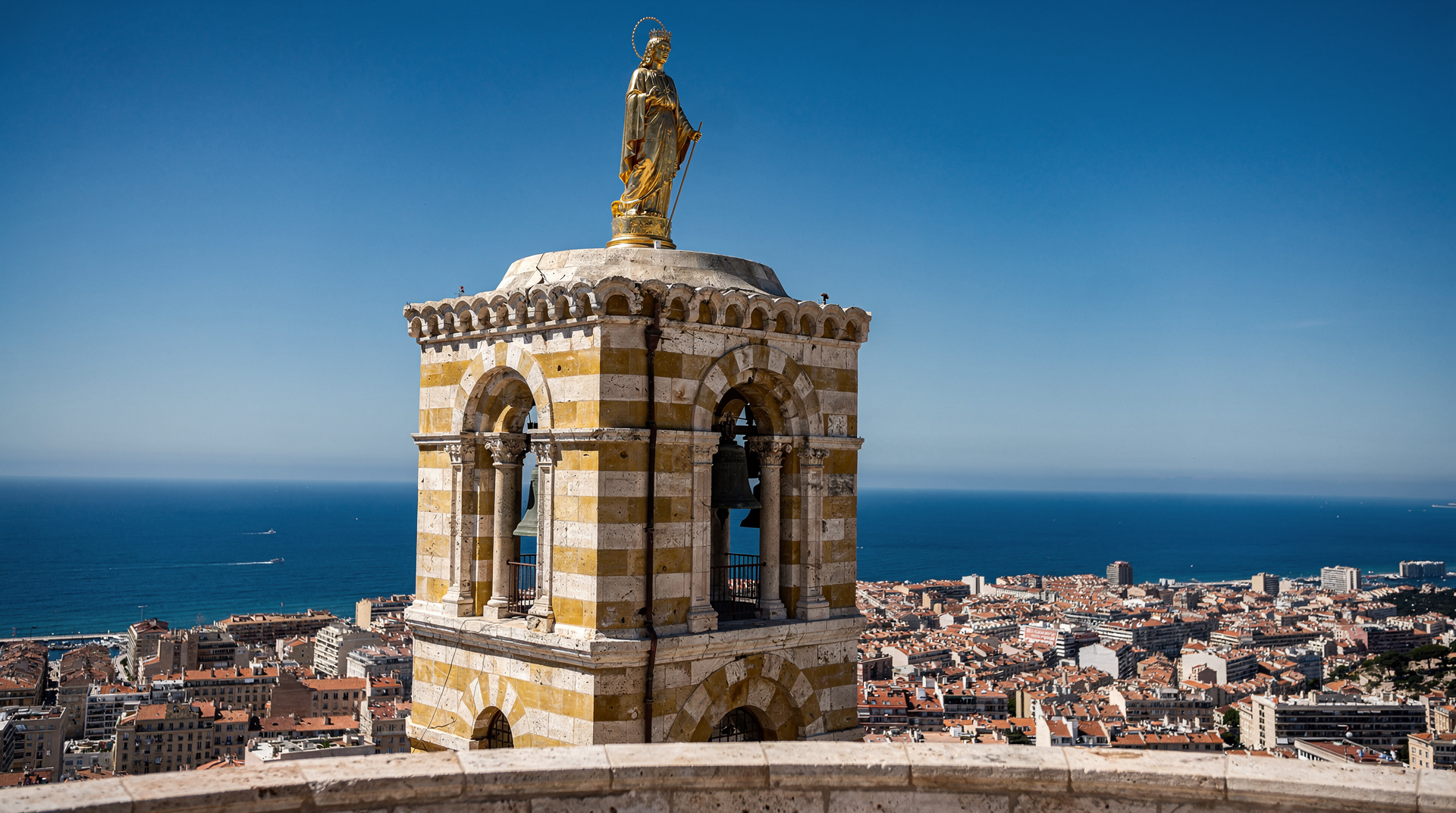
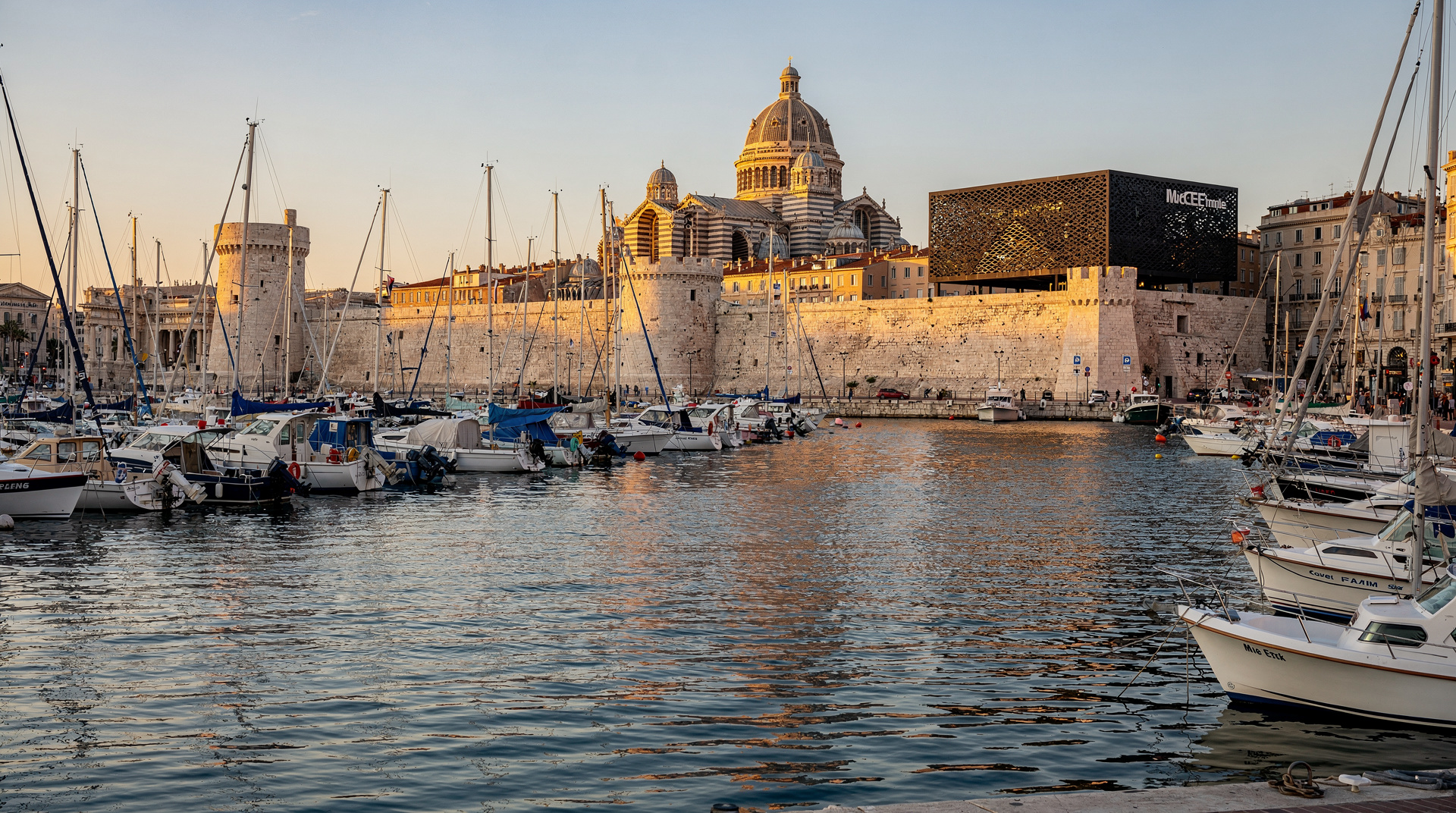
From the ramparts, the panorama takes in the Marseille waterfront in its full extent — the Vieux-Port and its two flanking forts, the MuCEM and the J4 esplanade, the Notre-Dame de la Garde basilica on its hill above the city, and the Frioul archipelago immediately to the north-west. The island is low-lying and surrounded by open water; the 360-degree view is unrestricted in a way that elevated land viewpoints cannot match.
The island itself is rocky limestone with sparse vegetation — garrigue plants, seabirds, and the kind of Mediterranean light that exists exclusively at sea level on small islands surrounded by clear water. Walking the perimeter of the island (possible, with care, depending on access routes open at the time) takes about 20 minutes.
Many of the landmarks you spot from the ramparts have their own pages: the Notre-Dame de la Garde guide for the basilica on its hill, the Vieux-Port destination page for the harbour you just left, and the Frioul Islands destination page for the archipelago to the north-west. The Château d’If destination page gives a shorter overview of the island.
Getting there
By ferry: The Frioul If Express ferry departs from the Quai des Belges at the Vieux-Port. The crossing takes approximately 25 minutes. Return tickets cost around EUR 11 per adult. Ferries run regularly throughout the day (frequency varies seasonally).
Combined with the Frioul Islands: The same ferry continues to the Frioul archipelago (Île de Ratonneau and Île de Pomègues) after Château d’If. Most visitors buy a round-trip ticket that allows a stop on the Château d’If and then continues to the Frioul for swimming, walking, and lunch before returning to Marseille in the afternoon. This is a much more satisfying day than visiting Château d’If alone.
By sailing or private boat: Several sailing and chartered boat tours depart from the Vieux-Port and include Château d’If as a stop. See the tours listed above for options.
Entry and practical information
Château entry: EUR 7 per adult. Free for under-18, under-26 EU nationals, disabled visitors. Hours: Tuesday to Sunday, 10:00–18:00 (18:00 in summer, 17:15 in winter). Closed Mondays. Ferry crossing: Not included in the château entry fee. Note: In bad weather or heavy swell, ferry service may be suspended and access to the island may be impossible. Check conditions before planning — the coast around Marseille can have significant swell even on otherwise pleasant days.
The Marseille City Pass (EUR 24–39) includes the ferry crossing and château entry, making it worth considering if you are buying the pass anyway for public transport and MuCEM.
Getting to the quay is straightforward: the Marseille metro guide and the getting around Marseille guide explain how to reach the Vieux-Port, and the Frioul Islands boat guide compares the other boat options. If you would rather be on the water without a fixed ferry timetable, the Château d’If by boat guide covers that route.
Combining Château d’If with the Frioul Islands
The Frioul archipelago — particularly the Île de Ratonneau — offers dramatically better swimming, hiking, and general island atmosphere than the Château d’If island alone. Most visitors combine both stops in a single day: morning ferry to Château d’If, 1 hour at the fortress, then the ferry continues to the Frioul for the afternoon.
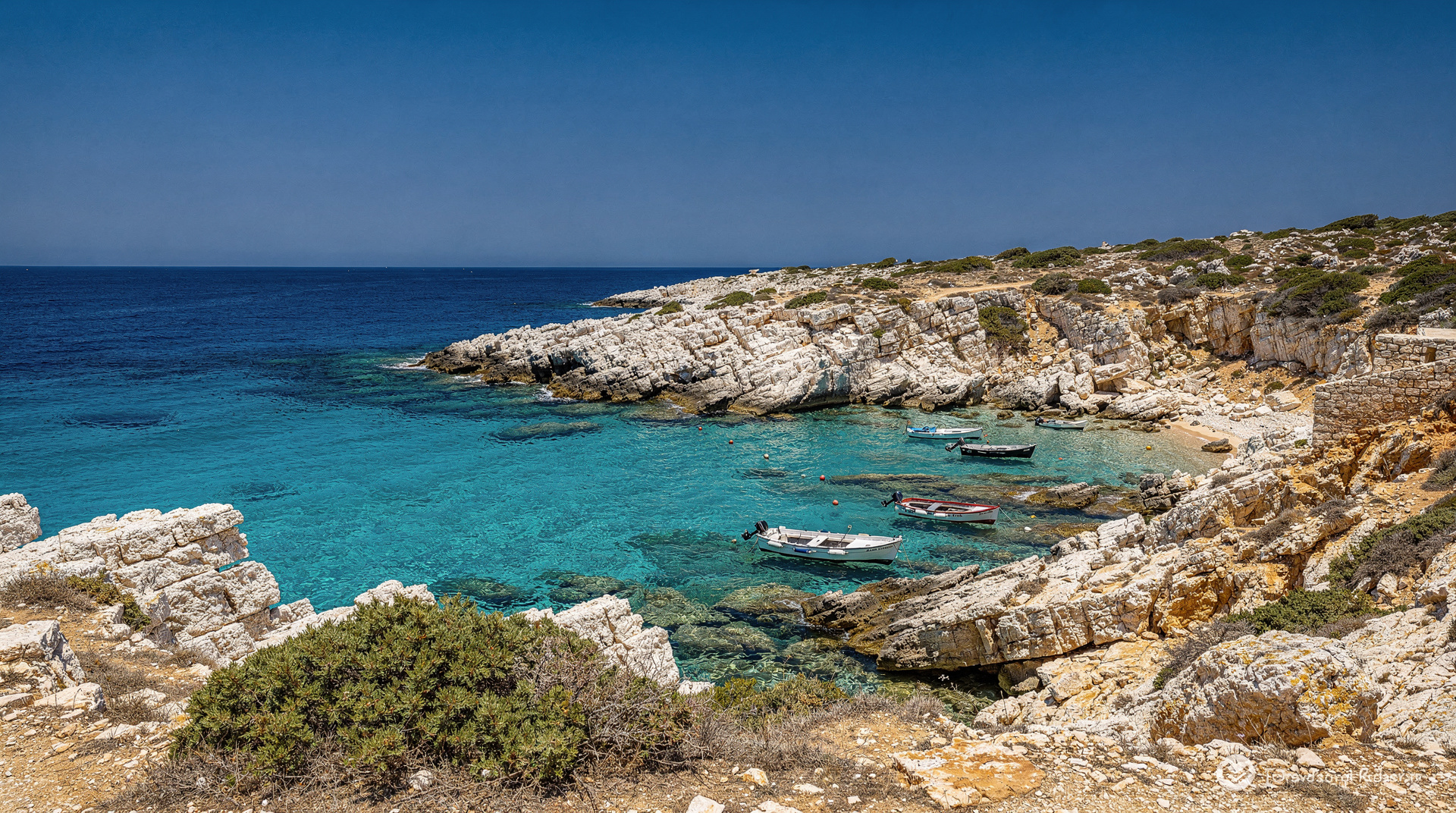
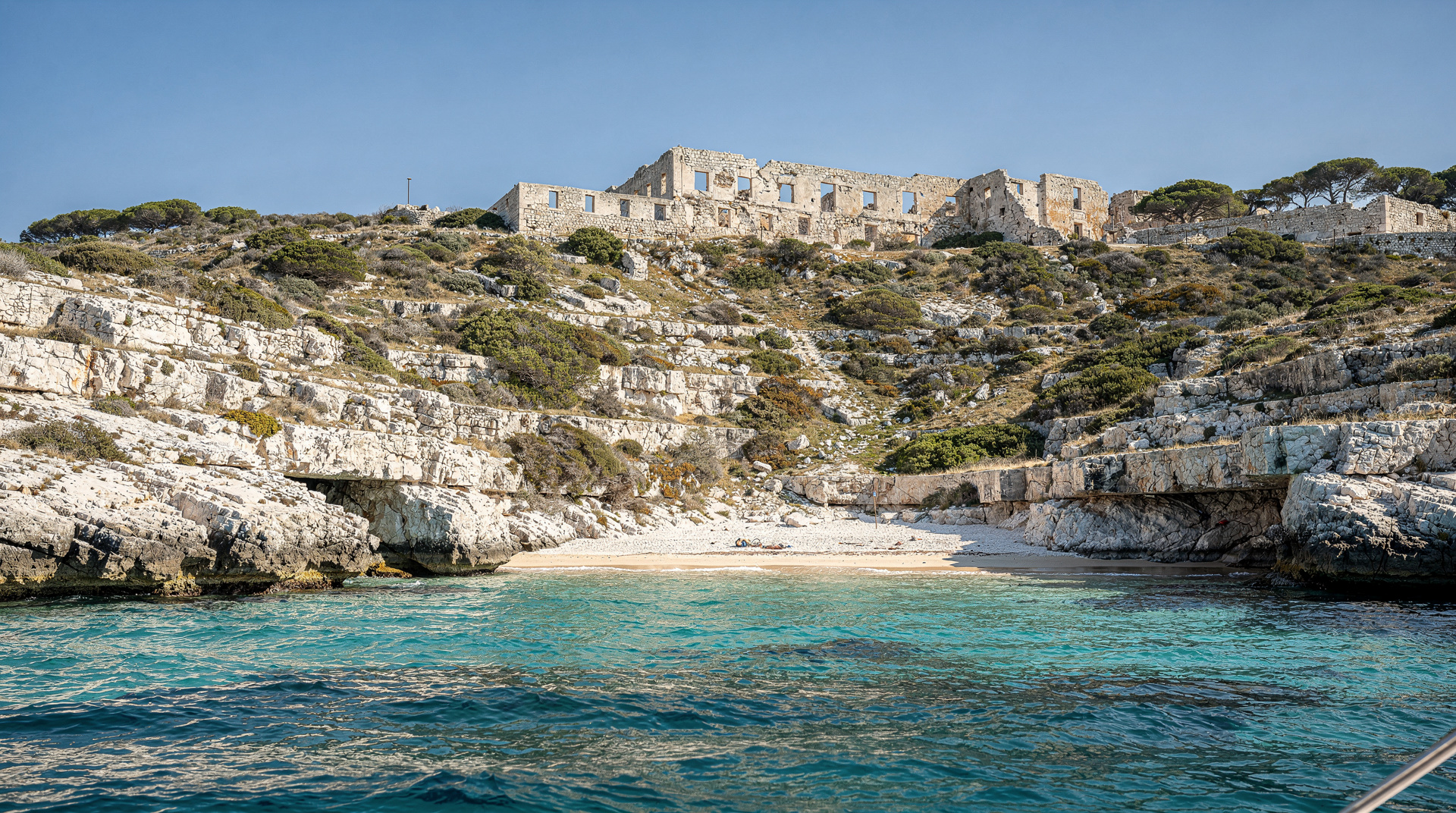
The Frioul has a small port (Port du Frioul) with a basic restaurant, accessible rocky beaches, and walking trails across the windswept plateau. The water clarity is exceptional — the islands are a marine reserve — and the swimming is among the best within reach of Marseille.
For the full Frioul Islands experience, see our Frioul Islands guide.
The crossing: why the ferry ride matters
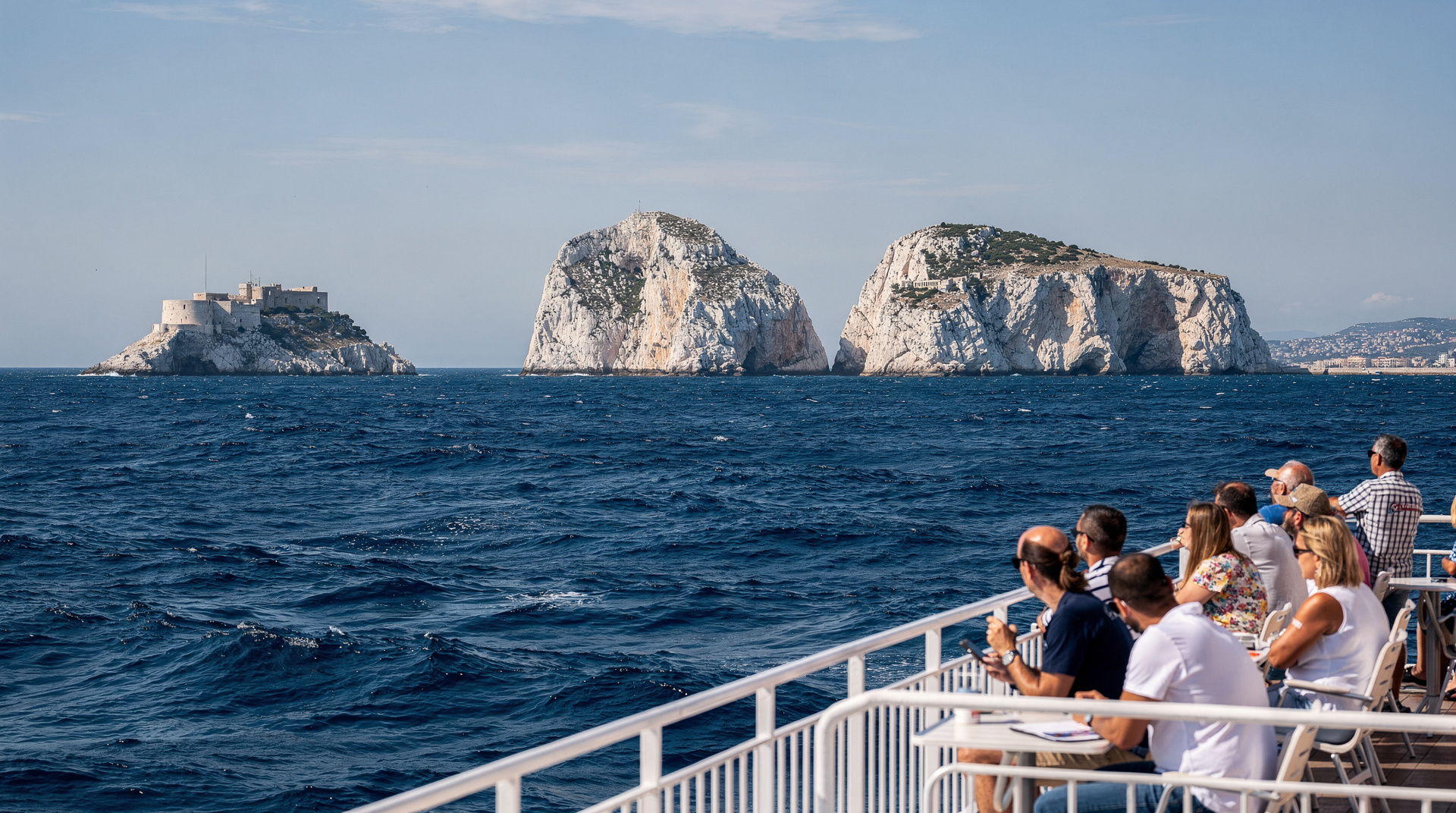
The approach to the Château d’If by ferry is one of the more quietly satisfying journeys available from the Vieux-Port. As the ferry clears the harbour mouth and enters open water, the city reveals its full coastal profile: Notre-Dame de la Garde on her hill, the Corniche running south, the white limestone ridge of the Calanques beginning beyond the southern arrondissements. The fort’s silhouette on the horizon — small, square, solitary on its rocky island — is exactly what a prison island should look like, which is part of why it has fed literary imagination for centuries.
The 25-minute crossing in summer conditions is pleasant in any weather. In autumn and spring, the bay can have significant swell; the crossing is still usually comfortable but check conditions if you are susceptible to seasickness.
The island ecology
The Île d’If is part of the Riou archipelago protected area. The island’s rocky limestone surface supports typical garrigue Mediterranean vegetation — rosemary, wild thyme, Aleppo pines in sheltered spots — and its coast is a nesting site for yellow-legged gulls and other seabirds. The surrounding water, clear and protected from urban pollution, allows underwater visibility of 10–15 metres on calm days.
The island perimeter is passable on foot in places; the western shore facing the open sea offers the most direct wind exposure and the most dramatic sea views. The walk around the island, possible in good weather, takes about 20 minutes and rewards the effort with views of the Frioul that the fortress terraces do not provide.
Historical prisoners: the real incarceration record
Beyond the literary mythology, the Château d’If held a documented list of real political prisoners whose stories are less romantic and more troubling than the fictional Dantès.
The Protestant prisoners are the largest documented group. After the revocation of the Edict of Nantes in 1685, which rescinded the religious freedoms granted to French Protestants by Henri IV in 1598, Protestant men of means who resisted conversion were sometimes imprisoned in state fortresses. The Château d’If held several hundred Protestant prisoners in its underground cells during the late 17th and early 18th centuries. The conditions in the lower cells — damp, poorly ventilated, with minimal natural light — were particularly severe. Many prisoners died in custody.
The comte de Mirabeau — the nobleman and lawyer who would become one of the most influential figures of the early French Revolution — was imprisoned in the Château d’If briefly in 1774. His father had obtained a lettre de cachet (a royal order allowing imprisonment without trial) against his own son, following a series of scandals involving debt, adultery, and public disorder. Mirabeau spent time in the If before being transferred to the more comfortable Château de Vincennes. He later became one of the most eloquent critics of the lettre de cachet system that had imprisoned him.
The iron cage reputedly used to transport the “Man in the Iron Mask” is sometimes associated with the Château d’If in tourist presentations, though the historical Man in the Iron Mask was held at Sainte-Marguerite island off Cannes, not at the If. The conflation is understandable — both are island prison fortresses in the Mediterranean — but historically incorrect.
The literary significance beyond the tour
For visitors who have read The Count of Monte-Cristo — or who intend to read it — the Château d’If visit has a different quality from a straightforward historical site. Dumas researched actual conditions in French prisons extensively and the novel’s descriptions of the Château d’If’s cells, its isolation, and the psychological impact of long imprisonment were grounded in real conditions even as the plot was invented.
The fortress as a place of unjust imprisonment — political prisoners held by lettre de cachet without trial, Protestants imprisoned for religious practice, men held at the will of powerful individuals with no recourse — is as historically real as the island itself. The Count of Monte-Cristo is a fantasy of escape and revenge from that reality. Understanding both makes the visit more resonant than the “Dantès cell” alone would suggest.
For the broader history of how Marseille’s political geography shaped the need for offshore fortresses, see our Marseille history guide.
Château d’If vs the Frioul: a quick comparison
| Château d’If | Frioul Islands | |
|---|---|---|
| Main draw | Fortress, literary mythology, ramparts view | Swimming, hiking, marine reserve water clarity |
| Time needed | 1 hour | Half a day |
| Ticketed entry | Yes, château around EUR 7 | No entry fee, ferry only |
| Best for | History and Dumas fans | Beach and outdoor time |
See our Frioul Islands boat guide for the full crossing details, and our Vieux-Port area guide for what to do before or after the ferry.
Fitting the island into a longer stay
The Château d’If works best as one half-day inside a wider plan. First-time visitors can slot it into the Marseille in one day or Marseille in two days itineraries, while the Marseille in three days plan leaves more room to pair it with the Frioul. The Marseille for first-timers guide and the how many days in Marseille guide help you decide how much time the city deserves, and the Marseille destination page is a good starting point for everything else.
Frequently asked questions about Château d’If guide
Can you swim at the Château d’If? Not really — there’s no proper beach on the island itself, and swimming isn’t the point of a Château d’If stop. If swimming is the goal, continue on the same ferry to the Frioul Islands, which have accessible rocky beaches and much better water access.
Do you need to book the ferry in advance? It’s not strictly required outside peak summer, but booking online is worth it in July–August when Quai des Belges queues can be long, especially for the more popular midday departures.
Top experiences
Bookable activities with verified prices and instant confirmation on GetYourGuide.