Cathédrale de la Major: Marseille's striped Byzantine cathedral
Marseille: Vieux-Port & Le Panier walking tour
Is La Major cathedral worth visiting in Marseille?
Yes — free entry, no queues, spectacular Romano-Byzantine interior, and immediately adjacent to MuCEM and the J4 waterfront. Open daily 10:00–19:00 summer, 10:00–17:30 winter. An often-overlooked alternative to Notre-Dame de la Garde for visitors who want a striking religious building without the uphill walk.
| At a glance | |
|---|---|
| Where | J4 esplanade, 200 metres from MuCEM, at the northern edge of the Joliette waterfront |
| Cost | Free entry, no booking required |
| Time needed | Around 30 minutes for the cathedral alone; 2–3 hours combined with the full J4 waterfront circuit |
| Getting there | 15–20 minute walk from the Vieux-Port along the Quai du Port and J4 esplanade; 10 minutes from Le Panier |
| Best time | Morning for the best light on the marble columns; avoid weekday lunchtimes and Sunday afternoons when mass is held |
The cathedral most visitors walk past on the way to MuCEM
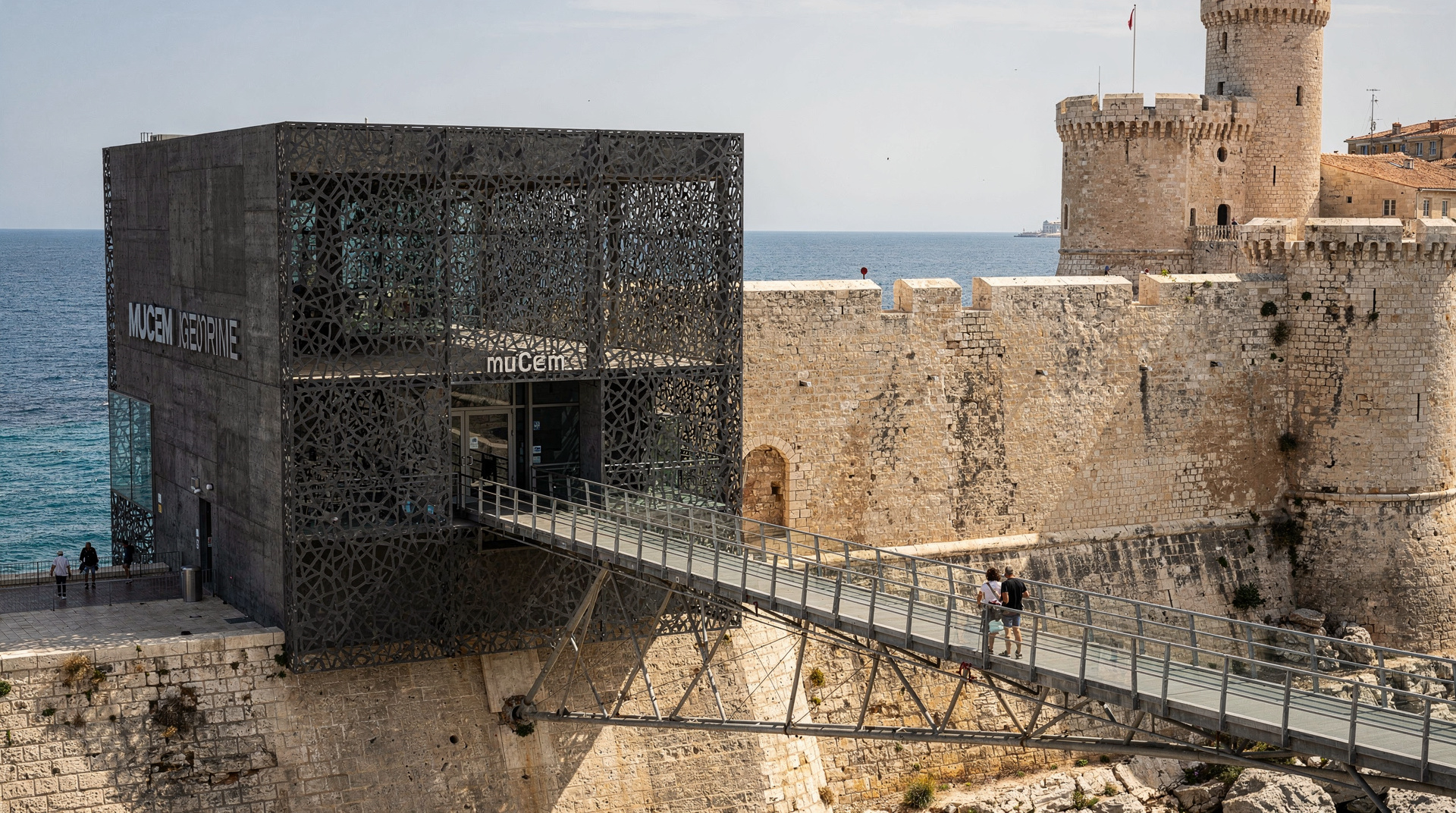
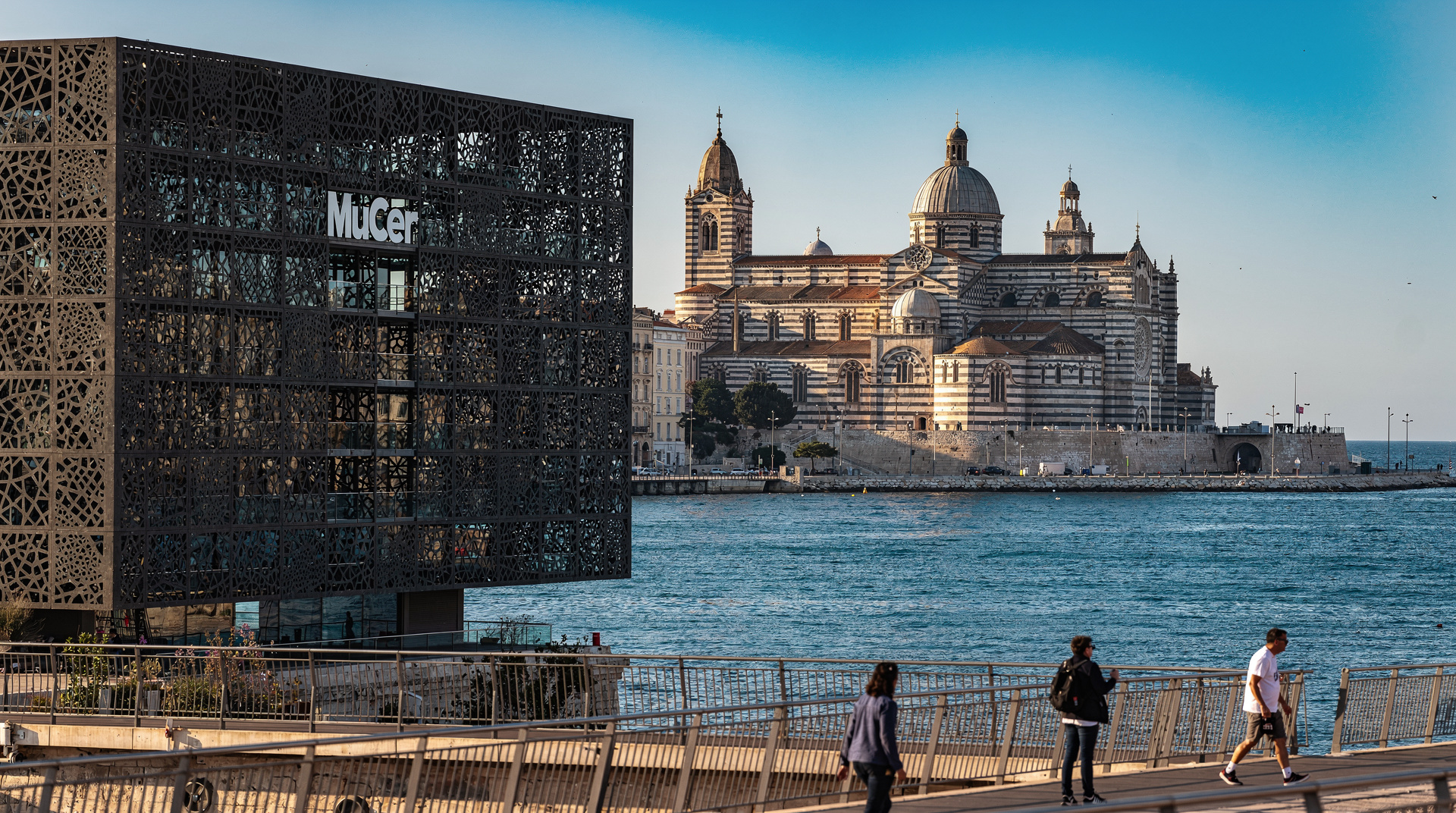
La Major — the Cathédrale Sainte-Marie-Majeure — stands at the northern end of the J4 esplanade, 200 metres from MuCEM. Most visitors who come to the waterfront to see Rudy Ricciotti’s famous concrete-lattice museum walk past the cathedral without stopping. This is an error: La Major is one of the finest examples of Romano-Byzantine religious architecture in France, it is free to enter, and it is rarely crowded.
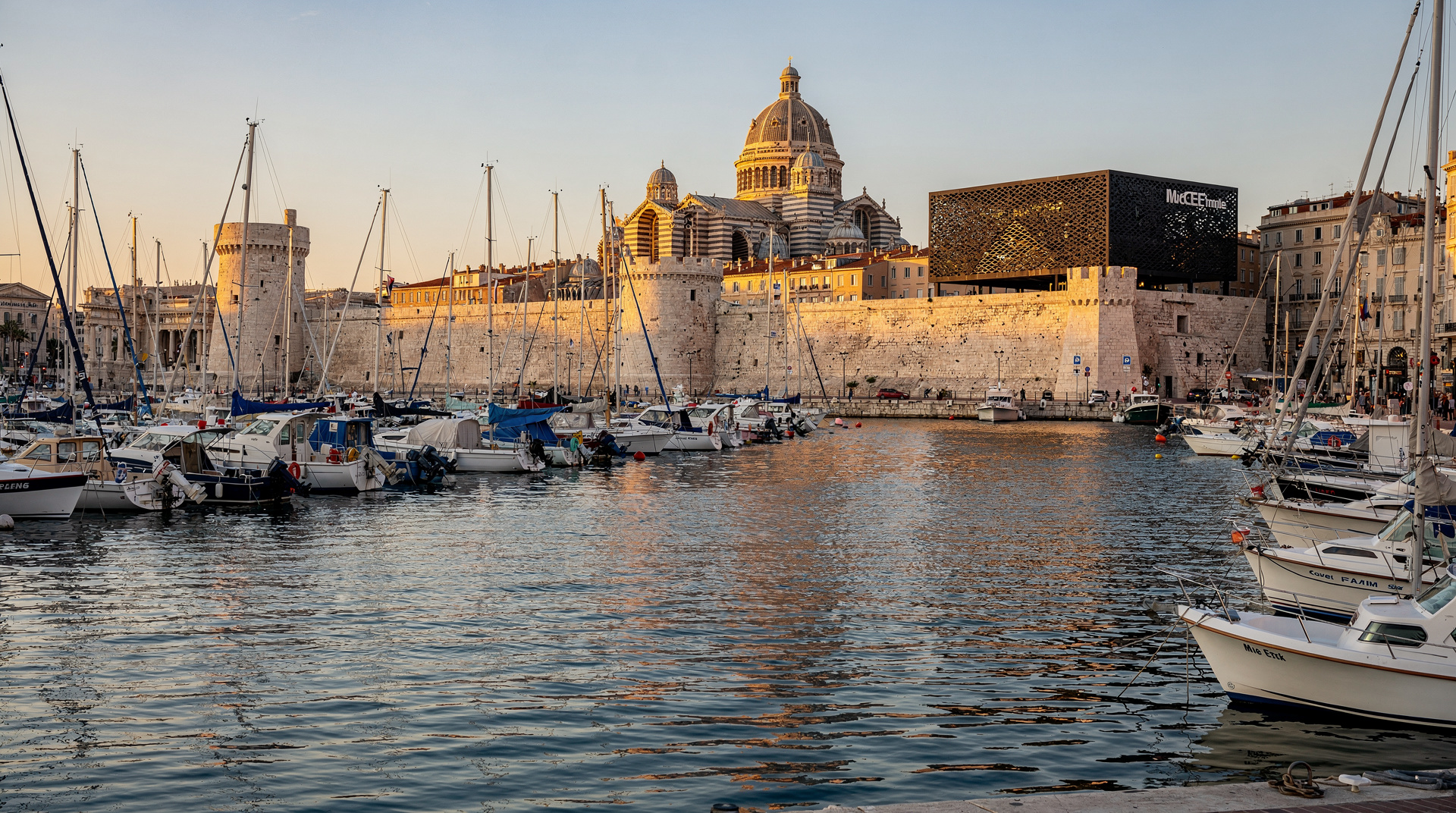
The building is externally dramatic in a way that photographs consistently underrepresent. The facade is constructed in alternating horizontal bands of dark blue-grey lava stone from the Volvic quarries in the Auvergne and cream limestone from Cassis — a polychrome pattern that gives the cathedral its distinctly un-French visual identity and references the great Byzantine and Islamic striped-stone traditions of the Mediterranean. The scale reinforces the effect: at 141 metres long and 70 metres to the summit of the main dome, La Major is the largest cathedral built in France in the 19th century.
History and architecture
The cathedral was built between 1852 and 1893 on the site of an earlier medieval cathedral, under the direction of Archbishop de Mazenod and the architect Léon Vaudoyer, who also worked on the Palais de Justice in Marseille. The style draws on the Romanesque and Byzantine traditions — round arches, barrel vaults, low domes on pendentives — processed through a 19th-century French architectural sensibility that was simultaneously confident and archaeologically curious.
The commission came at a moment of religious and civic ambition in Marseille: the city was growing rapidly through colonial trade, the bishop wanted a cathedral worthy of the second city of France, and the existing medieval structure (the Vieille Major, described below) was considered inadequate for the purpose. Construction proceeded over forty years; the consecration came in 1893.
The interior is vast and cool — entering from the waterfront esplanade in summer is a physical relief as much as an architectural one. The nave is lined with polished marble in multiple colours; the vaulting is decorated with geometric mosaic patterns; the apse behind the altar is flooded with filtered light from the clerestory windows. The overall impression is more Byzantine Constantinople than French Gothic — which is precisely the architectural argument the building makes about Marseille’s Mediterranean rather than northern European identity.
The Vieille Major: the medieval neighbour
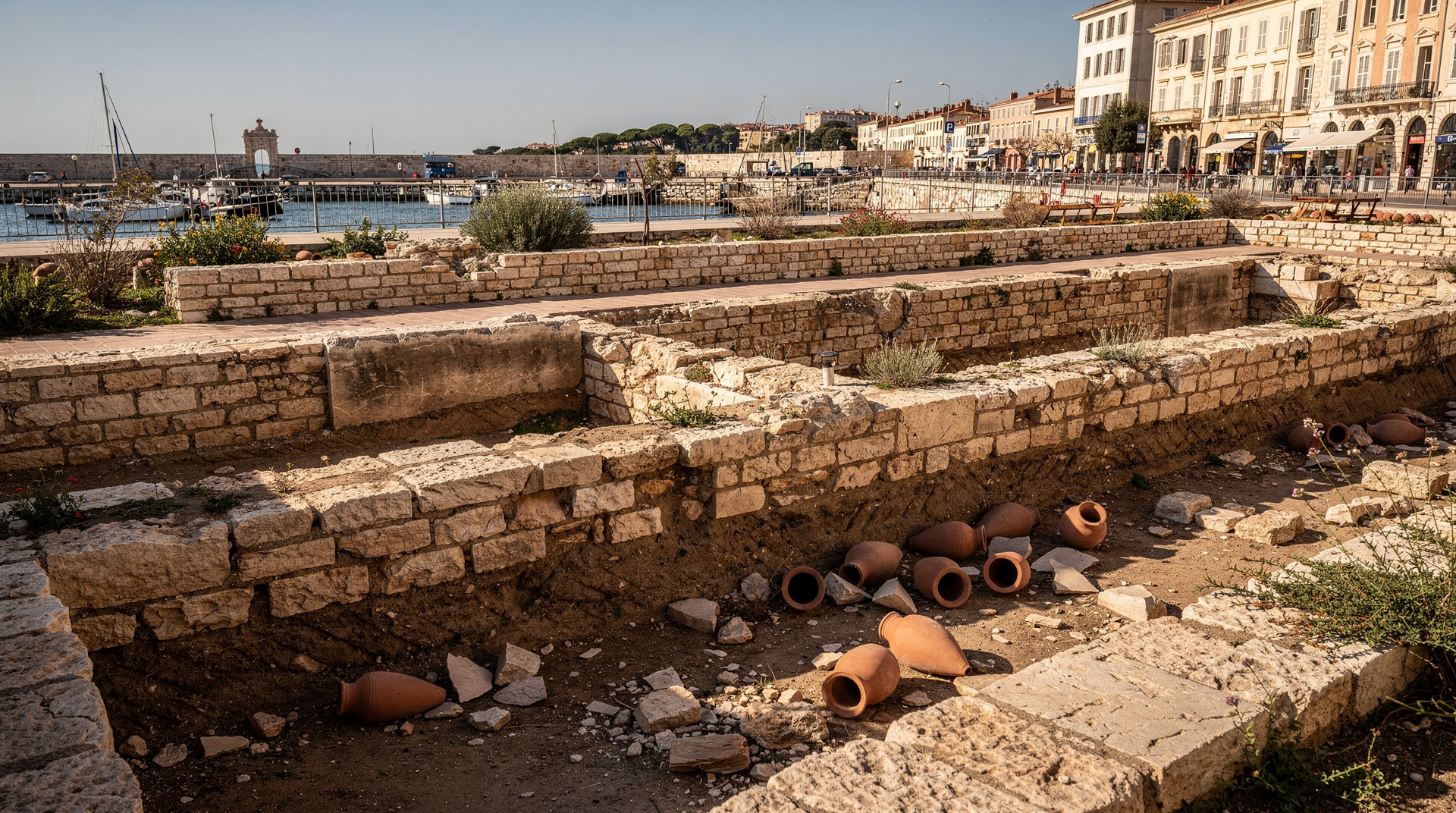
Immediately abutting La Major on its north-west side stands the Vieille Major — the older, 12th-century Romanesque cathedral it replaced. This is an extraordinary survival: the old cathedral was not demolished but maintained alongside the new one, creating a direct architectural conversation between medieval Romanesque (1123–1150) and 19th-century Byzantine Revival (1852–1893) separated by literally a few metres of space.
The Vieille Major is much smaller and far more austere than its neighbour. Three surviving apses of the original Romanesque structure stand intact, along with portions of the nave and some medieval sculpture. The scale is that of a large parish church; La Major, by contrast, feels like an imperial statement.
The Vieille Major is managed as a historical monument and is often accessible separately. Check at the cathedral entrance for current access conditions — opening hours can vary.
Les Voûtes de la Major: the commercial vaults
Beneath La Major, running along the length of the cathedral facing the esplanade, are the Voûtes de la Major — the vaulted ground-floor spaces beneath the cathedral’s raised platform. These have been developed into a cluster of shops, restaurants, and artisan producers selling Provençal and Mediterranean products.
The concept is a logical reuse of the structural space — the massive cathedral foundations created significant vaulted volumes that had no liturgical function. The commercial tenants include olive oil producers, cheese and charcuterie, wine merchants, ceramicists, and food artisans.
Honest assessment of Les Voûtes: The offer varies in quality. Some producers are genuinely excellent; others are tourist-grade Provençal packaging. Worth a walk through and a deliberate purchase if something specific appeals, but not worth treating as a primary shopping destination.
Practical visiting information
Entry: Free. No advance booking required. Hours: Daily 10:00–19:00 in summer (April 1 – October 31); 10:00–17:30 in winter (November 1 – March 31). Mass times (2026): Sunday at 17:30; Wednesday, Thursday, and Friday at 12:30. Visits are suspended during mass — arrive before 12:00 or after 13:15 on weekday lunchtimes, and well before 17:30 on Sundays.
Guided tours: The cathedral offers historical and spiritual guided tours on Sunday afternoons (16:00 in summer, 15:00 in winter) led by Father Bernard Dullier (OMI). Free to join during opening hours.
Getting there and combining with MuCEM
La Major is located at the far western end of the J4 esplanade, immediately at the point where the esplanade meets the northern edge of the Joliette port area. From MuCEM (the J4 building), it is a 5-minute walk north-west along the esplanade.
From the Vieux-Port: Walk north along the Quai du Port toward Fort Saint-Jean, continue past the fort along the J4 esplanade, passing MuCEM on your right. La Major is at the end of the promenade, 15–20 minutes’ walk in total.
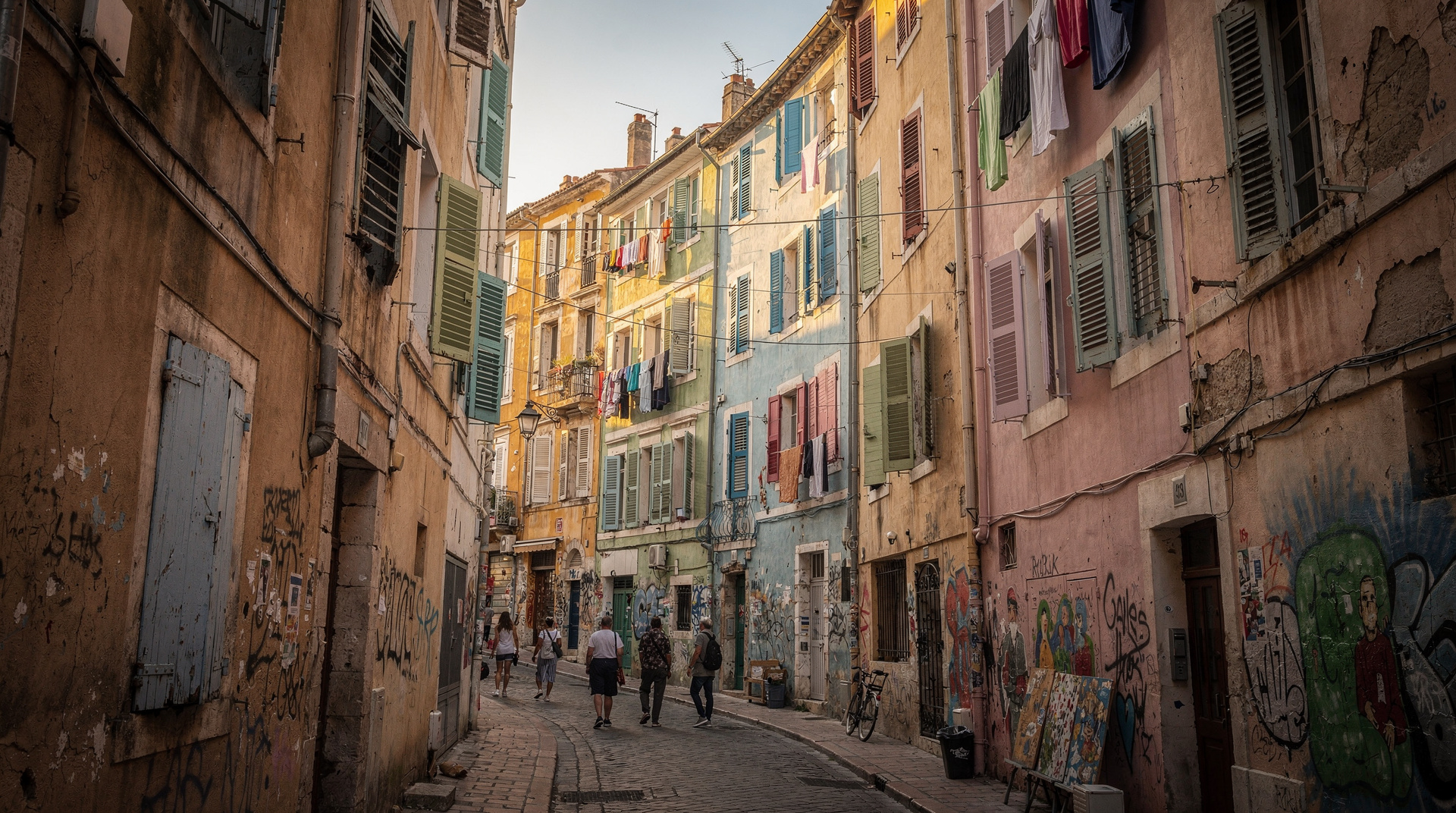
From Le Panier: Descend through the lower lanes of Le Panier toward the sea — the cathedral is visible from the lower streets of the neighbourhood and accessible in 10 minutes’ walk.
Combining La Major with MuCEM: The two buildings are 200 metres apart. A morning that begins at the fish market on the Vieux-Port, walks up through Le Panier, descends to La Major for 30 minutes, then continues along the esplanade to MuCEM for 2–3 hours covers the most architecturally rich 2 kilometres in Marseille in a single efficient circuit.
The interior decoration: mosaics, marble, and light
The decoration of La Major’s interior is worth understanding before you enter, because it is not immediately intuitive in the way that a Gothic nave’s stained glass or a Baroque church’s fresco programme might be.
The primary decorative language is geometric mosaic — interlocking patterns of coloured stone and glass tesserae on the arches, vault webs, and apses. This is a direct reference to Byzantine church decoration, where geometric abstraction (as opposed to the figurative mosaic programmes of Italian Byzantine churches) was favoured for its mathematical purity and its avoidance of the human figure in favour of pattern as theological abstraction.
The polished marble columns in the nave are in at least four different colours — red porphyry, black Belgian marble, white Carrara, and a veined green marble — creating a chromatic rhythm that runs the full length of the building. The effect in low morning light is particularly striking.
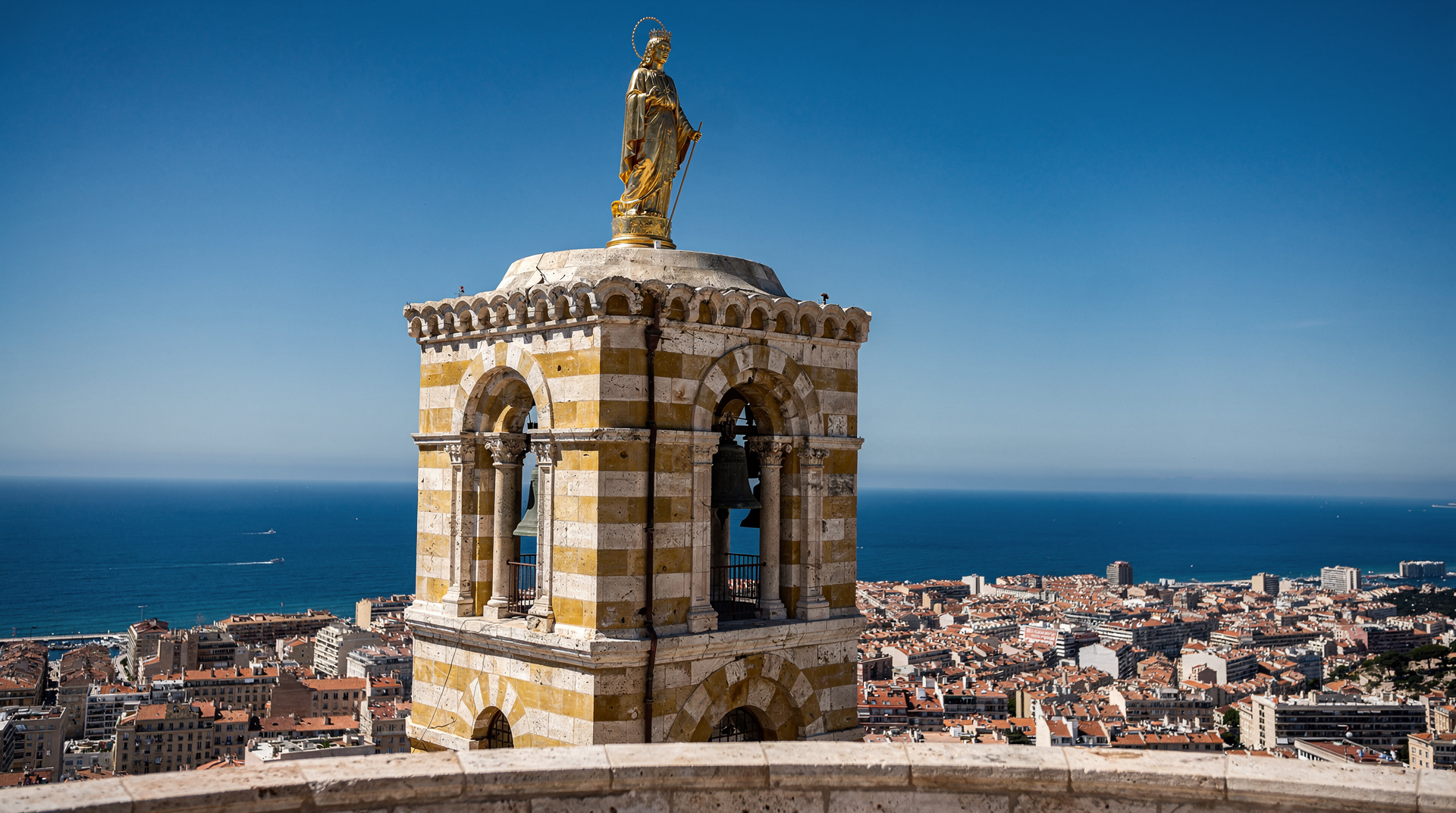
The main apse, semicircular and lit by clerestory windows above the altar, is the compositional focus. The mosaic behind the altar depicts a monumental enthroned Virgin with the Christ child — Byzantine in its frontality and gold ground — which connects explicitly to the Bonne Mère tradition of Notre-Dame de la Garde on the hill above the city. The same devotional current flows through both buildings, expressed through architecturally different but spiritually coherent means.
La Major and the history of Christianity in Marseille
The site of La Major has been a Christian religious place for far longer than the current building suggests. The first church on the headland above the Lacydon harbour was established in the 4th century CE, making this one of the oldest continuously Christian sites in France. The medieval Vieille Major, built in the 12th century, replaced earlier structures on the same location.
The decision to build the current La Major in the 1850s came from Bishop Eugène de Mazenod — founder of the Missionary Oblates of Mary Immaculate, the religious order that has served the cathedral since its completion and still does. De Mazenod had been bishop of Marseille since 1837 and was canonised in 1995. The cathedral that now bears his ambition is the largest 19th-century religious building in France.
The dual-cathedral structure — the Vieille Major and La Major standing side by side — is unique in France and rare in Europe. The practical reason for preserving the Vieille Major was liturgical continuity: the new cathedral took forty years to build, and the old one served the congregation throughout construction. Once La Major was consecrated in 1893, the Vieille Major remained as a historical monument rather than being demolished.
The J4 waterfront context: La Major as part of a larger picture
La Major does not stand alone on the waterfront. The cathedral is one element in a cluster of buildings that make the J4 esplanade the most architecturally varied 500-metre stretch in Marseille:
- The Vieille Major (12th century Romanesque) immediately adjacent
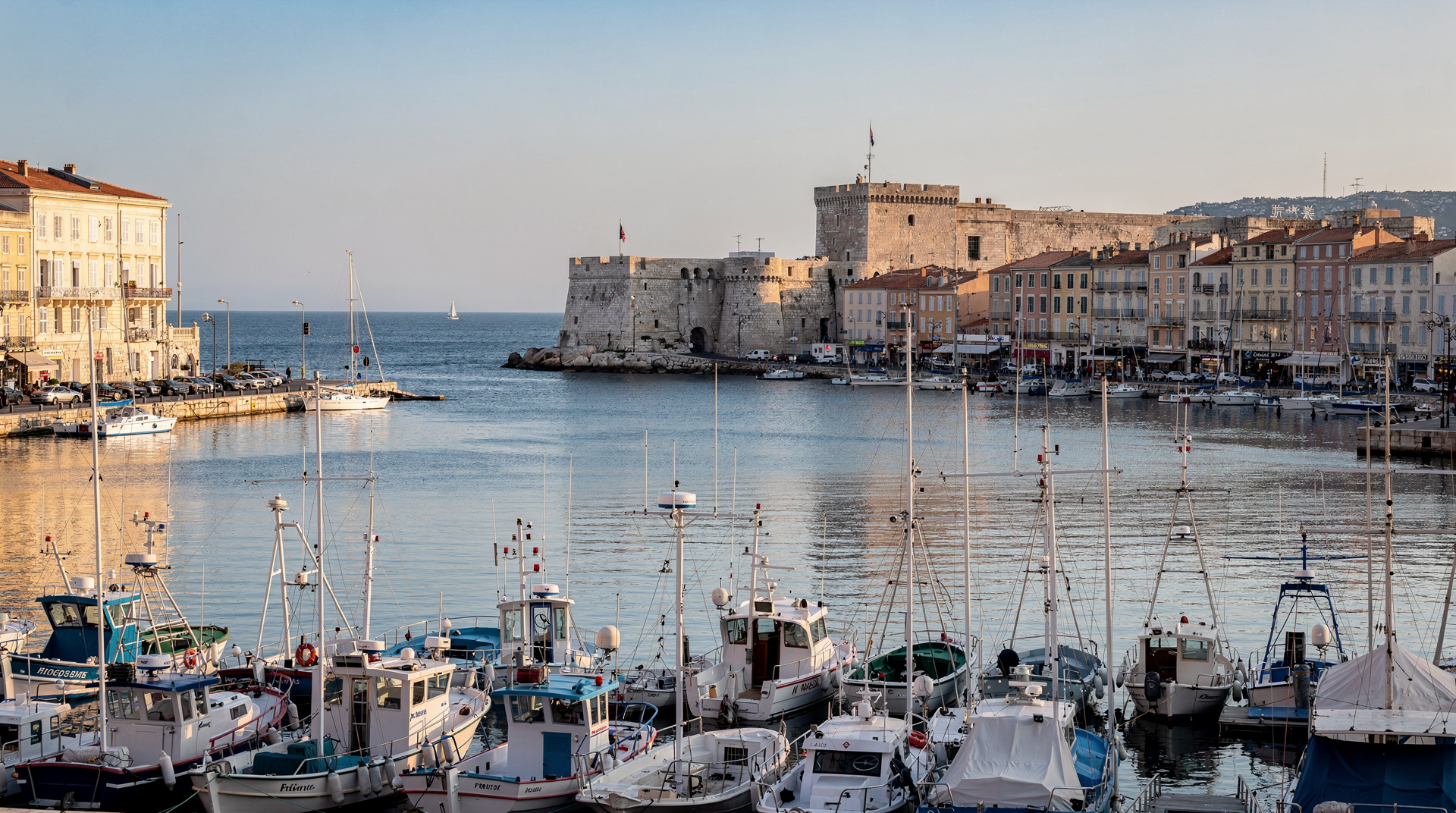
- Fort Saint-Jean (17th century, Louis XIV) 200 metres south-east
- MuCEM (Rudy Ricciotti, 2013) connected to the fort by footbridge
- Villa Méditerranée (Stefano Boeri, 2013) housing the Cosquer cave replica
- Les Docks de Marseille (19th century industrial, renovated 2015) to the north
- FRAC Provence-Alpes-Côte d’Azur (Kengo Kuma, 2013) a short walk north-east
Standing on the esplanade between La Major and MuCEM, you can see — in a single view — twelve centuries of Marseille building from the medieval to the contemporary. The cathedral’s striped stone facade, the fort’s 17th-century bastions, and Ricciotti’s concrete lattice are as different architecturally as three buildings can be, and yet they share the same limestone setting, the same Mediterranean light, and the same harbour-facing orientation.
This is what makes the J4 walk one of the best architectural promenades in France. La Major is the piece that most visitors undervalue, partly because it lacks a famous architect’s name and partly because it requires a little architectural literacy to appreciate fully.
Time needed: Allow 30 minutes for La Major alone. Allow 2–3 hours for the full J4 waterfront circuit including Fort Saint-Jean gardens and MuCEM exterior.
La Major versus Notre-Dame de la Garde: an honest comparison
Both are free, both are Romano-Byzantine, and both are significant Marseille landmarks. They are different experiences:
Notre-Dame de la Garde is on the highest hill in the city and requires either a 40-minute uphill walk or transport. Its panoramic terrace is the main draw for many visitors. The interior is decorated with authentic ex-votos and has genuine popular religious significance. It is busier and more visited.
La Major is at sea level, adjacent to MuCEM, and requires no special effort to reach. The interior is architecturally grander — larger, more elaborate, with higher-quality decorative stone work. It is quieter and less touristed. For visitors who are already at the waterfront for MuCEM or Le Panier, La Major costs nothing in additional time and delivers significant architectural quality.
If you are in the Joliette area and have 30 minutes, visit La Major. If you are building a day around religious and architectural architecture, combine both — the walk from La Major to Notre-Dame de la Garde via Le Panier and the Vieux-Port is one of the best possible sequences in Marseille.
For the full Notre-Dame de la Garde experience, see our dedicated guide to the Bonne Mère. For the complete architectural context of the waterfront including MuCEM, Fort Saint-Jean, and La Major together, see our Marseille architecture guide.
Frequently asked questions about Cathédrale de la Major
Is La Major cathedral suitable for visitors with limited mobility?
Yes, more so than most Marseille landmarks. The cathedral sits at sea level on the flat J4 esplanade, with no uphill approach — unlike Notre-Dame de la Garde, which requires either a steep walk or transport to reach the hilltop. The interior floor is level throughout the nave.
Can I combine La Major with a MuCEM ticket in the same visit?
They are separate: La Major is a free, unticketed cathedral, while MuCEM (the museum’s collections) requires a paid ticket, purchased separately or booked as skip-the-line access. The two are 200 metres apart and easily combined in the same morning or afternoon — see the MuCEM guide for ticketing details.
Les Voûtes and the wider Joliette district
The Voûtes de la Major sit within the broader redevelopment of the Joliette waterfront, a former industrial port district that has been steadily converted into a mixed cultural and commercial quarter over the past two decades. The Docks de Marseille — a 19th-century warehouse complex a short walk north — now houses shops and restaurants in a similar adaptive-reuse spirit to Les Voûtes, and is worth a look if the vaulted shops beneath the cathedral leave you wanting more of the same atmosphere without the tourist density of Le Panier.
Where La Major fits in a longer Marseille stay
La Major works best as a short pause inside a bigger day rather than a destination of its own. If you have only one day in the city, the Marseille in one day itinerary is the natural frame, and the cathedral slots in between the old harbour and the museum waterfront without adding any real detour. With more time, the Marseille in two days itinerary lets you give the J4 esplanade a slower morning and keep the afternoon for something else entirely.
Visitors arriving by ship will find the cathedral a convenient first stop on foot, and the Marseille cruise port guide explains how to organise a short call around the waterfront. If you are still deciding how to spend your hours, the Marseille museums guide helps you weigh MuCEM and the other collections against a quiet half hour in the nave.
Around the cathedral: the harbour and the old quarter
The walk to La Major passes through some of the most characterful ground in the city. The Vieux-Port area guide covers the quays you will cross on the way, and the Le Panier guide describes the lanes that lead down from the old quarter toward the sea. Both make good companions to the cathedral visit, and the Vieux-Port destination page gives a wider overview of the harbour itself.
If the cathedral sparks an interest in how the city grew, the history of Marseille puts the medieval Vieille Major and the nineteenth-century building into a longer story, while the Marseille neighborhoods guide shows how Joliette relates to the districts around it. Getting between these places is easy on foot, but the getting around Marseille guide is useful if you would rather save your legs for the climb to the Bonne Mère.
Top experiences
Bookable activities with verified prices and instant confirmation on GetYourGuide.