Cassis beaches guide: Grande Mer, Bestouan, and Calanques access from the village
Cassis: Calanques National Park sea-kayaking tour
Duration: 3-7 hours
What is the best beach in Cassis?
Plage de la Grande Mer is the main beach — family-friendly, shallow gradient, lifeguarded in summer, and Pavillon Bleu certified in 2026. Plage du Bestouan (10 minutes west of the port) is smaller and calmer. For the most spectacular swimming, Port-Pin calanque is 1 hour on foot from the village.
Cassis beaches: in the village and beyond
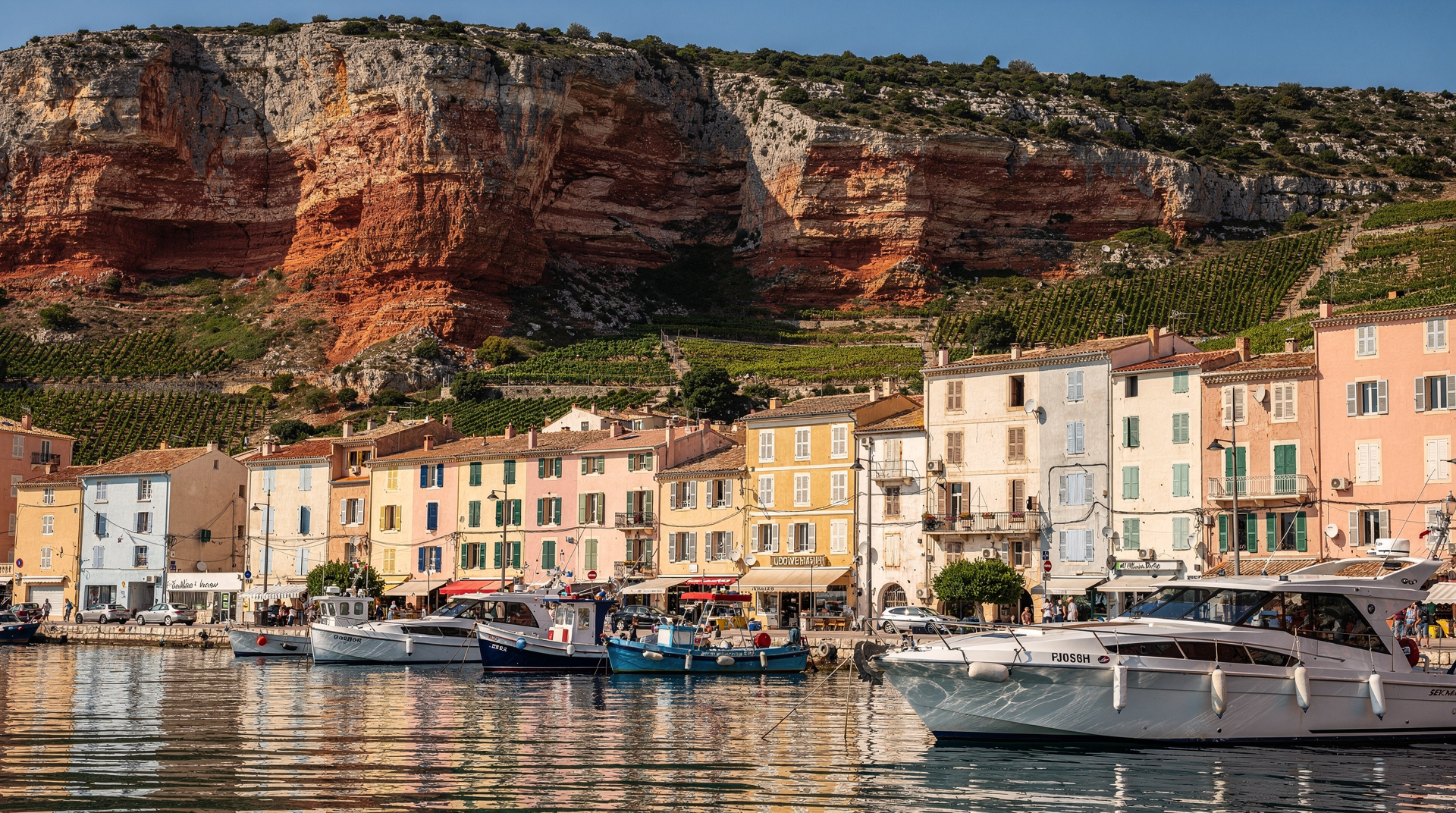
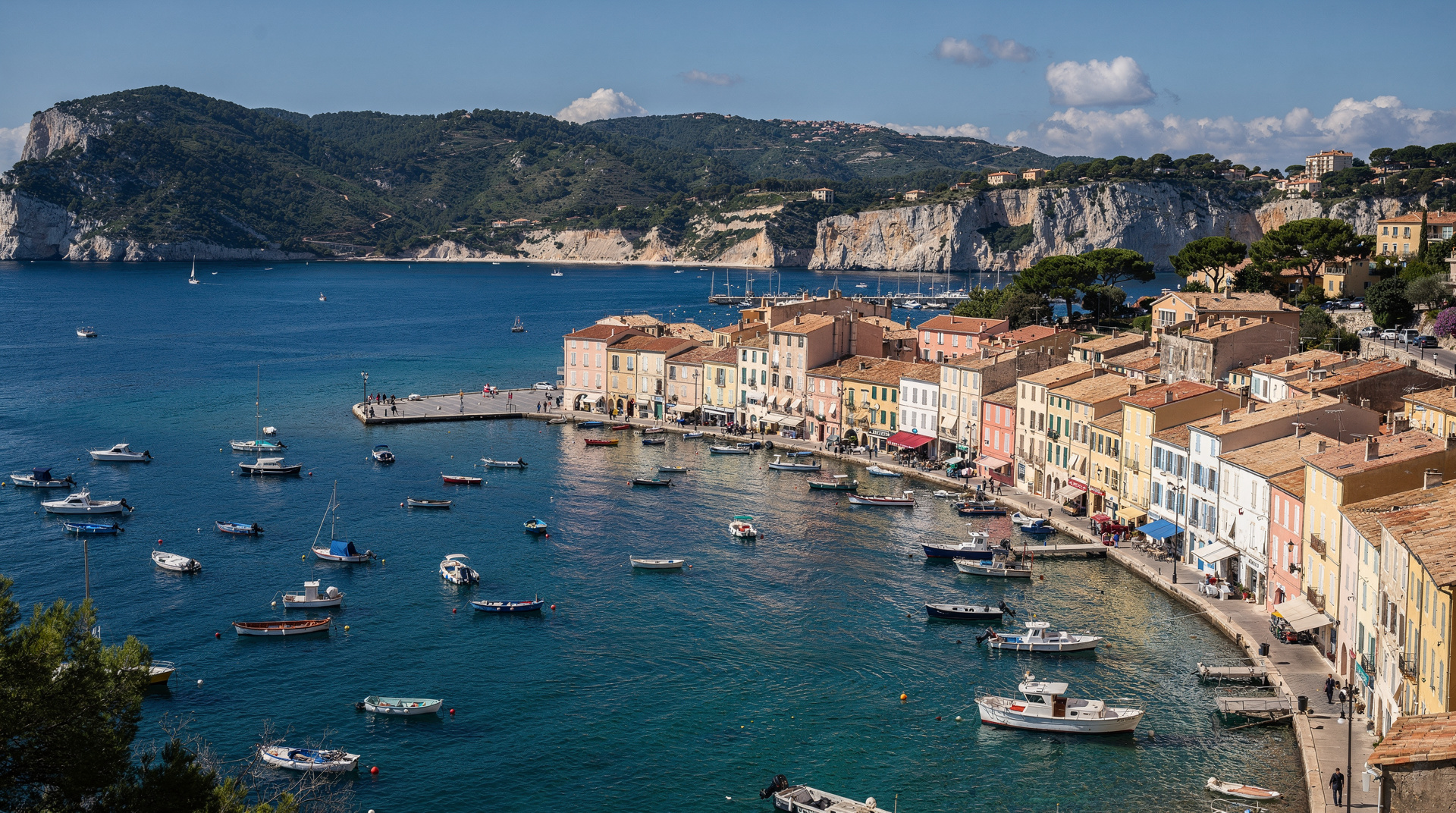
Cassis’s appeal as a destination does not rest primarily on its in-village beaches. The port, the Cap Canaille cliff, the AOC wine, and above all the access to three calanques on foot or by kayak — these are what make Cassis exceptional. The town beaches are functional, pleasant, and Pavillon Bleu certified (in 2026), but they are supplementary to the Calanques experience rather than the main event.
| At a glance | |
|---|---|
| Where | Cassis village port (Grande Mer, Bestouan) and the calanques trail east of town |
| Cost | Free access to all beaches; taxi from the station around EUR 8-12 |
| Time needed | 2-3 hours for a village beach visit; a half or full day to add Port-Pin or En-Vau |
| Getting there | TER train from Marseille Saint-Charles (around 35 min), then a short walk or shuttle to the port |
| Best time | May, June, and September for warm water without the July-August crush |
That said, the beaches in Cassis village are genuinely good for what they are: clean, supervised, and significantly less crowded than equivalent beaches in comparable Côte d’Azur resorts. In May and September they are particularly pleasant — the village is quieter, the water is warm enough for comfortable swimming, and you can combine a morning at the beach with an afternoon in the calanques without the July crowds.
Plage de la Grande Mer: the main beach
The Grande Mer beach sits at the foot of the Cassis port — the central and largest beach in the village, approximately 250 metres long and framed by the port on one side and the Cap Canaille headland on the other.
Sand and entry: The Grande Mer is a pebble beach (galets — the rounded, smooth Mediterranean pebble that covers most of the Cassis coast). The pebbles are clean and comfortable to lie on with a beach towel, though not as forgiving underfoot as sand. Entry into the water is gradual — the slope from the beach surface to the water deepens reasonably gently, making it suitable for children who can wade in the shallows.
Pavillon Bleu 2026: Plage de la Grande Mer holds the Pavillon Bleu (Blue Flag) label in 2026 — the EU environmental and quality certification awarded to beaches that meet criteria for water quality, environmental management, safety, and services. This places Cassis among the certified beaches in Bouches-du-Rhône, alongside Bestouan (also at Cassis) and La Ciotat’s Plage Cyrnos. No Marseille city beaches hold the label in 2026.
Facilities:
- Lifeguard post in summer (approximately mid-June to mid-September, 10:00–19:00)
- Showers and sanitary facilities
- Disabled access (accessibility ramp present; Grande Mer holds accessibility certification)
- Pedal boat, kayak, and windsurf rental (seasonal, from the beach)
- Restaurants and snack bars adjacent to the beach
- Parking: very limited in high summer; the village car-access restrictions mean most visitors arrive by train or organised car park + shuttle
Water quality: As a Pavillon Bleu beach, Grande Mer receives regular water quality monitoring and consistently meets EU bathing water standards. The sheltered position in the Cassis bay and the absence of significant river input helps maintain clarity.
Summer crowds: Cassis is popular and the Grande Mer beach reflects this. July and August bring significant pressure — by 11:00 on a summer Saturday, the beach is full. The car access restrictions help (fewer drive-in day trippers than would otherwise arrive), but the beach is not large and fills with both village visitors and organised day-tour participants. June and September are dramatically calmer.
Plage du Bestouan: the calmer alternative
Bestouan is approximately 10 minutes on foot from the Cassis port, heading west past the small harbour wall toward the Calanques direction. The beach is smaller than Grande Mer (approximately 150 metres long) and narrower, with the same rounded pebble surface. It also holds the Pavillon Bleu label in 2026.
Calmer character: Bestouan attracts fewer organised tour groups than Grande Mer and feels slightly less frenetic in peak season. This is partly due to the short walk from the port — enough to filter out those who want the most convenient option — and partly to its position facing slightly more open water.
Water: Supervised in summer (lifeguard post). The water is clear and the gradient into the sea is gentle — suitable for children. Cap Canaille is visible from the beach to the east, providing a dramatic backdrop.
Facilities: Showers, toilets, some snack options. Less developed than Grande Mer; the simplicity is part of the appeal.
Reaching the Calanques from Cassis village
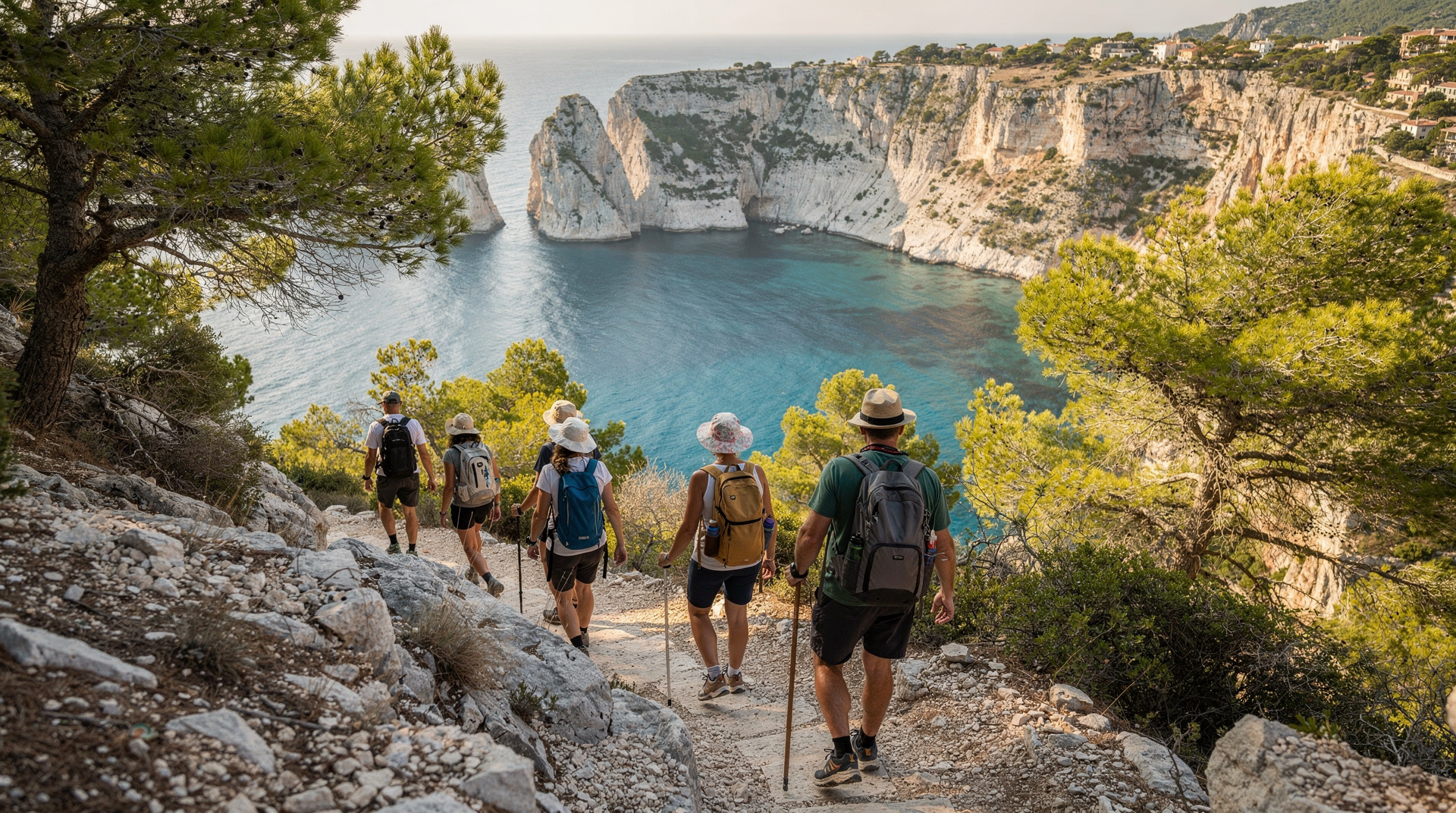
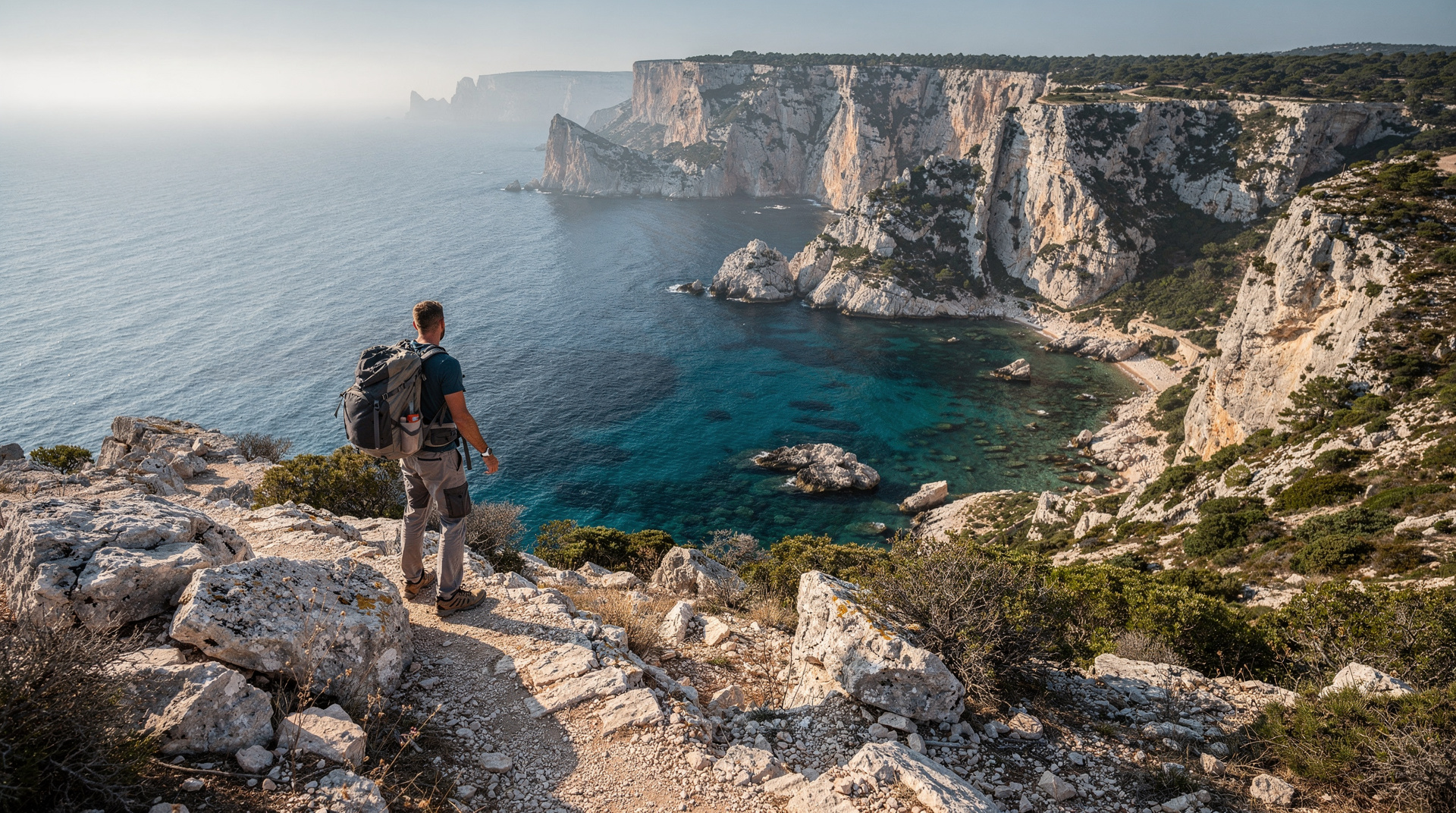
The greatest beach experiences from a Cassis base are not in the village but in the three calanques accessible from the eastern edge of the village: Port-Miou, Port-Pin, and En-Vau. The trailhead begins a 15-minute walk from the port along the Rue des Calanques.
Port-Miou: The first calanque — a long navigable inlet used as a marina. 15 minutes from the trailhead. Not a swimming beach (boats moored throughout) but the immediate transition from village to national park scenery is striking.
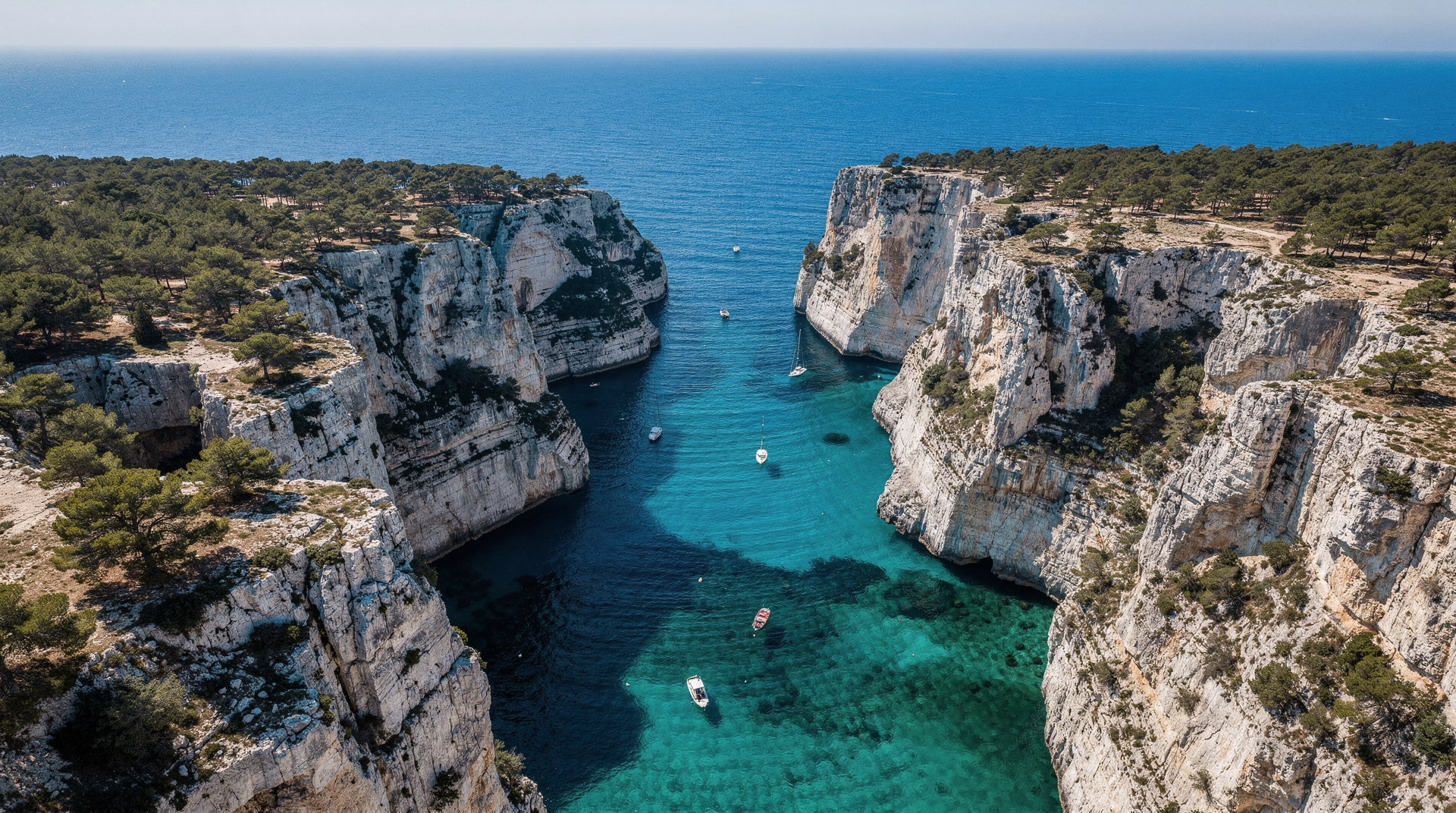
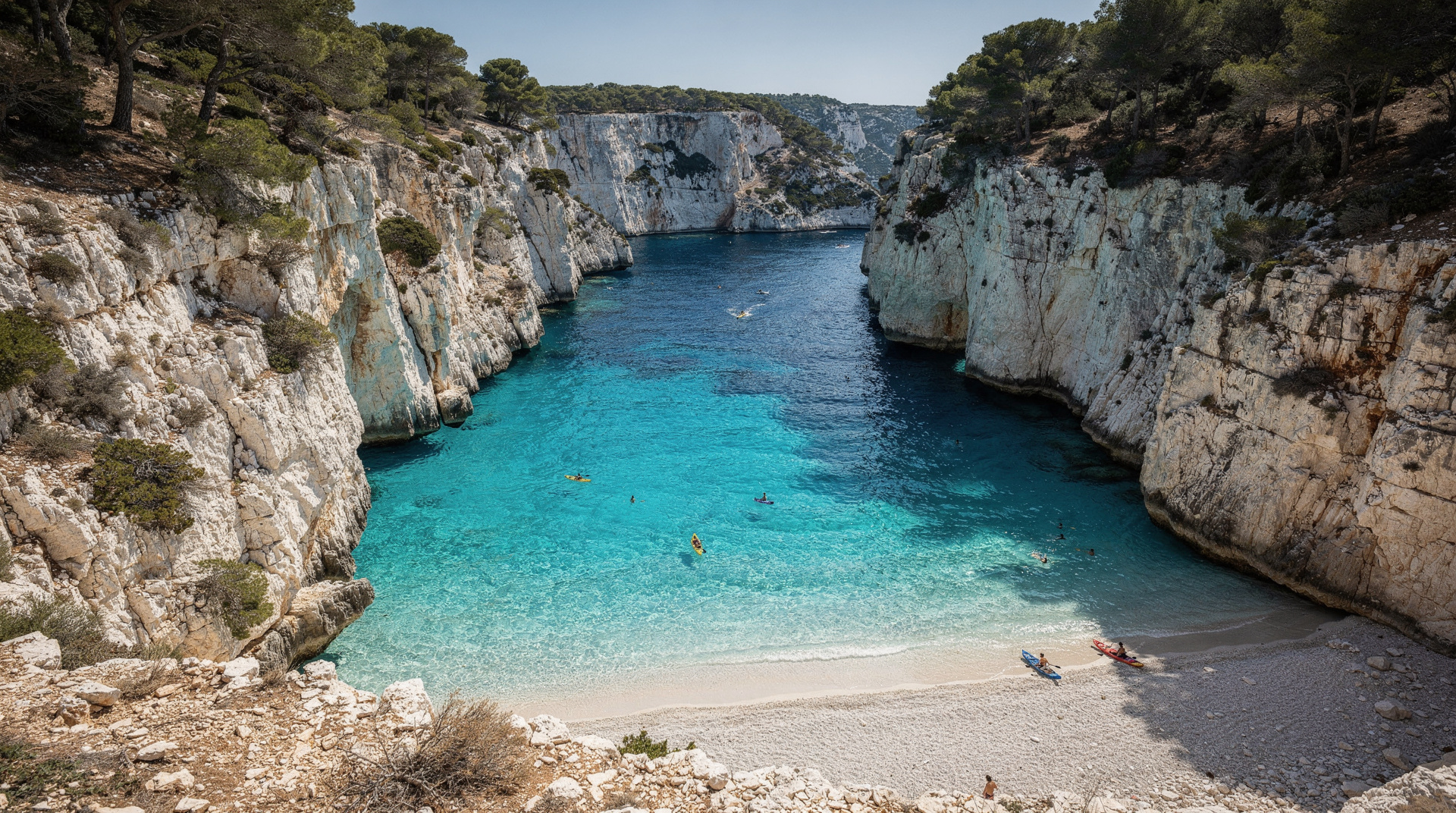
Port-Pin: 45 minutes further on foot from Port-Miou. A broad pebble beach framed by Aleppo pines, with calm, clear water and enough space for comfortable swimming on most weekdays. This is the best family swimming stop on the hike — calmer than En-Vau, accessible enough for children in good shape. No facilities; bring water and food.
En-Vau: 1 hour further from Port-Pin — a steep descent to the most dramatic calanque in the park. Small pebble beach between vertical white cliffs. The hike is tiring (4–5 hours return from Cassis village) and requires fitness and proper footwear. Alternatively, reach En-Vau by kayak from the Cassis beach (1.5–2 hours paddling guided, available through the tour operators listed above).
Important: summer trail closures. The same fire-risk closure rules apply to Cassis-side calanque trails as to Marseille-side trails. In July–August, trail access to Port-Pin and En-Vau is frequently suspended. Kayak access from the sea remains available regardless of trail status. Check calanques-parcnational.fr on the morning of your planned hike.
Calanques by boat from Cassis
If hiking is not an option (weather, trail closure, or preference), several boat tour options visit the calanques from Cassis port. These typically depart the small port and cover Port-Miou, Port-Pin, and En-Vau with swimming stops at one or two calanques.
This is a particularly useful option in July–August when hiking is restricted — you see En-Vau from the sea (the most dramatic approach angle) and swim in the same turquoise water without the trail closure problem. The boat tour format also allows those with less hiking fitness to access the most remote calanque.
Practical information for swimming in Cassis
Water temperature: The Mediterranean off Cassis follows the same seasonal pattern as Marseille. May averages 17°C — cold for extended swimming without a wetsuit. June reaches 20°C. July–August peaks at 23–24°C — comfortable for most adults without wetsuits. September stays around 22°C, with often better visibility than the peak summer months as the water column settles.
Jellyfish: Pelagia noctiluca (mauve stinger) can appear in Cassis bay, as across the wider Mediterranean coast, in July–August. Blooms are unpredictable — check locally on the day. A thin wetsuit provides meaningful protection. Lifeguards at Grande Mer and Bestouan can advise on current jellyfish presence.
Shade: The village beaches at Cassis have limited natural shade. Trees along the promenade edge provide some cover. Bring a beach umbrella for extended beach sessions in summer. The Calanques, by contrast, have overhanging limestone cliffs that create shade on the rock sections beside the water in the afternoon — one of the advantages of reaching Port-Pin or En-Vau rather than staying at the village beach.
Water shoes: Essential for comfortable entry at Grande Mer and Bestouan — the rounded pebble (galet) surface is manageable barefoot but significantly more comfortable with water shoes. Sea urchins are present on the rocks flanking both beaches; fins or water shoes prevent the most common minor injury (spine in foot, painful and avoidable).
Sea urchins (oursins): In season from October to April, local restaurants in Cassis serve fresh sea urchins — opened at the table and eaten with bread and lemon. This is a genuinely Cassis-specific experience at a reasonable price and more interesting than most of the generic Provence souvenirs. The urchin season is outside the beach season, but worth noting for autumn and winter visits.
Combining Cassis beaches with other activities
Full Cassis day (best in May, June, September): Morning at Bestouan (calm, Pavillon Bleu, uncrowded). Lunch at a port restaurant with a glass of AOC Cassis blanc. Afternoon hike to Port-Pin for a swim (allow 3 hours return) or a guided kayak session to En-Vau.
Day trip from Marseille: TER train from Saint-Charles (35 minutes), taxi from station to port (8–12 EUR), morning at Grande Mer beach, afternoon guided kayak or boat tour to the calanques. Return train to Marseille.
Combining Cassis and La Ciotat: Cassis for the calanques and wine; La Ciotat (8 km east via Route des Crêtes) for the Île Verte and calmer beaches. Both in one day with a car is comfortable; without a car, bus connection D1 links them.
Summer car restrictions: From approximately late June through August, Cassis restricts private vehicle access to the village centre during the day. Park in the outer car parks and take the shuttle bus into the port area. The TER train from Marseille avoids this issue entirely — arrive at Cassis station and take a taxi (EUR 8–12) or summer bus to the port.
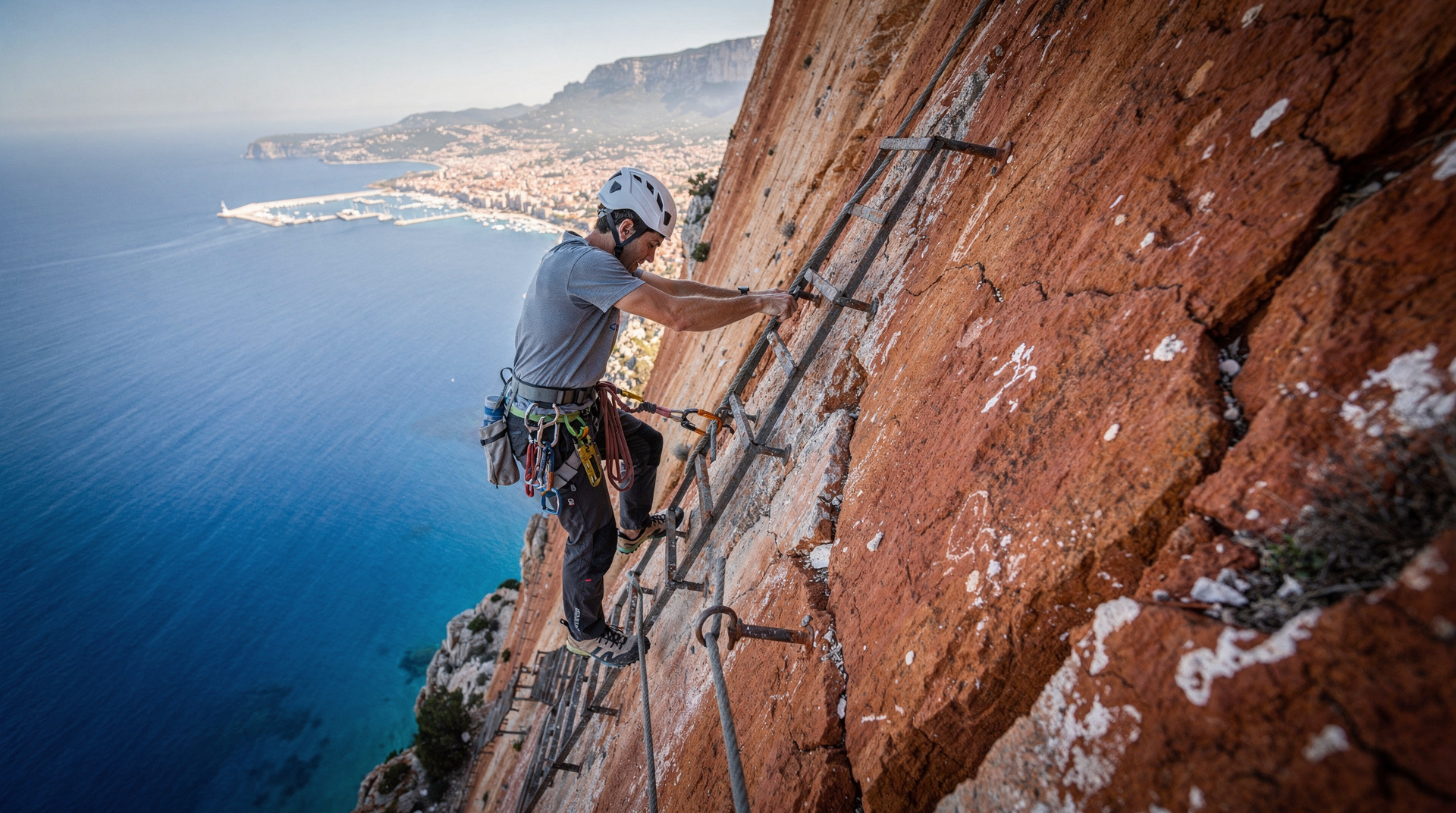
For the complete Cassis destination picture — Cap Canaille, via ferrata, wine, and village — see the Cassis destination guide. For the Calanques beaches in depth, including the full access guide, see our Calanques beaches guide. For the kayak options from Cassis, the kayaking guide covers all departure points and routes. For family-specific beach comparison across the region, see the family beaches guide.
Cassis beaches compared with Marseille alternatives
Visitors choosing between Cassis and Marseille for a beach day often underestimate how different the experiences are. The comparison matters:
| Factor | Cassis (Grande Mer) | Marseille (Borély, Prado) |
|---|---|---|
| Surface | Rounded pebble (galet) | Fine sand (artificial) |
| Water quality | Pavillon Bleu 2026 | EU good quality, no Pavillon Bleu |
| Water clarity | Excellent | Good |
| Lifeguard | Yes (summer) | Yes (summer) |
| Journey from Marseille | 35 min by train | 25 min by bus from city |
| Calanques access | Immediate (walk or kayak) | Boat tour from Vieux-Port |
| Summer crowding | Moderate (car restrictions help) | Heavy at Borély on weekends |
| Price | Free (beach), 8–12 EUR taxi from station | Free, low transport cost |
For a family with children who want sand underfoot: Borély (Prado) is the better choice. For anyone who wants exceptional water quality, easy Calanques access, and a genuinely beautiful village context: Cassis. The train journey from Marseille is short enough that choosing Cassis over the Prado is a straightforward decision on any day when you want more than a functional beach session.
Cassis’s key advantage for beach + Calanques in one day: You can swim at Grande Mer in the morning (15 minutes from the port), eat lunch at a port restaurant, and spend the afternoon on a kayak tour to Port-Pin or En-Vau. No other base in the region allows this combination without a boat tour from Marseille (2–3 hours of boat time) or a full Calanques hiking day (4–5 hours on foot).
The best beaches in Marseille guide covers the Marseille city options in full for direct comparison.
Cassis beaches for families with young children
Grande Mer’s gentle entry gradient and summer lifeguard cover make it the more manageable option for families with children under about eight — the pebble surface underfoot is the main adjustment for younger kids used to sand. Bestouan’s calmer atmosphere and shorter walk from the port also work well for families who want fewer crowds without committing to the hike. For a broader look at which beaches in the wider region suit different age groups, see the family beaches guide and the Marseille with kids guide.
Neither Port-Pin nor En-Vau is realistic with very small children given the hiking distance, but Port-Pin is achievable with fit school-age kids in good shoes; budget extra time and plenty of water. If a beach day matters more than the calanques for your trip, pairing Cassis with La Ciotat — whose beaches are larger and sandier — may suit families better; see our Cassis vs La Ciotat comparison.
Frequently asked questions about Cassis beaches guide
Are Cassis beaches sandy or pebble? Pebble (galet) — the same rounded Mediterranean stone found along most of this coast. There is no natural sand beach in Cassis village itself; the closest sand is at La Ciotat.
Is Port-Pin better for swimming than the village beaches? For clarity and calm water, yes — Port-Pin’s sheltered pebble beach and pine-shaded setting are widely considered the best easy swim stop in the Cassis-side calanques, at the cost of a roughly hour-long walk each way.
Top experiences
Bookable activities with verified prices and instant confirmation on GetYourGuide.