Family beaches near Marseille: sand, shallow water, lifeguards, and shade
Marseille: Frioul Islands boat tour with swim stop
Duration: 2 hours
What is the best family beach near Marseille?
Plage du Borély (Prado, Marseille) for the most accessible option from the city — sandy, lifeguarded, gradual slope, and adjacent to Parc Borély. For a day trip with exceptional water quality, Plage de la Grande Mer in Cassis (Pavillon Bleu 2026). For the widest sandy beach with gentle waves, Plage de Lumière in La Ciotat.
The family beach challenge near Marseille
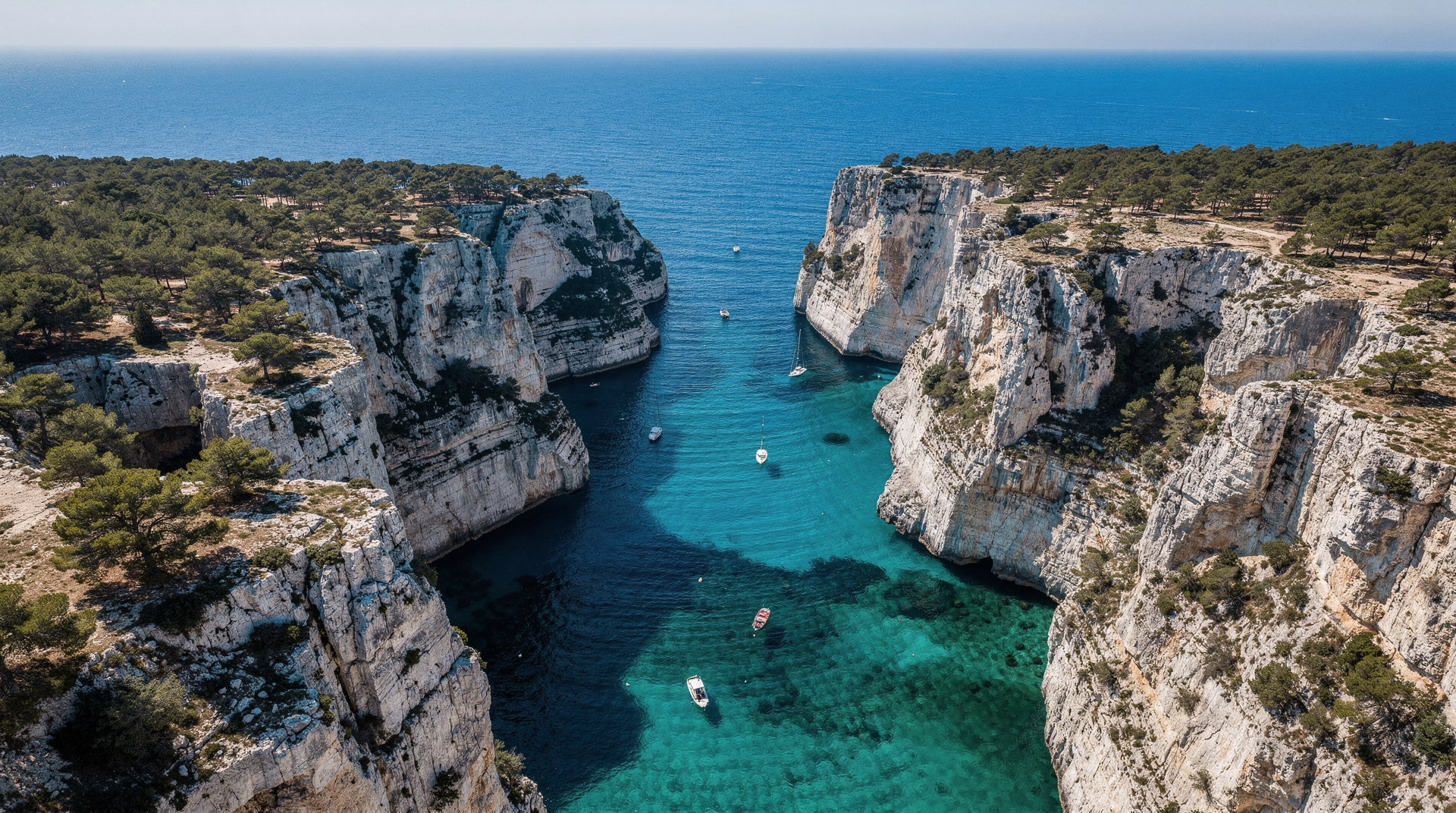
The coastline around Marseille is not naturally generous with family-friendly beaches. The local geology — white limestone dropping directly into deep turquoise water — produces the most spectacular scenery in the region but very little sandy, sheltered, shallow beach. The Calanques are extraordinarily beautiful and entirely impractical for families with toddlers: pebble or rock entry, no lifeguards, significant distances to reach, and no shade at water level.
For families, the calculation shifts: prioritise sand over scenery, shallow gradient over dramatic depth, lifeguards over solitude, and shade and facilities over natural beauty. The good news is that several excellent options exist within 45 minutes of Marseille. The key is matching the right beach to the children’s ages and the family’s mobility.
This guide covers the practical family options honestly — what each beach actually offers, and what age it suits.
At a glance
| Closest option | Prado beaches (Borély, Bonneveine) — 20–25 min by bus/métro from Vieux-Port, no car needed |
| Best water quality | Cassis Grande Mer or La Ciotat Cyrnos — both Pavillon Bleu 2026 certified |
| Best for toddlers | Plage du Borély (gradual sandy slope) or Plage de Lumière (very shallow, fine sand) |
| Cost | Free beach access everywhere; parasol/sunbed hire around EUR 15–25/day where offered; train fares EUR 8–15 return for day trips |
| Furthest realistic day trip | Bandol — around 1 hour by TER, at the outer limit for a family beach day |
| Lifeguard season | Mid-June to mid-September, roughly 10:00–19:00, on all beaches listed except the Calanques and Frioul coves |
Prado beaches, Marseille: the most accessible family option
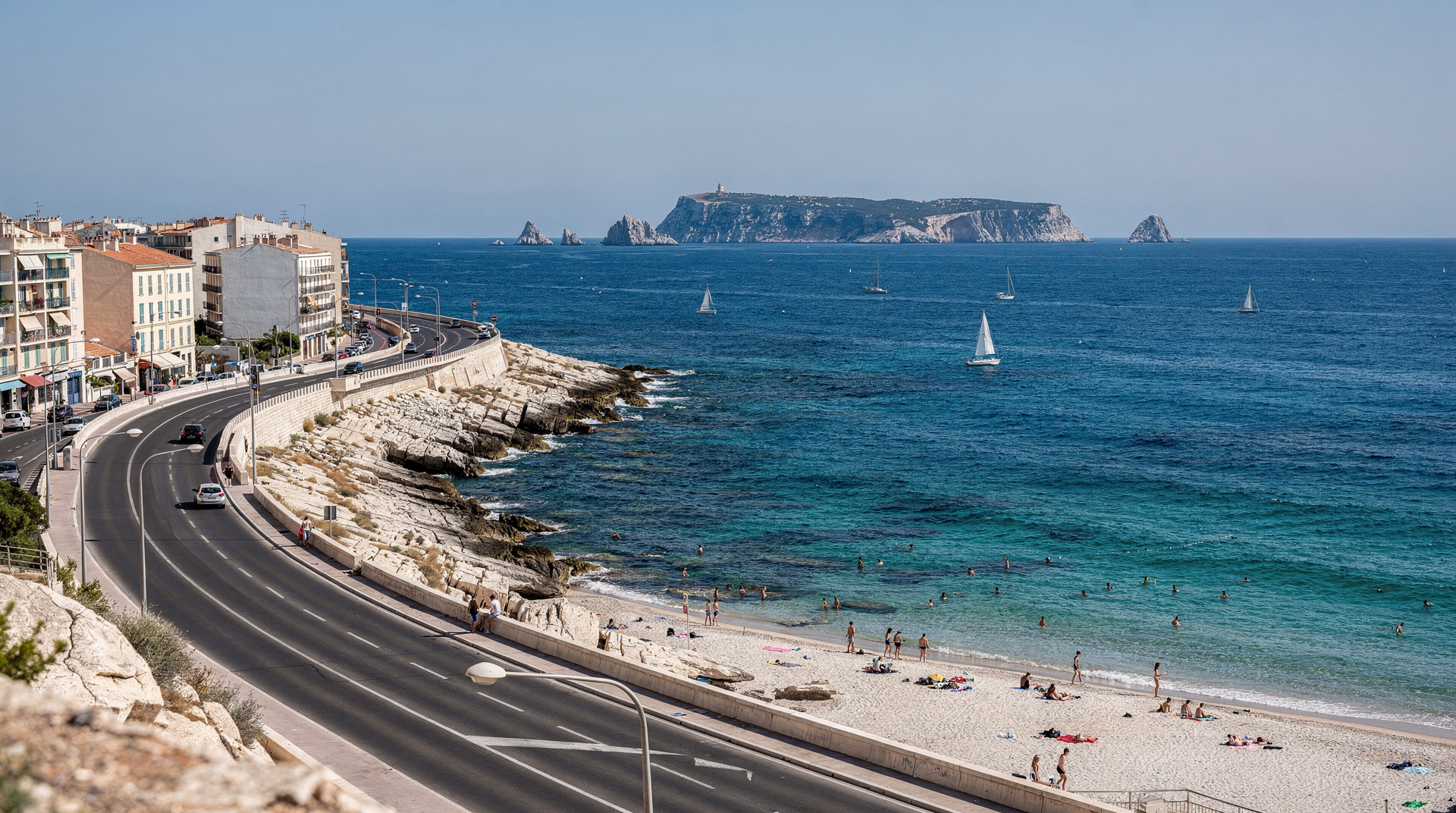
The Prado beach chain in Marseille’s 8th arrondissement is the best family beach accessible directly from the city without a car and without a significant journey. The key sections:
Plage du Borély: the family standard
The widest, most fully facilitated beach in the Prado chain. Borély’s sandy floor has a gradual slope — the water at 10 metres from shore is approximately 60–80 cm deep, rising to 1.5–2 metres at the outer swimming buoy zone. This makes it one of the only beaches near Marseille where toddlers can safely wade in the shallows with adult supervision in the immediate water.
Why it works for families:
- Sand underfoot — no sharp pebbles, no sea urchins in the entry zone
- Gradual depth increase from the waterline
- Lifeguards mid-June to mid-September (10:00–19:00) with flagged safe swimming zone
- Free outdoor showers (no salt buildup after swimming)
- Toilets nearby
- Beach restaurants and snack bars for lunch without leaving the beach zone
- Adjacent Parc Borély with shaded lawns, picnic areas, and a park play zone for younger children who need breaks from the beach
Shade: The beach itself has no natural shade — bring a beach umbrella or rent from the private section. Parc Borély provides shade 5 minutes’ walk away.
Getting there: Bus 83 from the Vieux-Port area or Castellane métro (line 1). No car needed; bus is genuinely easier than driving and parking in summer. Journey approximately 20–25 minutes.
Plage de Bonneveine
South of Borély, Bonneveine is slightly less crowded and equally well-facilitated. Same sandy bottom, gradual slope, lifeguards in season. Useful when Borély is at peak capacity (July and August weekends). The character is similar to Borély, slightly younger crowd, slightly quieter.
Cassis: Plage de la Grande Mer (Pavillon Bleu 2026)
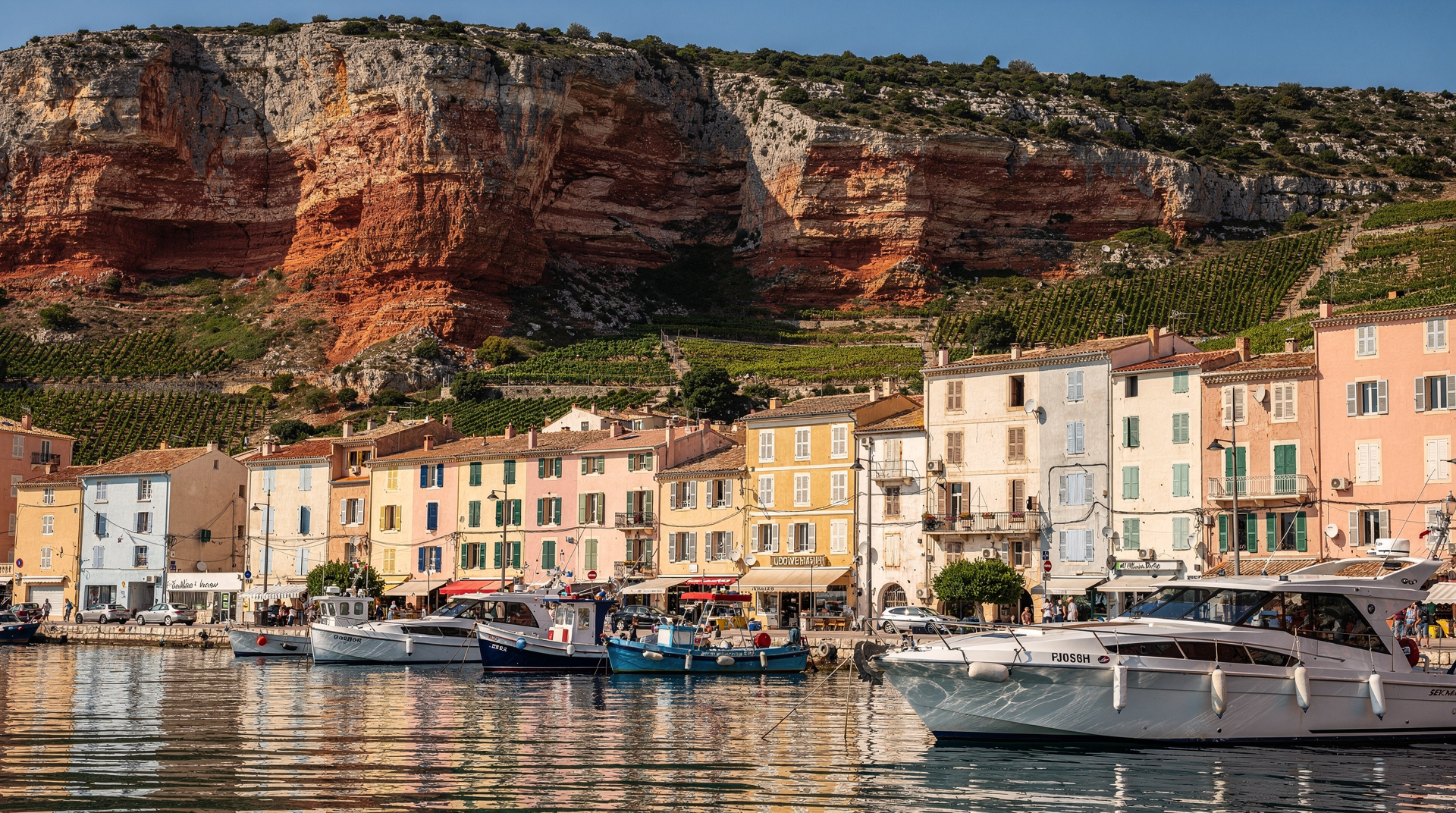
Cassis’s Grande Mer beach is the best quality controlled family beach in the region — Pavillon Bleu certified in 2026, lifeguarded in summer, with a gentle pebble slope and supervised swimming zone. The distinction from the Prado beaches is the setting: Cap Canaille visible to the east, the limestone massif framing the village, and water clarity noticeably better than the Marseille city beaches.
The pebble question: Grande Mer is pebble (galets), not sand. Rounded smooth pebbles — comfortable to lie on with a towel or mat, but harder underfoot than sand and less suitable for toddlers building sandcastles. Water shoes are strongly recommended for children entering from the pebble beach.
Practical advantages for families:
- Pavillon Bleu certification = highest water quality standards verified annually
- Lifeguarded from mid-June to mid-September
- Disabled access ramp (Grande Mer holds the Tourism and Handicap accessibility label for all four disability categories)
- Shallow gradient into the sea — suitable for supervised children aged 4 and above
- Pedal boat and kayak rental on the beach (family pedal boats available in season)
- Restaurants adjacent to the beach for lunch
Journey from Marseille: TER train Saint-Charles to Cassis station (35 min, approximately EUR 8 return per adult). Taxi from station to beach: EUR 8–12. Total: under 1 hour from central Marseille. Day trip format works well — arrive by 09:30, beach morning, lunch at port restaurant, afternoon option (calanques boat tour or port walk), return train.
La Ciotat: Plage de Lumière
Plage de Lumière in La Ciotat is the most family-optimised beach in the broader Marseille region — specifically designed and managed for family use. The beach is named after the Lumière brothers, who spent significant time in La Ciotat and whose early cinema invention was publicly demonstrated here.
What makes it the best for young children:
- Fine sand (not pebble) — rare on this coast
- Very shallow gradient — the depth stays minimal for an unusually long distance from the shoreline, specifically appropriate for young children who want to play at the water’s edge
- Lifeguard and first aid post in summer
- Tourism and Handicap label (all four disability categories, same as Cassis Grande Mer) — wide access ramp to the beach
- Activities for children on the adjacent esplanade
La Ciotat’s beach is less touristically developed than Cassis — the town is quieter, the beach less crowded in July and August (though still busy), and the atmosphere more local. This is an advantage for families who want a calmer environment.
Journey from Marseille: TER train to La Ciotat station (approximately 45 minutes, EUR 10–12 return per adult). Bus or taxi from station to the seafront (the station is slightly inland). Day trip viable but slightly longer than Cassis.
Plage Cyrnos (Pavillon Bleu 2026): La Ciotat’s Cyrnos beach is also Pavillon Bleu certified in 2026 — it is one of the certified beaches in Bouches-du-Rhône alongside Cassis’s two beaches. Cyrnos is adjacent to the Lumière beach zone and shares similar quality standards.
Bandol: Plage de Renécros and the bay
Bandol, approximately 55 minutes from Marseille by car or 1 hour 10 minutes by TER train, offers a wide bay with sheltered water and a mix of sandy and pebble sections. The town has a functioning marina, good restaurants, and a more developed tourist infrastructure than the other options listed here.
Plage de Renécros: The main family beach in Bandol, in a sheltered cove north of the marina. Pebble bottom but calm water and generally less crowded than Cassis or La Ciotat. Lifeguard in summer. The Bandol bay faces south-southwest, providing shelter from the dominant Mistral wind — this means calmer water on windy days than beaches in more exposed positions.
Journey from Marseille: TER train from Saint-Charles to Bandol (approximately 1 hour, EUR 13–15 return per adult). The station is central to the village. A Bandol day trip is at the outer limit of convenient day-trip distance from Marseille for a beach day with children — viable but long. Better suited to families staying overnight or on a second day out.
Frioul Islands: boat-based family swimming
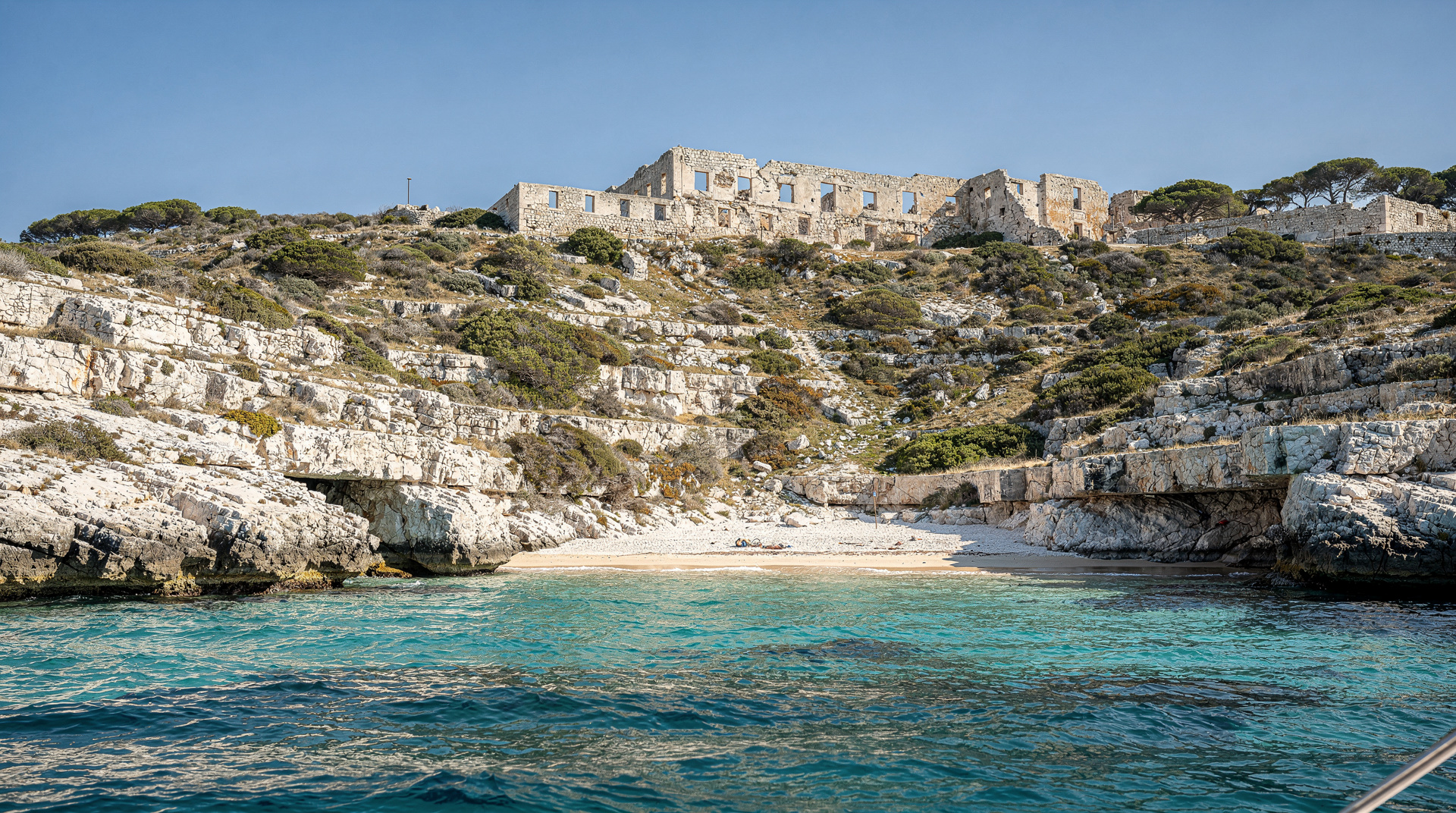
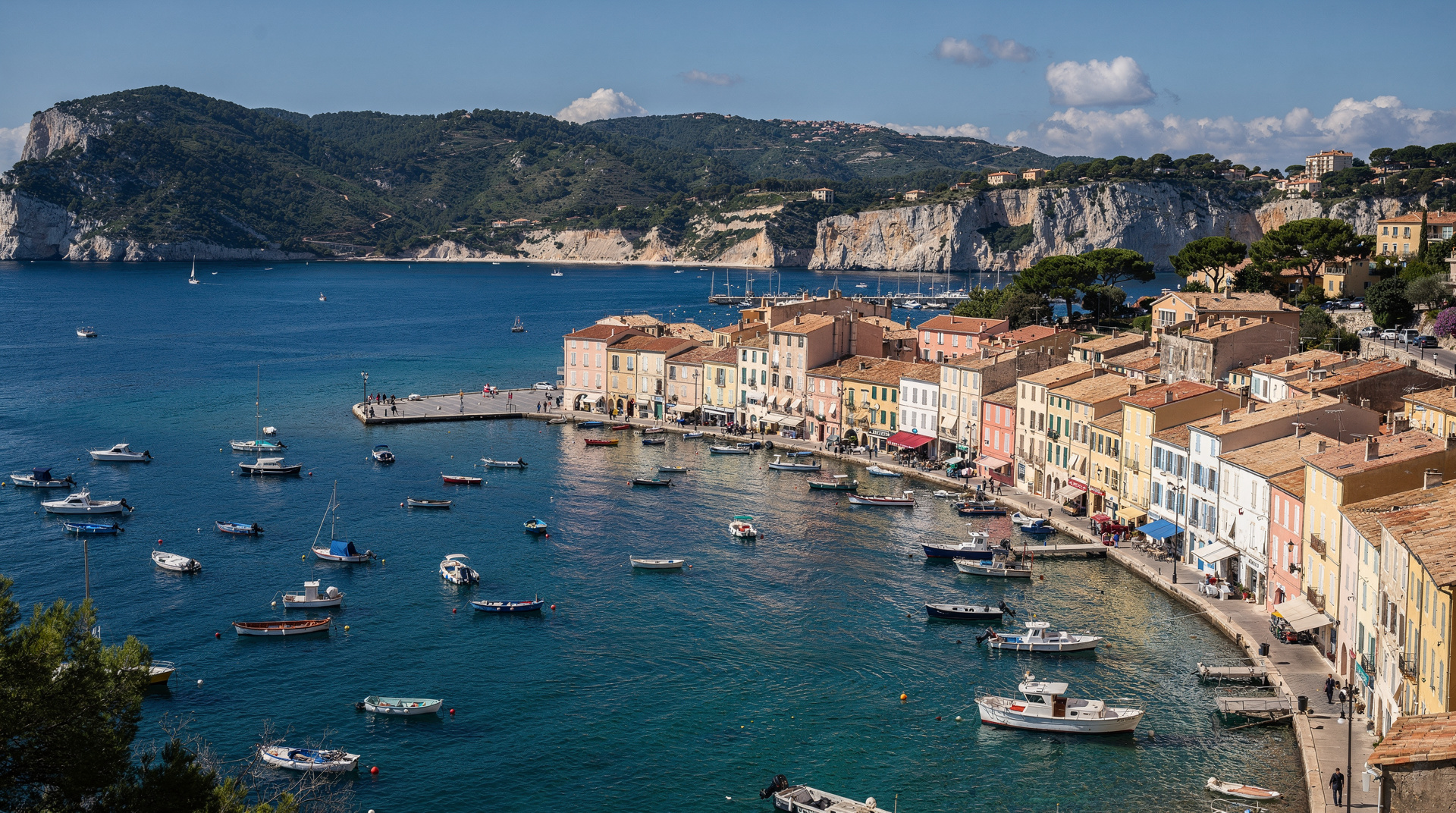
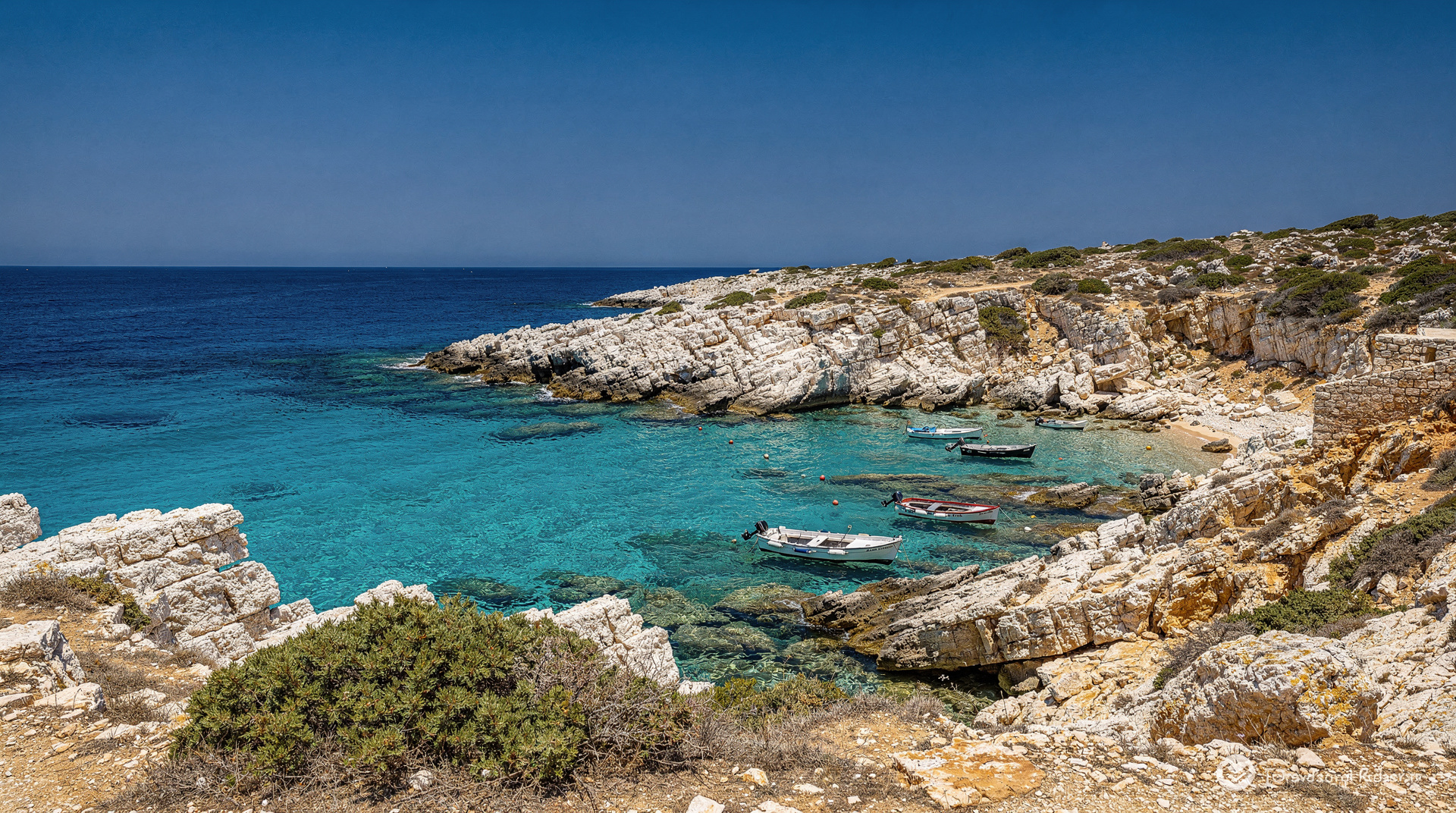
The Frioul Islands, 25 minutes by ferry from the Vieux-Port, offer a different kind of family beach experience — not sandy, not lifeguarded, but genuinely calm and remarkably clear water in sheltered south-facing coves.
What works for families: The ferry journey itself is an experience for children. The island coves on Ratonneau are at 3–5 metres depth, calm in most conditions, with rock and sandy bottom visible from the surface. The lack of facilities (no lifeguard, no services on the water) means this is suitable for families with children who can swim independently and with adult supervision in the water.
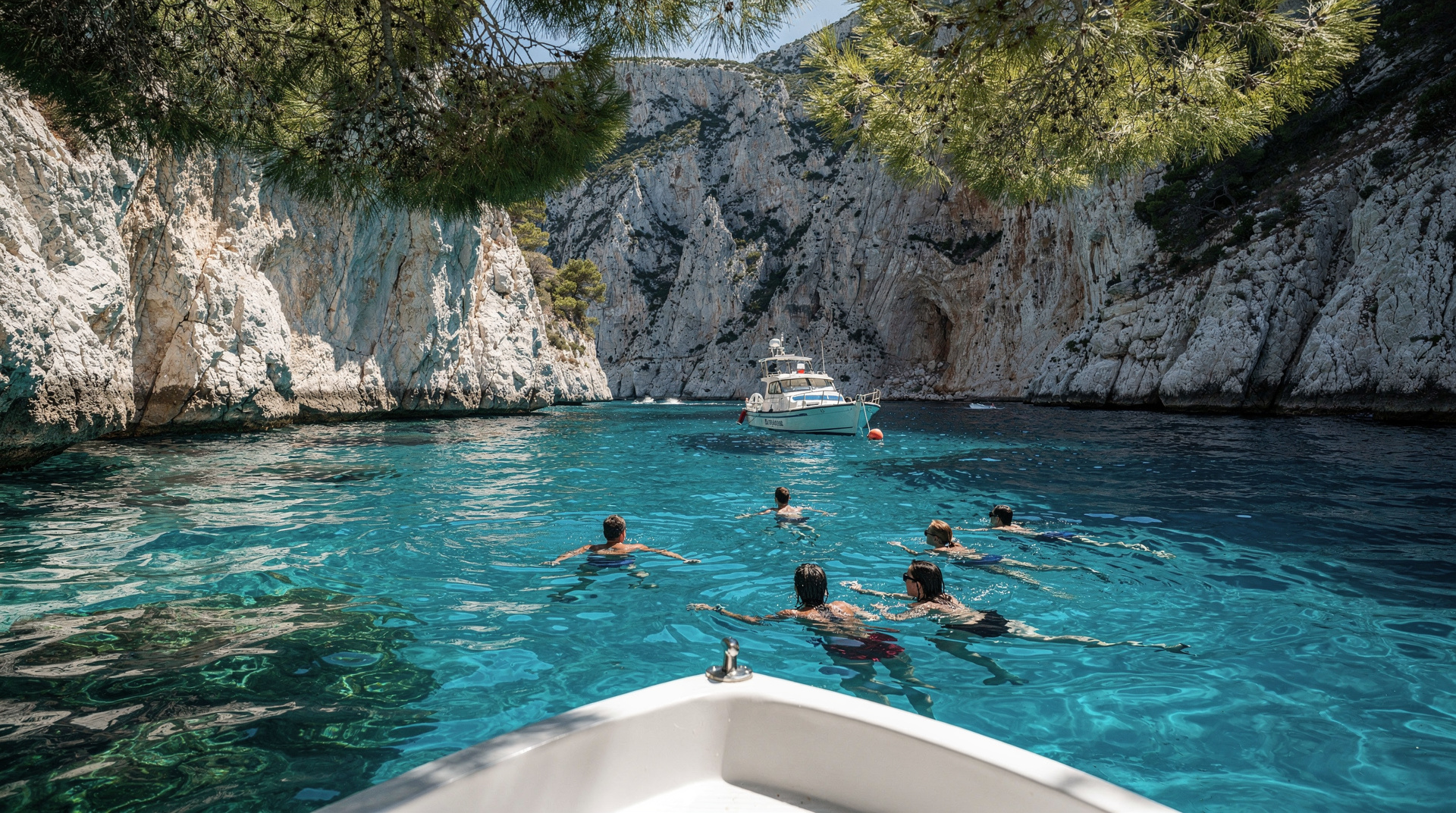
The boat tour format (not ferry): A Frioul Islands boat tour with a swim stop is the most structured family-friendly option — the boat anchors, the guide manages the swimming session, and you are back at the Vieux-Port without having to manage the ferry schedule. Suitable for children aged 6 and above who can swim.
See the Frioul Islands guide for the ferry schedule and full island context.
What the Calanques offer families (realistically)
The Calanques are spectacular and are accessible to families with the right planning:
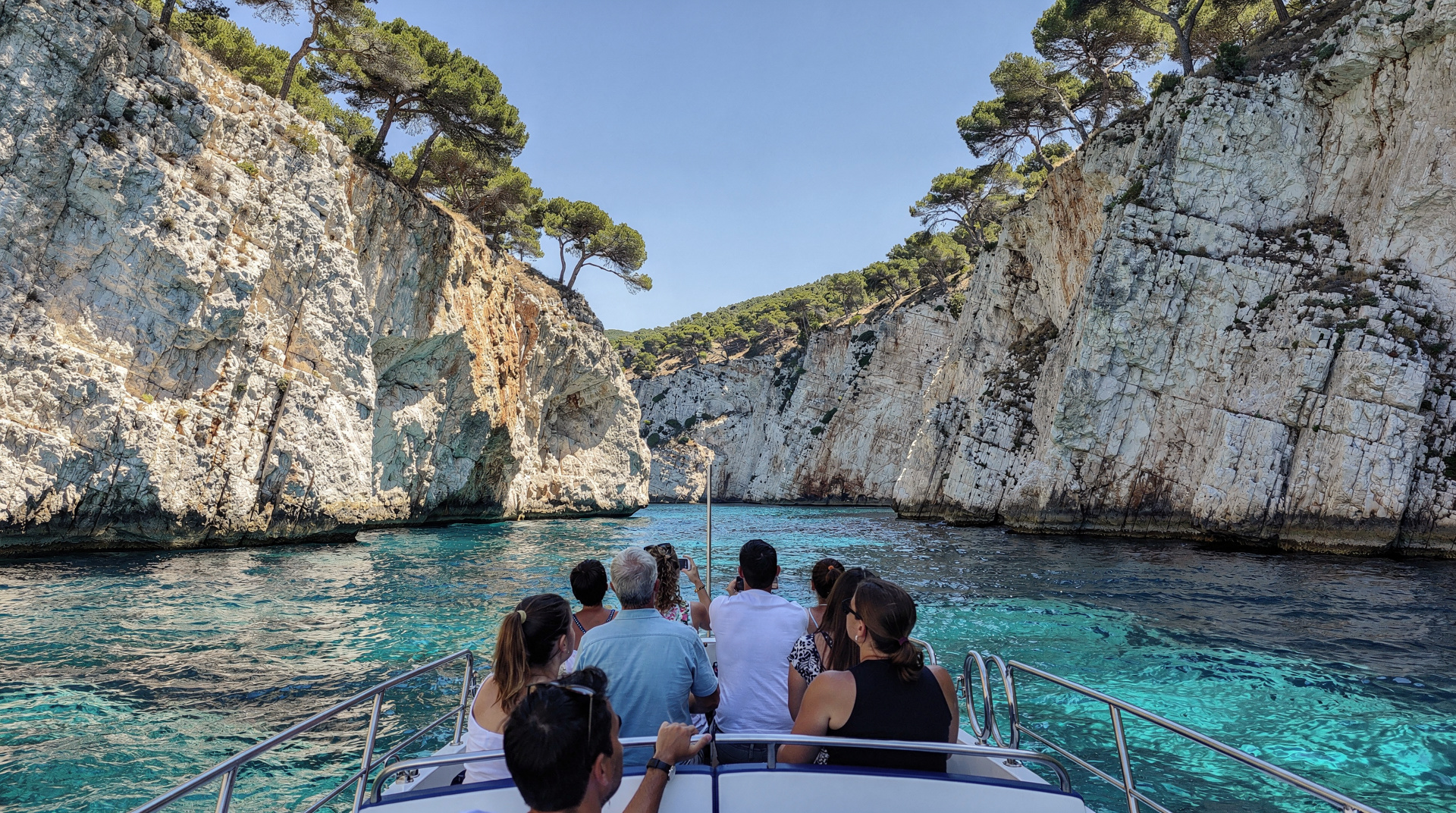
Boat tour from Marseille or Cassis: The most family-accessible Calanques option. No hiking, no distance management, no fire-risk complications. The boat anchors, children swim from the boat or ladder in the cove, return on schedule. Suitable for children aged 5+ who are comfortable on a boat and in open water (with adult supervision). July and August boat tours see many families — operators are experienced with family groups.
Port-Pin hike from Cassis: 1 hour each way on a marked trail (suitable for children 10+ with hiking fitness), arriving at a broad pebble beach with calm water and pine shade. This is the most family-appropriate Calanques hiking target — shorter and calmer than En-Vau.
What to avoid: All Calanques hiking with children in July–August (fire risk closures, extreme heat, no shade). En-Vau hiking with children under 12 (steep descent, exposure, long distance). Sugiton in summer without advance reservation and fire risk verification.
Planning checklist for a family beach day near Marseille
- Water shoes for all children — pebble and rock entry at most beaches makes bare feet painful; water shoes transform the experience
- Reef-safe sunscreen — required in the Calanques marine reserve; good practice everywhere
- Shade provision — bring a beach umbrella if going to an unshaded beach (most of the region); Parc Borély provides natural shade at Marseille
- Water quantity — children dehydrate faster than adults; 1 litre per child for a half-day beach visit, more in July–August heat
- Snack and lunch plan — facilities vary; Borély and Cassis have beach restaurants, Frioul has one seasonal restaurant only, Calanques have nothing
- Early arrival — all popular beaches are at capacity by 11:00 in July–August; arriving before 10:00 is the practical solution
Les Catalans: the central option
For families staying near the Vieux-Port or Le Panier who don’t want the bus ride to Prado, Plage des Catalans is a small lifeguarded beach a 15-minute walk from Notre-Dame de la Garde and the Corniche Kennedy. It mixes sand and pebble and has a steeper entry than Borély, so it suits confident swimmers aged 6 and above better than toddlers. See our Les Catalans beach guide for the full picture, and our Prado beaches guide for a closer look at Borély and Bonneveine specifically.
Choosing a base and planning the wider trip
Where you sleep shapes how easy the beach days feel. Families who want the Prado sand within easy reach will find the best area to stay for families a useful starting point, and the broader where to stay in Marseille guide compares the neighbourhoods side by side. If you are still sizing up the city itself, Marseille with kids and Marseille with kids: activities cover the days between beach outings, when children need something other than sand.
For a ready-made plan that mixes beach time with sights, the three days with family itinerary shows how a few beach mornings can fit around everything else. The Prado and Corniche destination page gives the geography of the whole beach chain, and the Prado Corniche guide helps you decide how far along it to go.
Beyond the beach: boats, snorkelling and timing
Once children are confident in the water, a boat day is a natural step up. Boat tours with swimming lists the formats that include a swim stop, and the Frioul Islands boat guide and family day out on Frioul explain how to organise the islands with younger children. For older children who want to look under the surface, snorkeling near Marseille is a gentle introduction.
If you are deciding when to travel, the best time to visit Marseille and Marseille in summer put the water temperatures and crowd levels above into a seasonal frame. On the Cassis side, the Cassis beaches guide goes deeper than the summary here, and the Cassis destination page covers the village itself. Families weighing the two coastal towns can read Cassis vs La Ciotat before choosing a day trip.
How the options compare for a family with young children
| Beach | Sand or pebble | Best for | Journey from Marseille centre |
|---|---|---|---|
| Plage du Borély (Prado) | Sand | Toddlers, gradual slope | 20–25 min bus/métro |
| Plage de Bonneveine (Prado) | Sand | Same as Borély, less crowded | 20–25 min bus/métro |
| Les Catalans | Sand/pebble mix | School-age, central location | 15 min walk from Vieux-Port |
| Cassis Grande Mer | Pebble | Water quality, accessibility | Around 35 min TER + short walk |
| La Ciotat Plage de Lumière | Sand | Very young children, calm atmosphere | Around 45 min TER + short transfer |
| Bandol Renécros | Pebble | Sheltered bay, quieter | Around 1 hour TER |
| Frioul Islands coves | Rock/pebble | Confident swimmers 6+, boat adventure | 25 min ferry from Vieux-Port |
Frequently asked questions about Family beaches near Marseille
Which beaches near Marseille have sand rather than pebble?
Sandy beaches are the exception in this region — most of the coast is pebble (galets) or rock. Sandy options: Prado beaches (Borély, Bonneveine, Pointe Rouge) in Marseille — artificially created, fine sand. Plage de Lumière in La Ciotat — fine sand, wide, shallow. Cassis's Grande Mer and Bestouan are pebble. Bandol has a mix of sand and pebble. The Calanques are pebble and rock only.What age is suitable for the Calanques with children?
Boat tours to the Calanques are suitable for children of all ages (no hiking required, swimming from the boat). Hiking to Sugiton from Luminy (45 min, rocky) is manageable for children 8 and above with proper footwear and good fitness. Hiking to En-Vau or Port-Pin (2+ hours each way) is for older children (12+) with hiking experience. Avoid all hiking in the Calanques in July–August with children.Do any beaches near Marseille have shallow water suitable for toddlers?
Plage du Borély (Prado) has a gradual sandy slope with water depth of 60–80 cm at 10 metres from shore — suitable for toddlers with adult supervision. Plage de Lumière in La Ciotat is specifically noted for very shallow entry. Cassis Grande Mer has a gentle pebble slope. Cassis Bestouan is gentle and calm. Les Catalans is steeper and less suitable for toddlers.Are Marseille beaches safe for children to swim?
The lifeguarded Prado beaches (Borély, Bonneveine) and Catalans are supervised mid-June to mid-September (approximately 10:00–19:00) and are the safest swim zones for families. The Prado seabed is sandy with a gradual slope — low risk of hidden rock injuries. Unguarded beaches (Endoume, Les Goudes coves) require adult judgment and awareness. Calanques beaches have no lifeguards.What is the water temperature for children near Marseille?
May averages 17°C — cold for extended swimming for children without wetsuits. June: 20°C — manageable. July–August: 23–24°C — comfortable for most children without wetsuits. September: 22°C — excellent. October: 19°C — cooling but still swimmable for active children. The warmer water months (July–September) are the practical swimming season for children without wetsuits.Which beaches near Marseille have sand rather than pebble?
Sandy beaches are the exception in this region — most of the coast is pebble (galets) or rock. Sandy options: Prado beaches (Borély, Bonneveine, Pointe Rouge) in Marseille — artificially created, fine sand. Plage de Lumière in La Ciotat — fine sand, wide, shallow. Cassis's Grande Mer and Bestouan are pebble. Bandol has a mix of sand and pebble. The Calanques are pebble and rock only.What age is suitable for the Calanques with children?
Boat tours to the Calanques are suitable for children of all ages (no hiking required, swimming from the boat). Hiking to Sugiton from Luminy (45 min, rocky) is manageable for children 8 and above with proper footwear and good fitness. Hiking to En-Vau or Port-Pin (2+ hours each way) is for older children (12+) with hiking experience. Avoid all hiking in the Calanques in July–August with children.Do any beaches near Marseille have shallow water suitable for toddlers?
Plage du Borély (Prado) has a gradual sandy slope with water depth of 60–80 cm at 10 metres from shore — suitable for toddlers with adult supervision. Plage de Lumière in La Ciotat is specifically noted for very shallow entry. Cassis Grande Mer has a gentle pebble slope. Cassis Bestouan is gentle and calm. Les Catalans is steeper and less suitable for toddlers.Are Marseille beaches safe for children to swim?
The lifeguarded Prado beaches (Borély, Bonneveine) and Catalans are supervised mid-June to mid-September (approximately 10:00–19:00) and are the safest swim zones for families. The Prado seabed is sandy with a gradual slope — low risk of hidden rock injuries. Unguarded beaches (Endoume, Les Goudes coves) require adult judgment and awareness. Calanques beaches have no lifeguards.What is the water temperature for children near Marseille?
May averages 17°C — cold for extended swimming for children without wetsuits. June: 20°C — manageable. July–August: 23–24°C — comfortable for most children without wetsuits. September: 22°C — excellent. October: 19°C — cooling but still swimmable for active children. The warmer water months (July–September) are the practical swimming season for children without wetsuits.Is Les Catalans beach in Marseille good for families?
Les Catalans is a small, central, lifeguarded pebble-and-sand beach near the Vieux-Port and Corniche Kennedy — convenient if you're staying centrally, but the entry is steeper than Prado, making it less suited to toddlers. It works well for families with confident swimmers aged 6 and above who want a beach within easy walking distance of the city centre rather than a bus ride to Prado.How far is Cassis from Marseille for a family beach day?
Around 35 minutes by direct TER train from Marseille Saint-Charles, plus a short taxi or a 20-minute walk from Cassis station down to the Grande Mer beach. It is comfortably doable as a half-day or full family day trip without a car.
Top experiences
Bookable activities with verified prices and instant confirmation on GetYourGuide.