Calanques beaches: En-Vau, Port-Pin, Sormiou, Morgiou — access and what to bring
Cassis: Calanques National Park sea-kayaking tour
Duration: 3-7 hours
Which Calanques beach is best?
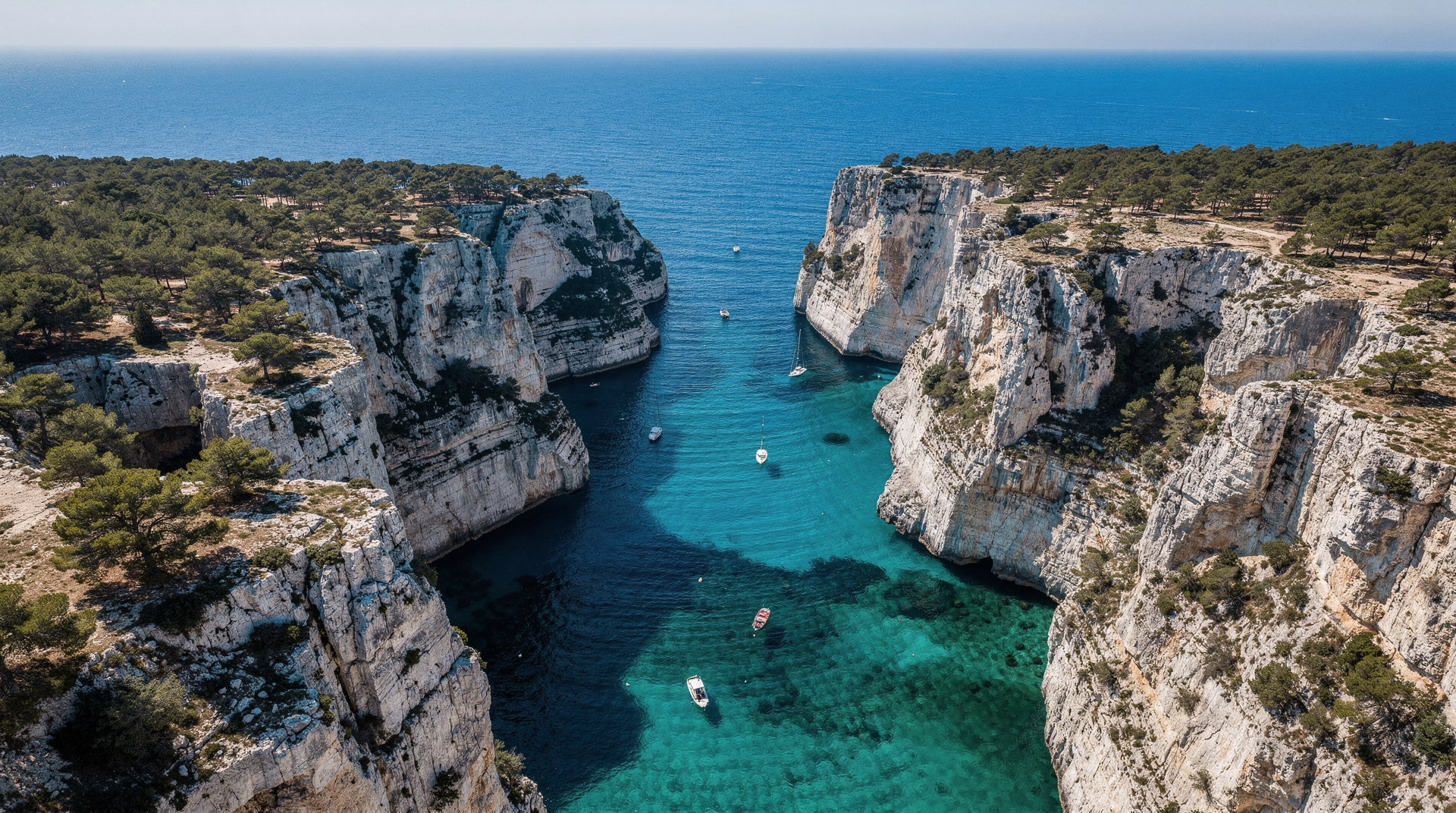
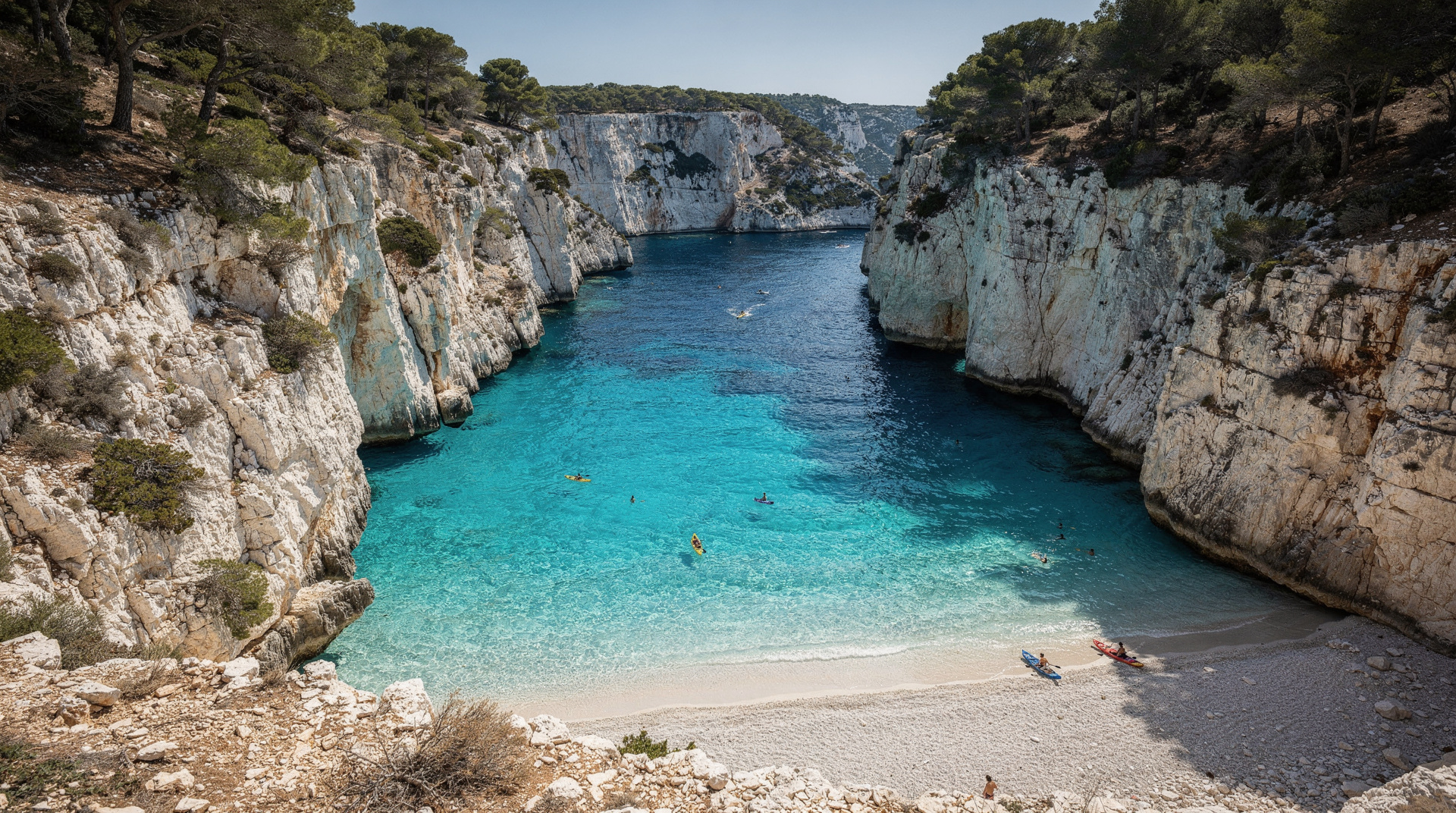
En-Vau has the most dramatic setting (white cliffs, narrow inlet, emerald water) but requires a long hike or kayak from Cassis. Port-Pin is broader, calmer, and easier to reach — the best swimming beach in the Calanques for most visitors. Sormiou is the most accessible from Marseille with a small seasonal restaurant at the water's edge.
Swimming in the Calanques: the most beautiful water in the region
No beach infrastructure, no DJ, no parasol hire. The Calanques beaches — pebble and rock ledges at the feet of 150-metre white limestone cliffs — are the antithesis of the organised resort beach, and that is precisely why they are worth the effort to reach.
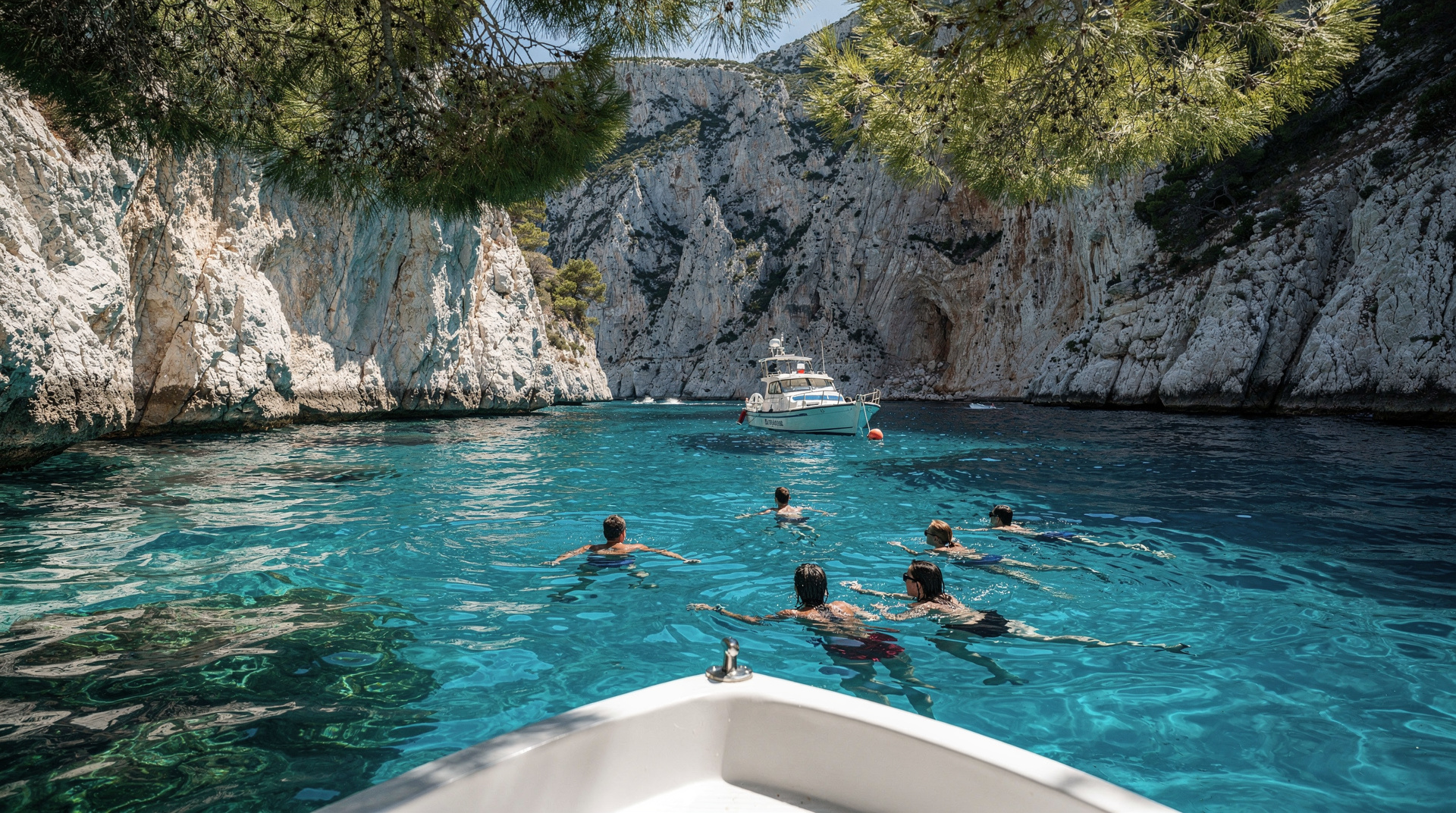
The water quality inside the Calanques National Park marine reserve is among the best on the French Mediterranean coast. The combination of restricted fishing, the limestone geology (which filters runoff rather than channelling it as rivers would), and the distance from urban development produces visibility of 10–15 metres in most conditions, and an underwater landscape of sea grass, urchins, bream, and occasional grouper that rewards snorkellers.
The entry to the water at any Calanques beach is from pebble or rock — fins or water shoes make a significant quality-of-experience difference, particularly for getting in and out over sea urchin-covered rock shelves. None of the Calanques have sandy bottoms in the shallows, though the seabed at depth is sandy in some coves.
This guide covers each accessible beach honestly — what you actually encounter, how to get there, and what to bring.
| At a glance | |
|---|---|
| Where | Calanques National Park, between Marseille and Cassis |
| Cost | Free access on foot (Sugiton reservation is free); guided kayak or boat around EUR 35–95 |
| Time needed | Half a day minimum per beach; a full day for En-Vau or Port-Pin from Cassis |
| Getting there | Hiking trails (spring/autumn), guided kayak or boat tour (year-round, including summer trail closures) |
| Best time | Spring (April–June) and autumn (mid-Sept–Oct) for hiking access; early morning year-round for quieter water |
How the beaches compare
Choosing between them comes down to how much effort you want to spend versus how much solitude and drama you want in return.
| Beach | Setting | Effort to reach | Best for |
|---|---|---|---|
| En-Vau | Narrow slot, 150 m cliffs, deepest water | High (2h hike or kayak) | The most dramatic single view in the park |
| Port-Pin | Broad, pine-shaded, calm shallows | Moderate (1h from Cassis) | Families, relaxed all-day swimming |
| Sormiou | Pebble coves, small seasonal village | Low–moderate (e-bike or 1.5h hike) | A restaurant lunch with the calanque as backdrop |
| Morgiou | Small, quiet, longer approach | High (1.5–2h hike) | Solitude on a spring weekday |
| Sugiton | Deep turquoise pool, no beach | Moderate (45 min from Luminy) | Scenery over swimming comfort; needs reservation in summer |
Sugiton: the famous calanque with no beach
Sugiton appears on every “best Calanques” list and deserves a clarification before you plan your visit: Sugiton has no beach. The calanque has a deep turquoise pool between white limestone walls that is spectacular and unambiguously worth seeing. Access to the water is from a rock ledge — you lower yourself in (or jump from a designated safe jumping point), swim in the emerald pool, and exit back up the rock.
This is not a limitation — it is simply a different experience from a beach visit. If you are hoping to lay out on sand or pebble and swim leisurely in shallow water, Sugiton is not the calanque for you. If you want to experience the most vertically dramatic narrow inlet on the Marseille side of the park and swim in extraordinary clear water from a rock ledge, it is exactly right.
Access: From the Luminy university campus (bus 21 from Castellane métro), 45 minutes of hiking down to the calanque. Reservation required June–September (free, via calanques-parcnational.fr — opens 11 June 2026 at 09:00 CET, bookable up to 3 days ahead). In July–August, access is frequently suspended under fire risk protocols; check the park website the morning of your visit. Boat tours also reach Sugiton in summer.
Sormiou: the most accessible from Marseille
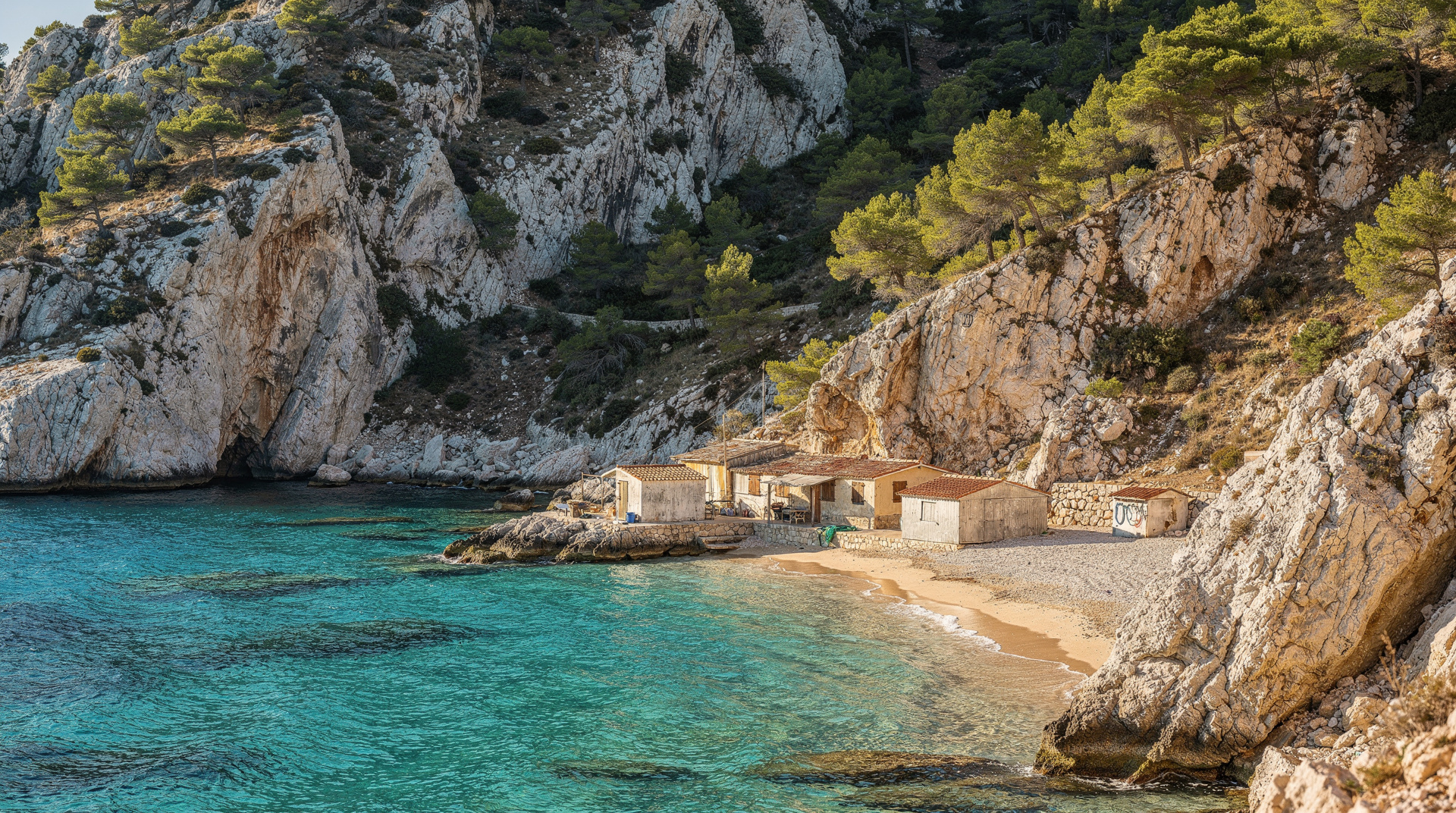
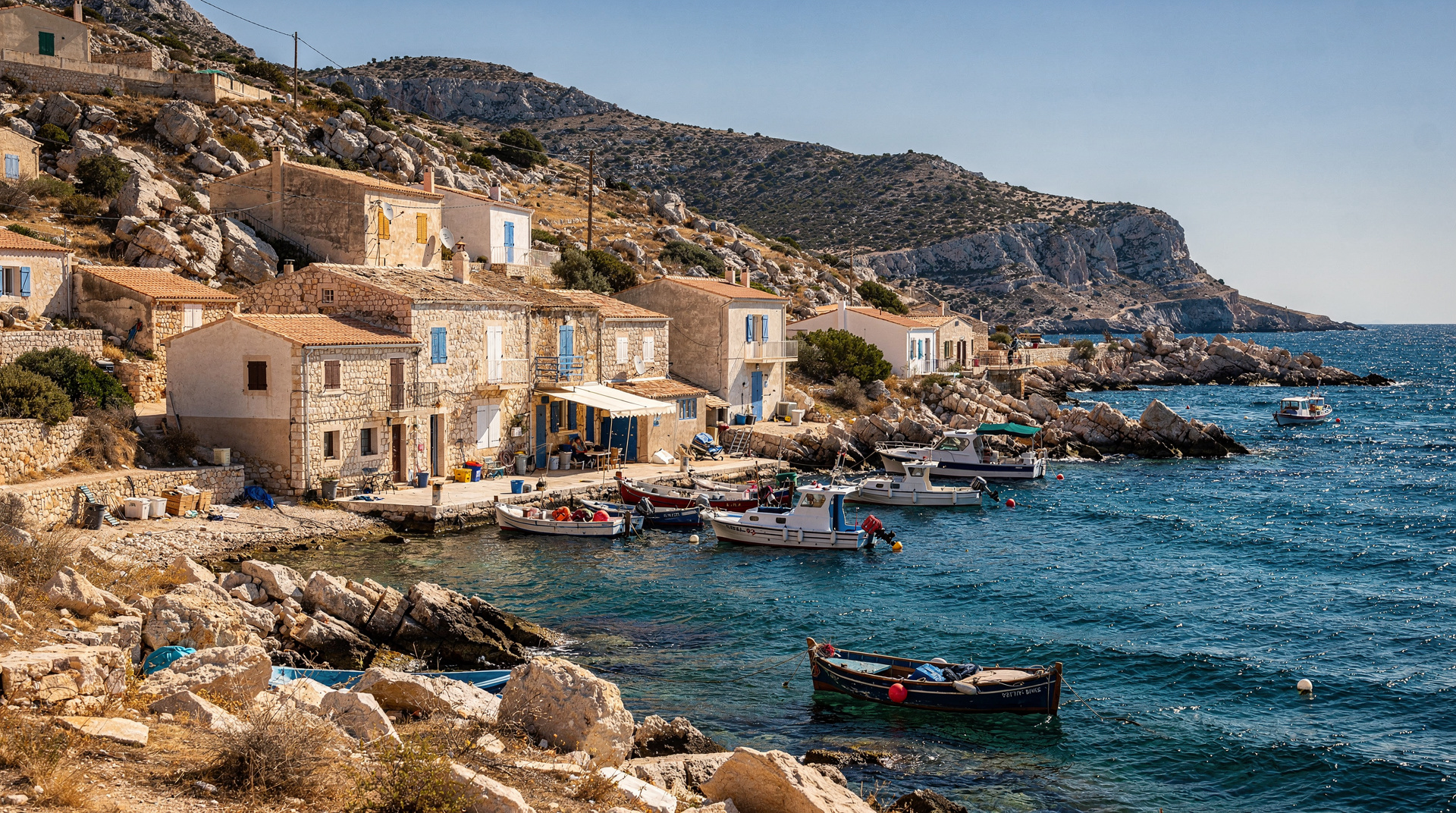
Sormiou is broader than Sugiton, has pebble coves with some flat rock platforms, and is the most family-appropriate Calanques beach on the Marseille side. The defining feature is the small seasonal village at the water’s edge — a handful of cabanons (traditional stone fishermen’s sheds), a restaurant or two operating in the summer months, and a handful of pleasure boats in the tiny harbour.
Sitting at Sormiou’s waterside restaurant with a glass of rosé and feet in the shade while looking at the calanque from ground level is one of the quintessential Calanques experiences — available at no other calanque. It is also genuinely seasonal: the restaurants at Sormiou operate only from approximately April through September.
Access from Marseille: The guided e-bike tour to Sormiou is the most practical car-free access from the city — the route covers the southern Marseille suburbs and descends to the calanque on a steep rough track that requires some bike-handling confidence. Alternatively, the road to Sormiou is accessible by car (restricted in summer — residents and cabanon owners only from June 15 to August 31, 07:00–19:00). In spring and autumn, the Sormiou hiking trail from the road head connects to the calanque in approximately 1.5 hours.
Swimming: Pebble and rock entry; fins recommended. Water clarity is excellent. The inner cove is sheltered enough for calm swimming in most conditions. No lifeguard.
See the Sormiou and Morgiou guide for full detail on both calanques.
Morgiou: quieter, more intimate
Morgiou is the calanque between Sormiou and Sugiton — smaller than Sormiou, less visited, and requiring a longer approach from the road (1.5–2 hours on foot from the road head). The extra effort filters out the casual day-tripper crowd, which is Morgiou’s defining characteristic: on a spring weekday, it is possible to swim here in near-solitude.
The calanque has a tiny hamlet (a few stone houses and cabanons, privately owned) and historically a small seasonal restaurant — check current status as operations change year to year. The pebble cove at the water’s edge is narrow but deep enough for swimming.
Access: Hiking only (no road access for general visitors). Trail from the Sormiou road head continues to Morgiou; allow 1.5–2 hours from the road. Fire-risk closures in July–August affect the approach trail. Boat tours occasionally stop at Morgiou but it is not a standard stop on most routes.
Port-Pin: the best swimming beach in the Calanques
Port-Pin sits between Port-Miou (the large navigable inlet immediately east of Cassis) and En-Vau. It is, by consensus among regular visitors, the most satisfying swimming beach in the Calanques system — broad enough to spread out, sheltered enough to be calm in most conditions, and with pebble bottom and immediate access to deep clear water.
Pines frame the beach on both sides, providing rare shade at water level. The combination of clear turquoise water, pebble beach, and pine canopy makes Port-Pin the most immediately comfortable of the calanques for an extended swim and beach session.
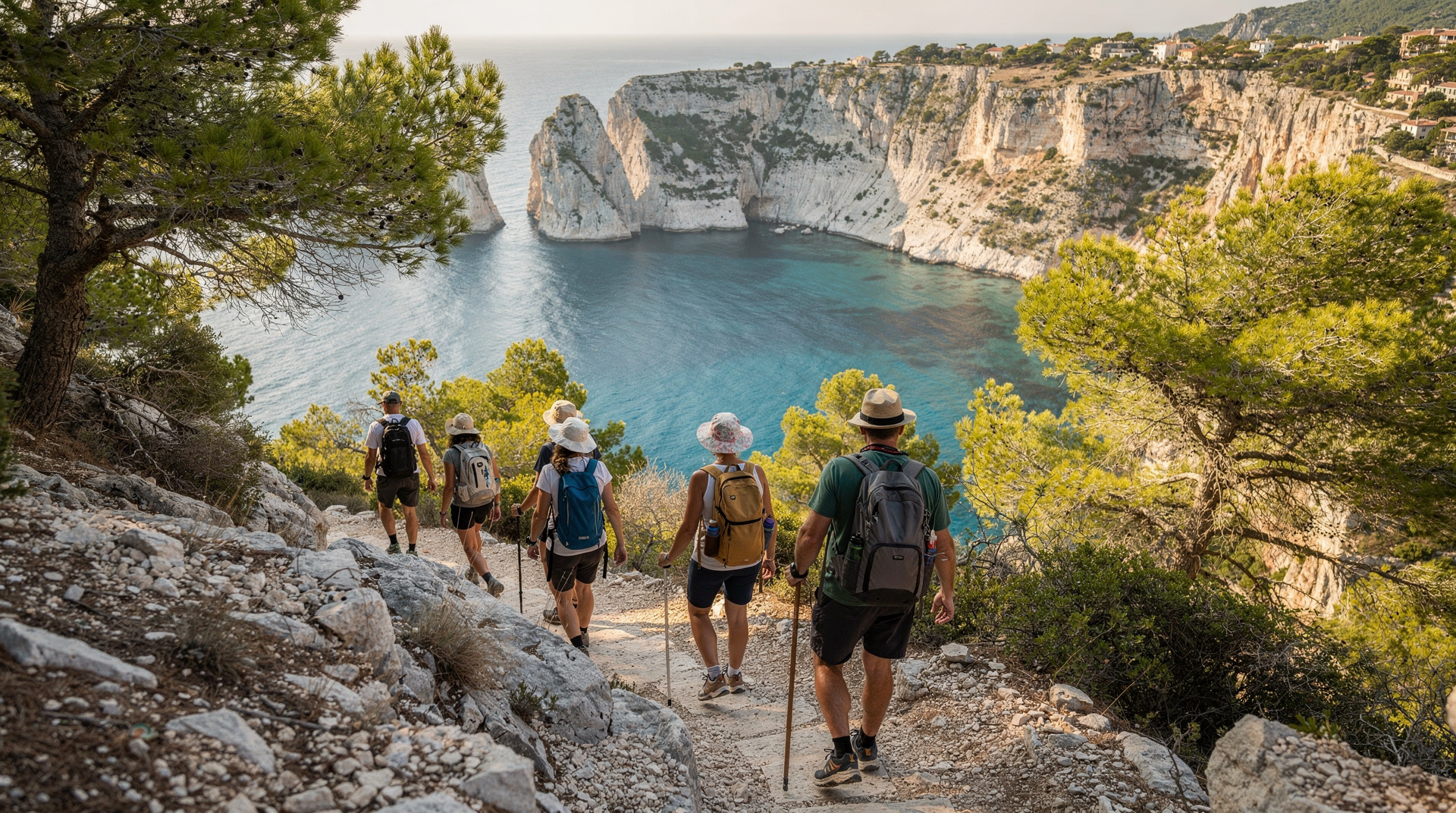
Access from Cassis: 45 minutes on foot from Port-Miou (which is itself 15 minutes from the Cassis trailhead). Total walk from Cassis village: approximately 1 hour. The trail is well-marked and mostly level after the initial Port-Miou section. Kayak from Cassis: 45–60 minutes paddling.
Access restrictions: The same fire-risk closure rules apply as elsewhere in the park. The Port-Pin trail closes in high fire-risk periods (typically July–August). Kayak access from Cassis remains available regardless of trail status.
Swimming: Pebble entry from the beach — manageable without fins but easier with them. The water at Port-Pin is calmer than at En-Vau (which has occasional swell pushing in from the south) and shallower near shore, making it more suitable for children and less confident swimmers than the dramatically deep En-Vau cove.
En-Vau: the destination
En-Vau is the most-photographed, most-visited-by-guided-kayak, and most dramatically situated beach in the Calanques. The description has been made many times: a narrow slot between vertical white limestone cliffs rising 150 metres from the water, with a small pebble beach at the end accessible only from the sea or a steep 2-hour descent from the Col de la Gardiole above Cassis.
The reality justifies the reputation. The cliff walls on both sides of the inlet create a sense of enclosure that becomes more intense the further you paddle or hike into the calanque. The water colour — a saturated turquoise-green from the combination of depth, limestone reflection, and the sea bottom — is consistently commented upon by first-time visitors as not looking real in person.
The beach: En-Vau’s “beach” is a small pebble cove at the end of the inlet. It can accommodate perhaps 50–80 people before feeling crowded. On peak summer days (July–August), the beach fills. Arriving by guided kayak tour generally means controlled group arrival at an agreed time — operators manage this as part of the tour logistics.
Access: By kayak from Cassis (1.5–2 hours paddling, guided tour recommended). By hiking from above Cassis — descent from Col de la Gardiole is steep, requires fitness, and takes 2 hours from the road. By boat tour stopping at En-Vau (less common than Sormiou and Sugiton stops, but some tours include it). Trail access is subject to fire-risk closures July–August.
Swimming: The final metres of En-Vau deepen rapidly — the pool at the beach end is 5–15 metres deep. The pebble beach entry is straightforward; fins are useful for exploring the walls and overhangs underwater. A snorkelling mask transforms the En-Vau visit — the underwater limestone walls are as dramatic as the surface view.
Snorkelling each beach: what’s actually underwater
The visual drama above water at the Calanques beaches has a quieter underwater counterpart worth planning for. At En-Vau, the walls continue underwater as ledges and small caves — bring a mask specifically for this stop. At Port-Pin, the shallow pebble shelf holds sea grass meadows and small bream close to shore, an easier snorkel for less confident swimmers than En-Vau’s deep drop-off. Sormiou and Morgiou both have rockier margins with urchins and occasional octopus in crevices — move carefully. None of the beaches have facilities for gear rental on site, so arrive equipped; see our kayaking the Calanques guide for operators who supply masks as standard.
For a longer stay that combines several of these beaches with proper hiking rather than a single stop, see our guide to hiking the Calanques and the difficulty breakdown in best Calanques hikes by difficulty. If you’d rather let a boat do the work between beaches, the boat tour guide covers which operators stop where.
What to bring to a Calanques beach
The Calanques beaches have no services — no shops, no snack bars (except at Sormiou seasonally), no fresh water. Everything you need for the day comes in your pack.
Essentials:
- Water: minimum 2 litres per person for a hiking day, more in July–August heat
- Food: the Calanques have no retail; if you are spending the day, bring a real picnic
- Snorkelling gear: mask and fins transform any swimming stop (bring your own or rent before departure)
- Water shoes or fins: rocky entry is universal; sea urchin spines in the foot are painful and avoidable
- Sun protection: reef-safe sunscreen (the marine reserve requires it), hat, UV shirt for extended time on the water
- First aid basics: plasters, antiseptic (sea urchin spine extraction often needed)
- Navigation: the Calanques hiking trails are not always perfectly marked; offline map with trail downloaded before entering areas without signal
What to leave at home: Large wheeled luggage (the trails are rocky and in many sections unsuitable for anything except a daypack). Barbecues and fires (prohibited anywhere in the national park, year-round). Collection of marine organisms (sea urchins, shells, coral, fish — prohibited in the marine reserve).
Summer access reality
July–August is the period when the most people want to visit the Calanques beaches and the period when land access is most restricted:
- Most hiking trails into the massif close due to fire risk
- Sugiton requires advance reservation even when open
- Car access to Sormiou is restricted for non-residents
- Beach parking at all Calanques approach points is extremely limited
The practical result: in July–August, the Calanques beaches are most reliably accessed by boat tour from the Vieux-Port, by guided kayak from Cassis, or by e-bike tour to Sormiou from Marseille. Plan these in advance — popular departure times fill in peak season.
For the complete summer access picture, see the Calanques National Park guide and our kayaking guide. For boat options to the same beaches, see the boat tour guide and Cassis vs Marseille comparison. If you’re still deciding between walking in and taking a boat, our boat vs hike comparison breaks down the trade-offs by visitor type.
Frequently asked questions about Calanques beaches
Can you actually swim at the Calanques beaches?
Yes — all accessible Calanques have clear water and are suitable for swimming. The entry is typically from rocks or pebble beaches, not sand (En-Vau and Port-Pin have pebble). Water shoes or fins are strongly recommended for rocky entries. The water quality inside the marine reserve is excellent — typically 10–15 m visibility and no pollution. There are no lifeguards at any Calanques beach.Are the Calanques beaches sandy?
En-Vau has a small pebble beach (sometimes described as coarse sand). Port-Pin has a pebble beach. Sormiou has pebble coves with some smooth rock platforms. Morgiou is pebble. Sugiton has no beach — it is a rock ledge at the water. None of the Calanques have the fine sandy bottoms of the Prado city beaches.When are the Calanques beach trails open?
Spring (April–June) and autumn (mid-September–October) are the open hiking seasons. July–August, most trails are closed due to fire risk — access to the beaches is then by boat tour or kayak only. The boat access remains open year-round regardless of fire risk. Sugiton requires a free advance reservation June through September.Is Sugiton worth visiting?
Sugiton is frequently described online as a famous 'hidden beach' — it is not hidden (it is the most accessed Calanque from Marseille) and it actually has no beach. The calanque is spectacular, with a deep turquoise pool between limestone walls, but entry into the water is from a rock ledge, not a pebble beach. Worth visiting for the scenery; don't expect sand.Can I reach the Calanques beaches without a guide?
Yes — the hiking trails to Sormiou, Sugiton, and Morgiou from the Marseille side are marked (though not always clearly in remote sections). The three-calanques hike from Cassis to Port-Miou, Port-Pin, and En-Vau is well-signed from the Cassis trailhead. No guide is strictly required, but heat, water, and fire risk awareness are mandatory. In summer with hiking trails closed, a guided boat or kayak tour is the only option.Can you actually swim at the Calanques beaches?
Yes — all accessible Calanques have clear water and are suitable for swimming. The entry is typically from rocks or pebble beaches, not sand (En-Vau and Port-Pin have pebble). Water shoes or fins are strongly recommended for rocky entries. The water quality inside the marine reserve is excellent — typically 10–15 m visibility and no pollution. There are no lifeguards at any Calanques beach.Are the Calanques beaches sandy?
En-Vau has a small pebble beach (sometimes described as coarse sand). Port-Pin has a pebble beach. Sormiou has pebble coves with some smooth rock platforms. Morgiou is pebble. Sugiton has no beach — it is a rock ledge at the water. None of the Calanques have the fine sandy bottoms of the Prado city beaches.When are the Calanques beach trails open?
Spring (April–June) and autumn (mid-September–October) are the open hiking seasons. July–August, most trails are closed due to fire risk — access to the beaches is then by boat tour or kayak only. The boat access remains open year-round regardless of fire risk. Sugiton requires a free advance reservation June through September.Is Sugiton worth visiting?
Sugiton is frequently described online as a famous "hidden beach" — it is not hidden (it is the most accessed Calanque from Marseille) and it actually has no beach. The calanque is spectacular, with a deep turquoise pool between limestone walls, but entry into the water is from a rock ledge, not a pebble beach. Worth visiting for the scenery; don't expect sand.Can I reach the Calanques beaches without a guide?
Yes — the hiking trails to Sormiou, Sugiton, and Morgiou from the Marseille side are marked (though not always clearly in remote sections). The three-calanques hike from Cassis to Port-Miou, Port-Pin, and En-Vau is well-signed from the Cassis trailhead. No guide is strictly required, but heat, water, and fire risk awareness are mandatory. In summer with hiking trails closed, a guided boat or kayak tour is the only option.
Top experiences
Bookable activities with verified prices and instant confirmation on GetYourGuide.