Valensole lavender day trip from Marseille: bloom window, ethics, and alternatives
From Marseille: Valensole lavender full-day tour
Duration: 9 hours
When is the best time to see lavender at Valensole from Marseille?
Mid-June to mid-July, with the first two weeks of July typically the peak for lavandin (what most Valensole fields grow). Drive 1h30 from Marseille by car — no public transport serves the plateau. Go early morning for the best light and fewer crowds. After mid-July, harvest begins.
At a glance
| Where | Valensole plateau, around 1h30-1h45 from Marseille |
| Cost | Free to view from roadside verges; guided day tours from Marseille typically run 8-9 hours |
| Time needed | A half-day minimum; a full day (6:30am-6:30pm) for the extended Moustiers/Lac de Sainte-Croix loop |
| Getting there | Car essential (A51 north then D4/D8); no public transport onto the plateau |
| Best time | First two weeks of July for peak bloom; late June for fewer crowds |
The bloom window: the single most important thing to understand
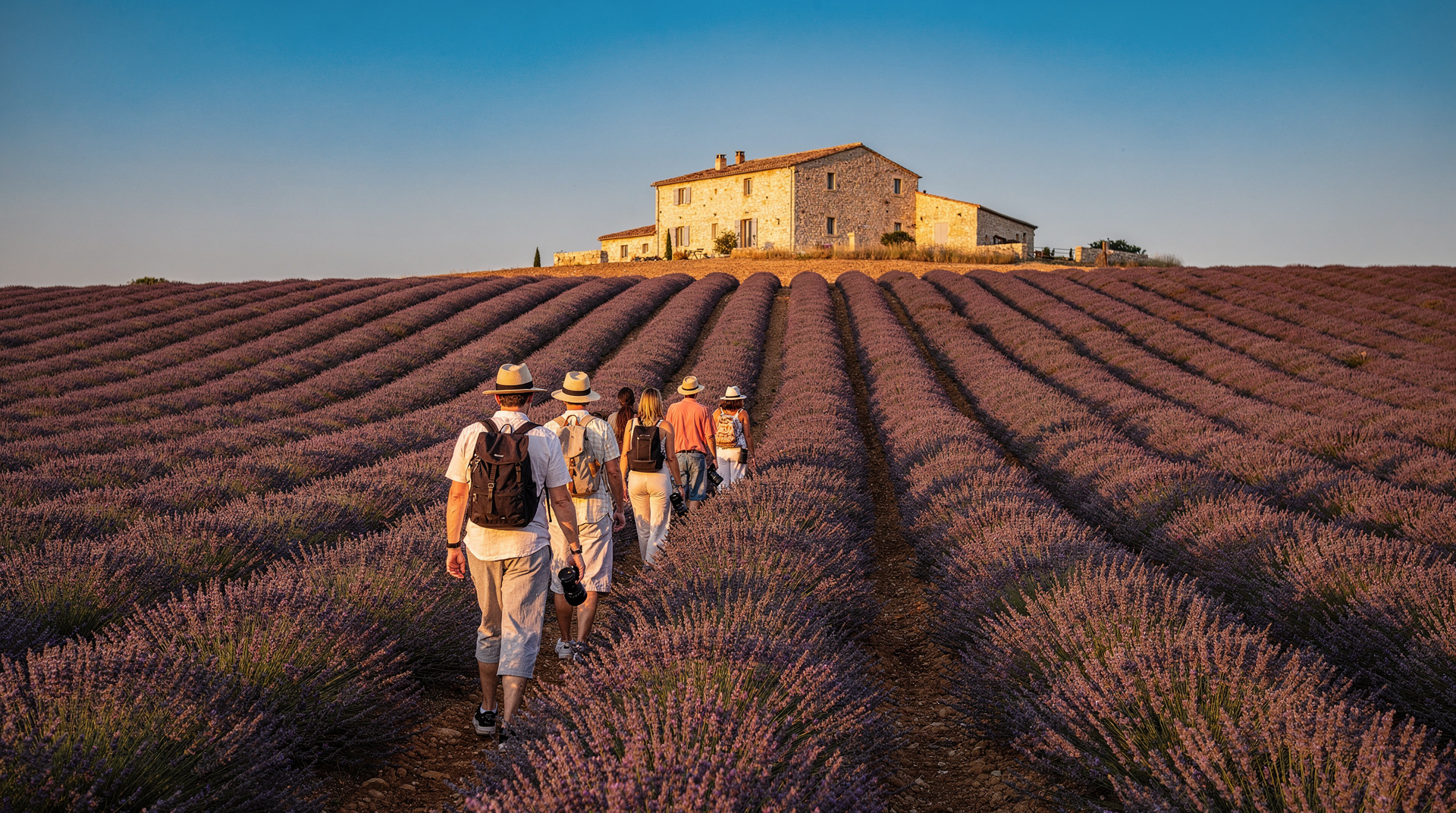
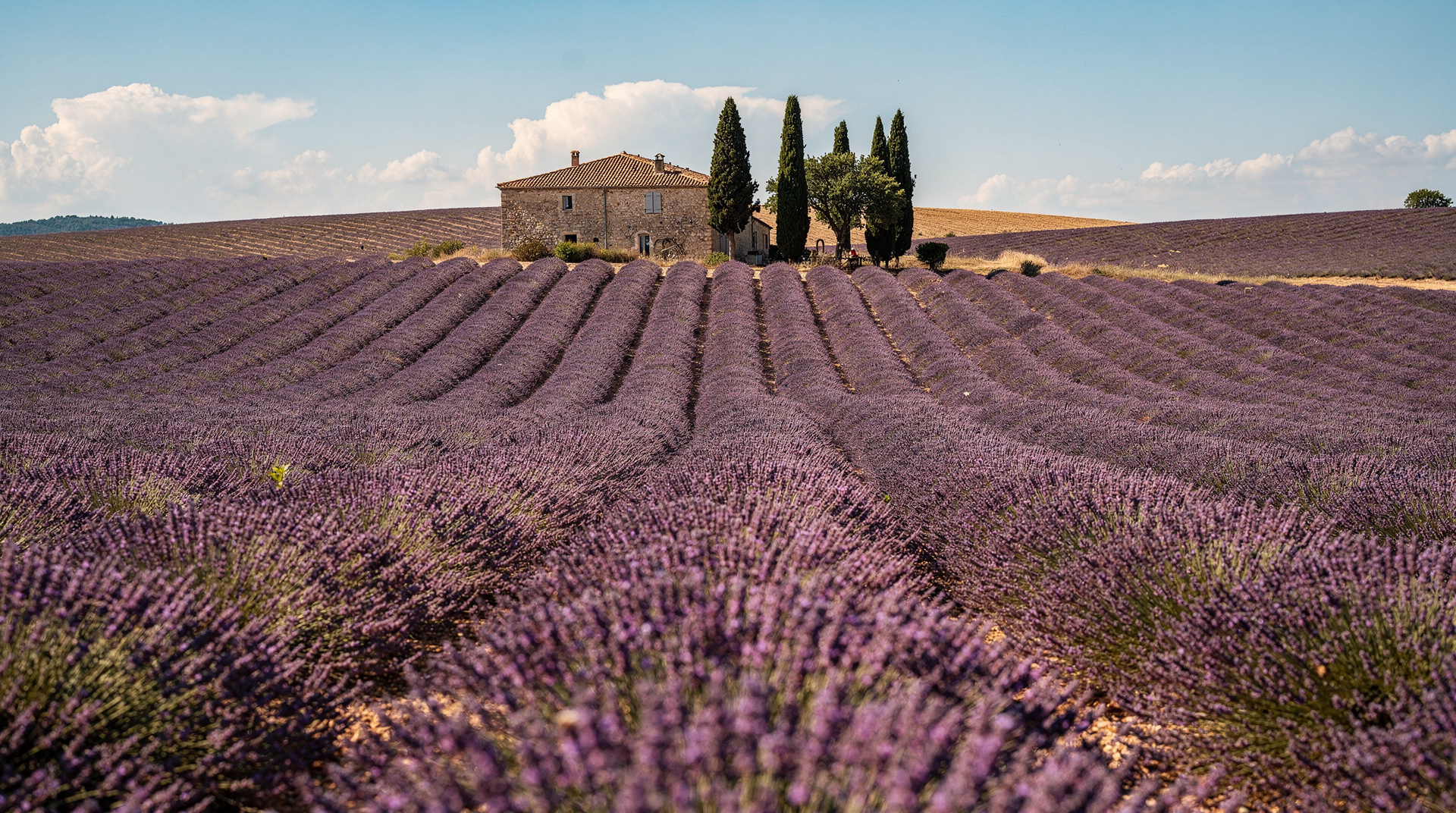
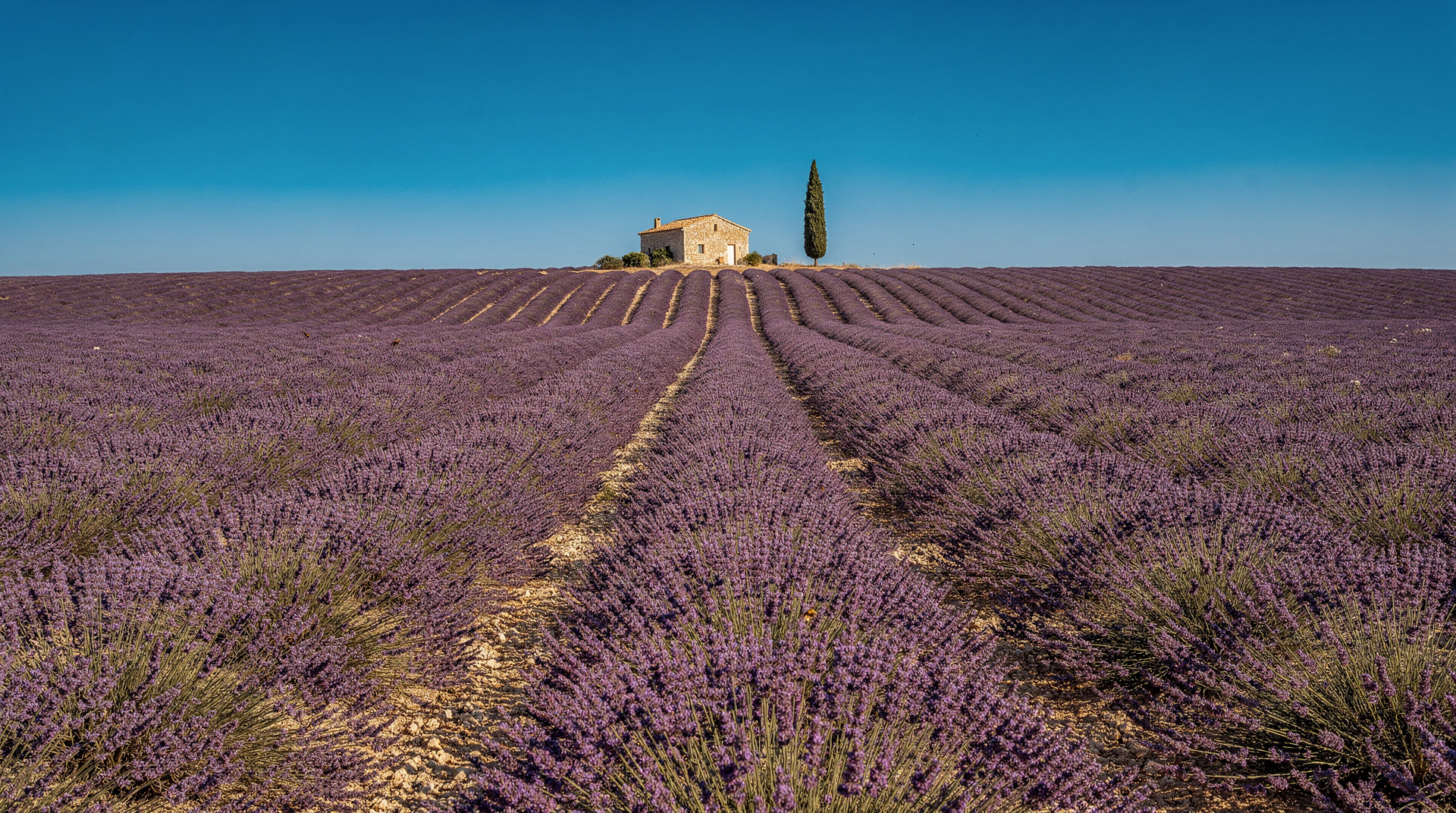
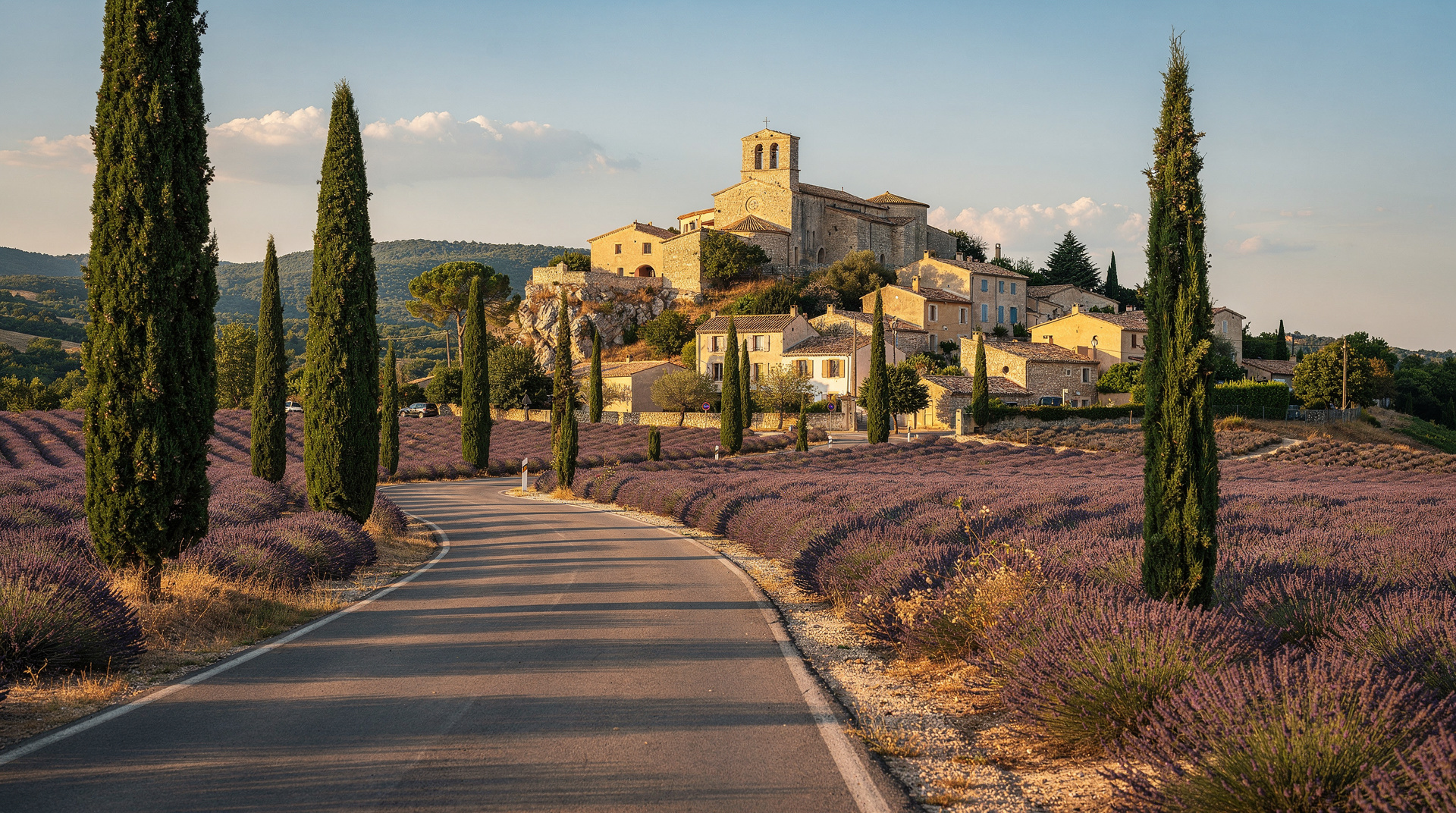
The Valensole lavender plateau is famous for one reason: the concentrated, horizon-to-horizon purple that appears in late June and persists into mid-July. Outside of this window, the fields are either green (growing), harvested (brown stubble), or dormant. Planning your visit around the window is not optional — it is the entire point of the trip.
The bloom calendar for 2026:
What Valensole grows is predominantly lavandin — a hybrid of true lavender and spike lavender that grows at lower altitudes (below 600 metres), produces higher oil yield, and blooms slightly later than true lavender. Understanding this distinction prevents disappointment.
- Mid-June: First colour appears in the earliest-blooming fields at lower altitude around Valensole village. Not peak, but the first blues visible.
- Late June: Colour builds. Fields that were green are now distinctly purple. This is a good time to visit with fewer crowds.
- First two weeks of July (peak): Maximum colour across the plateau. The first week of July is typically the most concentrated bloom, when the fields are fully open before harvesting begins. Peak photography conditions.
- July 15-19: Harvest begins in the earliest fields. The Valensole Lavender Festival (third Sunday of July, approximately July 19, 2026) marks the harvest season beginning. By this date, some fields are already cut.
- Late July and August: Most Valensole fields are harvested. Brown stubble dominates. The visual effect is gone.
Checking current conditions: In the days before your visit, check the real-time lavender reports on routes-lavande.com — a cooperative of lavender route destinations that maintains a bloom-stage map updated weekly in season.
Getting there from Marseille
A car is essential. There is no bus or train service to the Valensole plateau or to the lavender fields between the villages. This is non-negotiable.
Drive time: Approximately 1h30 to 1h45 from Marseille to Valensole village (via the A51 north toward Manosque, then the D4 and D8 into the plateau).
Route: Take the A51 north from Marseille (toward Aix-en-Provence and Manosque). At Manosque, exit and follow the D4 toward Valensole. The plateau begins immediately south of Valensole village, where the road opens into the lavender landscape.
Without a car: Guided group day tours from Marseille to Valensole are available through GYG operators, typically running 8-9 hours in late June and July. These are the only practical car-free option.
What to do on the plateau
Finding the best fields
The most photographed fields are the ones that are:
- Fully open (purple, not green)
- Adjacent to a road or track you can stand on
- Oriented toward the morning light (east-facing, best before 10:00)
- Free of combine tractor tyre marks (harvesting starts at the edges first)
The area south and west of Valensole village along the D8 and D956 roads concentrates some of the most photogenic fields. Driving slowly along these roads in the morning, you will find clear vantage points on the verges.
The almond tree rows: Some of the most iconic lavender photos in Provence feature almond or oak trees growing in rows through the fields, breaking the purple expanse with vertical shapes. These are found throughout the plateau — look for fields with trees in rows on the raised ridges.
The ethics of field visits
This point appears in every honest lavender guide and it bears repeating: the lavender fields are working farmland. Entering the rows to stand in the middle for photographs tramples the plants and damages the farmer’s harvest. The lavandin grown on the plateau is the farmer’s annual income — a few hundred visitors walking through the rows can cause real economic damage.
What is acceptable: Standing on the field edge and the road verge. Entering clearly designated visitor pathways on farms that have opened their land for tourism. Asking permission at a farm before entering.
What is not acceptable: Walking between the rows without permission, using fields as backdrops for extensive photography sessions, or ignoring “no entry” signs.
The best photographs can be taken from the field edges — you do not need to enter the rows to get the purple-field-to-horizon composition.
Distillery visits
Several family distilleries on and around the plateau offer guided visits, some year-round and some in season. The distillation of harvested lavandin into essential oil happens in August — if you want to see an actual still operating, you need to visit after the harvest. For visitors in June-July, the farms offer tours of the facilities and direct oil sales even before distillation.
Riez (15 km east of Valensole) is a small medieval town that serves as a base for several lavender producers and has a good weekly market (Wednesday).
Moustiers-Sainte-Marie and Lac de Sainte-Croix
Many Valensole visitors extend the day to Moustiers-Sainte-Marie (25 km east) — a village de France starred village perched in a gorge between two limestone cliffs, famous for its faïence pottery (Moustiers has been producing painted ceramics since the 17th century). From Moustiers, the Lac de Sainte-Croix (the reservoir at the entrance to the Gorges du Verdon) is 5 minutes by car — turquoise water in a mountain setting, boat hire and pedalo rental available.
This creates a full day: Valensole fields in the morning (6:30-10:00), Moustiers for lunch (30 min drive), Lac de Sainte-Croix in the afternoon.
Alternative lavender destinations
Sénanque Abbey (near Gordes, Luberon)
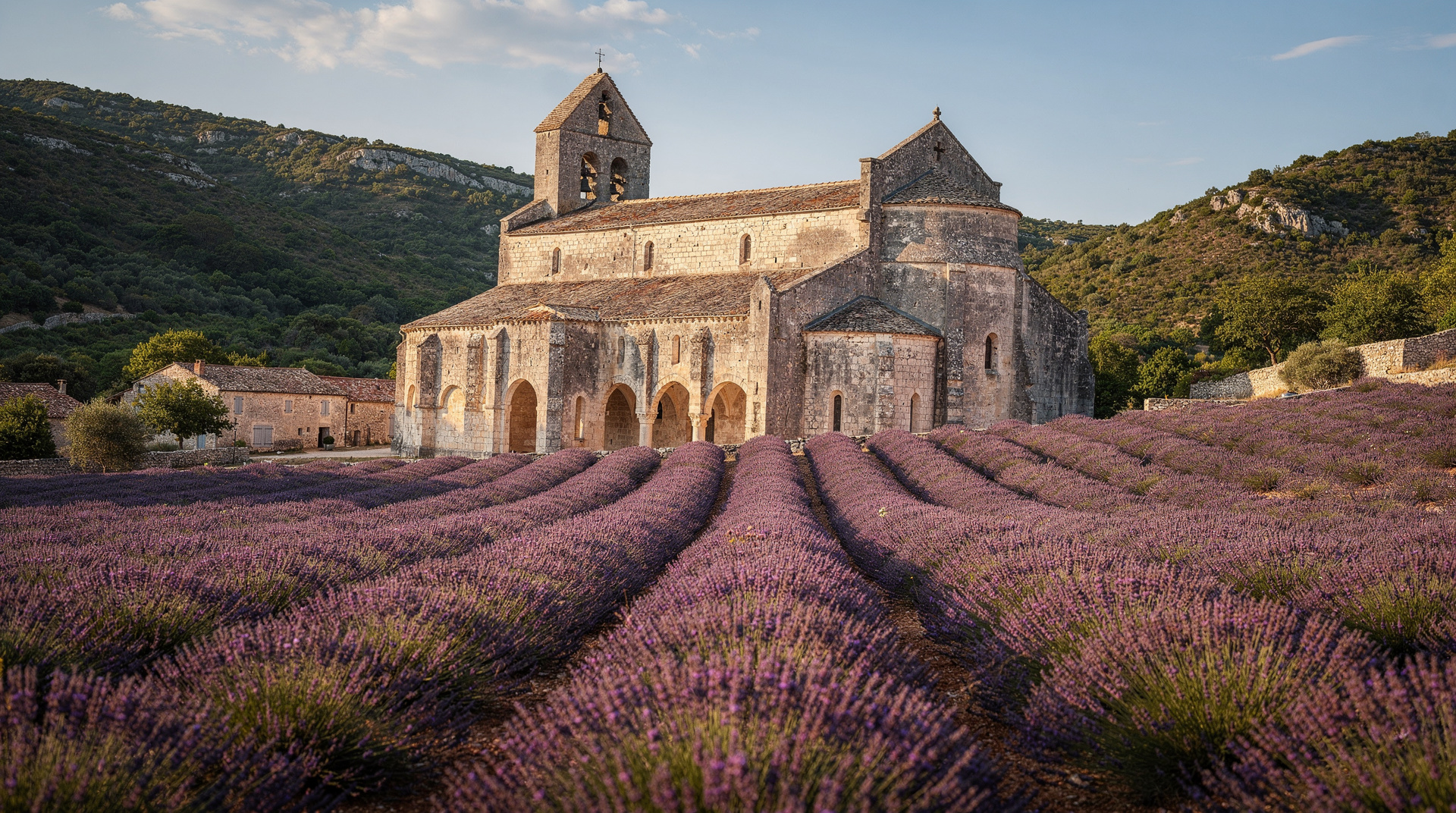
The Sénanque Abbey field is one of the most photographed lavender images in France — planted with true lavender (not lavandin) in front of a 12th-century Cistercian abbey in a valley. The scale is small compared to Valensole (one field, not a plateau), but the composition is exceptional. Blooms typically mid-June to early July.
Car access to the abbey road is restricted in summer — a shuttle from near Gordes village is required (follow signs for “navette Sénanque”). See our Luberon villages guide.
Sault and the Plateau d’Albion (for late July-August visitors)
If you are visiting after mid-July, when Valensole is being harvested, the Pays de Sault above 760 metres is the answer. Sault grows true lavender (Lavandula angustifolia), not lavandin — it blooms later (mid-July to mid-August) and the harvest tradition holds the cutting until after the annual Sault lavender festival on 15 August.
Sault is 2 hours northeast of Marseille by car — further than Valensole, but if you need to see open lavender in late July or August, it is the only reliable option.
Puimoisson (on the plateau)
The village of Puimoisson, 20 km east of Valensole on the higher plateau (550 m), has its own lavender fields with a slightly later bloom than the Valensole lowlands. It is also significantly less visited — if the main Valensole roads feel crowded, Puimoisson is a quieter alternative with equivalent scenery.
A practical early-morning day plan
05:30 — Leave Marseille (no traffic, A51 north in the dark).
07:00 — Arrive on the Valensole plateau before sunrise. The light in the first 90 minutes after sunrise on the fields is uniquely beautiful — warm light, long shadows, dew still on the flowers.
07:00-09:30 — Drive slowly along the D8 and D956, stop at the most photogenic verges. Best photography window.
10:00 — Valensole village for coffee and breakfast.
10:30 — Drive east to Moustiers-Sainte-Marie (30 min).
11:00-13:00 — Moustiers village: Sainte-Marie-de-Moustiers chapel hike (30 min up, worth it), faïence shops, old town.
13:00-14:30 — Lunch in Moustiers or at the lake.
14:30-16:00 — Lac de Sainte-Croix: pedalo hire, swim stop, views of the Verdon gorge entrance.
16:30 — Drive back to Marseille (arrive ~18:00-18:30).
For the complete regional lavender guide — bloom stages, all Provence locations, distilleries, photography advice — see our lavender season in Provence guide. For the full Valensole destination overview, see our Valensole destination guide.
What you will actually see: managing expectations
The Valensole lavender day trip has a specific problem: the photographs that drive most visitors to book the trip are taken at the perfect moment — morning light, fully open lavandin, no people. The reality on the ground in early July is often quite different.
The crowd reality
On a peak July weekend morning at Valensole, the ridge roads have cars parked every 50 metres. Groups of photographers stand at every photogenic verge. Drone operators hover above the fields (technically prohibited in the national park zone without a permit, but enforcement is inconsistent). The instagrammable moment is real — but it requires arriving before 7:00 on weekdays and before 6:30 on weekends to have any chance of photographing without crowds.
The practical approach: Either go very early (this means leaving Marseille at 5:00-5:30, which sounds extreme but produces exceptional results), or accept that your visit will include other people and compose your photographs accordingly. The landscape is large enough that with any creativity, you can find a composition that does not feature other visitors.
Lavender vs lavandin: the visual
The fields at Valensole are predominantly lavandin — a hybrid that looks very similar to true lavender in photographs but has a slightly greyer-blue tone before full opening and a more blue-violet colour at peak. In June, when the plants are still building colour, some fields read as grey-green rather than purple. At full bloom in the first week of July, the blue-violet is intense and the photographs match the postcards. The difference is real enough that arriving one week early (late June) or one week late (mid-July harvest) produces a noticeably different experience.
What makes the drive worthwhile regardless
Even if the lavender is slightly early or the crowds are present, the Valensole plateau experience has an irreducible quality: the scale. Standing on a ridge road with the fields stretching to the horizon in every direction — with the pale limestone hills of the Verdon foothills in the distance and the smell of lavandin in the air — is genuinely unlike any other landscape in Europe. This is worth the 1h30 drive regardless of exact bloom timing.
Lavender-focused guided tours from Marseille
For visitors who want the lavender experience without the logistics of renting a car and navigating rural Provence roads, several guided day tours from Marseille cover the Valensole plateau in late June and July. These typically run 8-9 hours, include commentary on the lavender industry and Provençal agriculture, and pick you up from a central Marseille point.
What guided tours offer: Transport solved, driver/guide who knows the roads, sometimes access to family farms for a proper field-edge experience, and the social aspect of a small group. The tradeoff is fixed departure times and the inability to linger in one location.
For current tour options departing from Marseille, see the GYG listings linked at the top of this guide.
Planning your bloom-window trip
If you are shaping your entire Provence trip around lavender rather than a single day trip, our Provence lavender route itinerary lays out a multi-day loop covering Valensole, Sault, and the Luberon in one bloom window. For a first-person account of what the timing gamble actually feels like on the ground, our lavender season diary covers a visit that arrived a week too early. And for how the Valensole trip fits into a broader Marseille stay, see our best time to visit Marseille guide — lavender season overlaps with peak summer heat and crowds across the whole region.
Frequently asked questions about Valensole lavender day trip from Marseille
When exactly does lavender bloom at Valensole in 2026?
Lavandin fields (what most of Valensole grows) typically reach peak colour between late June and mid-July, with the first two weeks of July being the most reliable peak. The exact dates vary by 7-10 days depending on the year's weather. Check the lavender condition reports on routes-lavande.com in early June for real-time updates.Is there public transport to the Valensole lavender fields from Marseille?
No — there is no practical public transport from Marseille to the Valensole plateau. A car is essential. The plateau roads between the lavender fields have no bus service. Without a car, the only option is a guided group day tour from Marseille (available through GYG operators).Can I walk into the lavender fields for photos?
No — the fields are working farms. Walking between the rows tramples the plants and damages the harvest. Stay on the edges of fields or on the road verges. Many fields have signs asking visitors not to enter. This is not bureaucratic caution — trampling lavender destroys the farmer's crop.What is the difference between Valensole and Sault for lavender?
Valensole grows lavandin (a hybrid, lower altitude, blooms late June to mid-July, massive commercial scale). Sault grows true lavender (fine lavender, above 760 metres, blooms later — mid-July to mid-August, with the Sault festival on August 15 as a reliable date). For July 1-15: Valensole. For late July-August: Sault.What happens after mid-July in the Valensole fields?
Harvest begins. Mechanical combines move through the fields cutting the lavandin, reducing the visual effect dramatically. By late July, many fields are brown stubble. The Valensole Lavender Festival takes place on the third Sunday of July (around July 19, 2026) — by which point some fields may already be partially harvested.Are there distillery visits near Valensole?
Yes — several family distilleries in the Valensole area offer guided visits and direct sales of essential oil. The distillation of lavandin into essential oil happens in August, after harvest. Outside the distillation season, most distilleries offer tours of their facilities and history. The village of Riez (15 km east of Valensole) has several producers.Is a Valensole day trip worth it if I only have one day of good weather?
Yes, if the timing is right (first two weeks of July) and you accept an early start. The plateau experience does not depend on perfect weather the way beach or hiking days do — overcast light can even help photography by softening shadows. What matters far more than weather is the bloom stage and the time of day you arrive.
Top experiences
Bookable activities with verified prices and instant confirmation on GetYourGuide.