Bandol wine guide: mourvèdre, structure, and the coast's great red
Bandol: visit the vineyards and discover Bandol wines
What is Bandol wine and why is it considered Provence's best red?
Bandol AOC (since 1941) requires a minimum 50% Mourvèdre in red wines — the highest such requirement in France. This late-ripening, difficult grape produces dark, structured wines that need 8–15 years to show their best. Domaine Tempier and Château Pradeaux are the reference names. The rosé is also the most structured in Provence.
The grape that makes Bandol different
Every wine appellation in France has a defining characteristic. Bordeaux has its cabernet-merlot balance. Burgundy has the specificity of its pinot noir. Bandol’s defining characteristic is Mourvèdre — a grape so difficult to grow that no other major appellation in France demands it as the dominant variety, yet so compelling when it succeeds that Bandol has developed an international reputation entirely disproportionate to its size.
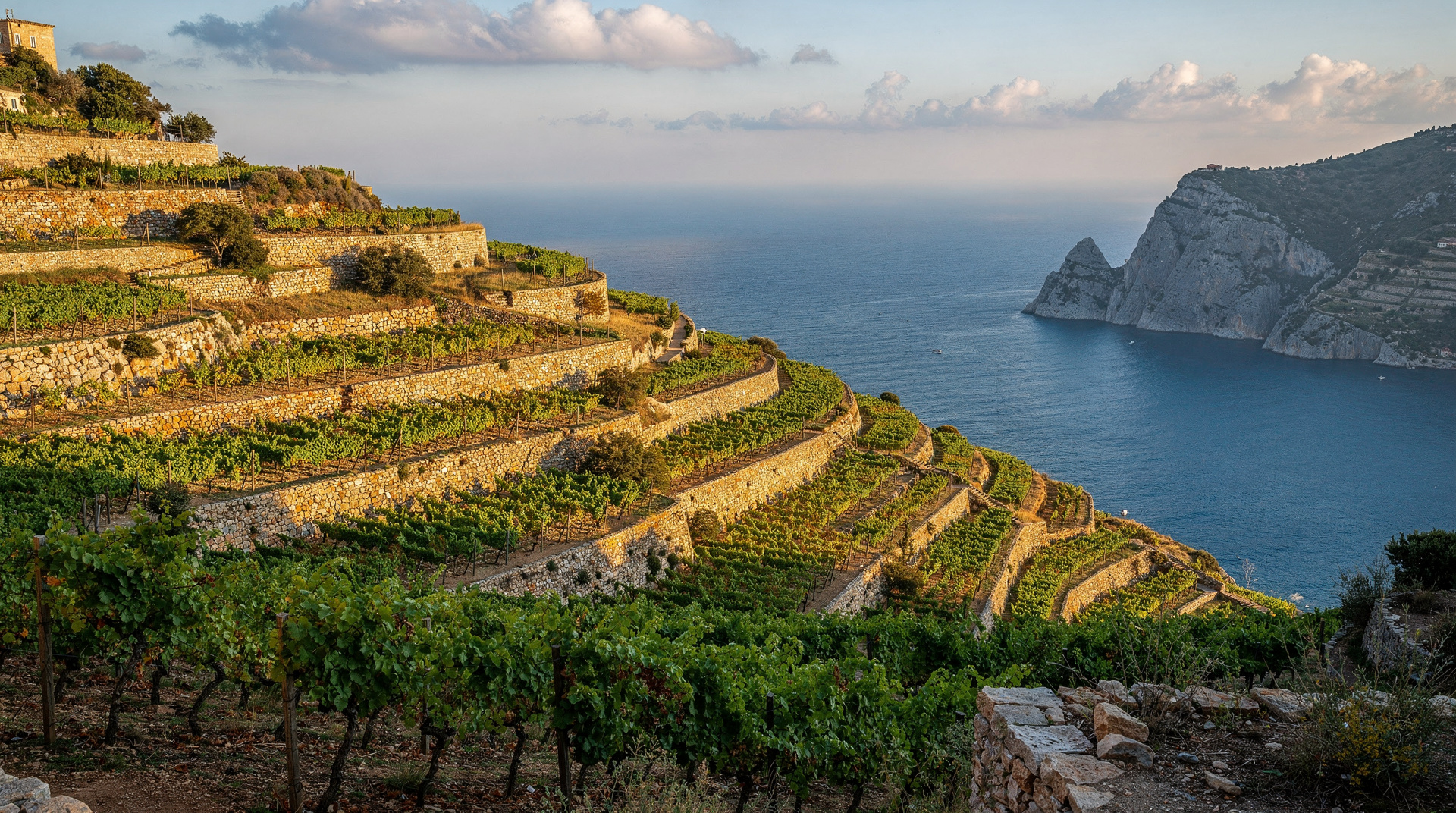
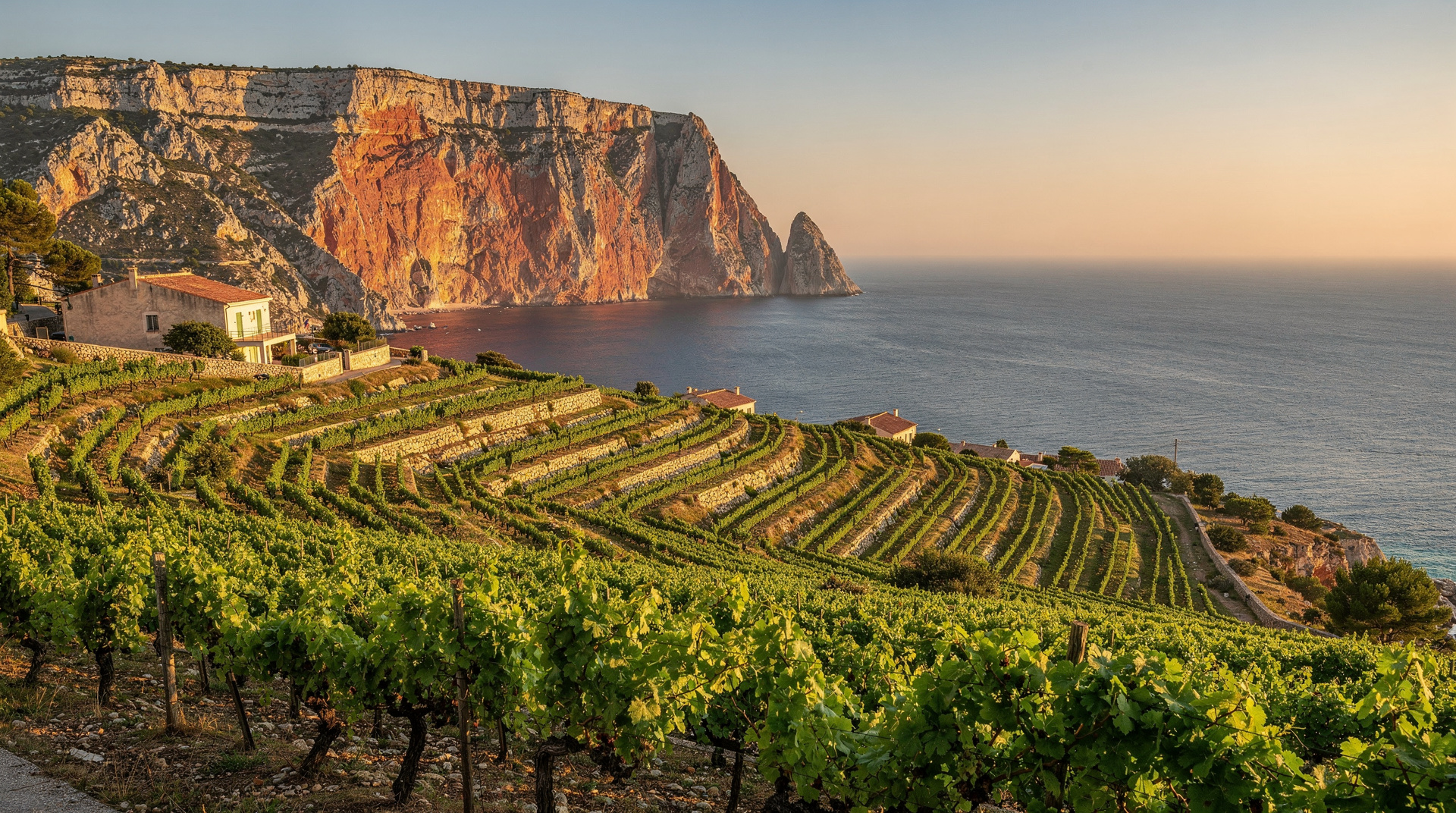
The Mourvèdre requirement for Bandol reds — minimum 50% of the blend — exists because the grape genuinely excels here and, critically, almost nowhere else in France. The specific combination of maritime warmth, limestone and clay soils, and the south-facing exposure of the coastal hills around Bandol produces conditions in which Mourvèdre reaches full phenolic maturity without losing the acidity that gives the wines structure and ageing potential.
This guide covers what Bandol wine is, why it matters, and how to experience it from Marseille.
If you are still deciding which wine corner of the region deserves your time, the Provence wine routes guide places Bandol next to the other appellations, and the Châteauneuf-du-Pape wine tour shows what a very different red-wine day looks like.
| At a glance | |
|---|---|
| Where | Bandol town and surrounding hills (Le Castellet, La Cadière-d’Azur), around 45 km / 50 minutes east of Marseille |
| Cost | Domaine tastings often free or a small fee redeemable on purchase; bottles from around EUR 15 (rosé) to EUR 70+ (prestige red) at the estate |
| Time needed | Half a day for a single domaine plus the port; a full day to add Le Castellet or combine with Cassis |
| Getting there | TER train from Marseille Saint-Charles (~50 min) or A50 by car (~45 min); estates in the hills need a car or organised tour |
| Best time | Spring and autumn for comfortable tasting weather; harvest (September) for atmosphere, though many domaines are busiest then |
The AOC: established 1941
The Bandol AOC was established in 1941 — five years after the first wave of French appellations (Cassis and Châteauneuf-du-Pape among them, both 1936). The appellation covers approximately 1,600 hectares across eight communes: Bandol, La Cadière-d’Azur, Le Castellet, Saint-Cyr-sur-Mer, Sanary-sur-Mer, Ollioules, Évenos, and Le Beausset.
The total is modest in French terms — Bandol produces around eight million bottles annually, compared to Châteauneuf’s 12 million from a smaller theoretical territory. The discipline of the appellation regulations — mandatory minimum Mourvèdre content, banned machine harvesting, compulsory 18 months in oak for reds — creates quality constraints that keep yields focused.
Mourvèdre: the difficult grape
Mourvèdre (known as Monastrell in Spain and Mataro in Australia) is one of the latest-ripening red grapes in France. It requires a long growing season, full sun exposure, and coastal warmth to reach its potential — conditions found reliably only in a handful of French appellations, with Bandol at the head of the list.
What it produces: Dark, dense wines with flavours of blackberry, dark plum, leather, game, tapenade, and garrigue herbs (thyme, rosemary). The tannins are firm and require time to integrate — a young Bandol red (0–5 years) often seems almost impenetrable, with the fruit buried under tannin and the oak from the 18-month ageing still prominent. At 8–15 years, the wines open into something genuinely complex and distinctive.
The structural requirements:
- Reds: minimum 50% Mourvèdre (most serious producers use 70–95%); remainder Grenache, Cinsault, sometimes Syrah
- Rosés: minimum 20% Mourvèdre (often 40–60% in serious cuvées); remainder Grenache, Cinsault
- Whites: Clairette, Bourboulenc, Ugni Blanc, with some Sauvignon Blanc — small production, dry and mineral
Machine harvesting: banned. All Bandol must be hand-harvested — a constraint that adds cost but ensures the integrity of the fruit (Mourvèdre grapes do not withstand mechanical impact well).
Oak ageing: minimum 18 months for reds. This is longer than many Bordeaux châteaux require. The oak integration time is part of why young Bandol reds taste less approachable than comparably priced wines from other appellations — and why cellared Bandol rewards patience.
The key domaines
Domaine Tempier (Le Plan-du-Castellet): The most internationally celebrated Bandol estate, and the one most responsible for bringing the appellation to world attention. The domaine was revived by the Peyraud family in the mid-20th century and championed by American food writer Richard Olney and importer Kermit Lynch, who introduced Tempier to the US market in the 1970s. Today, Domaine Tempier produces several cuvées of red — the basic La Tourtine and the single-vineyard Cabassaou, La Migoua, and La Tourtine — plus rosé and a small amount of white. The wines are expensive by appellation standards; the red cuvées are among the most sought-after in Provence.
Château Pradeaux (Saint-Cyr-sur-Mer): The benchmark traditionalist. The Portalis family has owned Pradeaux for generations and maintains one of the most conservative production styles in the appellation — very high Mourvèdre content, extended maceration, ageing in old large oak barrels rather than new barriques. The wines need a decade of cellaring but develop extraordinary complexity. A reference point for understanding what Bandol red can become with time.
Château de Pibarnon (La Cadière-d’Azur): One of the highest-elevation Bandol estates (up to 300 metres), producing reds with notable freshness and acid structure alongside the expected Mourvèdre power. The altitude gives a cooler microclimate that extends the growing season further. Visits available; among the more visitor-friendly of the top estates.
Domaine de la Suffrène, Moulin de la Roque, Château La Rouvière: Additional solid producers in the core zone. All produce wines to the appellation standard; all are worth tasting if visiting the area.
Bandol rosé: the most structured rosé in France
Bandol rosé deserves its own discussion. While Provence has made pale, delicate rosé famous globally, Bandol rosé is something different — and the difference is Mourvèdre.
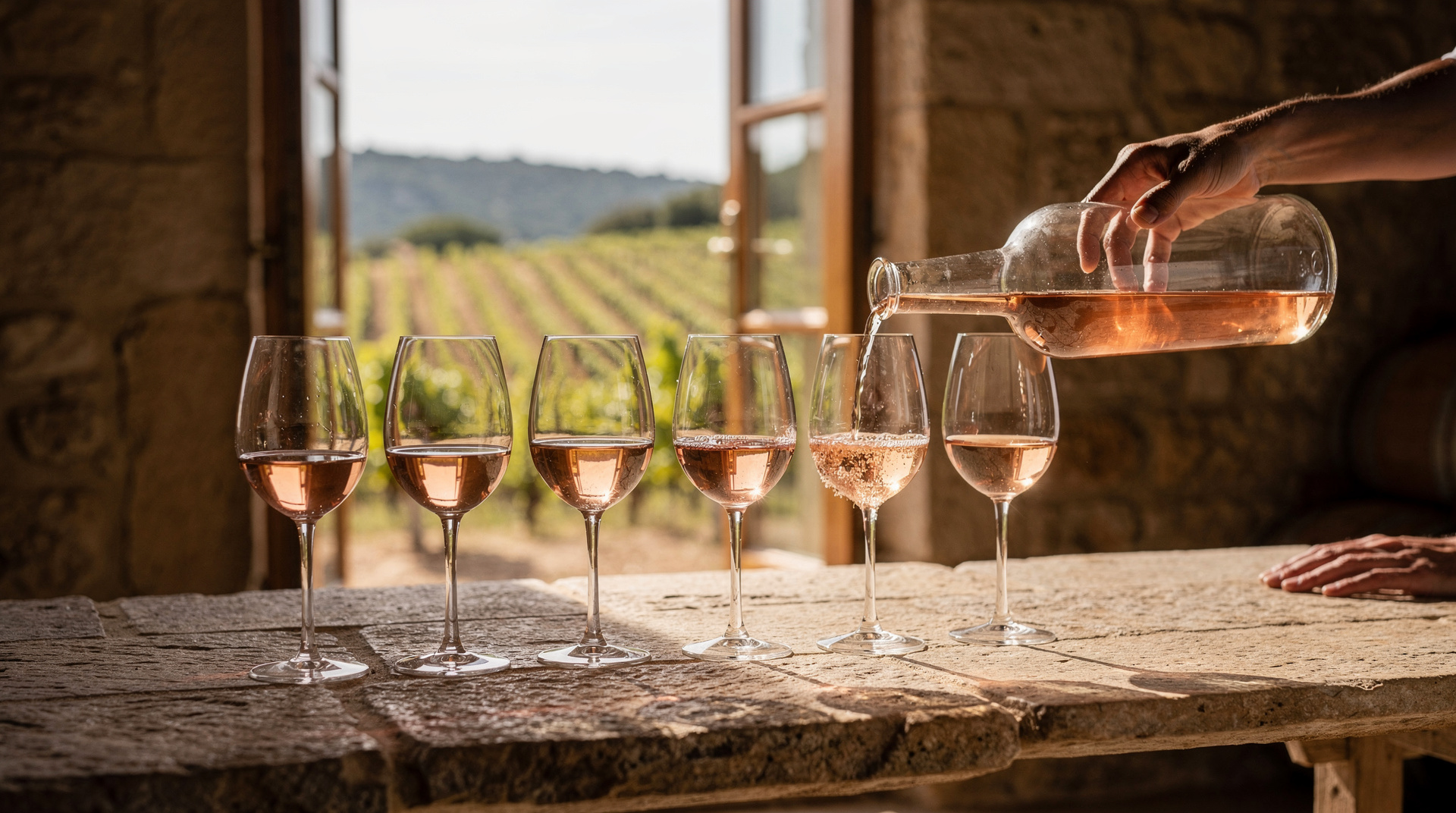
The minimum 20% Mourvèdre requirement (often 40–60% in practice at serious domaines) gives Bandol rosé a structure, colour, and aromatic complexity that no other Provence rosé appellation can match. Where a Côtes de Provence rosé is pale onion-skin pink, delicate, and best consumed young, a serious Bandol rosé may be salmon to light pink, have firm structure and a complex aromatic profile (red fruits, garrigue, a slight tannin grip), and age 2–4 years in bottle.
Bandol rosé is a food wine — with grilled fish, lamb, charcuterie, and strongly flavoured Provençal dishes — rather than a pure aperitif. This is not a criticism; it is a distinction. A good Bandol rosé alongside a daube provençale or a grilled lamb chop is one of the better regional food-wine combinations in France.
See our Provence rosé guide for the broader rosé context.
Visiting Bandol from Marseille
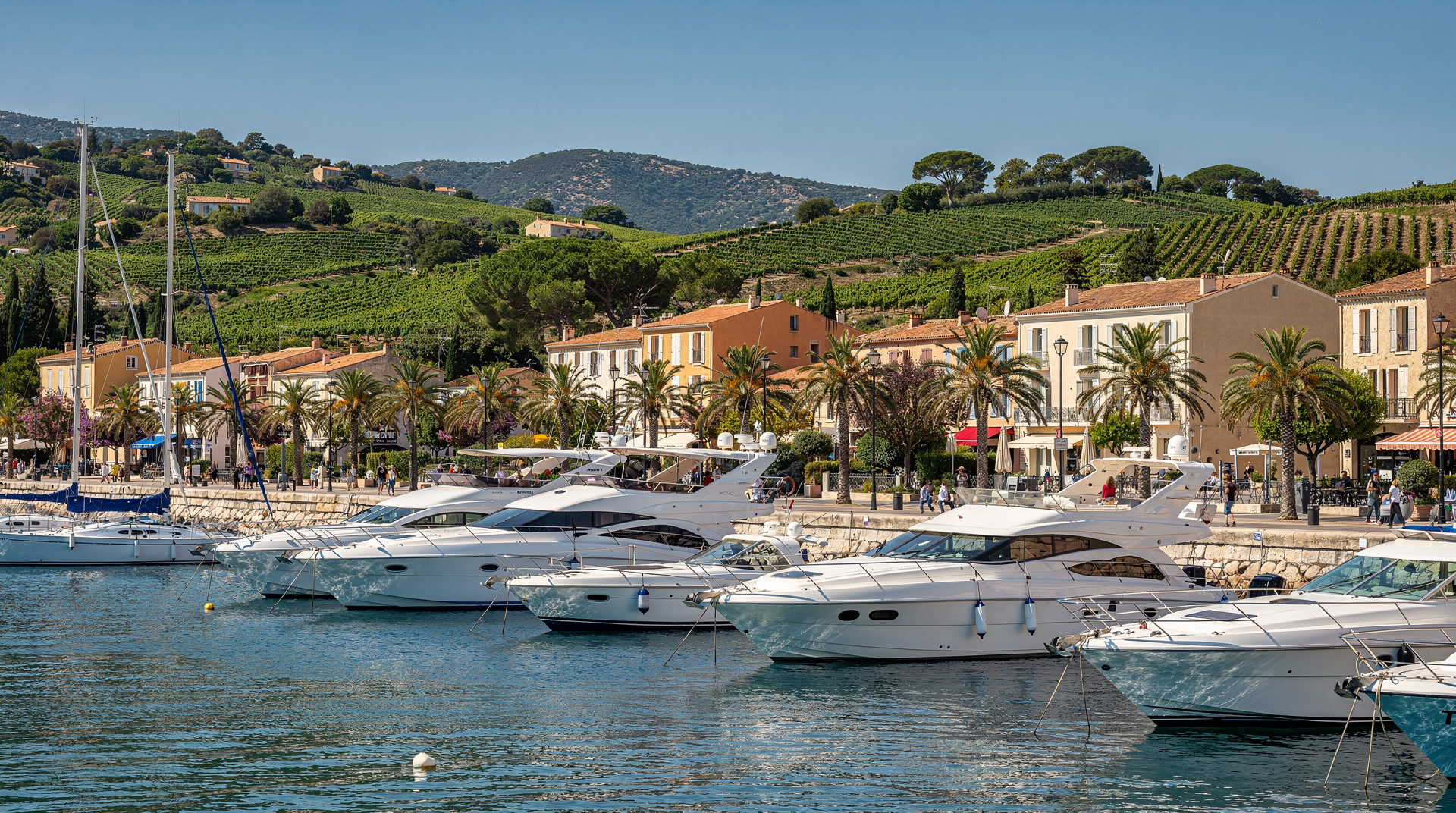
By train: TER from Marseille Saint-Charles to Bandol takes approximately 50 minutes. Services run regularly. The station is about 1 km from the port — a pleasant walk downhill through the town.
By car: 45 minutes via the A50 toward Toulon, exit Bandol. Easy parking near the port in the morning; the surrounding communes (Le Castellet, La Cadière-d’Azur) require a car for estate visits.
Organised wine tour: Multiple operators run Bandol + Cassis wine day tours from Marseille, including the GetYourGuide options above. These handle transport and typically include a guided domaine visit with tasting — the practical option if estate visits are the primary goal.
If you are weighing the car question for the wider region, the do you need a car in Provence guide lays out where trains are enough and where they are not, and getting around Marseille covers the city end of the journey.
What to spend a half-day on: Port breakfast (excellent fish, local cheese, charcuterie at the Tuesday/Saturday market), one domaine visit in the surrounding hills (Château de Pibarnon is the most scenic), lunch at the port with a glass of Bandol rosé. This is a coherent and not rushed half-day.
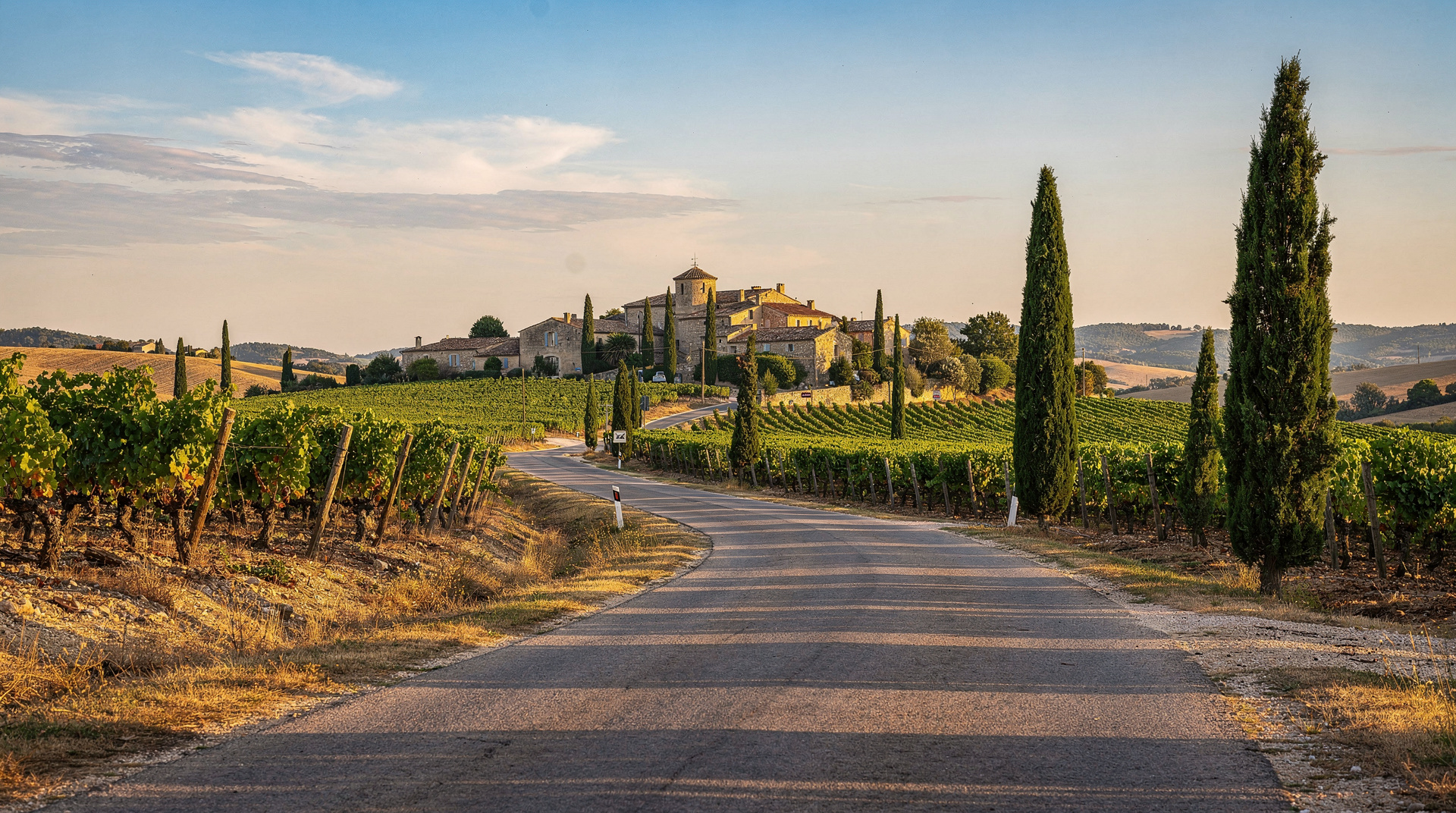
Full-day with Le Castellet: The hilltop village of Le Castellet, 8 km north of Bandol, adds a medieval village experience to the wine tour and is close to several important domaines. The drive up through the vineyards and the view south toward the Mediterranean from Le Castellet’s walls make the combination genuinely worthwhile. See the Bandol destination guide for detail on both the town and Le Castellet.
Pairing Bandol wines with food
Bandol red (aged 8+ years): Daube provençale, slow-roasted lamb with herbs, wild boar (sanglier), aged cheese (particularly Comté or Tomme de Provence). The wine’s structure needs food with comparable weight.
Young Bandol red (2–5 years): The tannins are still dominant; pair with grilled red meat, hearty stews, or continue ageing. Do not drink this wine cold — chamber temperature (16–18°C) is appropriate.
Bandol rosé: Grilled daurade or loup de mer, lamb chops, charcuterie, tapenade, and strongly flavoured Provençal dishes. This is not a cocktail-hour rosé; it needs food.
Bandol blanc (white): Shellfish, oysters, light fish dishes. Small production and harder to find than the red and rosé; worth trying at the domaine if available.
Back in the city, the same logic carries over to the table: the Provençal cuisine explained guide describes the dishes these wines were made to accompany, and the Marseille seafood guide points to where grilled fish and a structured rosé make sense together.
Combining Bandol with Cassis
The natural wine route on this stretch of coast is Bandol + Cassis — two AOCs separated by 10 kilometres and the La Ciotat headland, producing wines of very different character. A Bandol morning (domaine visit or port breakfast) followed by a Cassis afternoon (wine tasting, walk to Port-Miou) creates a coherent coast wine day. See our Cassis wine guide for the complementary picture, and the wine tasting near Marseille guide for combined logistics.
For a broader plan around the wine, the Marseille food and wine weekend itinerary shows how a domaine visit can fit into a longer stay, and the Cassis day trip guide covers the other half of the coast.
The Île de Bendor: a Ricard footnote
One kilometre off the Bandol coast, the small private island of Île de Bendor is worth knowing about for its wine context. Paul Ricard — the pastis entrepreneur — purchased the island in 1950 and built what amounted to a personal resort on it. Today the island is managed as a day-trip destination; regular boat service runs from the Bandol port every 30 minutes.
The Exposition Universelle des Vins et Spiritueux (EUVS), housed in a Ricard-built building on the island, is a privately assembled collection of wine and spirits bottles from around the world — over 7,000 bottles. It is one of the more unusual wine collections in France, a product of Ricard’s own eclectic interests. The island itself is a 20-minute walk from one end to the other. Worth 90 minutes as a boat-trip curiosity during a Bandol afternoon.
The Bandol market: Tuesday and Saturday
The Bandol port market (Tuesday and Saturday mornings) is a complement to a wine tour rather than the reason to visit, but it is genuinely good — local cheese, Provençal charcuterie, olives, seasonal vegetables, bread from local bakeries, and occasionally a producer selling their own wine directly. The market runs along the port promenade from approximately 7:30 to 13:00.
For food purchases to take home alongside wine bottles: the Tuesday market is less crowded than Saturday and the quality is comparable. A round of local cheese from a Var cheesemonger and a bottle of Château de Pibarnon rosé makes a coherent purchase. The cheese will travel in a cool bag; the wine bottle is best wrapped in a t-shirt in a hard-sided bag for the drive or train back to Marseille.
Bandol vintage guide: what years matter
Because Bandol reds are cellaring wines, understanding vintages matters more here than for most Provence wines.
Outstanding recent vintages: 2019 and 2020 were warm, even seasons — wines from these years show the full power and richness of the appellation, with excellent structure for ageing. 2016 and 2015 are reaching their first window of accessibility at serious producers. 2010 is now at an excellent drinking point.
Challenging vintages: 2018 saw significant rain during harvest — the wines are generally less concentrated. 2017 was affected by drought stress. At top producers, these years are still interesting; at smaller domaines, the inconsistency shows.
What to buy at the estate: If purchasing for immediate drinking (within 1–2 years), ask for the current rosé or a 5-year-old red that has had time to soften. If purchasing for a cellar, the most recent top vintage from a serious producer represents the best value — estate prices are lower than retail, and a case of 12 bottles from a great vintage purchased at the domaine is a genuinely worthwhile investment.
Bandol blanc: the overlooked wine
Bandol white wine represents approximately 3% of the appellation’s production — a tiny fraction that is frequently overshadowed by the celebrated reds and rosés. This obscurity is unwarranted.
Bandol blanc is made primarily from Clairette, Bourboulenc, and Ugni Blanc — the white grape varieties permitted in the AOC — and occasionally includes Grenache Blanc and Marsanne. The character is dry, structured, and mineral, with the limestone and clay terroir of the Bandol hills producing whites that have more intensity and age-worthiness than casual Côtes de Provence blanc.
At domaine tastings, asking specifically to taste the white is worth doing even if you are primarily a red wine drinker — the contrast with the famous reds and the quality relative to the lack of commercial attention make it one of the more interesting discoveries at a Bandol estate.
Production reality: Many estates produce only a few hundred cases of blanc per year. It sells out quickly at the estate and rarely appears in export markets. Tasting it at the source is the main opportunity.
If you like tasting your way through a region, the Cassis wine guide and the Marseille markets guide make good companions to a Bandol visit, since both reward the same unhurried, food-led approach.
The price reality: what Bandol costs
Bandol wines are priced above Côtes de Provence equivalents and below Burgundy Premier Cru equivalents — the correct position for a serious appellation with genuine age potential but limited global name recognition.
At the estate:
- Rosé: EUR 15–25 for current vintage
- Red (entry cuvée): EUR 20–35
- Red (prestige cuvée): EUR 40–70 at top producers
- Blanc: EUR 18–28
In Marseille wine shops: Add 30–50% to estate prices for the same wines in a shop. Online and in export markets, top Bandol reds can cost EUR 60–120 for wines that sell at EUR 40–70 at the domaine.
The purchase logic: If you are visiting an estate and enjoy the tasting, buying 3–6 bottles at the domaine price is straightforward economics. These wines do not appear frequently at accessible prices in most export markets, and the estate-direct price is the lowest you will find them.
Frequently asked questions about Bandol wine guide
Can I visit Bandol as a half-day trip without a car?
Yes, by train — the TER from Marseille Saint-Charles reaches Bandol in around 50 minutes, and the port and market are walkable from the station. Estate visits in the surrounding hills (Le Castellet, La Cadiere-d'Azur) are harder without a car, which is why an organised wine tour or taxi is the practical option if a specific domaine is the goal.Is Bandol wine the same thing as rose from Provence in general?
No. Bandol is a specific AOC with a minimum Mourvedre requirement that produces darker, more structured rose and red than the pale Cotes de Provence style most people associate with Provencal rose. See our Provence rose guide for how the styles differ.
Top experiences
Bookable activities with verified prices and instant confirmation on GetYourGuide.