Cassis wine guide: France's oldest coastal AOC
Cassis: discover AOC Cassis wineries by electric buggy
Duration: 1-2 hours
What makes Cassis wine special and where can I taste it?
AOC Cassis is one of France's first appellations (1936) — 12 estates on 210 hectares producing predominantly white wine (67%: marsanne, clairette, ugni blanc) on steep limestone terroir. The white is made for Mediterranean fish and bouillabaisse. Visit by electric buggy, or taste at the village domaines any time April–October.
| At a glance | |
|---|---|
| Where | Hillside domaines above Cassis village, 30 minutes east of Marseille by TER train |
| Cost | Electric buggy tour with tastings around EUR 40–65 per person; individual estate visits typically free with a purchase expected |
| Time needed | 1–2 hours for the buggy tour; a half day if pairing with a domaine visit and lunch in the village |
| Getting there | TER from Marseille Saint-Charles to Cassis (approximately 35 minutes), then taxi or the buggy tour pickup in the village |
| Best time | April–October for tastings; late September for the harvest atmosphere |
The appellation that white wine built
Most visitors to Cassis come for the Calanques, the port, the Cap Canaille viewpoint, and perhaps a glass of wine on the terrace. The wine, when they order it, is often treated as an afterthought — the correct regional choice rather than a deliberate one. This is a mistake.
AOC Cassis is a genuinely remarkable wine appellation: one of France’s oldest (established 1936 among the very first class of French AOCs), extremely small (210 hectares, 12 estates, approximately one million bottles per year), predominantly white in a world that reflexively associates Provence with rosé, and almost entirely consumed within France — making it an obscure find internationally despite quality that competes with Provence appellations five times its size.
This guide gives Cassis wine the treatment it deserves: the terroir, the grape varieties, the producers, the style, and why the traditional pairing with bouillabaisse is not a cliché but a genuine taste argument.
The AOC: history and context
The Cassis appellation was formally established on 15 May 1936, alongside Châteauneuf-du-Pape, Arbois, Monbazillac, and Tavel — among the first six AOCs created under the new French appellation system. The timing placed Cassis among the pioneers of French wine legislation, and the appellation’s rules have remained relatively stable since.
The appellation covers 210 hectares across 12 domaines, all within the commune of Cassis. This is deliberately small: the Cassis AOC excludes production from surrounding communes even when geologically similar, maintaining the specific limestone-and-sea character of the Cassis hillsides.
Production runs to approximately one million bottles per year — tiny by any commercial standard. For comparison, Châteauneuf-du-Pape produces around 12 million bottles on 3,200 hectares. The small scale of Cassis is partly responsible for its low international profile: there simply is not enough wine to fill both the French and export markets simultaneously.
The terroir: limestone, altitude, and the sea
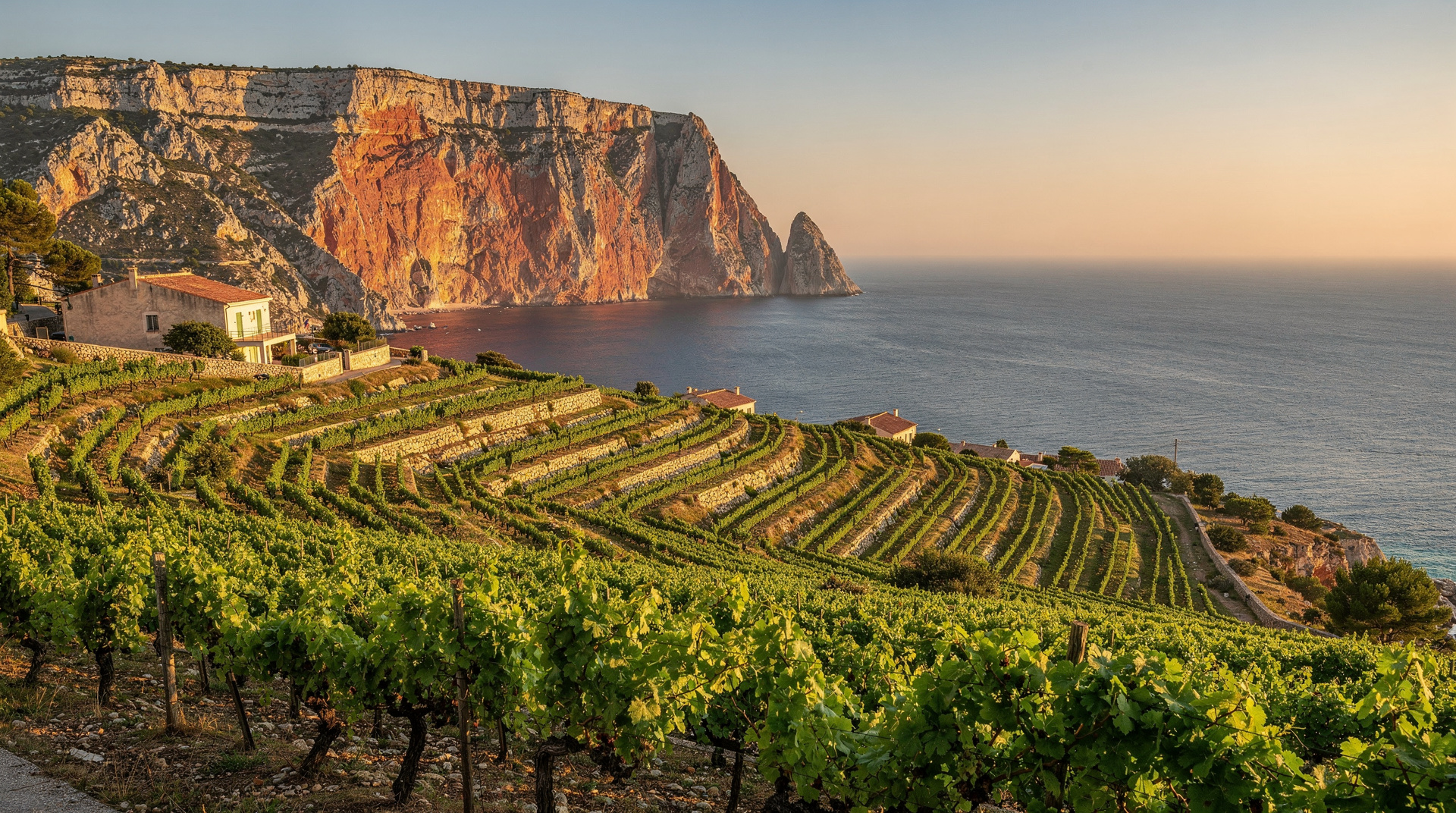
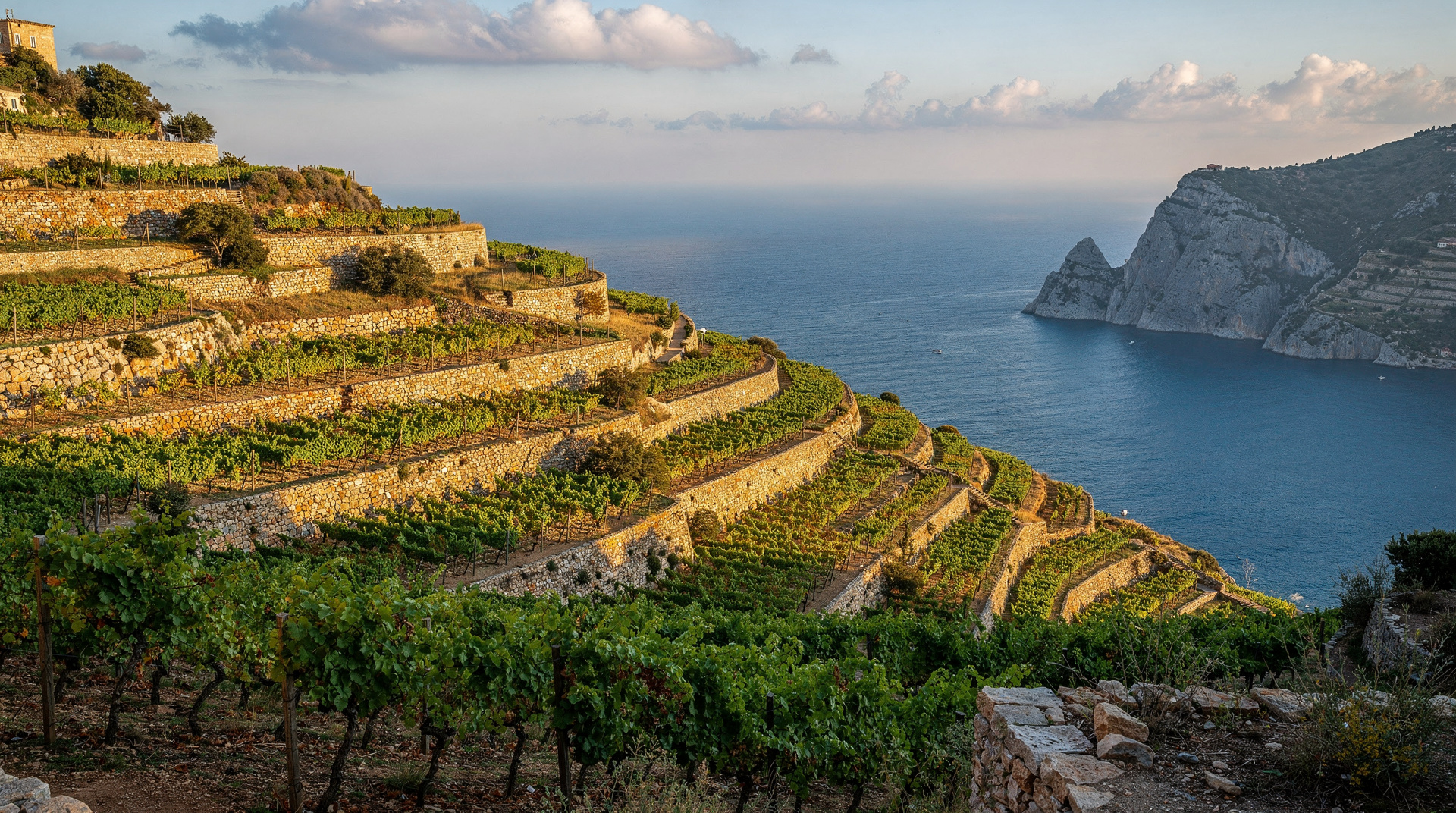
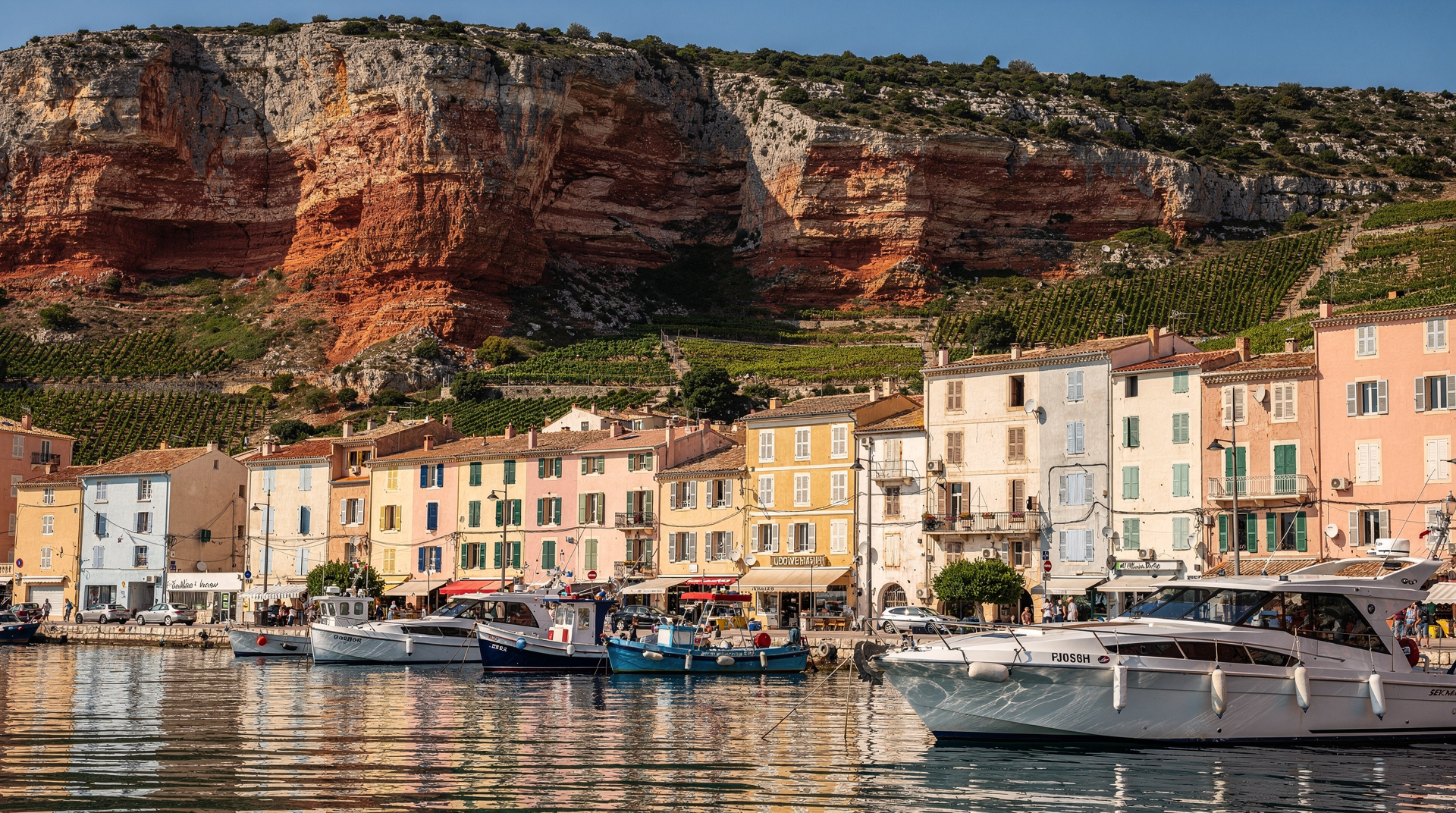
The Cassis vineyards occupy south-facing slopes above the village, rising from approximately 50 metres to 300 metres altitude. The geology is primarily limestone (calcaire), the same rock that forms the dramatic white cliffs of Cap Canaille and the fjord walls of the calanques.
Why limestone matters: Limestone soils drain well, stress the vines (which concentrates flavour), and impart a mineral character to the resulting wine. The white Cassis wines have a specific minerality — a flinty, chalky note in the finish — that reflects the soil composition more directly than most Provence appellations.
The sea influence: The proximity to the Mediterranean (the nearest vineyards are less than 2 km from the coastline) moderates temperature extremes and provides the humidity that prevents the vines from drying out during the hot Provence summer. The sea air also introduces saline compounds into the vineyard atmosphere — whether this contributes measurable salinity to the wine is debated, but the wines do have a coastal freshness that distinguishes them from inland Provence whites.
Garrigue overlay: The hillside vineyards are surrounded by the typical Provence garrigue — wild rosemary, thyme, fennel, lavender. The herbs do not directly flavour the wine, but their presence reflects the same mineral-limestone terroir that makes Cassis whites distinctive.
The grape varieties
White: 67% of production
Marsanne: The dominant white variety in Cassis — a grape that also appears in the northern Rhône (in Crozes-Hermitage and Saint-Péray) and in Bandol. In Cassis, Marsanne contributes body, richness, and floral aromatics (honeysuckle, white peach, sometimes almond). It ages well, gaining complexity and a slightly golden colour after 3–5 years.
Clairette: A native Provençal white grape with higher acidity and lighter body than Marsanne. It provides freshness and citrus notes, balancing Marsanne’s richness. Also used in the sparkling Clairette de Die appellation in the Drôme. Without Clairette, Cassis blanc would be too broad and weighty.
Ugni Blanc: A high-acid, high-yield white grape (the same variety used as Trebbiano in Italy and as the base for Cognac and Armagnac). In Cassis, it contributes brightness and helps maintain freshness. Less characterful than Marsanne or Clairette, but structurally important in the blend.
Minor whites: Doucillon, Bourboulenc, Sauvignon Blanc, and Grenache Blanc appear in smaller proportions at various domaines.
Rosé: approximately 30% of production
Cassis rosé is made primarily from Grenache, Cinsault, and Mourvèdre — the standard Provence rosé palette. The Cassis version tends toward pale-pink and dry, with a freshness that reflects the limestone terroir. It is a good rosé but not the appellation’s primary expression; visitors who order it expecting the character of the white are usually better off asking for Cassis blanc explicitly.
Red: approximately 3% of production
Tiny production, primarily for local consumption. Made from Mourvèdre, Grenache, and Cinsault. Not worth seeking out specifically — the appellation’s identity is in the white.
The 12 domaines
The following producers are documented members of the Cassis AOC (names verified from the Cassis tourism office and appellation records):
Clos Sainte-Magdeleine: One of the most celebrated Cassis estates, with vineyards directly above the village facing Cap Canaille. The blanc is considered one of the appellation’s reference points — rich and mineral simultaneously. Visits by appointment.
Domaine La Ferme Blanche: A historic estate with origins in the 17th century. The wines are vinified in a traditional style emphasising freshness over extract. Available for tasting at the estate.
Château de Fontcreuse: An elegant 18th-century château above the village, producing blanc and rosé. One of the more visitor-friendly estates, with a regular tasting room schedule.
Domaine du Bagnol: Consistently well-reviewed blanc with a notably mineral character. Visits by appointment.
Domaine du Paternel: Produces blanc and rosé; one of the estates included in the electric buggy tour circuit.
Château Barbanau: Located slightly further from the village but within the AOC boundaries. Produces blanc and rosé; visits by appointment.
Other domaines include Bodin, Domaine La Dona Tigana, and several smaller estates — the full 12 are best verified through the Cassis tourism office, which maintains current contact details.
The electric buggy winery tour
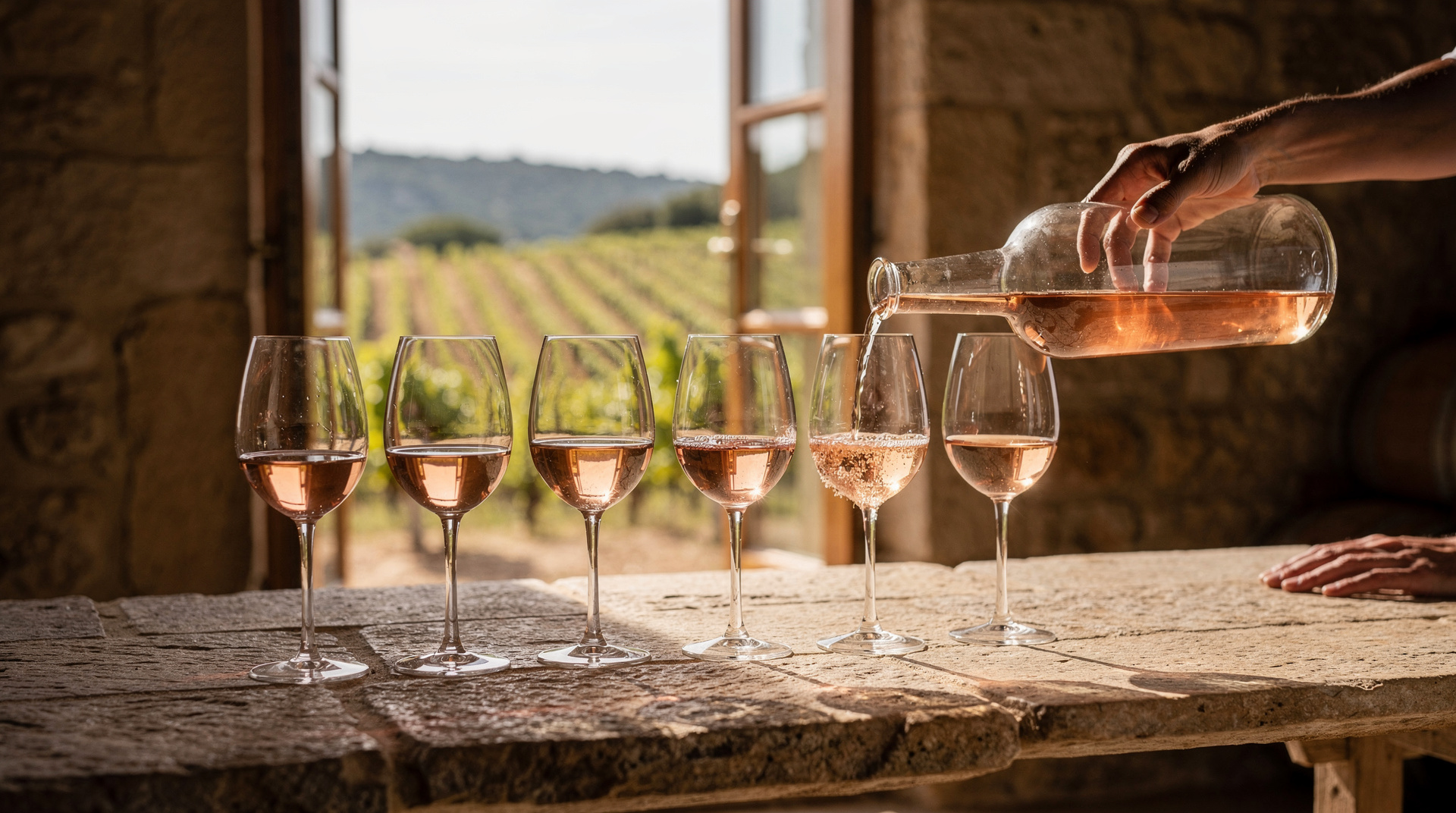
The most practical way to visit the Cassis vineyards without your own car is the electric buggy tour — a guided circuit through the estates above the village, with stops at two or more domaines for tastings. The format combines the vineyard geography (essential for understanding the terroir) with the tasting experience in a single 1–2 hour session.
What it covers: The buggy tour typically visits 2–3 domaines, with a tasting of 3–5 wines at each. The guide explains the appellation rules, the geology, and the production philosophy of each estate. The electric format is quiet and allows the guide to talk without competing with an engine.
Why it works better than self-driving: The Cassis vineyards are on steep hillside roads where parking is difficult and navigation is confusing. The tour handles all logistics, including appointments at estates that do not accept walk-in visitors. For visitors planning to drink wine during the tasting (the point of the exercise), having a driver is also the responsible choice.
Booking: Via GetYourGuide, advance booking recommended. The tour operates April through October; summer slots fill quickly.
Visiting independently
For visitors with a car, several estates accept visitors with appointments:
Without appointment (tasting room walk-in): Château de Fontcreuse has the most consistent walk-in availability during business hours. Call ahead to confirm.
By appointment: Most other domaines. Call at least 24 hours in advance, preferably several days during harvest season (September). French is the working language; English is spoken at some estates.
The domaine visit protocol: A typical Cassis estate visit lasts 30–45 minutes. You will be shown the vineyards (or at least the view of them), the cellar, and offered 3–4 wines for tasting. A small purchase is expected and appropriate — buying a bottle or two from an estate that has given you their time is the courtesy the tasting is designed to create.
Food pairing: the bouillabaisse argument
The canonical pairing of Cassis blanc with bouillabaisse is repeated so frequently that it risks becoming meaningless. But the taste logic is real:
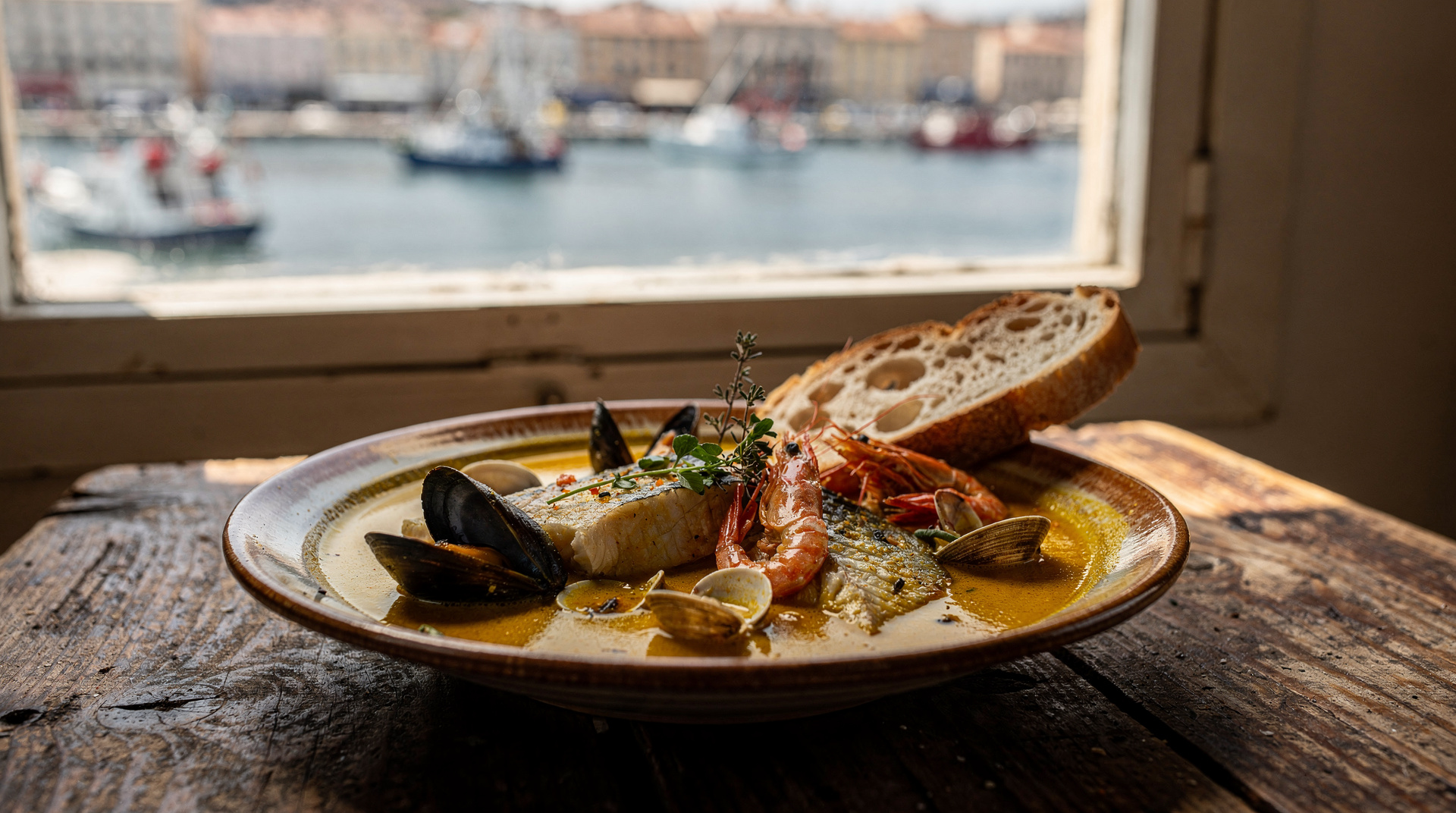
The case: Bouillabaisse is made from saffron, olive oil, and Mediterranean rockfish. The broth is rich, slightly fatty, and intensely marine. Cassis blanc — with its Marsanne-based body, its Clairette-sharpened acidity, and its limestone minerality — provides acidity to cut the fat, freshness to balance the saffron richness, and a mineral-coastal character that mirrors the fish’s provenance. The combination works in the way that regional food and wine pairings often work: they developed together in the same geography.
Beyond bouillabaisse: Cassis blanc is also excellent with whole grilled daurade, sea bass prepared with fennel and olive oil, sea urchins (oursins) in season, oysters, and the plateau de fruits de mer. Any Mediterranean fish preparation at a Cassis or Marseille seafood restaurant is a reasonable context.
Serving temperature: 10–12°C. Not ice-cold (which mutes the aromatic character of the Marsanne) but properly chilled. A bottle pulled from the fridge 10 minutes before serving hits the right temperature.
Ageing: Cassis blanc can age well — particularly Marsanne-dominant blends, which gain complexity and develop a slightly golden colour after 3–5 years. The 2020–2022 vintages are drinking well in 2026 and will continue to improve for another 3–4 years. Older vintages (2015–2018) from good producers are worth seeking out if available.
Cassis wine vs Bandol wine: the coast comparison
The natural comparison is Cassis blanc vs Bandol — two AOCs on the same stretch of coast, separated by 10 kilometres and the La Ciotat headland. The contrast is instructive:
Cassis: Predominantly white. Fresh, mineral, aromatic. Made for fish. Light and elegant in style.
Bandol: Predominantly red and rosé. Mourvèdre-based. Rich, structured, age-worthy. Made for grilled meat and the full Provençal table.
A day visiting both appellations — a morning in Cassis with a tasting of blancs, an afternoon in Bandol with a tasting of reds — covers the full range of what the Provence coast produces. See our Bandol wine guide and the wine tasting near Marseille guide for the combined itinerary.
Getting to Cassis and planning around it
Cassis works well as a wine stop because the village is easy to reach from the city. The practical details of the train and the road are covered in our Marseille to Cassis transport guide, and the village itself is described on the Cassis destination page. If you are still deciding whether the village deserves a full day, the Cassis day trip guide lays out the options, and Cassis vs La Ciotat helps if you are weighing two coastal bases.
Wine fits naturally into a longer stay. The Marseille and Cassis in 2 days itinerary leaves room for an afternoon tasting, and the Marseille food and wine weekend builds a whole trip around the table. For a wider look at what the region pours, see Provence wine routes and the Provence rosé explained guide, which puts Cassis rosé in context.
What to eat and drink alongside the wine
The white is made for seafood, so the best companion pages are about the dishes it was designed for. Our bouillabaisse in Marseille guide explains how to find a serious bowl, bouillabaisse tourist trap warns about the versions to avoid, and Marseille seafood guide covers the other fish and shellfish that suit a chilled blanc. For the wider culinary background, Provençal cuisine explained shows where these pairings come from. If you want a first-hand account of the day, the blog post a perfect day in Cassis follows the village from port to terrace.
Combining wine tasting with the rest of a Cassis day
Wine tasting rarely fills a full day on its own, and most visitors pair it with the other reasons to come to Cassis. A common structure: morning boat tour or hike into the Calanques (see Cassis day trip for the full itinerary options), lunch at the port, then the electric buggy tour or a domaine appointment in the afternoon when the heat has softened and a glass of chilled Cassis blanc is the natural way to end the day.
The morning options are described in Cassis beaches, Cassis vs Marseille Calanques boat and the Cap Canaille hike, which looks down over the same limestone that shapes the vines.
For visitors without a car, the logistics work cleanly: TER train from Marseille, boat or hike in the morning, buggy tour pickup from the village in the afternoon, TER back to Marseille in the evening. No need to drive after tasting, which removes the one practical complication of a wine day in Cassis.
If Cassis wine is the main draw rather than a side activity, consider the overnight structure — arriving the evening before frees the whole next day for a relaxed, unhurried circuit of two or three domaines rather than compressing everything into an afternoon squeezed between a boat tour and the last train back.
Frequently asked questions about Cassis wine guide
What wines does Cassis produce?
Cassis produces approximately 67% white wine (based on marsanne, clairette, and ugni blanc), around 30% rosé (from grenache, cinsault, and mourvèdre), and just 3% red. The whites are the appellation's identity — dry, aromatic, slightly mineral, and better than their obscurity suggests. Most production is consumed within France.How many wineries are there in AOC Cassis?
There are 12 domaines (estates) in the Cassis appellation, covering 210 hectares. Notable producers include Domaine du Bagnol, Domaine La Ferme Blanche, Château de Fontcreuse, Clos Sainte-Magdeleine, Domaine du Paternel, and Château Barbanau, among others. Production is approximately one million bottles per year.What is the best food pairing for Cassis blanc?
The traditional — and accurate — pairing is bouillabaisse and Mediterranean rockfish preparations. The mineral acidity of Cassis blanc cuts through the saffron-rich broth in a way that few other wines replicate. Also excellent with grilled daurade, sea bass, sea urchins, and oysters. The local saying is that you cannot truly eat bouillabaisse without Cassis blanc.When is the Cassis wine festival?
The Cassis Fête son Vin takes place in early September on the Esplanade Aristide Briand in the village, with local domaines pouring direct. The 2026 edition marks a significant anniversary for the festival. Check the Cassis tourism office for exact dates each year.How do I visit Cassis wineries?
Several domaines are open for tastings with or without appointment. The electric buggy tour visits the vineyards and includes tastings — the most practical option in summer. Individual estate visits typically require a telephone appointment in advance, particularly during harvest (September). The domaines are on the hillsides above the village, not walkable from the port — a car or the buggy tour is needed.What wines does Cassis produce?
Cassis produces approximately 67% white wine (based on marsanne, clairette, and ugni blanc), around 30% rosé, and just 3% red. The whites are the appellation's identity and most worth seeking out.How many wineries are there in AOC Cassis?
There are 12 domaines in the Cassis appellation, covering 210 hectares. Notable producers include Clos Sainte-Magdeleine, Domaine La Ferme Blanche, Château de Fontcreuse, and Domaine du Bagnol.What is the best food pairing for Cassis blanc?
The traditional pairing is bouillabaisse and Mediterranean rockfish. The mineral acidity of Cassis blanc cuts through saffron-rich broth in a way that few wines replicate. Also excellent with grilled daurade, sea bass, sea urchins, and oysters.When is the Cassis wine festival?
The Cassis Fête son Vin takes place in early September on the Esplanade Aristide Briand. Check the Cassis tourism office for the exact 2026 date.How do I visit Cassis wineries?
The electric buggy tour is the most practical option for visitors without a car — it visits multiple domaines with tastings included. Individual estate visits typically require a telephone appointment in advance.
Top experiences
Bookable activities with verified prices and instant confirmation on GetYourGuide.