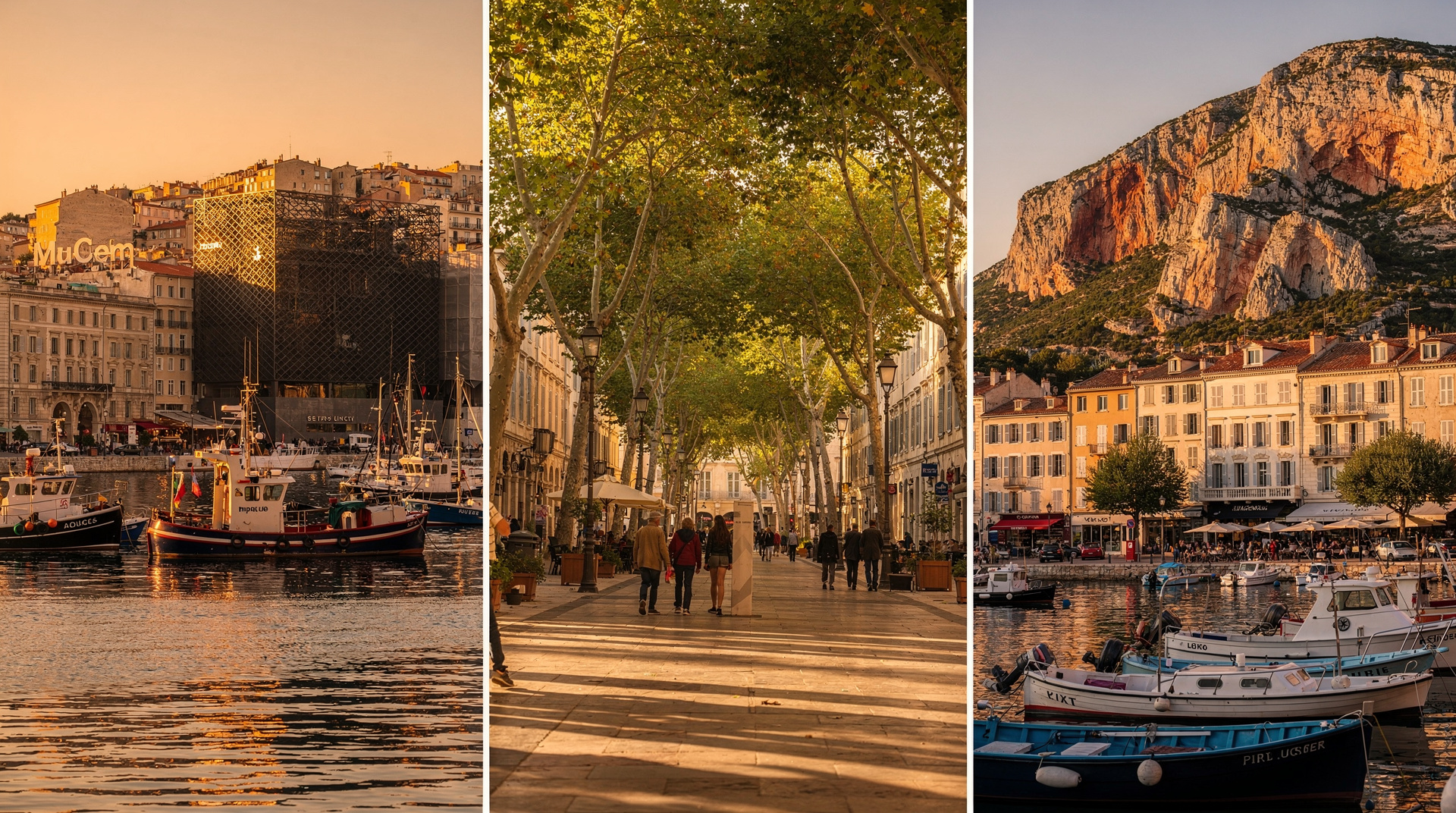
Staying in Marseille vs Aix-en-Provence: which base is right?
From Marseille: Cassis and Aix-en-Provence full-day tour
Duration: 8 hours
Should I base myself in Marseille or Aix-en-Provence?
Base in Marseille if the Calanques, Cassis, and coastal day trips are central to your trip. Base in Aix if you are focused on the Luberon, lavender country, and inland Provence. For a mixed itinerary of a week or more, start in Marseille and finish in Aix (or vice versa).
The base question is really a day-trip question
Where you stay in Provence determines what you can do efficiently from your base. The key question is not “which city is nicer to sleep in?” (though that matters too) — it is “what are the day trips I care about, and which city puts me closest to them?”
Marseille and Aix are 40 minutes apart by bus, 12 minutes by TGV between the two rail stations. Both cities have fast rail access to Paris. Both are reasonable bases for a Provence trip of any length. But their day-trip reach is genuinely different, and getting this choice right saves time and money.
| Marseille base | Aix base | |
|---|---|---|
| Best for | Calanques, Cassis, coastal Provence | Luberon villages, lavender, inland Provence |
| Getting between the two | Around 40 min by bus or 12 min by TGV | Same, reversed |
| Typical mid-range room | Around EUR 80–180/night | Around EUR 90–190/night |
| Car needed? | No — public transport covers most day trips | Helpful, close to essential for the Luberon |
| Evening pace | Late, lively, restaurants open past midnight | Calmer, cafés wind down earlier |
The first decision: what matters most in your trip?
Before comparing logistics, it helps to be clear about your priorities. The base-city question resolves quickly once you know what you are optimising for.
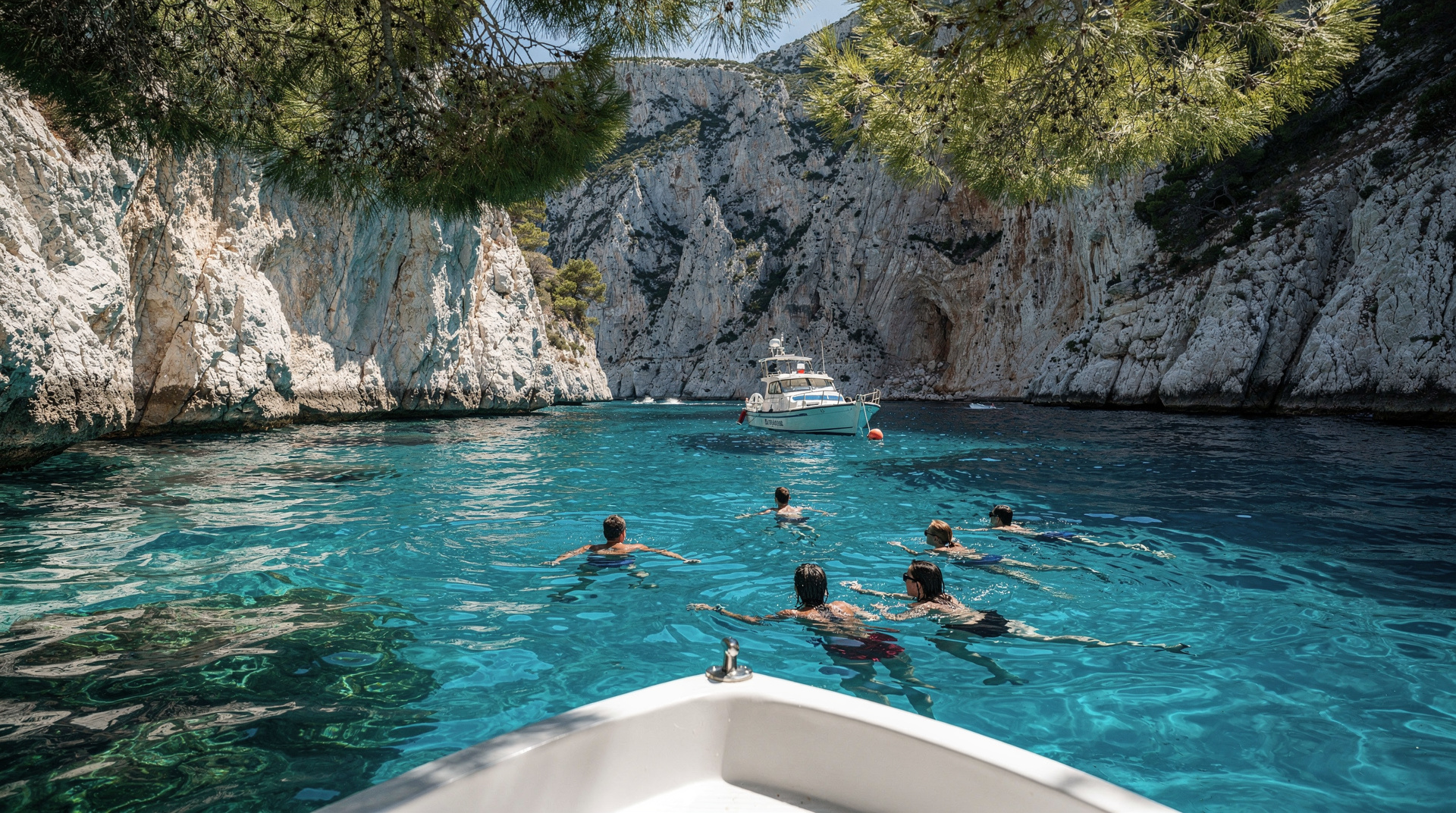
Optimising for the Calanques and the Mediterranean coast: Marseille. The Calanques are accessible without a car from the city. Cassis is 35 minutes by train. The entire Calanques National Park is on Marseille’s southern edge. No other base in the region puts you this close to this coastline.
Optimising for inland Provence — Luberon villages, lavender, perched villages: Aix. The road network from Aix into the Luberon is direct. Gordes, Roussillon, and Lourmarin are all under an hour by car. The lavender plateau at Valensole is an easy day trip. From Marseille, the same destinations require 30–40 additional minutes each way, which compounds over multiple day trips.
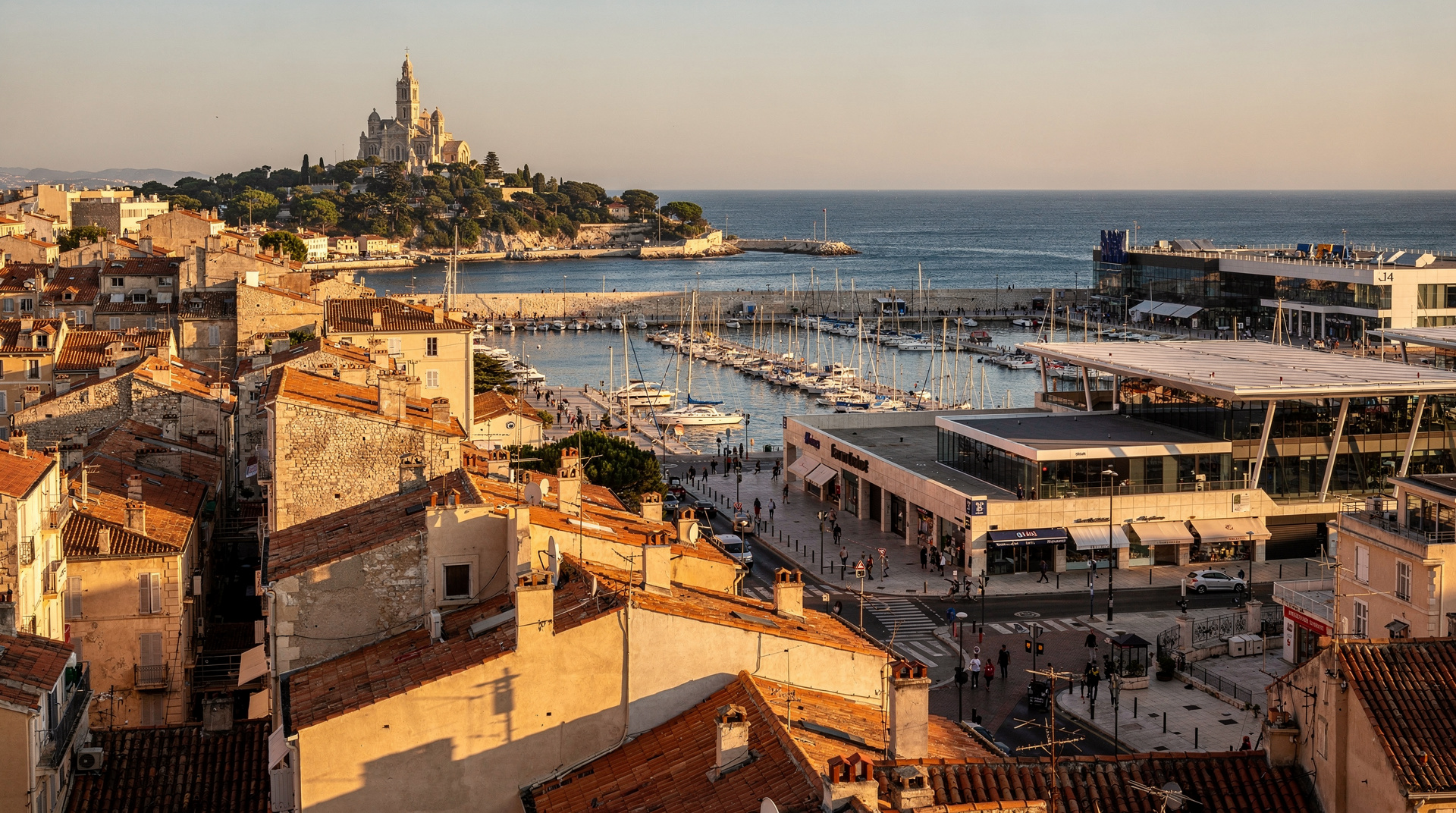
Optimising for the experience of being in a city: Marseille. For all its complexity, Marseille has more city — more neighbourhoods, more food cultures, more nightlife, more urban depth — than Aix, which is a beautiful and pleasant but relatively small and homogeneous city by comparison.
Optimising for quiet, comfort, and elegance: Aix. The Cours Mirabeau, the hotel particuliers, the smaller scale, the less chaotic streets — all of these make Aix a more conventionally comfortable base for visitors who find Marseille’s intensity difficult.
What you can reach from Marseille
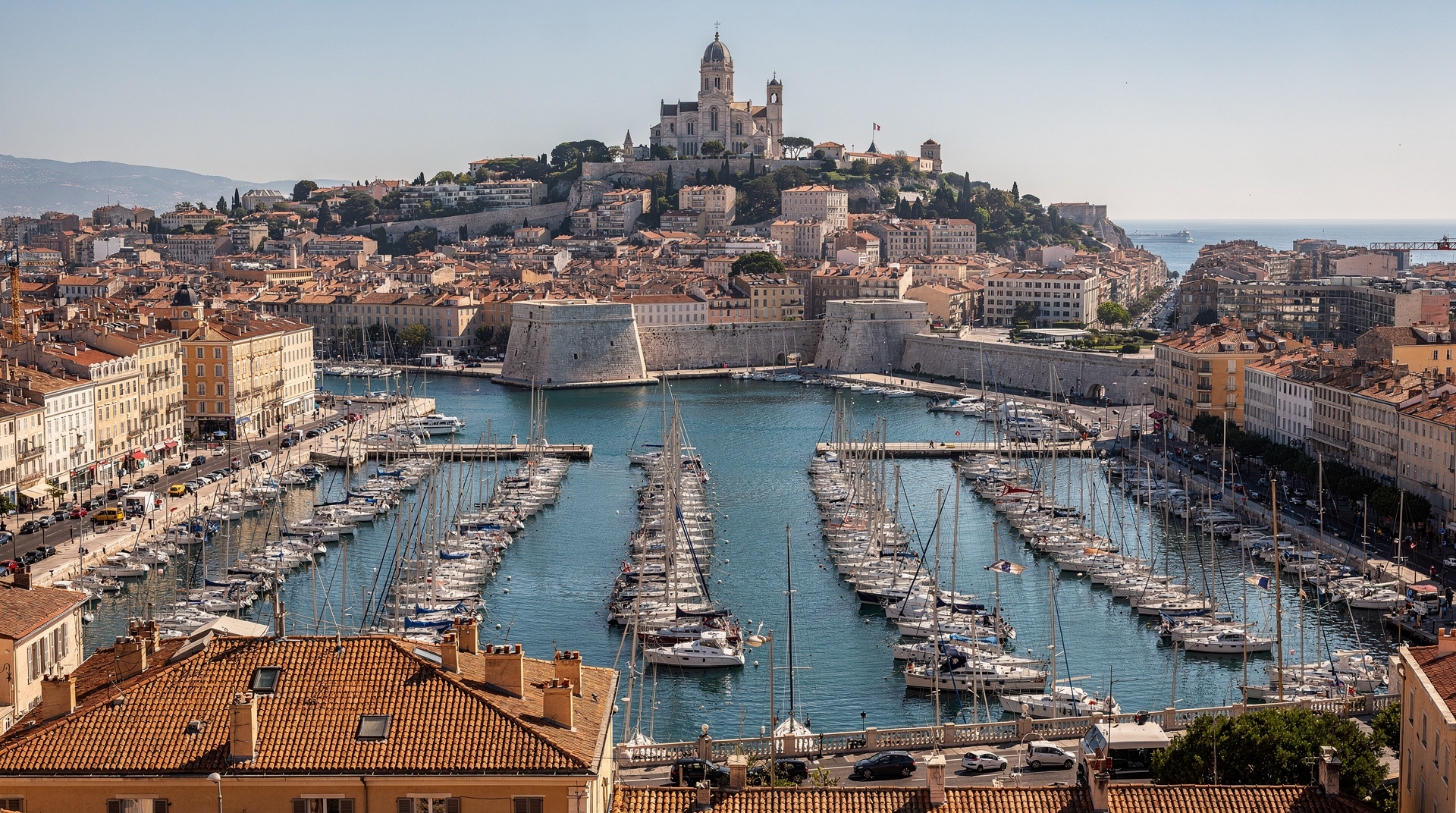
Coastal: Cassis (35 min by train), La Ciotat (50 min), the Calanques National Park (on foot from city, or by boat from the Vieux-Port), Frioul Islands (20 min ferry), Les Goudes and Côte Bleue (bus + coastal access).
Inland Provence: Arles (1 hour by train), Avignon (1 hour TGV from Saint-Charles), Aix-en-Provence (40 min bus or 12 min TGV to Aix TGV station + bus to town), Aubagne (20 min).
The Luberon: Possible but slow. Without a car, the Luberon from Marseille requires Aix TGV + bus or taxi — allow 1.5–2 hours to reach Gordes or Roussillon. With a car, around 1.5 hours.
Verdict for Marseille base: Excellent for coastal Provence (Calanques, Cassis, Côte Bleue, Frioul). Good for the main Rhône-Provence cities (Arles, Avignon). Slow for deep Luberon and lavender country.
If the coast is your reason for coming, the Calanques National Park and Cassis are the two places a Marseille base serves best. The Calanques boat vs hike guide helps you choose between the two ways in, and the Cassis day trip guide covers the rest of that outing.
What you can reach from Aix-en-Provence
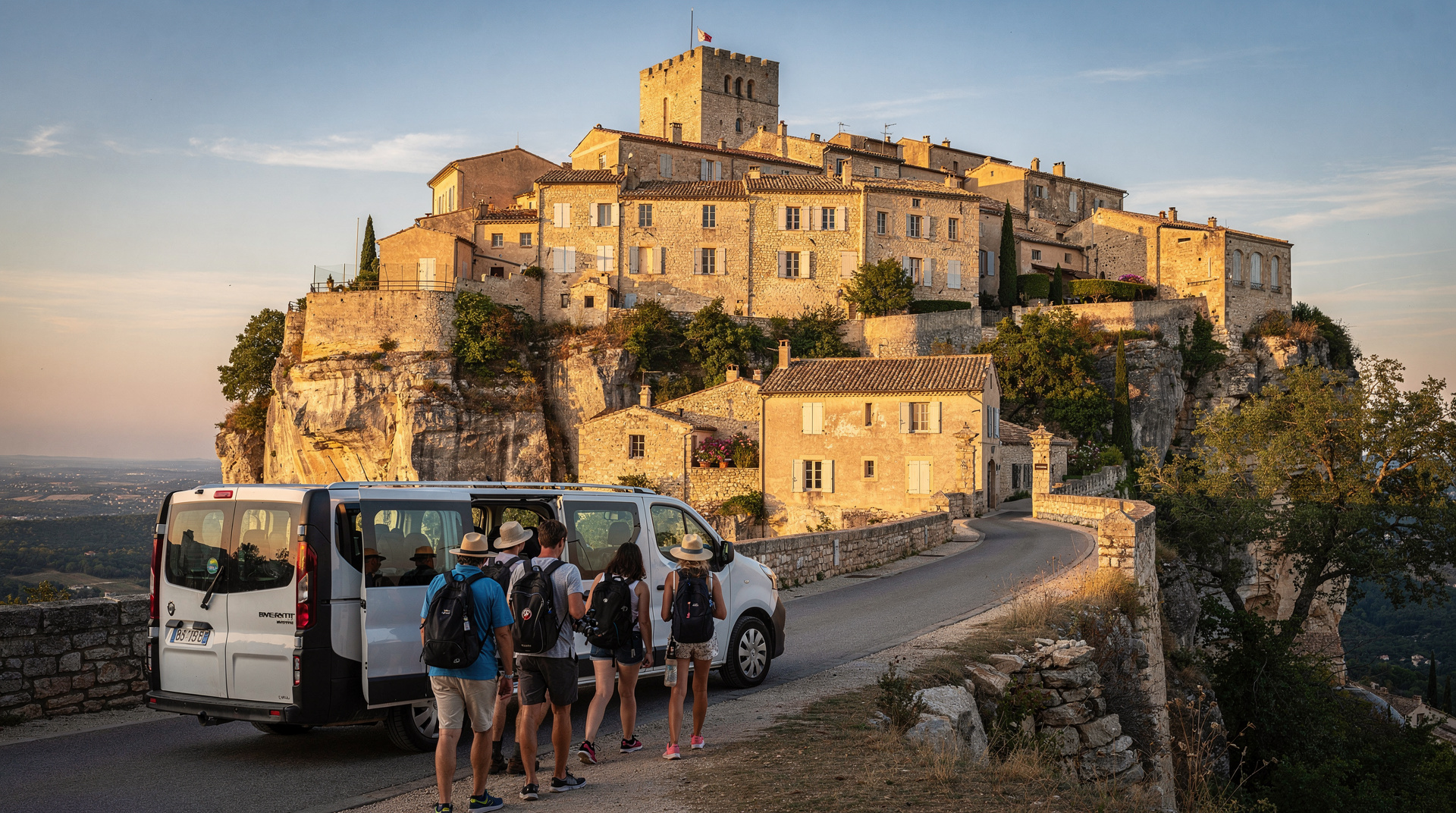
The Luberon: Gordes (~45 min by car), Roussillon (~55 min), Lourmarin (~40 min), Apt (30 min). Aix is the natural Luberon base. By car, you can reach two Luberon villages and a market in a comfortable day. Without a car, the bus network to Luberon villages is limited and the Luberon is significantly harder.
Lavender country: Valensole plateau (~1 hour by car). For lavender season (mid-June to mid-July), Aix is considerably more efficient than Marseille as a base — the plateau is 30 minutes closer and accessible by a guided tour if you prefer not to drive.
Avignon: 45 min by TGV. Roughly equivalent to Marseille (different direction but similar time).
Marseille: 40 min by bus or 12 min TGV. Cassis is 35 min by train. The coast is accessible from Aix — it is just a slightly longer day.
Verdict for Aix base: Excellent for inland Luberon day trips and lavender season. Good for Avignon and the Rhône cities. Slower for the Calanques and Marseille coast (possible, but adds 40 minutes each way relative to basing in Marseille).
For inland days, the Luberon villages are the main draw of an Aix base, and the Luberon villages day trip guide shows how a circuit fits together. If lavender is the reason you are travelling, read the lavender season guide before you fix your dates.
Transport connections compared
Both cities have direct TGV access from Paris (Gare de Lyon). Marseille Saint-Charles is a larger, more central station with more frequent direct TGV services. The Aix-en-Provence TGV station is on the edge of town and requires a bus connection to the centre (15 minutes, EUR 5).
The Marseille airport (MRS) is closer to Marseille than to Aix. A taxi from MRS to central Aix costs around EUR 40–55; to Marseille’s Vieux-Port area, around EUR 40–50 by taxi or a shuttle bus and metro combination for around EUR 10.
If you are flying from outside Europe and need international connections, Nice’s airport (NCE) is 2.5 hours from Marseille by TGV but has far more international routes than MRS. Some itineraries benefit from flying in and out of different airports — in/Nice, out/Marseille, or the reverse.
Atmosphere and evening life
Marseille evenings: The Vieux-Port terraces stay busy until late. Cours Julien has bars and live music. The city has a nightlife ecosystem that goes past midnight. The restaurant scene has genuine depth. For travellers who want an active city evening after day trips, Marseille is substantially more alive.
Aix evenings: The Cours Mirabeau cafés are pleasant but close relatively early. The old town has good restaurants. Aix has the atmosphere of a wealthy provincial university town in the evening — pleasant, calm, and not particularly exciting after 22:00. For travellers who want a quiet early dinner and a comfortable early bedtime after long days, Aix suits this rhythm better.
Prices and accommodation
Mid-range accommodation is broadly comparable. Both cities have hotels at EUR 80–180 per night for a comfortable central option. Aix’s centre has fewer budget options (hostels, very cheap hotels) than Marseille. Marseille has more price variation — both cheaper budget options and a wider range of neighbourhoods at different price points.
Restaurant prices: Aix’s Cours Mirabeau zone is expensive (EUR 18–30 for a main course in a good restaurant). Marseille’s tourist strip is similarly expensive; Marseille’s neighbourhood restaurants are cheaper. For budget-conscious travellers, Marseille’s market eating and neighbourhood restaurant scene provides more value.
The social experience of each base city
Basing yourself in a city is not only about logistics — it is about what the city feels like to move through and rest in every day.
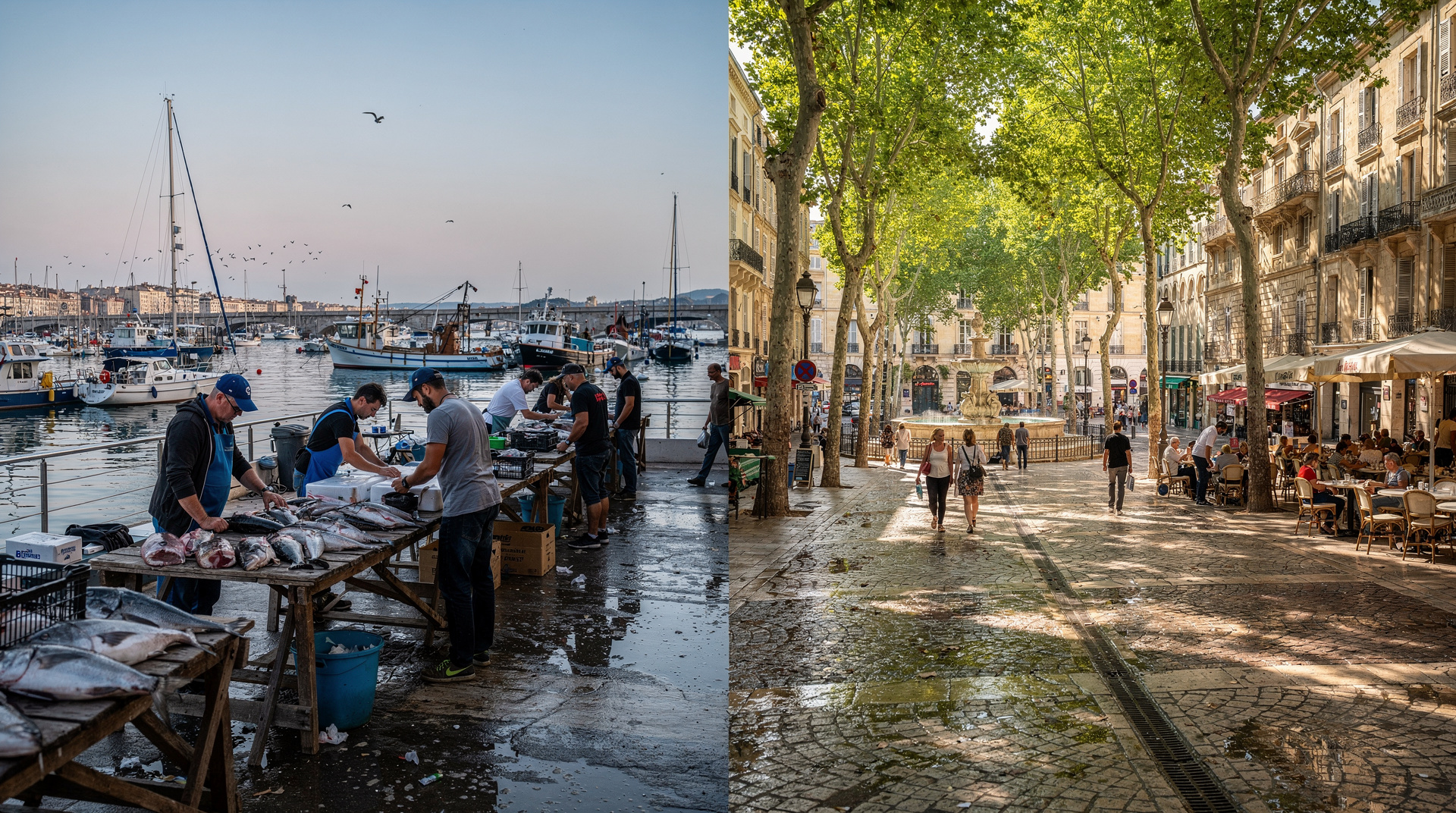
Daily life in Marseille: The city is loud and fast. The Vieux-Port area in the morning — the fish market, the coffee at a harbour terrace, the boats preparing for the day’s tours — is one of the more enlivening urban morning experiences in France. The noise of traffic, the energy of the markets, the visual complexity of a city that is Mediterranean, French, North African, and Provençal at once — these things make Marseille feel alive in a way that some visitors find stimulating and others find exhausting.
Returning to a Marseille hotel after a long day trip to the Calanques or Cassis means returning to a city that is still going — restaurants and bars open, the Vieux-Port animated, things to do. This is energising if you have the capacity for it and overwhelming if you do not.
Daily life in Aix: The pace is different. The Cours Mirabeau in the morning — café au lait under the plane trees, the market on Tuesday, Thursday, and Saturday on Place Richelme — is pleasant and ordered. The old town is quiet enough to appreciate its architecture properly. The scale is human: you can walk from one end of the historic centre to the other in 15 minutes.
Returning to Aix after a full day in the Luberon or at Cassis means returning to a small, calm, elegant city that closes relatively early. This is right for visitors who want their base city to be a rest point rather than a stimulation point.
Neither of these is objectively better. They reflect different ideas about what a city should feel like when you are using it as a base for a travelling life.
Practical daily costs
A practical comparison of daily costs for typical tourist spending (accommodation excluded):
| Item | Marseille | Aix-en-Provence |
|---|---|---|
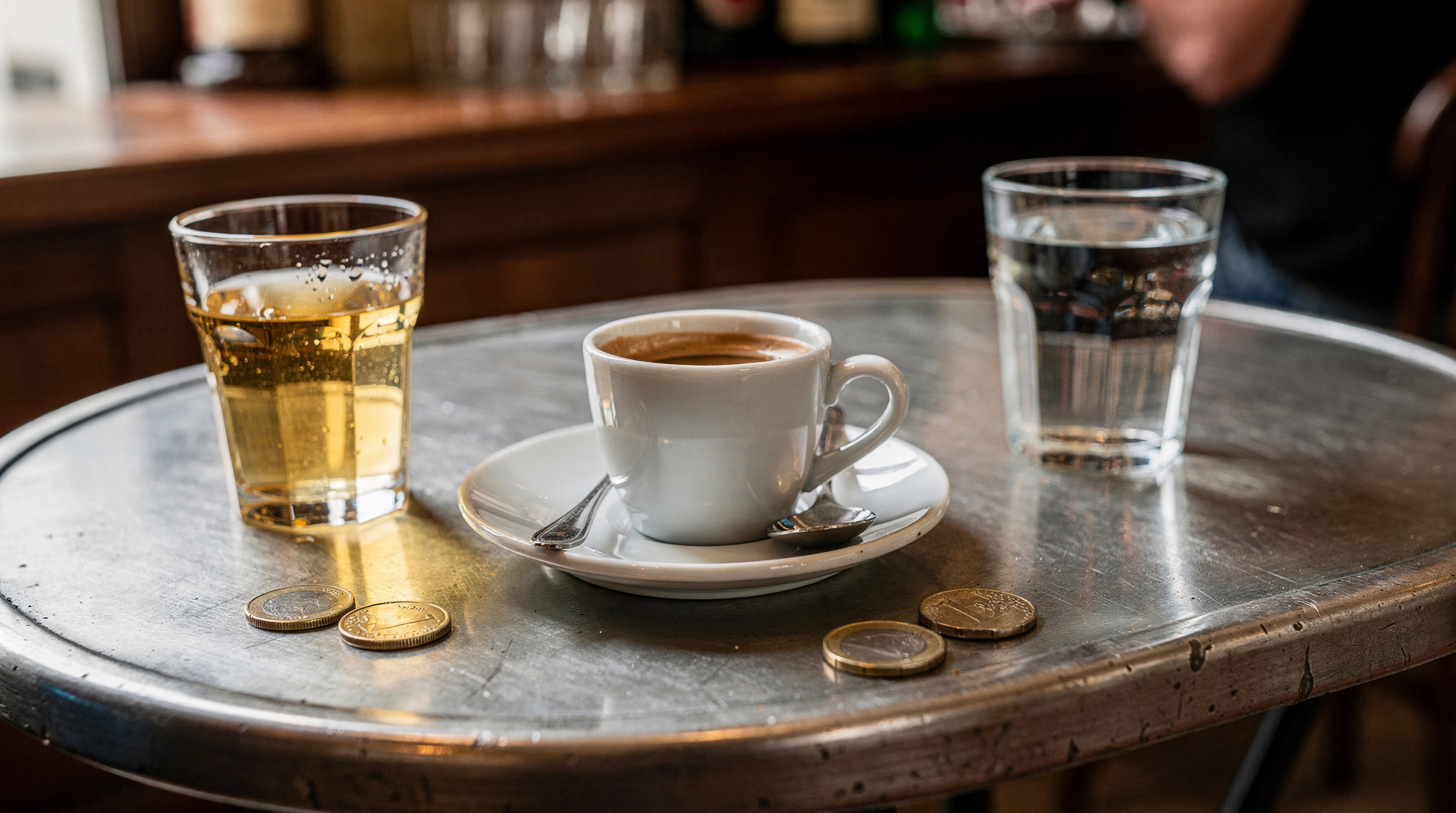
| Morning coffee | EUR 1.80–2.50 | EUR 2.50–3.50 |
| Lunch (restaurant, 2 courses) | EUR 15–22 (neighbourhood) / EUR 22–35 (Vieux-Port) | EUR 20–35 (centre) |
| Dinner (restaurant, 2 courses + wine) | EUR 30–55 | EUR 35–65 |
| Bus/metro day pass | EUR 5.20 (RTM) | EUR 4–8 (depends on route) |
| Supermarket lunch | EUR 8–12 | EUR 10–15 |
Marseille is marginally cheaper for daily food spending, primarily because it has more price tiers — the neighbourhood restaurants and market food options are significantly cheaper than anything equivalent in Aix’s centre.
The verdict by trip type
Base in Marseille if:
- The Calanques are central to your trip
- You want an active, cosmopolitan city base rather than a quiet Provençal town
- You are combining coastal and city activities
- You are visiting outside lavender season and the Luberon is not a priority
Base in Aix-en-Provence if:
- Your primary interest is the Luberon villages — Gordes, Roussillon, Lourmarin
- You are visiting in lavender season (mid-June to mid-July) and Valensole is a priority
- You prefer a quieter, more elegant base city
- You are travelling by car and want easy day-trip access to inland Provence
Split the base if: You have 6 or more days. Three or four nights in Marseille for the city, Calanques, and Cassis; two or three nights in Aix for the Luberon and lavender route. The TGV between them (12 minutes) makes moving between bases painless.
With or without a car?
This question significantly affects the base-city choice.
With a car, from Aix: The Luberon is 40–60 minutes away and easily done in a circuit. Valensole lavender in season is under an hour. Gordes, Roussillon, and Lourmarin are all independently accessible. The road network from Aix into inland Provence is good. Having a car makes Aix substantially more efficient as an inland Provence base.
With a car, from Marseille: The Calanques road access (restricted for Sormiou and Morgiou in summer) is a complication rather than a convenience — you are often better served by bus or bike than driving to the Calanques. For day trips to Arles, Avignon, and the Rhône valley, the A7 autoroute is direct. For the Luberon from Marseille by car, the same roads are available but 30–40 minutes further.
Without a car, from Marseille: This works very well. The train reaches Cassis, La Ciotat, Arles, and Avignon. Bus 21B reaches the Luminy trailhead for the Calanques. The metro and city buses cover the city. Marseille’s public transport network is adequate for a tourist visit without a car.
Without a car, from Aix: Aix has a bus network but it is not excellent for day trips. The Luberon villages require a car or an organised tour — the bus routes are infrequent and often require changes. Avignon is accessible by train. For a car-free trip in Provence, Marseille is a significantly better base.
Accommodation style comparison
Marseille accommodation: A wide range from budget hostels (several in the centre) through mid-range city hotels (independent and chain) to boutique options in renovated buildings in Cours Julien and the Panier area. The Intercontinental and AC Marriott represent the higher end at the Vieux-Port. Serviced apartments work particularly well in Marseille for families and longer stays.
Aix accommodation: Fewer budget options; the centre has several excellent boutique hotels in converted hôtels particuliers. The atmosphere in Aix’s nicer hotels (converted mansions with inner courtyards and refined Provençal style) is more distinctive than anything Marseille’s mid-range offers. For a special-occasion trip, an Aix boutique hotel beats a comparable Marseille option on atmosphere.
The split-base option in practice
Splitting a longer trip (6+ nights) between the two cities is the most efficient way to see both the coast and inland Provence. A practical structure:
- Nights 1–3: Marseille. Arrival, city acclimatisation, Calanques boat tour, Cassis day trip.
- Night 3 or 4: move to Aix by bus (40 min, EUR 6).
- Nights 4–6: Aix. Luberon circuit, market visit, lavender in season.
The one-way journey between them is simple and inexpensive. There is no need to return to Marseille for a departure flight — the Aix TGV station connects directly to Paris and other French cities, and the Marseille airport is accessible from Aix by taxi (EUR 40–55).
For the character comparison between the two cities — beyond the logistics — see Marseille vs Aix-en-Provence. For detailed Marseille neighbourhood choices, see where to stay in Marseille. For getting between the two cities, see Marseille to Aix transport.
If you want a ready-made plan rather than building one yourself, the Marseille, Aix and Cassis in 3 days itinerary shows how the two bases and the coast can be strung together. For the cities themselves, see the Aix-en-Provence and Marseille destination pages, and do you need a car in Provence if the car question is still open.
Short-stay verdict: 2–4 nights
For a short trip, splitting the base rarely makes sense — the packing and moving overhead eats into your limited time. Pick one:
- 2–3 nights, coast-focused: Marseille. You can fit the city, a Calanques hike or boat tour, and a Cassis day trip without rushing.
- 2–3 nights, inland-focused: Aix, especially in lavender season (mid-June to mid-July) or if the Luberon villages are the priority.
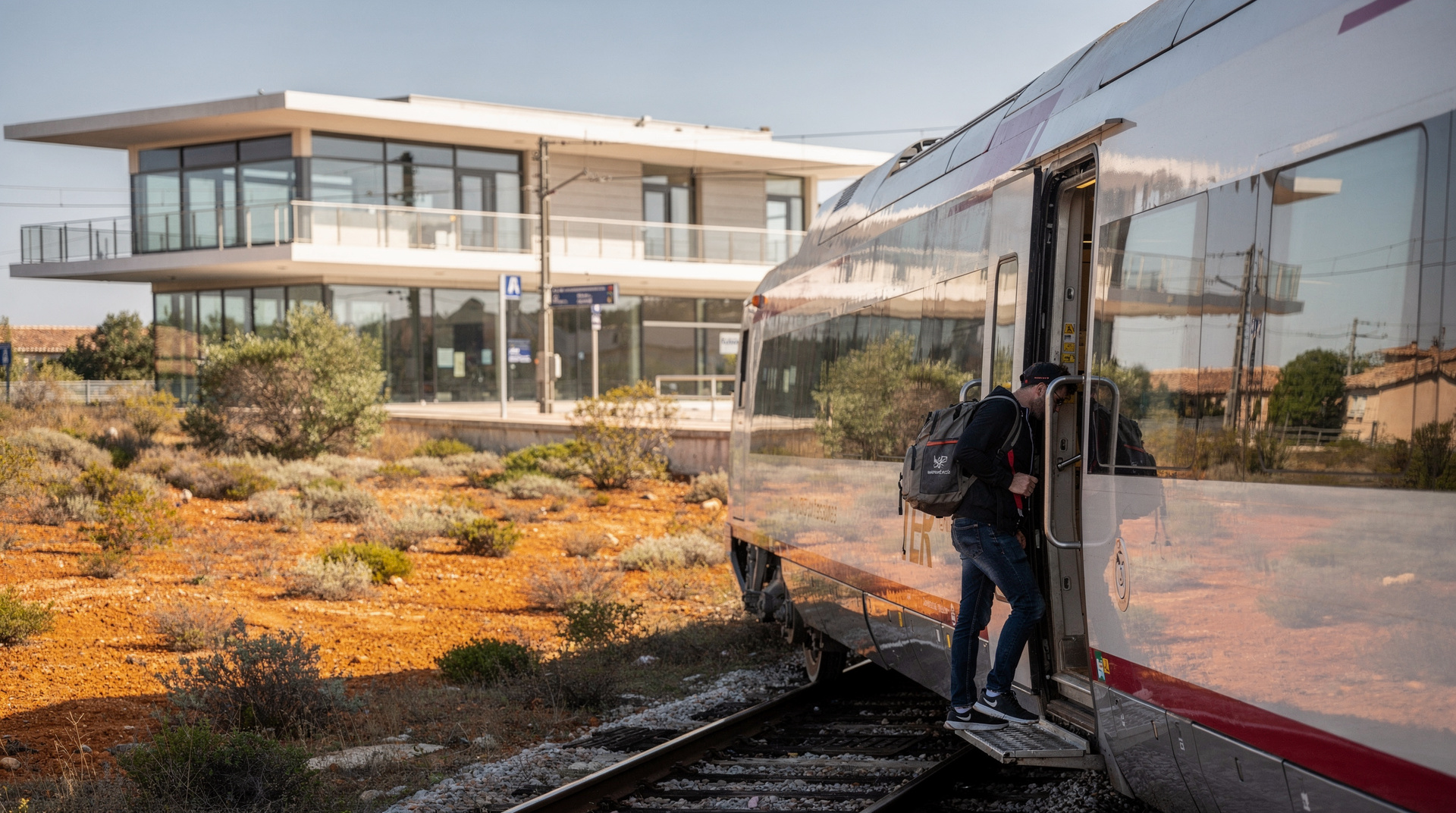
- 4 nights, want both: Still workable from a single Marseille base — Aix itself is a straightforward day trip by TER, so you get the city without moving hotels.
Frequently asked questions about Staying in Marseille vs Aix-en-Provence
Is it cheaper to base in Marseille or Aix?
Marseille, generally. Accommodation is broadly comparable, but Marseille has more budget options (hostels, cheaper neighbourhood hotels) and a wider range of affordable restaurants, especially away from the Vieux-Port tourist strip. Aix’s centre skews toward mid-range and boutique, with fewer budget beds.
Can I visit the Calanques while based in Aix?
Yes, but it adds roughly 40 minutes each way compared with a Marseille base — take the bus or TGV into Marseille, then a bus to the Luminy or Les Goudes trailheads, or a boat tour from the Vieux-Port. It’s a full day out rather than a half-day, so plan accordingly; see the Calanques crowds guide for timing tips.
Top experiences
Bookable activities with verified prices and instant confirmation on GetYourGuide.