Aix-en-Provence day trip from Marseille: the complete guide
Aix-en-Provence: private walking tour
Is Aix-en-Provence worth a day trip from Marseille?
Yes — one of the best. The TER train takes 43 minutes (35+ trains daily), the old town is completely walkable, and Aix works for markets, Cézanne, wine tasting, or simply wandering Cours Mirabeau. Go on Tuesday, Thursday, or Saturday for the open-air market.
The case for Aix as a day trip
| Where | Aix-en-Provence, Bouches-du-Rhône, about 30 km north of Marseille |
| Cost | Train from around EUR 7 each way; museum/studio entries EUR 6-8 each; a day including lunch and one paid sight runs roughly EUR 40-60 per person |
| Time needed | A full day (7-8 hours on site) to do the market, Cours Mirabeau, Atelier Cézanne, and lunch without rushing |
| Getting there | TER train from Marseille Gare Saint-Charles, around 43 minutes, 35+ trains daily |
| Best time | Tuesday, Thursday, or Saturday morning for the market; spring and autumn for comfortable walking weather |
Aix-en-Provence is not a spectacular landscape the way Cassis is. It does not have the grand Roman monuments of Arles. What it has is something rarer in Provence: a genuinely liveable, beautiful city that works as well for a focused cultural day as it does for leisurely wandering.
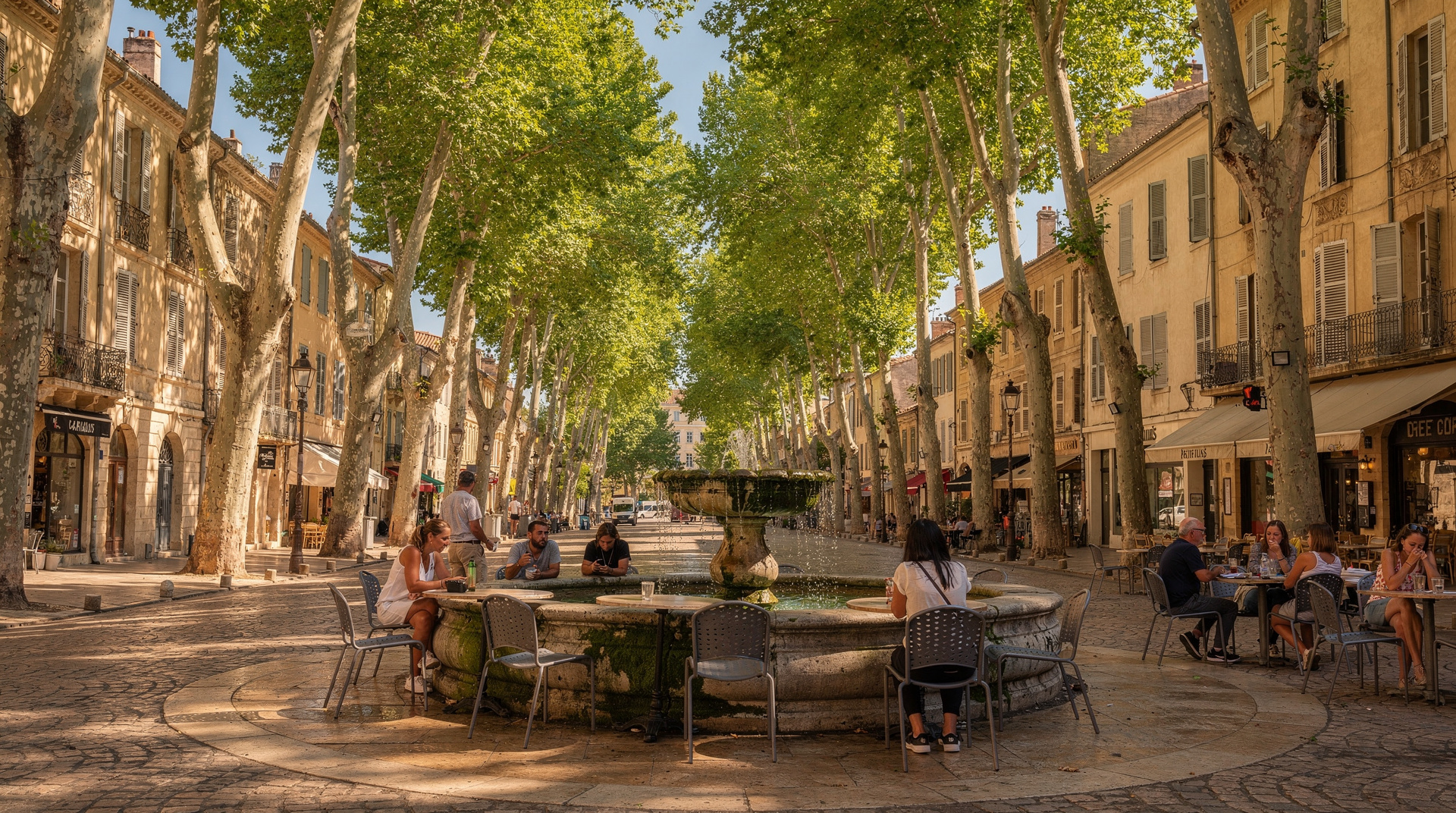
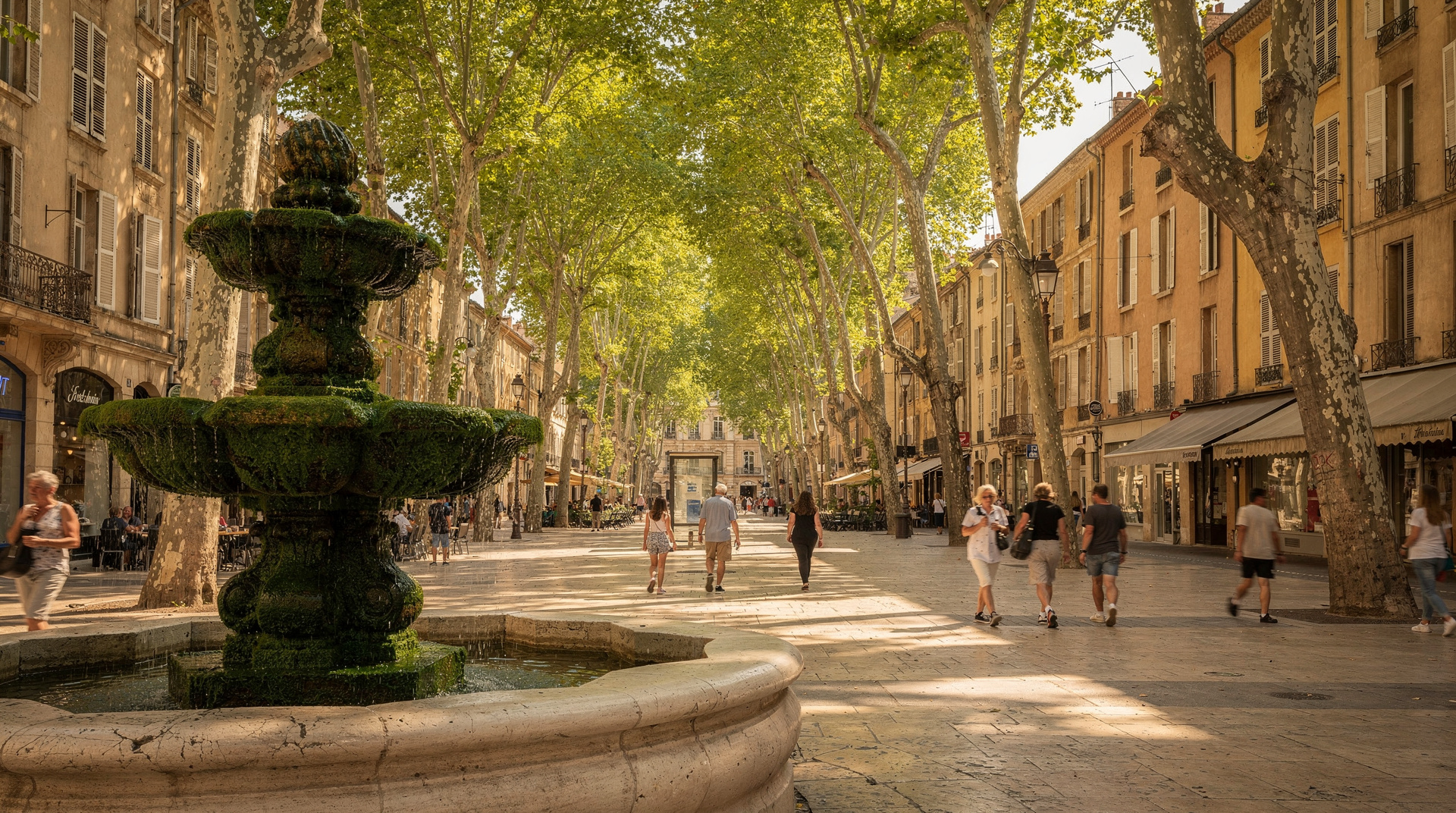
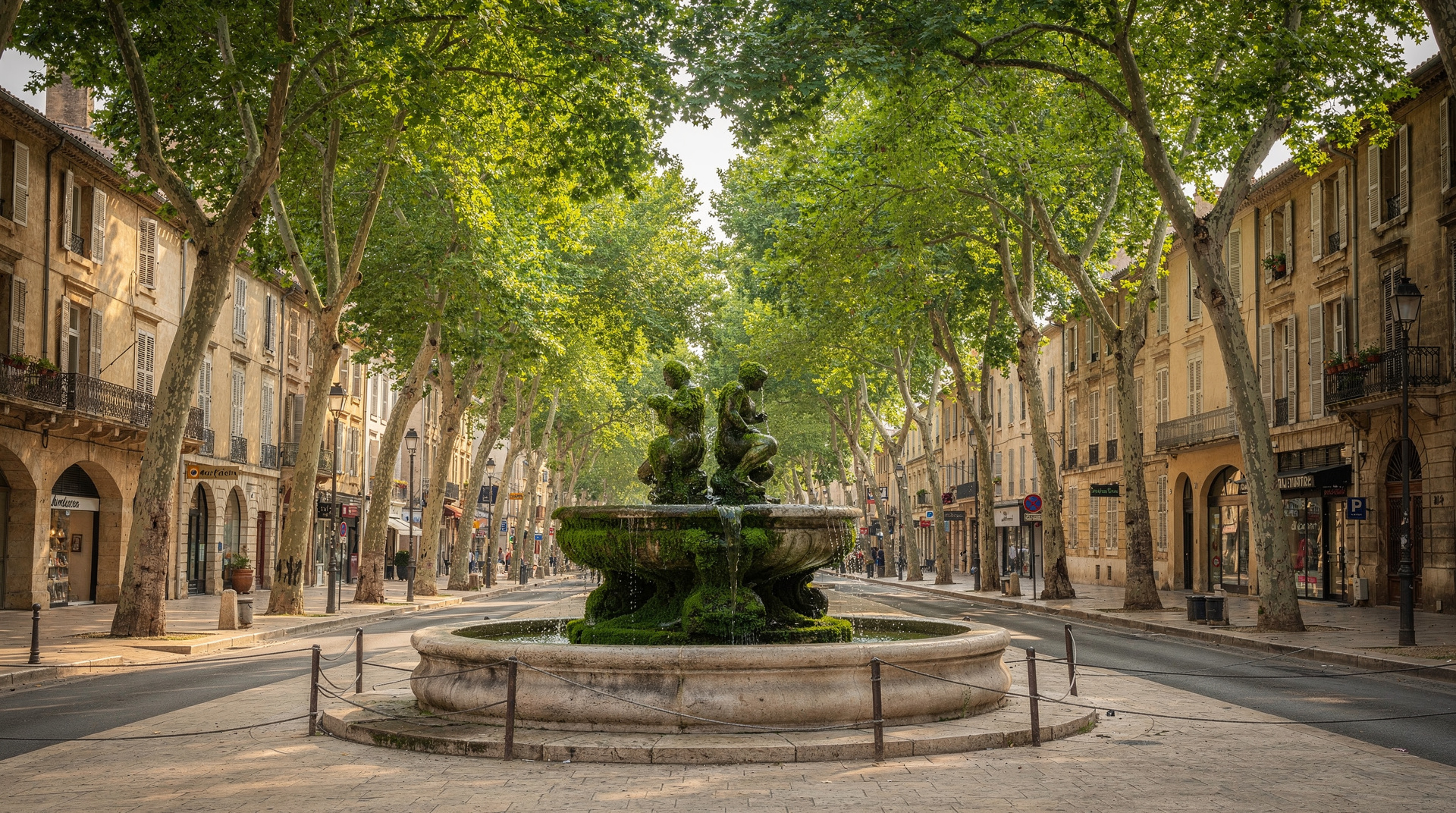
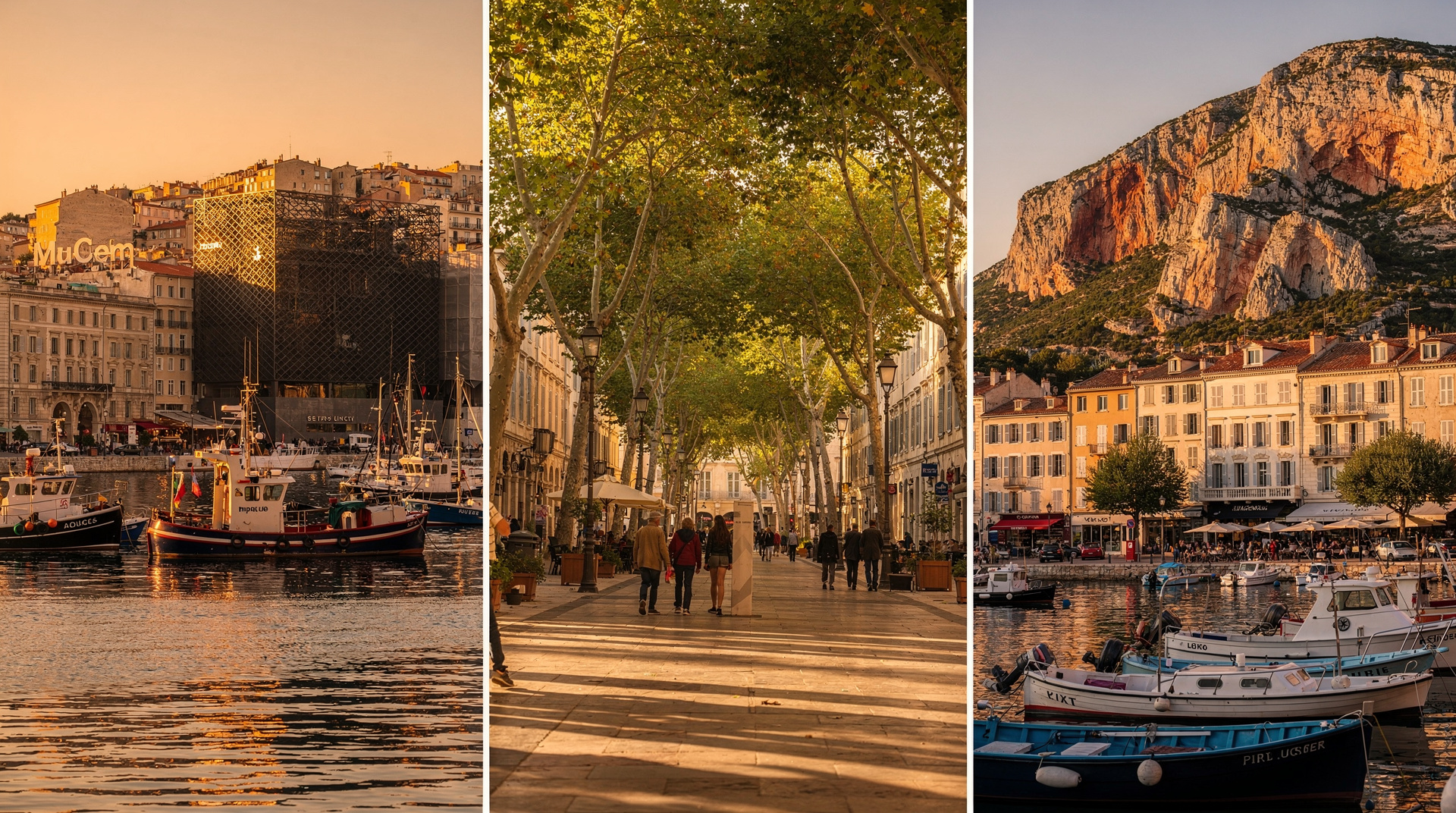
The Cours Mirabeau — the grand avenue of plane trees and flowing fountains that bisects the old town — is one of the finest urban streets in the south of France. The market culture (three mornings a week, year-round) is authentic and excellent. The city’s connection to Paul Cézanne — who was born here, died here, and spent decades painting the surrounding landscape — gives it a specific art-historical depth that rewards anyone who cares about painting. And the train from Marseille takes 43 minutes.
Getting there from Marseille
By train (recommended)
TER trains run from Marseille Gare Saint-Charles to Aix-en-Provence Centre throughout the day. Journey time: approximately 43 minutes. Frequency: 35+ trains daily. Fares from approximately EUR 7 each way.
Critical note on stations: Aix has two stations. Aix-en-Provence Centre (in the city, correct station for day trips) and Aix-en-Provence TGV (8 km outside the city, for high-speed Paris trains only). All TER trains from Marseille go to the Centre station. Do not get off at the TGV station.
At Aix-en-Provence Centre station, walk south down Avenue Victor Hugo to reach Cours Mirabeau in about 10-12 minutes.
By car
Approximately 35 minutes on the A51 motorway north from Marseille. Exit at Aix-en-Provence Centre, follow signs for the Parking Mignet or Parking des Augustins near the old town. Parking is EUR 1.50-2.50/hour in the central car parks. Aix traffic can be slow on market mornings.
What the day actually looks like
Start at the market (Tuesday, Thursday, or Saturday morning)
The main Aix market takes place in the streets around Place Richelme and Place des Prêcheurs from approximately 7:00 to 13:00. The food market on Place Richelme is the most photogenic: local farmers selling vegetables, fruit, cheese, flowers, and herbs directly from their stalls. The broader market on Place des Prêcheurs includes clothing, Provençal linens, and crafts.
Saturday is the best day. The market expands significantly, and the city has a more festive atmosphere. If you can time your visit for a Saturday, do.
If your visit falls on a Monday, Wednesday, Friday, or Sunday, the daily flower market on Place de la Mairie still runs, but the main food market does not.
Cours Mirabeau: the central axis
From the market square, walk west along any of the old-town streets to reach Cours Mirabeau — a wide avenue shaded by double rows of plane trees with four fountains along its length. The most famous is the Fontaine de la Rotonde at the western end, an elaborate multi-tiered structure at the main roundabout.
The north side of Cours Mirabeau (the “Café side”) has the main brasseries and cafés; the south side has fine-art galleries, expensive wine shops, and the façades of 17th and 18th-century hôtels particuliers. Les Deux Garçons (no. 53) is the historic café where Cézanne, Zola, and Picasso are said to have sat — it is now a typical tourist café, but the marble interior is worth a look.
The Atelier Cézanne
Paul Cézanne’s studio, located 1.5 km north of Cours Mirabeau at 9 Avenue Paul Cézanne, is the most specific cultural destination in the city. The studio has been preserved largely as Cézanne left it in 1906: his coat hangs on the wall, his easel and still-life objects (skulls, pots, fabric) remain as he arranged them. He painted the Bathers series here in his last years.
Practical: Open daily (check hours for 2026 on atelier-cezanne.com), entry approximately EUR 8 adult. Guided visits available. The 30-minute walk from Cours Mirabeau passes through the residential neighbourhood Cézanne knew as a boy; a 15-minute bus ride (Line 5) also connects.
Sainte-Victoire: the mountain Cézanne painted
From various points in Aix, you can see Mont Sainte-Victoire to the east — the rocky limestone ridge Cézanne painted over 60 times. The best views are from the Route Cézanne (D17) east of the city, accessible by car or the occasional bus to Le Tholonet village.
If you have a car, the viewpoint from the Plateau de Bibémus (where Cézanne had a rented shed for painting) is the most photogenic angle. The mountain itself offers hiking — the GR9 trail to the summit (945 m) takes 2-3 hours from the base. This is ambitious for a day trip but possible for active visitors who start early.
Wine tasting
Aix sits within the Coteaux d’Aix-en-Provence AOC, producing mostly rosé and some red and white wines from the surrounding landscape. Several wine bars in the old town offer structured tastings; the most convenient is a 45-minute session at a wine shop near Cours Mirabeau.
For a deeper experience, the half-day wine tour through Cézanne’s countryside (available through GYG operators) visits two or three estates in the agricultural landscape east of Aix and includes Sainte-Victoire views along the way.
The Granet Museum (Musée Granet)
For art lovers who want more than the Cézanne studio, the Granet Museum on Place Saint-Jean-de-Malte houses a permanent collection including nine Cézanne paintings (the largest public holding in Aix), drawings by Ingres, and Provençal and Flemish works. Entry approximately EUR 6 adult; free first Sunday of the month. Allow 1.5-2 hours.
Where to eat in Aix-en-Provence
The café and restaurant density on Cours Mirabeau itself caters heavily to tourists — reliable but not exceptional. The best eating is one or two streets into the old-town grid:
- Rue de la Verrerie and Place des Cardeurs: local lunch spots, set menus EUR 14-20
- Rue Rifle Rafle: slightly edgier, natural wine-friendly spots popular with the local student population
- The market area around Place Richelme: food stalls and sandwich vendors for a cheaper standing lunch among the market activity
Typical Aix lunch: socca (chickpea pancake, not as common as in Nice but found here), tapenade, local cheese, a glass of Coteaux d’Aix rosé.
A practical timed itinerary (Saturday market day)
08:30 — TER from Gare Saint-Charles (arrives Aix ~09:15)
09:15-09:30 — Walk to the market area via Cours Sextius
09:30-11:00 — Place Richelme and Place des Prêcheurs market — slow wander, tastings, purchases
11:00-12:00 — Cours Mirabeau walk, Les Deux Garçons for coffee
12:00-13:30 — Lunch in the old town
13:30-15:00 — Atelier Cézanne visit (walk or bus)
15:00-16:30 — Granet Museum or wine tasting in the centre
16:30 — Walk back to the Centre station (10-12 min)
17:00 — TER back to Marseille (arrives Saint-Charles ~17:43)
This leaves you in Marseille with a free evening — Cours Julien for drinks at 19:00, dinner at 20:30.
Combining with Cassis
The Cassis-and-Aix combination is the most popular two-destination day trip from Marseille, and it works on a single long summer day with planning. Organised full-day tours (available via GYG) run this route with a guide and transport. If doing it independently, go to Cassis in the morning (TER, early boat tour) and Aix in the afternoon (TER from Cassis to Marseille then change, or taxi from Cassis to Aix directly — about 30 minutes by road). This is a full day, but not an exhausting one.
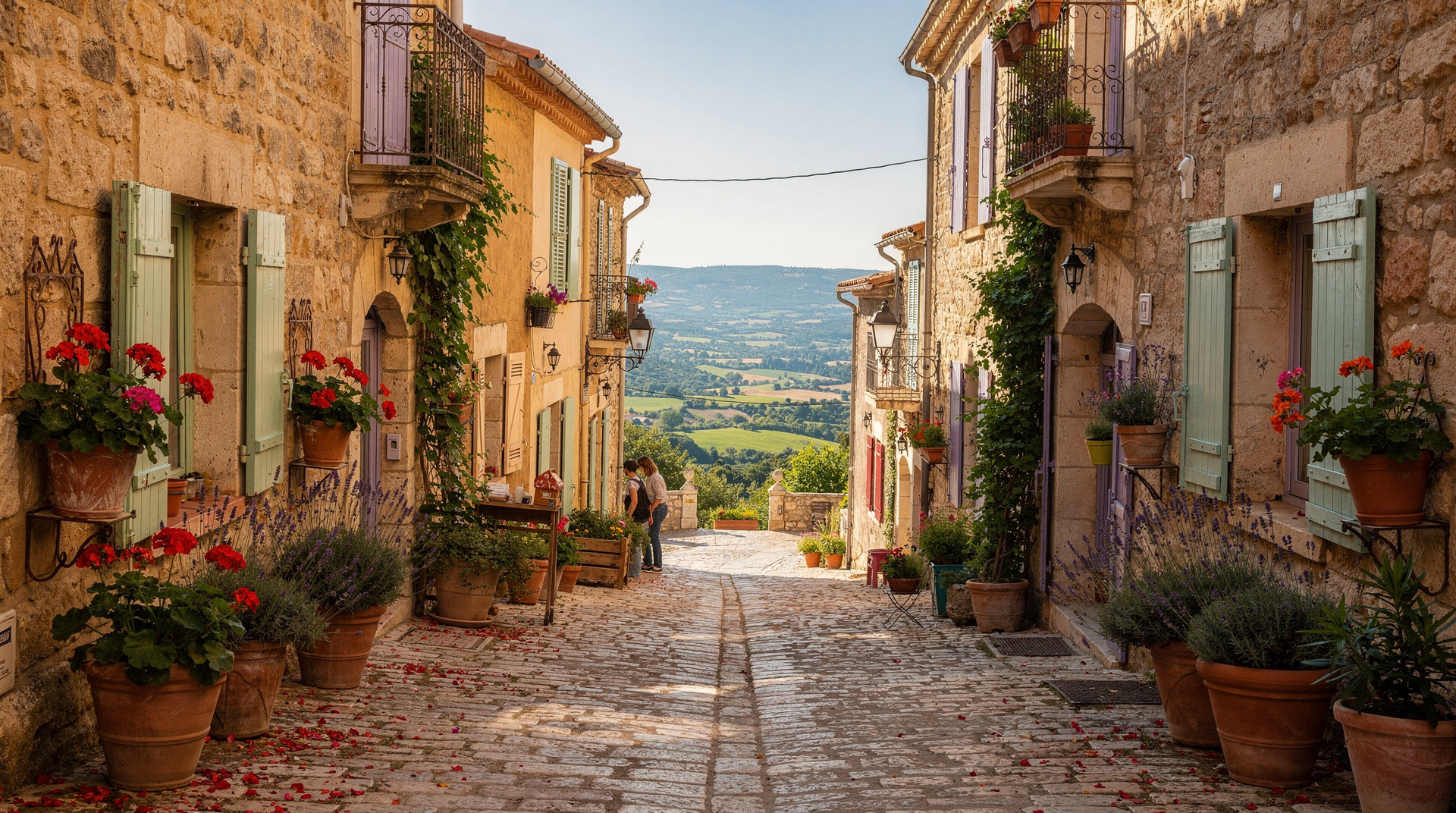
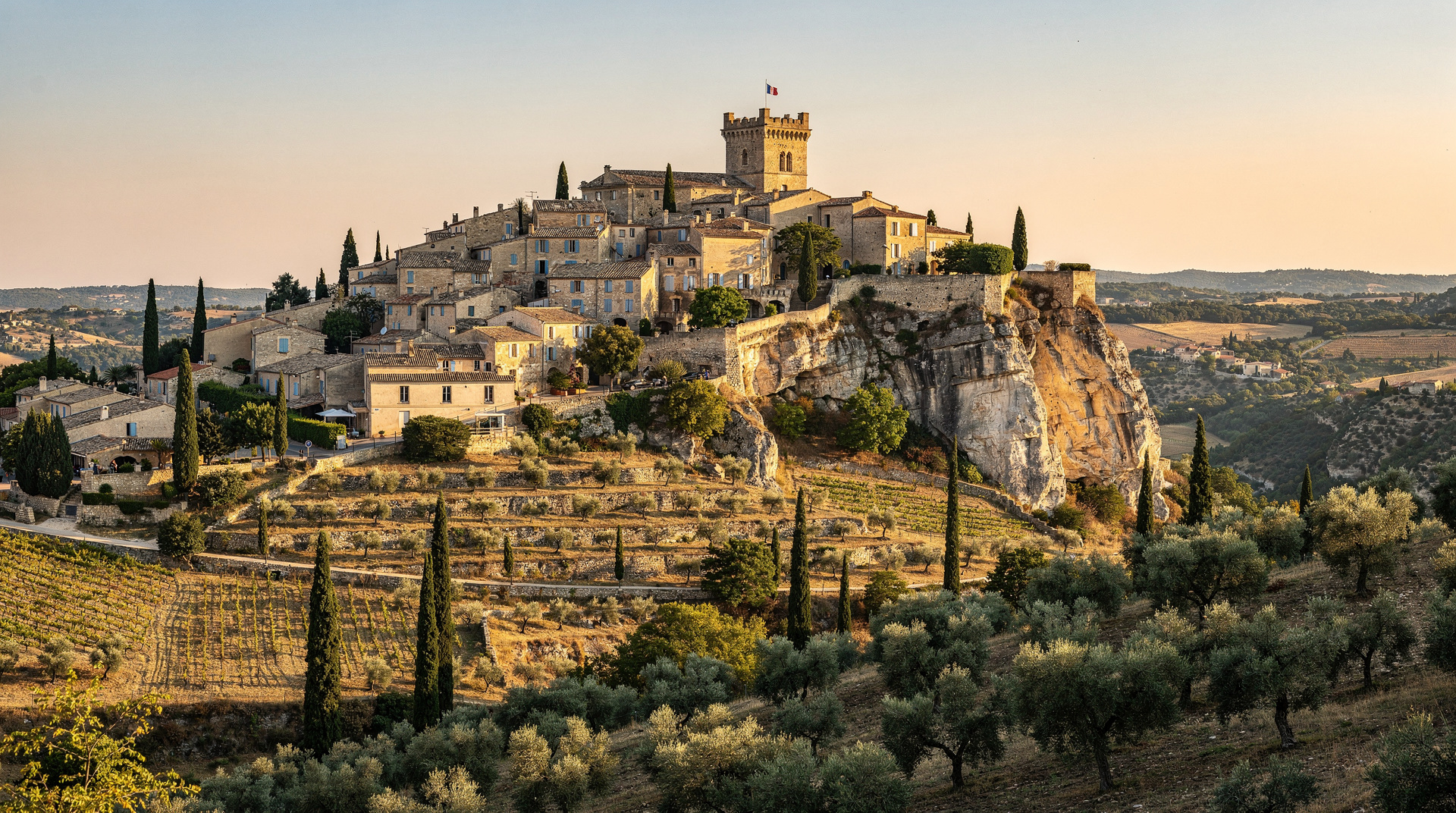
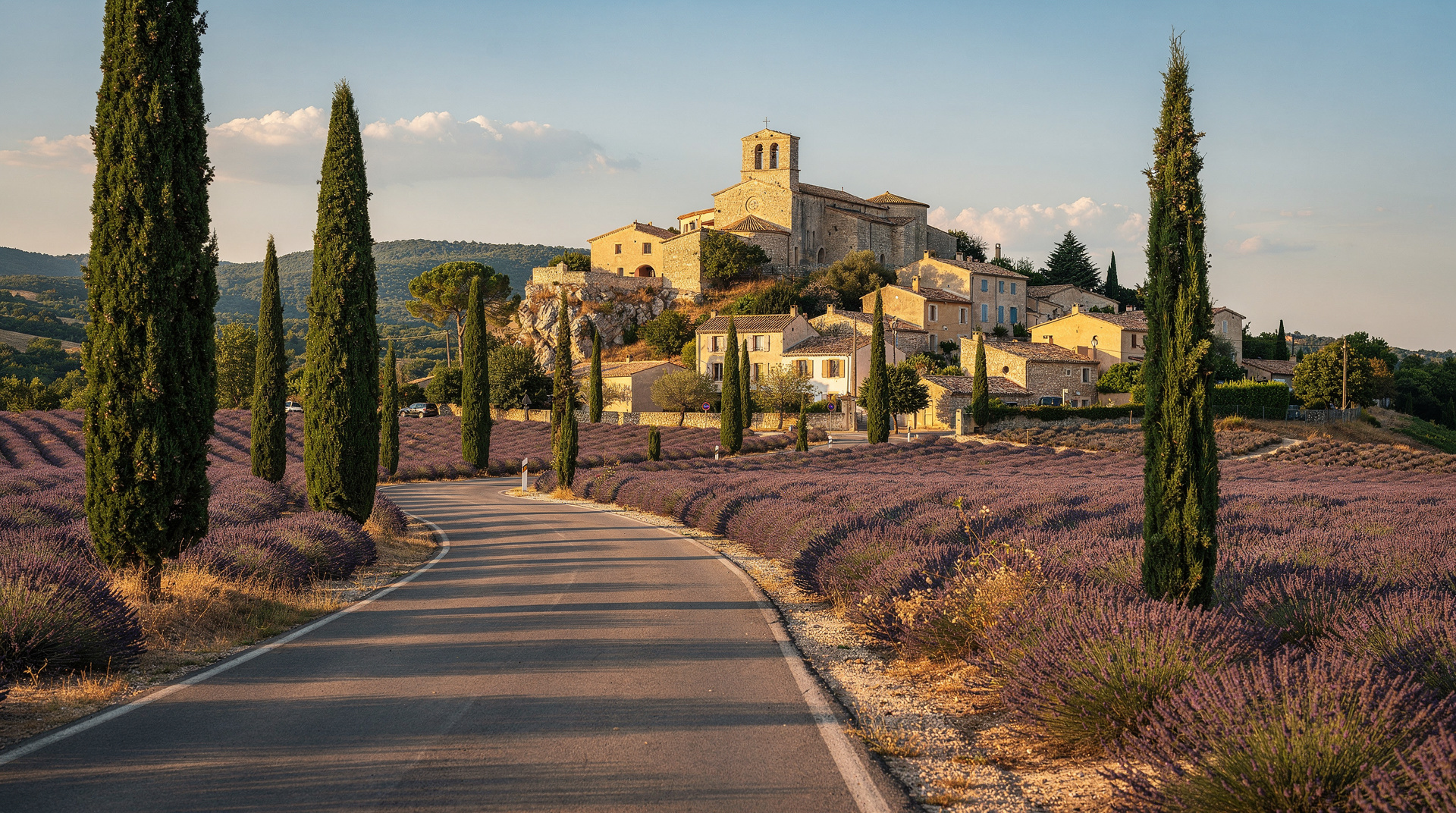
For the Luberon extension from Aix — villages, wine, lavender — that requires a car and a separate day. See our Luberon villages day trip guide.
Aix-en-Provence in different seasons
The experience of a day trip to Aix shifts considerably by season, and the timing affects what you encounter.
Spring (March-May): The best season for Aix. The street cafés and plane-tree shade of Cours Mirabeau come alive; the spring market has the best local produce — strawberries, asparagus, local cheese. Temperatures are comfortable for walking the entire day without heat exhaustion. The Atelier Cézanne and Granet Museum are uncrowded.
Summer (June-August): Aix is a university city and goes into partial summer mode when students leave in June. Tourist volumes increase but the city handles it better than Cassis — it is large enough to absorb visitors without feeling overwhelmed. The heat (30-35°C in July-August) makes the midday hours slower; the covered market at Les Halles and the shaded streets of the old town provide relief. Summer Saturday market is the most vibrant of the year.
Autumn (September-October): Excellent. Temperatures drop to 22-24°C, the plane trees turn golden, and the local rhythm resumes with the rentrée (return from summer). Autumn light on Cours Mirabeau is particularly beautiful. Market produce shifts to autumn fruits, mushrooms, and local truffles.
Winter (November-February): Quieter but fully functional. The Christmas market on Cours Mirabeau (December) is a local tradition; the city’s interior — the Musée Granet, the Atelier Cézanne, the covered Les Halles market — are all open and uncrowded. Cold but rarely very cold (11-14°C average high in December-January).
Aix as a base for Provence
If you are considering staying in Aix rather than Marseille as a base for exploring Provence, it has genuine advantages:
- Central location for Luberon (40 min), Verdon (1h15), Valensole lavender (1h15), Arles (45 min), Avignon (1h)
- Better driving-base city than Marseille (easier parking, less urban congestion)
- More consistent upscale accommodation options
- Closer to the TGV station (Aix-en-Provence TGV) for connections to Paris
The disadvantage is distance from the Calanques and the sea — Aix is inland, and the Mediterranean access from Aix requires a 30-minute drive or the TER to Marseille. For visitors whose priority is the Calanques, Marseille remains the better base.
For the full Aix-en-Provence destination guide with history, context, and the full list of attractions, see our Aix-en-Provence destination guide.
Aix vs. staying longer: is a day enough?
A single day covers the essentials — the market, Cours Mirabeau, and the Atelier Cézanne — but it does not leave much room for the Granet Museum, a proper wine estate visit, or the Sainte-Victoire hiking trails. If you find yourself wanting more after a day trip, Aix also works well as a one- or two-night base in its own right, particularly if you’re combining it with the Luberon villages or the Verdon Gorge, both of which are closer from Aix than from Marseille. For visitors deciding between the two cities as a base, see our comparison guide on Marseille vs. Aix-en-Provence.
How Aix compares to other Marseille day trips
Aix is the most reliably pleasant day trip from Marseille precisely because it does not depend on the sea, the weather, or a boat schedule. For a fuller sense of the alternatives, see our overview of day trips from Marseille, or compare directly with the Arles day trip (Roman monuments and Van Gogh) and the Avignon day trip (the Palais des Papes).
Planning around the day trip
A few other guides on the site help you build the rest of the trip around Aix:
- Train details: the train from Marseille to Aix guide covers the ticket and platform side in more depth, and getting around Marseille explains how to reach Gare Saint-Charles in the first place.
- Car or no car: if you are unsure whether to rent one for the wider region, read do you need a car in Provence.
- Pairing with the coast: Cassis as a day trip is the natural counterpart to a city day in Aix, and the Cassis vs. Marseille calanques boat comparison helps if you want to add the sea on another day.
- Wine: the Provence wine routes guide goes further than a single tasting in the old town, and Provence rosé explained helps you choose what to order at lunch.
- Longer stays: if one day feels too short, how many days in Marseille and the Marseille, Aix and Cassis in 3 days itinerary show how Aix fits into a longer plan, while staying in Marseille vs. Aix helps you pick a base.
- Personal take: our weekend in Aix story gives a more personal view of the city once the market crowds thin out.
Frequently asked questions about Aix-en-Provence day trip from Marseille
How far is Aix-en-Provence from Marseille by train?
The TER train from Marseille Gare Saint-Charles to Aix-en-Provence Centre station takes approximately 43 minutes. Trains run 35+ times daily. Fares start from around EUR 7 each way. Note: do not use the Aix-en-Provence TGV station — it is 8 km outside the city and requires a bus connection to the centre.When are market days in Aix-en-Provence?
The main Aix markets run Tuesday, Thursday, and Saturday mornings. The food and flowers market is in the Place Richelme and Place des Prêcheurs area. Saturday is the biggest and most vibrant. All markets wrap up around noon.How long do you need for a day trip to Aix-en-Provence?
A full day (7-8 hours on site) is ideal. With 43 minutes each way, that means leaving Marseille at 08:30 and returning by 18:30 gives you 7 hours in Aix — enough for the market, Cours Mirabeau, the Atelier Cézanne, lunch, and a wine tasting.What is there to see in Aix-en-Provence in one day?
Cours Mirabeau (the main boulevard, lined with plane trees and fountains), the old-town market (Tue/Thu/Sat), the Atelier Cézanne (his restored studio, 1.5 km north of the centre), the rotating fountain at Place de la Rotonde, Sainte-Victoire mountain views, and the Granet Museum for art. The city is compact — all of this fits in a long day.Is Aix-en-Provence easy to reach from Marseille without a car?
Very easy. The TER train is fast, frequent, and drops you at the Aix Centre station, a 10-minute walk from Cours Mirabeau. You need no car in Aix itself — the old town is pedestrianised and compact.Is Aix-en-Provence or Cassis a better day trip from Marseille?
They are very different trips, not really competing. Aix is a city day — market, Cézanne, café culture, wine tasting, walkable in any weather. Cassis is a coastal day — calanques boat trip or hike, beach, cliffside village. If forced to pick one, Aix is the more reliable all-weather choice; Cassis depends more on sea conditions and season. Many visitors do both on separate days.Can I visit Aix-en-Provence and Marseille's calanques on the same trip?
Not comfortably in a single day if you want to do both properly — Aix deserves 7-8 hours and the calanques deserve a similar block. If your stay is short, treat them as two separate day trips, or combine Aix with Cassis (see our guide to combining the two) rather than trying to add the Marseille calanques on top.
Top experiences
Bookable activities with verified prices and instant confirmation on GetYourGuide.
Aix-en-Provence: private walking tour

Aix-en-Provence: Provençal market walking tour with tastings
Aix-en-Provence: electric tourist train, Paul Cézanne route
Aix-en-Provence: half-day wine tour in Cézanne's countryside
From Marseille: Cassis and Aix-en-Provence full-day tour