Winter in Marseille — the case for visiting in January
Marseille: MuCEM skip-the-line entry ticket
At a glance
| Where | Marseille city and the Calanques, December through February |
| Cost | Hotel rates around 40–50% lower than summer; bouillabaisse and restaurant bookings much easier to get |
| Time needed | A long weekend covers the city well; add a day for a proper Calanques hike |
| Getting there | Same access as any season — Marseille Provence Airport or TGV to Saint-Charles |
| Best time | January for the clearest Mistral light; avoid expecting swimmable water |
Winter month by month
| Month | Weather | Crowds | Notes |
|---|---|---|---|
| December | Mild, 7–12°C days, Mistral spells | Low, quieter over Christmas week in the centre | Calanques trails fully open; bouillabaisse season |
| January | Mildest of the three, sharpest Mistral light | Lowest of the year | Best month for photography and empty museums |
| February | Similar to January, starting to lengthen | Low, picking up toward half-term | Almond blossom starts late in the month inland |
The thing nobody tells you about winter in Marseille
Winter in Marseille is not what the phrase “winter in Marseille” sounds like to someone who has never been. The phrase sounds like: cold, grey, empty, the Mediterranean without its sunshine. The reality is considerably more interesting.
We visited in December 2020, in a year when the choice was partly logistical and partly deliberate. The deliberate part was a curiosity about what the city looked like without its tourist layer, which we knew from summer and spring visits but had never seen removed. The logistical part was that most European destinations were operating under various restrictions, and Marseille in December — outdoor-focused, with a culture that handles mild cold as a starting point rather than an obstacle — was more accessible in spirit than other options.
What we found was the best version of Marseille we had seen.
The winter conditions
Marseille winters are mild by northern European standards. January average temperatures are around 7–12°C during the day and rarely drop below 4°C at night. It is not warm, but it is the kind of mild that makes a good coat sufficient and renders gloves optional. The Mediterranean does not cool as rapidly as the land, and the sea moderates the temperature of the coastal city significantly.
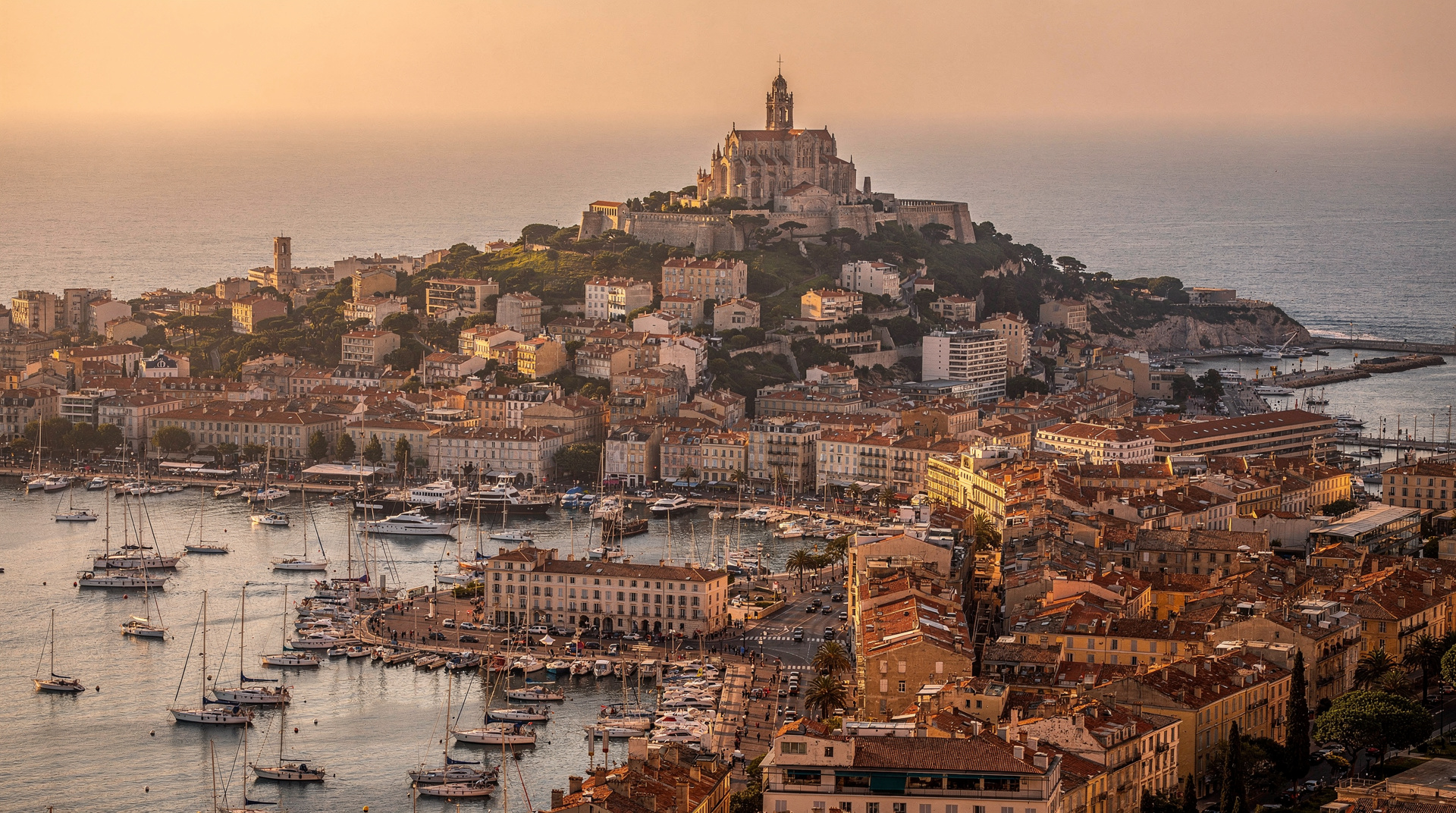
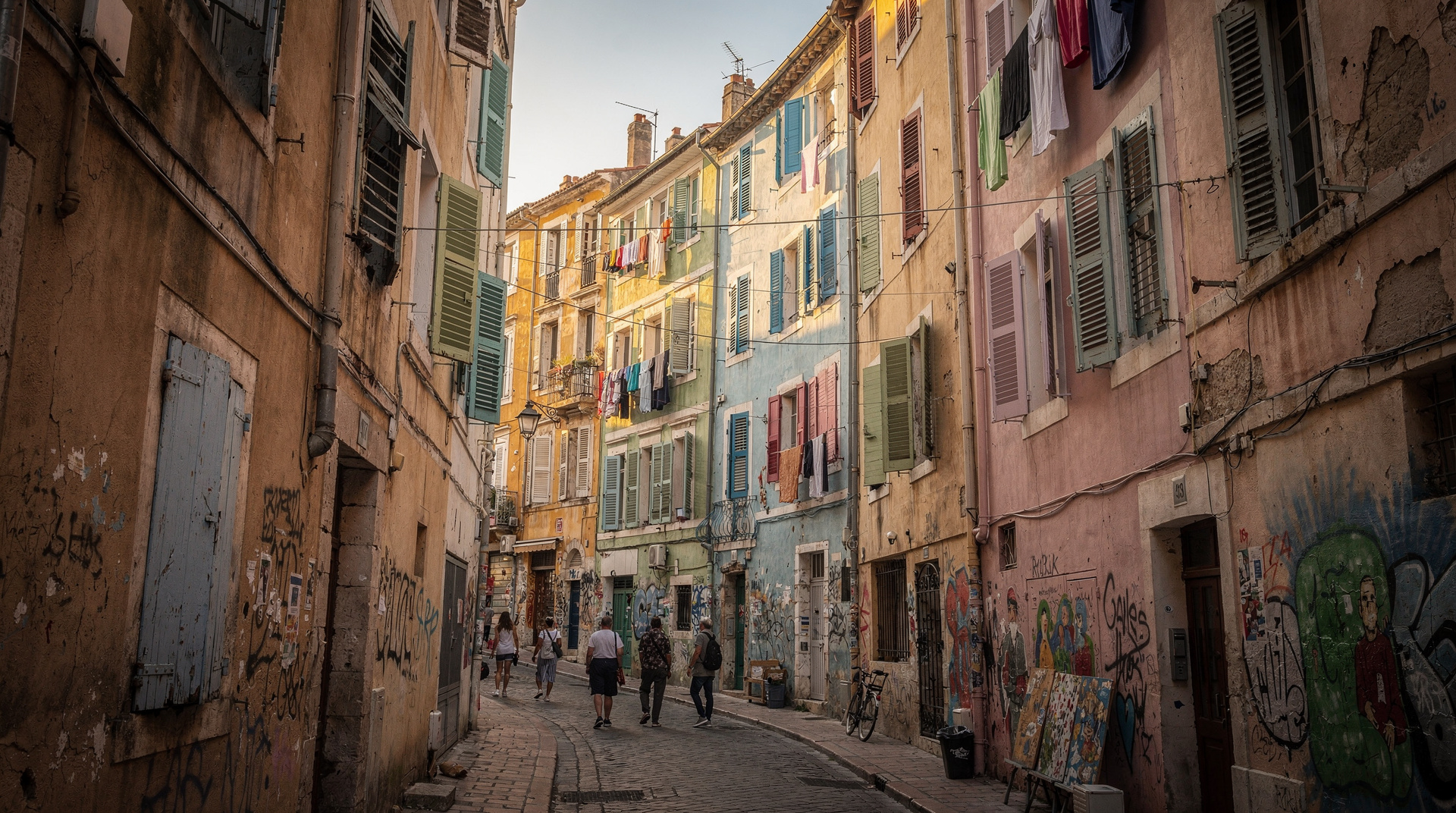
What winter does bring is the Mistral. The northwest wind that is Marseille’s weather signature blows with particular force in winter — sometimes for two or three consecutive days, bringing temperatures that feel significantly colder than the thermometer suggests (the wind-chill effect is real and considerable) and a light that is extraordinary. Mistral days in January have a clarity that no other season matches: the limestone of the Calanques and the facades of Le Panier turned brilliant white, the sea a hard metallic blue, the sky an improbable colour.
The Mistral also churns the sea, which affects boat tours. Some calanques boat departures are cancelled in strong Mistral conditions — check with operators on the day.
The Calanques in winter
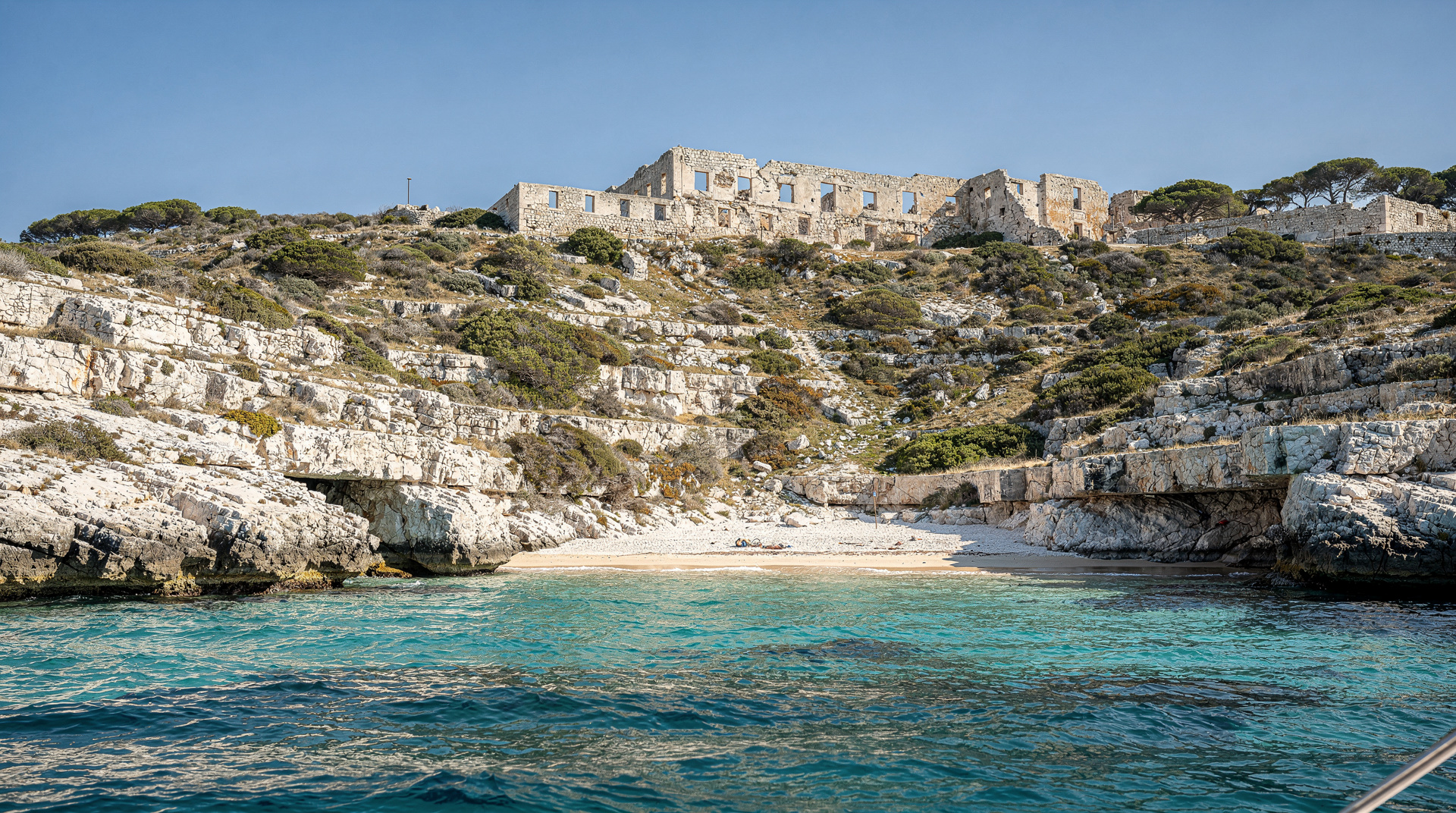
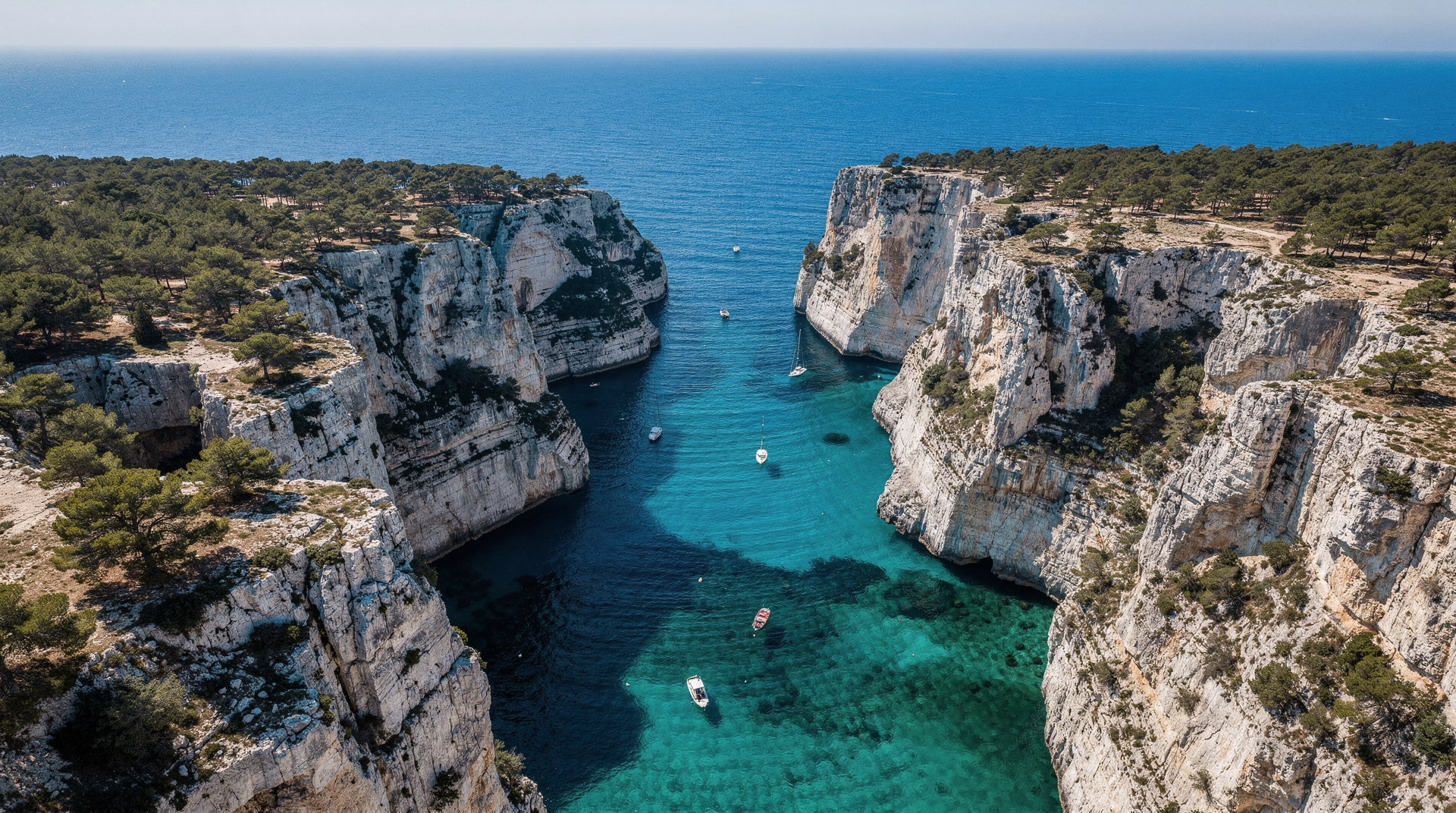
The Calanques are, counterintuitively, more accessible in winter than in summer. The fire-risk trail closures that prevent hiking from July through early September are lifted completely by October and stay open through spring. In January, the main trails to Sugiton, Morgiou, Sormiou, and the routes toward En-Vau are all open and do not require advance reservation.
We walked the trail from Luminy to Sugiton on a December morning. The car park at Luminy was sparsely occupied. The trail was ours, approximately — we encountered four other hikers over the entire route. The Calanques in December are not the Calanques of summer photographs: the garrigue is duller, the sea is darker, the limestone walls have a different gravity in the winter light. They are no less extraordinary. The December version is quieter and more austere, which is its own quality.
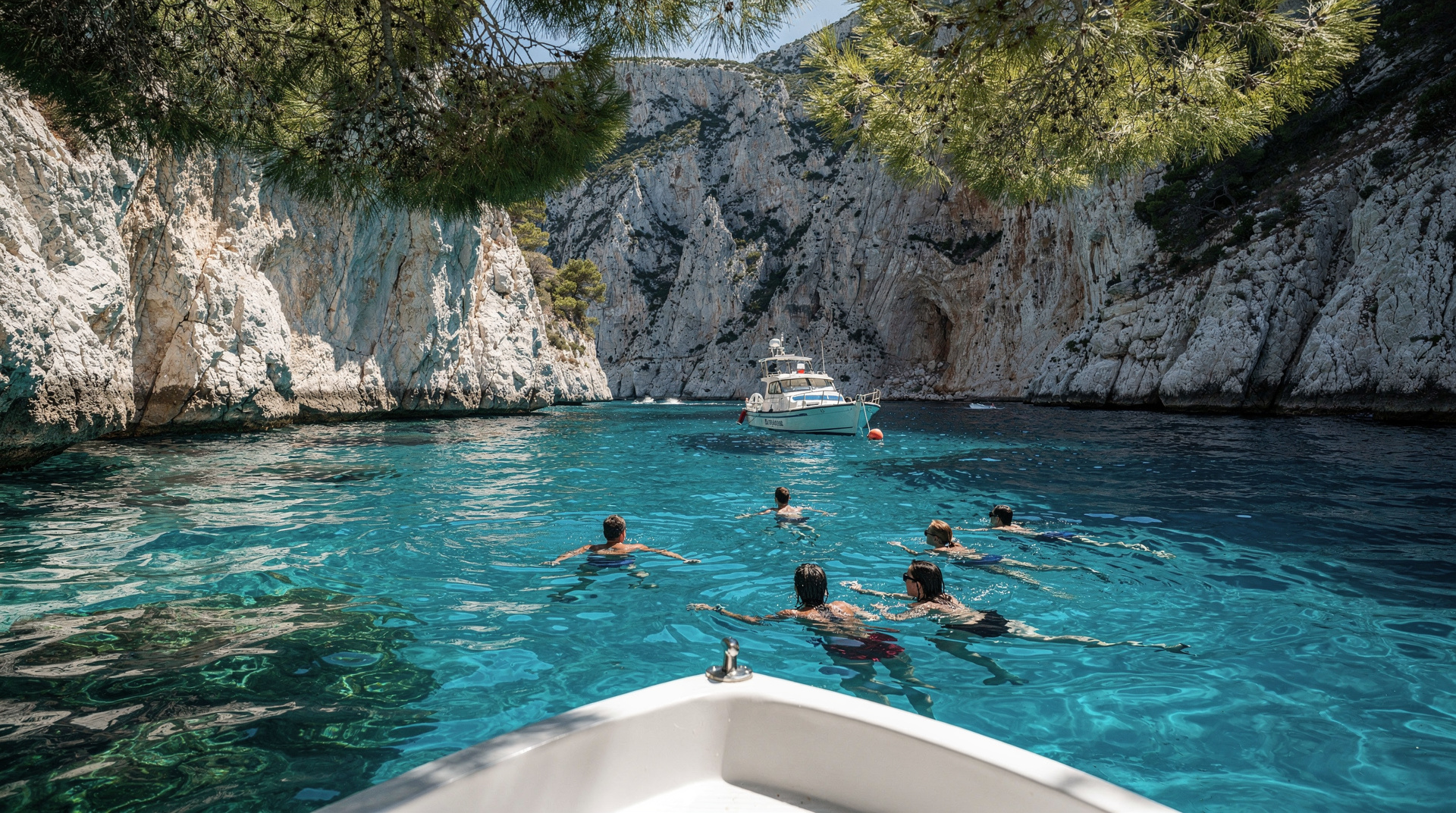
The swimming coves are cold (the water is around 13–14°C in January), but not impossible for those inclined. We did not swim. We sat on the pebbles of the Sugiton upper terrace (the Torpilleur) and watched the sea for a long time in the Mistral wind, wearing every layer we had brought.
The city without tourists
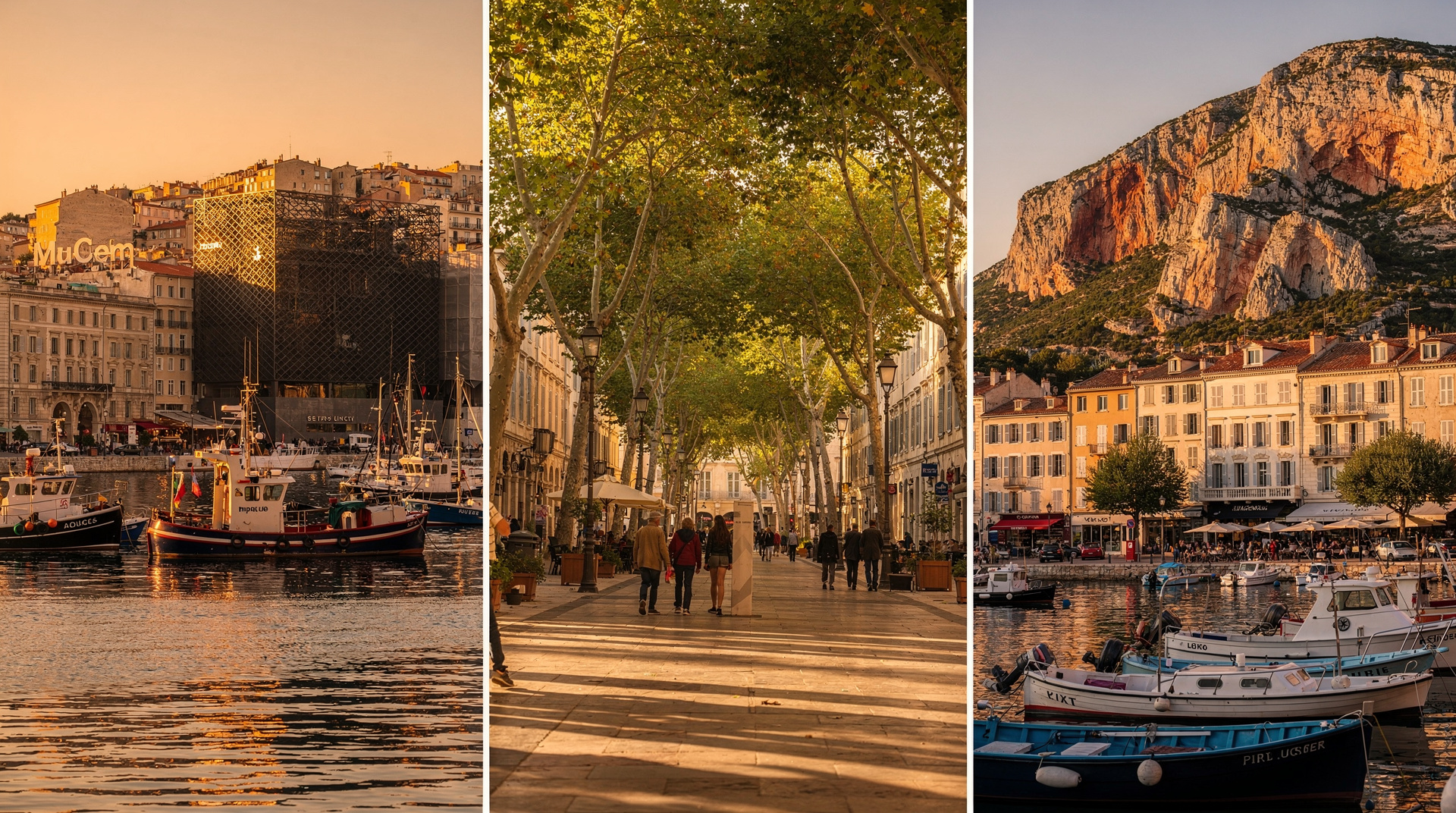
Le Panier in December is a neighbourhood of people living in it, rather than a neighbourhood with a tourist overlay. The craft shops are quieter, the terrasses are empty, the lanes in the early morning are used by residents rather than visitors. The Vieille Charité, which has a crowded courtyard in summer, was almost entirely ours on a weekday morning in December. We sat in the courtyard for the better part of an hour without being observed by anyone.
The Vieux-Port fish market continues regardless of season. The December market is smaller (the fleet adjusts for winter conditions) but it continues, and the 8:00 to 9:00 window — the fishermen offloading, the restaurant buyers negotiating — is unchanged. The absence of the tourist crowd around the market creates a cleaner view of what it actually is.
The MuCEM in winter is excellent. The interior exhibitions are the attraction when the terraces lose their primacy in cold weather; the permanent collection on Mediterranean civilisations, which is substantial and serious, rewards extended time. In summer, many visitors prioritise the outdoor experience. In December, the museum becomes a proper museum visit.
The food culture in winter
The food culture in Marseille does not hibernate. The bouillabaisse restaurants continue through winter — this is, historically, a winter dish, made from the fish that winter conditions bring — and are easier to book in January than in August. Several of the Charte restaurants that are difficult to book in summer have same-week availability in January.
The Noailles market continues in the cold. The Cours Julien restaurants that are most interesting are the indoor, wine-bar format operations that are more comfortable in winter than in summer. The pastis ritual, which is primarily a summer terrace experience, converts in winter to the café interior version — which has its own character.
The calissons at the confiserie near the Vieux-Port are, if anything, better in winter when you are eating them inside rather than carrying them in summer heat.
If the food side of winter is what draws you, the bouillabaisse guide explains what to look for on a menu, and the seafood guide covers the simpler tables that suit a cold evening. The Cours Julien neighbourhood is a good place to spend an evening when the terraces are closed, and the restaurant guide helps with choosing where to book.
Hotel rates
December and January hotel rates in Marseille are significantly lower than summer rates — sometimes 40–50 percent less for the same property. The hotels around the Vieux-Port, which charge accordingly in July and August, have genuine value in the winter season. Several good-quality mid-range properties become affordable in January that are priced out of range in summer.
This is not a minor consideration. Winter in Marseille makes financial sense as well as experiential sense.
The honest trade-offs
Winter is not the right season for everyone in Marseille. The boat tours to the Calanques are weather-dependent and some are cancelled in strong Mistral conditions. The Calanques water is cold enough to make swimming unpleasant for most visitors. Several outdoor-focused activities (kayaking, SUP, the open-air sections of various tours) are reduced in frequency or unavailable. The terrasse culture that makes summer Marseille so vivid is largely indoors.
If your primary purpose in Marseille is swimming in turquoise water, winter is wrong. Come in September or October for warm water and accessible trails.
If your primary purpose is the city — the food, the museums, the neighbourhoods, the specific quality of Marseille when it is being itself rather than accommodating visitors — winter is right.
What we came away with
We came away from the December 2020 visit with a stronger sense of what Marseille actually is than any previous trip had given us. The tourist layer, stripped away by season and circumstance, revealed the underlying city: assertive, proud, genuinely multicultural, with a food culture that does not perform for guests, and with a harbour that has been functioning continuously for 2,600 years and has no particular interest in adjusting its schedule for photographs.
That city exists in summer too, behind the surface. In winter, it is simply more visible.
For everything you need to plan a winter visit, the Marseille guide covers seasonal considerations throughout. The best time to visit guide gives the fuller seasonal comparison. The rainy day guide has the wet-weather indoor programme that works in winter as well as in spring storms.
What to do with a winter weekend
A city-focused winter visit works well built around three anchors: a morning in Le Panier when it is at its quietest, a Calanques hike from Luminy toward Sugiton or Morgiou on a clear Mistral day, and an evening booked at a bouillabaisse restaurant that would be fully booked in July. Our Le Panier piece covers the neighbourhood in more depth, and the Calanques hikes by difficulty guide helps pick a route that suits a shorter winter daylight window.
Planning around the weather
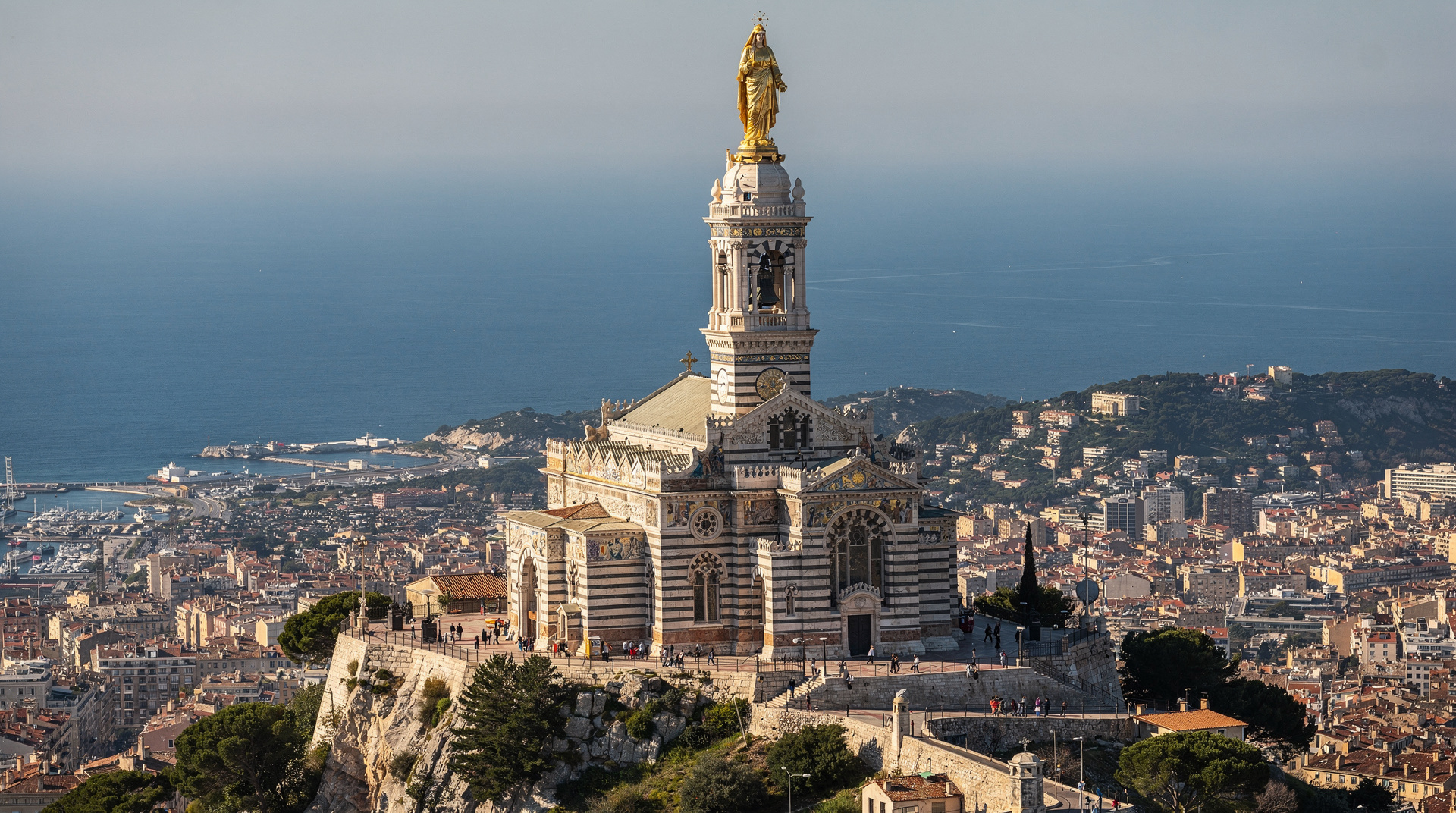
Because the weather decides so much in winter, it helps to keep the plan flexible. Pair an outdoor day with an indoor one and swap them depending on the wind. The Marseille in winter guide goes through the season in practical terms, the MuCEM guide is the obvious fallback for a blustery morning, and the getting around guide shows how to move between neighbourhoods without being exposed to the wind for long. For a first-time visitor, the two-day itinerary is easy to adapt to winter conditions, and the Notre-Dame de la Garde page is worth saving for a clear day, when the view from the hill is at its sharpest.
Frequently asked questions about Winter in Marseille — the case for visiting in January
Is it too cold to enjoy Marseille outdoors in winter? No — daytime temperatures of 7–12°C with a good coat are comfortable for walking and hiking. The exception is a strong Mistral day, when the wind-chill makes it feel considerably colder than the thermometer; layer up and expect some boat tours to be cancelled on those days.
Can you still visit the Calanques in winter without a permit or reservation? Yes. The summer reservation system for the busiest trails only applies from roughly July through August. From October through spring, including all of winter, the main trails to Sugiton, Morgiou, Sormiou, and En-Vau are open without advance booking.
Top experiences
Bookable activities with verified prices and instant confirmation on GetYourGuide.