Marseille on a rainy day — what to do when the Mistral brings rain
Marseille: MuCEM skip-the-line entry ticket
February in Marseille
We chose February deliberately. Not for the weather, which was uncertain, and not for the beaches, which were closed. We chose it because we wanted to see Marseille without its tourist layer, and February reliably removes the tourist layer. What we got, on the third day, was rain — the specific Mediterranean rain that arrives with the Mistral, horizontal and cold and persistent, making the Vieux-Port look like a 1930s noir film set.
This turned out to be one of the better days of the trip.
| At a glance | |
|---|---|
| Where | Central Marseille — museums, covered markets, indoor neighbourhoods |
| Cost | Around EUR 6–20 per attraction, most days manageable on EUR 30–40 total |
| Time needed | A full day, structured around 3–4 indoor stops |
| Getting there | RTM métro/tram/bus covers everything below; a day pass is around EUR 5.50 |
| Best time | Any rainy day, but shoulder-season (autumn, winter, early spring) rain is quieter than summer storms |
Why Marseille in bad weather works
The city’s indoor inventory is underestimated, partly because visitors come in summer expecting sunshine and do not think to research alternatives. But Marseille has a genuine museum infrastructure, a covered market culture, a coffee shop and wine bar scene that is most alive in the cooler months, and several specific attractions that are better in the rain than in the sun.
Here is how we structured the February rainy day. If you are still deciding when to come, our best time to visit Marseille guide and the Marseille in winter overview explain what the cooler months are really like, and the museums guide goes deeper on the indoor options we only touch on here.
Morning: the Musée d’Histoire and the Roman harbour
The Musée d’Histoire de Marseille is located inside the Centre Bourse shopping mall, which sounds absurd until you understand that the shopping centre was built over the excavated ruins of the ancient Greek and Roman city of Massalia. The museum sits above the excavations, and the ground-level mall has sections where you can see the ruins through the floor.
The museum proper is excellent and significantly undervisited. The star exhibit is the hull of a 3rd-century AD merchant ship preserved in situ — the wood still holds its shape, displayed in a controlled atmosphere. Around it, the museum uses the archaeological evidence to reconstruct the daily life, trade networks, and architecture of the ancient city with a sophistication that most small-to-medium European history museums do not achieve.
In February, on a rainy Tuesday morning, we had significant sections of the museum almost to ourselves. Entry is around 6 EUR. Spend two hours here. It will change how you read the city when you go back outside.
Mid-morning: the MuCEM (interior)
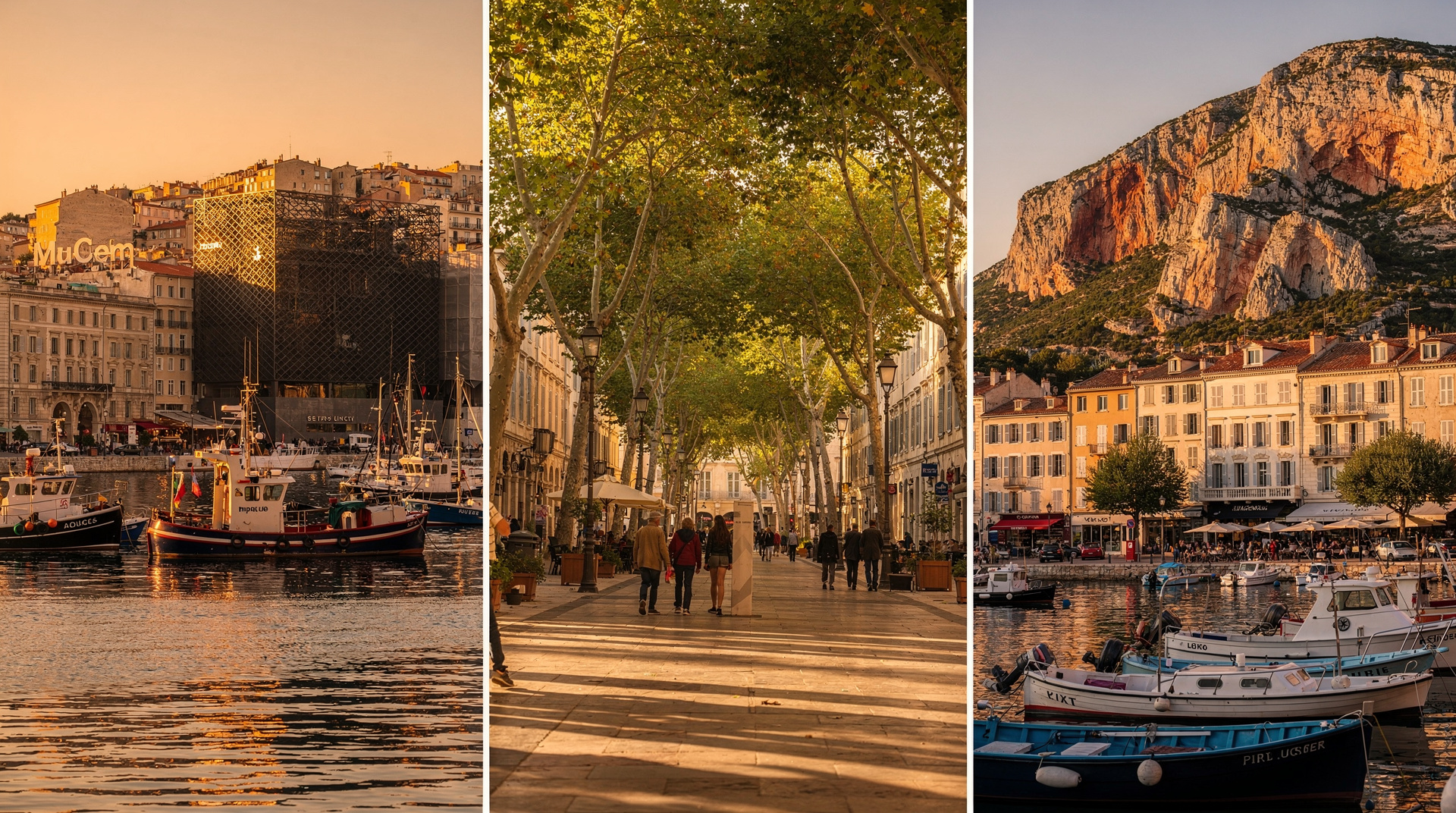
In summer, the MuCEM terraces are the attraction. The interior — the permanent collection of Mediterranean civilisations, the temporary exhibitions, the library — plays second fiddle to the free outdoor access. In February rain, the balance reverses. The interior becomes the point.
The permanent collection spans the agricultural, spiritual, artistic, and social history of Mediterranean civilisations from prehistoric times to the present day. It is thematic rather than chronological, which makes it more interesting and more demanding. The curators are not afraid of difficult questions — the migration of peoples, the conflicts between religions, the uneven power relations of colonial Mediterranean history. This is not a soft, celebratory museum.
The building itself — the concrete résille casting its grid of light into the interior spaces — is worth experiencing from inside. In rain, with the light reduced and different, the filtered shadow patterns shift and the interior acquires a quality it does not have in direct sunlight. Allow two to three hours for a proper visit.
Entry is 11 EUR (free on the first Sunday of each month). The café inside the museum is a decent lunch stop.
Lunch: the Noailles market and surroundings
The Noailles area — the stretch of covered and semi-covered market stalls around the Place du Marché des Capucins and the Rue de la Longue — is one of the few places in Marseille that does not lose its character in the rain. The covered sections keep going regardless of weather; the vendors have been at their stalls through every February in memory and a bit of rain is not their concern.
This is the North African and Maghrebi market — the spices, the pastries, the olives, the dried herbs, the fresh produce at prices that are nothing like the tourist-facing markets. For lunch, the counters and small restaurants in the surrounding streets serve the most honest and best-value food in central Marseille: Algerian pastries, Moroccan-influenced soups, sandwiches with merguez that cost EUR 4–5. No tourist pricing, no tourist performance.
Take the métro to Noailles (M1 or M2 interchange at Castellane, then one stop). Be alert in the market area — it is one of the pickpocket hotspots in the city, which means front-pocket habits apply here. Our guide to the pickpocket zones explains what to watch for, and the markets guide covers the other markets worth knowing about once the weather clears.
Afternoon: the Palais Longchamp
The Palais Longchamp in the 4th arrondissement is twenty minutes by tram from the city centre (T2 to Longchamp) and represents one of the best architectural experiences in Marseille. The building was constructed in 1869 as the terminal monument of the Canal de Marseille — the engineering project that brought fresh water from the Durance river to the city — and it is vast and theatrical in the 19th-century public monument tradition.
The central cascade and the two wings (one housing the Musée des Beaux-Arts, one the Musée d’Histoire Naturelle) form a composition built around the idea of water as civic abundance. In the rain, with the fountain actually running and the limestone of the facade wet and darkened, it is even more striking than in sun.
The Musée des Beaux-Arts has a collection of European paintings from the 16th to 19th centuries that is solid if not spectacular — Rubens, Courbet, Puvis de Chavannes, and a substantial French academic section. The Provençal painters are the most interesting part. The natural history museum is old-fashioned in the best sense: a Victorian-era cabinet of specimens and taxidermy that has not been updated, for better and for worse, in some time. Children and people who like the uncurated version of natural history will find it more interesting than the design-conscious museum format.
Both museums cost around EUR 6. The courtyard between the wings, with the cascade, is free.
Late afternoon: Cours Julien and a glass of wine
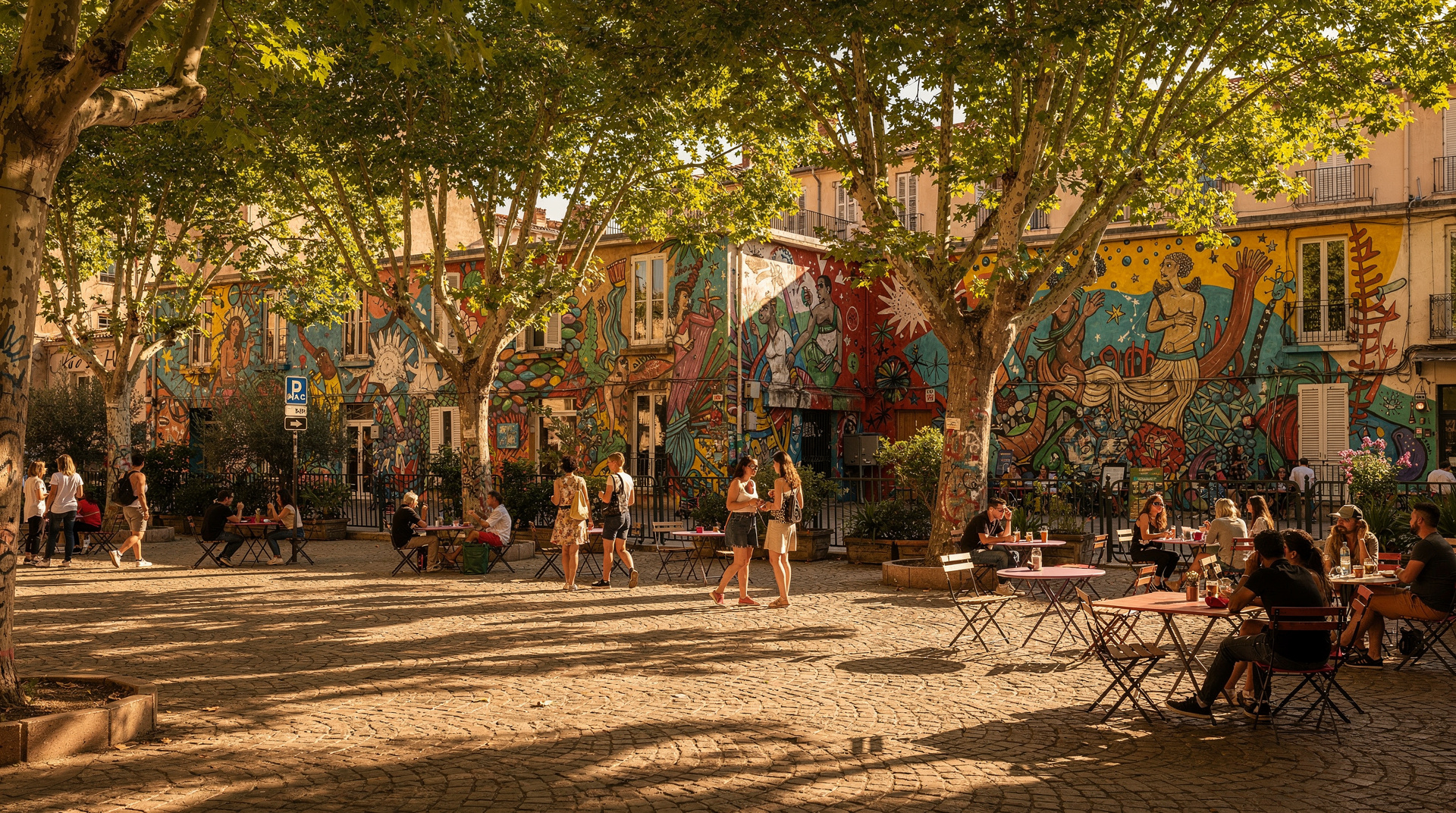
Cours Julien in February rain is a different place from its summer festival mode. The record shops and vintage clothing stores are open; the square itself is mostly empty; the natural wine bars and small restaurants are warm and filling from around 17:00 as locals decompress from the working day.
This is the best time to have a wine by the glass somewhere in the Cours Julien neighbourhood — not because the wine is better in winter (it is the same wine), but because the social dynamics are different. The bar is occupied by the people who actually live and work in the neighbourhood, not by tourists discovering it for the first time. The conversations are in French, often fast and Marseillais-accented, and the energy is relaxed in a way that summer crowds make impossible.
We spent three hours here on the rainy February afternoon. A natural wine from the Languedoc, some bread and olives, the gradual normality of sitting in a warm place while it rains outside. This is not a museum or a monument. But it is, in its way, the most accurate version of Marseille we have found.
The Cosquer Cave replica (bonus option for structured visitors)
The Cosquer Cave replica — Grotte Cosquer Méditerranée — opened in 2022 near the MuCEM at the Villa Méditerranée. It recreates the Cosquer Cave, which contains 27,000-year-old Paleolithic paintings and is accessible only via an underwater passage from the Calanques sea floor. The replica is full-scale and impressively done.
If you have booked in advance (essential — it sells out, especially in the shoulder season), this is an excellent wet-weather morning or afternoon. Budget around EUR 18–20 per adult and allow 90 minutes to two hours. The immersive aspect — the recreation of a cave environment within a contemporary building — works better than we expected. If the story of the original cave interests you, the Cosquer Cave replica guide has the full background, and the Calanques national park page shows the coastline where the real cave lies hidden.
Building a full rainy-day itinerary
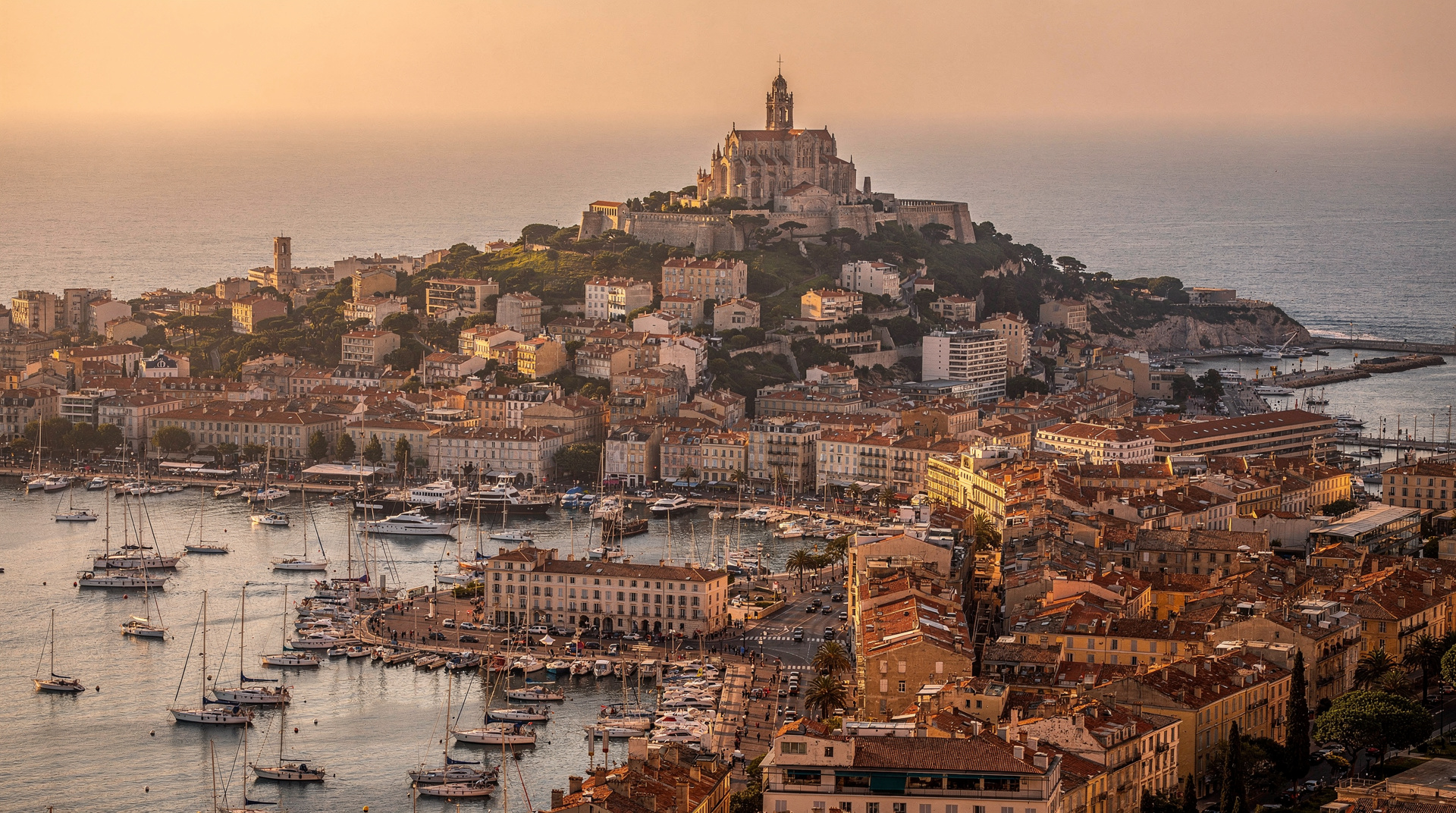
If you only have one rainy day, do not try to fit all of the above in. A realistic pairing is the Musée d’Histoire in the morning, lunch at Le Panier or Noailles, and the MuCEM interior or the Cosquer Cave replica in the afternoon, finishing at Cours Julien for a wine. That is roughly a full day of indoor and semi-indoor activity with only short outdoor transfers between stops. With two rainy days, add the Palais Longchamp and, if the rain eases even briefly, a fast pass along the Vieux-Port — it looks its most atmospheric under grey skies and does not require dry weather to appreciate from under an awning.
Practical notes for rainy days
Restaurants: Marseille restaurants are very accommodating in the shoulder season. February bookings are not generally necessary except at the top-tier places, but it does not hurt to check for weekend evenings.
Transport: The RTM network (métro, tram, bus) covers all the locations above. A day pass at around EUR 5.50 makes sense for a day of museum-hopping. Taxis and ride-shares are readily available. For lines, tickets and how the network fits together, see the Marseille métro guide and getting around Marseille.
Café culture: Marseille does not have a strong café-as-rainy-day-refuge culture in the Parisian sense — the city is more oriented toward outdoors and terrasses — but the Cours Julien neighbourhood and the area around the Réformés church have a concentration of good options. The best coffee in the city, in our experience, is in the neighbourhood coffee shops rather than the tourist-facing café terrasses of the Vieux-Port.
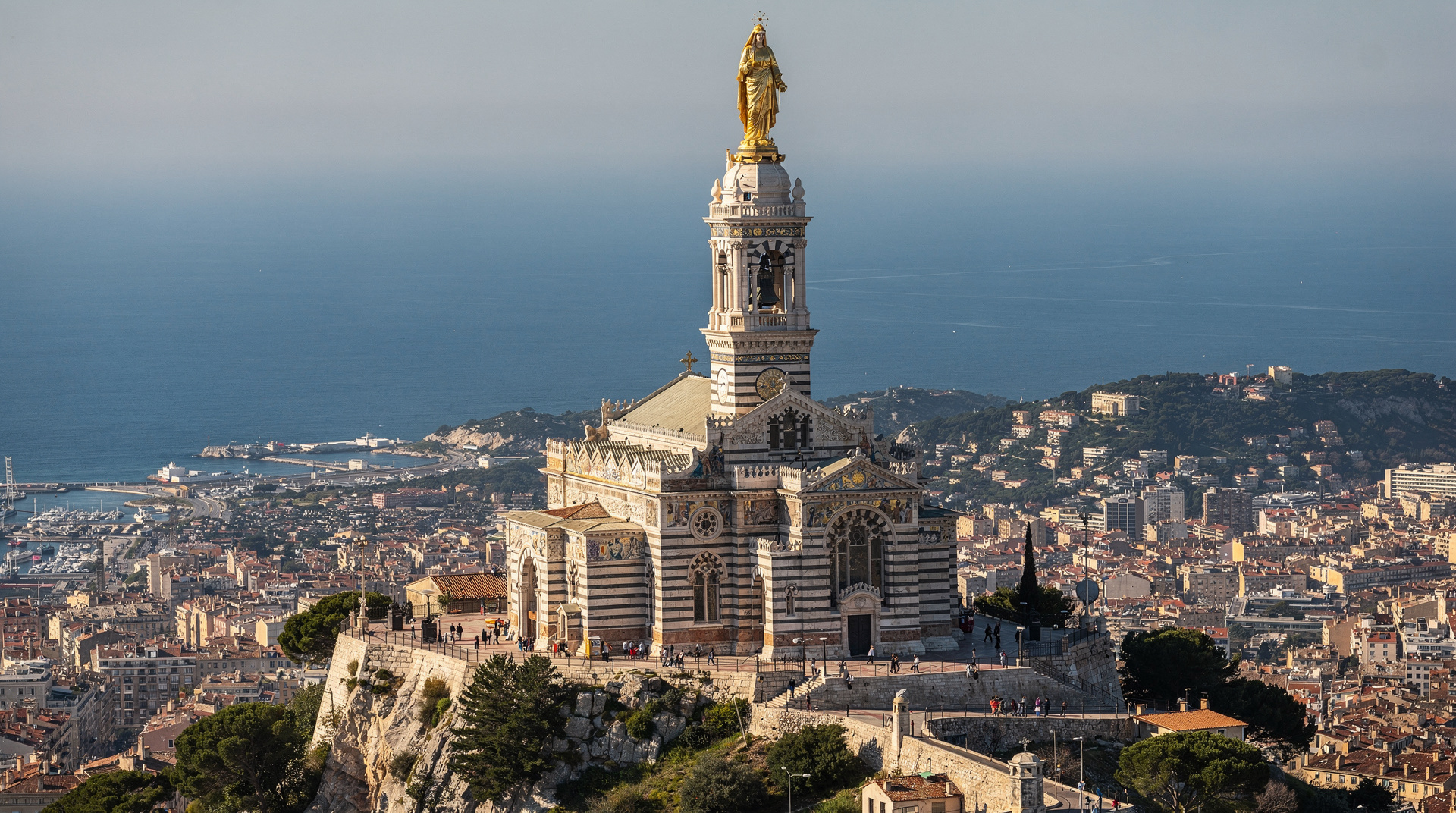
What to skip in the rain: Notre-Dame de la Garde (spectacular in sun; the hilltop is cold and exposed in bad weather); the Corniche walk (waterproof essential if you must); the fish market at the Vieux-Port (they soldier on but it is an outdoor market and rain does not improve the experience).
For everything else about Marseille, the full destination guide covers the city in detail. Our winter in Marseille piece makes the broader case for a cold-season visit. The hidden gems list includes several of the above and more.
Frequently asked questions about Marseille on a rainy day — what to do when the Mistral brings rain
Is Marseille worth visiting if the weather forecast is bad? Yes. The city has enough genuine museum and market infrastructure that a rainy day does not have to be a wasted one — see the itinerary above. It is a different, quieter Marseille than the summer version, and several attractions (the MuCEM interior, the Musée d’Histoire) are arguably better experienced without the crowds.
Do Marseille museums get much quieter in the rain or in winter generally? Yes, noticeably. Museums that are moderately busy in summer can be nearly empty on a weekday winter morning, which is one of the better reasons to plan an indoor day outside peak season rather than treat rain as a problem to work around.
Top experiences
Bookable activities with verified prices and instant confirmation on GetYourGuide.