Why we love Le Panier — slow days in Marseille's oldest quarter
Marseille: Cityrando — Le Vieux-Port, Le Panier, La Joliette
At a glance
| Where | Hill above the north shore of the Vieux-Port, roughly 10 minutes on foot from the harbour |
| Cost | Free to walk; Vieille Charité courtyard free from the street entrance; museum entry around EUR 5–7 |
| Time needed | 2–3 hours for a proper wander; a full morning if you want coffee, the Vieille Charité, and street art |
| Getting there | Walk uphill from the Vieux-Port; no car access in the upper quarter; Joliette tram stop for the lower slopes |
| Best time | Early morning (8:00–9:00), any weekday, shoulder season — see “When to go” below |
A neighbourhood that earns the word ancient
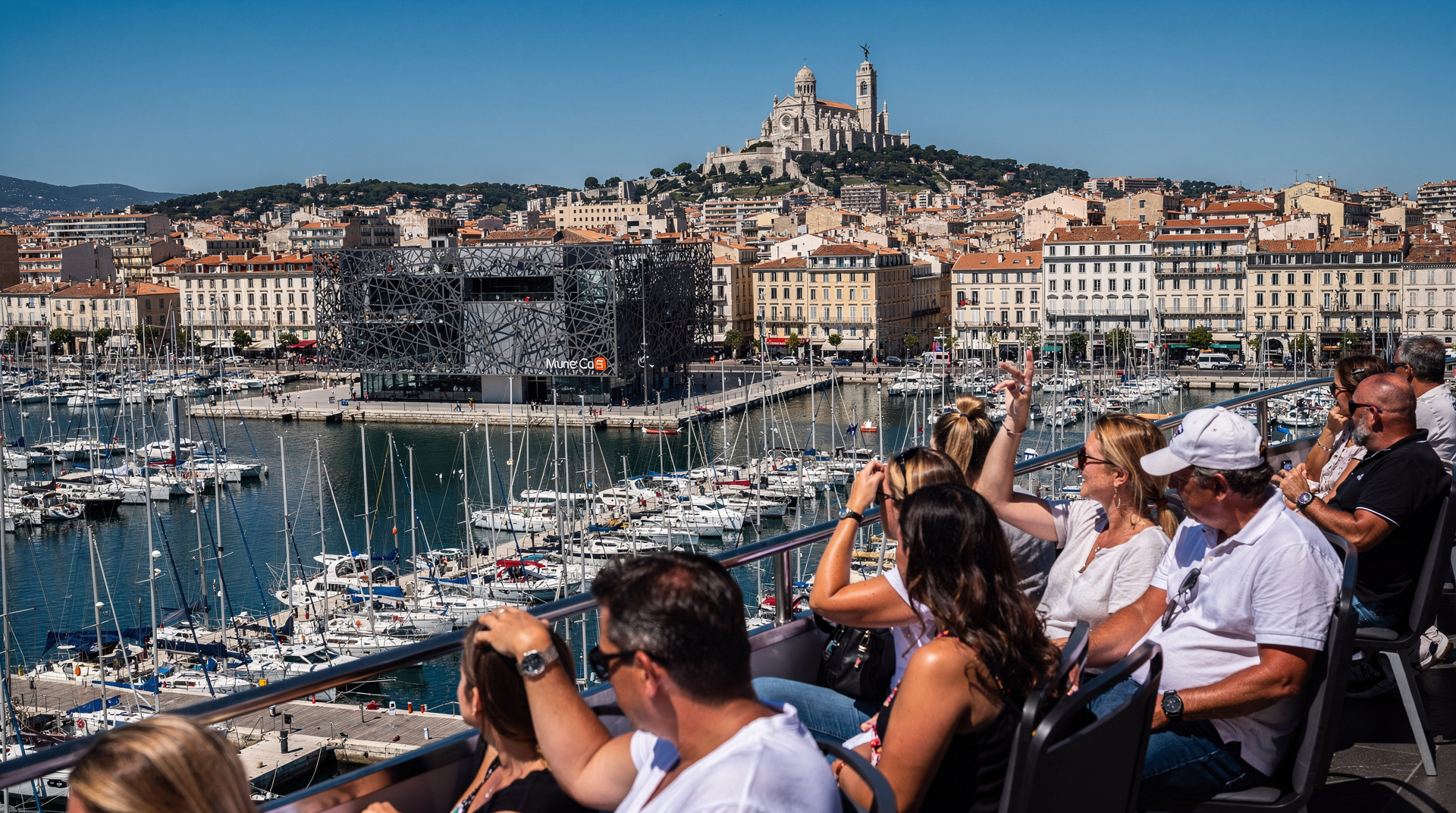
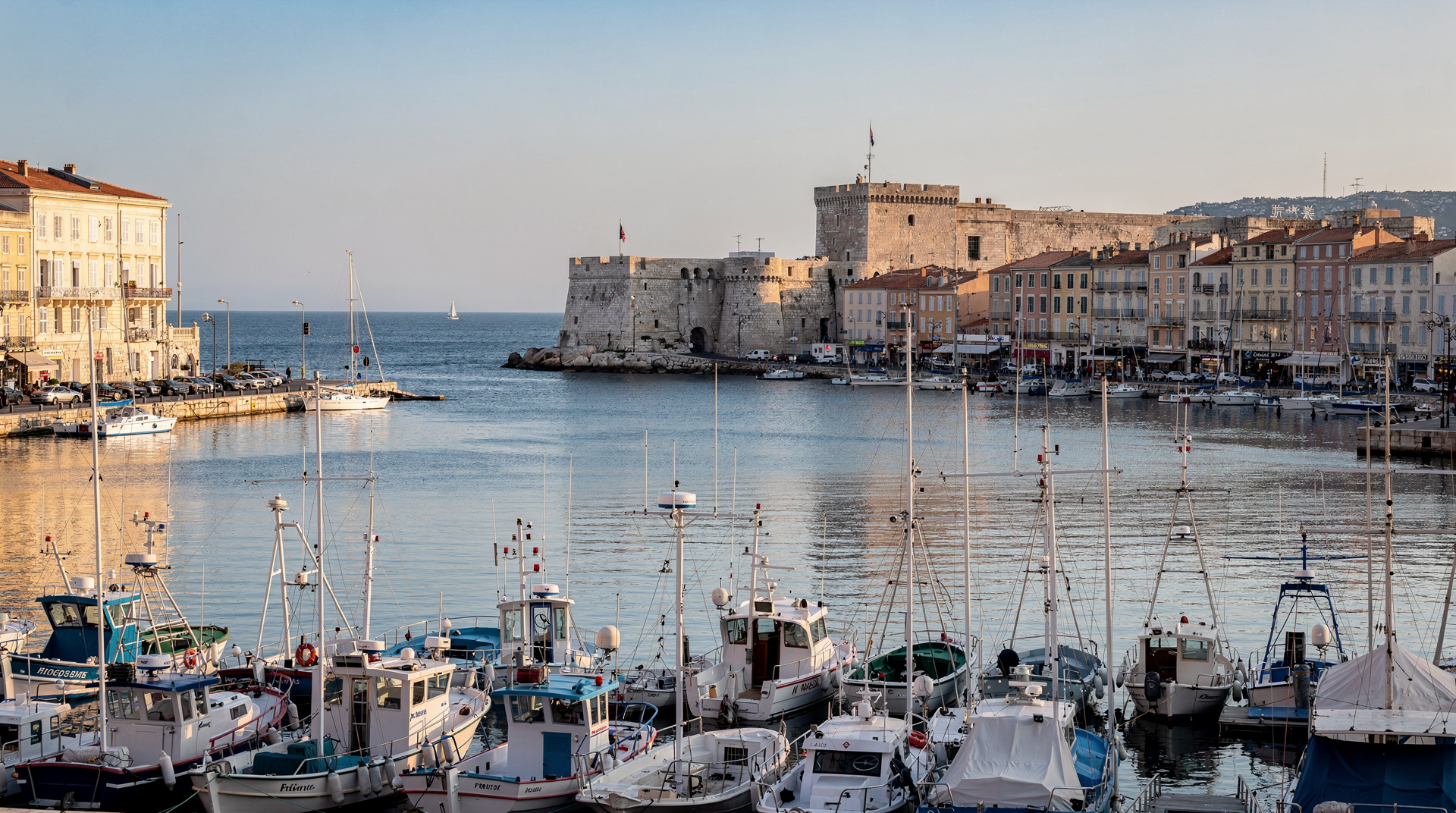
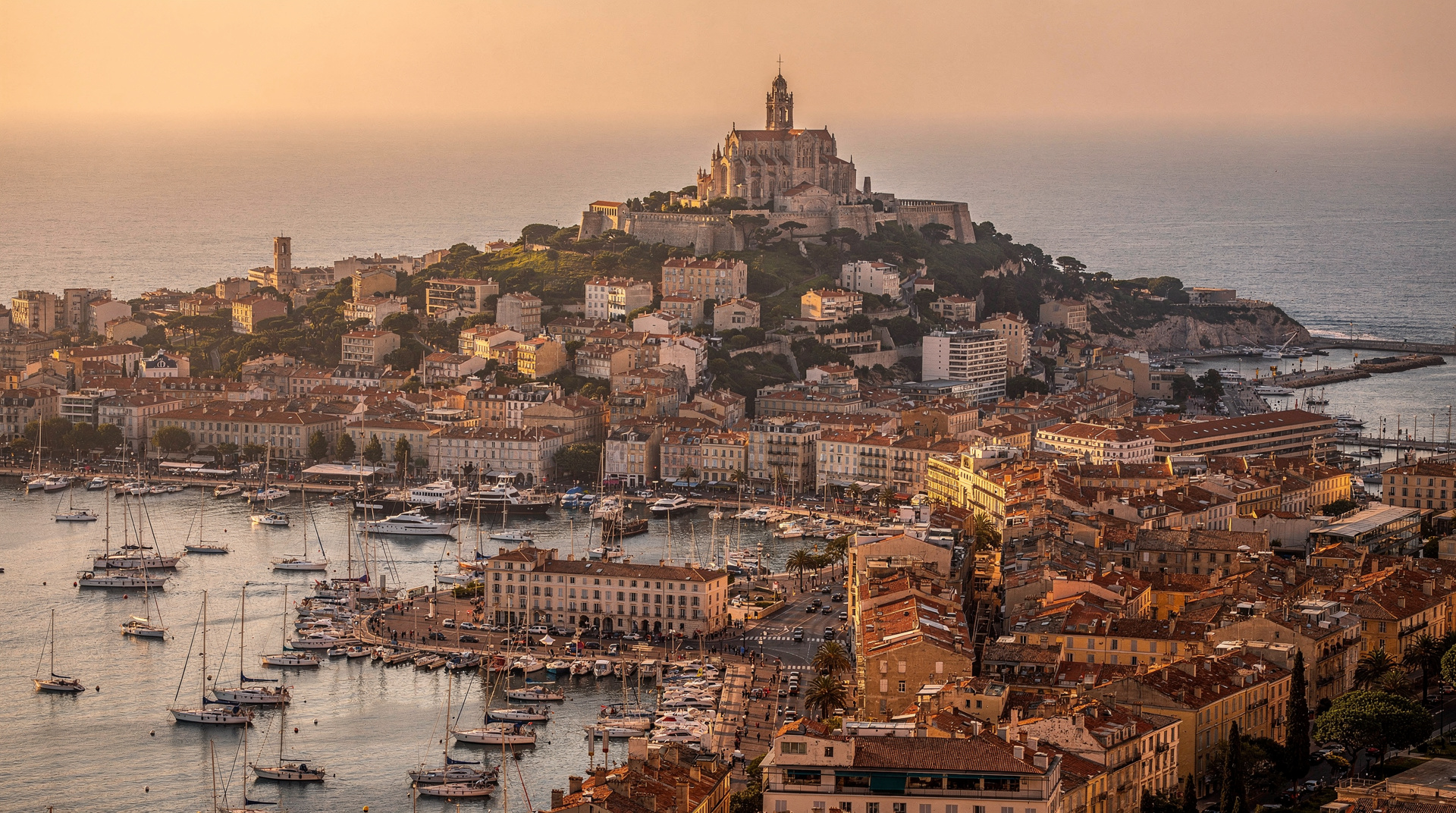
Le Panier sits on the hill directly above the north shore of the Vieux-Port — which is itself on the site of the ancient Greek agora of Massalia, the city founded by Phocaean traders around 600 BCE. This is not a neighbourhood with old buildings. This is a neighbourhood that occupies the oldest continuously inhabited site in France.
You feel this in the grain of the place, even if you do not know the history. The lanes are too narrow for anything with wheels. The steps connect levels that were established before the concept of a modern street existed. The Vieille Charité, the 17th-century charitable hospital that anchors the neighbourhood, is built on Roman foundations, and the ground it sits on was built over by earlier structures going back more than two thousand years.
What we actually do here
We have been to Le Panier more times than we can count, and the routine has settled into something that feels instinctive now.
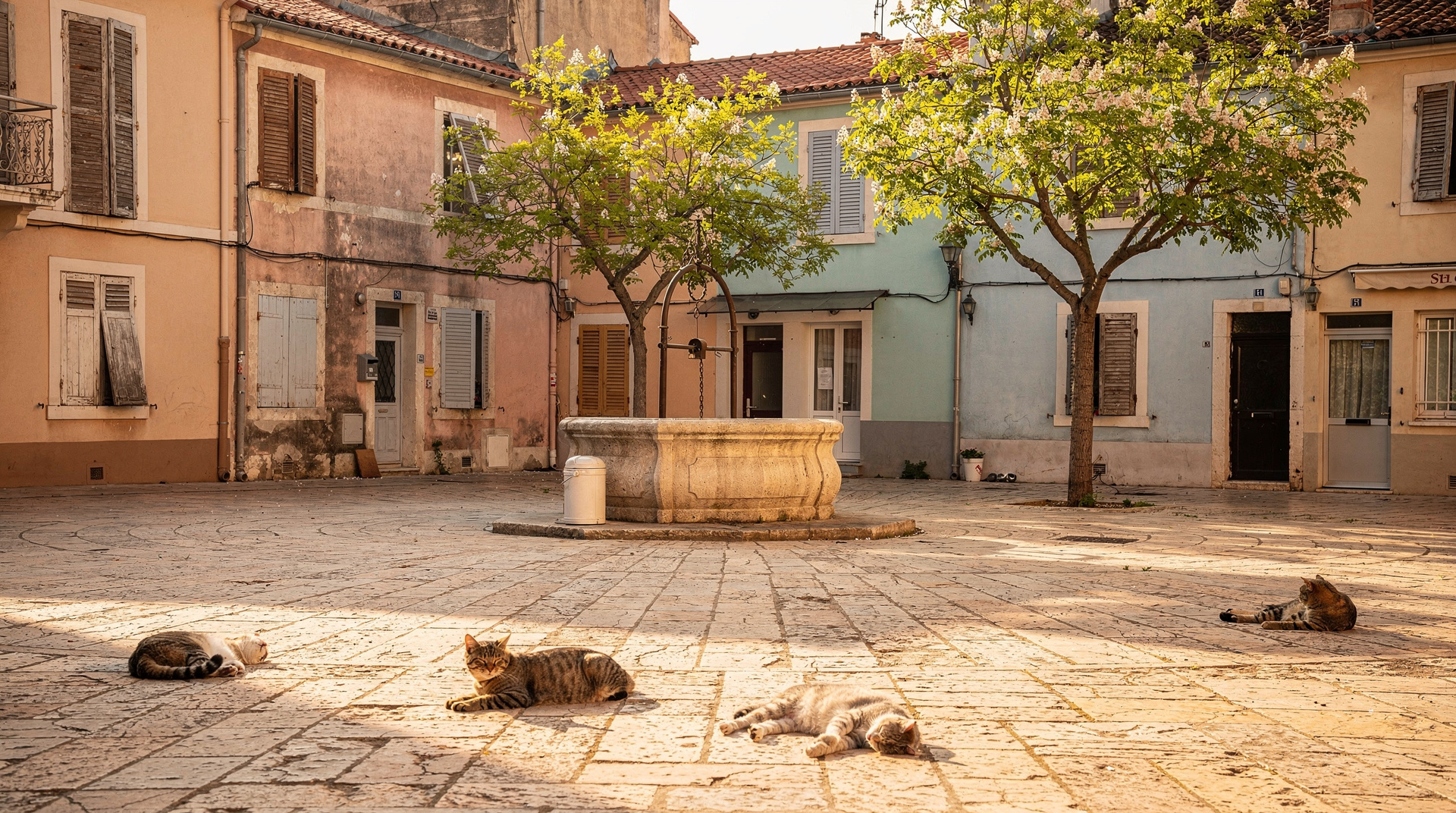
We arrive early — 8:00 or 8:30 if we are organised, before the tour groups. Coffee at one of the bars on the Montée des Accoules or near the Place des Moulins. No one in these places is performing hospitality for tourists. The bar owner is on their second espresso, the newspapers are being read, a cat is occupying the best chair. This is September 2020 and the city has been through a difficult period; the quietness has a quality different from the usual morning quiet.
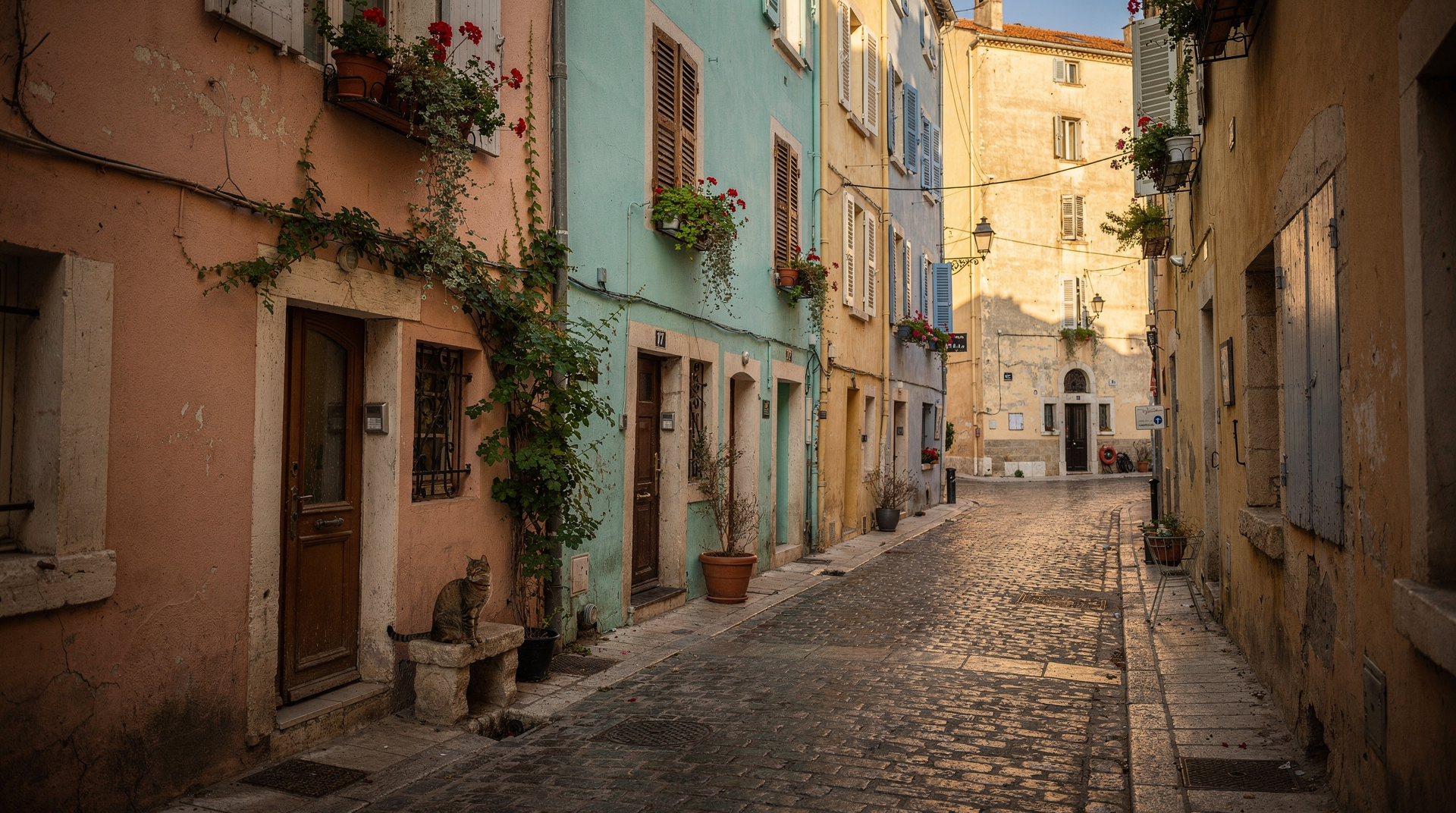
After coffee, we walk without a map. This sounds precious but it is genuinely the right approach in Le Panier, because the layout defies logical navigation anyway. The hill is a maze that predates urban planning, and trying to follow a phone screen through it means you spend more time looking down than up. We walk toward the light — east in the morning, when the sun comes over the ridge and fills the steep lanes with gold — and let the lanes take us where they go.
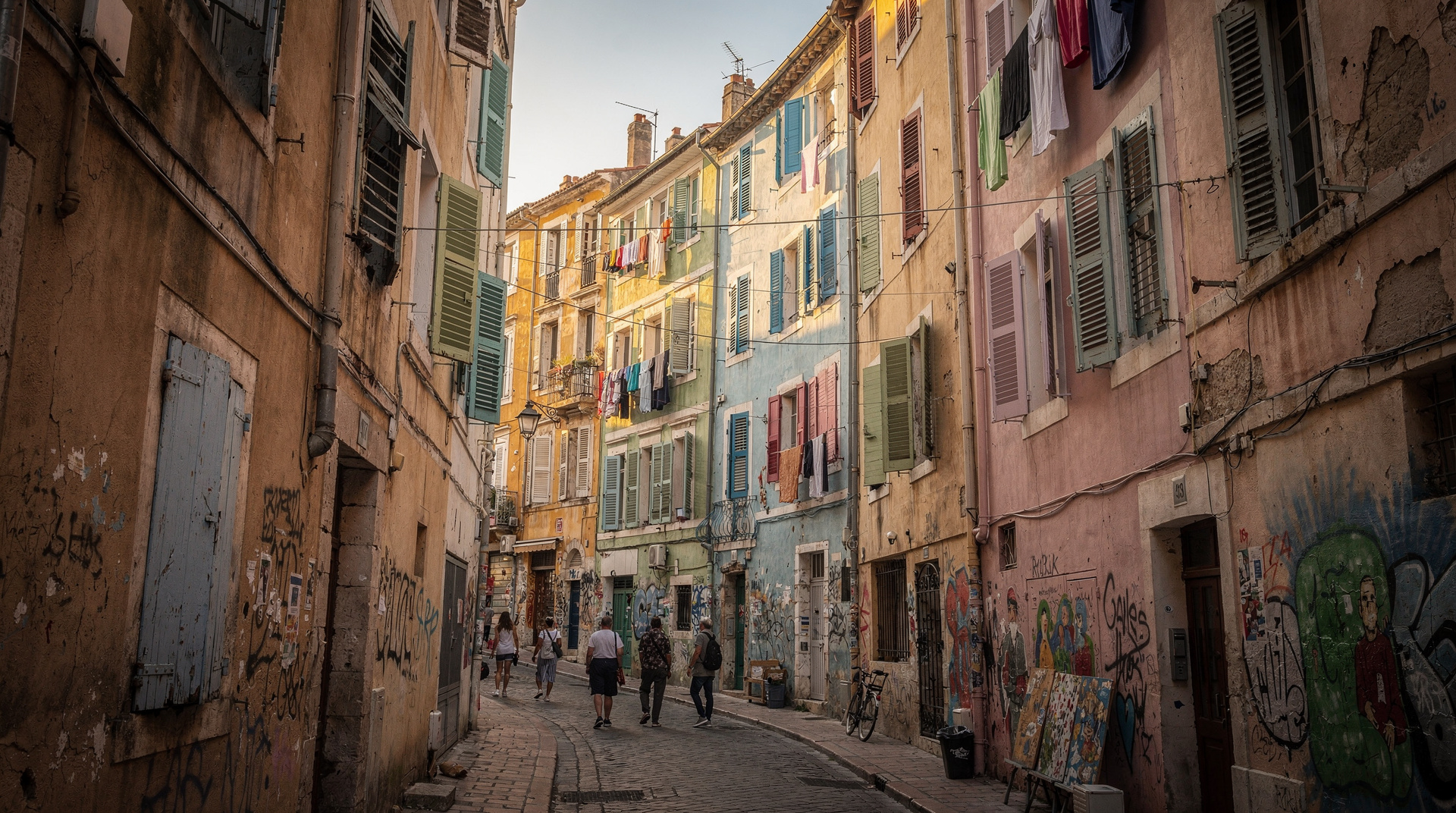
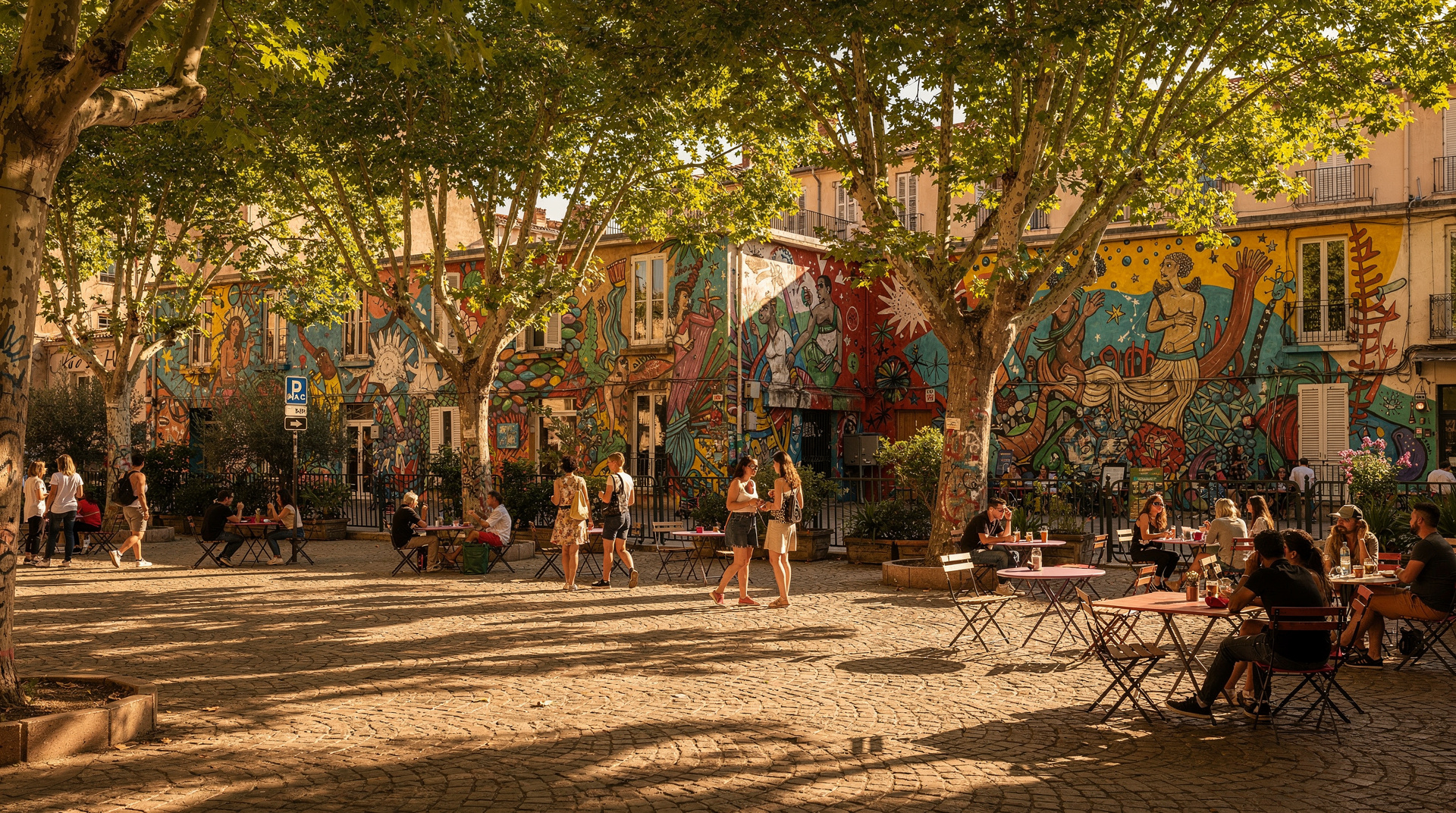
What we find, reliably, is: laundry strung between windows. Somebody’s geraniums threatening to overtake the facade. A mural covering an entire building end — Le Panier is one of the better canvases for street art in the city, partly because the walls are big and partly because the neighbourhood has a long tolerance for colour. A passage that narrows to less than two people’s width and comes out unexpectedly onto a belvedere with a view of the Vieux-Port below. A small square where pigeons and old men share an uncomplicated Tuesday morning.
The Vieille Charité
The 17th-century hospice at the centre of Le Panier is one of the most beautiful pieces of architecture in Marseille, and one of the least trumpeted. The building is a three-story rectangular courtyard surrounding a baroque oval chapel — all in pale stone, the chapel topped by a dome that glows in the afternoon light. Pierre Puget designed it in the 1670s as a place to house the poor of Marseille, who were at that point overflowing the streets in ways the city council found embarrassing.
Today it houses two museums (the Musée d’Archéologie Méditerranéenne and the Musée d’Arts Africains, Océaniens, Amérindiens) and serves as an exhibition venue. Entry is modest — around EUR 5–7 depending on the current exhibition. But the building itself, and particularly the courtyard, can be accessed for free from the street entrance, and in September 2020 we sat in the courtyard for the better part of an hour reading in the dappled shade.
We have observed that most visitors to Le Panier walk past the Vieille Charité, photograph the exterior, and keep moving. Sitting in the courtyard is a different experience. The city noise disappears behind the walls and what remains is the sound of the fountain and the occasional murmur of other people also discovering the quiet.
The street art that goes unread
Le Panier has an extensive street art inventory that goes mostly unread because most visitors are not looking up or around the corners. The murals on the end walls of buildings in the upper quarter (particularly around the Montée des Accoules and the streets above the Vieille Charité) are substantial works — not tags, but considered compositions. Some are recent; some are years old and have taken on the patina of the limestone around them.
The guided street art walk is available and useful if context is what you want. Unguided wandering is better if you simply want to encounter the work without narration. Marseille’s street art culture does not require explanation to be experienced; it requires looking.
What the quarter is not
Le Panier is not a theme park. It is not curated for tourism in the way that the Marais in Paris or the Trastevere in Rome have been curated. People live here — working people, older residents who have lived in the same building for decades, families, students, artists who have been priced out of Cours Julien. The tourism is visible (the souvenir shops on the main lane, the tour groups at the Vieille Charité entrance) but it sits on top of a neighbourhood that is still functioning.
We find this balance — imperfect, slightly awkward, not fully resolved — more honest than the alternative. Le Panier is not performing Marseillais authenticity for visitors. It is simply being what it has always been, which is a hill neighbourhood with long memory and short streets.
When to go
September in 2020 was specifically quiet — travel had barely resumed after the spring restrictions, and we had stretches of lane that would have been shoulder-to-shoulder in a normal August. But even in ordinary years, the formula holds: early morning, any weekday, any shoulder-season month. The quarter reveals itself in the spaces between the tourist surge.
Avoid arriving at 11:00 on a Saturday in July. This is not Le Panier at its best.
The practical details
Le Panier is about ten minutes on foot uphill from the Vieux-Port, following the Rue de la République or the more atmospheric lanes directly behind the Hôtel de Ville. There is no car access in the upper quarter; park at the Vieux-Port and walk. The Joliette end of Le Panier (the lower slopes toward MuCEM) is reachable from the Joliette tram stop.
The neighbourhood has a modest selection of places to eat and drink at the top — small restaurants in the squares, a cave à vins, the occasional terrasse. Prices are generally reasonable by Marseille standards, which is to say significantly below Paris equivalents.
For everything else in the city that connects to Le Panier, the Marseille guide has the full neighbourhood overview. Our hidden gems piece covers other overlooked spots in the city that share Le Panier’s quality of not being entirely obvious.
Where to end the walk
Le Panier’s lower slopes toward the Joliette flow naturally into the Vieux-Port, which makes a good closing stretch — down through the lanes, out onto the quays, and along toward the fish market if the timing is right (early morning, before it winds down).
If you have appetite for more street art after Le Panier, the street art walk piece covers the Cours Julien scene, which has a different, younger energy than the older murals in Le Panier’s upper quarter. And if the quiet, unhurried mood of Le Panier appeals to you generally, our rainy day piece has a similar slow, indoor-friendly itinerary for when the weather doesn’t cooperate.
Frequently asked questions about Why we love Le Panier — slow days in Marseille’s oldest quarter
Is Le Panier safe to walk around, including at night? Yes, Le Panier is a generally safe, lived-in residential quarter, and it is popular with visitors during the day. Like anywhere in central Marseille, ordinary city awareness applies after dark in the quieter upper lanes, but there is nothing specific to Le Panier that should deter an evening walk on the main routes.
How long do you actually need in Le Panier? Two to three hours covers a proper wander with a coffee stop and the Vieille Charité courtyard. Add another hour if you want to go inside the museums or follow the street art in detail. It is a small enough quarter that rushing it defeats the point — this is a place for slow movement, not a checklist.
Top experiences
Bookable activities with verified prices and instant confirmation on GetYourGuide.