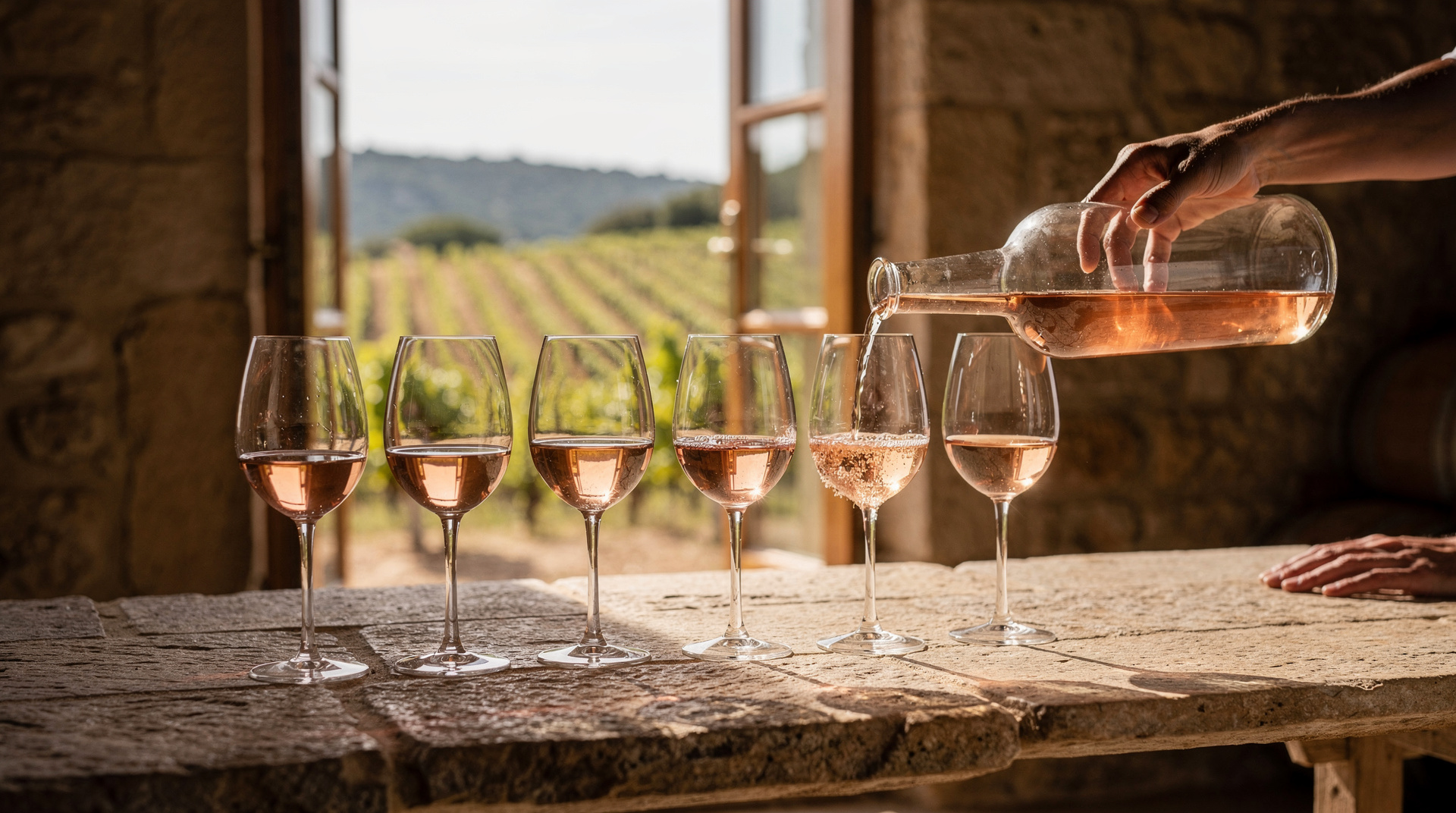
Wine tasting near Marseille: half-day and full-day options within 1 hour
Bandol and Cassis: full-day wine tour from Marseille
Duration: Full day
What wine regions can I visit for tasting within 1 hour of Marseille?
Cassis (35 min by train/car) and Bandol (45–50 min) are the closest wine appellations to Marseille. Coteaux d'Aix-en-Provence is accessible via the Aix day trip (40 min by train). Coteaux Varois is an hour by car. For a half-day, Cassis by train is the most practical. For a full-day wine circuit, Bandol + Cassis by car or organised tour.
The wine country accessible from Marseille
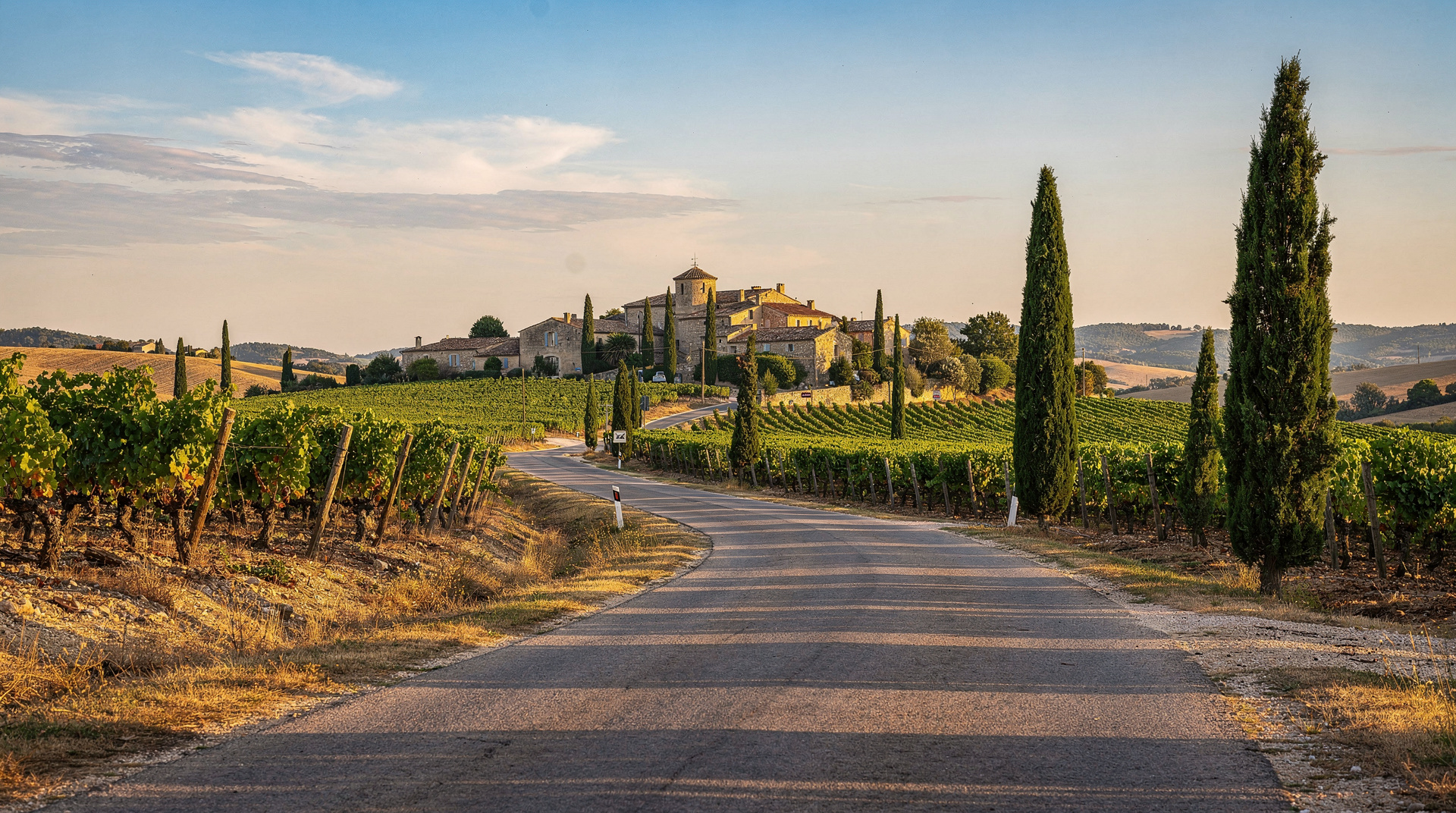
Marseille is unusual among major French cities in being surrounded, within 1 hour, by two of France’s most characterful wine appellations — AOC Cassis and AOC Bandol — plus the broader Coteaux d’Aix-en-Provence territory accessible through the regular day-trip connection to Aix. For wine-interested visitors, this proximity makes Marseille a genuinely appealing wine base as well as a city destination.
This guide covers the practical picture: which appellations are within reach, what they produce, how to get there, what tasting logistics to expect, and whether you need a car.
| At a glance | |
|---|---|
| Where | AOC Cassis and AOC Bandol within 1 hour; Coteaux d’Aix via the Aix day trip; Coteaux Varois by car only |
| Cost | Around EUR 15–25 for a city tasting, EUR 40–130 for a guided half or full-day tour, plus wine purchase |
| Time needed | A half day for Cassis or Bandol by train; a full day to combine both or to add sightseeing |
| Getting there | TER train from Marseille Saint-Charles for Cassis and Bandol; car or organised tour for Coteaux Varois and full-day circuits |
| Best time | Spring and autumn for comfortable tasting weather; avoid peak August heat for hillside domaine visits |
AOC Cassis: 35 minutes, train possible
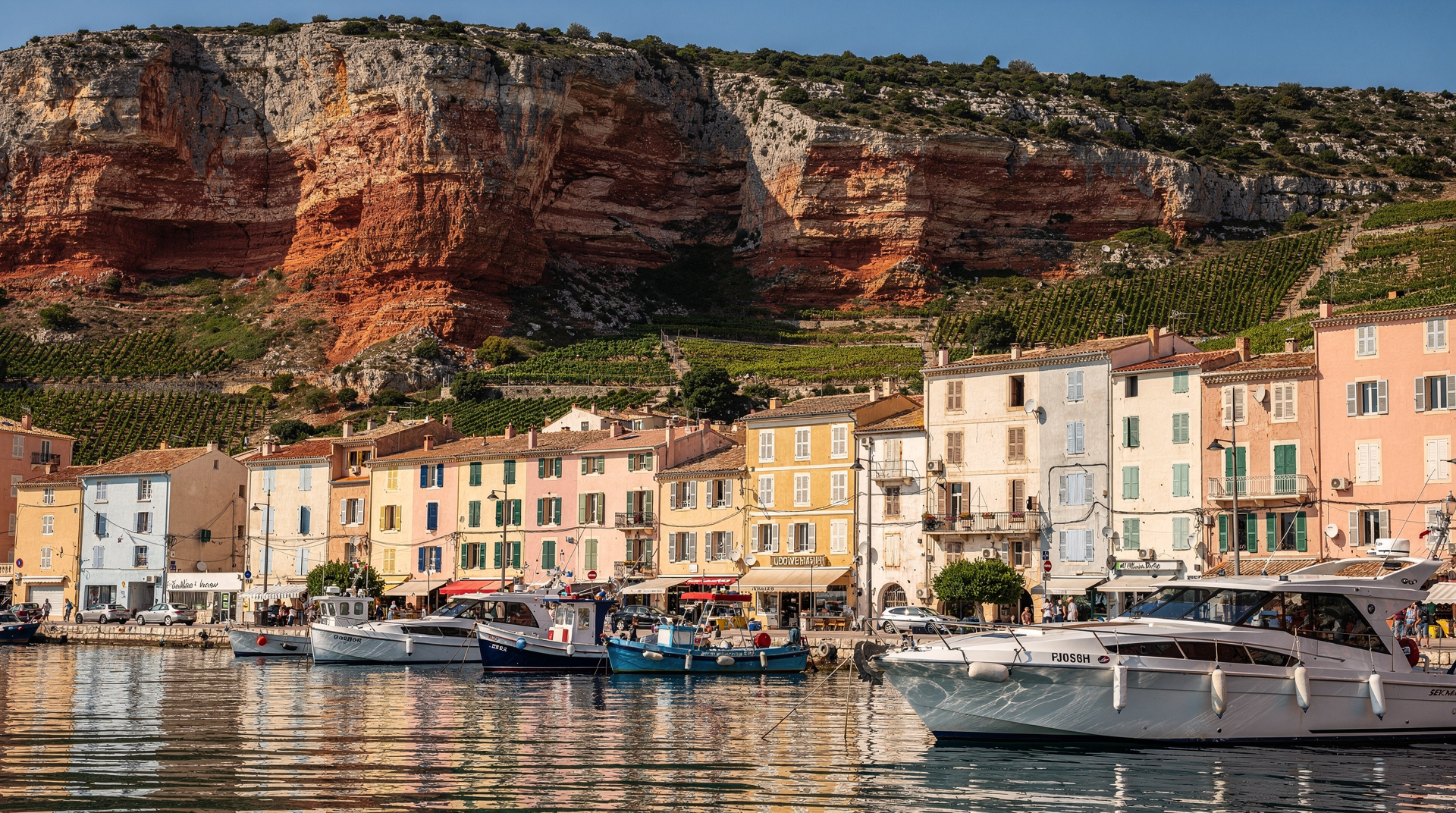
Distance: 35 minutes by TER train from Marseille Saint-Charles to Gare de Cassis (then taxi or bus to the port, about EUR 8–12). Production: Predominantly white wine (67%: marsanne, clairette, ugni blanc). 12 domaines, 210 hectares. Best for: White wine enthusiasts, fish and bouillabaisse pairings, the limestone mineral style.
Cassis is the most accessible wine appellation from Marseille without a car — the TER connection is frequent and the journey is comfortable. The caveat: the wine estates are above the village on hillside roads, not walkable from the port. Either join the electric buggy winery tour (which handles transport to the estates) or take a taxi from the port to a pre-arranged domaine appointment.
Half-day tasting plan: Morning train from Marseille (arrive Cassis 10:00). Electric buggy winery tour (10:30–12:30, includes 2–3 estate tastings). Lunch at the port with a glass of the morning’s favourite Cassis blanc (12:30–14:00). Afternoon: Cap Canaille viewpoint by taxi (15 min) or kayak to Port-Miou. Train back to Marseille (17:00–18:00).
See our Cassis wine guide for producer names and detailed tasting guidance.
AOC Bandol: 45 minutes by train or car
Distance: 50 minutes by TER train; 45 minutes by car via the A50. Production: Predominantly red (Mourvèdre minimum 50%) and rosé (Mourvèdre minimum 20%). Whites are a small fraction. Best for: Red wine enthusiasts, structured rosé, Mourvèdre exploration.
Bandol is slightly less train-convenient than Cassis because the key estates are in the surrounding hills (Le Castellet, La Cadière-d’Azur) rather than in the port town itself. The train from Marseille arrives at Bandol station, which is 1 km from the port — walkable. But to visit the serious domaines (Château de Pibarnon at La Cadière-d’Azur, Domaine Tempier at Le Plan-du-Castellet), you need either a car or a taxi from the port.
Half-day tasting plan: TER to Bandol (arrive 10:00). Taxi to pre-arranged domaine appointment in the hills (10:30–12:30). Return to Bandol port for lunch with a glass of the appellation’s rosé (12:30–14:00). Optional: Île de Bendor boat (14:00–15:30). TER back to Marseille.
Full-day: Bandol + Cassis by car: Depart Marseille 9:00. Bandol domaine visit (10:00–12:00). Lunch in Bandol. Drive to Cassis via La Ciotat and the coastal D559 (40 minutes). Afternoon wine tasting at Cassis domaine or electric buggy tour. Return to Marseille by 18:00–19:00.
The Bandol + Cassis combination is the classic coast wine itinerary — the contrast between Mourvèdre-driven Bandol reds and Marsanne-based Cassis whites is the point. See our Bandol wine guide for the producer picture.
Coteaux d’Aix-en-Provence: 40 minutes by train
Distance: 40 minutes by TER from Marseille to Aix (Gare d’Aix-en-Provence centrale). Production: Red, rosé, and white. Grenache, Cinsault, Mourvèdre, Cabernet Sauvignon (permitted in Coteaux d’Aix but not Côtes de Provence). More relaxed rules than other Provence AOCs. Best for: Rosé and light red exploration in the Aix hinterland; Sainte-Victoire scenic context.
Aix-en-Provence itself has a compact wine tasting experience — a 30–40 minute session at a wine shop or dedicated tasting room in the city, covering Provence wines across appellations. This is the most accessible first tasting for visitors who want an overview without a domaine visit.
The half-day Cézanne countryside wine tour from Aix takes visitors into the vineyard landscape around Mont Sainte-Victoire — the terrain that Cézanne painted obsessively — with estate tastings built into the circuit. The combination of the artistic and wine geography in a single 4-hour session is genuinely well-designed.
For the Aix wine tasting in context: See our Aix-en-Provence guide for the full day-trip picture, or our Aix day trip guide for a broader itinerary that fits the tasting into a full day out.
Coteaux Varois en Provence: 1 hour by car
Distance: Approximately 1 hour by car from Marseille (toward Saint-Maximin-la-Sainte-Baume). Production: Predominantly rosé, with some red and white. Inland, cooler climate than the coastal appellations. Character: Higher-acid, fresher-style rosé and red than the coastal Provence AOCs. Often good value.
Coteaux Varois is less visited by tourists from Marseille than Cassis or Bandol, partly because it lacks a well-known destination town (Saint-Maximin is pleasant but not a compelling tourism destination in itself) and partly because the drive requires a car with no practical alternative. The wines, however, are among the better value propositions in the Provence rosé category — the cooler interior climate produces rosés with more freshness and acidity than the warmer coastal counterparts.
Practical logistics: Best visited as part of a self-drive wine circuit that combines Coteaux Varois with Bandol or Sainte-Victoire — both are within reach for a full-day car trip.
Tasting etiquette: what to know before you go
Do I need to buy? At estate visits (domaine appointments), purchasing at least a bottle or two per couple is the expected courtesy for a guided tasting. You have been given the producer’s time; buying is how you reciprocate. Most estates price their wines honestly and the quality is genuine — this is not an obligation to feel resentful about.
At cooperative and public tasting rooms (Vinadea in Châteauneuf, cave shops in the village): There is generally no obligation to purchase, and the tasting fee (EUR 10–20 for 4–8 wines) covers the experience.
How to taste: Swirl gently, smell before sipping, taste without swallowing if you are driving (the spittoon, crachoir, is there for a reason and using it is not rude — it is professional). Comment positively on what you find interesting; no fake enthusiasm required for wines that do not appeal.
How to spit: A spittoon (crachoir) is provided at serious tasting sessions. Use it. Swallowing 8 wines across two estate visits produces a degree of impairment that makes driving dangerous regardless of the low individual pour size. The protocol of spitting is entirely normal in wine culture and no producer takes offence.
Language: Most Provence wine estates speak workable English. French is always appreciated; “c’est très bon” and “j’aime beaucoup ce vin” are sufficient compliments that produce visible pleasure from producers.
Designated driver options
The train solution: For Cassis and Bandol, the TER train eliminates the driver concern entirely — you taste, you get back on the train, no calculation required.
The organised tour solution: All guided wine tours from Marseille include a driver. This is the cleanest option for a full-day tasting itinerary — everyone in the group tastes freely, the logistics are managed, and the guide provides context.
The split arrangement: For a couple with one car, one person designates to taste minimally and drive; the other tastes fully. The non-driving partner gets to experience the full tasting; the driver gets to enjoy the wine later that evening from purchased bottles.
What not to do: Drive after a full tasting session where you have swallowed rather than spat. The individual pours are small, but 8–12 wines at half a glass each accumulates. In France, the legal blood alcohol limit is 0.05% — lower than the UK’s 0.08% — and enforcement is active on Provence roads in summer.
Price ranges for wine tasting near Marseille
| Format | Price per person |
|---|---|
| Aix city wine tasting (30–40 min) | EUR 15–25 |
| Cassis electric buggy winery tour | EUR 40–65 |
| Aix Cézanne countryside wine tour (half-day) | EUR 50–80 |
| Bandol + Cassis full-day wine tour from Marseille | EUR 85–130 |
| Self-drive estate visit + tasting fee | EUR 10–25 (tasting) + wine purchase |
For the comprehensive wine touring picture — self-drive routes, the Provence wine route system, and 3-day itineraries — see our Provence wine routes guide.
What to buy and how to take it home
Wine purchased directly at Provence estates is consistently cheaper than the same bottles in Marseille shops, French supermarkets, or export markets. For visitors who enjoy what they taste, buying at the source is practical and economical.
Estate pricing vs export: A bottle of Cassis blanc that costs EUR 18–22 at the domaine is the same bottle that sells for EUR 30–45 in London or New York wine shops. Over a case of 12 bottles, the estate-direct saving is EUR 150–250 — enough to justify buying during the visit rather than hoping to find it at home.
Transport logistics:
- By car: A mixed case (12 bottles) in the boot of a rental car is straightforward. Wrap each bottle individually in clothing to prevent breakage.
- By TER train (Cassis or Bandol): Up to 6 bottles in a padded wine carrier is manageable on a 40-minute train journey. Most good estates can provide a cardboard wine box for transport.
- By air: EU regulations allow unlimited wine in checked luggage (subject to weight allowances). Checked wine bags with individual bottle protection are available at some estates and at Marseille airport shops.
What to buy: At any estate visit, ask to taste the full range before deciding. The entry-level wine at a serious domaine is often the best value; the prestige cuvée requires more patience (and usually cellaring) to justify the premium. Rosé for early drinking, white for food pairings on holiday, red (Bandol particularly) for cellaring.
Combining wine tasting with sightseeing
The Cassis and Bandol wine visits make natural sense as parts of larger half-day itineraries that include the coastal scenery:
Cassis: Wine tasting in the morning (electric buggy tour to the estates, 10:00–12:00), lunch at the port with a glass of the morning’s Cassis blanc, afternoon walk or kayak to the Calanques (Port-Miou, Port-Pin). Return to Marseille by early evening. This structure uses the Cassis day fully without the wine tasting feeling rushed.
Bandol: Morning domaine visit in the surrounding hills (Château de Pibarnon has one of the more dramatic settings — 300m altitude looking south toward the sea), lunch at the port, afternoon boat to Île de Bendor or drive up to Le Castellet medieval village. The wine is the morning; the landscape and village are the afternoon.
Aix-en-Provence wine + city: The TER to Aix (40 minutes from Marseille) combines naturally with a morning wine tasting — Cézanne countryside wine tour or city wine tasting — followed by an afternoon in Aix’s old town. This is the strongest full-day combination from Marseille that covers both wine and city tourism.
What first-time Provence wine tasters should know
If this is your first organised wine tasting in France, a few things make the experience easier:
You do not need expert knowledge. Winemakers and tasting room staff are accustomed to visitors who know little about wine. Describing what you taste in simple terms (“more fruity,” “too dry,” “this one I prefer”) is entirely acceptable and appreciated.
The first wine sets the context. Most estate tastings begin with the lighter wine (white or rosé) and move to the reds. Your palate adjusts. If the first wine tastes sharp, wait — by the third taste your reference point has shifted.
The temperature matters. Tasting room wines are generally served at appropriate temperature. If you are at a shop that serves everything the same temperature, the reds may be too warm and the whites too cold — this affects how the wine tastes and is not a reflection of the wine’s quality.
Ask questions. “Quel millésime recommandez-vous à garder?” (Which vintage do you recommend keeping?) and “Avec quels plats serviriez-vous ce vin?” (What food would you serve with this wine?) are good opening questions that typically lead to a more engaged tasting conversation.
Take notes. Phone camera photos of the label are the minimum; a short note on what you tasted and what you liked is better. Provence wine estates produce many different cuvées, and the memory of “the rosé at that Cassis place” degrades quickly across a multi-day holiday. Noting the producer name and cuvée before you leave the tasting room takes 30 seconds and saves significant frustration later when trying to order or buy the same wine.
Wine tasting alongside an Arles or Aubagne day out
Wine is not confined to the Cassis-Bandol coast. Visitors combining a Marseille base with a trip to Arles for its Roman monuments and Van Gogh connections often pass through Camargue rice country rather than vineyards, but a stop at a Coteaux d’Aix domaine en route back is a reasonable detour by car. Closer to the city, Aubagne — best known for santons and Marcel Pagnol’s hills — sits just beyond Cassis and Bandol on the map, and a self-drive circuit can loop through it on the way to a Coteaux Varois or Bandol tasting without much extra driving time.
Pairing a tasting with the rest of your trip
A wine outing works best when it is chosen to fit the rest of your stay rather than squeezed in. If rosé is what draws you, Provence rosé explained helps you decide what to look for before you arrive, and the Cassis destination page and Bandol destination page show what else each town offers around the tasting.
Travellers who want the Rhône side of the story can look at the Châteauneuf-du-Pape wine tour or the Côtes du Rhône from Marseille guide, both of which are longer outings than the coastal appellations. For a broader choice of excursions, the day trips from Marseille overview puts wine next to the other options.
If a tasting is part of a longer plan, the food and wine weekend itinerary shows one way to build a few days around it. The Marseille provençal cuisine guide is useful for choosing dishes to match what you taste, and the seafood guide goes with the Cassis whites in particular. If you are still deciding whether to hire a car, do you need a car in Provence covers the question in more detail, and the Cassis day trip guide and Marseille to Cassis transport cover the practical side of the easiest trip.
Frequently asked questions about Wine tasting near Marseille
Do I need a car for wine tasting near Marseille?
No, not for Cassis or Bandol — both are reachable by TER train, with a taxi covering the last leg to the hillside domaines. A car becomes useful for Coteaux Varois or for combining Bandol and Cassis into one full-day circuit, and it removes the driver-and-spittoon calculation entirely if you use an organised tour instead.Which is better for a first wine tasting near Marseille, Cassis or Bandol?
Cassis for a first-timer who wants an easy train trip and prefers white wine with seafood; Bandol for someone more interested in structured reds and Mourvedre. Many visitors do both on a full-day car circuit or organised tour, since the contrast between the two styles is part of the appeal.
Top experiences
Bookable activities with verified prices and instant confirmation on GetYourGuide.
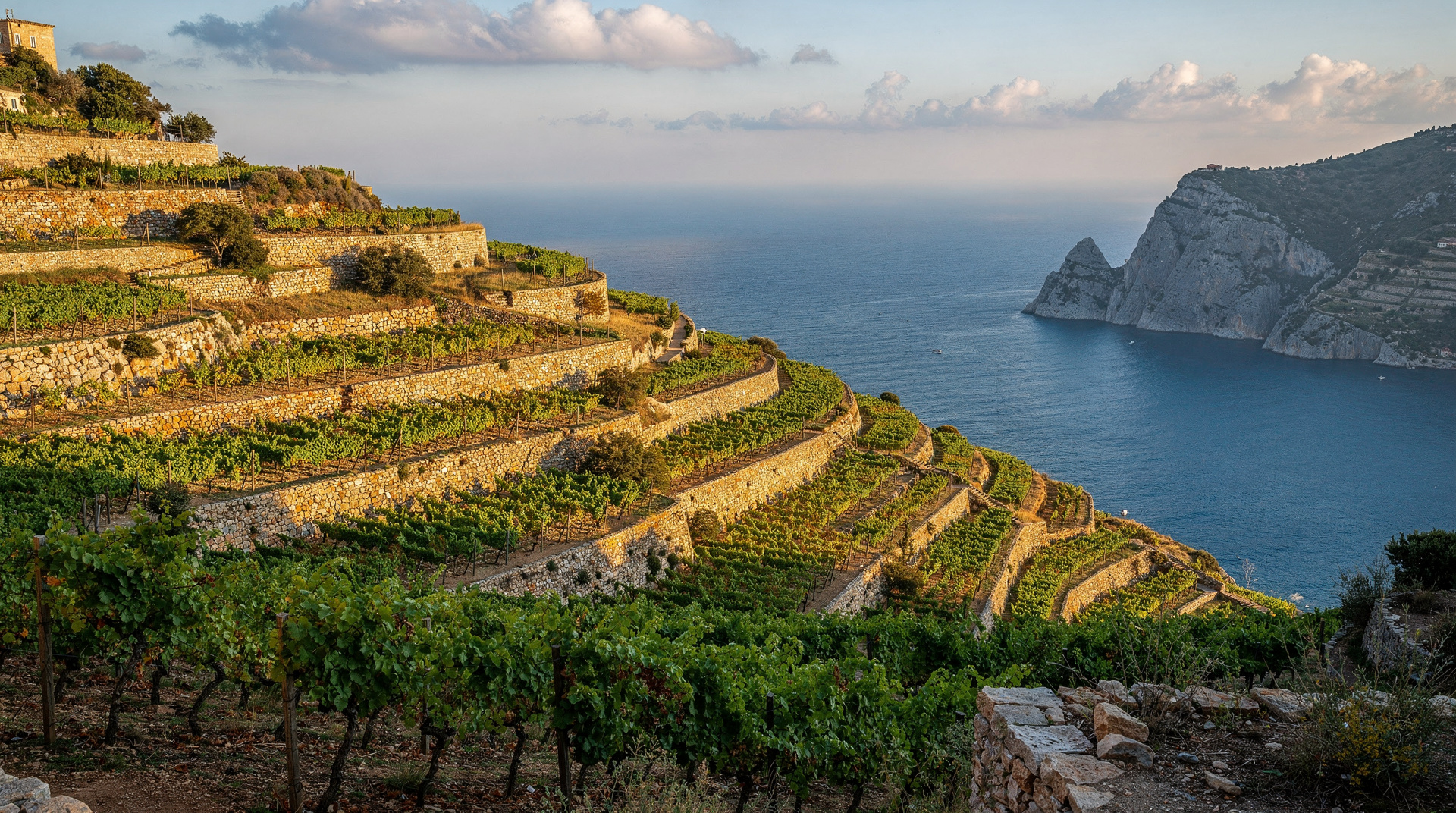
Bandol and Cassis: full-day wine tour from Marseille
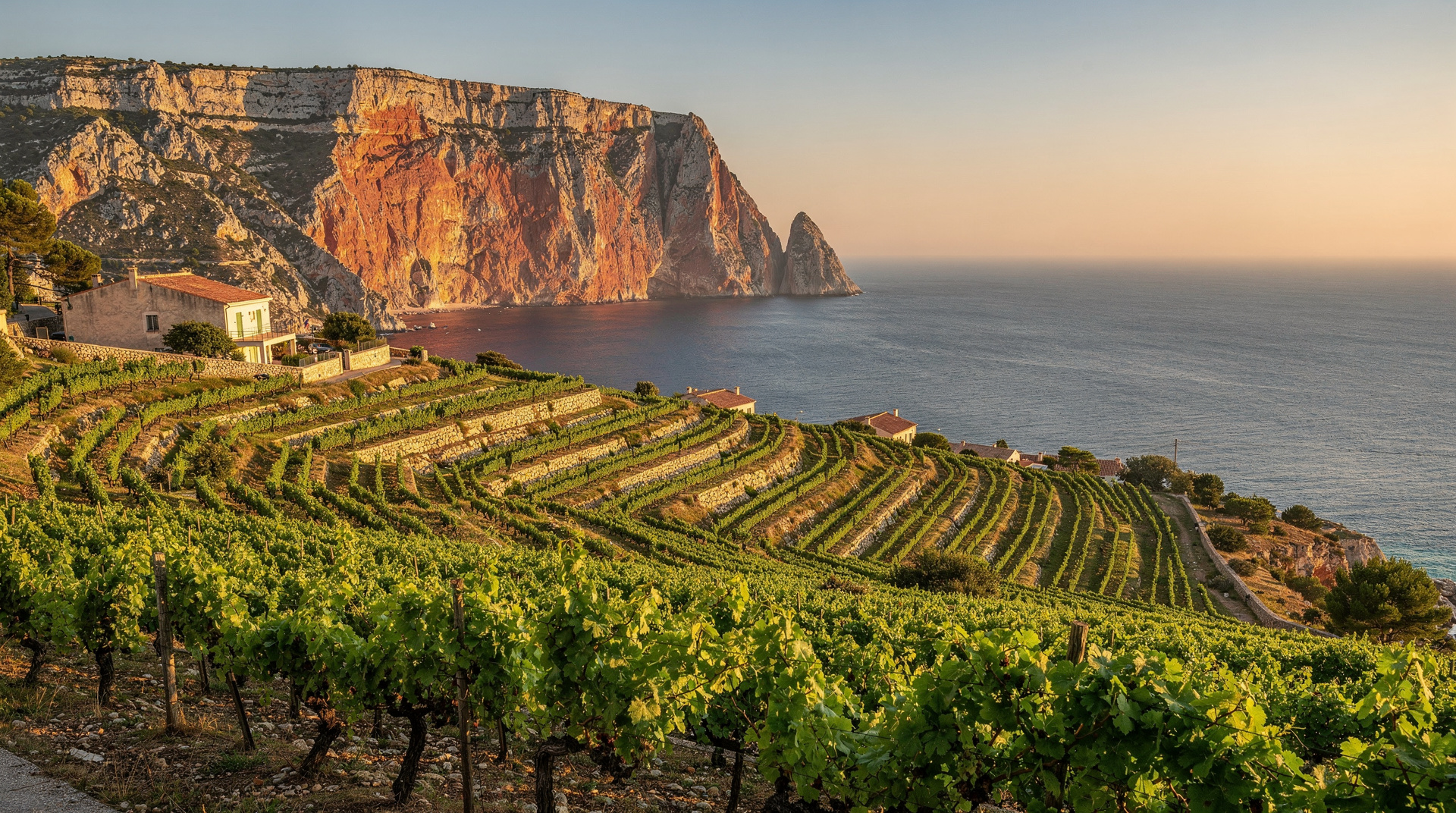
Cassis, Bandol, Le Castellet wine tour: cliffs and vineyards
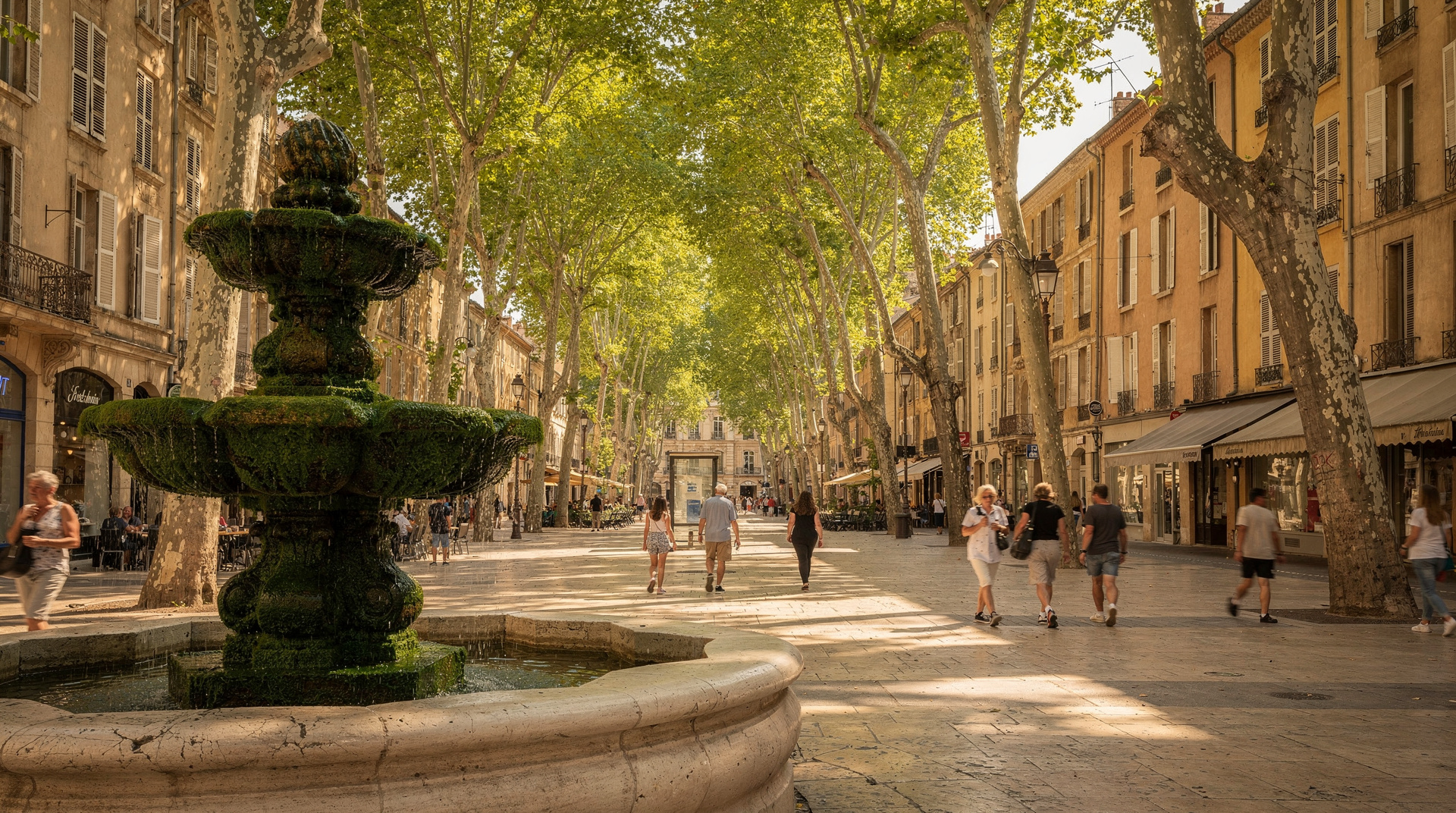
Aix-en-Provence: Provence wine tasting
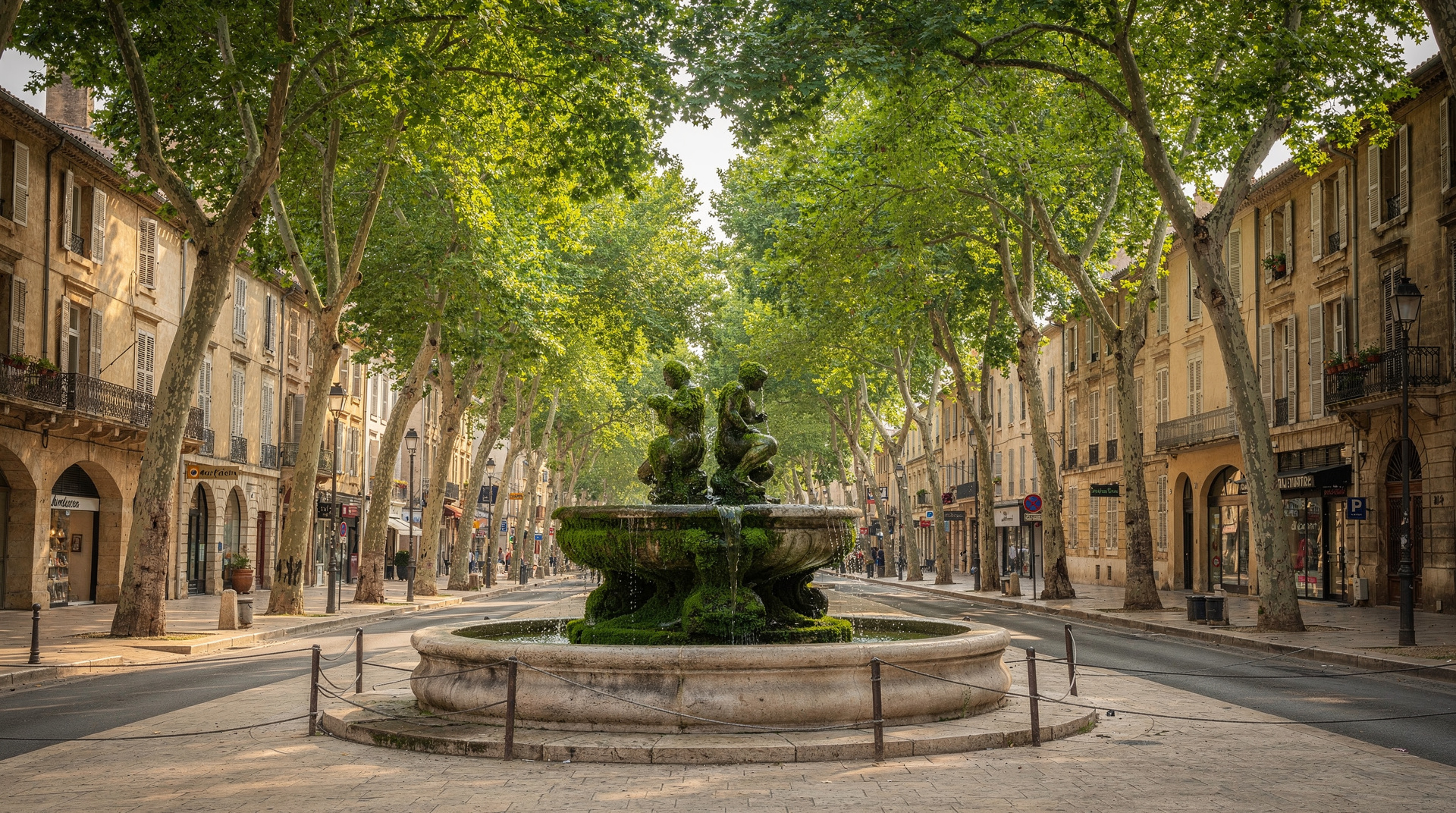
Aix-en-Provence: half-day wine tour in Cézanne's countryside
Marseille: highlights & wine-tasting day tour