Provence rosé explained: pale colour, direct press, and the real story
From Marseille: Provence in a day with wine tasting
Duration: 9 hours
What makes Provence rosé different and how should I choose one?
Provence rosé gets its pale colour from direct-press technique (not saignée). The grapes are grenache, cinsault, mourvèdre, and syrah. Look for the AOC Côtes de Provence, Coteaux d'Aix, or Bandol label — not generic 'Provence' rosé which may be Languedoc. Serve at 10–12°C, not ice-cold.
| At a glance | |
|---|---|
| Where | Estates across Côtes de Provence, Coteaux d’Aix, and Bandol, plus wine shops in Marseille |
| Cost | Around EUR 8–15 everyday, EUR 15–25 for the interesting mid-range, EUR 25–50+ for premium |
| Serving temperature | 10–12°C, not ice-cold |
| Best time to buy | Spring/summer for the current vintage; check the harvest year on the label |
| How to taste it properly | Join a guided tasting (see the wine tasting guide) or visit estates directly on the wine routes |
The world’s most imitated wine style
Provence rosé has become the most globally recognised regional wine style in France — more discussed than Burgundy in some markets, more widely distributed than Bordeaux in others. This level of success has created a secondary market of wines that imitate the pale pink colour and the “Provence style” label without actually coming from Provence. Understanding what makes the real thing is useful before spending EUR 20–40 on what might be a Languedoc approximation.
This guide covers the production technique that creates the colour, the grape varieties, the key AOCs, what to look for on the label, and how to serve it correctly. If you would rather start from a single appellation, the Cassis wine guide and the Bandol wine guide go deeper on two of the coastal names mentioned below.
The direct-press technique: why it is pale
The defining production technique of Provence rosé is direct press (also called skin contact rosé or rosé de pressurage direct). The grapes — usually whole clusters or whole berries — are pressed directly after harvest, without a period of maceration (skin contact) in a tank. The short contact time between juice and skins during pressing extracts only a small amount of anthocyanins (the red pigment compounds), producing the characteristic pale pink or salmon colour.
This is fundamentally different from how red wine is made (where extended skin maceration is the point) and different from the saignée (“bleeding”) method used in some other rosé appellations (where juice is drained from a red wine tank mid-fermentation to concentrate the remaining red wine, leaving a deeply coloured rosé as a by-product).
The direct-press technique is associated with freshness, lower extract, higher acidity, and the pale colour that has become the aesthetic identity of Provence rosé. It is also, in cooler years or less skilled hands, associated with thin wines lacking character — the pale colour does not guarantee quality, just a specific production approach.
Côtes de Provence regulations: The AOC regulations require that at least 20% of Côtes de Provence rosé be produced by the saignée method (confusingly, the opposite of what might be expected). In practice, most serious producers use predominantly direct press; the regulatory minimum for saignée reflects a different historical balance of production methods.
The grapes of Provence rosé
Provence rosé blends are typically built from four to five grape varieties in varying proportions:
Grenache: The workhorse and the most planted red variety in Provence. In rosé, Grenache contributes red fruit character (strawberry, cherry), roundness, and moderate alcohol (grenache ripens early and accumulates sugar quickly). Most Côtes de Provence rosés are grenache-dominant.
Cinsault: A lighter, high-acid red variety that adds freshness and aromatic lift to the blend. Cinsault-dominant rosés are the palest and most delicate in style; higher cinsault content means lower body and higher suitability as an aperitif rather than a food wine.
Mourvèdre: Where mourvèdre appears in significant quantity (as required in Bandol rosé — minimum 20%), it adds structure, darker colour, and complexity. Most generic Côtes de Provence rosés use only a small percentage of mourvèdre; Bandol rosé is the extreme where mourvèdre defines the style.
Syrah: Increasingly used in Provence rosé for its aromatic complexity (violet, black pepper) and colour-contributing pigments. A small percentage of syrah in a grenache-cinsault blend adds aromatic dimension without dramatically changing the pale colour.
Tibouren: A native Provence variety increasingly used in appellation wines for its distinctive floral and spicy character. Particularly associated with Côtes de Provence Sainte-Victoire and the coastal zones.
The AOCs of Provence rosé
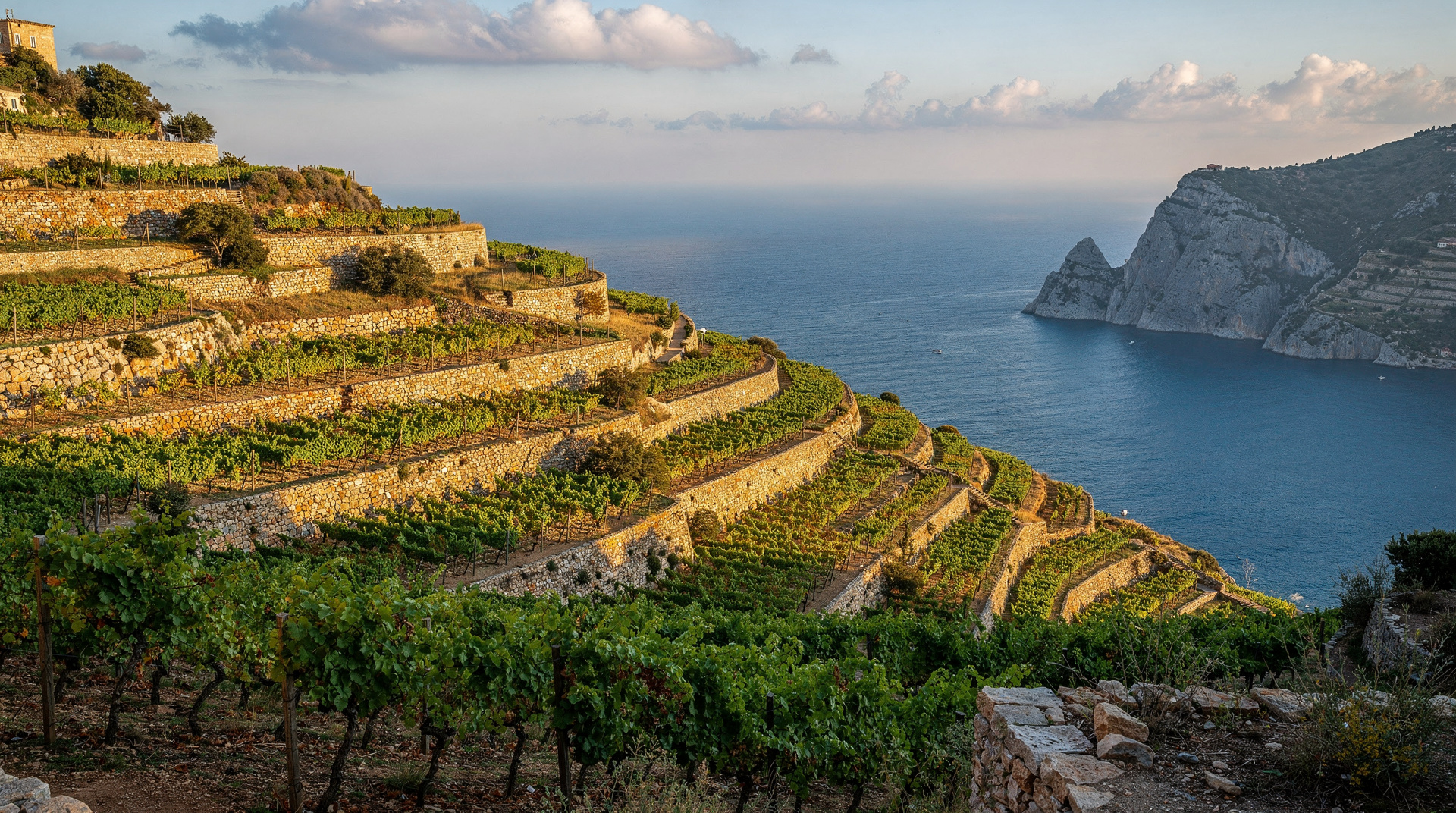
Côtes de Provence: The largest and most commercially significant appellation, covering approximately 20,000 hectares across the Var department and eastern Bouches-du-Rhône. Produces approximately 80–90% rosé (the balance being red and white). This is the volume core of Provence wine; quality ranges from serious single-estate wines at EUR 25–45 to commercial bulk at EUR 8–12.
Sub-zones within Côtes de Provence have been formalised to acknowledge terroir differences:
- Côtes de Provence Sainte-Victoire: The eastern Bouches-du-Rhône zone around Mont Sainte-Victoire, with a cooler, more continental climate than the coastal Var. Often produces more structured rosés.
- Côtes de Provence La Londe: The coastal zone near Hyères and the Îles d’Or. Maritime influence produces aromatic, fresh rosés.
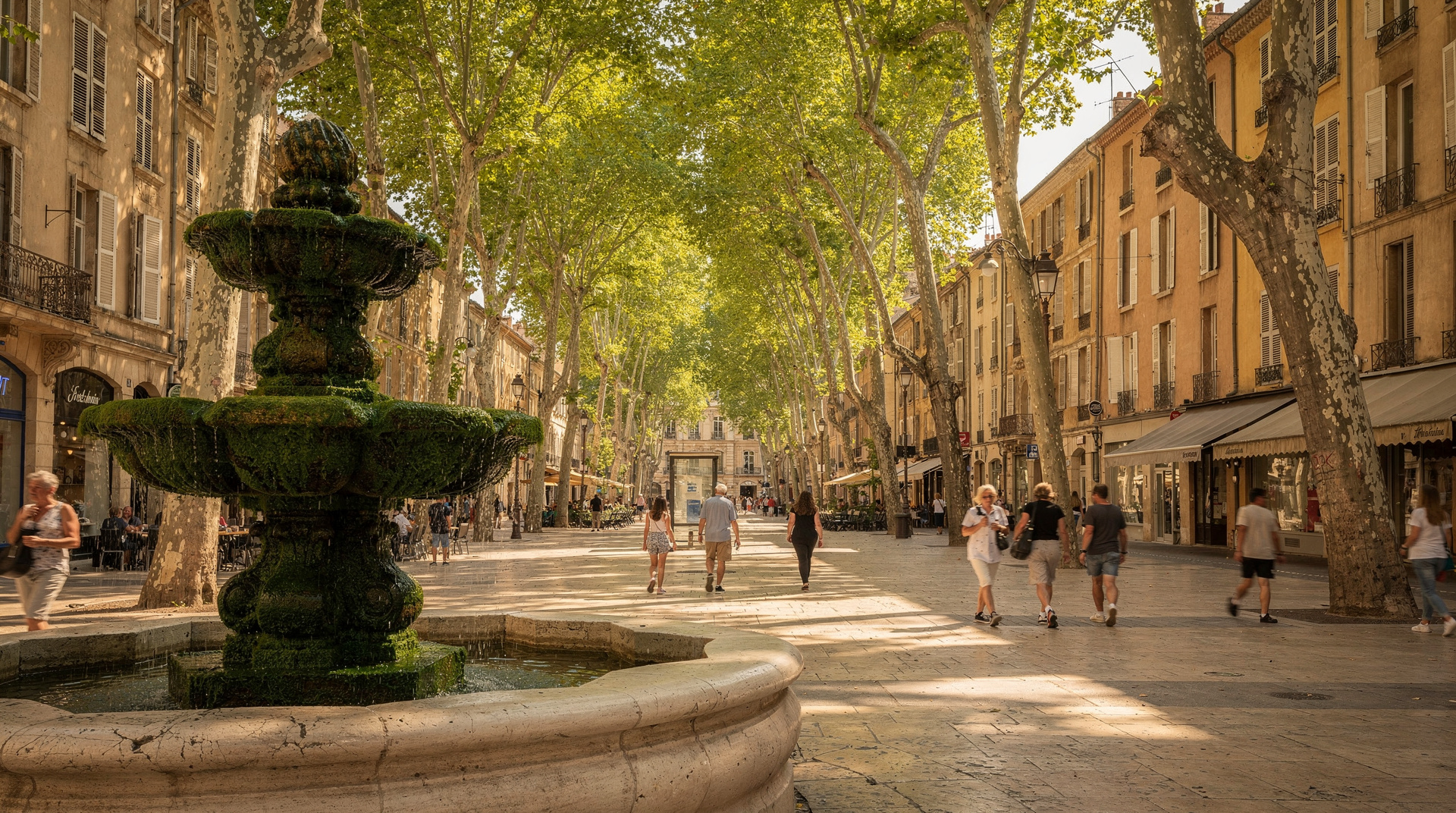
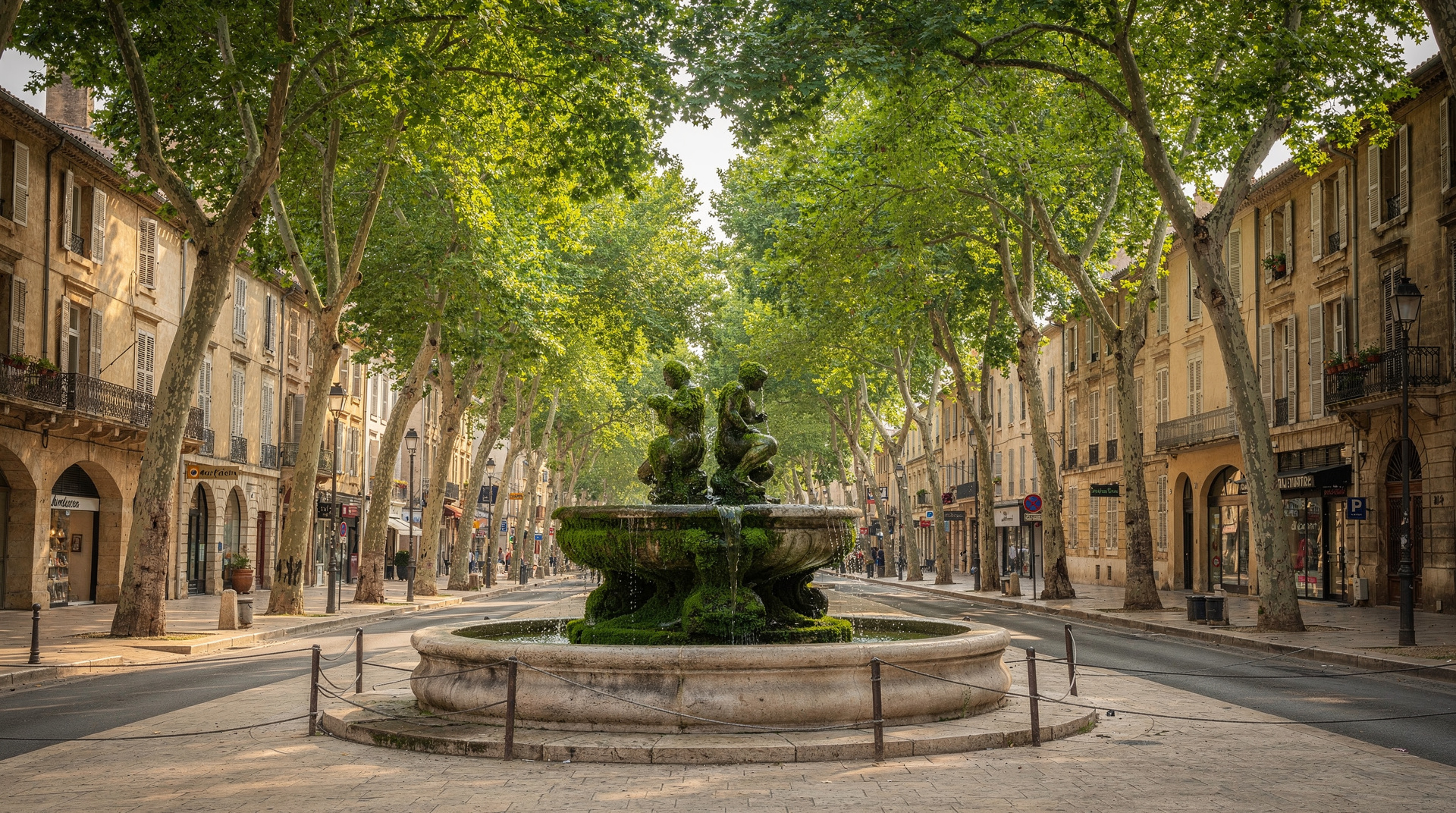
Coteaux d’Aix-en-Provence: The Aix hinterland and the Baux-de-Provence zone. Slightly more varied in style than Côtes de Provence; often includes more mourvèdre and produces rosés with slightly more body.
Coteaux Varois en Provence: Inland Var, at higher altitude than coastal Côtes de Provence. Cooler temperatures produce higher-acid, fresher rosés.
Bandol: The most structured rosé in Provence — see our Bandol wine guide for the full explanation. Not a typical aperitif rosé; more a food wine.
AOC Cassis: Approximately 30% of Cassis production is rosé. Similar in style to Côtes de Provence but with the limestone minerality of the Cassis appellation.
Provence vs Languedoc: reading the label
The commercial success of Provence rosé has motivated producers in other regions — particularly the Languedoc (Gard, Hérault, Aude departments) — to produce pale pink wines styled after Provence rosé and marketed in similar bottle shapes. These are not necessarily inferior wines, but they are not Provence wine.
What to check: The AOC on the label. “Côtes de Provence,” “Coteaux d’Aix-en-Provence,” “Bandol,” “Cassis,” or “Coteaux Varois” indicates genuine Provence production. “Vin de pays du Var” or “IGP Pays d’Oc” on the back label (while the front emphasises “Provence style”) indicates it is not an AOC Provence wine.
The bottle shape: The distinctive Provence bottle (wider at the base, narrowing to a corset waist) is not protected — any producer anywhere can use it. It is not a reliable quality indicator.
The colour: Pale pink does not indicate Provence origin. The direct-press technique that produces the colour is not exclusive to Provence.
How to serve Provence rosé correctly
Temperature: 10–12°C. This is cooler than red wine (16–18°C) but not as cold as some people serve rosé (6–8°C, which mutes the aromatics). The ideal: remove from the fridge 5–10 minutes before serving.
Ice in the glass: Not the usual French approach, but acceptable in summer heat if the wine would otherwise warm quickly. Adding ice directly to the wine dilutes it; an ice bucket to chill the bottle is more appropriate.
Glassware: A standard white wine glass or a tulip-shaped glass is correct. Wide-mouthed red wine glasses dissipate the aromatics too quickly.
Vintage: Drink Provence rosé young — within 1–2 years of harvest for most commercial cuvées. The exception is Bandol rosé and premium single-estate wines designed for ageing. A 2024 Côtes de Provence rosé is in its ideal drinking window in 2026; a 2021 is past it for most examples.
Matching with food: The versatility of Provence rosé is genuine — it works with a wide range of food:
- Grilled fish and seafood (the primary pairing in the region)
- Charcuterie and pâté
- Soft goat cheese and sheep’s milk cheese
- Provençal vegetable dishes (ratatouille, pan-fried courgettes with herbs)
- Light pasta dishes
- As an aperitif with olives and tapenade
Where it does not work: rich, dark, slow-braised meat (daube, lamb shoulder) — these need red wine. Very sweet desserts — the wine’s dryness creates a clash.
Price and quality tiers
EUR 8–15: Commercial Côtes de Provence or IGP rosé — often made in large-volume facilities from blended grapes. Acceptable for everyday drinking; not interesting enough to examine critically.
EUR 15–25: Mid-range Côtes de Provence from named estates. This is where the genuinely interesting Provence rosé lives — single-estate wines with identifiable house styles, more careful production, and the terroir differences between sub-appellations becoming evident.
EUR 25–50: Premium single-estate or cru wines, Bandol rosé, and top Coteaux d’Aix-en-Provence producers. Worth buying for a special occasion or to understand the ceiling of the style.
EUR 50+: Iconic names (Domaines Ott, Minuty’s top cuvées) and rarities. At this level, the price reflects both quality and reputation — justified for committed enthusiasts, probably not necessary for a holiday exploration.
Tasting Provence rosé near Marseille
For organised wine tasting that includes Provence rosé, the half-day Aix-en-Provence wine tasting session and the Cézanne countryside wine tour both cover Provence rosé in context. See our wine tasting near Marseille guide for logistics, and the Provence wine routes guide for self-drive options across the full Provence AOC territory.
Where to go next
Rosé tastes best in its setting. If you are building a trip around wine, the Marseille food and wine weekend puts tastings alongside the city’s restaurants, and the Aix-en-Provence destination page covers the hinterland where the Coteaux d’Aix estates sit. For the wider picture of the city itself, start from the Marseille destination guide, and for a seasonal read on when to travel, see the best time to visit Marseille.
The vintage question: does rosé age?
Most Provence rosé is designed for early drinking — within 1 to 2 years of harvest. The winemaking choices that produce the pale colour and fresh aromatic profile (direct press, early bottling, inert handling to preserve freshness) are also choices that limit cellaring potential. A 3-year-old commercial Côtes de Provence rosé has usually lost its appeal.
Exceptions: Bandol rosé (particularly from Domaine Tempier and Château Pradeaux) is designed to age — the high Mourvèdre content gives structure that evolves positively for 4–6 years, sometimes longer. Premium single-estate rosés from Coteaux d’Aix-en-Provence producers have occasionally been made in styles that cellar 3–4 years. These are the exception.
The practical rule: When buying Provence rosé to drink during a holiday, check the harvest year on the bottle. In 2026, look for 2024 or 2025 vintage. A 2022 Côtes de Provence rosé found on a restaurant wine list is probably past its best, and a good sommelier will know this.
The pink colour spectrum explained
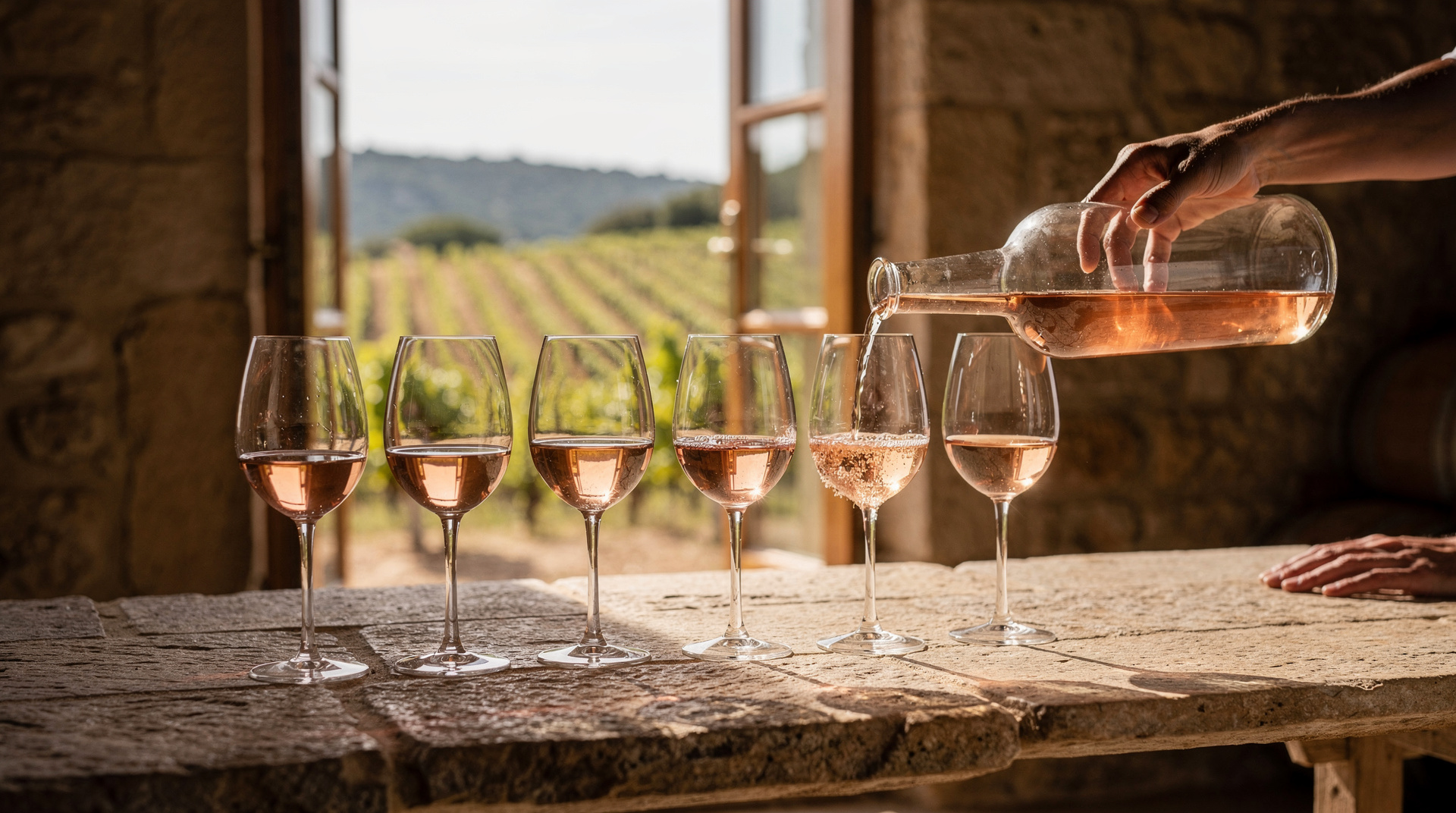
Provence rosé encompasses a range of pink shades, and the colour correlates loosely (but not perfectly) with style:
Very pale/platinum: Maximum skin separation in pressing, minimum contact time. The palest wines are often the most delicate and the least structured — aromatic, fresh, best as aperitifs. Some producers chase paleness as a marketing differentiator; extreme paleness without flavour is not a quality indicator.
Pale salmon/onion skin: The sweet spot for most serious Côtes de Provence rosé — enough colour to indicate some extract, pale enough to signal the direct-press approach. This is where most single-estate wines in the EUR 15–30 range fall.
Rosé cuivré (coppery rose): More extract, sometimes more Mourvèdre or Syrah in the blend. More body and structure. Bandol rosé often falls in this range. A food wine rather than an aperitif.
The colour-quality myth: Pale does not mean better, nor does deeper colour mean worse. The colour reflects the winemaking choices and grape varieties, not the inherent quality of the fruit. Judge by taste.
Provençal rosé at the table: a broader pairing guide
The food versatility of Provence rosé is genuine — it bridges the gap between white wine pairings (fish, light dishes) and red wine territory (grilled meats, charcuterie) better than most styles.
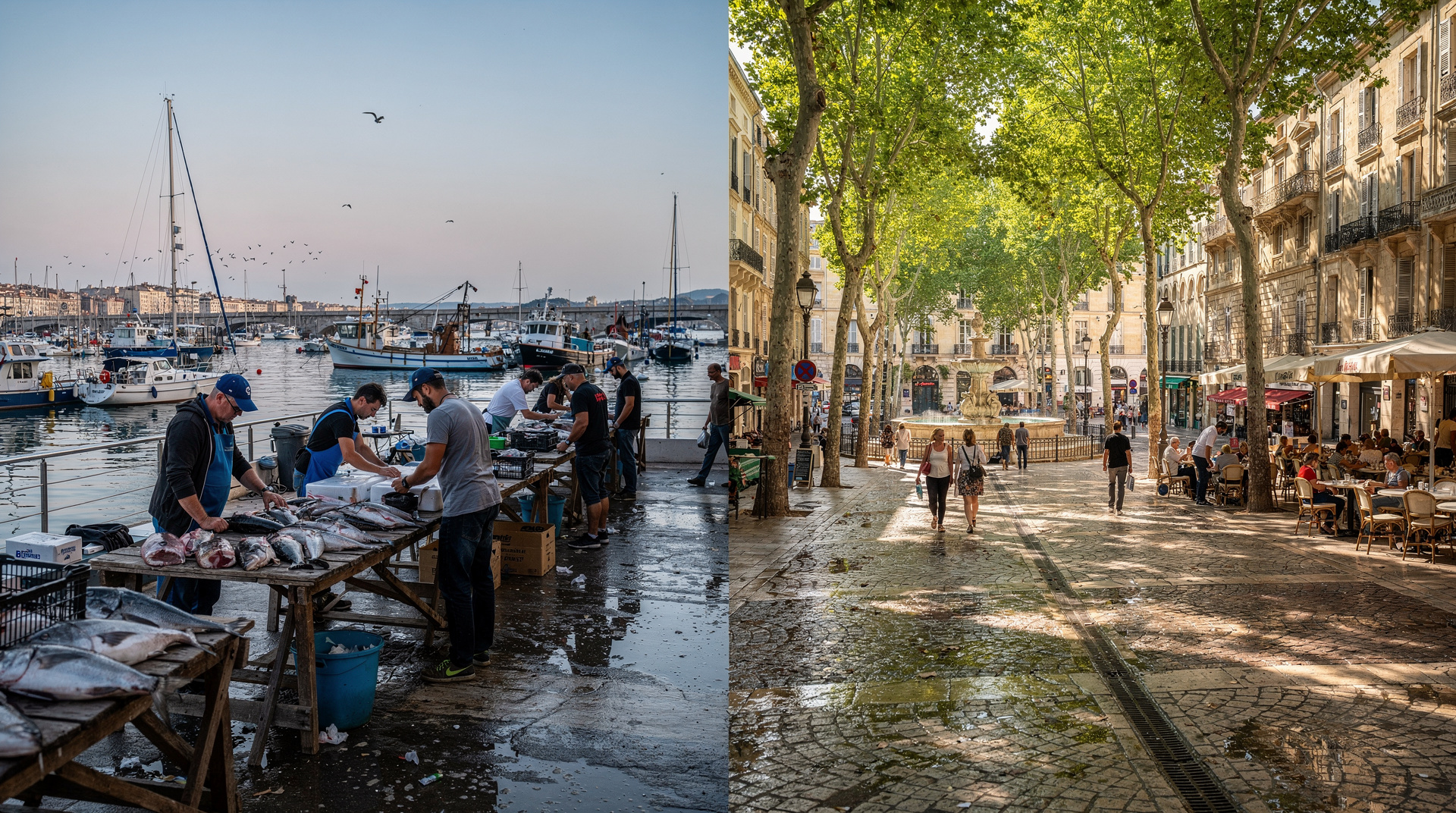
On a Provençal table: The natural pairing context is the Provençal summer meal (the Provençal cuisine guide explains the dishes in more detail) — ratatouille, grilled fish, a plate of olives and tapenade, socca or panisses, aioli with summer vegetables. Rosé handles all of these without conflict. In the summer heat of Marseille, where lighter drinking is instinctive and the food is vegetable-forward, rosé makes structural sense as the default wine.
With bouillabaisse: A matter of debate among Marseille restaurateurs (see the bouillabaisse guide for what a proper bowl involves). The traditional pairing is Cassis blanc — the white wine from the nearest AOC. Some tables prefer a structured rosé. Either is defensible; the classic choice is the white.
With North African food: Côtes de Provence rosé with couscous, merguez, and harissa-based dishes is a food pairing that works well in the Noailles context — the wine’s freshness cuts through spice without clashing, and the alcohol level is moderate enough for a lunch setting.
What to avoid: Pairing light, delicate Provence rosé with very spicy dishes (where the wine gets lost) or with heavy, slow-cooked meat dishes (where red wine is genuinely more appropriate). The wine is versatile but not infinitely so.
The Provence rosé industry in numbers
Provence is the world’s leading producer of premium rosé wine by value and by reputation, a position it has consolidated significantly over the past two decades.
Côtes de Provence AOC alone produces approximately 160 million bottles per year — roughly 80% of it rosé. The total Provence rosé production across all appellations (including Coteaux d’Aix, Coteaux Varois, Cassis, and Bandol) exceeds 200 million bottles annually.
The United States is the largest export market for Provence rosé by value, followed by the UK, Germany, and the Scandinavian markets. The export premium is significant — a bottle that sells at the estate for EUR 12–15 often retails at EUR 20–30 in the US market, and at EUR 25–40 at New York restaurant wine lists.
What this means for visitors: Buying directly at estates in Provence, or at wine shops in Marseille, represents a meaningful saving over the same wines in export markets. A case of 12 bottles of a quality Côtes de Provence rosé purchased at the estate (EUR 15–22 per bottle) costs significantly less than the same wine bought in the US, UK, or Germany. This is one of the clearer economic arguments for buying wine during a Provence holiday rather than shipping it home.
Frequently asked questions about Provence rosé explained
Is more expensive Provence rosé always better?
Not linearly. The EUR 15-25 range from named estates is where quality and character become clearly evident; above EUR 50 you are largely paying for brand reputation (Domaines Ott, top Minuty cuvées) rather than a proportionally better wine. Blind tastings regularly favour mid-range bottles over prestige names.Can I bring Provence rosé home in checked luggage?
Yes, if well wrapped - wine-specific inflatable sleeves or bubble wrap inside checked luggage work reasonably well for a bottle or two. For a case, shipping services used by many Provence estates are more reliable than checked baggage, and some estates offer to ship internationally directly.
Top experiences
Bookable activities with verified prices and instant confirmation on GetYourGuide.