Train from Marseille to Aix-en-Provence
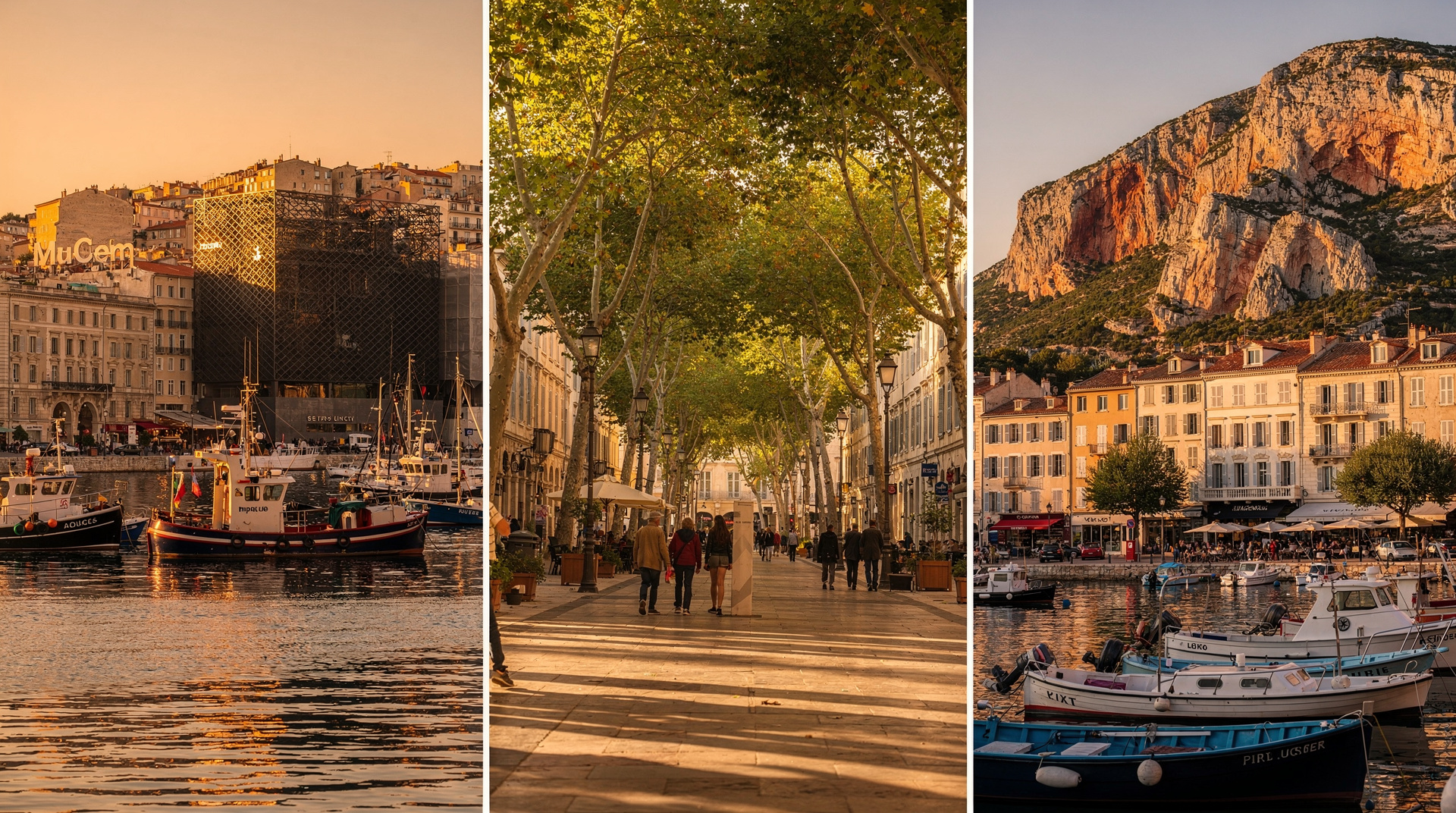
From Marseille: Cassis and Aix-en-Provence full-day tour
Duration: 8 hours
How do I take the train from Marseille to Aix-en-Provence?
Take the TER from Marseille Saint-Charles to Aix-en-Provence station (35–45 min, from around 7 EUR, ~30 trains/day). Aix TGV station is 8 km from the city centre — only useful if connecting from Paris directly. The TER puts you in the city centre.
Two stations, two completely different situations
| Route | Marseille Saint-Charles to Aix-en-Provence (Centre) |
| Cost | Around EUR 7–8 one-way |
| Time needed | 35–45 minutes each way |
| Getting there | TER regional train, no reservation needed, around 30 trains/day |
| Best time | Early morning for the Place Richelme market; avoid the 08:00–09:30 peak if buying tickets at the machine |
The single most important thing to understand about getting from Marseille to Aix-en-Provence by train is that there are two train stations in Aix, and they are not interchangeable.
Aix-en-Provence (Centre) — located in the city’s Rotonde area, a 10-minute walk from Cours Mirabeau and the old town. This is where TER regional trains from Marseille Saint-Charles arrive. It is the station you want for a visit to Aix.
Aix-en-Provence TGV — located 8 kilometres southeast of the city, in an industrial zone near the A8 motorway. This station exists exclusively as a high-speed rail interchange — it serves passengers travelling directly between Paris and the Mediterranean corridor, or connecting to Marseille from Paris. It is not walkable to Aix city centre, requires a bus or taxi connection, and adds 20–30 minutes to your journey compared to the TER. Do not use Aix TGV for a day trip to Aix from Marseille unless your journey starts in Paris.
The TER: Marseille to Aix-en-Provence Centre
Operator: SNCF TER Sud Provence-Alpes-Côte d’Azur
Departure station: Marseille Saint-Charles
Arrival station: Aix-en-Provence (Centre)
Journey time: 35–45 minutes
Frequency: Approximately 30 trains per day (from early morning to late evening), running roughly every 20–30 minutes during the day
Fares: From around 7–8 EUR one-way; standard fares vary by booking window
First trains: Early morning departures before 06:00 allow an early arrival in Aix, useful for the morning market on Place Richelme (open every morning but particularly vibrant Tuesday, Thursday, and Saturday).
Last trains back: Evening trains continue until around 21:30–22:00, allowing a full dinner in Aix before returning.
Tickets are sold at Gare Saint-Charles ticket machines, SNCF Connect app, and third-party platforms. TER tickets do not require advance booking for a guaranteed seat — you can buy them at the machine moments before departure. However, buying in advance online is slightly cheaper (promotional fares start lower when booked days ahead).
No reservation required: TER trains in this region are open seating. Just validate your ticket at the orange post before boarding.
From Aix-en-Provence station to the city centre
Aix-en-Provence Centre station is not in the historic old town, but it is close enough to walk. The station exit opens onto Avenue Victor Hugo; from there, it is approximately 10–12 minutes on foot to the fountain roundabout at La Rotonde, which marks the beginning of Cours Mirabeau, Aix’s most famous boulevard.
Alternatively, several local bus lines stop just outside the station and run into the centre. Taxis are also available at the station rank.
What if I am arriving from Paris?
If you are travelling Paris→Aix→Marseille or Paris→Marseille with a stop in Aix, you have two options:
Option A — Paris Gare de Lyon to Aix-en-Provence TGV: Journey time approximately 3 hours. You arrive at Aix TGV station, 8 km from the city. Take Bus Navette (shuttle bus) or taxi to the old town. Budget 20–30 minutes extra. Then continue to Marseille from Aix TGV station if needed (TGV or TER connecting service).
Option B — Paris Gare de Lyon to Marseille Saint-Charles, then TER back to Aix: Sometimes cheaper overall. You arrive centrally in Marseille, store bags at the station, take the TER to Aix Centre station (35–45 min), do your Aix day trip, return to Marseille by TER. This keeps the Aix arrival at the central station rather than the TGV interchange.
For a straightforward Paris–Marseille trip with a day stop in Aix en route, Option B typically gives better city-centre access to Aix. But check both options on SNCF Connect for fare and timing comparison on your specific dates.
Journey time reality
The 35–45 minute figure for Marseille–Aix by TER is accurate for most services. A small number of services make additional stops and take slightly longer. On SNCF Connect, filter for “direct” services to see the faster options.
If you are combining Aix with Cassis on the same day (a popular double day trip from Marseille), the sequencing matters. Aix in the morning (leave Marseille ~08:30), return to Marseille by early afternoon, then TER to Cassis for the afternoon and early evening — this is tight but achievable. See our Marseille to Cassis transport guide for details.
Before you reach Saint-Charles
Most of the stress in this journey happens before the train, not on it. If you are staying near the Vieux-Port, our getting around Marseille guide and the Marseille metro guide explain how to reach the station without losing time. If you land by air first, the Marseille airport to city guide covers the connection into Saint-Charles, and the Paris to Marseille TGV guide helps if your trip starts on the high-speed line.
What to see in Aix on a day trip from Marseille
Aix-en-Provence rewards at least a half-day, preferably a full day. The main highlights:
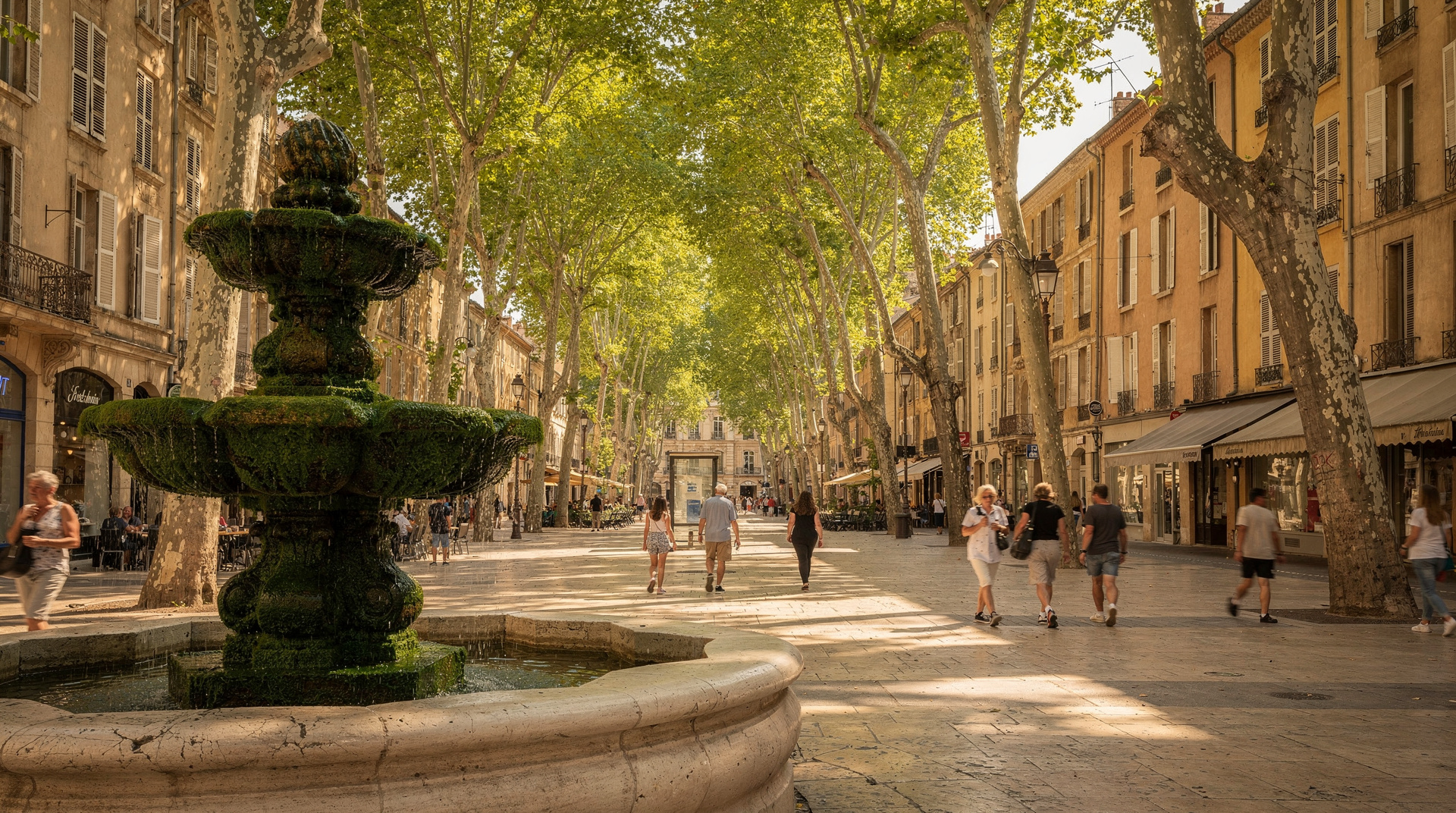
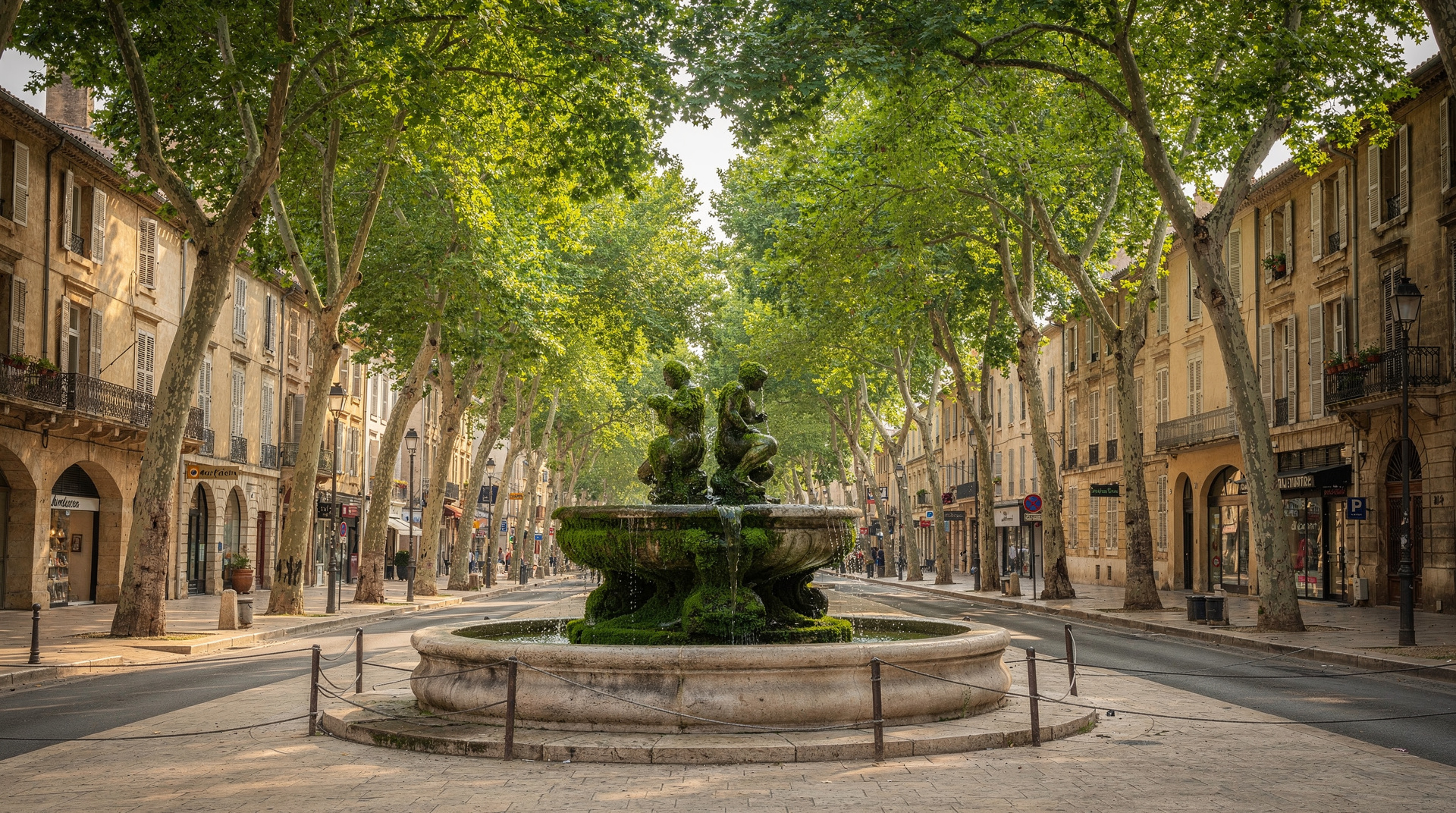
Cours Mirabeau: The city’s great boulevard, lined with cafés, fountains, and 17th–18th century hôtels particuliers on the southern side. The most photographed street in Aix. Morning café culture here is excellent.
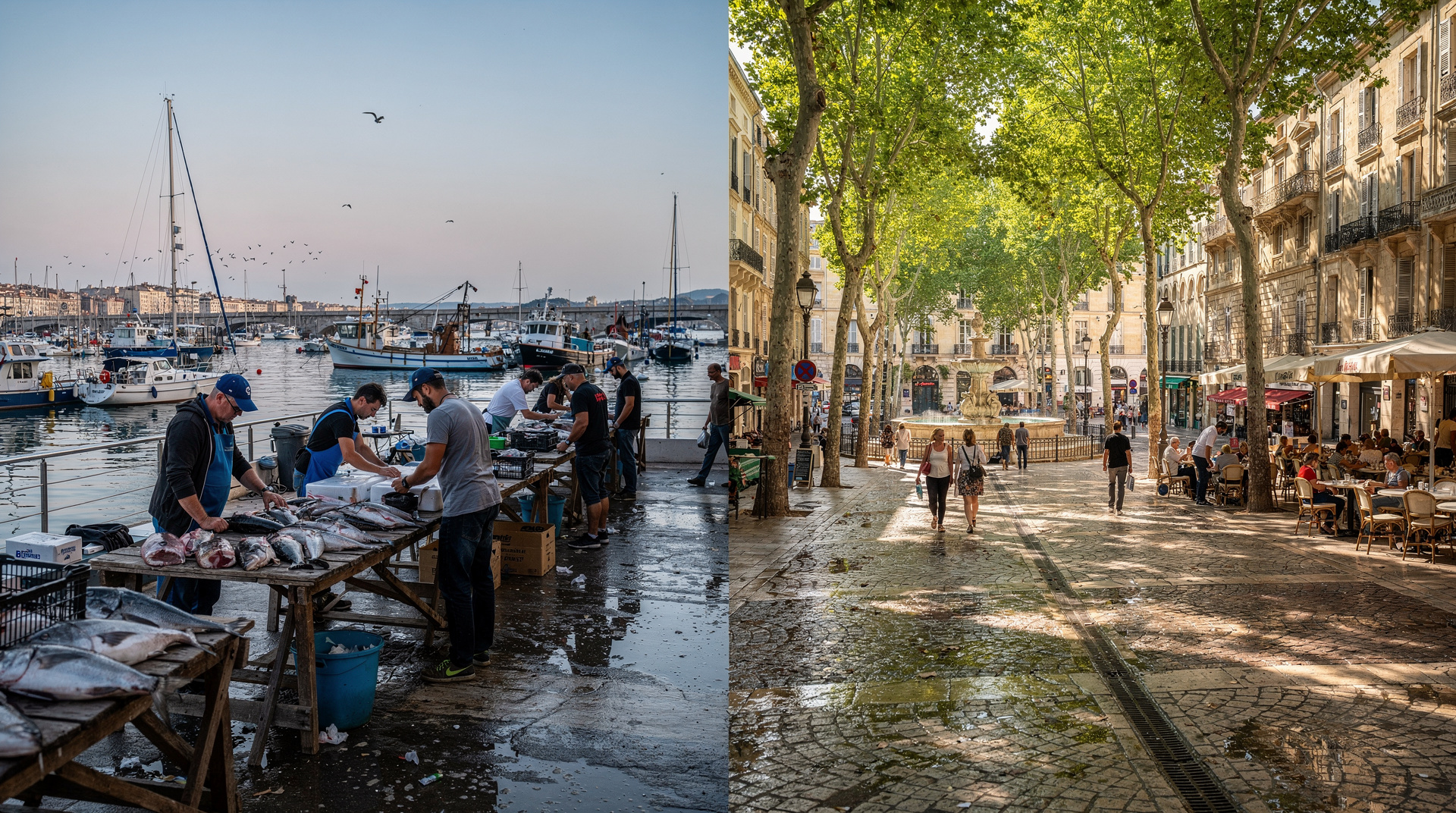
Old town and market: The streets north of Cours Mirabeau hold the main provençal market (Place Richelme, daily; Place des Prêcheurs, Tuesday, Thursday, Saturday). The Saturday market is the most extensive.
Cézanne sites: Paul Cézanne was born in Aix and painted in the surrounding countryside. His studio (Atelier Cézanne, north of the city on Lauves hill, 15 minutes on foot from the centre) is open for visits. The circuit of locations where he painted Mont Sainte-Victoire is best done by car or e-bike.
Aix thermal baths and spa culture: Aix-en-Provence means “Aix in Provence” — the aix part comes from the Latin aquae, waters. Roman baths were central to the city’s original function. Various wellness and thermal options still operate, though not Roman-era.
Cathédrale Saint-Sauveur: A remarkable composite cathedral built across different centuries, incorporating a 5th-century baptistery, a Romanesque cloister, and Gothic nave sections.
Eating in Aix: Calissons — the oval almond-paste confection covered in white royal icing — are the canonical Aix food souvenir. They are sold at multiple confiseries around the old town.
Common mistakes on this route
Taking a bus instead of the train: Regional buses from Marseille to Aix exist but are slower and less reliable than the TER. Use the train.
Confusing the two Aix stations: Type “Aix-en-Provence” (not “Aix-en-Provence TGV”) when searching on SNCF Connect for the TER service that drops you in the city centre.
Not checking the return schedule: The last direct TER from Aix Centre back to Marseille runs until late evening, but confirm the specific last departure on your travel date. Missing the last train leaves you needing a taxi (approximately 45–60 EUR).
Trying to drive from Marseille to Aix: The motorway is fast (30 minutes), but parking in central Aix is limited and paid. The train is faster door-to-door for a day trip because it drops you at the city centre rather than a peripheral car park. See our car in Provence guide for when driving makes sense.
Connection to wider Provence by train from Aix
Aix-en-Provence Centre station connects onward to:
- Marseille (direct, 35–45 min)
- Toulon (changing in Marseille)
- Avignon (changing in Marseille — total about 1 hour 40 min)
- Salon-de-Provence (by bus from Aix, limited service)
For Luberon villages from Aix, a car or organised tour is required — no direct public transport exists to Gordes or Roussillon.
Aix-en-Provence: the city context
Understanding what Aix is changes how you plan a day there. It is not a quaint village with a market — it is a proper university city of 150,000 people with a dense art scene, serious dining, and the kind of urban energy that comes from 35,000 students and centuries of cultural investment. At the same time, it feels entirely different from Marseille: calmer, more formal in its architecture, more overtly bourgeois in its café culture, and much more comfortable with its heritage.
The Paul Cézanne connection is genuine. Cézanne was born in Aix in 1839 and spent most of his life painting in the surrounding countryside. His studio on the Lauves hill north of the centre is open for visits (modest entry fee, worth 45 minutes). The subjects of his most famous series — Mont Sainte-Victoire, the Montagne Sainte-Victoire seen across vineyards — are visible from the outskirts of the city. A half-day by car or e-bike following the Cézanne landscapes is available for serious enthusiasts.
Aix Cathedral (Cathédrale Saint-Sauveur): One of the most genuinely complex buildings in Provence — Romanesque cloister, Gothic nave, 5th-century baptistery, and Baroque elements all in one structure built and added to across fifteen centuries. Entry is free. Allow 45 minutes minimum.
Market towns and surrounding villages from Aix
Aix functions naturally as a hub for the surrounding area:
The Luberon from Aix: A car is required, but the Luberon is closer from Aix than from Marseille. Gordes (55 km), Roussillon (60 km), and Bonnieux (50 km) are all under an hour by car. Day tours from Aix (organised, including transport) are available. See our Provence driving guide for the honest assessment.
Sainte-Victoire from Aix: The mountain that Cézanne painted obsessively dominates the skyline east of Aix. Walking circuits, via ferrata, and e-bike tours all depart from the base of the mountain, reachable by taxi or bus from Aix. For adventurous visitors adding a half-day before or after an Aix visit.
Aix wine country: The Cézanne countryside east of Aix — Palette and Montagne Sainte-Victoire appellations — produces underrated red and rosé wines. A half-day guided wine tour from Aix visits two or three domaines with tasting. See the GYG options for this in the tours section.
Practical tips for the day trip
Book the morning TER in advance: While no reservation is required on TER trains, printing or downloading your ticket before leaving your accommodation avoids queuing at the machine at Gare Saint-Charles during peak morning departure times (08:00–09:30).
Keep the SNCF Connect app active: Live train information and platform announcements appear on the app. If a TER is delayed (uncommon but possible), you will know on your phone before the departure board updates.
Luggage at Aix: The Centre station has left-luggage lockers (small charge), useful if you want to leave a bag and explore freely. At the Vieux-Port, your hotel concierge typically holds luggage if you arrive before check-in.
Heat in summer: Aix in July–August is hot (regularly 35°C+). The morning is the productive visiting window; a long lunch in the shade is the authentic Aix noon practice. The city essentially slows between noon and 15:00 in high summer, and adapting to this pace rather than fighting it makes the visit much more pleasant.
Planning the rest of your Aix visit
Once the train is sorted, the question becomes how to spend the day. Our Aix-en-Provence day trip guide builds a full itinerary around the arrival at the Centre station, and the Aix-en-Provence destination page gives the wider picture of the city. If you are still deciding between the two cities as a base, read Marseille vs Aix-en-Provence and staying in Marseille vs Aix. For a personal account of the city, see a weekend in Aix, and for a ready-made plan that links both cities, the Marseille, Aix and Cassis in 3 days itinerary shows how the train fits into a longer trip. If the Luberon tempts you after Aix, the Luberon villages day trip guide explains how that separate day works.
For the full picture on Provence travel planning, see our car in Provence guide and our day trips from Marseille guide.
Frequently asked questions about Train from Marseille to Aix-en-Provence
Can I buy a return ticket for the same day?
Yes — SNCF Connect and the station machines sell open return tickets that don’t lock you to a specific return time, which suits a day trip where your Aix departure time is flexible. A fixed-time return is usually slightly cheaper if you already know your schedule.
Is the TER train to Aix crowded?
It can be standing-room only during the morning commute (07:00–09:00) and on Saturday mornings around market time, since locals and day-trippers use the same trains. Off-peak trains (mid-morning, early afternoon) are comfortably seated. If you’re set on the earliest market atmosphere, expect a fuller train.
Top experiences
Bookable activities with verified prices and instant confirmation on GetYourGuide.