Getting from Marseille to Cassis
From Marseille to Cassis: a journey to the Calanques and traditions
Duration: 8 hours
What is the best way to get from Marseille to Cassis?
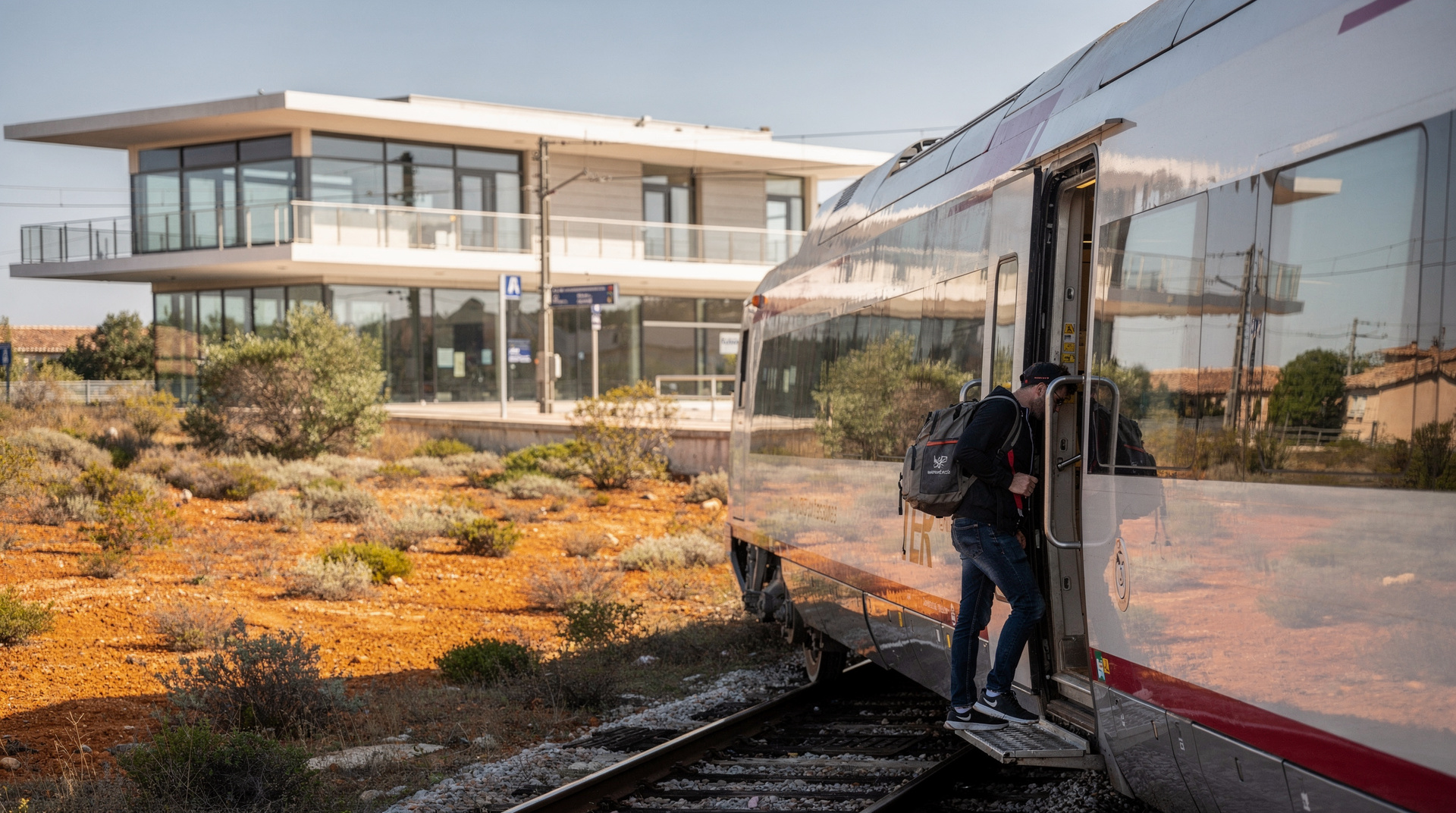
TER train from Gare Saint-Charles: 22 minutes, fares from 7 EUR, around 30 trains per day. The station is 3 km from the port — take the Marcouline shuttle bus (10 min) or walk 35 minutes. Driving is possible but parking in Cassis in summer is a serious problem.
At a glance
| Where | Cassis, 22 km east of Marseille, western gateway to the Calanques |
| Cost | TER train from around 7 EUR one-way; taxi station-to-port around 12–16 EUR |
| Time needed | 22–25 minutes by train; half a day minimum, a full day recommended |
| Getting there | TER from Gare Saint-Charles, then shuttle bus, taxi, or a 35-minute downhill walk to the port |
| Best time | Early morning departures for the quietest port; avoid driving in July–August |
Cassis from Marseille: closer than it looks
Cassis sits 22 kilometres east of Marseille, tucked below the highest sea cliffs in France (Cap Canaille, 399 metres), at the western end of the Calanques coastline. It is one of the most rewarding short day trips from Marseille — a genuinely beautiful small port with excellent seafood, accessible calanques, and a completely different atmosphere from the city.
The good news for those without a car: Cassis is very easy to reach by train. The bad news for those with a car: Cassis has almost no useful parking in summer, and the town actively discourages car access during peak season.
Method comparison at a glance
| Method | Time (Marseille to Cassis port) | Typical cost | Best for |
|---|---|---|---|
| TER train + shuttle | 32–35 minutes | From around 7 EUR + shuttle | Most visitors, especially day-trippers without a car |
| TER train + taxi | 26–29 minutes | From around 7 EUR + 12–16 EUR | Groups splitting the taxi, tight schedules |
| TER train + walk | 57–65 minutes | From around 7 EUR | Fit travellers who enjoy an unhurried arrival |
| Car (A50) | 25–30 minutes driving, plus parking search | Fuel + parking (often free-flowing off-peak, a real problem July–August) | Hikers carrying gear, or combining with a Luberon drive |
By train: the best option
Operator: SNCF TER Sud Provence-Alpes-Côte d’Azur
Departure station: Marseille Saint-Charles (or Marseille Blancarde, en route)
Arrival station: Cassis
Journey time: 22–25 minutes from Marseille Saint-Charles
Frequency: Approximately 30 trains per day
Fares: From around 7 EUR one-way
The TER is fast, frequent, and dramatically simpler than driving. Trains run from early morning (before 06:00) to late evening (around 21:30–22:00), which comfortably covers a full day trip with time for dinner in Cassis before the return.
Tickets are sold at Gare Saint-Charles machines, SNCF Connect app, or on board (at a small surcharge if the machine at Cassis station is out of service). No seat reservation required for TER.
From Cassis station to the port
Here is the one logistical nuance: Cassis train station is not in the village. It sits approximately 3 kilometres from the port and town centre, on the hillside above. You have three options:
Shuttle bus (Marcouline line M1): A local bus operates between the station and the town centre, taking approximately 10 minutes. Buses run 364 days per year, 7 days a week, from roughly 06:40 to 20:30. This is the most practical option for most visitors.
Taxi: A taxi from the station to the port takes about 4 minutes and costs approximately 12–16 EUR. Taxi ranks are at the station.
Walk: The walk from the station to the port is approximately 35–40 minutes downhill through the town. On a comfortable morning this is a pleasant introduction to Cassis, passing through residential streets and terraced vineyards. In summer heat, it is exhausting with a daypack.
By car: feasible but complicated
Driving time: Approximately 25–30 minutes from central Marseille via the A50 autoroute. The route is straightforward: A50 east from Marseille, exit toward Cassis, then a scenic descent into the town.
The parking problem: Cassis is a small town that receives vastly more visitors than its infrastructure was designed for. In July and August especially, parking in Cassis is a genuine crisis:
- The centre of Cassis has very limited paid parking, which fills completely by 10:00 on summer weekends
- The town has introduced a shuttle system (navette estivale) replacing some central parking with park-and-ride areas on the outskirts
- Current restrictions on car access vary year to year — check the official Cassis tourism website (ot-cassis.com) before your visit for the latest parking and access rules
If you drive, plan to arrive before 09:00 to find a space near the centre, or use the park-and-ride system. Paying for parking and then discovering no spaces are available is a common summer scenario.
When driving to Cassis makes sense: If you plan to hike into the Calanques from the Cassis side (Port-Pin, En-Vau trailheads) and need to carry equipment, or if you are combining Cassis with a Luberon drive on the same day, a car is useful. For a simple port-and-beach day trip, the train is more practical.
By boat: the scenic alternative
Several tour operators run boat trips from the Vieux-Port in Marseille to the Calanques that stop at or pass near Cassis. These are not a substitute for a direct transport connection — you cannot simply “take the boat to Cassis” as a transport method — but they offer a memorable way to see the coastline between the two if you are doing a guided calanques boat tour.
For Calanques boat tours from Cassis (departing Cassis port directly), see our Calanques boat tour guide.
Day-trip vs staying overnight
Cassis works very well as a day trip from Marseille — 22 minutes by train, and you can be back in Marseille comfortably for dinner. A full day in Cassis allows time for:
- Walking the port and coastal path toward the Corniche de Crau viewpoint (1 hour)
- Swimming at Plage de la Grande Mer or Plage du Bestouan (the town beaches)
- Lunch (Cassis is known for sea urchins in season and local AOC white wine)
- An afternoon hike to Port-Miou calanque (45 minutes from the port, straightforward trail)
Staying overnight in Cassis makes sense if you want to hike into the deeper Calanques (En-Vau is 3–4 hours return from the port), do an early-morning kayak session, or use Cassis as the base for Cap Canaille climbing or via ferrata. The town is noticeably more peaceful after the day-trippers depart on the last afternoon trains.
What to do in Cassis
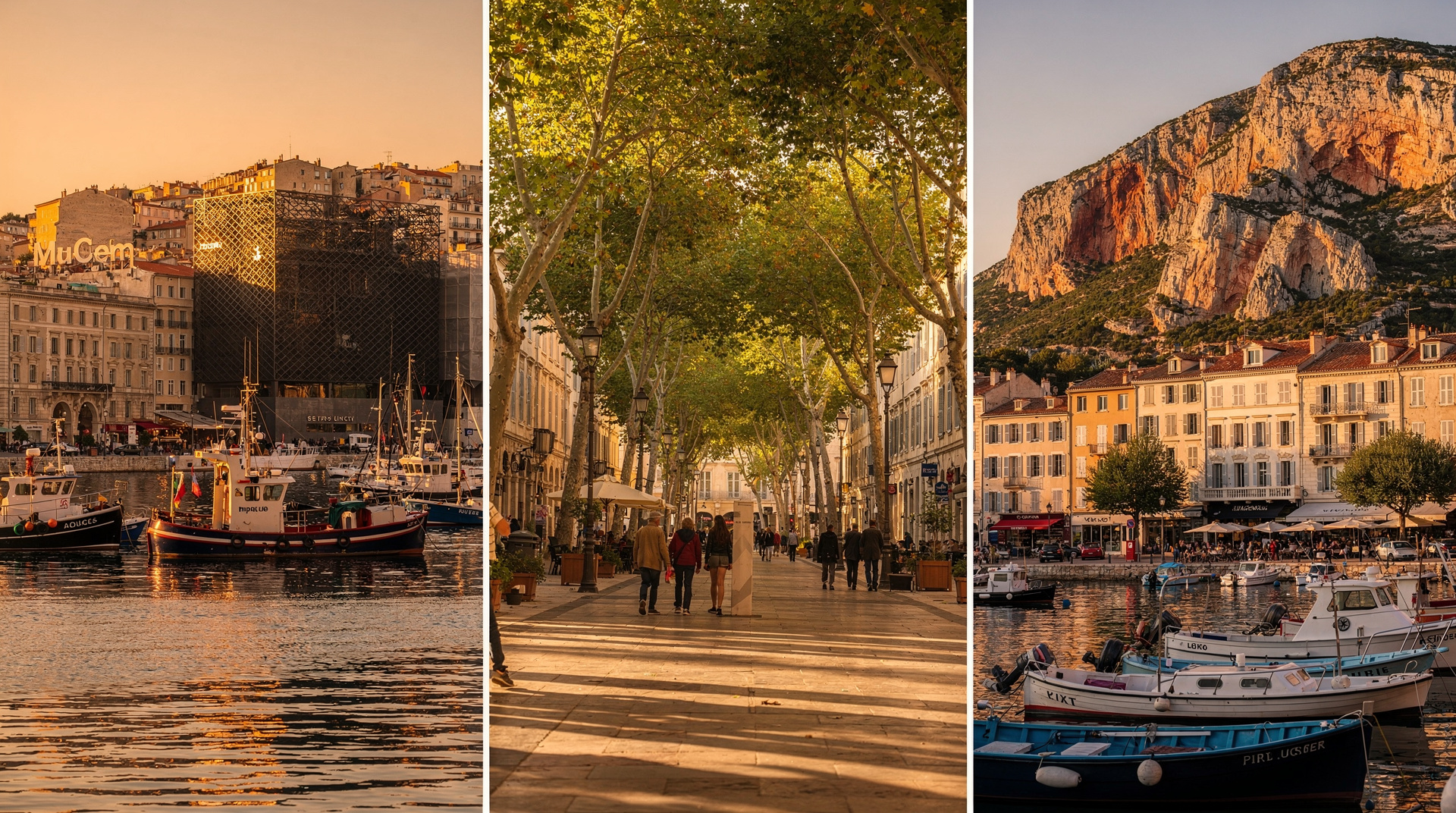
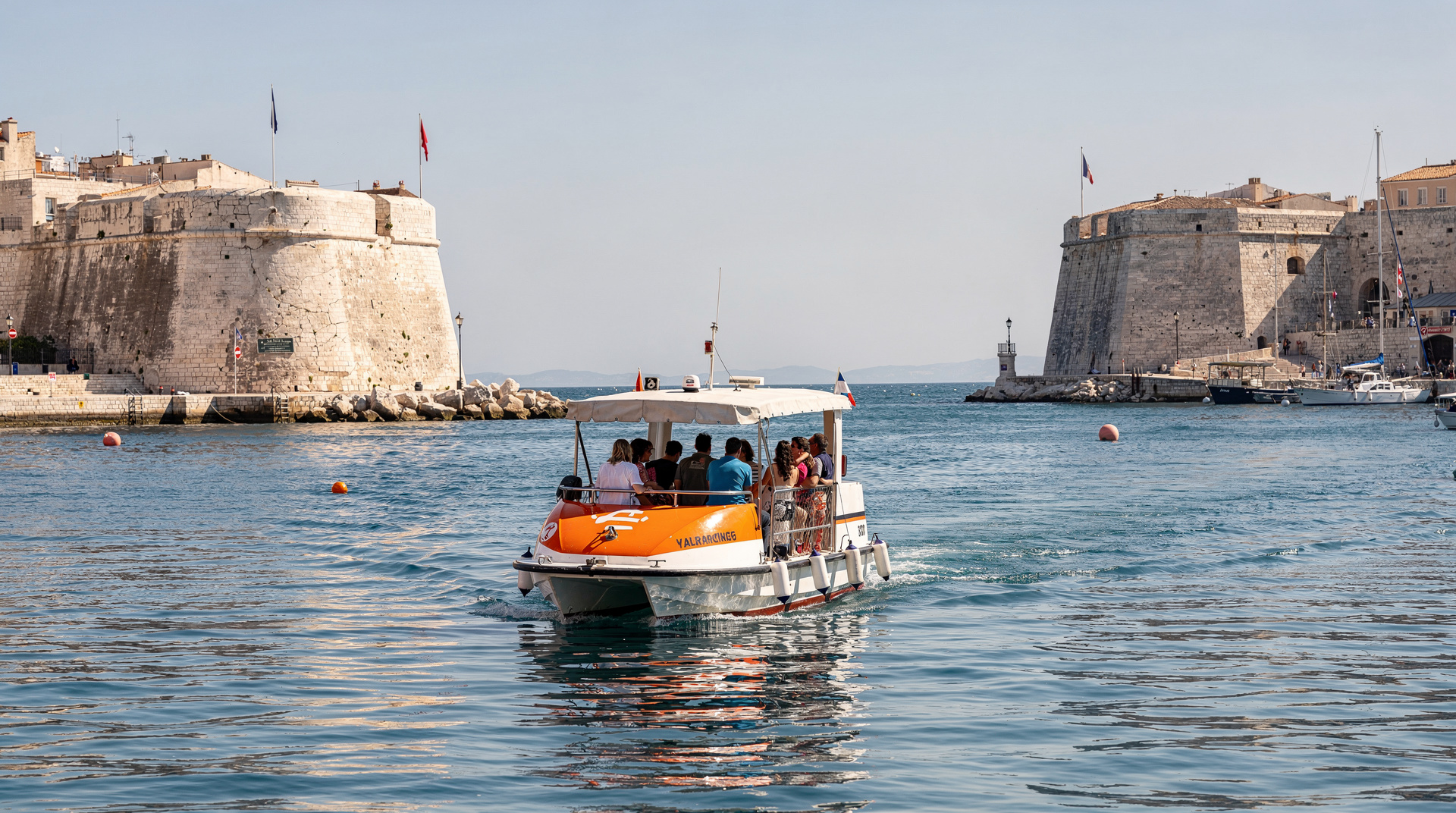
The port: Cassis’s coloured fishing boats, café terraces facing the water, and Cap Canaille as a backdrop make it one of the most photogenic harbours on the French Mediterranean. Arrive early morning for the quietest light and fewest people.
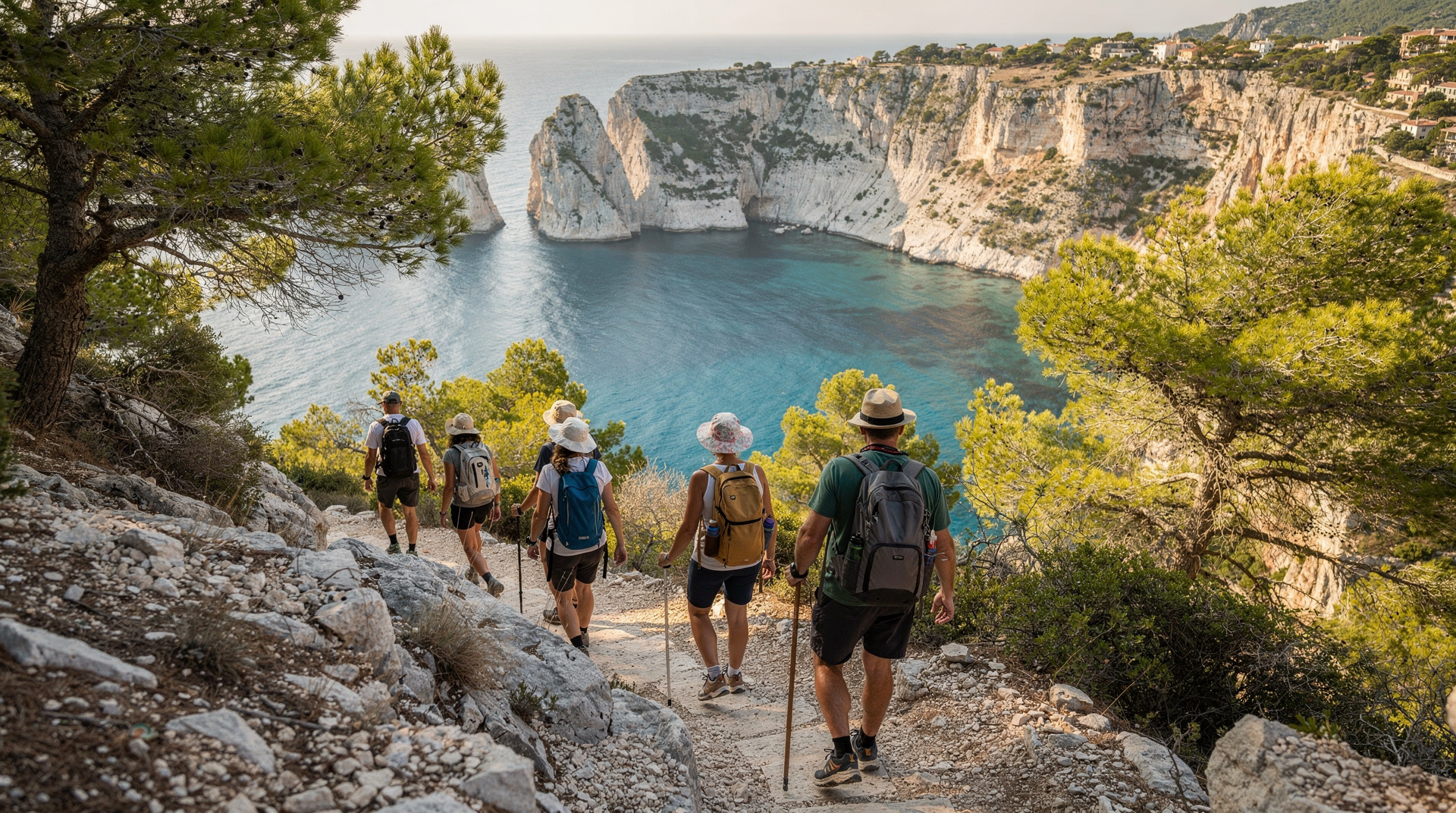
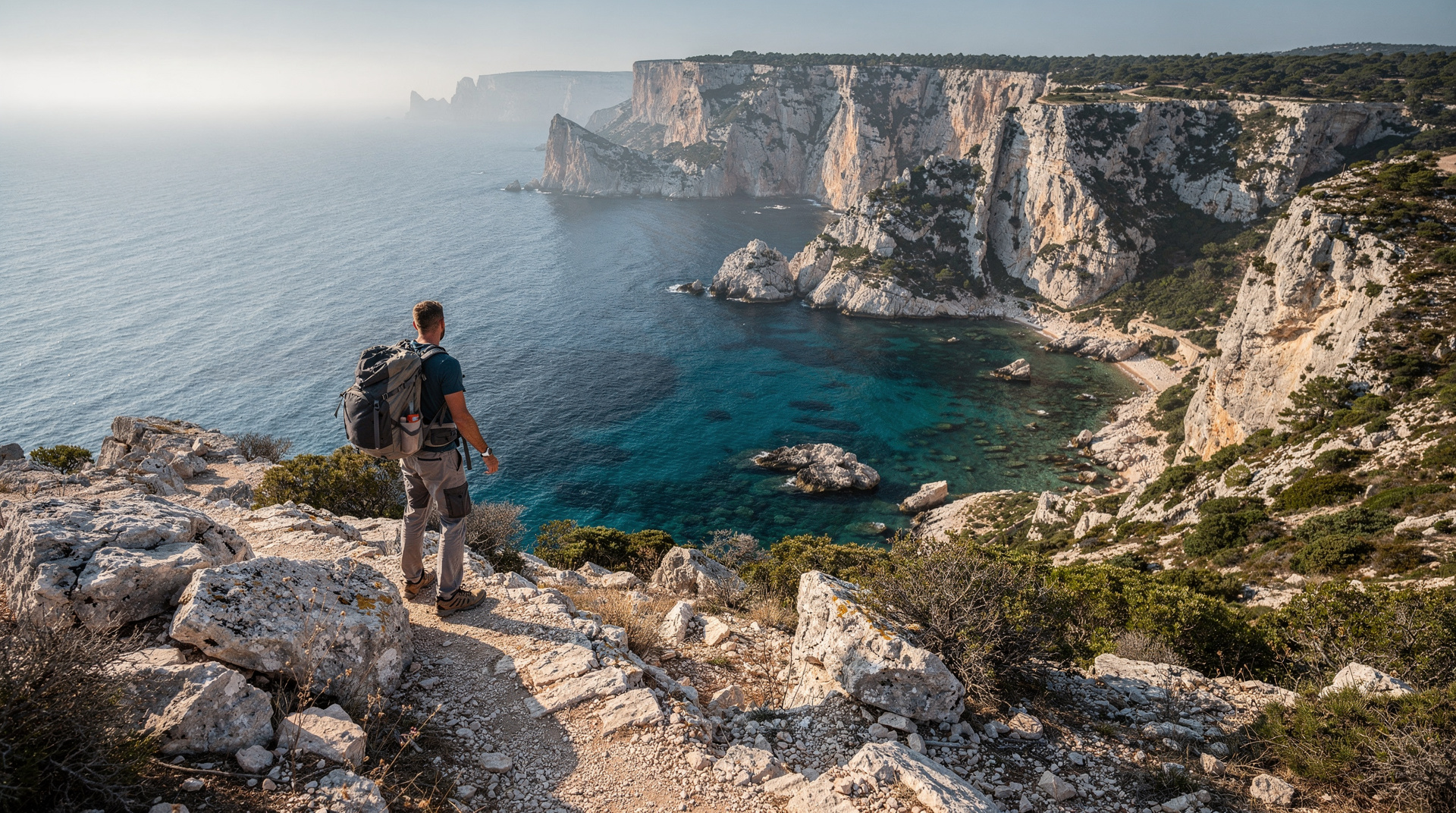
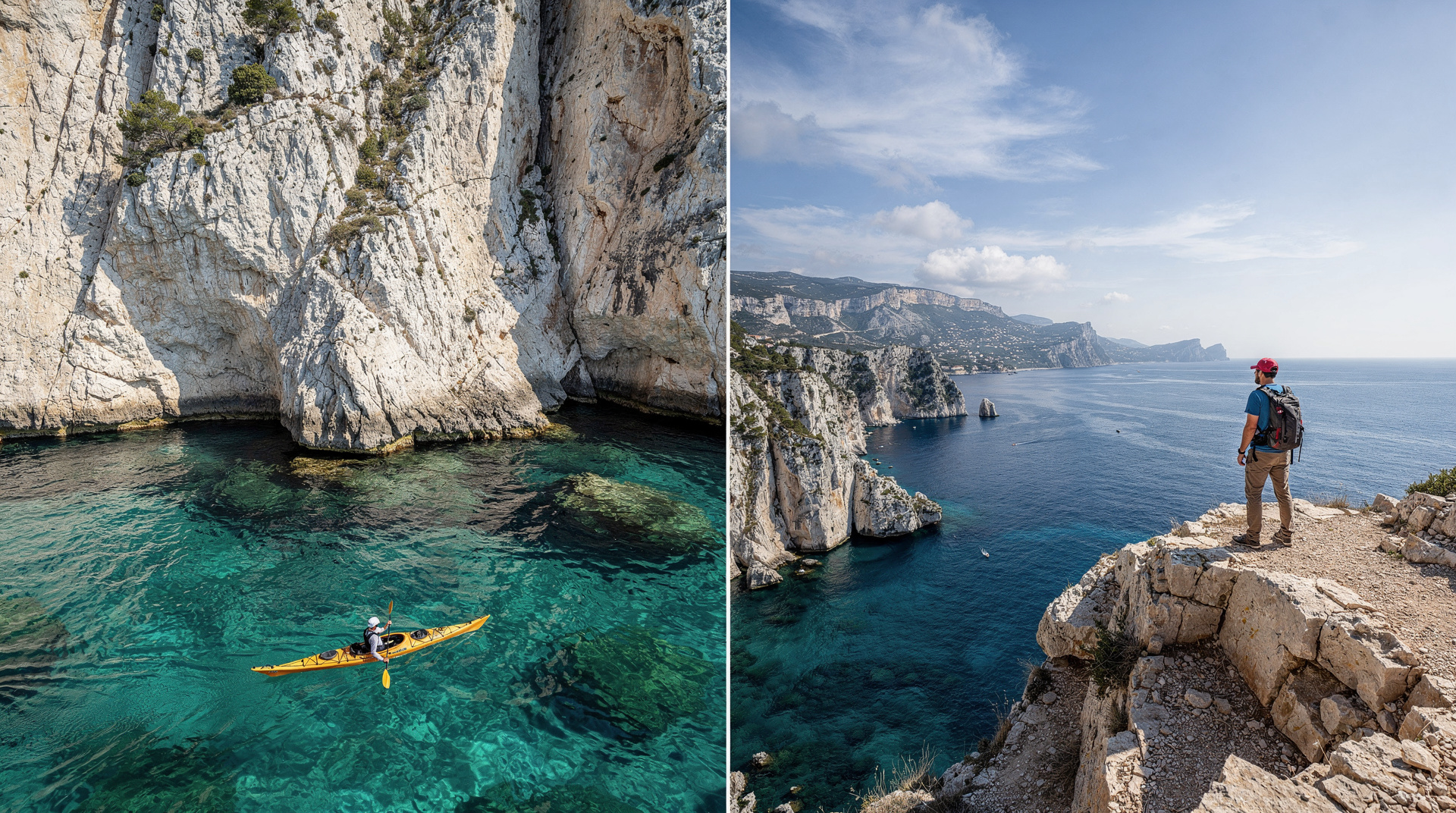
Calanques from Cassis: The three closest calanques are Port-Miou (walkable from the port edge, 45 min), Port-Pin (2 hours from the port), and En-Vau (3–4 hours from the port, the most spectacular). These are the eastern calanques — limestone cliffs plunging into turquoise water, walkable on marked trails. No access restrictions comparable to the Marseille-side Sugiton reservation, though trails can be closed in extreme fire risk periods in summer.
Cap Canaille viewpoint: The road over Cap Canaille (D141) offers one of the most dramatic coastal views in France — the cliff drops 399 metres directly into the sea, and the panorama takes in Cassis, the Calanques, and Marseille in the distance. Reachable by car or taxi from Cassis; not practical on foot from the port.
AOC Cassis wine: Cassis is one of France’s smallest AOC wine regions, producing primarily white wine (Clairette, Marsanne, Bourboulenc grape varieties) with a small amount of rosé. The local wine pairs perfectly with sea urchins. Several domaines are open for visits; some are walkable from the port.
Combining Cassis and Aix-en-Provence in one day
A popular double day trip from Marseille visits both Cassis and Aix. The sequencing:
Morning (Aix-en-Provence): TER from Marseille Saint-Charles to Aix Centre (35–45 min). Market and old town exploration until noon.
Afternoon (Cassis): Return TER from Aix to Marseille (35–45 min), then immediately connect to the Cassis TER from Marseille Saint-Charles (22 min). Cassis port and swim until 18:00–19:00.
Evening: Return TER from Cassis to Marseille for dinner.
This is doable but busy. The connection in Marseille requires a platform change and planning — leave adequate time at Gare Saint-Charles between trains. Organised day tours that visit both Cassis and Aix in a single circuit avoid the connection complexity. See the GYG options above for guided alternatives.
What makes Cassis different from other day trips
Cassis is often described as a prettier, quieter version of Nice or Antibes, but this comparison is slightly off. The more accurate reference point is a Calanques gateway with a working port still attached. The geological drama here is immense — Cap Canaille is the highest sea cliff in France, dropping 399 metres directly into the water — and the combination of that clifftop scenery, the narrow calanques cutting inland from the coast, and a small port that still has functioning fishing boats (not just pleasure yachts) creates an atmosphere that is genuinely unusual on the Riviera.
The town is also manageable on a human scale. The historic centre consists of a handful of streets behind the port; the beaches are close enough to walk from the port; the calanques begin at the edge of the town. You do not need a car, a map, or a guide to find the good parts. Simply walk west from the port ferry landing along the coastal path toward Port-Miou, and the Calanques will announce themselves.
Port-Miou calanque on foot from Cassis
Port-Miou is the closest of the three main Cassis-side calanques, reached by a 45-minute walk from the port along the well-marked coastal path (Route des Crêtes is signposted). The calanque is a long, narrow inlet carved from white limestone, with emerald-to-turquoise water depending on the angle of light and depth. Unlike the wild calanques accessible only by a multi-hour hike, Port-Miou functions as a working marina for local boats — the combination of moored sailing yachts under 100-metre limestone walls is visually extraordinary.
From Port-Miou, the trail continues to Port-Pin (another hour) and En-Vau (a further 30–45 minutes beyond Port-Pin). En-Vau is widely considered the most dramatic of the three — a narrow slot of turquoise water with vertical limestone walls — but requires 3–4 hours return from Cassis port. Start early, bring water, and check fire-season restrictions before attempting in July–August.
Local wine: the AOC Cassis white
Cassis wine is one of the city’s genuine pleasures and almost unknown outside the region — which is partly because production is tiny (one of the smallest AOC appellations in France) and most of it is consumed locally. The dominant style is white: crisp, mineral, with notes of white flowers and citrus from the Clairette, Marsanne, and Bourboulenc grape varieties grown on the steep terraced vineyards above the calanques.
Ordering a glass of AOC Cassis white with a plate of sea urchins (oursins) at a port-side restaurant in Cassis in October — when urchin season is in full swing and the summer crowds are gone — is one of the more perfect simple pleasures available in southern France. Several domaines offer visits and tastings if you want to see the vineyards themselves; most are reachable on foot or by short taxi from the port.
Parking reality in high season
In July and August, Cassis has implemented seasonal restrictions on car access that change the logistics for drivers. The system varies by year — sometimes entire zones are car-free with mandatory park-and-ride shuttles, sometimes paid parking areas are closed to non-residents by early morning. The official Cassis tourism website (ot-cassis.com) publishes current access and parking rules before each summer season.
The practical consequence: arriving in Cassis by car in July or August without checking current restrictions can result in turning around at a road closure point with no viable parking option. This is not hypothetical — it is a documented annual pattern. The train avoids this entirely.
For the full transport comparison across Provence day trips, see our car in Provence guide.
Pairing the trip with a hike or a longer stay
If the goal is more than the port and a swim, two extensions are worth planning around. Walkers with a full day and reasonable fitness can tackle the coastal GR98 trail between Marseille and Cassis instead of the train — a much longer undertaking, but it turns the transfer itself into the highlight. For a more relaxed pace, see our dedicated Cassis day trip guide for a structured itinerary, or check our Cassis beaches guide before deciding whether to bring swimwear on the train.
For those combining Cassis with wine tasting, our Cassis wine guide covers the AOC domaines in more detail than the summary above. And if a longer Provence loop is on the table, the Marseille-Aix-Cassis 3-day itinerary sequences all three stops without the connection stress described above.
Planning the rest of your stay around the transfer
Cassis rarely works as an isolated outing, so it helps to place it within the rest of your time on the coast. If you are still deciding how long to spend in the region, our how many days in Marseille guide shows where a Cassis day fits. For the city side of the journey, the getting around Marseille guide explains how to reach Gare Saint-Charles from your hotel, and the Marseille metro guide covers the simplest link to the station.
Travellers who like to compare before committing can read Cassis vs La Ciotat, which sets the two coastal towns side by side. If the draw is the white cliffs and turquoise water rather than the town itself, Calanques by boat or on foot helps you pick the approach that suits your legs and your schedule, and the Cassis destination page gives the wider picture of the town. A slower, two-day version of the trip is laid out in the Marseille and Cassis in 2 days itinerary.
Frequently asked questions about Getting from Marseille to Cassis
Do I need to book the TER train to Cassis in advance? No. TER trains on this route do not require reservations. Buy a ticket at the Gare Saint-Charles machines, via the SNCF Connect app, or on board (small surcharge if paying on board). Turning up 10–15 minutes before a departure is normally enough outside the busiest summer weekends.
Is there a direct bus from Marseille to Cassis instead of the train? Not a practical one. There is no dedicated fast coach service comparable to the TER; the train remains the fastest and most frequent public transport option. The Marcouline shuttle only operates within Cassis, from the station to the port.
Top experiences
Bookable activities with verified prices and instant confirmation on GetYourGuide.