Getting from Marseille to Avignon
Marseille: Avignon and Côtes du Rhône wine-tasting day tour
Duration: 8 hours
How do I get from Marseille to Avignon?
By TGV: 40 minutes to Avignon TGV station (8 km from centre, bus connection needed). By TER: about 1 hour directly to Avignon Centre station inside the city. Fares from around 4 EUR. By car: 1 hour on the A7, park outside the ramparts and walk in.
Avignon: one city, two stations
The most important logistical fact about travelling from Marseille to Avignon is that Avignon has two entirely separate railway stations, and choosing the wrong one can cost you 30–45 minutes and complicate your day.
| At a glance | |
|---|---|
| Where | Avignon, about 100 km north of Marseille |
| Cost | From around EUR 4 (promotional TER/TGV fares) up to EUR 30–50 for last-minute TGV |
| Time needed | Full day recommended; 5–6 hours on-site minimum for the Palais des Papes, bridge, and old town |
| Getting there | TER (~1h, Avignon Centre) or TGV (~40 min to Avignon TGV, plus a bus/taxi connection) or car via A7 (~1h) |
| Best time | Spring or autumn for mild weather without festival crowds; book ahead in July–August for the Festival d’Avignon |
Avignon Centre (also called Avignon Gare Centre or simply Avignon) — the historic station inside the city walls, about 300 metres from the central bus station (PEM) and a 10-minute walk from the Palais des Papes. This is where TER trains from Marseille arrive. It is the practical choice for a day trip to Avignon.
Avignon TGV — a purpose-built high-speed rail station 4–5 kilometres outside the city, near the Henri Duffaut hospital on the outskirts of the Avignon urban area. This station exists purely for TGV intercity connections — it was built to allow the LGV Méditerranée high-speed line to bypass the historic centre. From Avignon TGV, you need a bus (approximately 20 minutes) or taxi to reach the old town.
TGV vs TER vs car: quick comparison
| Option | Journey time | Fare | Arrives |
|---|---|---|---|
| TGV | ~40 min + 20 min connection | From ~4 EUR to 30–50 EUR | Avignon TGV (outskirts, needs bus/taxi) |
| TER | ~1 hour, no connection | From ~4 EUR to ~20 EUR | Avignon Centre (inside the walls) |
| Car (A7) | ~1 hour | ~8–12 EUR tolls each way + parking | Park outside the ramparts |
By TGV: fast, but not necessarily simpler
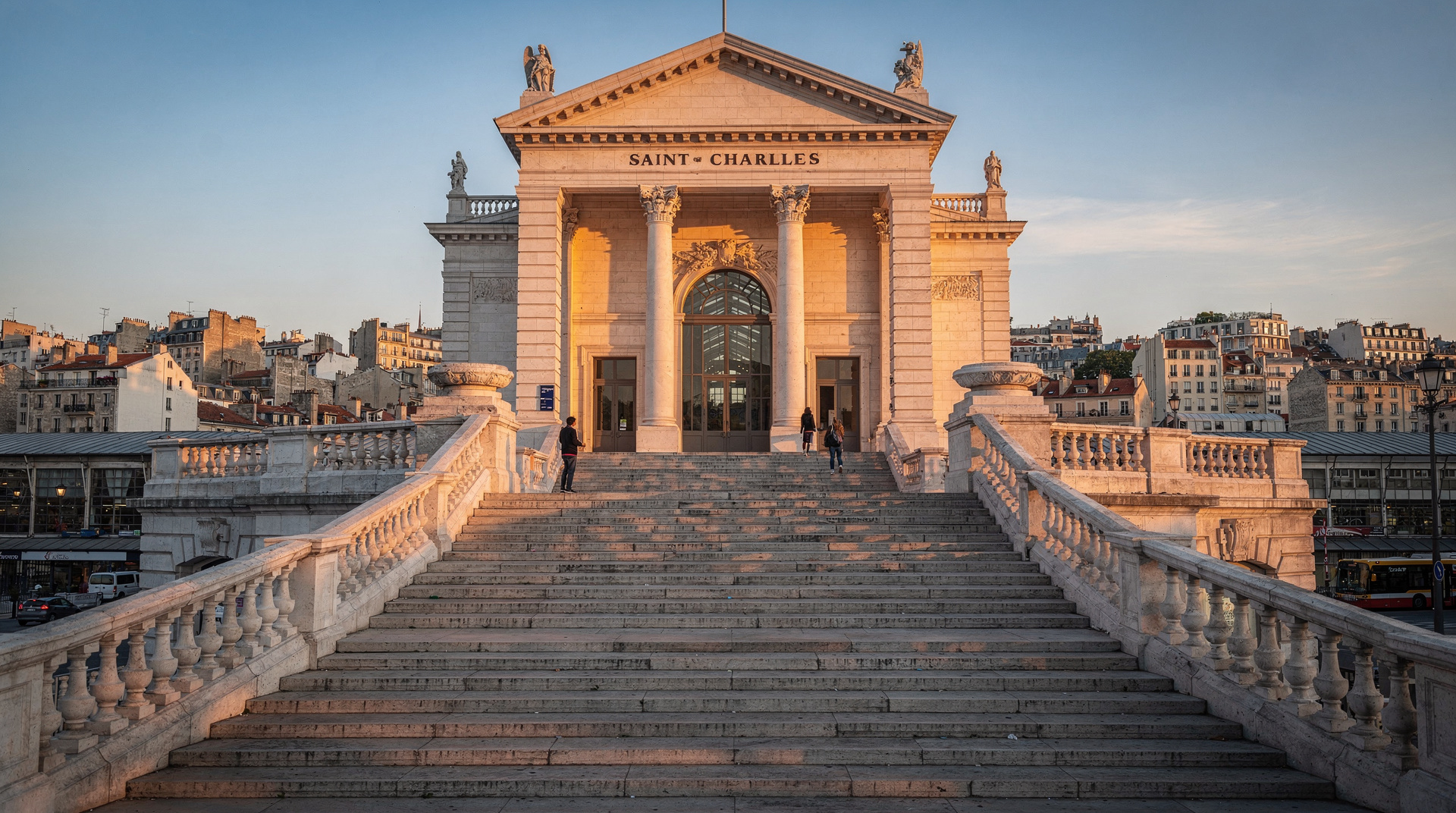
Departure: Marseille Saint-Charles
Arrival: Avignon TGV station (not central)
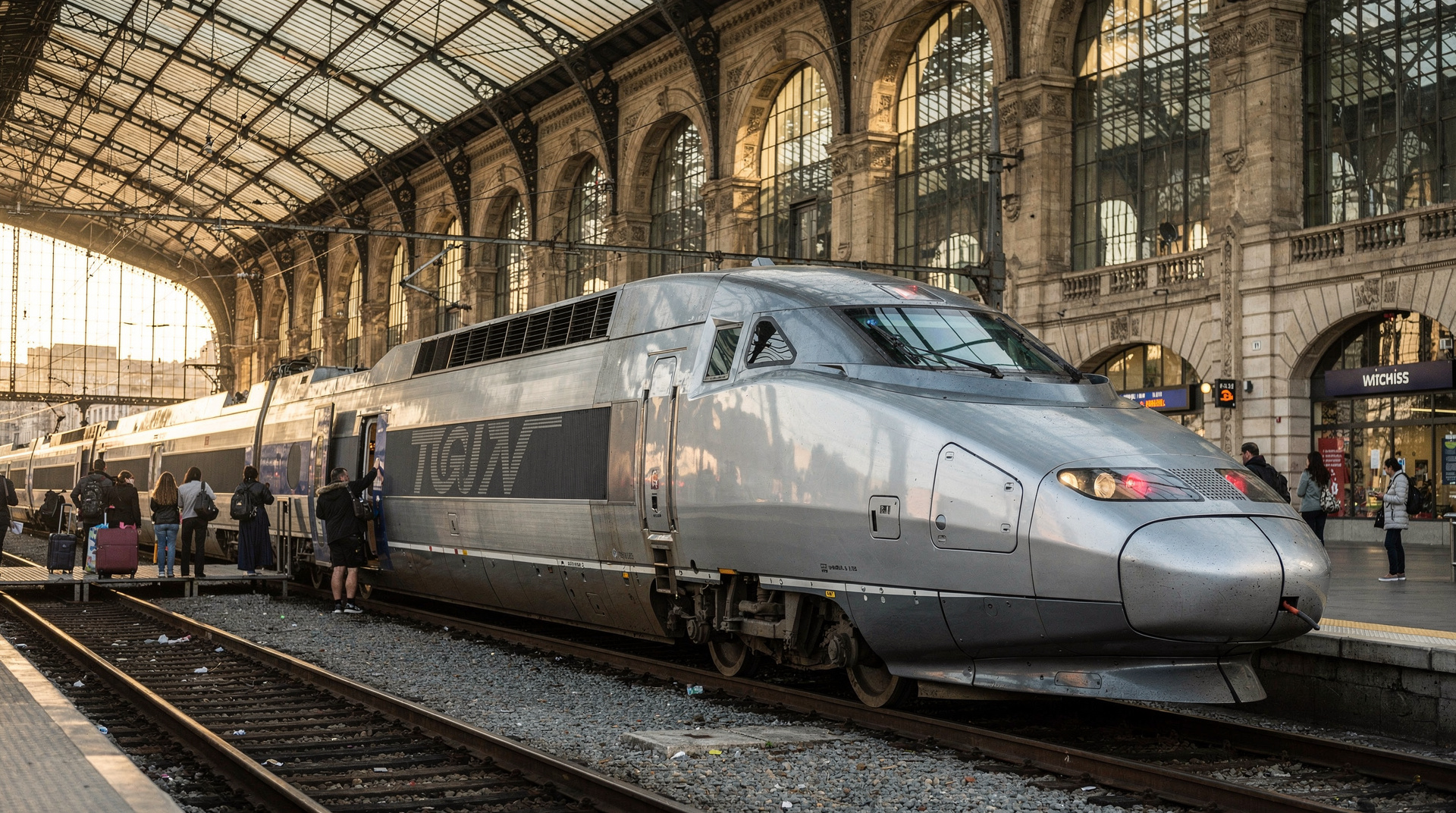
Journey time: Approximately 40 minutes
Frequency: Multiple TGV departures per hour
Fares: From approximately 4 EUR (promotional early-booking) to 30–50 EUR for last-minute standard
The TGV is the fastest option on paper, but the 4–5 km between Avignon TGV station and the city centre adds time back. From the TGV platform to the Palais des Papes typically requires:
- A shuttle bus (liO bus line, approximately 20 minutes, around 2 EUR) or
- A taxi (approximately 10 minutes, around 15–20 EUR)
In practice, the door-to-door journey from Marseille Saint-Charles to the Palais des Papes via TGV is approximately 60–75 minutes when including the TGV station connection.
The TGV makes sense if:
- You are travelling as part of a Paris–Marseille trip and stopping in Avignon en route
- You are travelling as a group (taxi split reduces the cost disadvantage)
- You need the earliest or latest service in the day
By TER: slower but city-centre arrival
Departure: Marseille Saint-Charles
Arrival: Avignon Centre station (inside the city walls)
Journey time: Approximately 1 hour
Frequency: Approximately every 30 minutes during the day
Fares: From approximately 4 EUR (promotional) to around 20 EUR standard
The TER takes about 20 minutes longer than the TGV but drops you at Avignon Centre station, from which the Palais des Papes is a 10–12 minute walk. No connection bus needed.
Door-to-door from Marseille Saint-Charles to the Palais des Papes via TER: approximately 70–75 minutes — comparable to the TGV once the connection is included, and with simpler logistics.
For a day trip to Avignon from Marseille, the TER is often the more practical choice unless you specifically want the fastest possible transit time.
Avignon TGV station to Avignon Centre: your options
If you arrive at Avignon TGV and need to reach the centre:
Bus (liO regional): Takes approximately 20 minutes, costs around 2 EUR. Runs roughly every 30 minutes to 1 hour. Look for the bus stop outside the TGV station’s main entrance.
Taxi: 10–12 minutes, approximately 15–20 EUR. Taxi rank is at the station exit.
Return from centre to TGV: The same bus and taxi options operate in reverse. Allow 30–40 minutes minimum between leaving the city centre and your TGV departure, to account for bus timing.
By car: the A7 autoroute
Driving time: Approximately 1 hour from central Marseille (faster from the northern outskirts; the A7 motorway heading north is well-signed from the Marseille ring road)
Motorway tolls: The A7 between Marseille and Avignon is tolled — budget approximately 8–12 EUR each way depending on the exact entry/exit points
Parking in Avignon: Parking inside the ramparts is limited and expensive. The practical approach for day visitors is to park outside the walls at one of the car parks near the historic gates (Porte de la République, Parking des Italiens) and walk in. These are within 5–10 minutes’ walk of the Palais des Papes and typically cheaper than trying to navigate the old town streets by car.
Several park-and-ride (P+R) areas also operate on the city’s outskirts with free or cheap parking and a bus connection to the centre. Check the Avignon city website for current locations.
Driving verdict: A car makes sense for Avignon if you are combining it with other destinations accessible only by car — Gordes and the Luberon villages to the east, Châteauneuf-du-Pape and Orange to the north — where the train does not reach. For Avignon alone, the train is simpler.
What to see in Avignon on a day trip
Palais des Papes: The largest Gothic palace in the world, built when the papacy relocated from Rome to Avignon between 1309 and 1376. Entry to the palace is around 12–15 EUR. Audio guides are included. The scale is extraordinary — bare stone halls the size of cathedrals, a building that housed the entire Roman Catholic administrative apparatus for nearly 70 years.
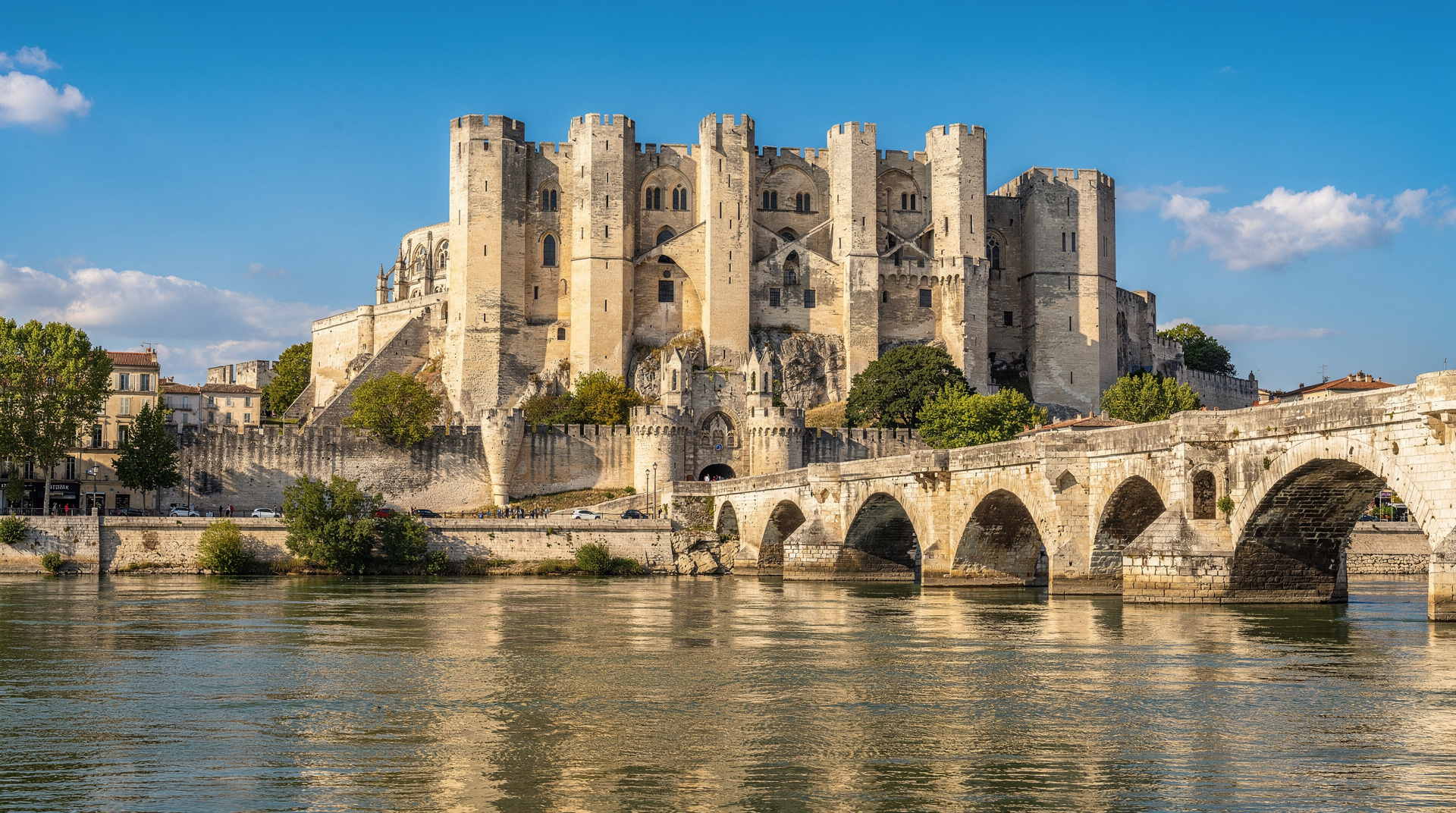
Pont d’Avignon (Pont Saint-Bénézet): The broken medieval bridge, famous from the song “Sur le Pont d’Avignon.” Only four of its original 22 arches survive, ending in the middle of the Rhône. Entry to walk out on the bridge is around 5–6 EUR. The view from the bridge, and the view of the bridge from the Rocher des Doms gardens above, are both excellent.
Rocher des Doms gardens: The hilltop park above the Palais des Papes, free to access, with panoramic views over the Rhône, the bridge, the surrounding vineyards, and on clear days the Alpilles and Mont Ventoux. This is one of the best free viewpoints in Provence.
The Rhône: A 1-hour scenic cruise on the Rhône is available from the landing near the Pont d’Avignon — a relaxed way to see the city from the water.
Old town: The streets between the Palais des Papes and Rue de la République contain bookshops, restaurants, and a pleasant urban density. Avignon has a notably good restaurant scene for a city of its size, with a concentration of quality around Place de l’Horloge and the surrounding streets.
Honest timing: is Avignon doable as a day trip from Marseille?
Yes — with honesty about what “doable” means.
The journey is 1 hour each way by TER. A comfortable day trip from Marseille leaves at 09:00–09:30, arrives in Avignon around 10:00–10:30, gives you 5–6 hours in the city (plenty for the Palais des Papes, the bridge, the gardens, and lunch), and returns to Marseille in time for dinner.
What it does not accommodate easily: the Rhône cruises (check timing), extensive museum visits beyond the Palais des Papes, and relaxed café sitting that eats into your time.
If you want to combine Avignon with Châteauneuf-du-Pape wine country to the north, an overnight stay in Avignon makes more sense — that combination requires a car and a full day on its own. See our day trips from Marseille guide for the timing breakdown across all destinations.
Understanding the Avignon context
Avignon is a different kind of day trip from the others in the Marseille orbit. Cassis and Aix are compact, easy, and quick. Avignon is a proper medieval city that requires — and deserves — a full day. The Palais des Papes alone is worth 2 hours of genuine attention. The old town needs another 2–3 hours to walk meaningfully. Add lunch, the Pont d’Avignon, and the Rocher des Doms gardens, and you have a full programme that leaves no slack.
The historical context enriches the visit. In 1309, Pope Clement V — a Frenchman — moved the entire papal court from Rome to Avignon. For nearly 70 years, Avignon was the centre of the Western Christian world, not Rome. The palace built here during that period — the Palais des Papes — was the largest Gothic building in the medieval world. When the papacy finally returned to Rome in 1377, a rival pope continued in Avignon until 1403 in what became the Great Schism. The political, architectural, and cultural legacy of that period is what you see in the city today.
The Pont Saint-Bénézet — the famous bridge — dates to the same era, built between 1177 and 1185. The song (“Sur le Pont d’Avignon, on y danse, on y danse”) refers to dancing on a sandbank beneath the bridge rather than on the bridge itself; the bridge’s width makes dancing on it physically unlikely. Walking out on the four surviving arches, with the Rhône spreading behind you and the papal palace visible ahead, the medieval scale of the city becomes clear.
Seasonal considerations
Summer (July–August): Avignon during its famous annual theatre festival (Festival d’Avignon, typically mid-July to mid-August) is a completely different proposition. The city fills with theatre productions in every venue — the Palais des Papes courtyard stages major international productions; the streets host street performers. It is extraordinary but extremely crowded. Train seats for Avignon in this period should be booked weeks in advance.
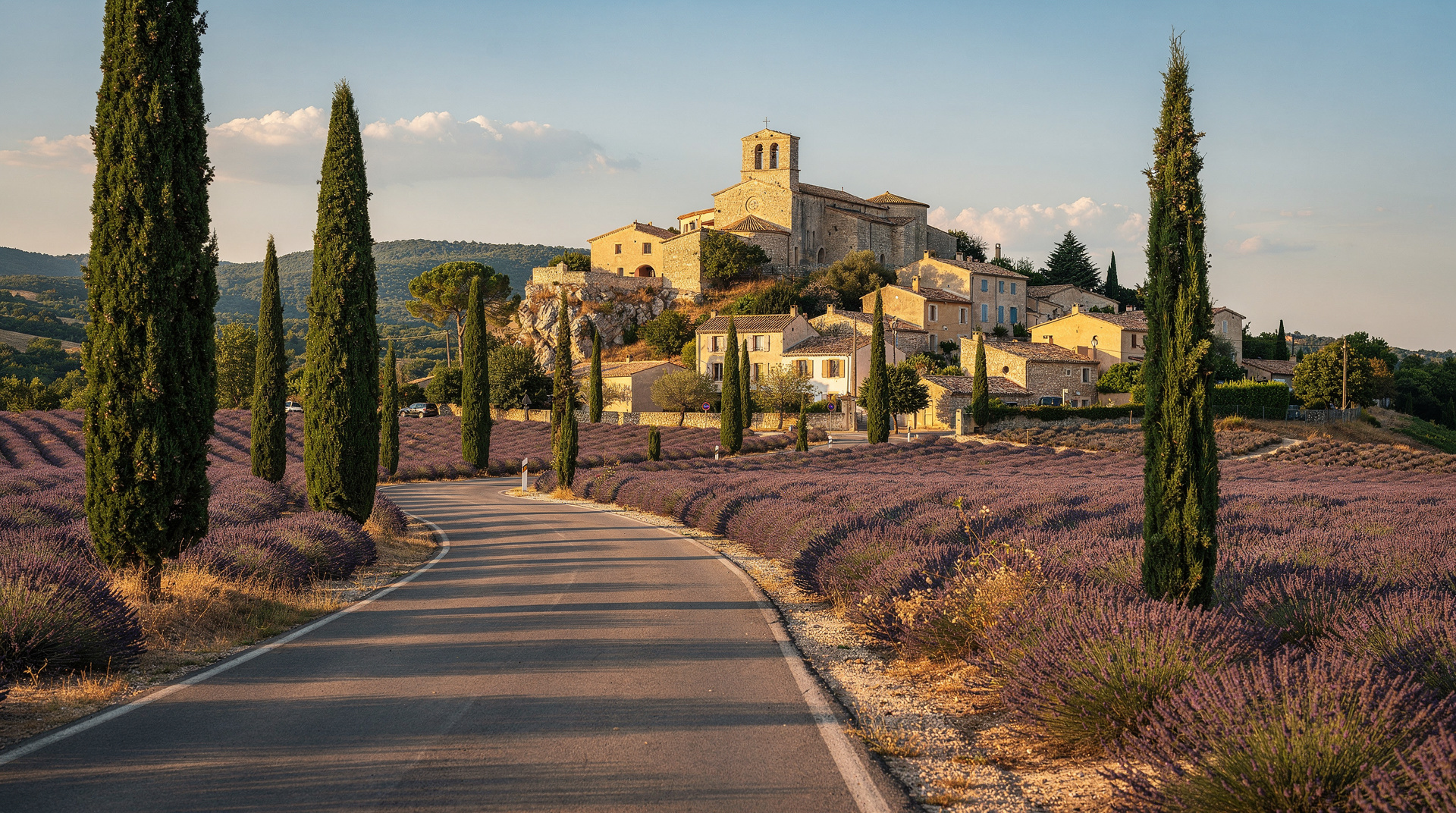
Lavender season (mid-June to mid-July): If you plan to combine an Avignon visit with the lavender-growing areas north of the city (around Sault, Gordes, Sénanque Abbey), a car or organised tour is required. The lavender fields around these villages are not reachable by public transport from Avignon. See our lavender season guide for timing and access.
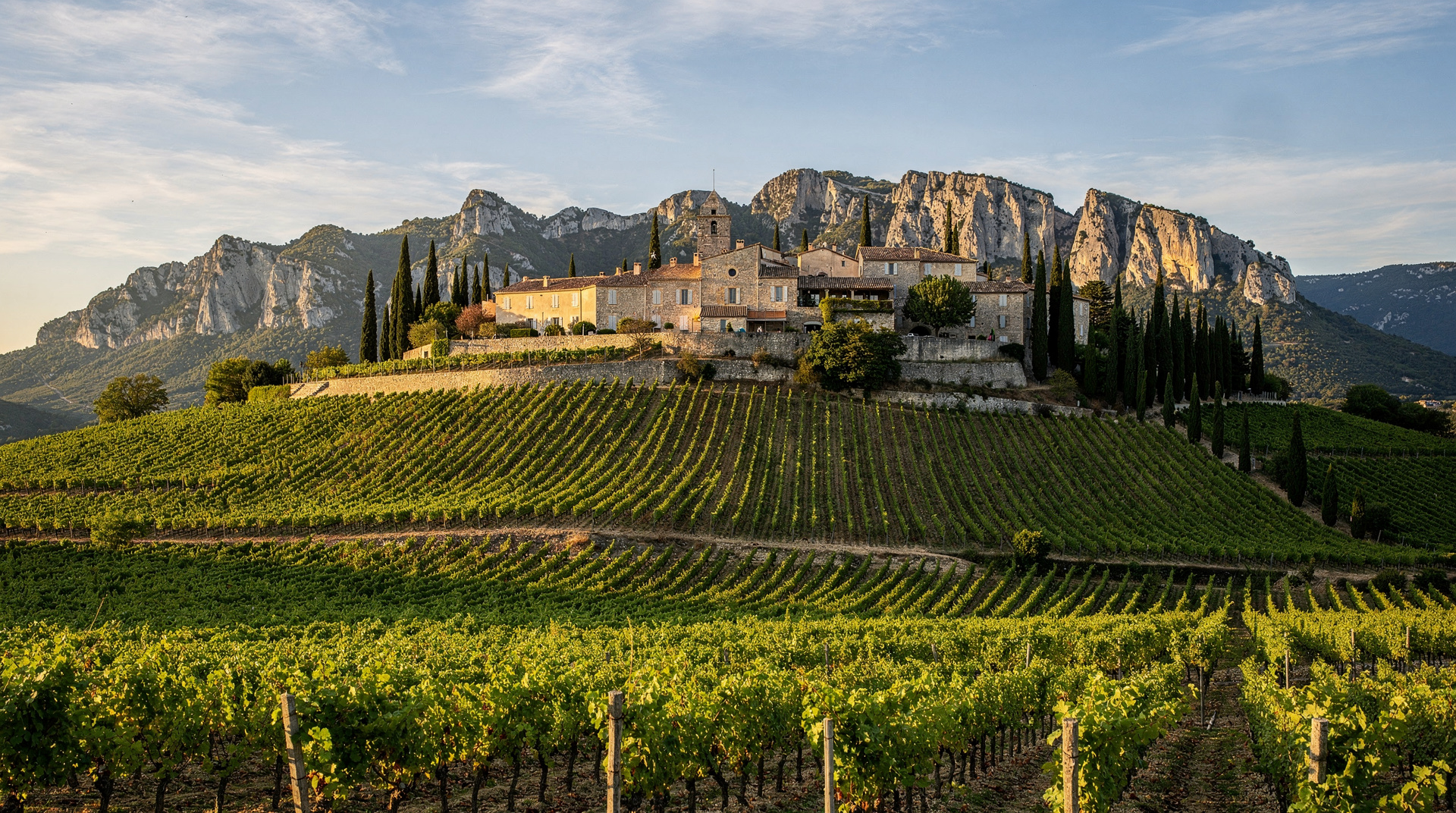
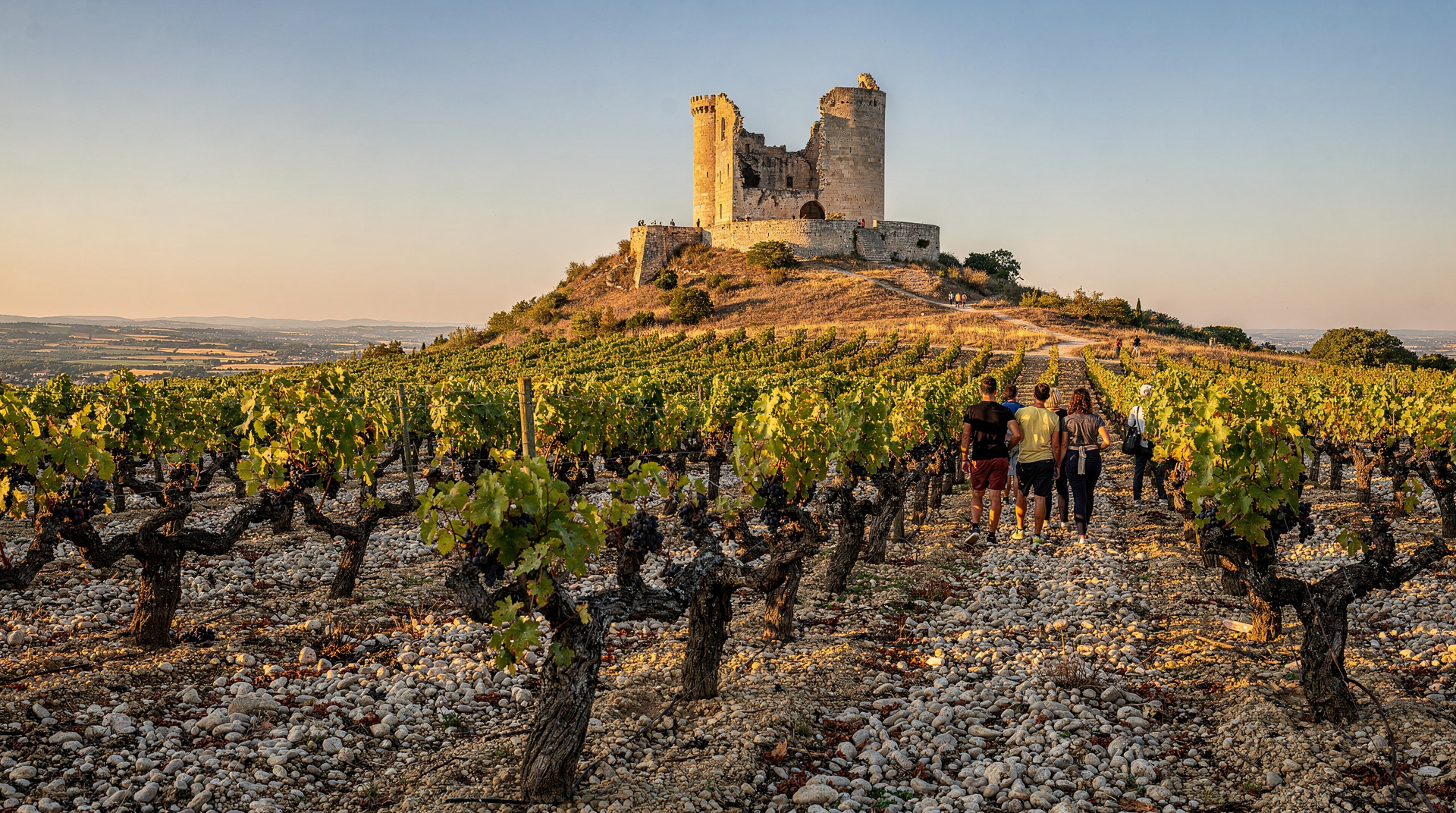
Spring and autumn: Avignon is excellent in April–June and September–October — mild weather, no festival crowds, the Palais des Papes accessible without summer queues. The surrounding vineyards (Châteauneuf-du-Pape is 20 km north) are at their most beautiful in October, with the harvest underway.
Combining Avignon with Arles or Les Baux
If you have a car, or are willing to take a taxi/bus between the sites, combining Avignon with Arles (60 km southwest) or Les Baux-de-Provence (30 km south) in a single day is possible. By train, Avignon is the logical anchor — Arles has its own direct TER service from Marseille (~1 hour), so you could do Avignon in the morning and Arles in the afternoon via a separate train. This requires careful schedule coordination but is feasible.
Les Baux-de-Provence — the dramatic hilltop village overlooking the Val d’Enfer — is not directly accessible by public transport from Avignon or Arles. A taxi from Arles (approximately 25 EUR) or a car is needed.
Driving in and around Avignon
Once in Avignon, parking your car outside the ramparts (at the signposted park-and-ride areas or the car parks near Porte de la République) and exploring on foot is strongly recommended. The streets inside the ramparts were not designed for cars — narrow, one-way, and difficult to navigate with GPS that predates the old town’s layout.
The A7 motorway from Marseille is direct. On the approach to Avignon, follow signs for “Centre-Ville” and the intra-muros car parks. The Parking des Italiens and Parking du Palais (both just inside or outside the ramparts) are the best options for a day visit.
For the Paris connection, see our Paris to Marseille TGV guide.
Comparing Avignon with other Marseille day trips
Avignon takes longer and requires more planning than most other day trips from Marseille. For a quicker, lower-commitment outing, Cassis and Aix-en-Provence are both closer and easier to fit into half a day.
If you’re weighing options, our day trips from Marseille guide lays out the full comparison, and do you need a car in Provence covers the broader transport question beyond just this one route. Whether you take the train or drive, our getting around Marseille guide covers reaching Gare Saint-Charles or the A7 on-ramp from wherever you’re staying in the city.
Frequently asked questions about Getting from Marseille to Avignon
Which station should I book for a day trip — Avignon TGV or Avignon Centre? For a straightforward day trip without a car, book the TER to Avignon Centre. It takes about 20 minutes longer than the TGV but drops you inside the city walls with no bus or taxi connection needed, which usually makes the total door-to-door time comparable or better.
Can I visit Avignon and Aix-en-Provence in the same day from Marseille? It’s possible but tight — Avignon alone comfortably fills 5–6 hours, and Aix needs at least 2–3 more. Most visitors do them as separate day trips rather than combining them, unless you’re prepared to see both at a rushed pace.
Top experiences
Bookable activities with verified prices and instant confirmation on GetYourGuide.