Côtes du Rhône from Marseille: wines, villages, and how to get there
Marseille: Avignon and Côtes du Rhône wine-tasting day tour
Duration: 8 hours
Can I visit Côtes du Rhône wine country from Marseille?
Yes — with a car (Gigondas and Vacqueyras are about 2 hours north) or by organised tour from Marseille via Avignon (the natural hub). The full-day Avignon and Côtes du Rhône tour covers both the city and the appellations in a single departure. Châteauneuf-du-Pape is a separate half-day from Avignon.
| At a glance | |
|---|---|
| Where | Southern Rhône valley, roughly 1h45–2h north of Marseille by car |
| Cost | Regional Côtes du Rhône around EUR 8–15/bottle; Gigondas/Vacqueyras around EUR 18–35 |
| Time needed | A full day |
| Getting there | Car via A7 to Avignon then D950, or organised tour from Marseille via Avignon |
| Best time | Spring or early autumn, morning domaine appointments |
The Rhône valley from a Marseille perspective
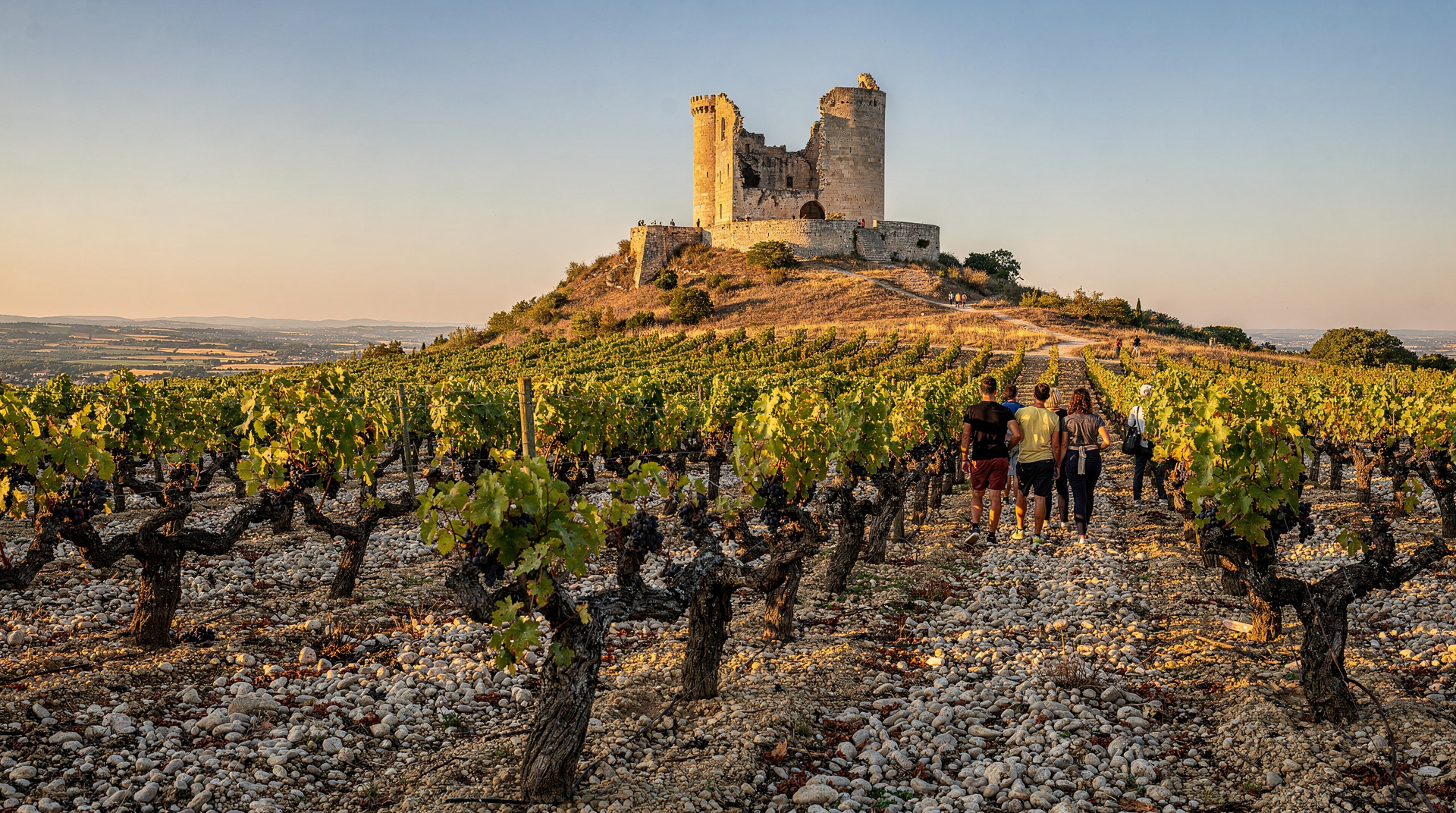
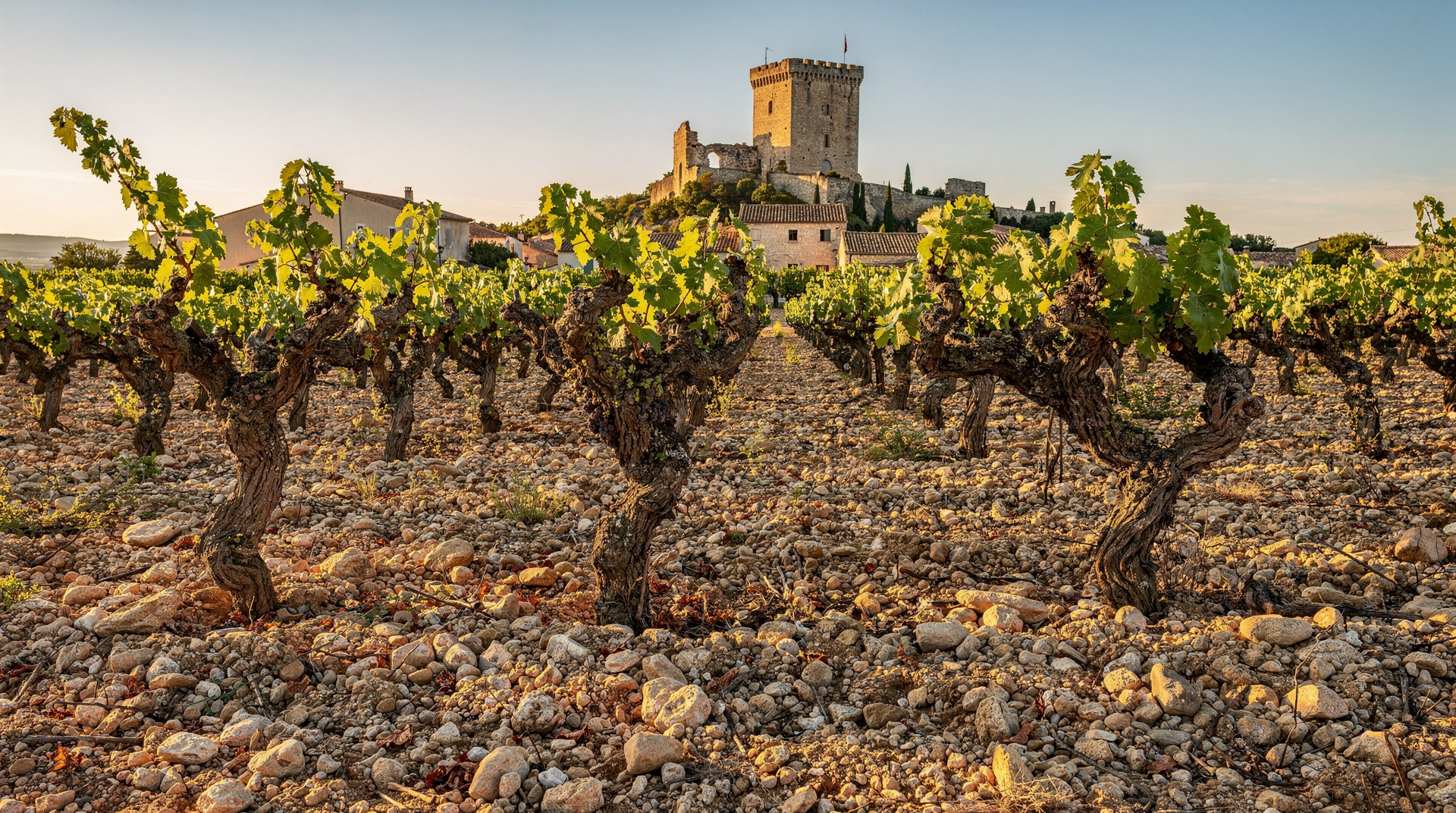
Marseille sits at the southern end of a wine axis that runs north through Avignon and into the Rhône valley — one of France’s great wine corridors. The southern Rhône, with its Grenache-dominant red wines, its distinctive galets roulés pebble vineyards, and its hierarchy of appellations from the broad regional Côtes du Rhône to the famous village crus of Gigondas and Châteauneuf-du-Pape, is within reach of Marseille for a full-day excursion with a car or via an organised tour using Avignon as the hub.
This guide covers the structure of the southern Rhône appellations, the key wine villages, what to expect in the glass, and the logistics of visiting from Marseille.
The appellation hierarchy
The southern Rhône’s appellation system is structured in three tiers, from broad regional to specific cru:
Regional: Côtes du Rhône AOC The largest category, covering approximately 43,000 hectares across the Rhône valley from Avignon to just south of Lyon. The Grenache-based reds are the volume core — typically round, fruit-forward, and best consumed young (2–4 years). Quality ranges from simple cooperative wine to serious estate bottlings from producers who could release under a more prestigious appellation but choose the Côtes du Rhône label for accessibility.
Grenache almost always dominates (minimum 40%), with Syrah and Mourvèdre providing structure and colour. Whites (Grenache Blanc, Clairette, Viognier, Roussanne) and rosés are also produced but represent a smaller fraction of the total.
Intermediate: Côtes du Rhône Villages AOC Applies to wines from a specific list of 95 communes with stricter yield and quality requirements. The Villages appellation can optionally include the commune name on the label (e.g., “Côtes du Rhône Villages Séguret” or “Côtes du Rhône Villages Sablet”), which functions as a sub-appellation designation without formal cru status.
Village crus (the elevated appellations) These have their own AOC status separate from Côtes du Rhône:
- Châteauneuf-du-Pape (1936): See our dedicated guide.
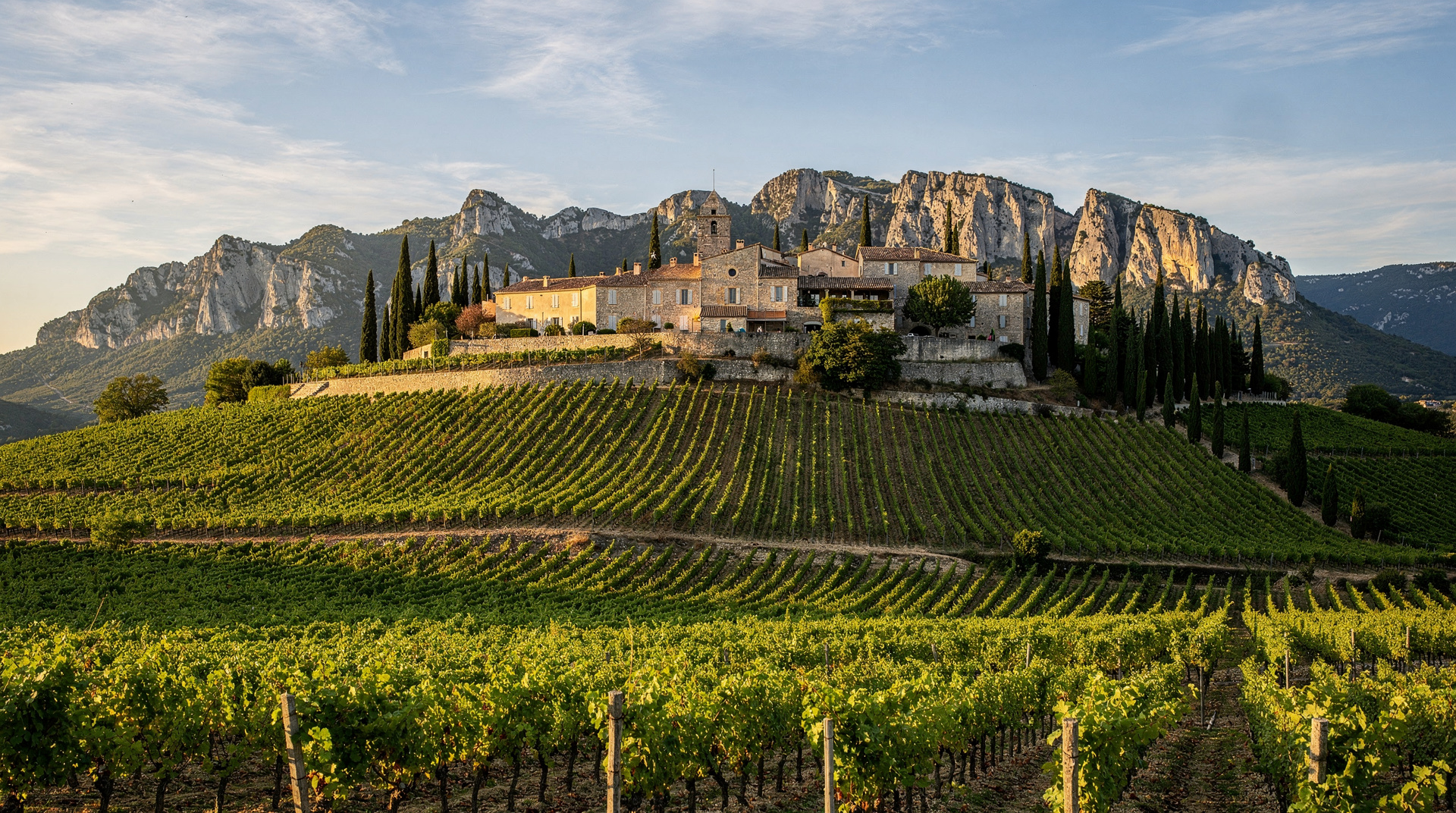
- Gigondas (cru status since 1971): Red and rosé only. Located at the foot of the Dentelles de Montmirail, a dramatic jagged limestone formation. Grenache-dominant (with Syrah and Mourvèdre), typically more structured and age-worthy than Côtes du Rhône. Approachable at 3–5 years; the best wines improve for 10+.
- Vacqueyras (cru status 1990): Red, white, and rosé. Located a few kilometres south of Gigondas on similar terroir. Grenache-dominant but with more Syrah than Gigondas, giving more perfume and tighter structure in the reds. Often excellent value relative to Gigondas — similar quality, lower profile.
- Vinsobres (cru status 2006): Red only. Further north in the Drôme department, at higher altitude (300–500 metres). Cooler climate produces more structured, higher-acid reds. Less well known than Gigondas and Vacqueyras; consistently undervalued.
- Cairanne (cru status 2016): The newest southern Rhône cru. Red and white. Located between Séguret and Rasteau, producing wines with a distinctive spice character from the clay-limestone mix.
- Rasteau (cru status for reds 2010, previously known for fortified wines): Red only from the village itself. Grenache-dominant, structured, often dark and spiced.
What to expect in the glass
The southern Rhône red style: Grenache in the southern Rhône produces wines that are full-bodied, relatively high in alcohol (13.5–15.5% is common), with soft tannins, ripe dark fruit (blackberry, plum, dried fig in hot years), and aromatic garrigue notes (lavender, thyme, rosemary). The style is genuinely different from northern Rhône wines (based on Syrah, which produces more tannic, darker, more peppery wines).
Village variations: Gigondas is typically the most structured and age-worthy of the villages below Châteauneuf-du-Pape. Vacqueyras has more Syrah in the blend, giving a more aromatic and slightly darker style. Vinsobres is more linear and mineral, reflecting the higher altitude. Cairanne has a distinctive savoury note, almost truffle-inflected in the best examples.
White wines: The southern Rhône whites (from Grenache Blanc, Clairette, Viognier, Roussanne) are significantly less well known than the reds but worth tasting. Viognier-based Côtes du Rhône blanc from the Avignon area can be genuinely good; Vacqueyras and Gigondas blancs are interesting curiosities.
Getting to Côtes du Rhône country from Marseille
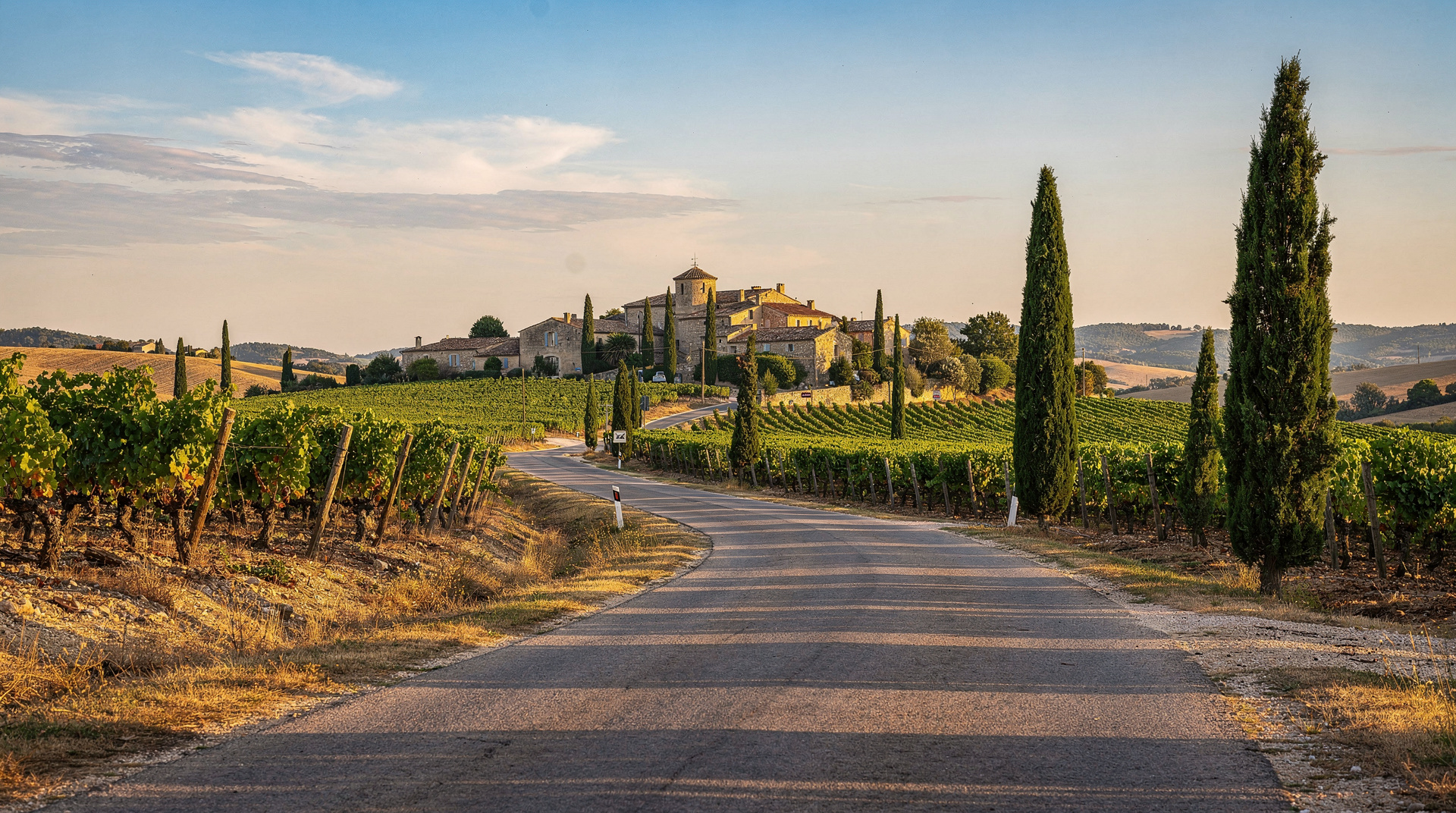
By car: The A7 autoroute north from Marseille reaches Avignon in approximately 1 hour. From Avignon, the D950 east leads to Vacqueyras and Gigondas in about 45 minutes. Total from Marseille: approximately 1 hour 45 to 2 hours.
By organised tour: The Marseille to Avignon and Côtes du Rhône wine-tasting day tour (departure from Marseille, via Avignon, into the wine villages, return to Marseille) covers both the city of Avignon and at least one wine domaine in a single departure. This is the practical option for visitors without a car or without confidence navigating rural Rhône roads.
By train to Avignon + local tour: TGV from Marseille Saint-Charles to Avignon Ville (approximately 55 minutes) or Avignon TGV station (approximately 35 minutes). Then join a wine tour departing from Avignon — the Châteauneuf half-day wine tour and the full-day Châteauneuf + Luberon tour both use Avignon as the departure point.
What a Rhône wine day from Marseille looks like
Option 1 — Organised tour, no car: Depart Marseille at 8:00–9:00 with the Avignon and Côtes du Rhône tour. Morning in Avignon (brief city orientation). Afternoon: at least one wine domaine visit in the Gigondas or Vacqueyras area, with guided tasting. Return to Marseille: late afternoon or early evening. Total tasting: 2–3 hours at domaine(s).
Option 2 — Self-drive, half-day: Marseille by car to Gigondas (2 hours). Arrive for pre-arranged 10:00 estate tasting. Village lunch (Gigondas has a small restaurant and terrace in the village square). Afternoon tasting at a second domaine, or drive the scenic Dentelles de Montmirail circuit (spectacular limestone formations, 30-minute drive). Return to Marseille by 18:00.
Option 3 — Full wine day with Châteauneuf: Marseille to Châteauneuf-du-Pape (1 hour 20), morning tasting and village. Lunch in Châteauneuf or Avignon (25 minutes south). Afternoon: Gigondas or Vacqueyras (45 minutes north of Avignon). Return to Marseille by 20:00. This requires a car and an early start; it is a full and somewhat tiring day but covers the maximum wine territory.
The honest logistics verdict
Châteauneuf-du-Pape, Gigondas, and Vacqueyras are all too far from Marseille for a comfortable there-and-back by train without significant logistical complexity. They make most sense as part of a Avignon-based day trip: travel to Avignon by TGV (fast and comfortable), use Avignon as the base for wine country exploration, and return to Marseille in the evening.
The distance from Marseille to the Rhône wine villages is real — this is not a quick half-day out. Budget a full day, and consider whether spending the night in Avignon to allow a more relaxed approach is worth the extra cost. The wines are genuinely worth the journey; the journey should not be so rushed that the tasting becomes a checkpoint rather than the point.
What to taste and what to expect in the glass
When you arrive at a Côtes du Rhône village estate or tasting room, you will typically be offered a range spanning the regional Côtes du Rhône through to the village or cru level. The difference is instructive:
Regional Côtes du Rhône (entry level): Round, fruit-forward, approachable immediately. Made for early drinking (within 3–5 years). Good versions cost EUR 8–15 at the estate. The majority of southern Rhône volume falls here. Not complex, but honest and well-suited to an outdoor lunch on a hot day.
Côtes du Rhône Villages: The step up — slightly more concentrated, often with a named village on the label (Séguret, Sablet, Roaix). EUR 12–20 at the estate. At this level, the grenache character becomes more distinctive and the wines can age 5–8 years.
Gigondas and Vacqueyras crus: Serious wine. Gigondas is typically darker, more tannic, and more age-worthy than Vacqueyras; Vacqueyras has more Syrah in the blend, giving additional perfume and spice. EUR 18–35 at the estate for good examples. These wines need 5–10 years to show their full range; tasting them young at the estate gives you the structure but not the complexity.
What the estate visit adds: Seeing the Dentelles de Montmirail from a Gigondas terrace, or the galets roulés at a Châteauneuf domaine, is the context that makes the tasting meaningful. The wine alone could be purchased in a shop; the vineyard conversation and the visual geography cannot.
The Beaumes-de-Venise detour
Beaumes-de-Venise, a village between Gigondas and Vacqueyras, produces two wines worth knowing:
Muscat de Beaumes-de-Venise: A naturally sweet wine (vin doux naturel) made from the Muscat à Petits Grains grape — intensely aromatic (orange blossom, apricot, peach), golden, and medium-sweet. Often served as an aperitif or with foie gras; a genuinely beautiful wine when made well and at its best young (within 3 years).
Beaumes-de-Venise AOC red: Since 2005, Beaumes-de-Venise has its own red wine AOC — Syrah-dominant (minimum 50%), unlike the Grenache-based styles of neighbouring villages. Darker, more peppery, more northern Rhône in character. An interesting contrast to the Gigondas and Vacqueyras style.
Both wines are worth a brief stop at a Beaumes-de-Venise producer if the route passes through. The village is 8 km east of Vacqueyras.
Buying wine to bring home
Estate purchases are the most economical way to buy serious Côtes du Rhône wines. Gigondas and Vacqueyras wines at the domaine are typically EUR 18–35 for bottles that retail for EUR 25–50 in European wine shops and considerably more in export markets. The saving is real and meaningful over a case (12 bottles) purchased at the estate.
Shipping: Most serious Rhône estates can arrange shipping to EU addresses. International shipping (outside France) is complicated by import regulations and alcohol-specific customs rules; discuss specifics with the estate.
Carrying bottles back to Marseille: European regulations permit personal transport of purchased wine. A case of 12 bottles in the boot of a rental car is logistically straightforward. By TGV from Avignon to Marseille with bottles in a bag — also fine, if physically managing 6–8 bottles on a train seems acceptable.
See our Châteauneuf-du-Pape guide for the specific village detail, our Provence wine routes guide for the self-drive circuit, and the wine tasting near Marseille guide for the closer coastal appellations.
The language of southern Rhône wine
For first-time visitors to southern Rhône estates, a few terms help navigate the tasting experience:
Garrigue: The aromatic scrubland of southern France — thyme, rosemary, lavender, cistus, fennel — whose scent permeates the vineyard air and translates into a recognisable herbal character in the wines. When a producer describes their wine as “garrigue notes,” they mean this specific herbal-mineral complex.
Vieilles vignes: Old vines. In the southern Rhône, vines over 40–50 years old produce lower yields and more concentrated fruit. A vieilles vignes cuvée from Gigondas or Châteauneuf is typically a step up in intensity and complexity from the producer’s standard wine.
Domaine vs Château: In Provence and the Rhône, both terms indicate estate-bottled wine from a single property. There is no strict legal difference in France between the two designations. Some producers use “Château” for marketing reasons; both indicate the wine comes from the estate rather than being bought in from other growers.
Cru vs village: In the southern Rhône context, “cru” status (Gigondas, Vacqueyras, Châteauneuf, etc.) means the wine has its own independent AOC rather than being labelled under the broader Côtes du Rhône or Côtes du Rhône Villages umbrella. The cru appellations have stricter rules and typically higher quality thresholds.
Appellation tier comparison
| Tier | Example | Style | Price at estate |
|---|---|---|---|
| Regional AOC | Côtes du Rhône | Round, fruit-forward, drink young | Around EUR 8–15 |
| Villages AOC | Séguret, Sablet | More concentrated, ages 5–8 years | Around EUR 12–20 |
| Village cru | Gigondas, Vacqueyras | Structured, ages 5–10+ years | Around EUR 18–35 |
| Village cru (top) | Châteauneuf-du-Pape | Complex, ages a decade or more | Around EUR 25–150+ |
For the Châteauneuf specifics, see our Châteauneuf-du-Pape wine tour guide. For the closer coastal alternative, see our Cassis destination guide and our Bandol wine guide.
Fitting a Rhône day into a wider trip
A Rhône wine day works best when it is planned around the rest of your stay rather than squeezed in. Avignon is the natural hub, and our Avignon day trip guide covers the city itself, while the Marseille to Avignon transport guide lays out the practical ways of making the first leg. If you are weighing up the car question for the whole stay, do you need a car in Provence will help you decide whether renting is worth it for the wine villages alone.
Wine lovers who would rather stay closer to the coast can pair this guide with the Cassis wine guide and the Provence rosé explained page, which give a very different picture of southern French wine: lighter, fresher and shaped by the sea rather than the garrigue. For a broader menu of excursions, the day trips from Marseille guide shows where a Rhône day sits among the alternatives, and the Avignon destination page and Châteauneuf-du-Pape destination page give background on the two towns most visitors use as anchors.
If the wine is one part of a longer holiday, the Marseille food and wine weekend and the Provence road trip itinerary show how to combine tastings with the rest of the region. And if you like the idea of understanding what you are drinking before you arrive, the Provençal cuisine explained guide is a good companion for choosing what to eat with these wines at lunch.
Frequently asked questions about Côtes du Rhône from Marseille
Is Gigondas or Vacqueyras better for a first visit? Gigondas has the bigger name and the more dramatic Dentelles de Montmirail backdrop; Vacqueyras is often better value for similar quality. Many visitors do both in one afternoon since the villages are only a few kilometres apart.
Can I visit Côtes du Rhône country without renting a car? Yes, via an organised tour departing Marseille (via Avignon) or a tour booked from Avignon itself after a TGV ride — see the getting-there section above for the realistic options.
Top experiences
Bookable activities with verified prices and instant confirmation on GetYourGuide.