Châteauneuf-du-Pape wine tour: galets roulés, 13 grapes, and visiting from Avignon
From Avignon: Châteauneuf-du-Pape half-day wine tour
Duration: 4 hours
How do I visit Châteauneuf-du-Pape from Marseille or Avignon?
From Marseille: 1 hour 20 by car, or take the TGV to Avignon (1 hour) and join a half-day wine tour from Avignon (25 min to Châteauneuf). There is no practical public transport. The village itself takes 30 minutes to walk; the tastings are the reason to stay 3–4 hours.
| At a glance | |
|---|---|
| Where | Southern Rhône valley, about 25 minutes north of Avignon |
| Cost | Tastings around EUR 10–20 at village cave shops; Vinadea free |
| Time needed | Around 3–4 hours for tastings, plus the village (45–60 min) |
| Getting there | Car via D17 from Avignon, or an organised half-day tour from Avignon |
| Best time | April–June or September–October, morning for domaine appointments |
The most famous name in southern Rhône wine
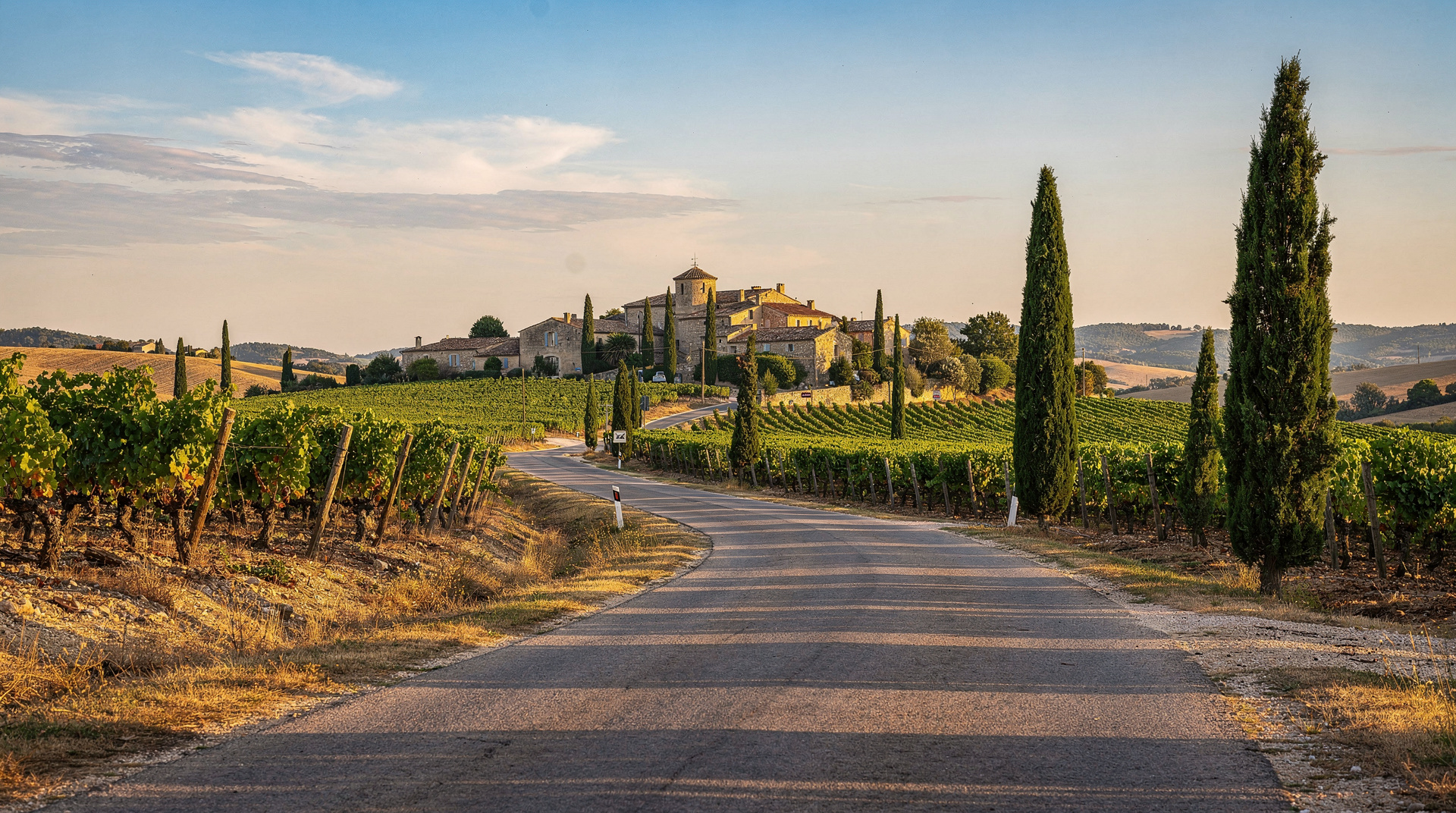
Châteauneuf-du-Pape does not need introduction in most wine conversations — the name appears on the list of the world’s most recognised appellations, alongside Bordeaux, Burgundy, and Champagne, despite being much smaller than any of them. The village sits on a low hill above the southern Rhône valley, 25 minutes north of Avignon, surrounded by vineyards that produce roughly 12 million bottles of wine per year from a territory of approximately 3,200 hectares.
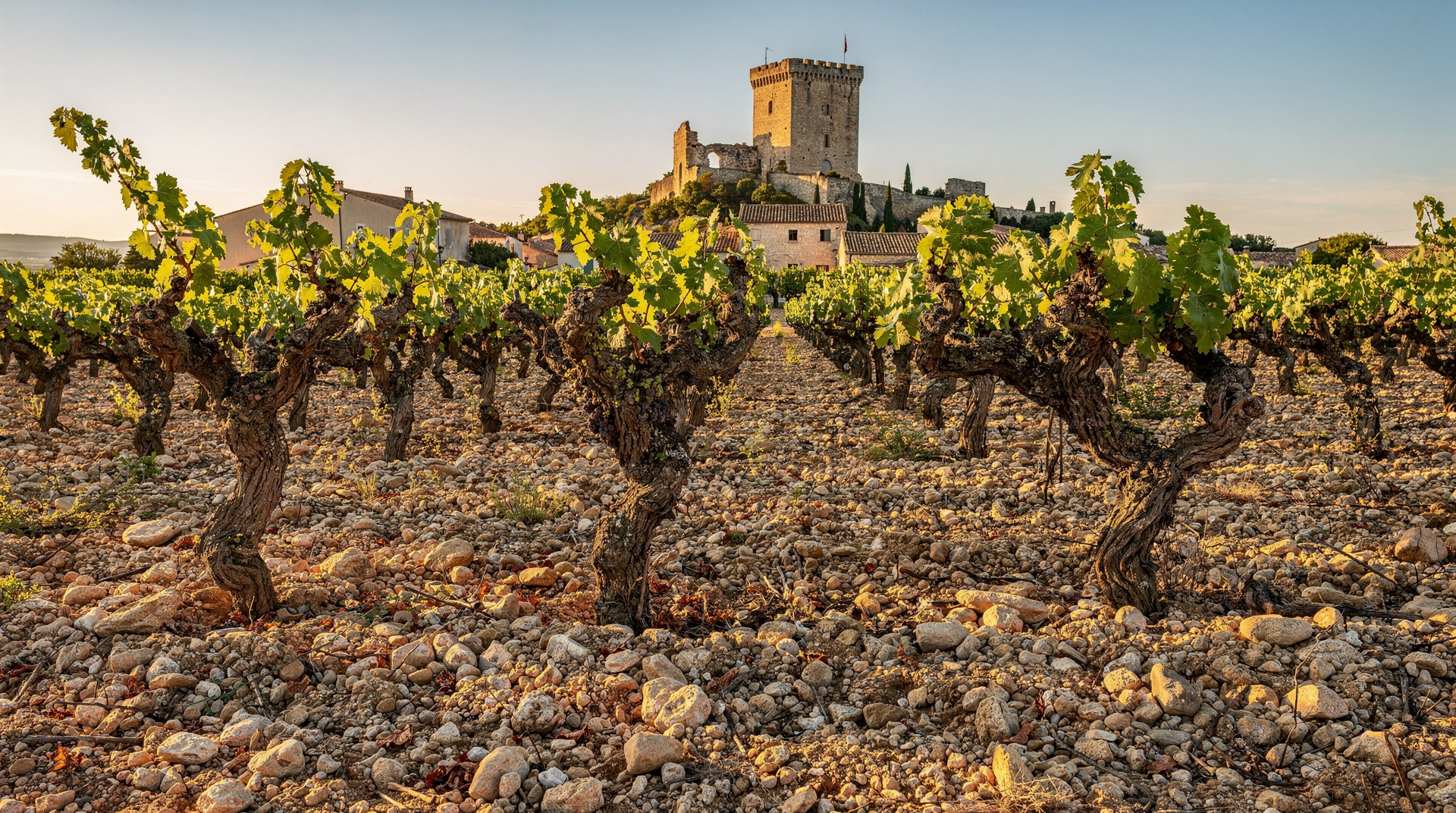
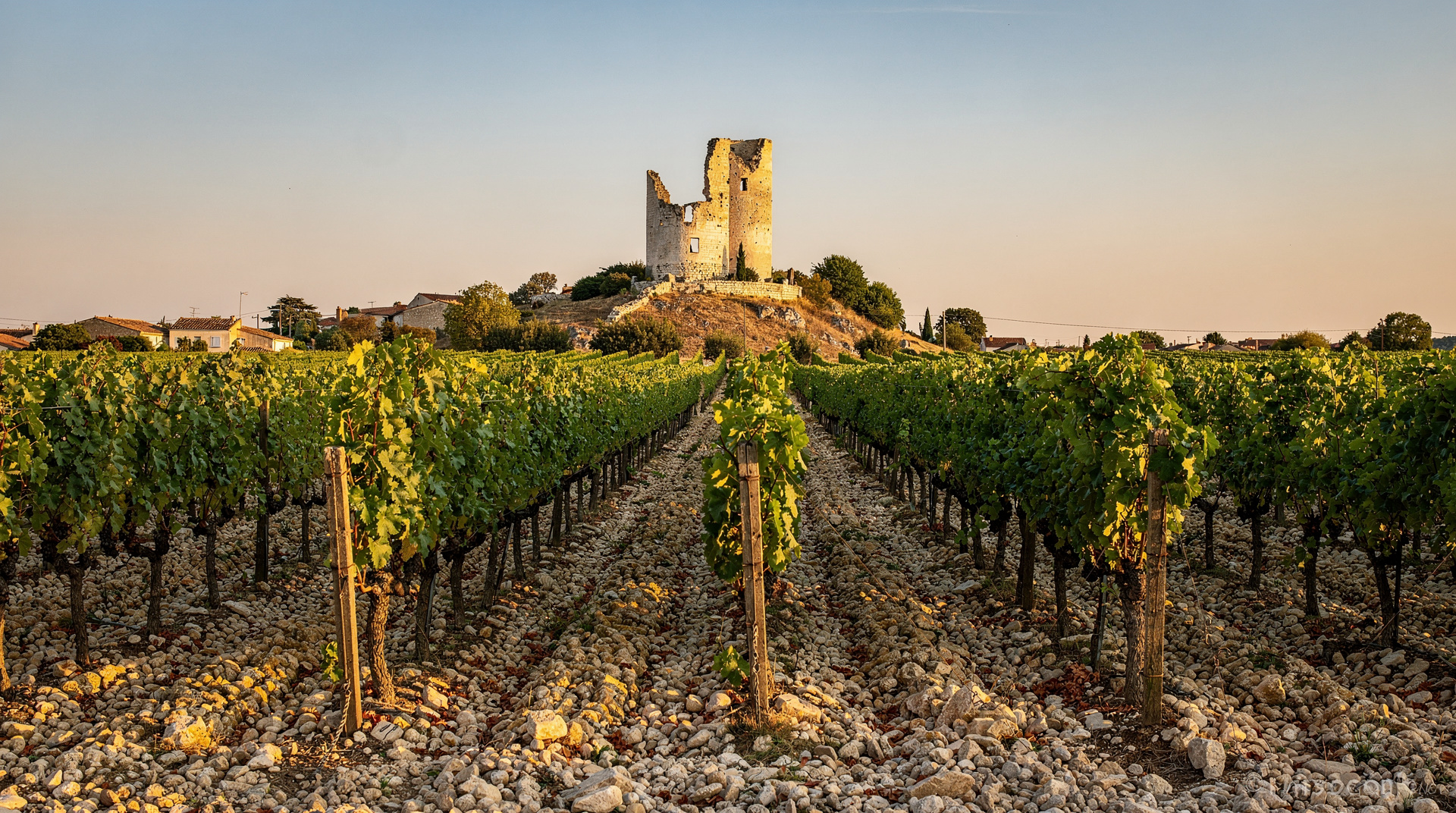
What Châteauneuf produces in quantity, it makes up for in complexity. The appellation allows 13 permitted grape varieties (reduced from 18 in earlier rules), creates wines that age for a decade or more in the best vintages, and has a terroir feature — the galets roulés, large rounded quartzite pebbles covering the vineyard floors — that is visually and geologically unlike anything else in France.
For wine-focused visitors to Marseille, Châteauneuf-du-Pape is the logical extension of a Provence wine itinerary toward the Rhône — different in character from Cassis and Bandol (the coastal appellations), bigger in scale and weight, with the added context of the papal history and the dramatic castle ruin.
The 13-grape AOC
The original AOC rules for Châteauneuf, established 15 May 1936, permitted 13 grape varieties. The current list — slightly refined from the original — includes both red and white varieties:
Red varieties (dominant): Grenache Noir, Grenache Gris, Syrah, Mourvèdre, Cinsault, Muscardin, Counoise, Terret Noir, Vaccarèse, Picpoul Noir, Picardan
White varieties: Grenache Blanc, Clairette Blanche, Clairette Rose, Roussanne, Bourboulenc, Picpoul Blanc, Picardan Blanc
In practice, Grenache dominates most blends — typically 60–80% of the wine by volume. Syrah and Mourvèdre play supporting roles. The minor varieties (Counoise, Vaccarèse, Muscardin) appear primarily at estates like Château Beaucastel, which famously uses all permitted varieties in its red, producing a wine of unusual complexity.
Why so many varieties? The diversity reflects the geological and climatic diversity of the Châteauneuf territory — different soil types and exposures suit different varieties, and the broad palette allows blending to adapt to the character of each vintage. In great vintages (warm and even), grenache dominates; in challenging vintages, Mourvèdre or Syrah may contribute more.
The galets roulés: geology as terroir
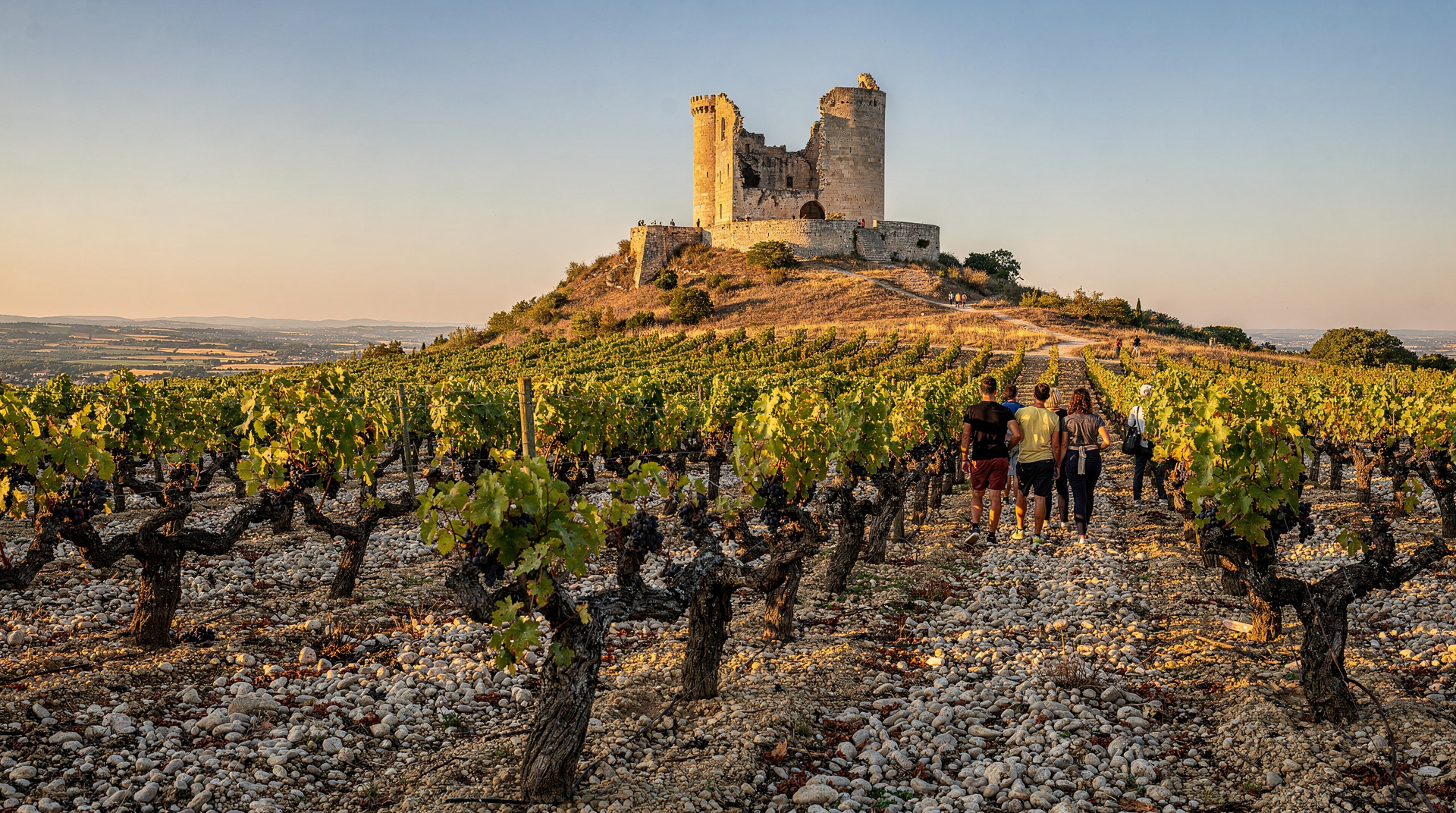
Walking through a Châteauneuf-du-Pape vineyard is immediately striking. The ground is not soil in any recognisable sense — it is covered with rounded river stones, some the size of a fist, some as large as a melon, accumulated to depths of 30–60 centimetres in some plots. These are the galets roulés (literally “rolled pebbles”): quartzite and limestone rocks deposited by ancient glacier melt and river action during the Pleistocene era.
What the galets do: The stones absorb heat from the Provence sun during the day and radiate it back through the night, effectively extending the growing season by several hours of warmth after sunset. This helps Grenache reach full phenolic maturity in the southern Rhône climate. In summer, the vineyard floors become hot enough to burn bare feet — temperatures of 45–50°C on the stone surface are not unusual in July.
The galets also drain water efficiently (no waterlogging, which would dilute flavour) and force the vine roots downward into the cooler, moisture-retaining subsoil — a form of vine stress that concentrates the resulting fruit.
The visible marker: The galets roulés are the clearest visual difference between a Châteauneuf vineyard and anything in Provence, Bandol, or Cassis. If you visit a single vineyard, the stones alone make the trip worthwhile — the geology is literally visible as the mechanism of quality.
The papal history
The name “Châteauneuf-du-Pape” — literally “new castle of the Pope” — reflects the 14th century when the Avignon papacy (1309–1377) made this village their country estate. Pope John XXII (1316–1334) built the castle on the hilltop above the village and developed vineyards around it. The wine produced here for the papal court was the direct ancestor of the current appellation.
The castle was partially destroyed during the Wars of Religion in the 16th century and further damaged by German artillery in 1944, when the Wehrmacht used it as an observation post. Today only the north tower stands at significant height. Entry is free; the ruins and the view from the ramparts are accessible during daylight hours.
The “Pope” rosé question: Châteauneuf produces approximately 7% white wine and the vast majority is red. There is no significant rosé production associated with the appellation. This distinguishes it sharply from the coast appellations (Cassis, Bandol, Côtes de Provence) where rosé dominates.
Key producers
Château Beaucastel: One of the most celebrated estates in the appellation. Owned by the Perrin family, Beaucastel is famous for using all 13 permitted grape varieties in its cuvée (a rarity) and for producing whites based on Roussanne that age magnificently. The top cuvée, Hommage à Jacques Perrin, is among the most collected wines in France. Visits by appointment.
Domaine du Vieux Télégraphe: The Brunier family’s estate takes its name from the old telegraph tower in the vineyards. The wines are powerful, consistent, and based on old-vine grenache. The estate is widely distributed and a reliable reference for the appellation style. Visits by appointment.
Château Rayas: The legendary but elusive estate, producing one of the most distinctive wines in France from very low-yielding grenache on unusual sand-dominated soils rather than the classic galets. The wine is typically pale-coloured and aromatic despite being 100% grenache — a counterpoint to the dominant dark, powerful Châteauneuf style. Extremely limited availability and not easy to visit.
Domaine de la Janasse: Widely praised for consistency and for accessible (relative to Beaucastel and Rayas) pricing. The estate produces several cuvées in different styles. More practically visitor-friendly than the most famous names.
Vinadea (village wine centre): For visitors who want a broad survey without committing to a domaine appointment, the Vinadea cooperative tasting room on the main street offers free tastings of over 250 local producers. This is the logical starting point — taste broadly, identify what interests you, then visit the specific estate if a particular wine stands out.
Getting here
From Avignon: 25 minutes north by car on the D17. No practical public transport connection. An organised half-day wine tour from Avignon (the GetYourGuide option includes transport) is the most logical approach for visitors without a car.
From Marseille: Approximately 1 hour 20 by car (A7 north toward Avignon, then D17 north). Alternatively, take the TGV from Marseille Saint-Charles to Avignon (approximately 35 minutes to Avignon TGV, or 55 minutes to Avignon Ville), then join the organised tour from Avignon for the Châteauneuf circuit.
The full-day Rhône option: The combined Avignon + Châteauneuf-du-Pape + Luberon full-day tour from Avignon covers all three in a single organised day — practical if you want to see the maximum without renting a car.
What to expect at tastings
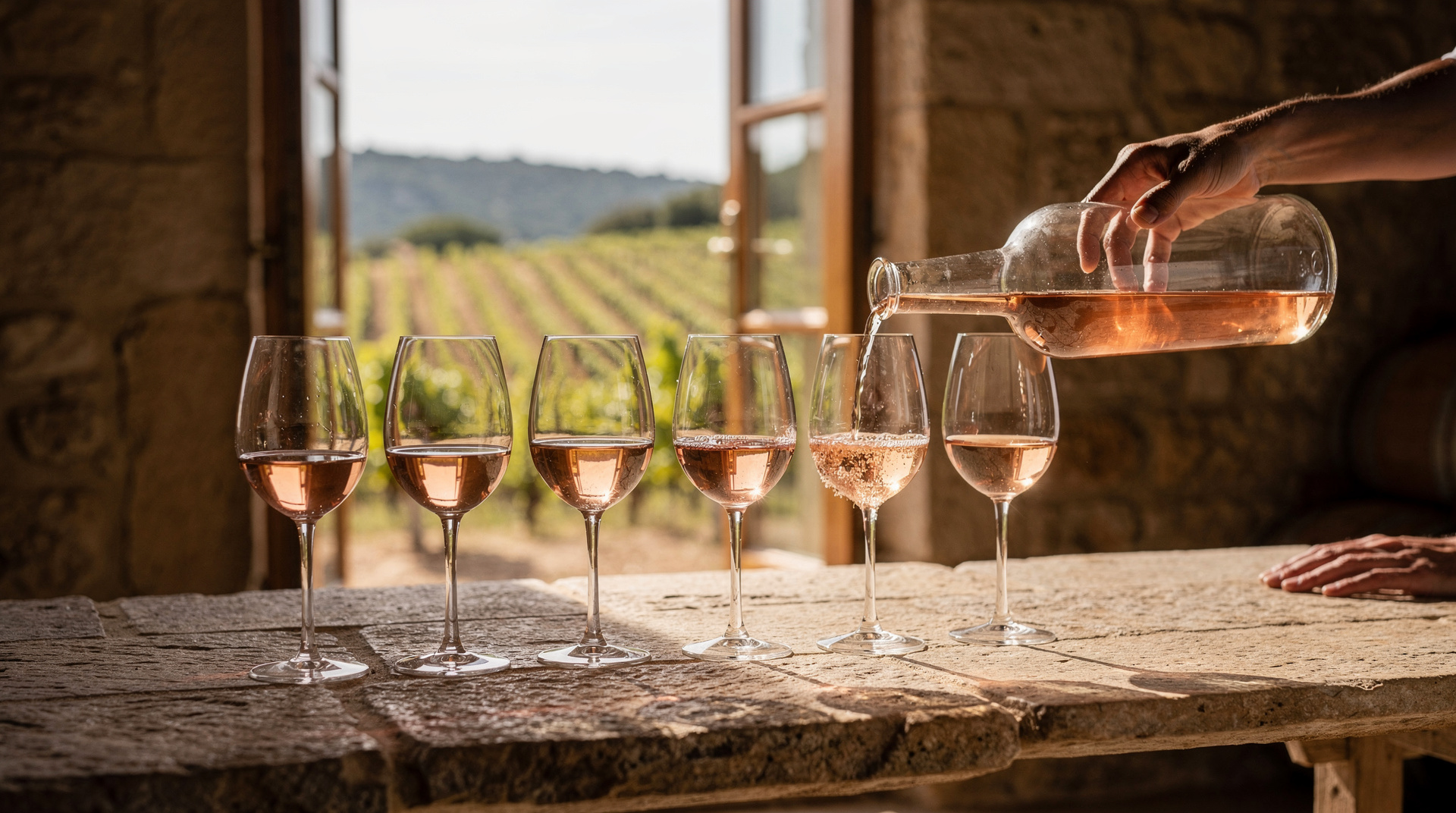
Village cave de dégustation shops: 8–12 shops on and around the main street (Rue de la République) offer tasting menus of 4–8 wines for EUR 10–20. Quality varies; the best are run by staff who know their producers’ vineyards in depth.
Vinadea free tasting: The cooperative tasting room allows a free survey of the appellation. Ask to taste reds at different ages if available — understanding the evolution from 2 years to 10 years is the fastest way to grasp what Châteauneuf ageing does.
At the domaines: Serious visits (for wine buyers and committed enthusiasts) require an appointment. Major estates receive by appointment in the morning; afternoons are typically less reliable. Book at minimum a week in advance.
Best time for tastings: April–June (spring, before the harvest rush, when producers have time) and September–October (harvest energy, new vintage discussion, though the busiest estates may have reduced availability during the pick itself — typically late September).
The honest time and logistics verdict
Châteauneuf-du-Pape is a wine destination, not a village destination. The castle view and the galet vineyards are worth the visit in themselves. The village takes 30 minutes to walk through. The reason to spend 3–4 hours here is the tastings.
For visitors coming from Marseille, the honest logistics are: either rent a car and combine Châteauneuf with an Avignon day (stay the night in Avignon rather than trying to return to Marseille the same evening), or take the TGV to Avignon and join an organised wine tour. Do not try to do both Châteauneuf and Avignon on the same day trip from Marseille by train without a car — the logistics require too many connections and too little time at each destination.
See our Châteauneuf-du-Pape destination guide for the village detail, and our Côtes du Rhône from Marseille guide for the broader southern Rhône wine context.
Châteauneuf-du-Pape white: the overlooked wine
Approximately 7% of Châteauneuf-du-Pape production is white wine — a small fraction dominated by the reds and rosés but worth separate attention. Châteauneuf blanc is made from a rotating cast of white varieties permitted by the AOC: Grenache Blanc, Roussanne, Clairette Blanche, Bourboulenc, Picardan, Clairette Rose, and Roussanne.
The style: Full-bodied, high alcohol (13.5–15%), complex, and genuinely age-worthy. The best Châteauneuf blancs (Château Beaucastel’s Roussanne Vieilles Vignes is the reference point — one of the most age-worthy white wines produced anywhere in France) are wines that evolve for 10–20 years in bottle.
At the tasting room: Ask specifically to taste a blanc if one is available. The Vinadea cooperative tasting room in the village sometimes includes a white in its standard tasting menu; individual estates often do not unless prompted.
Why it matters: Visitors who come for the famous grenache-based reds and miss the whites leave with an incomplete picture of what the appellation can produce.
The Châteauneuf-du-Pape village itself
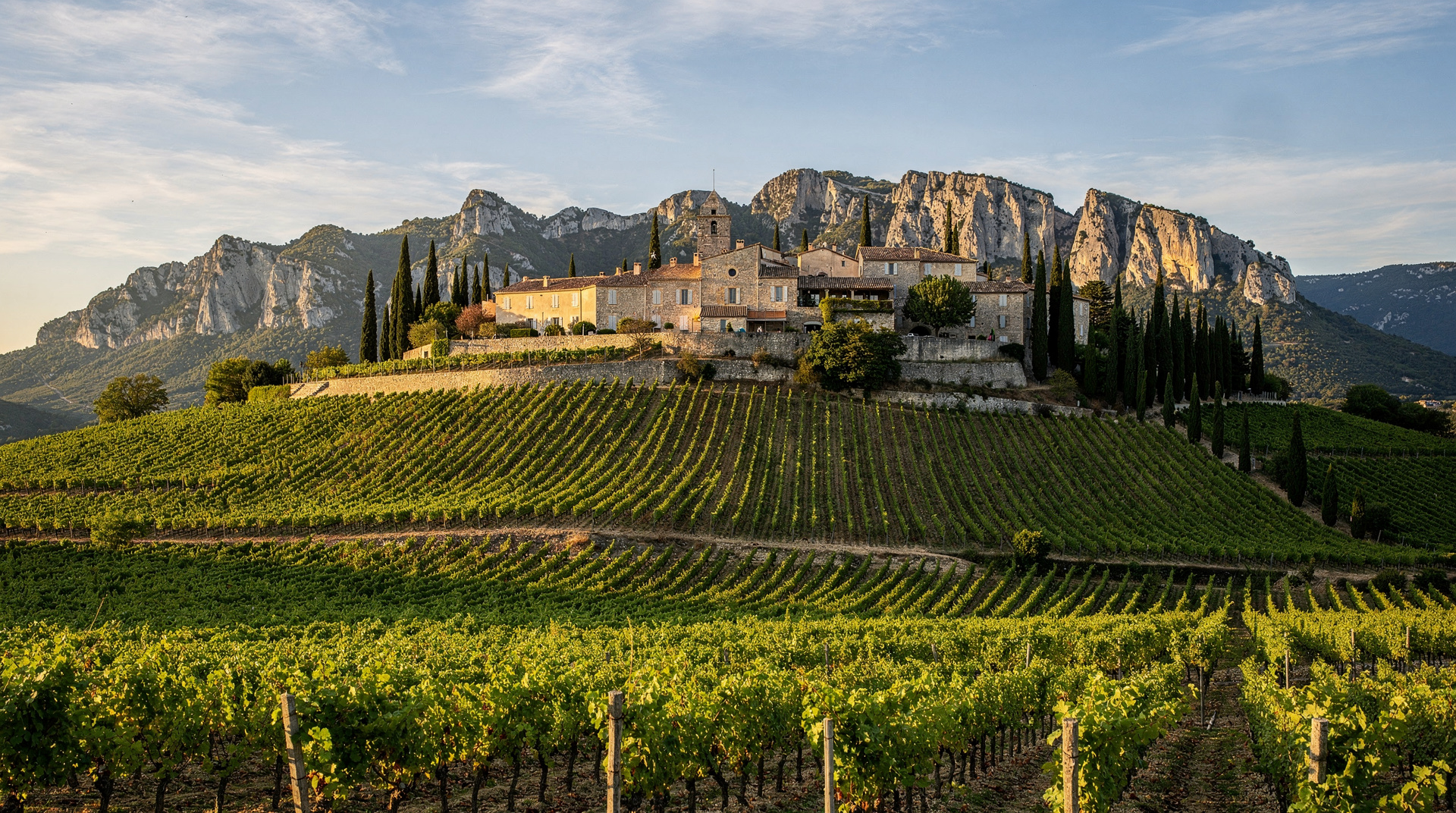
The village deserves 45–60 minutes of walking beyond the wine focus. From the castle ruins on the hilltop, the view extends south across the Rhône valley toward Avignon, east toward the Dentelles de Montmirail and the mountains, and north into the Côtes du Rhône wine corridor.
The castle ruins (Château des Papes): Free entry. The north tower is the most intact remaining structure, damaged by German artillery in 1944 when the Wehrmacht used it as an observation post. The surrounding platform offers the best panoramic view in the appellation.
The village main street: Rue de la République runs downhill from the castle square through the commercial heart of the wine village — cave shops, tasting rooms, restaurants, and wine bars. It is not a large street; 10 minutes suffices to walk its length. The tasting rooms along this street vary considerably in quality and approach — the better ones have staff who know their producers; the tourist-facing shops offer less depth.
Lunch in the village: Two or three restaurants operate in the village; they tend to be busy at lunch in the wine tourism season (April–October). Booking in advance for a village restaurant makes sense if you want to lunch here. Alternatively, the neighbouring villages of Roquemaure and Orange (15–20 minutes) offer more choice at lower prices.
The vintage picture at Châteauneuf-du-Pape
Because Châteauneuf-du-Pape ages for a decade or more in the best vintages, understanding which years are worth seeking matters differently here than in younger-drinking appellations.
The great recent vintages: 2019, 2020, and 2022 are widely considered exceptional — warm, concentrated, with the acid balance that allows long ageing. These wines will be at their peak from 2030–2040. 2016 and 2010 are now at excellent drinking points.
More accessible years: 2017 and 2018 are approachable sooner — the growing seasons produced rounder, earlier-drinking wines without the structural severity of the very best years.
The practical advice: At the tasting room, ask specifically whether there are any older vintages available for tasting (some producers open library wines at estate visits for serious buyers). A 2010 Vieux Télégraphe alongside the current release illustrates the ageing potential in concrete terms.
Estate release schedules: Serious Châteauneuf producers release their reds later than most Provence appellations — often 18–24 months after harvest, sometimes longer for prestige cuvées. What you taste at the estate in 2026 is likely the 2023 or 2022 vintage.
Buying Châteauneuf-du-Pape to take home
Estate prices for Châteauneuf range from EUR 25–40 for entry-level AOC wines to EUR 70–150+ for prestige cuvées at the top producers. On export markets, the same bottles cost significantly more.
The buying logic: If you taste something you enjoy at an estate visit, ask whether they offer direct shipping (livraison à domicile or expédition) or whether they can sell you a case at a reduced price. Most serious estates handle this as a matter of course for wine buyers. A mixed case of 12 bottles — including the red, white, and the current vintage plus an older bottle if available — is the typical structure of a serious estate purchase.
At Vinadea: The cooperative tasting room also operates as a shop selling wines from all producers in the appellation. This is the most convenient source for buying a range across multiple producers without visiting each individually. Prices are retail (higher than estate direct) but the selection breadth is unmatched.
Transport considerations: EU travel regulations permit personal transport of purchased wine without restriction within EU member states. Renting a car and loading a case in the boot for the return to Marseille is logistically straightforward. TGV from Avignon with 6–8 bottles in a bag is also manageable. For large purchases (multiple cases), ask the estate about shipping to your home address — they handle this routinely.
Châteauneuf-du-Pape vs the wider Rhône villages
| Châteauneuf-du-Pape | Gigondas / Vacqueyras | |
|---|---|---|
| Distance from Avignon | 25 minutes | 45 minutes |
| Style | Grenache-dominant, powerful, ages 10+ years | Similarly Grenache-led, slightly less weight |
| Price at estate | Around EUR 25–150+ | Around EUR 18–35 |
| Best for | Wine collectors, prestige names | Value hunters, quieter tasting rooms |
For the broader appellation context, see our Côtes du Rhône from Marseille guide and our Provence wine routes guide.
Fitting Châteauneuf into a wider Provence trip
Châteauneuf works best as one chapter of a longer stay rather than a stand-alone errand. If you are still deciding how to build the week, the Marseille and Provence 5-day itinerary and the food and wine weekend itinerary show where a Rhône wine morning can slot in without rushing the rest.
Because the village is a wine stop first, it pairs naturally with a town that gives you the sightseeing. The Avignon day trip guide covers the papal city itself, and the Avignon destination page is the best base if you decide to sleep there. For the practical side of getting between the coast and the Rhône, see Marseille to Avignon transport, and if you are weighing a rental, read do you need a car in Provence before you commit.
Not every wine day has to head north. If the logistics feel heavy, the Bandol wine guide and the Cassis wine guide describe the coastal alternatives, and Provence rosé explained is a useful contrast to the red-dominated style of Châteauneuf.
For readers who like to see a trip through someone else’s eyes, our blog entry on Provence markets we love and the diary-style best rosé of the summer add a more personal angle to the same region. Once the tastings are done, the provençal cuisine explained guide helps you decide what to eat with the bottles you bring home.
Frequently asked questions about Châteauneuf-du-Pape wine tour
Is Châteauneuf-du-Pape a day trip from Marseille without a car? It’s possible but tiring: TGV to Avignon (around 35–55 minutes), then an organised half-day wine tour from Avignon into Châteauneuf. Doing Avignon sightseeing and Châteauneuf tastings on the same train-only day from Marseille is not realistic — see the honest logistics section above.
How many wineries can you realistically visit in a day? Two is the practical maximum if you also want time in the village and lunch — one appointment-based domaine in the morning, and the Vinadea walk-in tasting room or a cave shop in the afternoon.
Top experiences
Bookable activities with verified prices and instant confirmation on GetYourGuide.