Châteauneuf-du-Pape
Châteauneuf-du-Pape guide — 13-grape AOC blends, galets roulés vineyards, the ruined papal castle, and how to visit from Avignon or Marseille.
From Avignon: Châteauneuf-du-Pape half-day wine tour
Duration: 4 hours
Quick facts
- Distance from Avignon
- 25 min by car; no practical public transport
- Distance from Marseille
- ~1 h 20 by car
- AOC status
- One of France's first AOCs (1936); 13 permitted grape varieties
- Castle entry
- Free; open access at the top of the village
- Tastings
- Most cave de dégustation shops: EUR 10–20 for 4–8 wines; Vinadea: free tasting, 250+ wines
The village that became the name on the label
Châteauneuf-du-Pape is a small village — around 2,000 people — on a low hill above the southern Rhône valley, 18 km north of Avignon. Its name is known worldwide because of one thing: the wine appellation that bears it, which has been producing some of the most complex red wines in France since the 14th century when the Avignon popes established vineyards here.
The village itself takes perhaps 30 minutes to walk through. The ruined castle at the summit takes another 20 minutes. The reason to spend half a day here is the tastings — in the cave de dégustation shops along the main street, in the Vinadea wine centre, or at one of the domaines in the surrounding vineyards. The wine is the experience.
At a glance
| Where | Southern Rhône valley, 18 km north of Avignon |
| Cost | Free castle entry; tastings around 10-20 EUR at most cave shops, free at Vinadea |
| Time needed | Half a day |
| Getting there | Car required (no public transport); around 25 min from Avignon |
| Best time | April-June and September-November (harvest) |
The AOC and the 13-grape rule
Châteauneuf-du-Pape was one of France’s first AOCs, formally established in 1936. The regulations permit up to 13 grape varieties in the blend — an unusually generous number for an appellation, reflecting the diverse soils and microclimates across the territory. The varieties include Grenache (which dominates in most blends), Syrah, Mourvèdre, Cinsault, Clairette, Roussanne, Bourboulenc, and others.
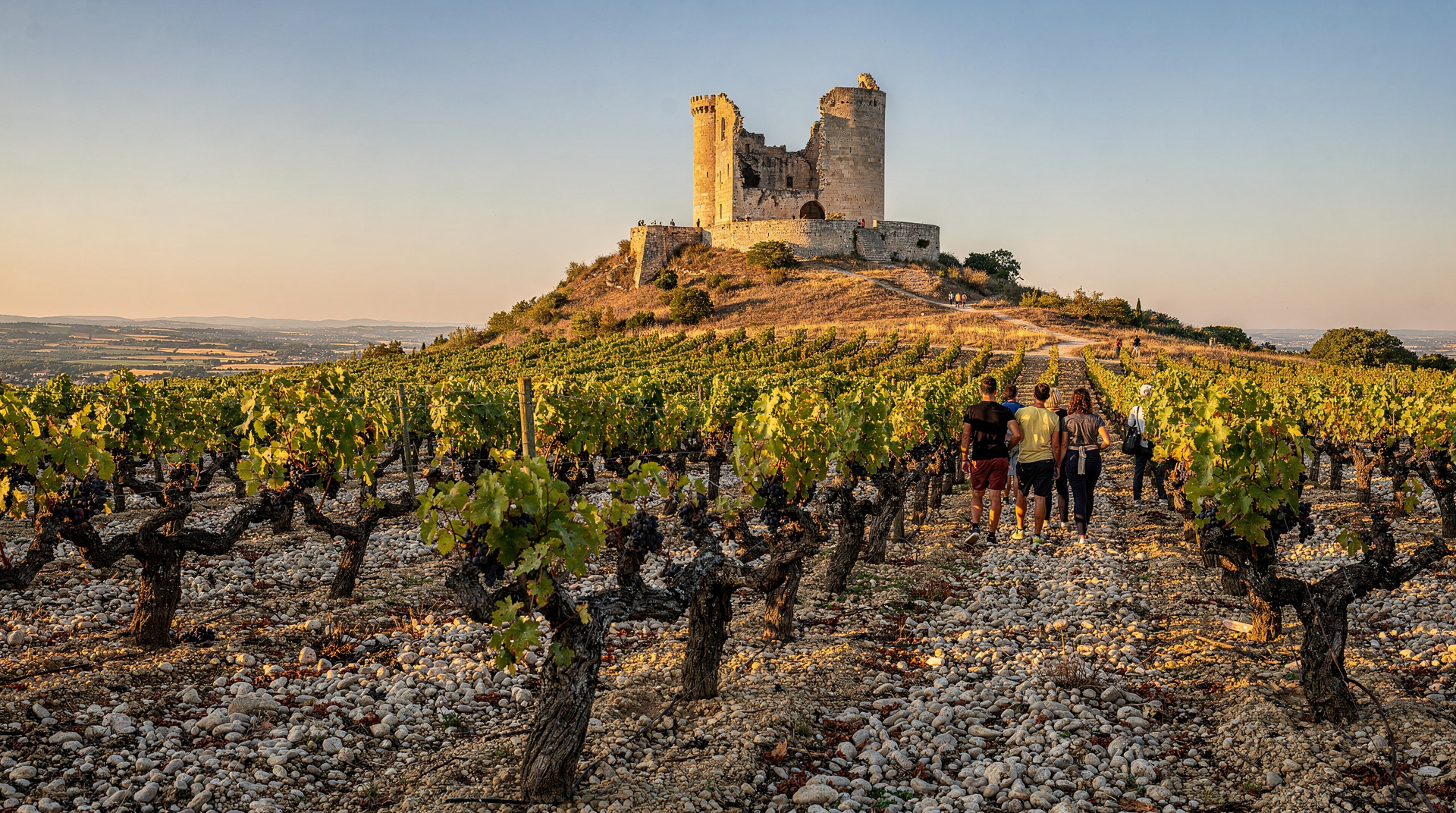
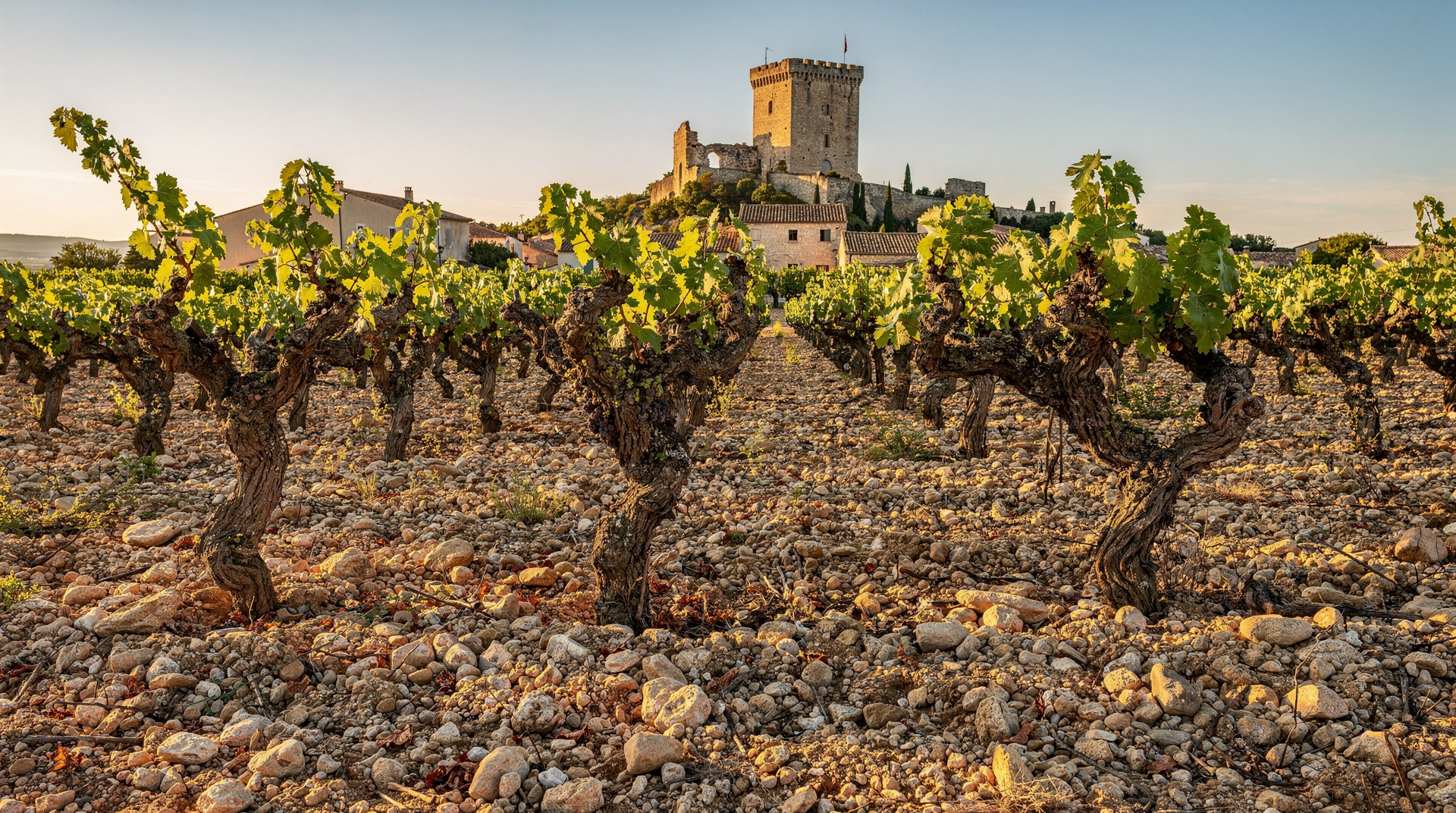
The most distinctive feature of the vineyards is the galets roulés — large, rounded pebbles of quartzite, deposited by ancient glaciers and river action, covering the vineyard floors. These stones absorb heat during the day and radiate it at night, extending the growing season and contributing to the wine’s characteristic warmth and body. Walking through a Châteauneuf vineyard in summer, the ground radiates heat like a solar panel.
The reds (which dominate production) are typically deep, full-bodied, spiced, and age-worthy — the great cuvées from Château Rayas, Château Beaucastel, Domaine du Vieux Télégraphe, and Domaine de la Janasse are among the most collected red wines in France. The whites (around 7% of production) are mineral and aromatic, based on Grenache Blanc, Clairette, and Roussanne — often overlooked but excellent.
The ruined castle
The Château des Papes at the village summit was a secondary papal residence, used by the Avignon popes as a retreat and hunting lodge from the early 14th century. The Wars of Religion in the 16th century partially destroyed it; a WWII bombardment in 1944 (the German army used it as an observation post) finished the job. Only the north tower survives with any significant height.
Entry is free. The ruins are accessible during daylight hours. The view from the ramparts is the main event: south across the appellation to Avignon and the Rhône, west to the Pont d’Avignon, north to the Orange plain. On clear days the hills around Gigondas are visible. The Rhône valley seen from this vantage — the river threading through vineyards in every direction — explains immediately why the popes chose this spot.
Tastings in the village
Vinadea (on the main street, Rue de la République) is the village’s wine centre — a cooperative tasting room representing over 250 local producers. The tasting is free and allows a broad survey of the appellation without appointment. This is the practical starting point for visitors unfamiliar with the producers.
Cave de dégustation shops line the main street and the lanes below the castle. Most offer tasting menus of 4–8 wines for EUR 10–20. The best sessions include both red and white cuvées and are run by staff who know their producers’ vineyards.
At the domaines: For serious wine buyers, visiting domaines by appointment is the most rewarding option. Major producers that receive visitors include Château Beaucastel, Domaine du Vieux Télégraphe, and Château Fortia (one of the oldest estates). Book well in advance, particularly from April through November.
The best time for tastings: April through June (post-harvest assessment, spring cuvées available) and September through October (harvest energy, new vintage discussion). July and August are peak season — the village fills with visitors and some estates reduce tasting availability or close at midday due to heat (the galets roulés make the vineyards extremely hot in summer, with temperatures regularly reaching 35–40°C).
Getting here from Marseille
Châteauneuf-du-Pape has no public transport connection from Marseille or Avignon. A car is required, or you take an organised wine tour.
By car from Marseille: Approximately 1 hour 20 via the A7 toward Avignon, then the D17 north. Allow time for the village and return.
By car from Avignon: 25 minutes north on the D17. This makes Châteauneuf the natural half-day add-on to an Avignon visit — morning in Avignon (Palais des Papes, old town), afternoon in Châteauneuf (castle, tastings), return to Avignon for dinner.
By tour from Avignon: Multiple operators run half-day and full-day wine tours from Avignon that include Châteauneuf-du-Pape. These handle transport and typically include a guided domaine visit with tasting. The most practical option from Marseille (come by train to Avignon, join the tour, return to Marseille in the evening).
Honest assessment
Châteauneuf-du-Pape is a wine destination, not a village destination. The castle view and the galet vineyards are photogenic and worth the short walk. The village itself — a main street, a square, a handful of restaurants — does not hold attention for more than an hour without wine. The experience is in the glass, the vineyard geology, and the conversation with a producer about what makes this particular terroir distinctive.
If you are a wine drinker with curiosity about the Rhône, this half-day is excellent value. If you are not particularly interested in wine, the view from the ruined castle and the drive through the vineyards are sufficient reasons for a brief stop on the way between Avignon and Orange, but not a primary destination in their own right. See our Avignon guide for the natural base for this visit.
Combining Châteauneuf-du-Pape with the wider Rhône
Wine-focused visitors rarely stop at Châteauneuf-du-Pape alone. The village sits within easy reach of the rest of the southern Rhône wine country, and pairing it with a second appellation or a Roman site makes better use of a rental car for the day. Avignon itself, 25 minutes south, is the obvious base — its Palais des Papes gives the historical context for why the popes planted vineyards here in the first place.
Further afield, Pont du Gard and Arles both fit within a wider Provence-Rhône loop for visitors with more than a day to spend north of Marseille. Our Côtes du Rhône from Marseille guide covers the logistics of reaching this whole region without a fixed base.
How to structure a half-day here
The simplest rhythm is to treat the village as a slow loop rather than a checklist. Start at the top, with the ruined castle, while your head is clear and the light on the vineyards is good. The view is easier to read before you have tasted anything: you can pick out the pattern of the vineyard plots, the line of the river, and the direction of Avignon, and it gives the glass in your hand some geography later.
Walk down through the lanes towards the main street and use Avignon’s history as the thread. The popes who planted vineyards here were the same ones who built the great palace in town, and the wine is the most direct surviving link to that period. If you arrive having already seen the palace, the village makes more sense; if you arrive first, it works as a preview.
Start tastings at Vinadea, because a broad survey of the appellation is the most useful thing a first-time visitor can do. Notice which style appeals: the warm, spiced, Grenache-led reds, the more structured blends with a larger share of Syrah or Mourvèdre, or the whites. Then use the cave shops on the main street to follow that preference, asking the staff which producers make the style you liked. People who work in these shops generally enjoy that question, and it tends to lead to better recommendations than a printed menu.
Tasting well, and staying sensible
A few habits make a visit more rewarding and less tiring:
- Spit or share. Professional tasters do not swallow every sample, and nobody in a cave shop will think less of you for using the spittoon. Sharing a tasting flight between two people also stretches an afternoon.
- Drink water between wines. Most shops will give you a glass on request.
- Eat something first. Châteauneuf reds are powerful, and tasting on an empty stomach in warm weather tires the palate quickly.
- Decide who drives. The roads between the village and Avignon are straightforward, but this is a place where the designated driver should be agreed before the first glass. An organised tour removes the problem entirely.
- Buy what you will actually drink. Many visitors buy a case on impulse and regret the shipping or the luggage. Ask the shop about shipping options, and think about whether a single bottle for a special evening makes more sense than a crate.
If the wine itself is the point of your trip, our Châteauneuf-du-Pape wine tour guide goes deeper on how to organise the tastings, and the Provence wine routes guide places this appellation among the others in the region.
Reading the landscape
Even if you never visit a domaine, the landscape rewards attention. The galets roulés are the first thing you notice, but look also at how the vines are trained: low, gnarled bush vines, often without wires, a traditional form well suited to wind and heat. The ground between the rows can look bare and unforgiving, which is part of the point: the vines are forced to send roots deep for water, and the stones keep the soil from drying out at the surface.
The seasons change the character of a visit more than almost any other factor. In spring the vines are leafing out and the countryside is green; in summer the canopy is dense and the heat is intense; in autumn the leaves turn colour and the harvest brings tractors, crates, and a busy, purposeful mood to the lanes. Winter is quiet, and the bare vines show their structure best, though some tasting rooms keep shorter hours. If you want a feel for how the seasons shape wine across the region, our guide to Provence rosé and Bandol wine guide show how very different the coastal wines are from the Rhône reds.
Where this fits in a wider trip
For many visitors Châteauneuf-du-Pape is one stop in a longer journey north from the coast. If you are basing yourself in Marseille, you can read about the realistic ways of doing this in our day trips from Marseille guide, and compare the effort involved with simpler outings such as Cassis, where vineyards meet the sea and no long drive is needed.
Travellers who want to build a longer Provence journey around wine, markets, and old towns can fold Châteauneuf-du-Pape into the 7-day Provence road trip, which suits a rental car better than a short stay in the city. If you are deciding whether you need to rent a vehicle at all, the car in Provence guide weighs the options honestly. For those who prefer to spend the evening back in Marseille, the Marseille to Avignon transport guide covers the train legs of that day.
What to expect at the table
The area’s restaurants tend to lean on the same ingredients as the rest of Provence, and a lunch here is a good moment to put the morning’s tasting into practice. Pairing a robust red with slow-cooked meat dishes, or a mineral white with simple local produce, shows quickly what the wines are built for. If you are curious about the broader food culture that goes with the glass, Provençal cuisine explained is a useful companion read before you travel.
Lunch is also the sensible pause in the middle of the visit. Wine rooms often slow down around the middle of the day, so eating properly at that point suits both the schedule and the palate, and gives you a break from the sun before the afternoon.
Frequently asked questions about Châteauneuf-du-Pape
Can I visit Châteauneuf-du-Pape without a car?
Not practically as an independent traveller — there is no direct public transport from Avignon or Marseille. The realistic options are a taxi from Avignon (about 25 minutes), a rental car, or joining one of the organised half-day wine tours that depart from Avignon and handle transport.
Do I need to book wine tastings in advance?
Not for Vinadea or most of the cave de dégustation shops on the main street, which take walk-ins. Appointments matter mainly for visiting a specific domaine such as Château Beaucastel or Domaine du Vieux Télégraphe, which should be booked well ahead, particularly in the busier April-to-November window.
Top experiences
Bookable activities with verified prices and instant confirmation on GetYourGuide.