Cosquer Méditerranée: the prehistoric cave replica in Marseille
Marseille: Cosquer Cave entry ticket and audioguide
What is Cosquer Méditerranée and is it worth visiting?
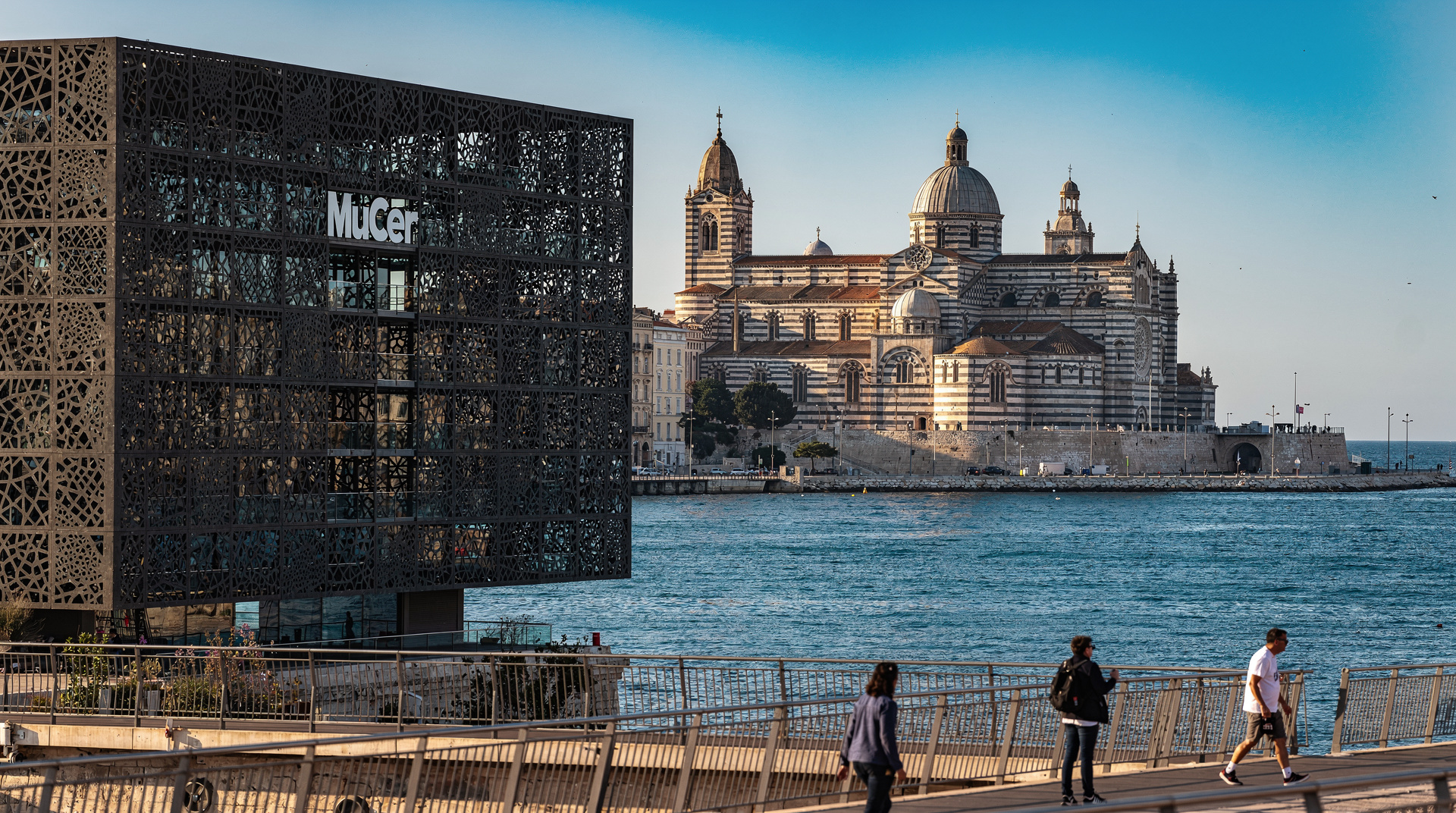
A full-scale facsimile of the original Cosquer prehistoric cave, now 37 metres underwater off Cap Morgiou. Located at Villa Méditerranée next to MuCEM. EUR 18 adult, 2-hour visit. Genuinely impressive — book well in advance, especially July–August when it sells out weeks ahead.
A cave that exists twice: the original and its facsimile
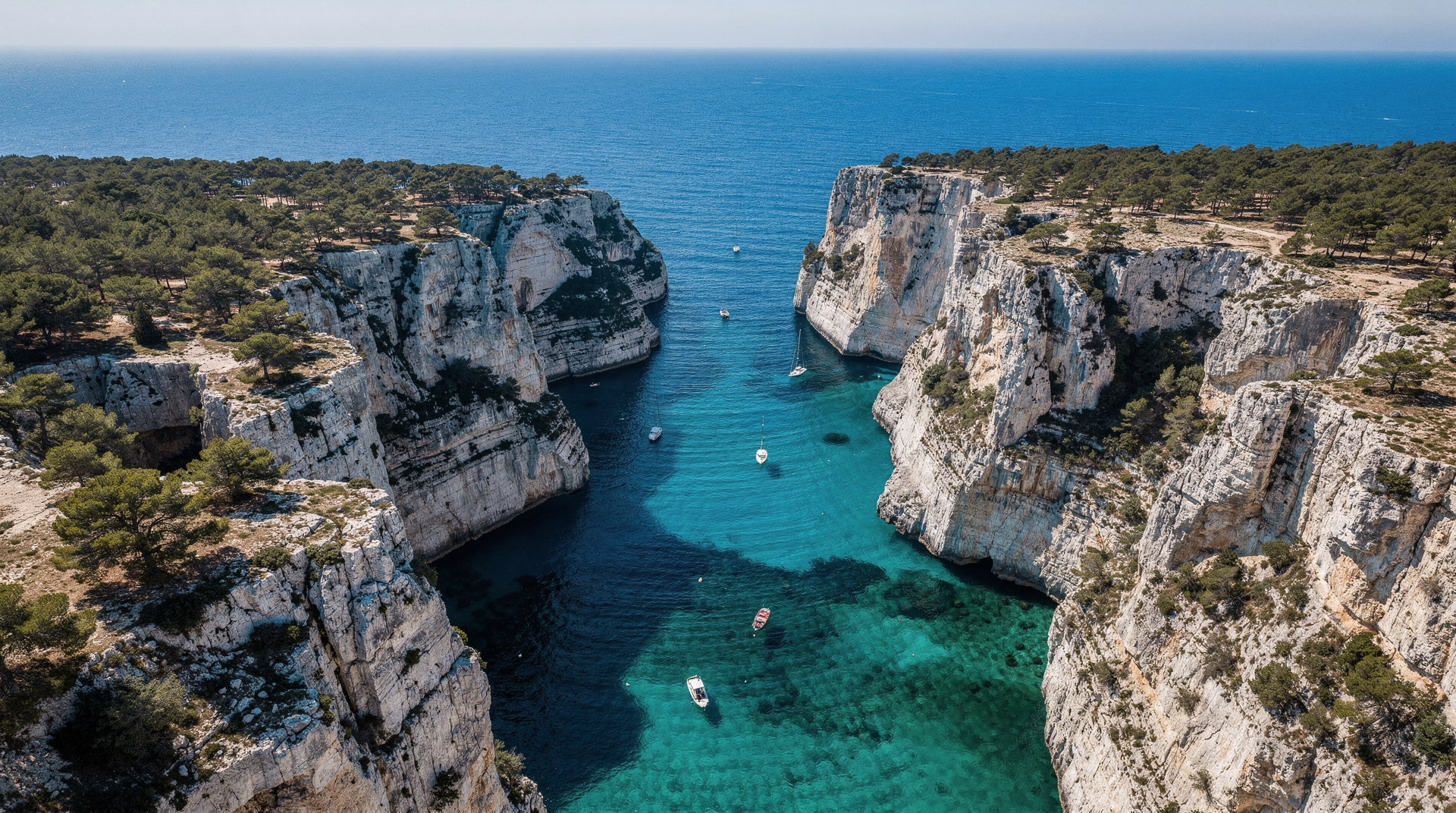
In 1985, diver Henri Cosquer was exploring the underwater cliffs of the Cap Morgiou headland — part of the Calanques coast east of Marseille — when he found a narrow underwater tunnel leading into the rock. He followed it for 175 metres, ascending through the flooded passage, and emerged into an air-filled cave system decorated with paintings and engravings that had been sealed from the surface since the last ice age ended roughly 10,000 years ago.
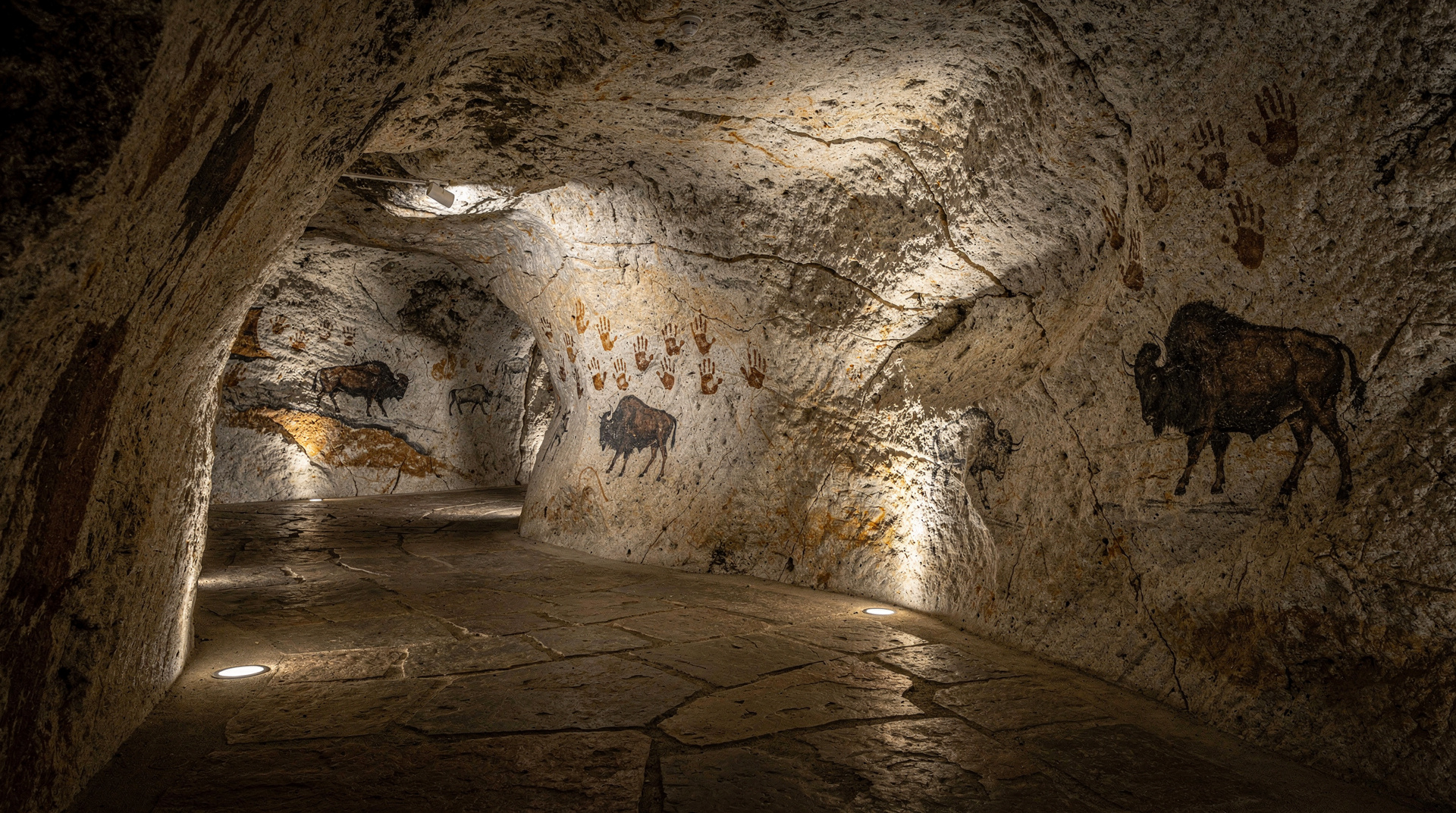
The Cosquer Cave contains some of the oldest cave art in the world: around 500 paintings and engravings made approximately 27,000 years ago — horses, bison, ibex, deer, woolly rhinoceroses, auks, and dozens of hand stencils made by pressing a hand against the rock wall and blowing ochre around it. The original site is one of the most significant Paleolithic art locations in existence.
It is also completely inaccessible to visitors. The cave entrance is 37 metres below sea level; the 175-metre flooded tunnel passage that leads to the air-filled chamber can only be navigated by experienced divers. Three divers died attempting the passage in the 1990s. The original Cosquer Cave is a heritage site protected by its own inaccessibility.
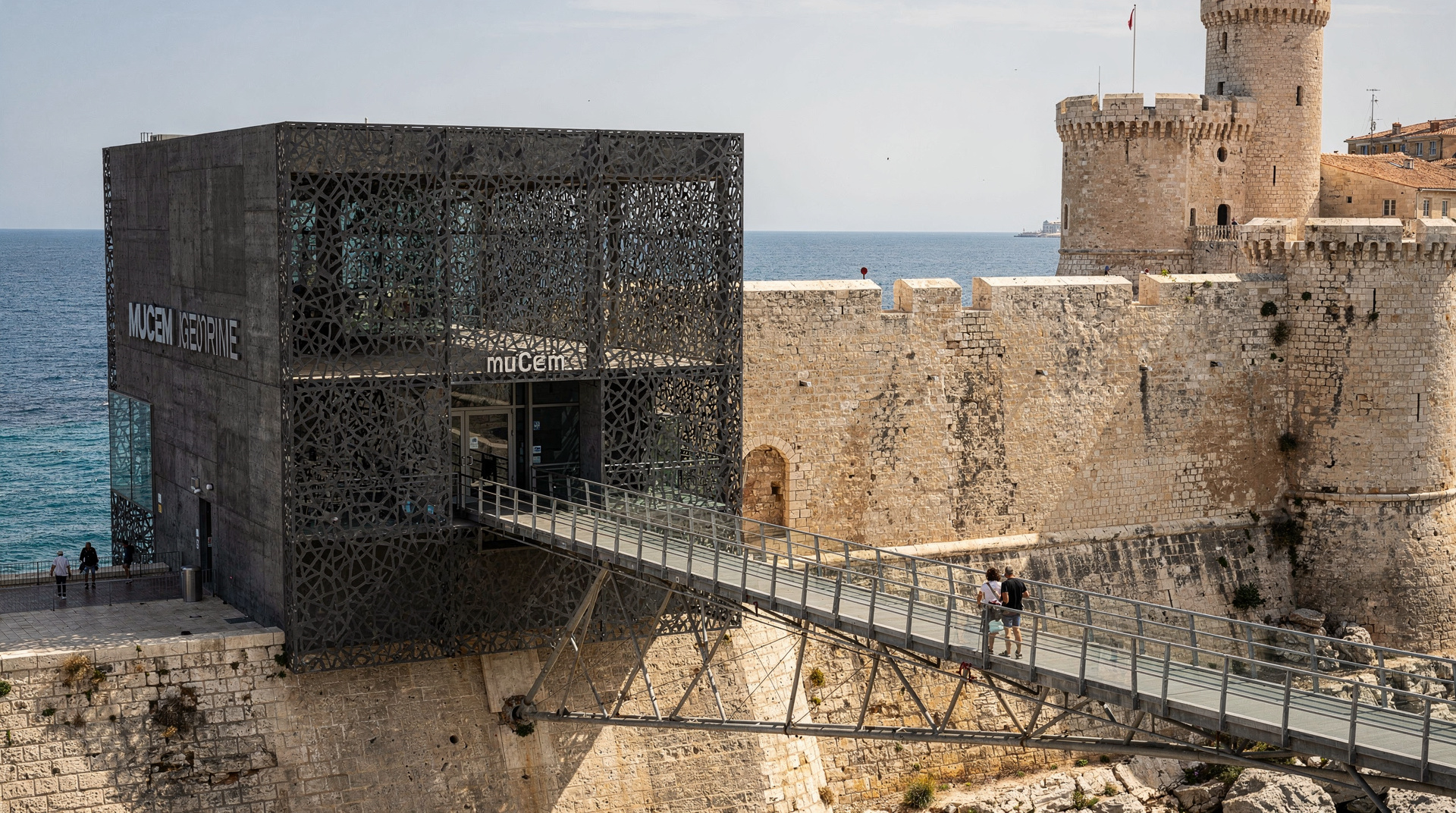
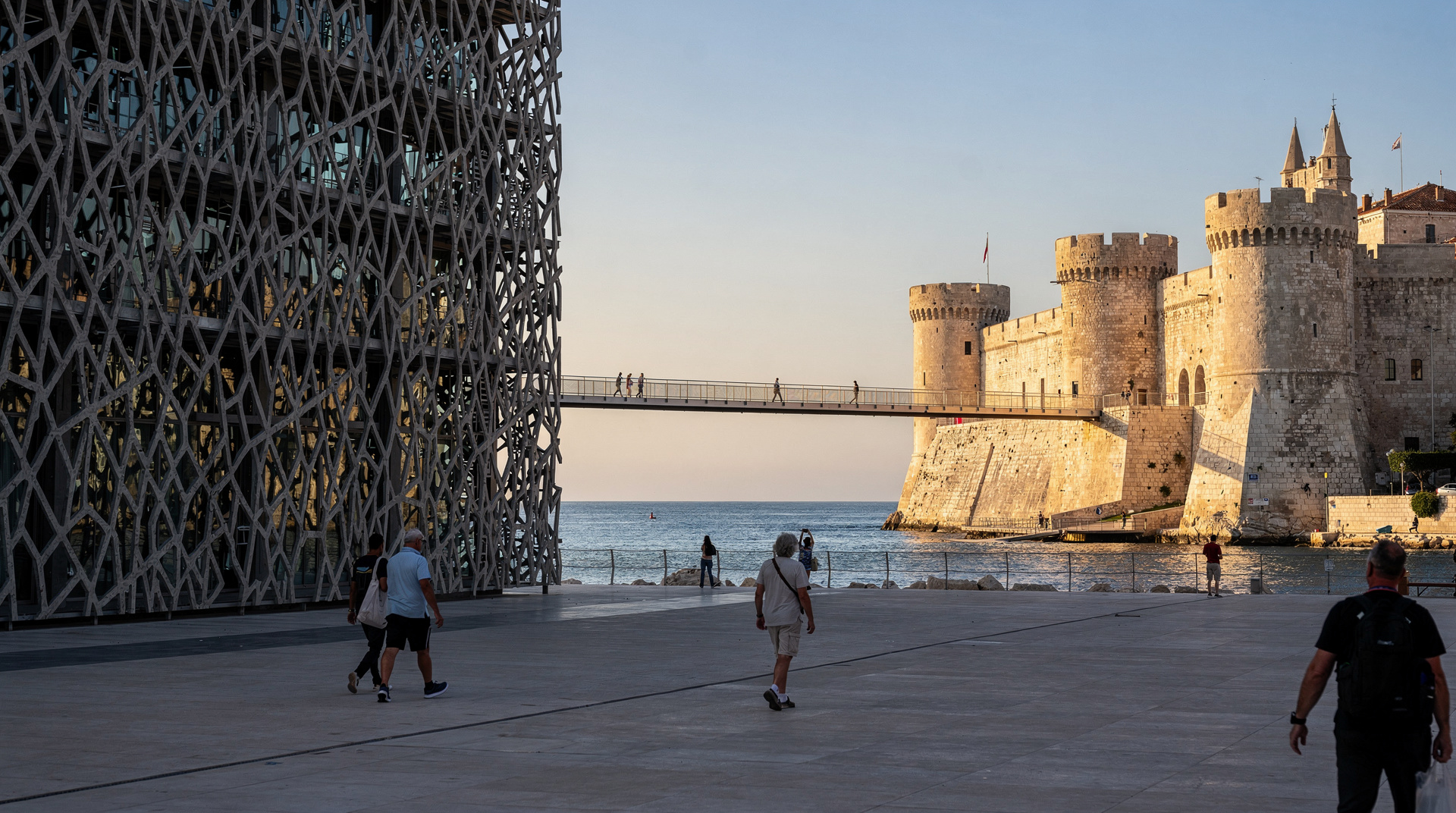
The Cosquer Méditerranée at the Villa Méditerranée on Marseille’s J4 waterfront is the full-scale answer to that inaccessibility: a facsimile of the cave built to the original’s dimensions, containing reproductions of 500 paintings and engravings with the same spacing, scale, and relationship to the rock surfaces as the originals.
| At a glance | |
|---|---|
| Where | Villa Méditerranée, J4 esplanade, next to MuCEM |
| Cost | Around EUR 18 adult, EUR 11 ages 10–17, EUR 6 ages 6–9, free under 6 |
| Time needed | Around 2 hours including the introductory exhibition |
| Getting there | Walkable from the Vieux-Port along the J4 waterfront; also reachable by tram/bus to Joliette |
| Best time | Morning slot (9:30 opening); book well ahead in July–August |
The visit experience
The Cosquer Méditerranée visit opens with an introductory section that explains the cave’s discovery, the archaeology of the Paleolithic occupation, and the significance of the art. This section is well designed and contextually rich — understanding what you are about to see makes the cave itself considerably more meaningful.
The cave replica occupies a large subterranean space beneath the Villa Méditerranée building. The reproduction uses photogrammetric scanning of the original cave surfaces to achieve dimensional accuracy; the rock textures, the ceiling curves, the relationships between painted surfaces, and the topography of the original are faithfully reproduced at full scale.
Walking through the cave with an audioguide, you encounter:
The hand stencils: Dozens of negative hand prints — the oldest and most universal form of human mark-making — created by individuals who placed their hand against the rock and blew pigment around it. Some are clustered in groups; one section has stencils of a hand with a missing finger joint. These are not decorations. They are identity marks, signatures across 27 millennia.
The horse frieze: A sequence of horses depicted with the assured, economical line quality characteristic of Paleolithic art at its best — suggesting movement, weight, and individuality despite the medium of rock and mineral pigment.
The great auks: The Cosquer Cave is unusual for its prominent depictions of auks — large flightless seabirds that are now extinct. At the time the paintings were made, the cave entrance was above sea level (the Mediterranean was much lower during the last glacial maximum) and the site would have been a coastal headland. The auks would have been part of the visible fauna of that coast.
The bison and ibex: The large herbivore depictions show the same technical confidence as the horses — a consistent and skilled artistic tradition rather than the naive mark-making sometimes assumed.
The underwater simulation: One section of the visit uses projection to represent the flooding of the cave entrance — the process by which rising sea levels after the last ice age submerged the original entrance and preserved the cave in its current state.
The visit lasts approximately 2 hours including the introductory exhibition.
Practical information
Entry prices (2026): EUR 18 adult (18+), EUR 11 ages 10–17, EUR 6 ages 6–9, free under 6.
Opening hours: Daily 9:30–18:00 on weekdays outside school holidays; 9:30–19:30 on weekends, public holidays, and during school holiday periods.
Booking: Essential in July and August, where the site can sell out 2–3 weeks in advance. Strongly recommended throughout the spring and autumn high season. The GYG ticket (linked above) allows advance booking and confirms your entry slot. Do not plan to arrive without a booking during peak months.
Location: Villa Méditerranée, immediately adjacent to MuCEM on the J4 esplanade. The approach is from the same J4 esplanade used to access MuCEM — La Major and the Fort Saint-Jean are within a 5-minute walk.
Duration: Budget 2 hours. The audioguide is included in the ticket price (available in 6 languages).
The original Cosquer Cave: background for understanding the replica
To appreciate what the Cosquer Méditerranée represents, it helps to understand the geological story behind the original.
During the last glacial maximum — approximately 25,000–19,000 years ago — global sea levels were roughly 120 metres lower than today. The Mediterranean coastline was considerably further south than the current shoreline; the Cap Morgiou headland was not a coastal cliff but an inland hill, and the cave would have been accessible from the surface at approximately 37 metres above the waterline.
The artists who decorated the cave worked at a site that was above sea level, possibly near the coast but not immediately at it. As the last ice age ended and global temperatures rose from around 18,000 years ago, sea levels rose correspondingly. By approximately 10,000 years ago, the entrance to the cave was submerged, sealing its contents in the almost perfectly stable conditions of an underwater cave — constant temperature, humidity, and absence of atmospheric oxygen that has preserved the pigments for 27 millennia.
The three Paleolithic artists who left hand stencils with a missing finger joint — a feature visible in the replica — were individuals whose names are gone, whose language is gone, whose world is gone, but whose presence is legible in the wall of the cave in a way that nothing else in 27,000 years has erased.
The facsimile technology: how the replica was built
The Cosquer Méditerranée replica is not a simplified or stylised version of the original — it is a full-scale dimensional reproduction using data collected by photogrammetric scanning of the actual cave during specialist diving expeditions. Teams of archaeologist-divers documented every surface of the accessible cave interior, generating three-dimensional point clouds of the rock surfaces that were then used to recreate the cave’s topography in concrete and pigmented resin.
The process took several years. The replica’s ceiling curves, wall textures, floor irregularities, and the relationship between painted surfaces and the rock formations they are placed on are reproduced to centimetre precision. The pigmented reproductions of the paintings use the same mineral pigments (ochre, manganese dioxide for the black figures) as the originals, applied to match the texture and depth of the original application as closely as modern analytical data allows.
What you walk through is not a model or an impression. It is a scientifically accurate spatial reproduction — a technology that has been used for the Chauvet Cave replica in the Ardèche (the Caverne du Pont d’Arc, opened 2015) and for the Lascaux IV replica in the Dordogne. The Cosquer Méditerranée is the most recent and uses improved scanning and fabrication technology.
What makes the Cosquer Cave scientifically exceptional
The Cosquer Cave occupies a specific and important position in the archaeology of prehistoric art for several reasons beyond its age:
The auk depictions: Alcids — flightless seabirds of the type extinct since the 19th century — are rare in prehistoric art. Cosquer has more auk depictions than any other known cave site, which tells archaeologists something about the fauna of the coastal environment accessible from the site 27,000 years ago.
The hand stencils with missing finger joints: Several of the negative hand prints in the cave were made by individuals who appear to be missing one or more finger joints. Similar anomalous hand stencils appear in other prehistoric cave art sites, and their interpretation is debated: deliberate amputation as ritual practice, disease or injury, or a convention of hand positioning. The Cosquer examples are among the clearest instances of this phenomenon.
The co-existence of two stylistic periods: Archaeological analysis has identified two distinct periods of artistic occupation — the oldest paintings dating from approximately 27,000 years ago (Gravettian culture) and a second phase from approximately 19,000 years ago (Solutrean culture). The different styles are identifiable in the replica and explained in the audioguide.
The context of rising sea levels: The fact that the original cave entrance is 37 metres underwater is not merely a visitor access problem. It is a direct physical record of climate change: the cave entrance was above sea level when the art was made; it is now underwater because the global climate changed, ice sheets melted, and sea levels rose approximately 120 metres over the following 17,000 years. The Cosquer Cave is, among other things, a document of what happens to human habitation sites when sea levels change — a fact with present-day resonance.
Frequently asked questions about Cosquer Méditerranée
Is the Cosquer Méditerranée suitable for children?
Yes, generally — the audioguide and visual scale of the cave hold the attention of most children aged 7 and up, and the underwater flooding simulation is a highlight for younger visitors. Very young children may find the low light and enclosed cave setting less engaging; the 2-hour duration is also worth weighing against a young child’s attention span.
Can I see the real Cosquer Cave?
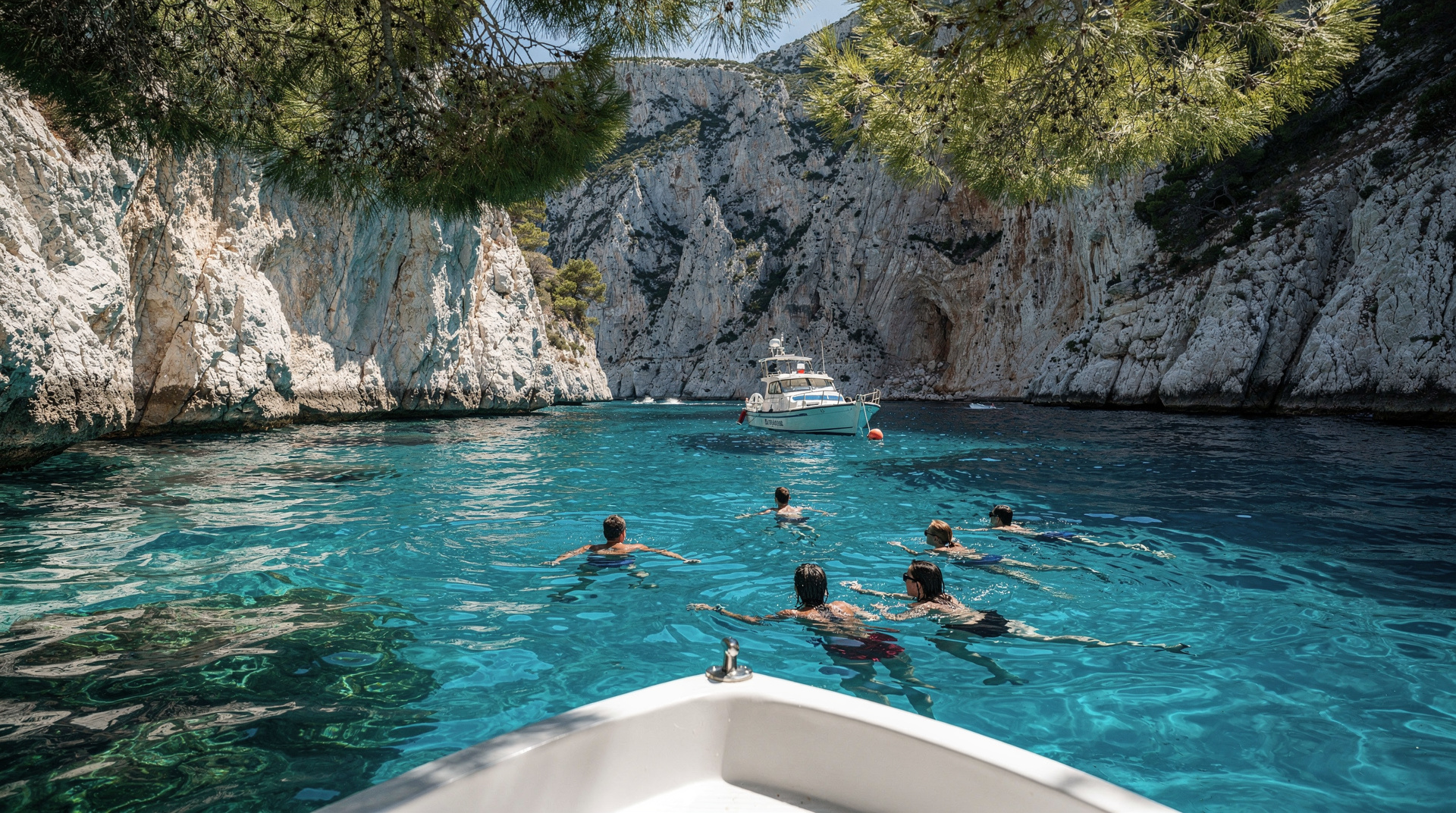
No. The original cave entrance is 37 metres underwater off Cap Morgiou, reached via a 175-metre flooded tunnel that has caused fatalities among the small number of trained divers who have attempted it. It is not open to the public in any form, and the Cosquer Méditerranée facsimile is the only way to experience the cave’s interior. Boat tours that pass the Cap Morgiou coastline, such as those covered in our Calanques boat tour guide, sail near the site but the entrance itself is invisible from the surface.
Combining Cosquer Méditerranée with MuCEM
Both sites are on the J4 esplanade, 200 metres apart, and both deal with Mediterranean civilisations — MuCEM at the historical and contemporary end, Cosquer at the prehistoric end. They are complementary rather than redundant.
However: doing both in a single day is genuinely demanding. MuCEM alone deserves 2–3 hours of serious engagement; Cosquer Méditerranée is 2 hours. A combined 4–5-hour cultural morning is viable but tiring. Most visitors do better to dedicate separate half-days to each, or to do Cosquer Méditerranée in the morning (beginning at 9:30 when it opens) and MuCEM in the afternoon.
The visit sequence that uses the J4 waterfront architecture as a thread works well: arrive at the esplanade at 9:30, visit La Major cathedral (30 minutes, free), then Cosquer Méditerranée (2 hours), walk the esplanade past the FRAC building, visit the MuCEM exterior and Fort Saint-Jean gardens (1 hour, free), and go inside MuCEM the following morning. This spreads the density appropriately.
Fitting the visit into a wider Marseille trip
Cosquer Méditerranée sits naturally in a first visit built around the waterfront. If you are still deciding how long to stay, our guide on how many days in Marseille helps you see where a half-day indoors fits, and the Marseille for first-timers page covers the other essentials you will want to pair with it.
Short on time? The Marseille in one day itinerary and the two-day plan both pass through the Vieux-Port and the J4 area, so you can swap an outdoor stop for the cave when the weather turns. A cave visit is also a good answer to a hot or wet day: see our notes on Marseille in summer for why a cool, shaded indoor slot is welcome, and Marseille in winter for the quieter months when it is easier to book.
Getting to the esplanade is simple. The Vieux-Port area guide shows how the old harbour connects to the J4 waterfront on foot, and the Marseille metro guide explains the public transport options if you would rather ride than walk. For other ways to move around the city, see getting around Marseille.
Pairing the cave with the Calanques and the old town
The cave replica is also a good primer before you head out to the coast it came from. Once you have seen the painted walls, the Calanques boat vs hike comparison helps you choose how to see the headland above the original site, and which Calanque to visit narrows down the stop that suits you. Families who want to continue the day outdoors can look at kid-friendly Calanques, and anyone thinking about the wider landscape will enjoy the Marseille history guide for the long story behind the port.
For something to eat after the visit, the best restaurants in Marseille and the Le Panier guide are both a short walk or ride from the waterfront, while the Marseille with kids page collects more ideas if children are with you.
Why this is one of the most intellectually significant visitor experiences in Marseille
The Cosquer Méditerranée is not a theme park attraction or a tourist spectacle. It is a serious attempt to communicate one of the most remarkable facts about the place you are standing: that the coastline you can see from the J4 esplanade was, 27,000 years ago, home to humans sophisticated enough to make paintings whose aesthetic quality still commands attention, skilled enough to work in ochre and charcoal on rock surfaces, and — in their hand stencils — motivated to leave a mark of presence that neither they nor anyone else could have known would survive for millennia.
The replica cannot replicate the original — the original is irreplaceable, sealed in its underwater chamber, accessible only to the small group of authorised researchers who dive to it. What the replica does is bring the spatial and aesthetic experience of the cave within reach, with the accuracy of modern scanning technology, for visitors who will never make that dive.
For the connection between the Calanques coastline (where the original Cosquer Cave is located) and the rest of the Marseille landscape, see our Calanques National Park guide. For the broader museum context of this visit in Marseille, see our museums guide. For the wider Cap Morgiou area by boat, see our Calanques boat tour guide, and for the district around the J4 esplanade, see our Marseille destination guide.
Top experiences
Bookable activities with verified prices and instant confirmation on GetYourGuide.