Fontaine-de-Vaucluse
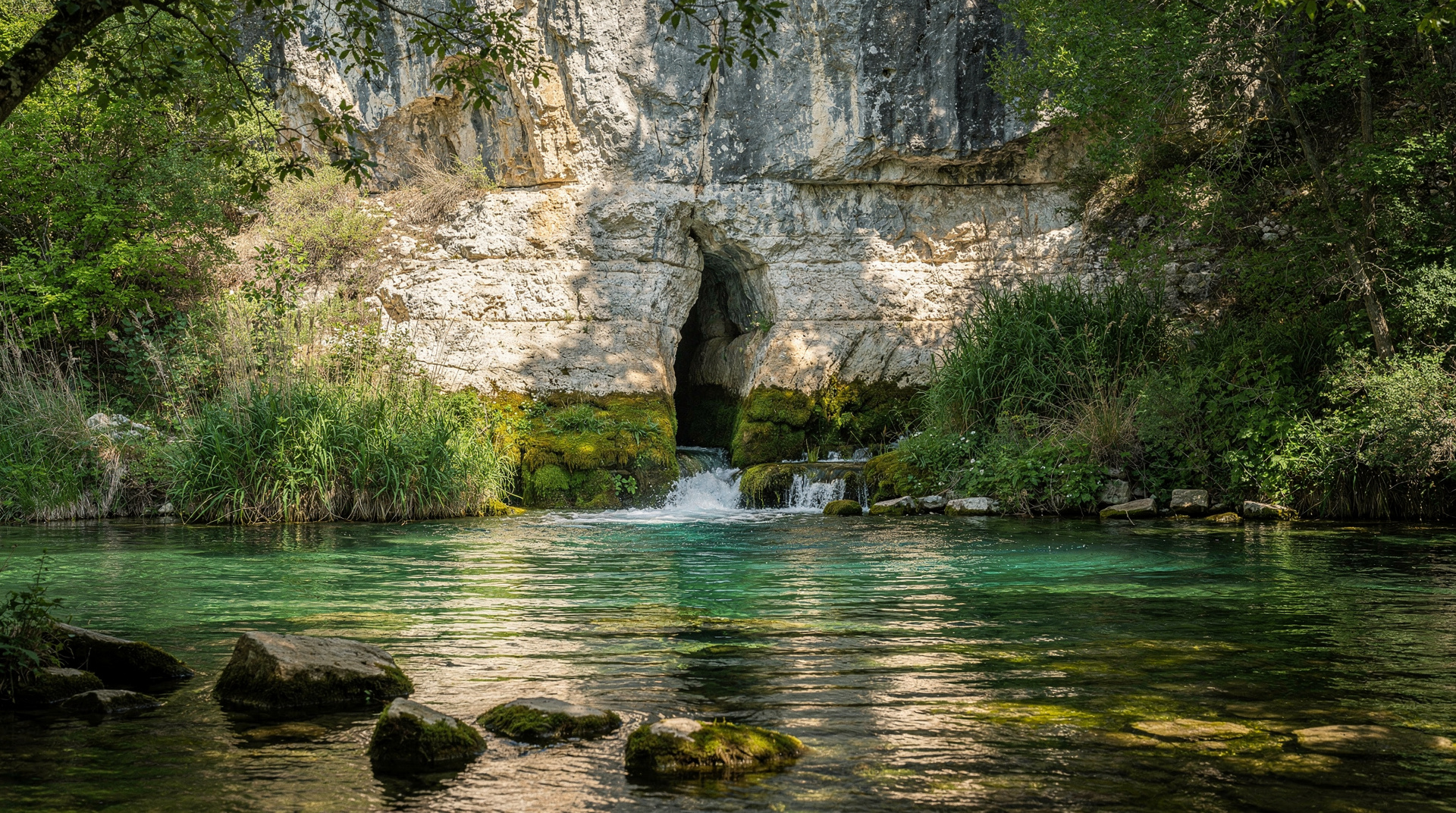
Fontaine-de-Vaucluse is France's most powerful spring — an emerald pool at the foot of a 200 m cliff. Visit in winter or spring for the full surge effect.
From Avignon: private walking tour from Gordes to Sénanque
Quick facts
- From Gordes
- ~20 km northwest; 25 min by car
- From Aix-en-Provence
- ~50 km north; 1 h by car via Pertuis and Pertuis
- Spring surge
- February–April is peak flow; summer often reduced to a trickle
- Petrarch
- The poet lived here 1337–1353; museum at the site of his house
- Paper mill museum
- Free to enter; demonstrates medieval paper production techniques
France’s most powerful spring
At the base of a 200-metre vertical cliff, a natural cave opens at water level and from it emerges the Sorgue river — the fifth largest natural spring in the world and the most powerful in France, with an annual average flow of 630 million cubic metres. The cliff and its pool constitute one of the more geologically dramatic natural sites in Provence, and one that is almost entirely dependent on timing for whether you experience it as extraordinary or merely interesting.
| At a glance | |
|---|---|
| Where | Northern Luberon, ~20 km from Gordes, ~35 km east of Avignon |
| Cost | Free to walk to the spring; paper mill free; Petrarch museum around EUR 4–5 |
| Time needed | 2–3 hours including the walk from the car park |
| Getting there | Car only — no rail, limited buses; organised day tours from Avignon also stop here |
| Best time | February–May for the spring surge; avoid July–August if the surge matters to you |
The honest entry for any Fontaine-de-Vaucluse guide: come in winter or spring. The summer version of this natural spectacle is often underwhelming.
The spring: what happens when
The Fontaine de Vaucluse is a vauclusian spring — one fed by rainwater that percolates through a vast karst limestone plateau (the Massif de Vaucluse) over many months and eventually resurges at a single point under enormous pressure. The plateau above collects water across approximately 1,200 square kilometres of terrain. What emerges at Fontaine-de-Vaucluse is the accumulated drainage of an entire limestone massif.
Winter and spring (February–May): This is when the spring surges. After autumn and winter rains have recharged the aquifer, the pressure at the resurgence point increases dramatically and the pool fills to the cliff’s lower section, sometimes spilling over in a spectacular rush of green-white water. March and early April are typically the peak flow months. The water colour at full surge is an intense turquoise-green from dissolved minerals.
Summer (June–August): The aquifer depletes after a dry spring and the spring reduces dramatically, sometimes to a trickle through rocks at the base of the cliff. The pool remains, but instead of a natural wonder, it is a shaded rocky basin in a dry cliff. Visitor numbers are at their highest in summer; the spectacle is at its lowest.
Autumn (September–November): The first significant rains begin recharging the aquifer, and by October–November the spring begins surging again, sometimes dramatically. Autumn visits avoid the summer crowds and can deliver the full visual experience.
The practical conclusion: if you are visiting Provence in July or August, Fontaine-de-Vaucluse is low on the priority list. If you are visiting in spring or late autumn, it moves up considerably.
Seasonality at a glance
| Season | Spring flow | Crowds | Verdict |
|---|---|---|---|
| Feb–May | Peak surge, turquoise-green rush | Moderate, rising toward May | Best months to visit |
| Jun–Aug | Often reduced to a trickle | Highest of the year | Lowest priority in Provence in summer |
| Sep–Nov | Rains recharge the aquifer, surge returns | Low | Second-best window, quieter than spring |
| Dec–Jan | Building toward the surge | Very low | Atmospheric but cold; mill and museum hours reduced |
Petrarch at Fontaine-de-Vaucluse
The Italian poet Francesco Petrarca (Petrarch) lived at Fontaine-de-Vaucluse from 1337 to 1353, in the valley below the spring. His choice of this remote site was deliberate — it was far from the Avignon papal court where he spent much of his career, and the natural setting suited the solitary reflection his poetry required.
Here he wrote a substantial portion of the Canzoniere — the sonnets addressed to Laura, the woman he first saw in Avignon in 1327 and who is the central figure of his life’s work. The Sorgue river appears repeatedly in the poems as an emblem of his emotional state: turbulent when he is troubled, clear when he is at peace.
The museum at the site of Petrarch’s house presents the poet’s life and work in the context of the 14th-century Avignon papacy and the Renaissance intellectual culture he was part of. Open seasonally (May–September most days, reduced hours in shoulder season); entry around 4–5 EUR. The collection is modest but well-explained.
The village along the Sorgue
The walk from the village car park to the spring takes about 15–20 minutes along the Sorgue riverbank. The path passes between the two banks of what is essentially a gorge as you approach — the valley narrows, the cliff becomes visible above, and the sound of water increases if the spring is at good flow.
Along the path:
Paper mill (Moulin à Papier): A functioning reproduction of a medieval paper mill demonstrates how the waterwheel-powered mallets process linen and cotton fibres into the laid paper used in medieval manuscripts. Free to enter; demonstrations run regularly. The mill shop sells the hand-made paper produced here — a genuine if modest souvenir. Worth 20 minutes.
Column de la Liberté (Column of Liberty): A small monument marking the celebration of the French Revolution’s centenary in 1889. Of modest interest but marks the approach to the spring area.
Restaurant terraces: Several restaurants along the riverbank serve lunch with views over the Sorgue. The fish that inhabit the crystal-clear river (trout, primarily) occasionally appear on menus. Prices are moderate by tourist-site standards.
The spring pool at the base
The pool at the base of the cliff is where the spring emerges. The geology is striking regardless of season — the cliff wall is sheer, fractured limestone in grey and cream tones, and the pool is deep enough (the cave system extends at least 315 metres underground and has never been fully explored) to have an intense colour even in low flow conditions.
Summer reality check: In July and August, the pool may be reduced significantly. The cliff is still impressive; the spring itself less so. If you have driven specifically for the natural spectacle, consider visiting in spring.
Safety: The pool edge is rocky and the surrounding vegetation is slippery when wet. Do not attempt to access the cave entrance (which is underwater in high-flow periods and blocked by collapsed rock at other times). Several exploration attempts by cave divers in the 20th century explored down to 315 metres without reaching the bottom.
Combining with other Luberon sites
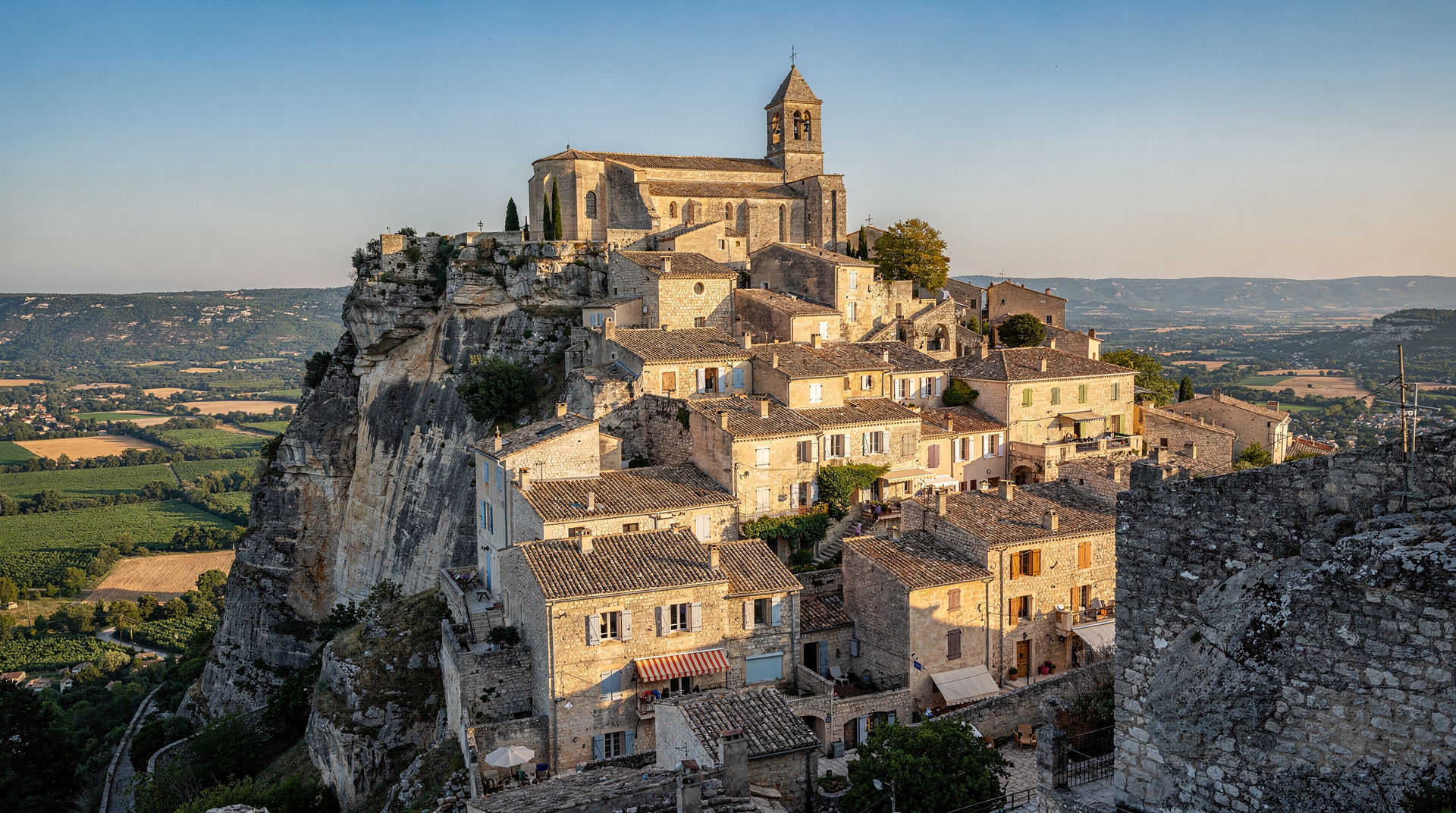
Fontaine-de-Vaucluse + Gordes + Sénanque: The classic northern loop. Fontaine-de-Vaucluse and Gordes are 20 km apart; Sénanque is 3 km from Gordes. A morning at Fontaine-de-Vaucluse and an afternoon at Gordes (with a Sénanque detour) works as a full day from Avignon or as an extension of a north Luberon Marseille day trip.
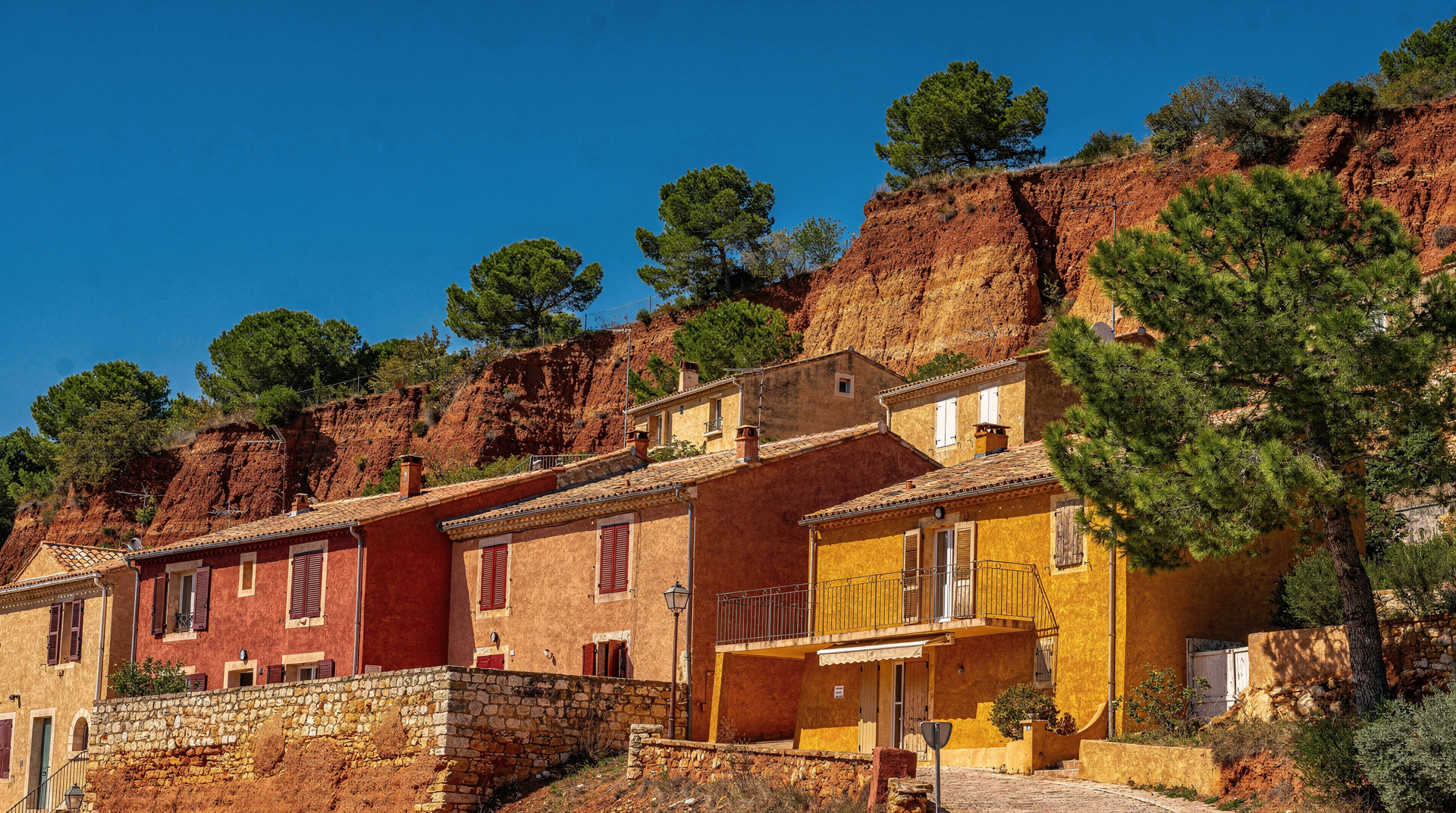
Fontaine-de-Vaucluse + Roussillon: 25 km and 30 minutes apart. A half-day combination with the ochre trail in the afternoon and the spring in the morning gives the best light at both sites (morning at Fontaine-de-Vaucluse, afternoon at the Sentier des Ocres). See the Roussillon guide.
From Avignon as a day trip: The spring is 30 km east of Avignon by car (30–40 minutes). Day tours from Avignon that include Gordes often pass through Fontaine-de-Vaucluse as a stop. See the organised tour options.
Building a day around the spring
Fontaine-de-Vaucluse rewards a slow, unhurried visit more than a rushed one. Arrive early if you can: the path along the river is at its most atmospheric when few people are on it, and the sound of the water carries further in the quiet of the morning. Take your time at the pool itself, then walk back along the riverbank at a gentler pace, stopping at the paper mill and one of the terraces. Lunch beside the Sorgue is part of what makes the stop feel like more than a quick photograph.
Because the village is small, it pairs naturally with something larger. Many travellers use it as a calm morning before the busier villages of the Luberon. The Luberon villages day trip guide shows how the stops fit together, and the Luberon destination page gives the wider geography. If you prefer to see a hilltop village the same day, Gordes is the obvious neighbour, while Ménerbes and Lourmarin suit a longer loop for those with a car and a free day.
Choosing the right season for your trip
Because the spring depends so heavily on rainfall, it helps to think about Fontaine-de-Vaucluse when you plan the rest of your stay, not after. Our best time to visit Marseille guide explains how the seasons shape the whole region, and the same logic applies here. Spring visitors can read Marseille in spring to see what else is at its best at the same moment, while anyone travelling in the hottest months should read Marseille in summer and keep this stop for another trip.
If lavender is the reason you are in Provence, remember that its season and the strongest flow of the spring do not coincide. The lavender season in Provence guide and the lavender fields day trip are better built around the summer, and this spring is better built around the cooler months. Trying to cover both in one visit usually means one of them disappoints.
Practical advice before you go
Wear shoes with a decent grip. The path is easy, but the stones near the pool are polished by water and by countless footsteps, and they can be slick even on a dry day. Bring a light layer: the cliff shades the pool and the air beside the water feels cooler than in the village. A camera helps, but the best views of the cliff and the pool come from simply standing still for a while and letting your eyes adjust to the colour of the water.
If you are driving from the coast, the wider question of whether a car is worth it is covered in do you need a car in Provence. Travellers without one can start from Avignon and read the Avignon day trip guide to see how to organise the rest of the day. For the long haul from the coast, the day trips from Marseille overview helps you weigh this against closer options.
Where it fits in a longer Provence trip
This destination is rarely the centrepiece of an itinerary, and that is fine. It works best as a quiet chapter between larger ones. The Marseille and Provence five-day itinerary and the Provence road trip itinerary both give you the sort of rhythm in which a spring and a village stop make sense. For a very different pace, see Aix-en-Provence, which many visitors use as a base before heading north.
Getting there
By car from Gordes: 20 km northwest on the D2 and D25. About 25 minutes.
By car from Avignon: 30 km east on the D900/D25. Around 35–40 minutes.
By car from Aix-en-Provence: Roughly 50 km via Pertuis and Cadenet, approximately 1 hour.
No public transport: Fontaine-de-Vaucluse has no rail connection and bus service from nearby towns is limited. Car or organised tour is the practical approach.
Parking: A large car park at the village entrance is the standard approach. In July–August this fills rapidly; out of season it is manageable. The walk from the car park to the spring is part of the experience regardless.
For the full Luberon context, see the Luberon guide. For Gordes and Sénanque, see the Gordes guide. For a planning route combining the spring with the ochre trail, see the Roussillon guide. The Luberon day trip guide covers the full northern and southern Luberon circuit from Marseille.
Is it worth a special trip from Marseille?
Fontaine-de-Vaucluse is roughly 90 minutes from Marseille by car, which makes it a long round trip for a single natural feature — even a spectacular one. It works far better as part of a wider Luberon day, combined with Gordes or the Aix-en-Provence route north, than as a standalone destination. Travellers without a car should look at organised day tours from Avignon, since public transport does not reach the village.
Frequently asked questions about Fontaine-de-Vaucluse
Is Fontaine-de-Vaucluse worth visiting in summer?
Only partially. The village, the paper mill, and the cliff are still worth seeing, but the spring itself is often reduced to a trickle by June, which is the main draw for most visitors. If your Provence trip is fixed for summer, treat this as a minor stop rather than a priority.
How long does the walk from the car park to the spring take?
About 15–20 minutes each way along the Sorgue riverbank, passing the paper mill and small monuments on the way. The path is flat and easy, suitable for most fitness levels.
Top experiences
Bookable activities with verified prices and instant confirmation on GetYourGuide.