Côte Bleue
The Côte Bleue is Marseille's quieter coast to the west — a marine reserve, train-accessible coves, Niolon harbour.
Marseille: Côte Bleue marine park 4-hour boat cruise
Duration: 3.5 hours
Quick facts
- Train from Marseille
- TER toward Miramas; Carry-le-Rouet ~35 min, Niolon ~25 min
- Marine reserve
- Two protected zones: Carry-le-Rouet (85 ha) and Cap-Couronne (210 ha)
- Snorkelling
- Free guided snorkel sessions at Carry-le-Rouet marine reserve in July–August (book ahead)
- Crowds
- Significantly lighter than Calanques in summer; still busy July–August
- Car or train
- Train works well for Carry-le-Rouet and Niolon; car needed for Cap-Couronne
West of Marseille: the coast people skip
Most visitors approach Marseille’s coastline by heading east — toward the Calanques, Cassis, and Cap Canaille. The Côte Bleue goes the other way. Stretching roughly 30 km westward from the northern edge of Marseille toward Martigues, it is a coast of pine-shaded coves, small fishing ports, and protected marine waters that the majority of tourists never reach.
This is partly a geography problem: the Côte Bleue sits between the autoroute and the sea, accessible mainly by train or car, without the Instagram signature of the white Calanques cliffs. But that is exactly what makes it work as an alternative. In July and August, when the eastern Calanques are at peak capacity, the Côte Bleue offers something increasingly rare on the Mediterranean coast: a seat on the rocks with no queue.
At a glance
| Where | West of Marseille, stretching around 30 km toward Martigues |
| Cost | Train fare only; free guided snorkelling in July-August (book ahead) |
| Time needed | Half a day to one full day |
| Getting there | TER train toward Miramas from Marseille Saint-Charles |
| Best time | May-June and September-October |
The train de la Côte Bleue
The coastal train from Marseille Saint-Charles toward Miramas is one of the more enjoyable rail journeys in Provence — 32 km along the coast, with viaducts above the sea, station stops within walking distance of beaches, and views that improve every few kilometres as the city recedes.
Key stops and what they offer:
L’Estaque — The first stop west of Marseille’s centre, famous among art history readers as the village where Cézanne and Georges Braque painted in the early 20th century (Braque’s Cubist experiments with the Estaque geometry are the origin of the style). The port and old village retain their character despite being technically within Greater Marseille.
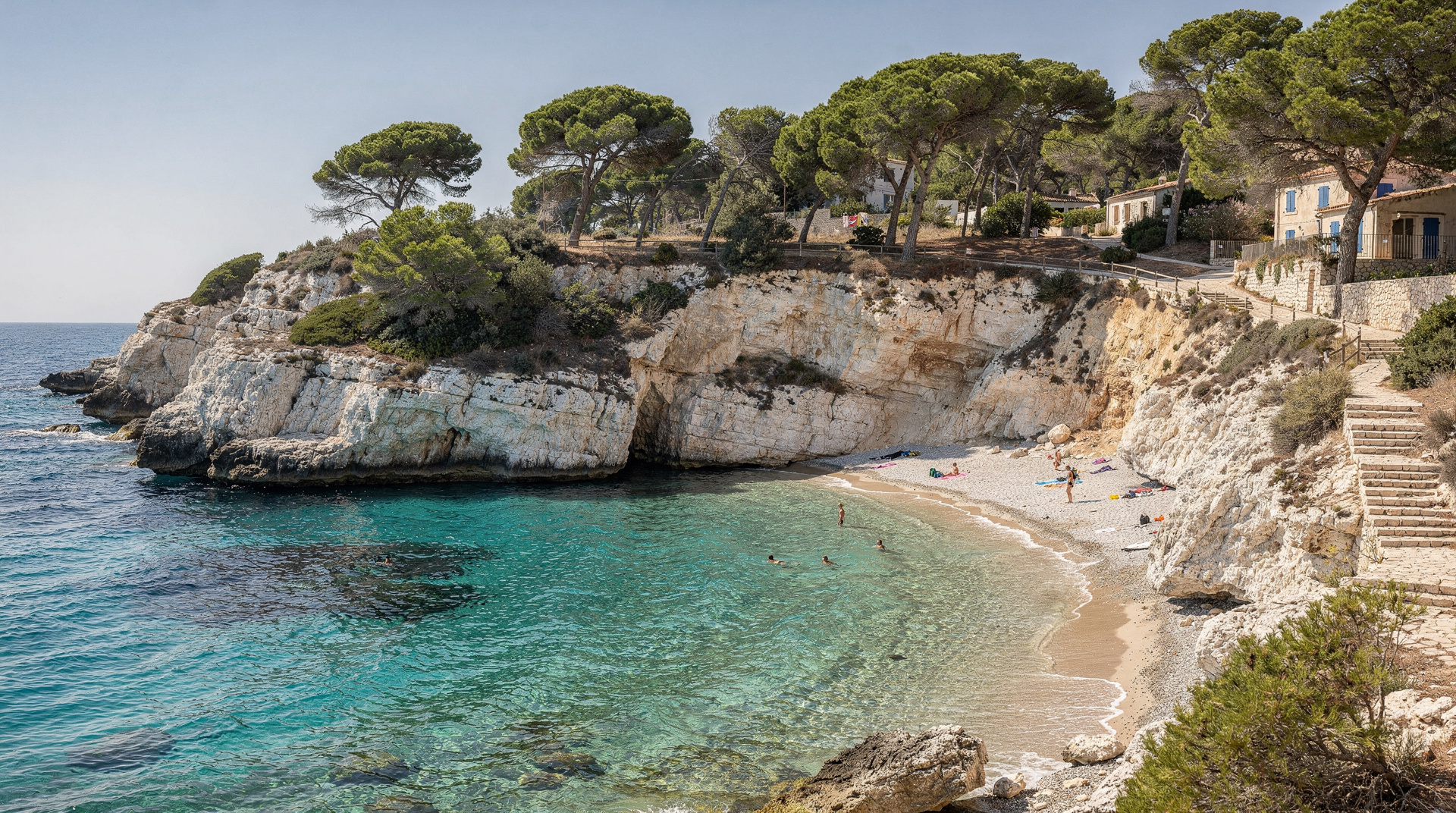
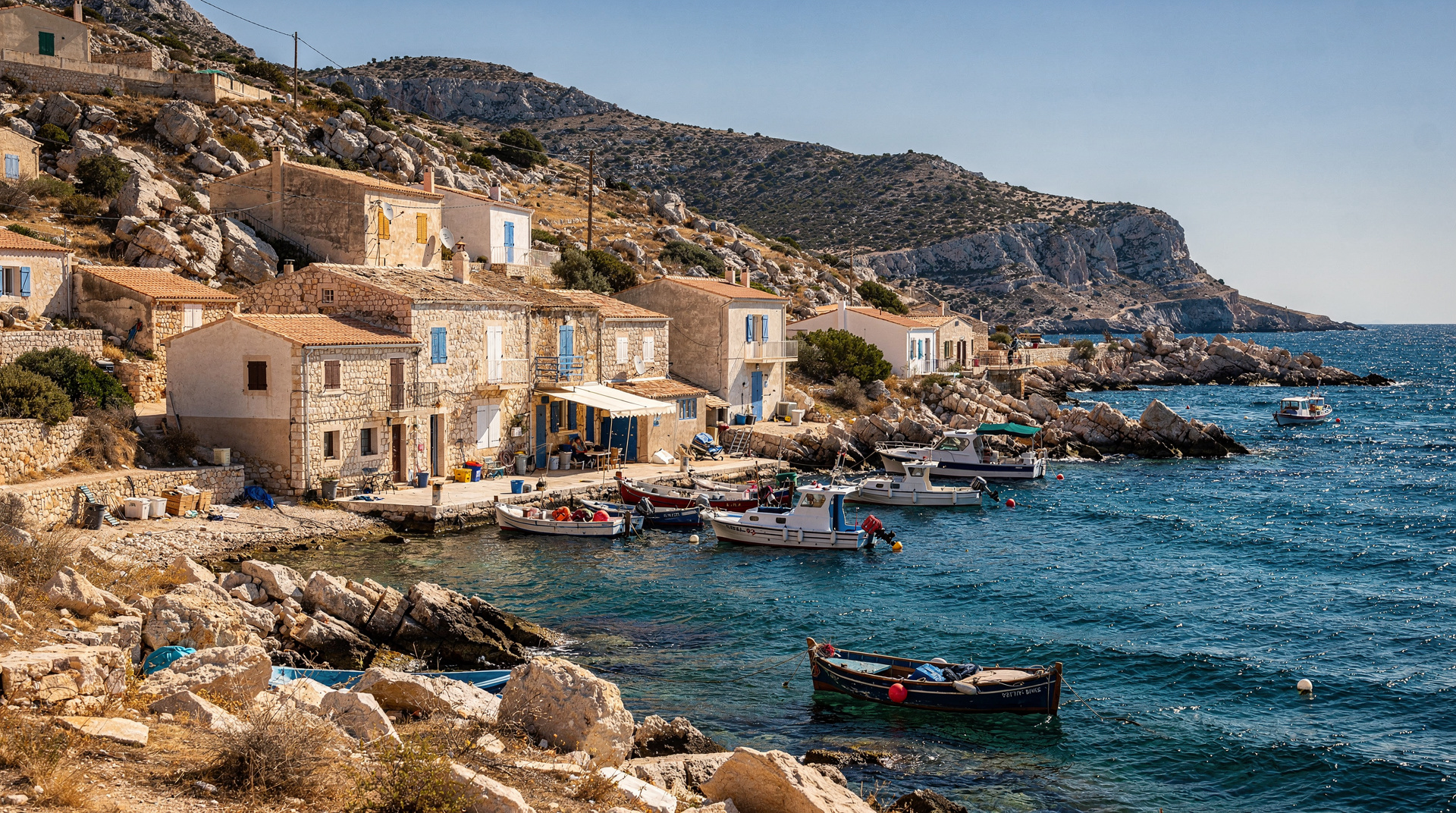
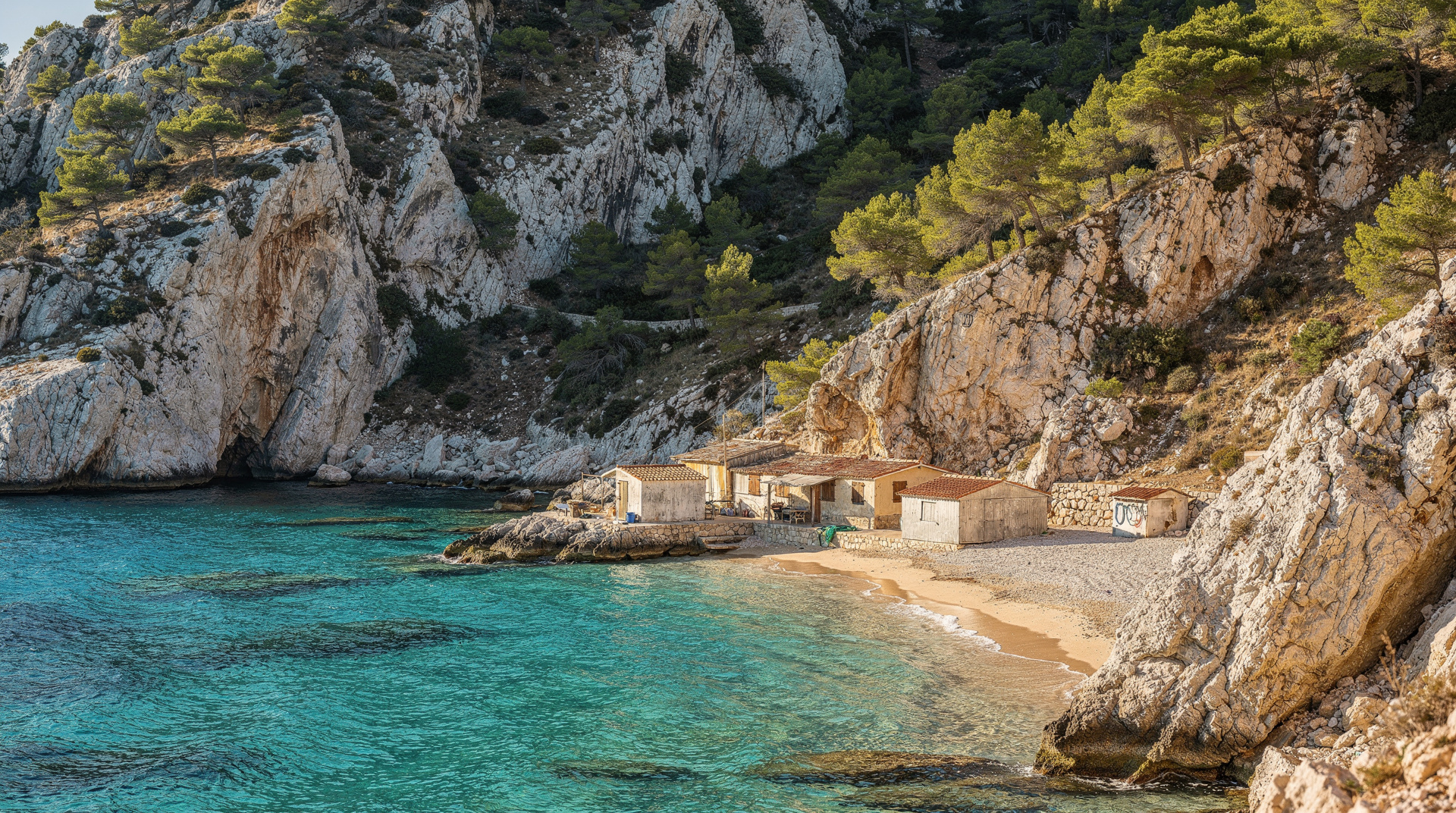
Niolon — A small harbour village that requires a 10-minute downhill walk from the station to the water. The village has a handful of restaurants and one of the Côte Bleue’s most photogenic coves: limestone cliffs, clear water, a small beach, and a diving centre that caters to both beginners and experienced divers. The return is uphill (all 10 minutes of it) but not seriously strenuous.
Carry-le-Rouet — The main town of the Côte Bleue, and the most logical base for a day visit. The station is a 5-minute walk from the port. The town has a proper market, several good restaurants, and direct access to the marine reserve. In summer, the port fills with pleasure boats and the beach gets busy — but the scale is entirely manageable compared to the Calanques.
Cap-Couronne — A headland with the second protected marine zone (210 hectares) and a lighthouse at the tip. Accessible by car from Carry-le-Rouet (about 10 minutes); the train does not serve this section.
The Côte Bleue marine reserve
The Parc Marin de la Côte Bleue manages two entirely protected marine zones where fishing, anchoring, and scuba diving are prohibited. The purpose is ecological regeneration — and it works. The underwater richness in these areas is significantly higher than the surrounding sea, making them among the best snorkelling spots accessible from Marseille.
Carry-le-Rouet reserve (85 hectares): The most accessible for visitors. The reserved zone runs along the coastline east of the port. You can snorkel here independently with mask and fins; the water is shallow enough in several sections to observe marine grass beds and the fish that shelter there.
Free guided snorkelling sessions: From July through August, the marine park organises free guided surface visits at the Carry-le-Rouet reserve — mask, snorkel, and a naturalist guide who explains what you are seeing. Booking is required through the Carry-le-Rouet tourist office. Places fill quickly; contact them at least a week ahead if you plan to be in the area in summer.
Cap-Couronne reserve (210 hectares): Larger and more remote, better suited to experienced snorkellers or divers who arrange access through the dive centres at Carry-le-Rouet or Niolon.
Kayaking the Côte Bleue
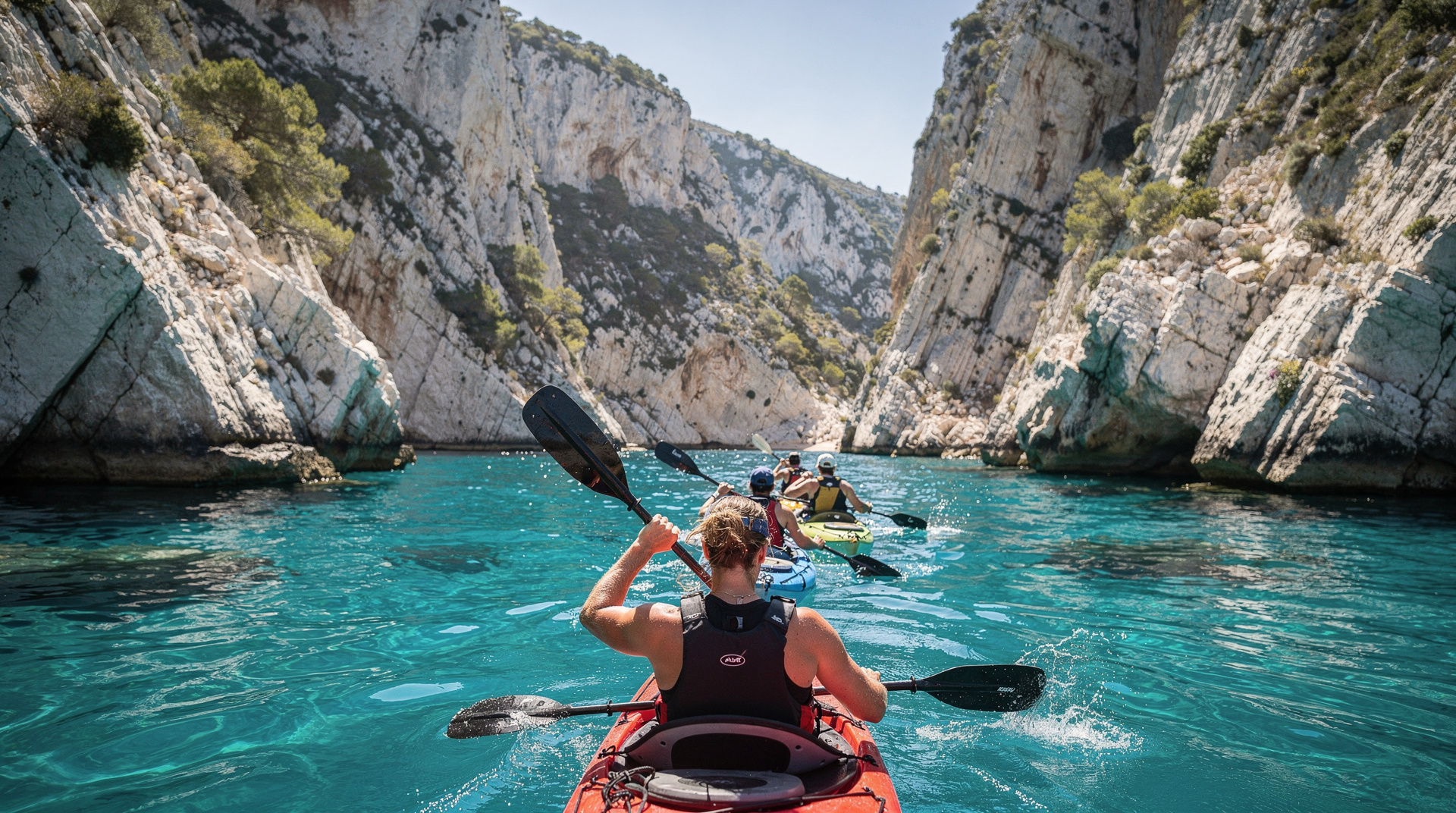
The limestone coves between Carry-le-Rouet and Niolon are excellent kayaking terrain — calm in most conditions, with enough variety in the cliff formations to make the paddling interesting. Guided kayak half-day tours operate from the Marseille side and can be booked as a structured excursion.
For independent kayakers, rental is available at Carry-le-Rouet. The route west from the port toward Cap-Couronne offers the most scenic paddling, with the lighthouse as a natural turnaround point. The route east toward Niolon passes through the marine reserve boundary — stay on the surface and avoid entering the strictly protected zone.
Wind conditions on the Côte Bleue are typically moderate, but the mistral can arrive with little warning. Check the forecast before heading out for more than a short paddle close to shore.
Boat tours from Marseille
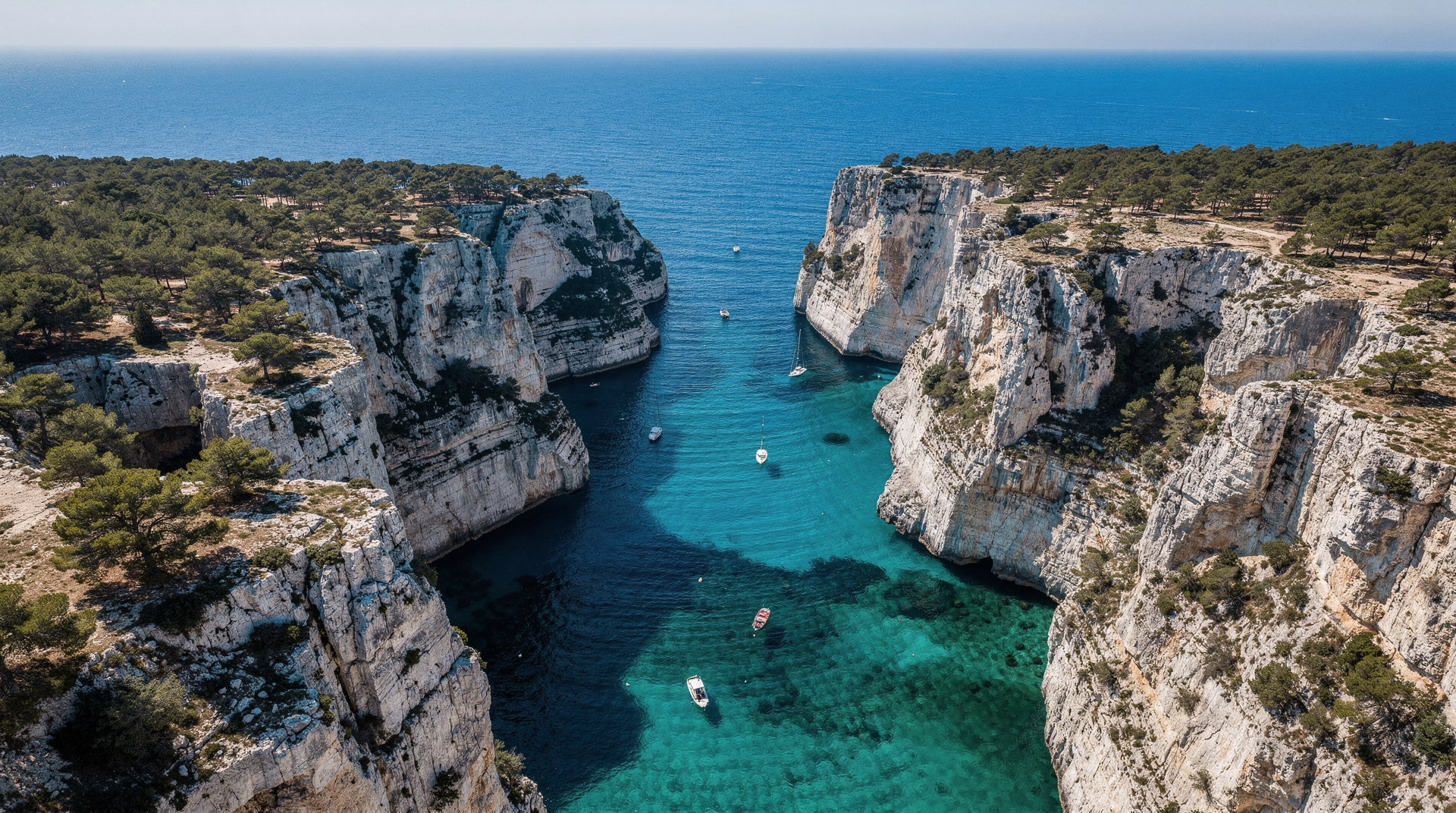
The most complete view of the Côte Bleue — including the sea caves, the vertical limestone sections of the Cap-Couronne cliffs, and the marine park at water level — comes from the 4-hour boat cruise that departs from the Vieux-Port and covers the entire stretch. This is the efficient option for a single day that combines Côte Bleue geography with swimming stops in the protected water.
The tour is significantly less crowded than the equivalent Calanques boat tours; in May and June it often runs at half capacity.
Where to eat on the Côte Bleue
Carry-le-Rouet has the strongest restaurant concentration — mostly fish and seafood focused, with terrace views over the port. The town is known for its sea urchins (oursins) in season from October to April, when local restaurants serve them directly from the morning’s fishing boats. The combination of protected marine waters and the established fishing tradition means the quality of the catch is consistently good.
In Niolon, the single restaurant overlooks the cove and serves straightforward lunch plates. Its main virtue is the location: eating above turquoise water with the cliff walls on three sides is difficult to improve on.
How the Côte Bleue compares to the Calanques
The honest comparison:
| Côte Bleue | Calanques (eastern) | |
|---|---|---|
| Crowds (July–August) | Moderate | Very high |
| Visual drama | Good (limestone cliffs) | Exceptional (dramatic fjords) |
| Train access | Yes (several stations) | Limited (Marseille-side only by car/bus) |
| Swimming quality | Excellent (marine reserve) | Excellent |
| Hiking options | Limited | Extensive |
| Fire-risk closures | Not applicable | Significant summer restrictions |
The Côte Bleue is not the substitute for the Calanques — it is a different experience. If you have two days and want coastal variety, combine one day in the Calanques with one day on the Côte Bleue. If you have one day and the Calanques are at peak capacity, the Côte Bleue via train is an honest alternative that most visitors leave satisfied with.
For the full Calanques National Park experience — eastern calanques, fire-risk rules, and Sugiton reservation — see the dedicated guide. For Marseille’s southern coastal villages, see Les Goudes. For the city context, see the Marseille guide.
For planning a full coastal day combining train access and kayaking, the kayaking guide covers the full range of options from both coasts. The car vs no-car guide is useful if you are deciding whether to rent.
Planning a Côte Bleue day from Marseille
A comfortable single-day plan starts on the morning train to Niolon for the cove and a swim, continues by train to Carry-le-Rouet for lunch and an afternoon snorkel in the marine reserve, and returns to Marseille in the early evening. This covers the two most rewarding stops without needing a car. Travellers with a rental car can extend the day to Cap-Couronne for the lighthouse and the larger reserve, though the train alone is enough for most visitors. For a wider comparison of coastal options around Marseille, see the Sormiou and Morgiou guide for the Marseille-side calanques, or Les Goudes for the closer, more urban southern coast.
Who the Côte Bleue suits best
The coast rewards a particular kind of traveller: someone who would rather have a flat rock, clear water and an unhurried lunch than a famous viewpoint. Couples and friends who already know the eastern coast often find it a relief. Families with young children can also do well here, because the coves are small and easy to keep an eye on; the Marseille with kids guide and the family beaches near Marseille cover the wider options if you want to compare. If you are building a longer stay, the Marseille 3-day planning guide shows where a quiet coastal day fits between the city sights.
Travellers without a car are well served as long as they stay on the train line. The car vs no-car question is answered neatly by a rail-only itinerary, and the Côte Bleue is one of the few swimming days out of Marseille that needs no vehicle at all.
What to pack and how to pace the day
Because the stops are small, there is rarely much shade, shopping or equipment hire waiting at the water’s edge. Bring your own mask and snorkel if you plan to swim in the reserve, along with sandals that grip wet limestone, a hat, water and something to eat in case a terrace is full. Swim early, eat at midday, and keep the hottest hours for the shade of a restaurant terrace or the train itself. The same logic applies on the eastern coast, as the Calanques by season guide explains.
Leave a margin before the return train. The walk back up from Niolon is short but easy to underestimate after a swim and a lunch, and nobody enjoys sprinting for a platform. Checking the timetable at Saint-Charles before you leave, and again when you arrive, takes a minute and removes most of the stress from the day.
Combining the Côte Bleue with other trips
The Côte Bleue works best as a single, relaxed day, and it pairs naturally with city time on either side. Spend a morning at the Vieux-Port or in Le Panier and save the coast for a day when you want to slow down. Visitors planning a first trip can slot it into the Marseille for first-timers guide, while those who want a stronger itinerary around the Calanques can look at the Marseille Calanques weekend.
If the weather turns, the sea can be rougher and the mistral can make swimming unpleasant. A day like that is better spent in town; the Marseille on a rainy day story and the museums guide give you somewhere dry to go, and the coast will still be there tomorrow.
Reading the coast: why it feels different
The Côte Bleue is shaped by the same Provençal limestone as the Calanques, but it lacks the deep, enclosed inlets, so the mood is open and breezy rather than dramatic. Small ports, pine woods and low cliffs give it a lived-in feel: this is where many Marseille residents go for a weekday swim, not a place built for visitors. That local character is the real reason to come. If you enjoy the atmosphere of a working harbour, the Vallon des Auffes in the city gives a similar flavour, and the Frioul Islands offer another quiet swimming option reachable by ferry.
For a story from the other side of the same coast, the our favorite calanque post is a good companion read, and the Cassis day trip guide is the natural next step if you decide you want a prettier harbour and more cliffs on your next visit.
Frequently asked questions about the Côte Bleue
Is the Côte Bleue worth visiting instead of the Calanques?
It depends on your priority. The Côte Bleue offers calmer, less crowded swimming and snorkelling with easy train access, but the Calanques have more dramatic limestone scenery. If you have two days, doing one of each gives the fullest picture of the Marseille coastline.
Can I visit the Côte Bleue without a car?
Yes, for the two main stops. The TER train from Marseille Saint-Charles toward Miramas reaches both Niolon and Carry-le-Rouet directly. A car is only needed to reach Cap-Couronne and its larger marine reserve.
Top experiences
Bookable activities with verified prices and instant confirmation on GetYourGuide.