Lavender season diary — a week on the Valensole plateau
From Aix-en-Provence: Valensole lavender full-day tour
Duration: Full day
On arriving with expectations
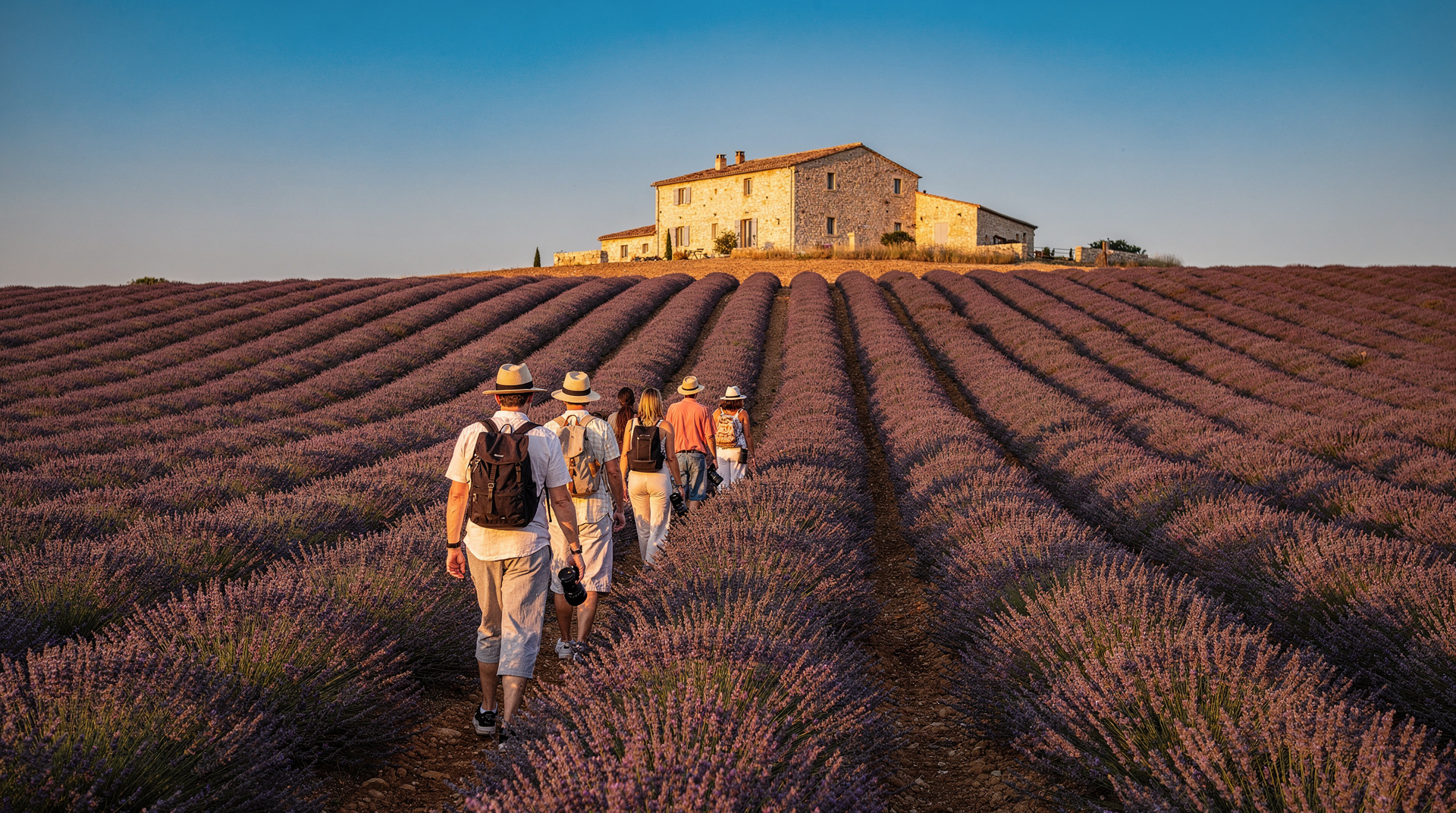
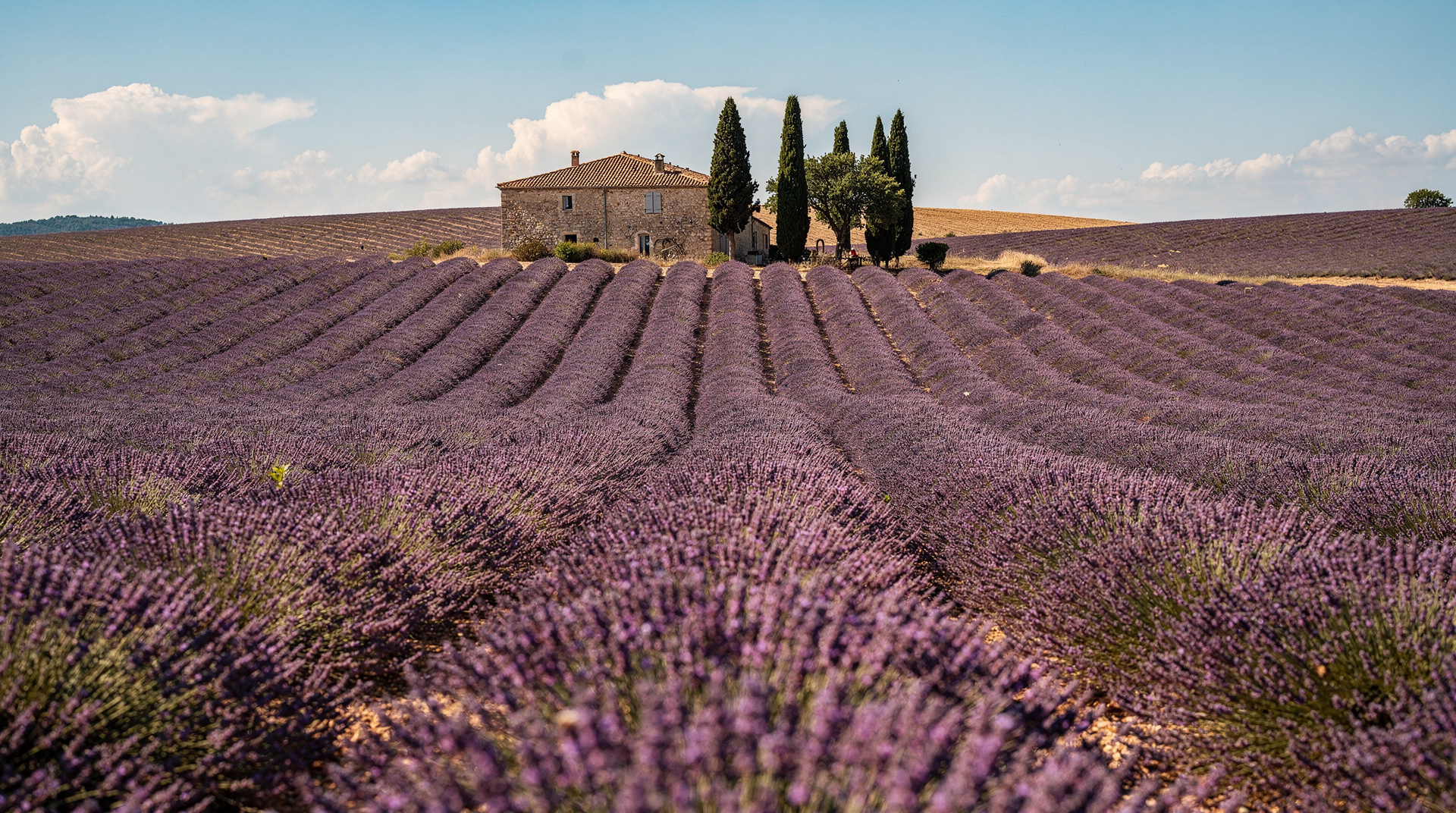
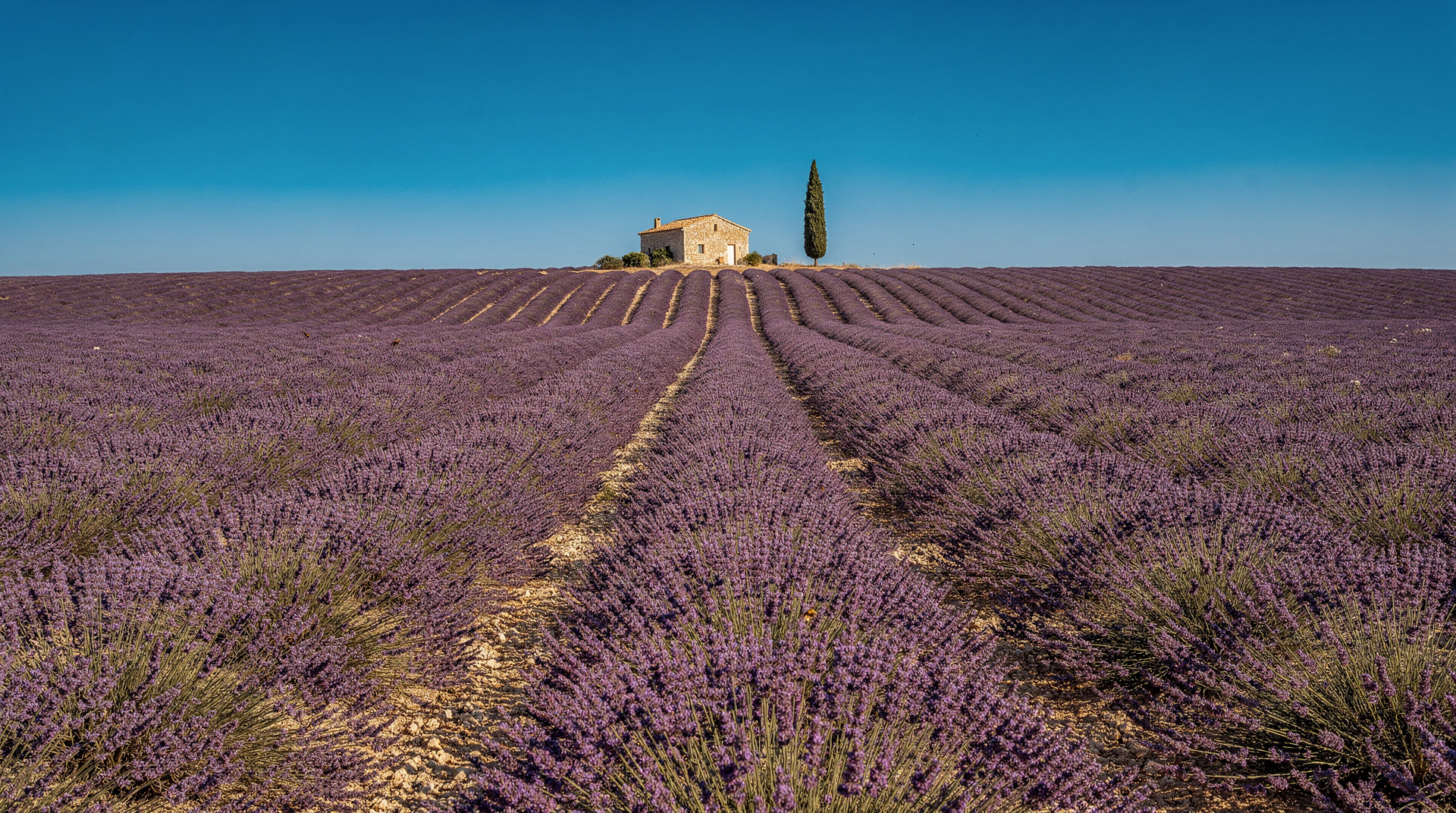
The Valensole plateau photographs are everywhere online — the ones with the purple rows stretching to the horizon, a lone farmhouse, a single cypress, and nobody else. These photographs exist. They require a drone, a very specific morning light in late June, and either extraordinary luck or extraordinary patience. They do not represent what the plateau looks like at 10:00 on a July Saturday. What it actually looks like is a parking lot surrounded by lavender fields and a queue of people trying to get the photograph that does not have a queue in it.
We came to terms with this on the first morning of our week in the area in July 2024. Once we made our peace with the reality — that lavender season is a shared experience, not a solitary one — the week became something else entirely.
| At a glance | |
|---|---|
| Where | Valensole plateau, around 1h15–1h30 from Marseille by car |
| Peak bloom | Roughly late June to mid-July (varies by year) |
| Cost | Free to visit the fields; day tours from Marseille around EUR 60–100 |
| Time needed | A day trip works; a full week lets you pair it with the Luberon and Verdon |
| Getting there | Car recommended (no practical public transport); guided day tours available |
| Best time of day | Around 07:00–09:00 and again near 19:00 for golden hour |
When lavender blooms
The peak bloom on the Valensole plateau typically runs from late June through mid-July. The exact timing varies by year — a warm spring pushes it earlier, a cool June delays it — and the only reliable source is the local tourism offices and lavender growers themselves, not the generic “mid-June to mid-July” that appears in guides including this one.
In 2024, we arrived on July 1 to find fields at peak colour. By July 7, the earliest fields (those with the most sun exposure, slightly lower elevation) were beginning to turn bronze at the tips. The cool, north-facing fields above Puimoisson were still brilliant. The plateau does not bloom uniformly; you can be looking at prime purple in one field and past-peak adjacent to it.
The takeaway: plan for the first week of July as your target. If you can extend the trip into late June, do so. Mid-July is usually late.
| Window | Bloom status | Crowds |
|---|---|---|
| Mid-to-late June | Fields greening up, early rows starting to colour | Light |
| Last week of June | Many fields near peak, colour building fast | Moderate |
| First week of July | Widest spread of fields at or near peak | Heavy |
| Mid-July | Lower fields turning bronze; higher, cooler fields (Sault, above Puimoisson) can still be good | Heavy, thinning slightly |
| Late July onward | Harvest under way in most fields | Light |
Why the plateau, and not just any lavender field
Lavender grows across a wide belt of haute-Provence, but Valensole concentrates the largest unbroken stretch of commercial fields in one accessible area, which is why it became the reference image. The Luberon and the hills around Moustiers-Sainte-Marie have smaller pockets, often prettier for being less crowded, but nothing on the scale of Valensole. Knowing this in advance reframes the plateau correctly: it is not a hidden secret to be disappointed by finding company, it is an industrial-scale agricultural landscape that happens to be gorgeous, and the crowd is part of what you are seeing, not a flaw in the plan.
The plateau at different hours
The photographs require early morning, and this is not only about photography. The plateau before 8:00 is genuinely different from the plateau at 11:00. The flowers are wet with dew. The air smells so strongly of lavender that it is briefly disorienting. The bees — there are always bees; they are essential to the ecology and the production of lavender honey — are starting their work. A tractor might be moving in a distant field. The light is low and lateral and the colour of the purple is at its most saturated.
By 10:00, the cars are arriving. By 11:00, the roadside fields near the village of Valensole are ringed with photographers. By 14:00, the smell of sunscreen has joined the lavender. By 16:00, the light is high and harsh and the flowers look slightly washed out.
Go at 7:00. Stay for two hours. Come back at 19:00 for the golden hour.
Where we stayed
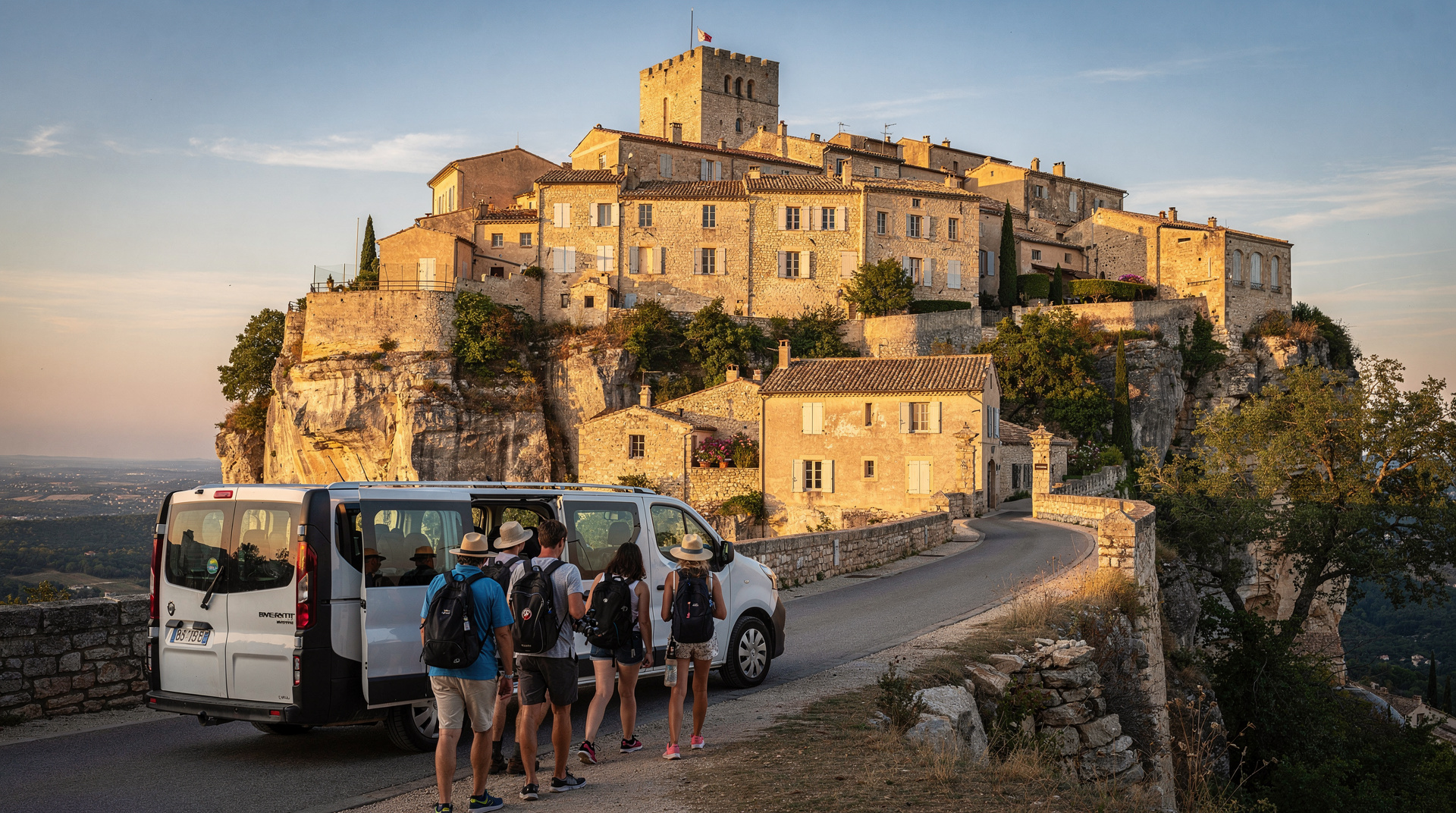
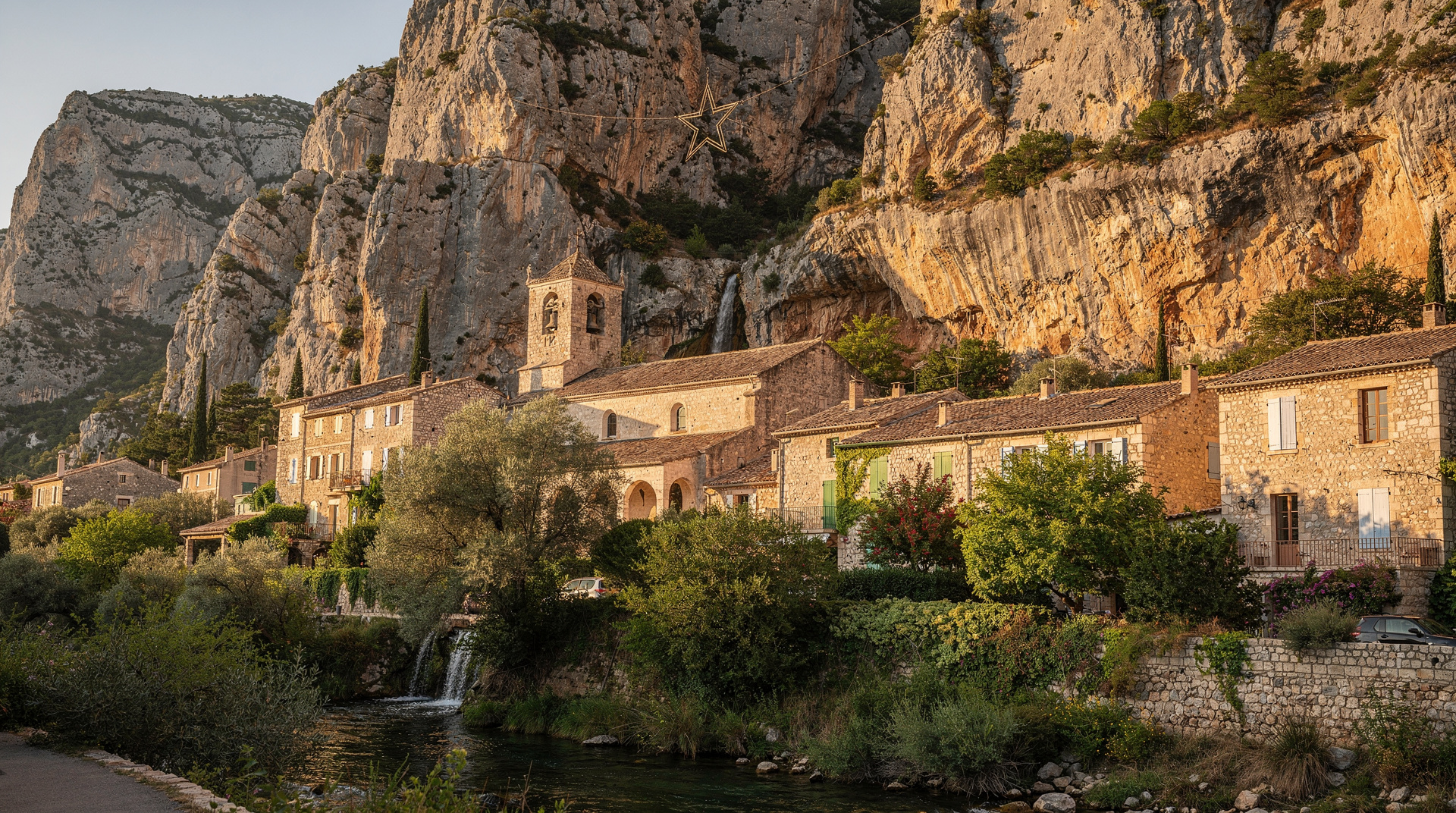
We based ourselves in Moustiers-Sainte-Marie, which is 20 kilometres from the plateau and one of the most beautiful villages in Provence. The choice was deliberate: staying in Valensole village or near the plateau means the lavender crowds are your immediate neighbour. Staying in Moustiers puts you in a different landscape — the cliffs and waterfalls and the proximity to the Gorges du Verdon — and you drive into the plateau for the morning, then retreat.
Moustiers in early July in 2024 was busy but not overwhelmed. The village is small enough that the crowds thin quickly once you leave the main street, and the two restaurants we ate at were genuinely excellent — Provençal cooking at the level that justifies the drive.
Beyond Valensole
The plateau is the concentration point but lavender is everywhere in haute-Provence. The Sault plateau (slightly higher, slightly later bloom, significantly less visited) is an alternative that photographers and lavender enthusiasts with flexible timing prefer. The route between Sault and Aurel along the D30 offers straight lines of lavender with mountains behind them and a fraction of the Valensole crowds.
The distillery at Sault (L’Occitane operates one of the major lavender distilleries in the area; smaller operations run their own) offers factory visits during harvest season. The essential oil extraction process, which involves enormous copper stills and the most intense lavender aroma we have ever experienced, is well worth an hour.
The Luberon villages, one to two hours west, make a natural pairing with a lavender week. Gordes, Roussillon, Lourmarin — all within a half-day drive, all worth their own time. Our Provence markets piece covers the Saturday market at Lourmarin in detail.
The honest crowds conversation
We will say it plainly: the Valensole plateau in peak season is crowded. Not in the way that Paris is crowded, or Rome in August, but crowded in the way that a specific natural phenomenon with a narrow bloom window and universal visual appeal is always crowded when it becomes widely known. This is the reality of lavender season in 2024.
The response is not to avoid it. The response is to structure the visit around the crowds: early mornings, late afternoons, mid-week, the plateau fields away from the main road. There are fields on the backroads south of the village of Valensole that are just as beautiful as the photographed ones and significantly less occupied. Drive past the first three roadside fields with the tour buses, keep going, and find the track that leads into the centre of the plateau.
The smell
We have been writing around this because it sounds like purple prose, but the lavender smell at peak bloom is genuinely extraordinary in a way that photographs cannot capture. You smell it from the car before you can see the colour. At 7:00 in the morning in a field with no one else in it, the smell is not like lavender products. It is like the origin of lavender products — saturating, herbal, sweet without being cloying, slightly medicinal in the way that good southern French landscapes sometimes are.
It is the smell that stays. We have described lavender season to people who have not been and the smell is always what they have trouble imagining. The colour, the photographs, the social media inventory — all of that is imaginable. The smell requires being there.
Getting to Valensole from Marseille
The plateau is approximately 1 hour 15 minutes to 1 hour 30 minutes from Marseille by car, depending on traffic and route. There is no practical public transport to the plateau. A car is required.
Several operators offer full-day lavender tours from Marseille that include transport, a guide, and multiple plateau and distillery stops — a useful option if you would rather not drive. The day tours from Marseille typically depart early and return by early evening, which is sufficient for the essential plateau and distillery experience. Check departure times: the good operators leave at 7:30 or 8:00; afternoon-only tours miss the best of the morning plateau.
From Aix-en-Provence, the drive to the plateau is slightly shorter. The lavender day trip from Aix is also a well-organised option for visitors based in the city.
The week’s verdict
A week was the right amount. Three days on the plateau would have been two too many, but distributed across the week with day trips to Moustiers, the Gorges du Verdon, the Sault plateau, and one long loop through the Luberon, the week balanced well. The lavender was at peak for about four of the seven days, which felt like the right proportion — enough to feel like the season’s centrepiece, not so much that it became repetitive.
We will come back. Possibly for the distillation, which we missed (it happens in mid-July as the cutting begins). Possibly for the Sault plateau in a year when the bloom is later. Possibly because Moustiers requires another visit and the Gorges du Verdon remains one of the best landscapes in France. The lavender is the reason to time a trip to Provence; the rest of the region is the reason to extend it.
For planning, the Moustiers guide is the practical starting point. The Gorges du Verdon are covered in our regional guides. Day trips from Marseille, including lavender options, are detailed in our day trips coverage, and our weekend in Aix piece pairs well if you are routing through Aix-en-Provence on the way.
Frequently asked questions about Lavender season diary — a week on the Valensole plateau
Do you need a car to visit the Valensole lavender fields? Effectively yes. There is no practical public transport onto the plateau itself, and the fields worth reaching are spread across backroads. If you do not want to drive, a guided day tour from Marseille or Aix-en-Provence that includes transport is the realistic alternative.
Is the lavender free to see, or do you need to pay for anything? Walking or driving past the fields and photographing them from the roadside is free — this is working farmland, not a paid attraction. Some individual farms or distilleries charge a small entry fee for shop or garden visits, and guided day tours are a separate paid product.
Top experiences
Bookable activities with verified prices and instant confirmation on GetYourGuide.