Cruise stop done right — a 9-hour Marseille port-stop blueprint
From Marseille cruise port: Avignon and wine tasting
Duration: 8 hours
| At a glance | |
|---|---|
| Where | La Joliette cruise terminal to central Marseille (Vieux-Port, Le Panier, Notre-Dame de la Garde) |
| Cost | Around EUR 40-60 per person for transport, lunch and optional sights |
| Time needed | 9 hours, disembarking around 8:30 |
| Getting there | Tram from La Joliette to Vieux-Port (around 8 minutes) or taxi (around EUR 15-18) |
| Best time | Spring and autumn for comfortable walking; carry water in summer |
The problem with the standard cruise itinerary
Most cruise passengers disembark in Marseille and take one of the organised shore excursions — typically a three-to-four-hour coach tour that loops the main sights from a distance, includes Notre-Dame de la Garde, passes the MuCEM, and returns to the port. These tours do what they promise: they are efficient, stress-free, and produce a reasonable set of photographs. They also produce a version of Marseille that bears the same relationship to the actual city that a television documentary about a place bears to going there.
The cruise passenger who disembarks independently and plans carefully gets a genuinely different experience from the same nine hours. This is that plan.
Starting from the cruise terminal
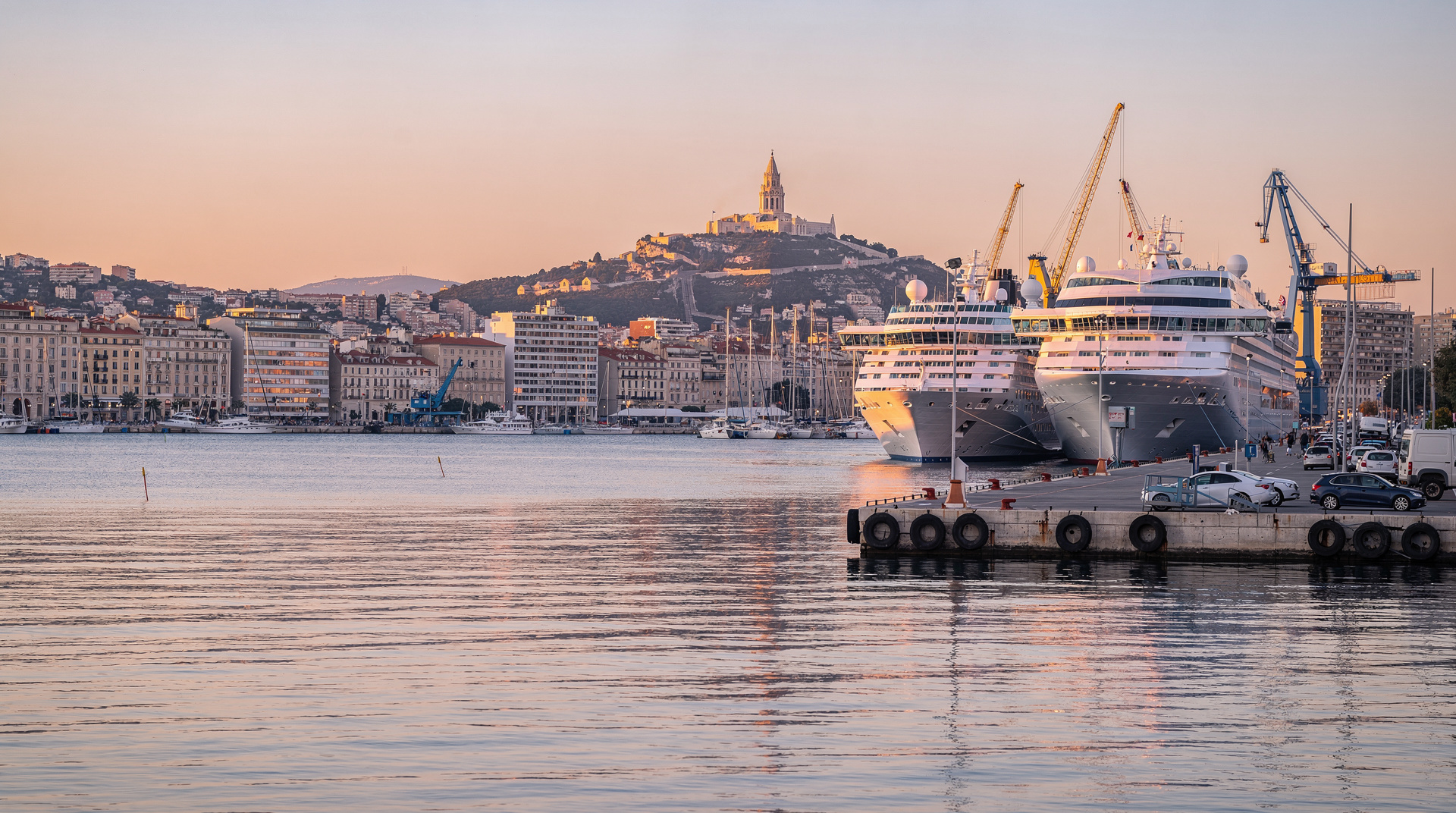
The Marseille cruise terminal is at La Joliette, approximately 15 minutes by taxi (around EUR 15–18) or 20 minutes on foot from the Vieux-Port. The Joliette tram stop is a 10-minute walk from the terminal and connects directly to the Vieux-Port by tram. In spring, the walk is pleasant; in summer heat, take the tram or taxi.
Plan to be off the ship by 8:30 and at the Vieux-Port by 9:00. This timing is critical: it puts you at the fish market while it is still running.
9:00 — The fish market
The Vieux-Port fish market runs at the Quai des Belges from early morning until around noon. In the 9:00–10:00 window, the market is at its most active — the fishermen are selling the night’s catch directly, the restaurant buyers are negotiating for the day’s service, the cats are working the edges of the stalls. This is not a tourist attraction that runs for tourists. It is a working market that has been running every morning on this quai since antiquity.
Walk through slowly. You do not need to buy anything. If you want a souvenir that is genuinely of the place, a small jar of navettes from the vendor at the end of the stall row is more Marseille than any postcard.
9:45 — Le Panier
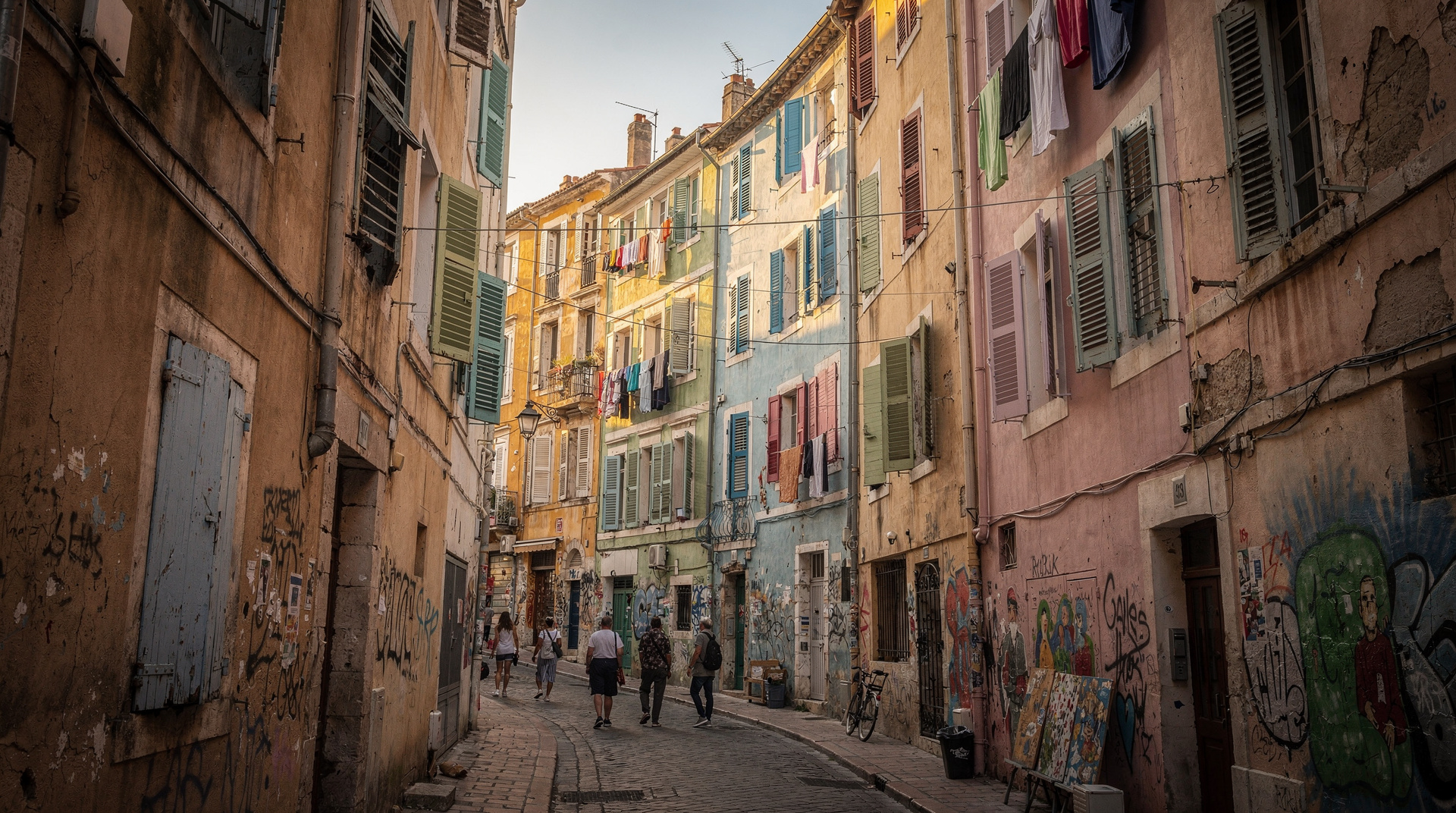
Walk north from the Quai des Belges along the waterfront, turn inland at the Hôtel de Ville, and begin climbing into Le Panier. The lanes arrive quickly.
Ninety minutes is the right amount of time for a cruise-visit Le Panier: enough to find the Vieille Charité (look for the baroque dome visible above the rooftops), enough to sit for ten minutes in one of the squares, enough to buy something from one of the artisan shops if that is the plan. Not enough to get lost, which requires more time.
The Vieille Charité courtyard is free to access from the street entrance. The museum exhibitions inside require a ticket (EUR 5–7) and 60 additional minutes — this is optional on a nine-hour stop.
If the lanes appeal and you would like to know what you are looking at, the Le Panier guide explains the quarter’s history and character, and our Le Panier blog story gives a more personal view of why it is worth the climb.
11:15 — MuCEM exterior and Fort Saint-Jean
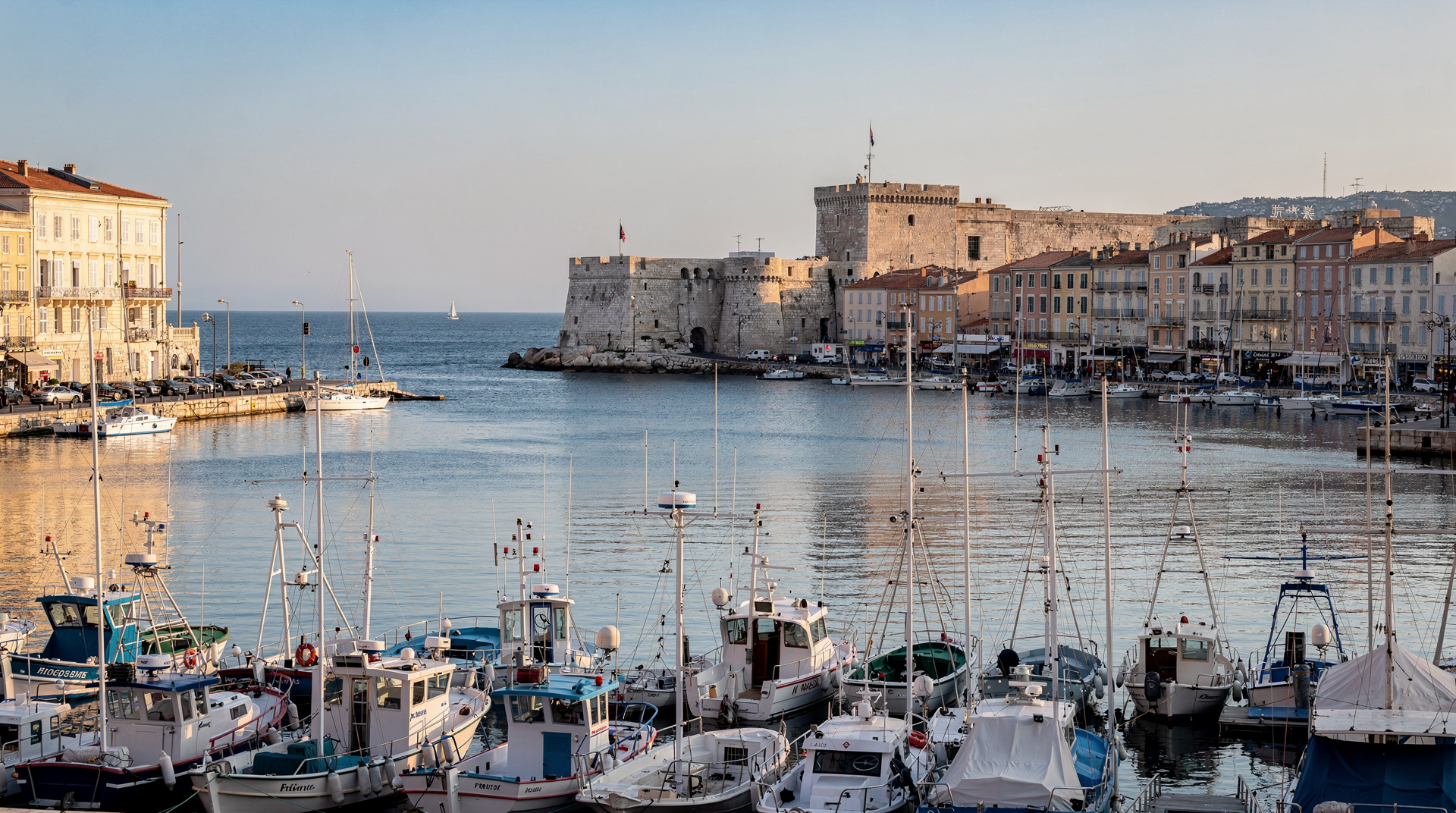
Walk from Le Panier toward the Joliette end of the waterfront — about 15 minutes on foot. The MuCEM exterior, the suspended footbridge to Fort Saint-Jean, and the terraces are all free. The views from the footbridge of the port mouth, the two forts, and the Frioul Islands in the bay are the best accessible views in this part of the city.
If time allows: the MuCEM interior (EUR 11, 2 hours) is excellent. A nine-hour stop that prioritises the MuCEM interior should build the schedule around it, starting here rather than the fish market. For the compressed nine-hour plan as written, the exterior and terraces are the correct allocation.
The MuCEM guide covers what the interior offers if you decide to swap it in, and the Vieux-Port destination page puts the harbour you keep passing into context.
12:30 — Lunch
Walk south from the MuCEM, past the Vieux-Port, to the Cours Estienne d’Orves — the pedestrianised square one block back from the south quai. This is the most pleasant lunch neighbourhood in central Marseille: quieter than the Vieux-Port tourist strip, with a better selection of restaurants and less aggressive pricing.
Avoid the tourist bouillabaisse at EUR 25. See the bouillabaisse tourist trap guide for why. A correct port-stop lunch: grilled fish (the day’s catch, ask what is fresh), a glass of Provence rosé, bread. Budget EUR 25–35 per person. Allow 75 minutes.
For other places to eat, the best restaurants in Marseille guide and the seafood guide help you choose a table that suits your appetite and your schedule.
14:00 — Notre-Dame de la Garde
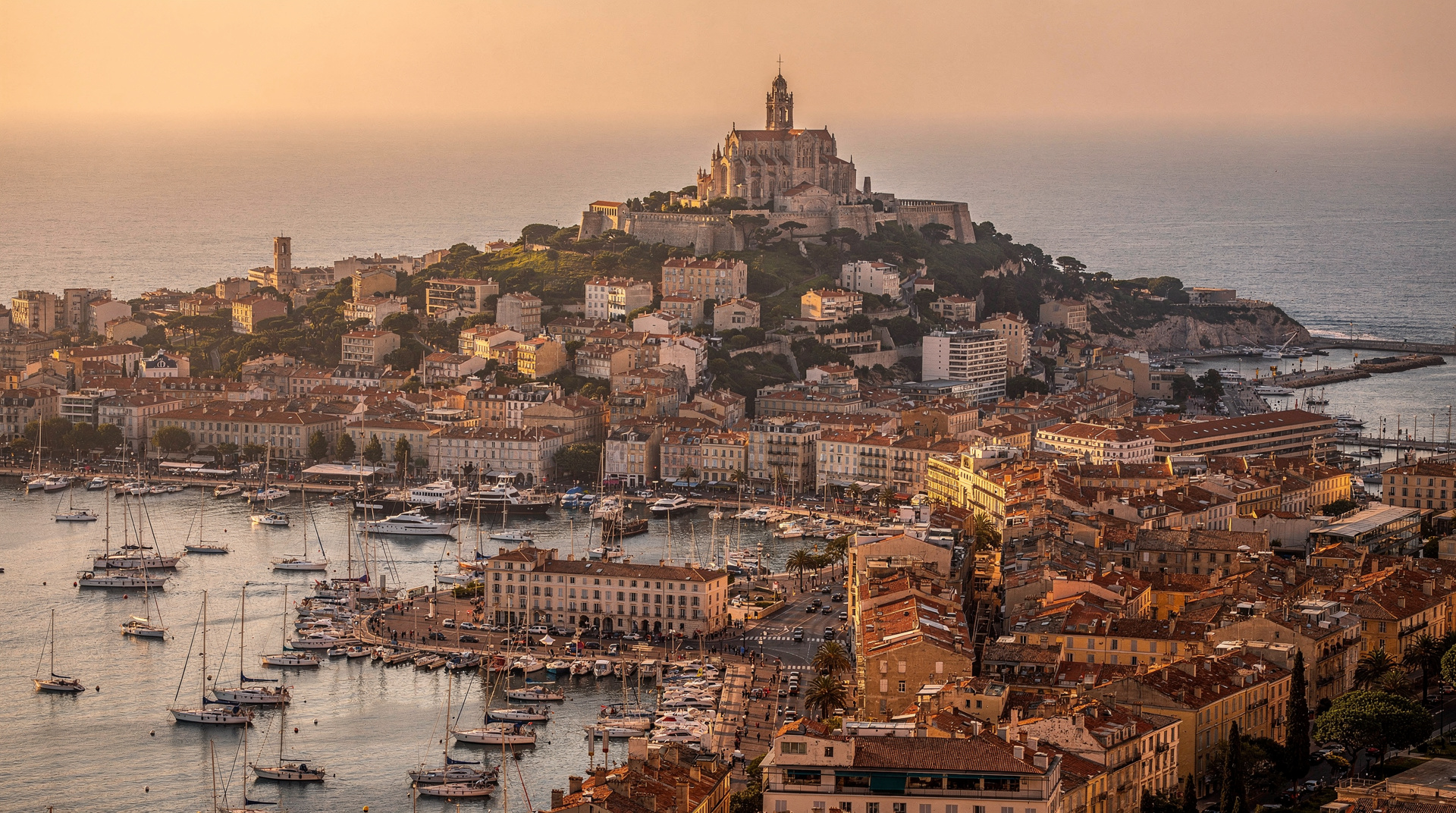
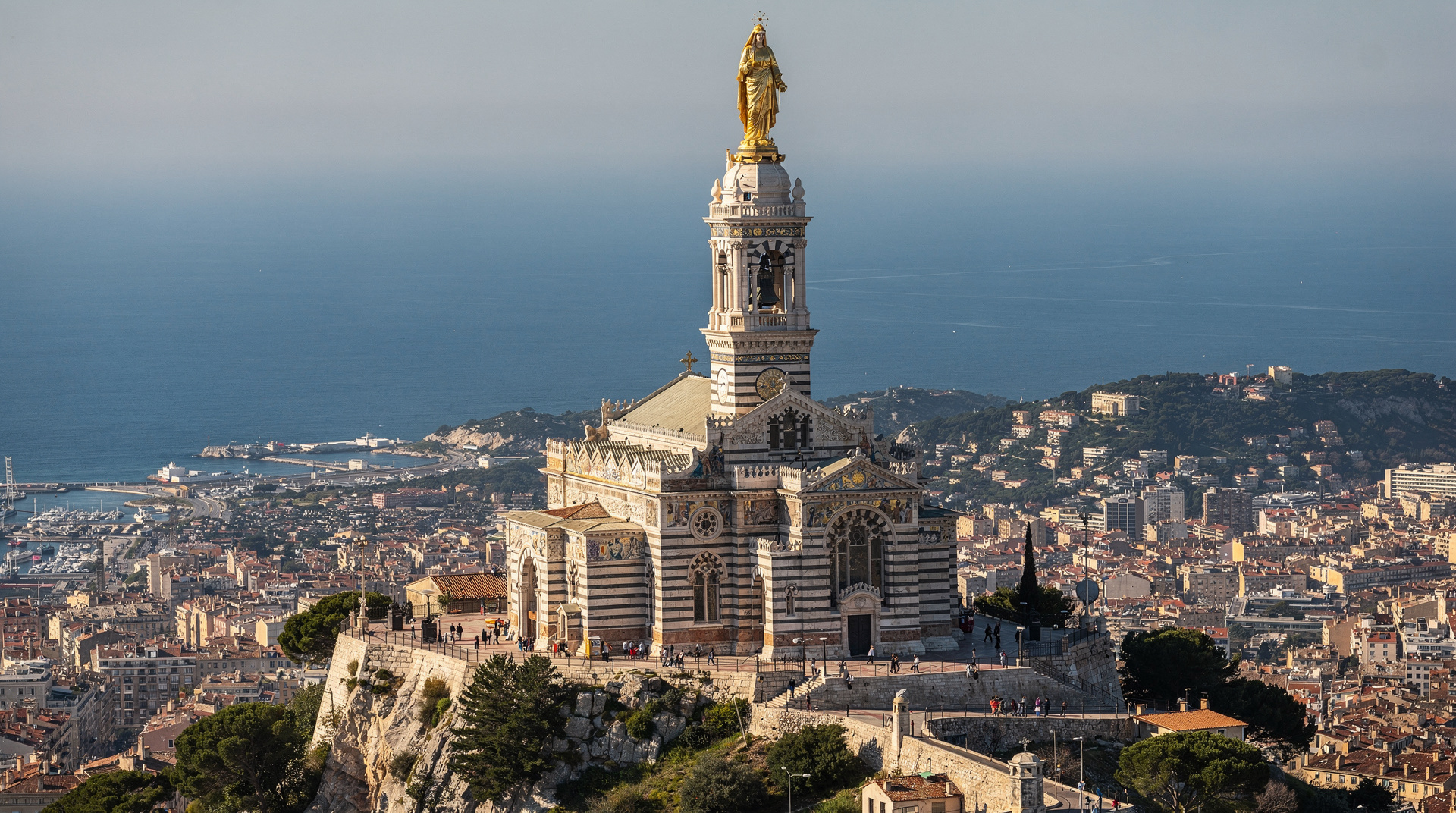
Notre-Dame de la Garde is on every cruise itinerary because it deserves to be. The Romano-Byzantine basilica on the highest point of Marseille, with the golden Madonna visible from the sea, is free to visit and the panorama from the terrace is exceptional — the entire bay, the Frioul Islands, the Calanques visible to the east on a clear day.
The question is how to get there. The options:
Tourist petit train (EUR 12–15 per adult, departs Vieux-Port): 35 minutes, commentary, efficient. The correct choice if walking uphill is difficult.
Bus 60 (EUR 1.70, departs Castellane métro): efficient, cheap, slightly faster than the petit train. Take the métro to Castellane and then bus 60.
Walking: 40 minutes from the Vieux-Port, uphill. Good in spring and autumn; gruelling in summer.
Allow 60–75 minutes for the Notre-Dame visit (basilica interior + terrace panorama).
15:30 — The Corniche walk or Calanques boat
Two options for the afternoon, depending on priorities:
Option A: The Corniche walk (1.5 hours): Walk south from Notre-Dame de la Garde along the Corniche toward the Vallon des Auffes. The Vallon — the small fishing harbour under the viaduct — is a 15-minute walk from the Notre-Dame summit. From there, continue south toward the Prado beaches if time allows, or take the tram back north from the Vallon des Auffes tram stop.
Option B: Calanques boat tour (3–4 hours): If the primary motivation for the Marseille stop is the Calanques, a boat tour from the Vieux-Port covers the main inlets in three to four hours and includes swimming stops. This requires starting the post-lunch portion at 13:30 rather than 14:00 (shorten the Notre-Dame visit or skip it entirely). Several operators depart around 13:00–14:00. Book in advance through the port’s shore excursion desk or independently.
For the afternoon, the Vallon des Auffes page describes the harbour at the end of Option A, the Prado and Corniche guide covers the coast beyond it, and the best Calanques boat tours guide compares the boat options for Option B. The Calanques National Park page explains what you are sailing past.
17:30 — Return to port
Allow 30 minutes to return from the Vieux-Port area to the cruise terminal (tram to Joliette, then 10-minute walk). Do not cut this tight. Add a buffer of 20 minutes to account for any delays.
Critical logistics
Port to Vieux-Port: Tram T2 from Joliette to Vieux-Port (3 stops, 8 minutes, EUR 1.70) or taxi (EUR 15–18). The tram is reliable; buy the ticket from the machine before boarding.
Transport card: A single Marseille RTM ticket is EUR 1.70. Buy in advance at the station machines or from a tobacconist. The tram and métro run on the same ticket.
Language: English is workable in hotels, restaurants, and tourist sites. Basic French phrases help in markets and neighbourhood restaurants. Marseille residents are generally welcoming of effort.
Safety: Standard urban precautions apply. The fish market and Noailles market are pickpocket hotspots; front pocket for valuables, bag across body. The pickpocket zones guide shows where to be most careful, and the metro guide explains the network if you combine tram and métro.
What to skip: The hop-on hop-off bus is not the right tool for a nine-hour stop — it covers the main sights from a distance and the loop takes 90 minutes minimum. Better to walk and be in the city rather than above it.
For the full cruise port guide with additional options, see our Marseille cruise port guide. The main Marseille guide covers the city in depth for those returning for a longer visit.
If your ship gives you less than 9 hours
Shorter port calls are common. With 6 hours, cut the MuCEM exterior detour and choose either Le Panier or Notre-Dame de la Garde, not both — trying to fit everything into a compressed window is the most common mistake independent cruise visitors make. With 4 hours or less, stay close to the Vieux-Port: the fish market, a walk into the edge of Le Panier, and lunch at Cours Estienne d’Orves cover the essential character of the city without transport risk. Consult the getting around Marseille guide for transport timing if your itinerary needs adjusting on the fly.
Hour-by-hour summary
| Time | Activity | Duration |
|---|---|---|
| 8:30-9:00 | Disembark, transfer to Vieux-Port | 30 min |
| 9:00-9:45 | Fish market | 45 min |
| 9:45-11:15 | Le Panier | 90 min |
| 11:15-12:30 | MuCEM exterior and Fort Saint-Jean | 75 min |
| 12:30-14:00 | Lunch at Cours Estienne d’Orves | 90 min |
| 14:00-15:30 | Notre-Dame de la Garde | 90 min |
| 15:30-17:30 | Corniche walk or Calanques boat | 2 hours |
| 17:30-18:00 | Return to port | 30 min |
Frequently asked questions about Cruise stop done right — a 9-hour Marseille port-stop blueprint
Is it safe to leave the ship independently in Marseille without a guided tour? Yes, for most travellers. Standard urban precautions apply (watch belongings in markets), and transport between the port and the city centre is straightforward via tram.
What is the minimum port-stop time to see Marseille properly? Around 6 hours allows a meaningful visit (fish market, Le Panier or Notre-Dame de la Garde, and lunch). Under 4 hours, stay close to the Vieux-Port area.
Top experiences
Bookable activities with verified prices and instant confirmation on GetYourGuide.