Climbing in the Calanques — route notes from a guided intro
Cassis: climbing discovery session in the Calanques
Duration: 3.5 hours
| At a glance | |
|---|---|
| Where | Calanques National Park, above Les Goudes and other access points near Marseille |
| Cost | Guided introductory sessions typically run several hours with equipment included |
| Time needed | Around 4 hours for a standard introductory session |
| Getting there | Car or taxi to the trailhead car parks; some access points reachable by bus |
| Best time | October and April-June; avoid July-August for fire-risk closures and heat |
The Calanques as a climbing destination
The Calanques are, among other things, one of the most significant sport climbing destinations in France. The white limestone that makes the inlets beautiful also makes it exceptionally good rock — compact, textured, offering reliable friction even when wet (though climbing in the wet is not something guides recommend). Routes range from beginner-friendly slabs near the parking areas to committing multipitch routes above the sea that require a full day and serious technique.
We are not climbers. Or we were not, before an October afternoon in 2022 when we signed up for an introductory guided climbing session in the national park. This is the story of that day — not as a technical guide to the routes (our guide should be writing that, not us), but as an honest account of what the first experience of climbing on this rock actually feels like.
The guide briefing
Our guide — a BAFA-certified instructor certified by the French federation — met us at the car park above Les Goudes at 9:00 on an October morning. October in the Calanques is specifically good: the fire-risk trail closures of summer are lifted, the temperatures are around 20°C, the summer crowds are absent, and the rock is warm but not blisteringly so.
The briefing covered the basics: harness fitting, the language of commands for belaying (the person at the bottom managing the rope), the mechanics of moving on rock (three points of contact, weight on feet, look for footholds before committing). We also received the national park rules specific to climbing: no anchor bolts may be added without park approval, some species nesting sites on certain walls close specific routes seasonally, and the fire risk access zones apply even to climbers when the alerts are in force.
The most useful part of the briefing was the guide’s instruction to stop trusting our hands more than our feet. Climbers default to gripping with the hands; on good limestone friction rock, the feet do most of the work and the hands are for balance. This sounds simple. It took about thirty minutes of actual climbing for it to feel true.
The first routes
We started on a slab — a section of rock angled at perhaps 50 degrees from vertical, with holds that were visible but not dramatically protruding. The guide demonstrated the sequence from the bottom: weight back over the feet, hips close to the rock, look two moves ahead. We attempted this and were approximately 60 percent successful. The 40 percent of the time when we defaulted to upper-body desperation (the instinctive response when the exposure becomes real) produced the correct sensation: tension, wasted energy, and a clear demonstration that the guide was right about the feet.
By the third ascent of the slab, the movement was beginning to feel like something that might eventually be described as flowing. We were not flowing. But we could imagine flowing, which is progress.
The second route was a vertical face with more textured rock — the specific Calanques limestone that has been described as crystalline, with small but reliable edges every few body lengths. The exposure on this route was more significant: looking down from ten metres above the belay point, over limestone slabs, toward the sea visible through a gap in the rock. October light. The Frioul Islands in the middle distance. A very clear sense of being where we were.
What the limestone actually feels like
The rock deserves a description because it is one of the notable things about the Calanques climbing experience. The limestone is not smooth — it has a granular texture at the scale of fingertips that provides friction in a way that, once you have learned to trust it, is reassuring rather than alarming. It has been compared, by people more qualified than us to make this comparison, to good limestone at Fontainebleau or the Dolomites in its basic adhesive quality. Experienced climbers who visit the Calanques as a destination (many do, particularly from northern Europe) find it excellent and technically interesting.
For beginners, the quality of the rock means that introductory climbing is more achievable than it might be on other rock types. The exposure — the fact that you are above a national park coastline with the sea below you — adds a specific dimension that other beginners’ destinations (indoor walls, flat-rock quarries) do not have.
The afternoon route: above the calanque
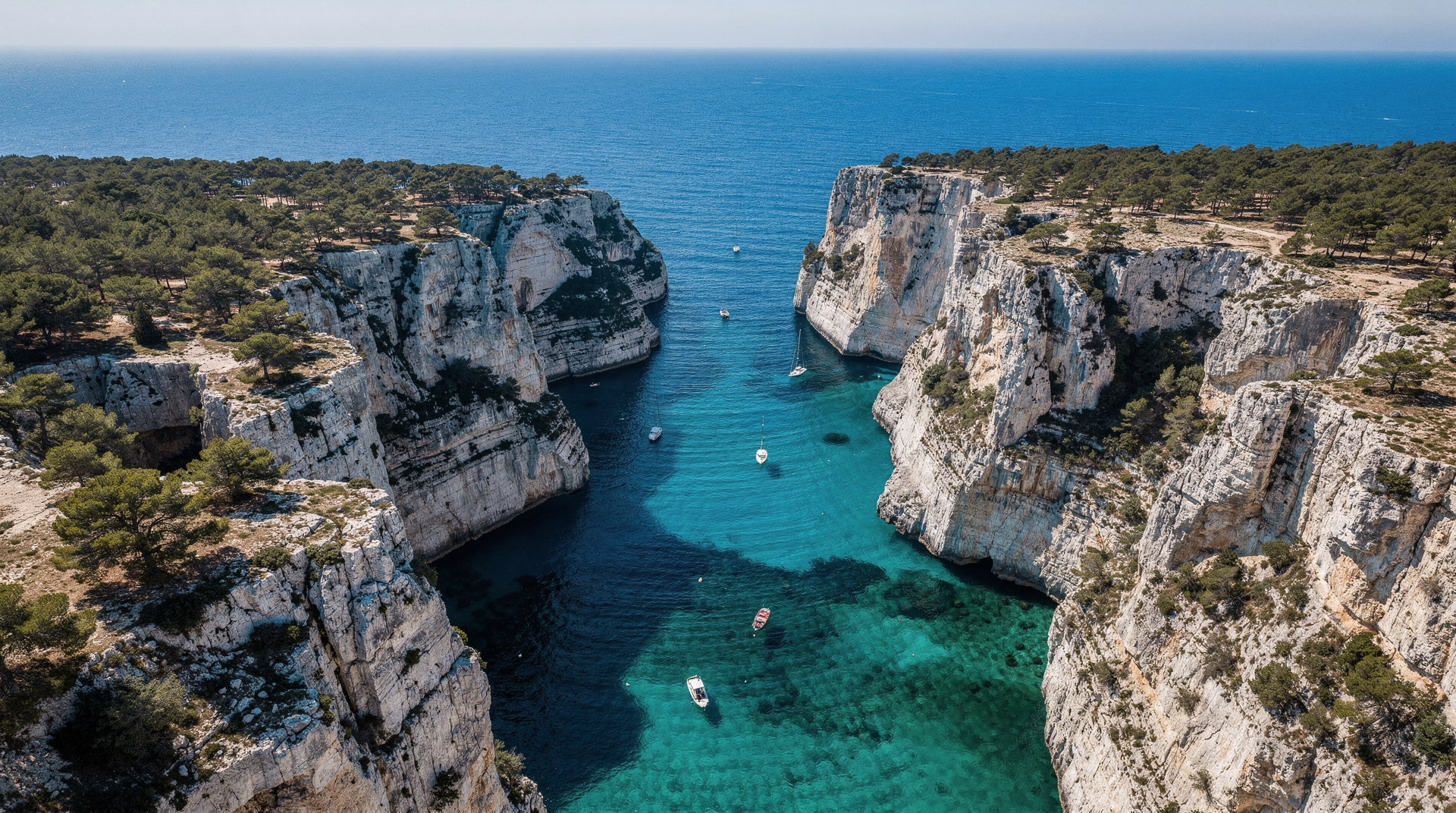
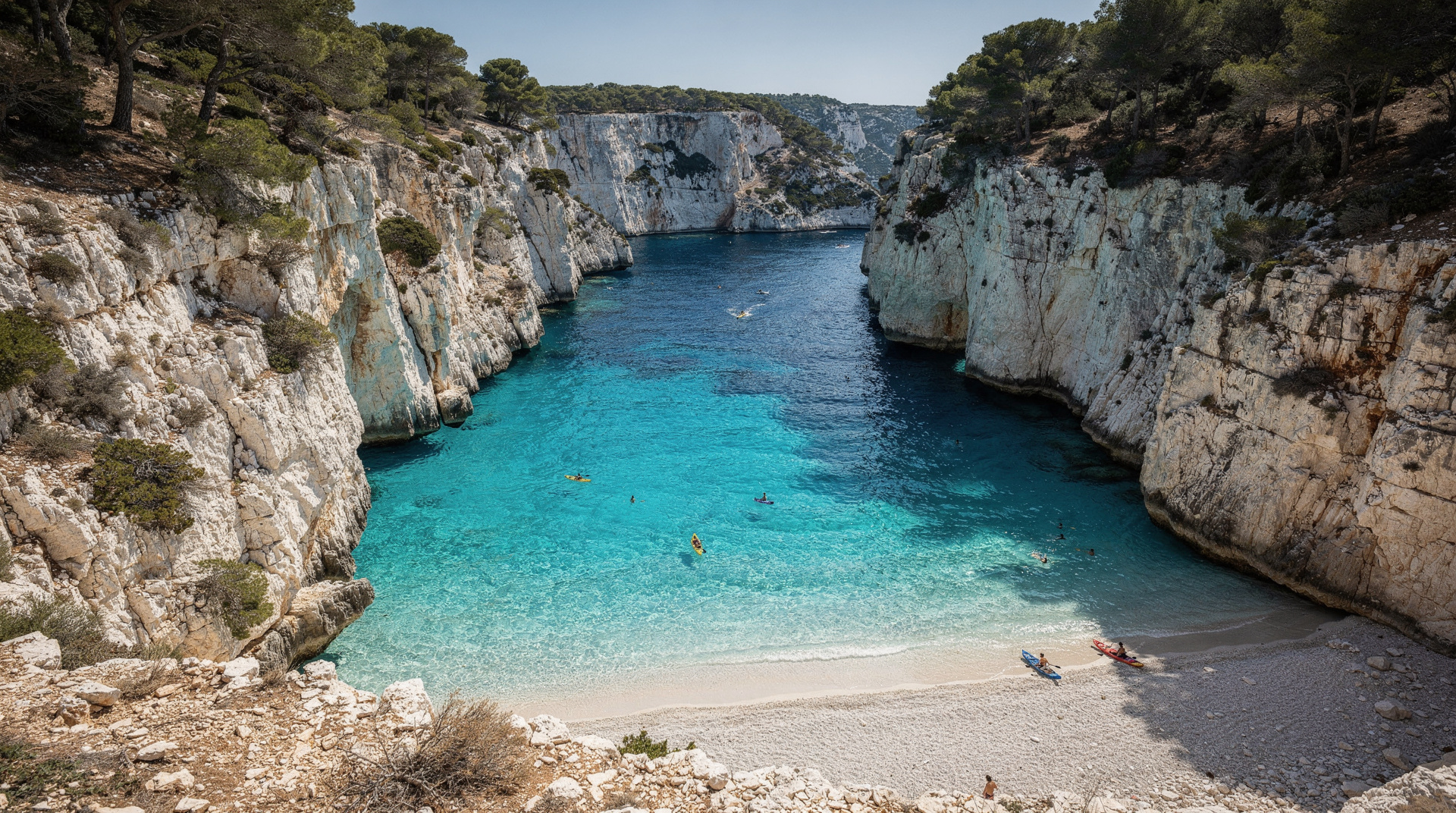
In the afternoon, we moved to a location above one of the smaller inlets. The view from the top of the day’s main route looked directly into the inlet — the white walls, the water the colour of turquoise glass, two boats anchored in the cove below. We were perhaps 80 metres above sea level. The guide clipped into the anchor and we belayed from above.
This was the route that made us want to come back. The technical demands were within reach of a day’s learning — the guide had chosen deliberately — and the reward was that specific combination of earned exposure and extraordinary landscape. You do not get this view from a trail. You get it only by going up the rock.
What a beginner needs to know
Fitness: Rock climbing is more technique than strength, particularly at the beginner level. But core strength and flexible hips make a difference. If you do not exercise at all, some basic preparation — planks, stretching — in the weeks before will help.
Footwear: The guide will provide climbing shoes if you do not have your own. They fit differently from ordinary shoes — tighter, with a downturned toe. They will be slightly uncomfortable. This is normal.
Height tolerance: The exposure is real. You are not going to heights that require professional fearlessness (introductory routes stay within 20–30 metres), but the position above limestone rock above the sea is different from a ladder or a balcony. If significant heights are a problem for you, say so at the briefing. A good guide adjusts.
Season: October is very good. Spring (April–June) is also excellent. Avoid July and August for fire-risk access reasons and summer heat on exposed limestone.
Organised options: A guided introduction to climbing in the Calanques National Park is available from several operators; the sessions typically run four hours and include all equipment. This is the correct format for a first visit. See the Calanques National Park guide for context on the park’s regulations and seasonal access.
Whether to come back
We went back the following April. The second visit was technically more demanding (the guide, with one visit’s knowledge of our abilities, pushed toward more interesting terrain) and produced the specific satisfaction that any skill practised honestly generates: the sense that something difficult is becoming, if not easy, then at least more familiar.
The Calanques as a climbing destination are not something we had on our list before that October afternoon. They are now. The national park is exceptional; its rock is one of the reasons why.
For the non-climbing Calanques experience, our favourite calanque piece covers the hiking and swimming options, and the boat tour guide describes the easiest access route for most visitors.
How climbing compares to hiking the same terrain
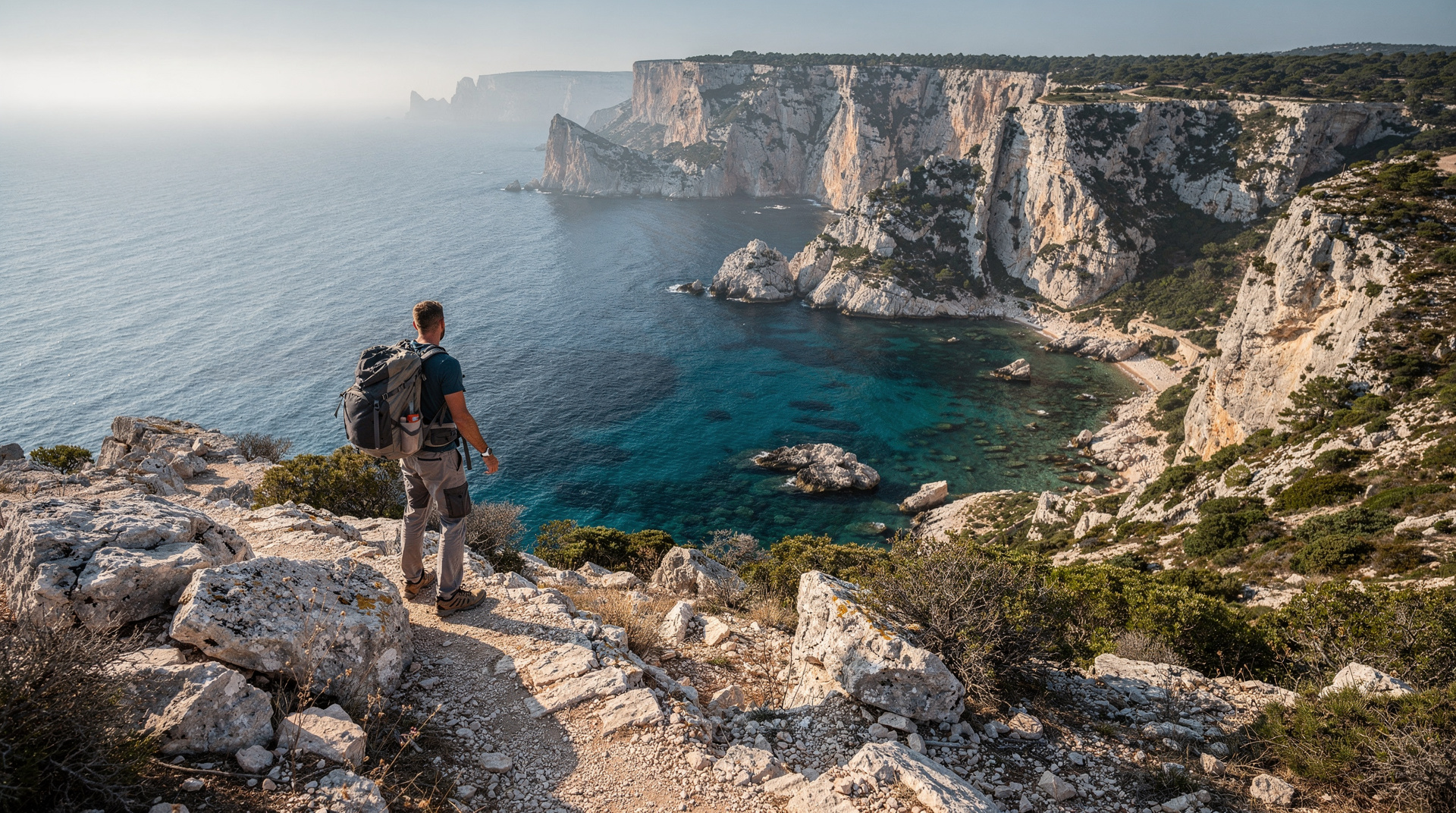
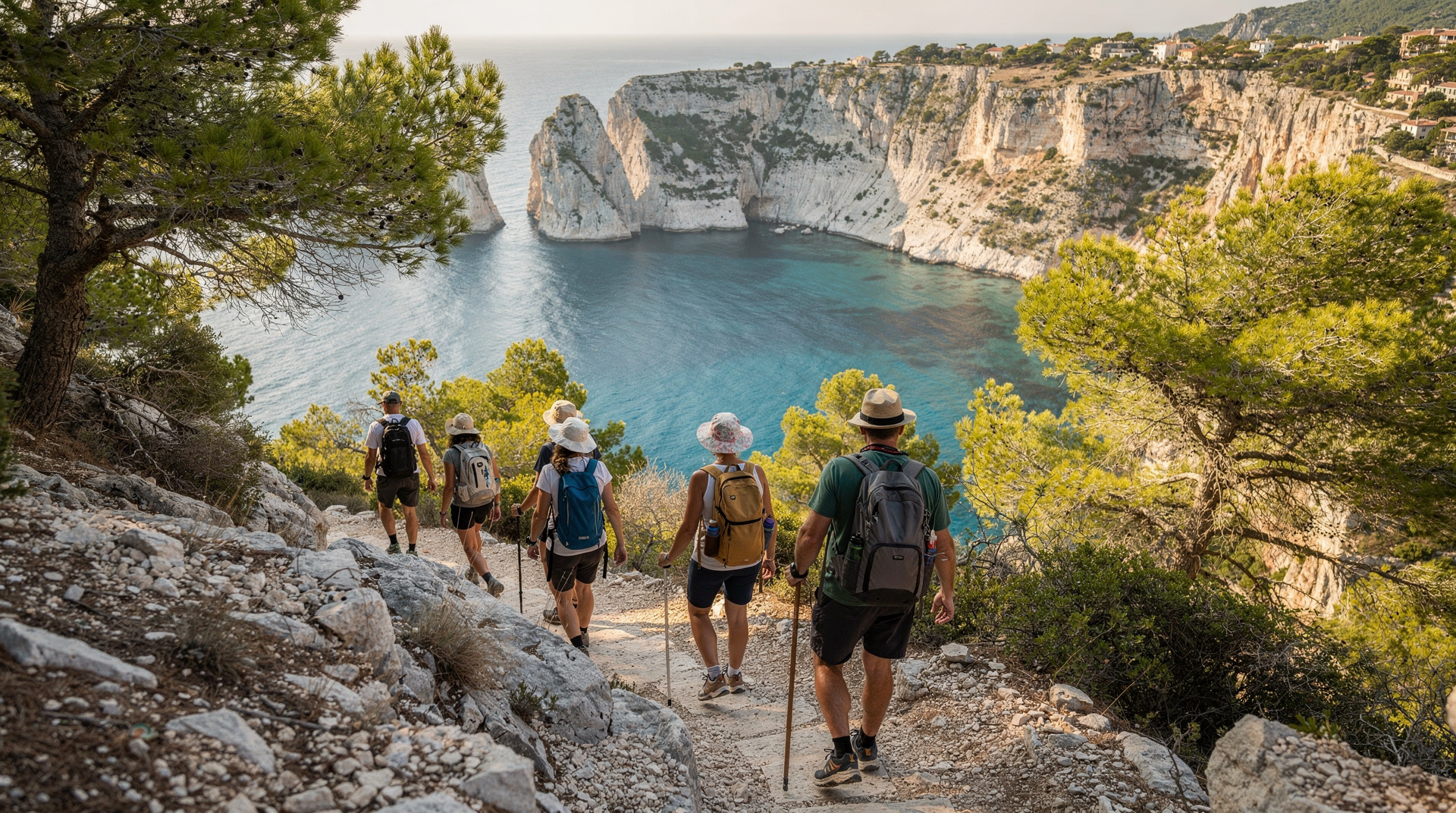
Most visitors experience the Calanques on foot rather than on rope, and the two access modes reveal genuinely different things about the landscape. Hiking the Calanques trails or a specific route like the En-Vau hike gets you into the inlets at sea level, with swimming as the reward. Climbing gets you above them, looking down into the turquoise water from the rock itself — a different, more exposed relationship to the same coastline. Neither replaces the other; the hiking difficulty guide is the right starting point if climbing is not your interest.
Access and seasonal rules
Climbing routes fall under the same national park regulations as hiking trails: fire-risk access restrictions apply in summer, and some walls close seasonally for nesting birds regardless of climbing ability. Guides stay current on which sectors are open; independent climbers should check the park’s official access status before a summer visit. See the summer access rules guide for the trail-closure system that also governs climbing zones.
Frequently asked questions about Climbing in the Calanques — route notes from a guided intro
Do you need climbing experience to try the Calanques? No. Introductory guided sessions are designed for complete beginners and include all equipment and instruction.
Is Calanques climbing safe for someone afraid of heights? Introductory routes are not extreme (typically within 20-30 metres), but the exposure is real and different from indoor climbing. A good guide will adjust the route if you flag height concerns at the briefing.
Top experiences
Bookable activities with verified prices and instant confirmation on GetYourGuide.