Best rosé of the summer — Provençal wines tasted that season
Aix-en-Provence: Provençal market walking tour with tastings
Duration: 2-3 hours
| At a glance | |
|---|---|
| Where | Bandol, Cassis and Luberon wine country, all reachable from Marseille |
| Cost | Domaine tastings often free or a small fee; bottles from around EUR 9 (Luberon) to EUR 22+ (Bandol) |
| Time needed | A half-day per wine region if visiting the domaines directly |
| Getting there | Car is easiest; Bandol and Cassis are 45-60 minutes from Marseille by road |
| Best time | Summer for drinking it in context, but domaines pour rosé year-round |
On writing about wine honestly
Wine writing has a reputation for imprecision dressed as description. Tasting notes that describe “hints of distant forest floor after autumn rain” while not mentioning that the wine costs EUR 85 and you would need to drink a lot of it before the forest floor appeared. We are not going to do that.
What follows is a summer’s honest engagement with Provençal rosé — the wine that the south of France produces in larger quantity than anywhere else in the world, in quality that ranges from excellent to mass-produced. We tasted in the context we find most useful: with food, in the locations where the wines are produced, at the time of year when they are meant to be drunk. The summer of 2024 was our framework, and these are the wines that stayed with us.
Why Provençal rosé is worth taking seriously
The Provence AOC rosé is the reference style for what the wine world now calls “dry rosé” — the pale, salmon-coloured, fresh, mineral style that has become the dominant rosé category globally. This was not inevitable. Until the 1990s, most Provence rosé was darker, often slightly sweet, and made to be drunk young by the glass at beach bars. The shift to pale, dry, structured rosé was driven primarily by producers around Saint-Tropez and the Côteaux Varois who were looking for premium positioning.
By 2024, the premium Provence AOC rosé is one of the most reliably excellent wine categories available — but also one of the most widely replicated outside the region, with pale rosé from Spain, the Languedoc, and Tuscany competing directly for the same shelf position. The argument for buying Provençal rosé specifically is that the best versions still do something the copies do not: they have a specific minerality and structure that relates to the limestone and schist soils of the region, and they age in a way that surprises people who think rosé is always simple.
The Bandol rosé
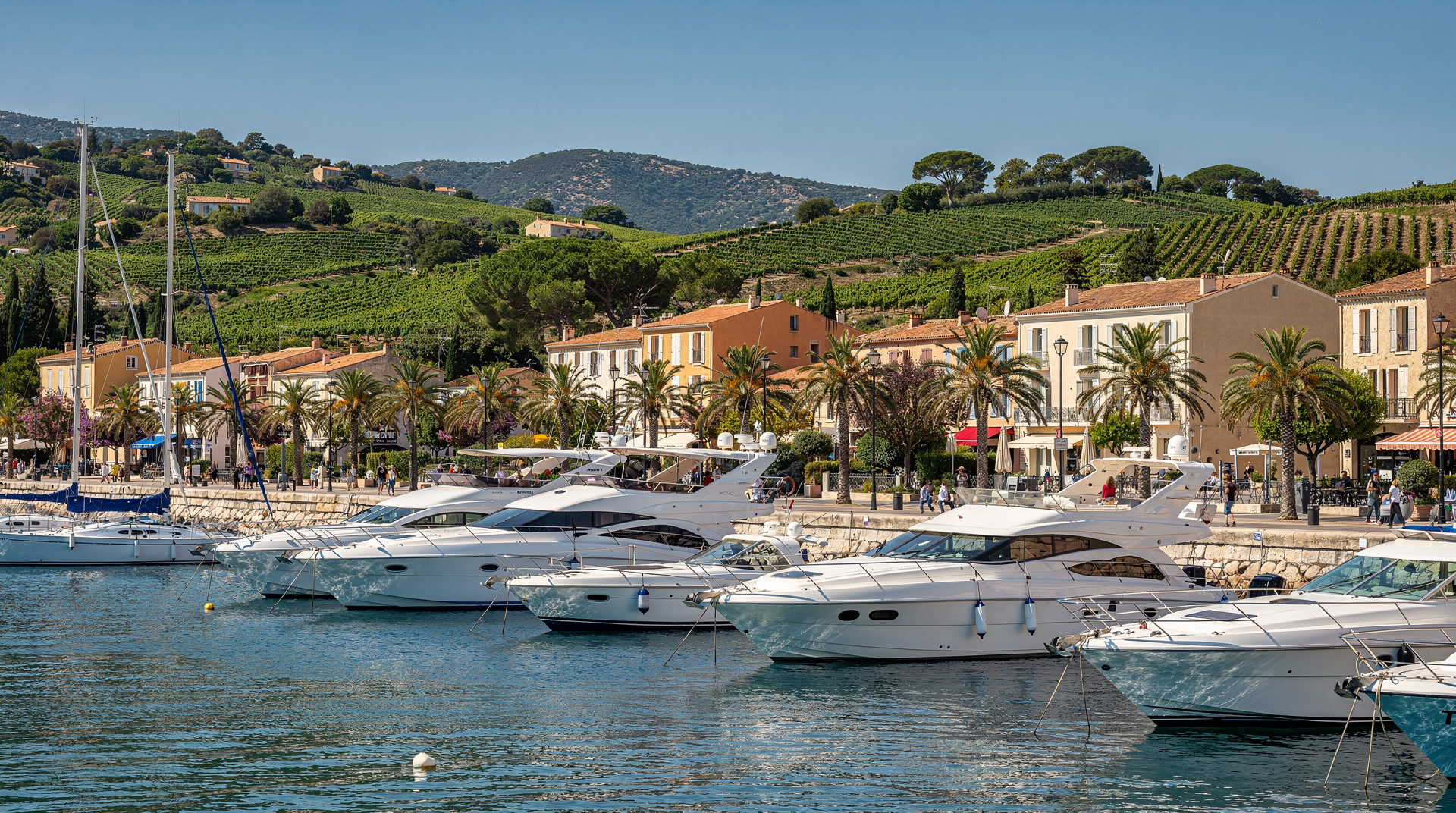
Bandol produces, in our consistent view, the best rosé in Provence. The appellation sits on limestone slopes above the coast between Marseille and Toulon, and its rosé is made primarily from Mourvèdre — a thick-skinned, late-ripening grape that gives the wine a depth and structure rare in rosé.
The Bandol rosé we returned to this summer had a pale copper colour (not the washed-out platinum of some commercial Provence rosé), a nose that genuinely had the garrigue character the books describe, and a palate that lasted long enough to finish a fish course and still have something to say with the cheese. It was not subtle in the way that restrained Loire rosé is subtle. It was direct and confident, which is appropriate for a wine from a place where direct and confident is the default register.
At the vineyard, the price was around EUR 18–22 per bottle. In the wine shops of Marseille, comparable Bandol rosés run EUR 20–28. In Paris, the same wines appear at EUR 30–40. The argument for buying at source is obvious.
The Cassis white
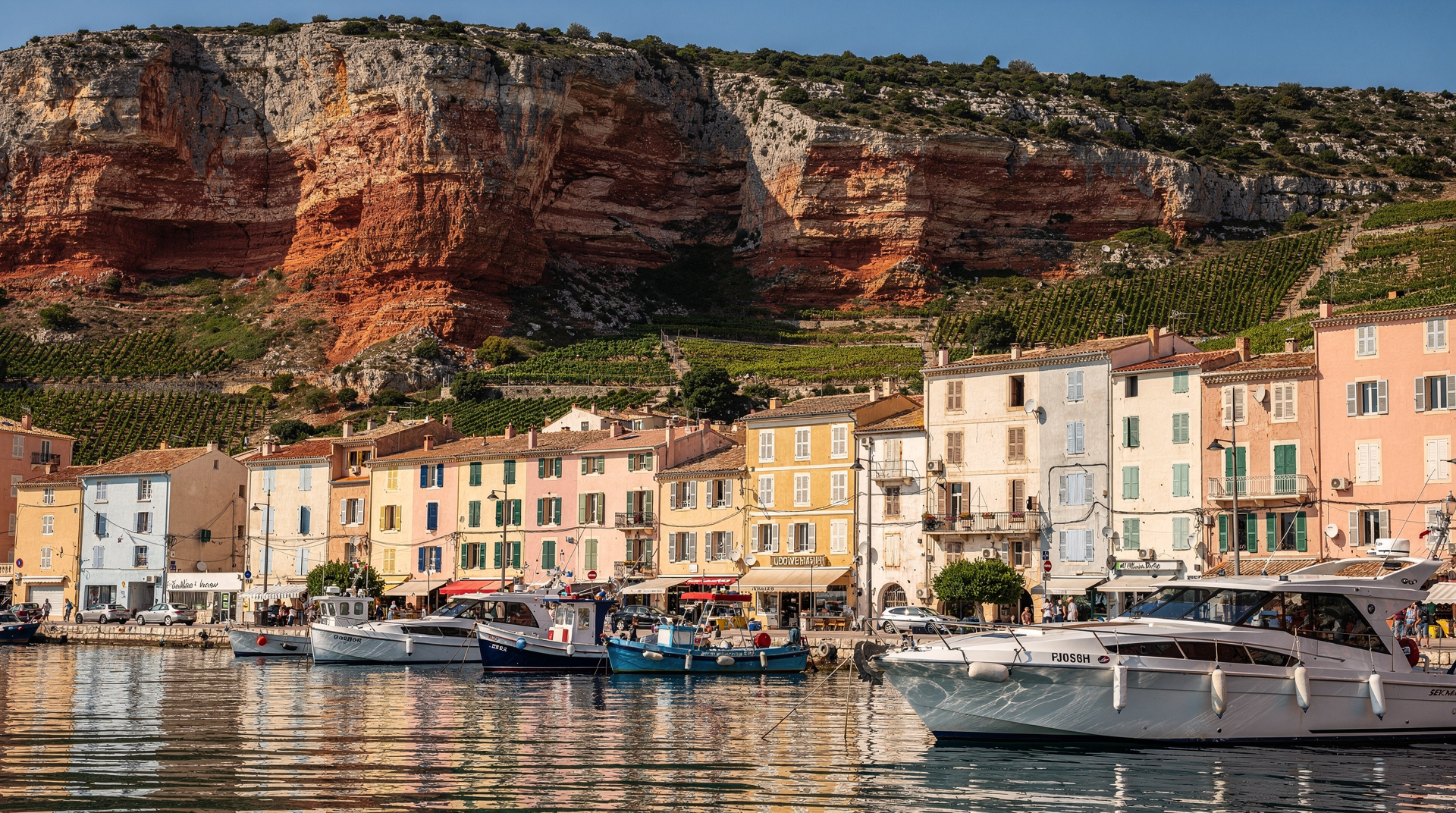
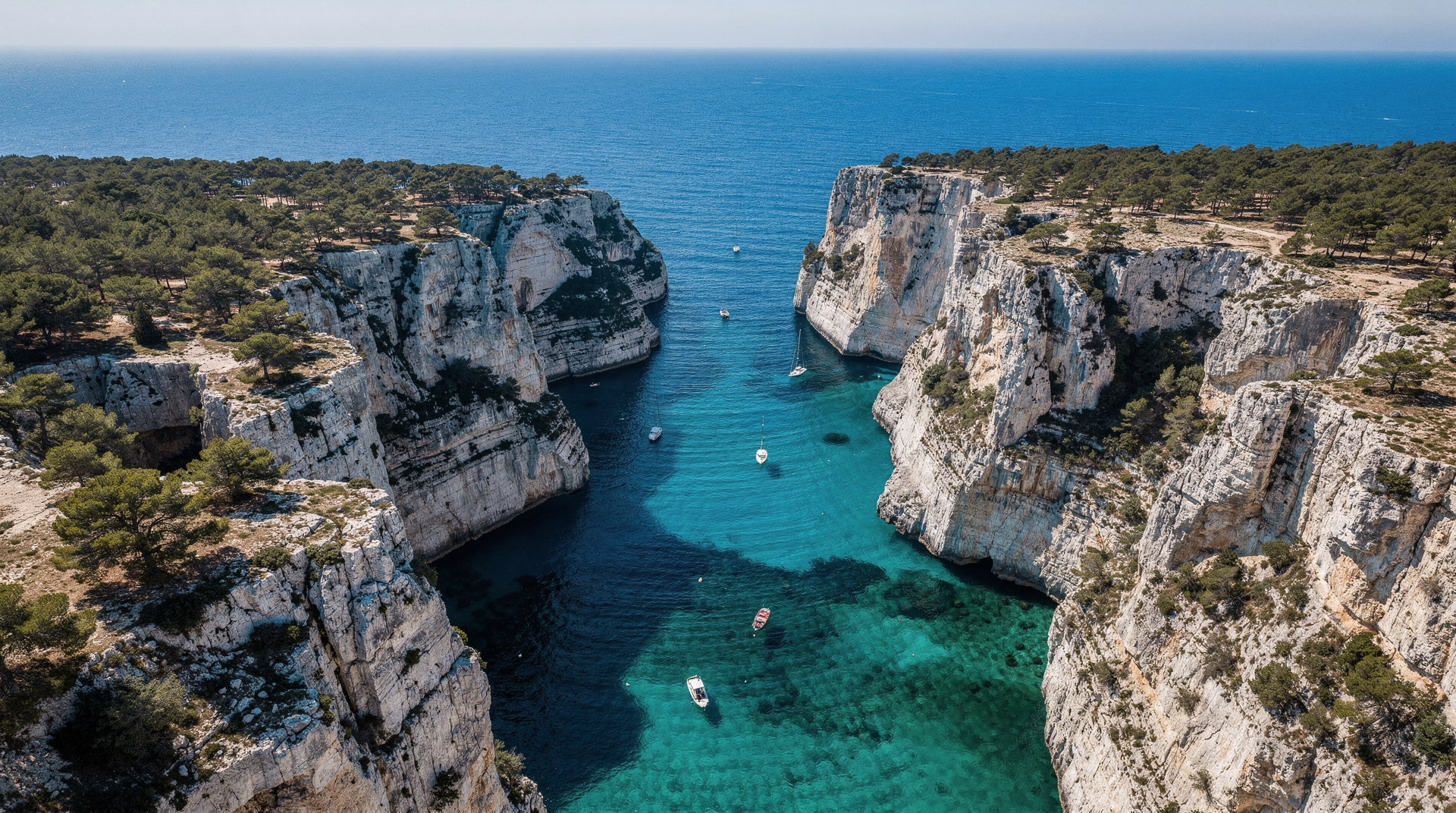
We include this not as a rosé but as a corrective. The Cassis AOC white — made from Clairette, Marsanne, and Ugni Blanc on the limestone terraces above the village — is one of the best white wines in Provence and one of the least known outside the immediate region. The production is tiny (215 hectares total for the entire AOC) and reportedly 75 percent of it is drunk locally. Visiting the Cassis wine country and drinking the white at a terrace restaurant with the sea in view is, specifically, the correct way to encounter it.
The Cassis white in summer 2024 was excellent. Fresh, mineral, with a backbone that made it a genuine partner for the bouillabaisse at the lunch we had in mind. Not a wine for contemplation in the abstract; a wine that makes sense in context.
The off-label Luberon rosé
The Luberon AOC produces rosé in the hills between the Luberon mountain and the Durance valley — wines that are less celebrated than their coastal cousins and correspondingly less expensive. We found a domaine near Lourmarin in August that was selling a rosé at EUR 9 per bottle from the cave that was significantly better than its price suggested: pale, fresh, with a grapefruit note and the dusty character that Luberon wines take from the limestone above the valley.
This is the wine we brought home in quantity. It is the honest answer to the question of what to drink on a Tuesday evening that does not require ceremony.
What we eat with Provençal rosé in summer
The honest answer is: fish and vegetables, primarily. The bouillabaisse conversation is dealt with elsewhere (see our bouillabaisse guide) but the short version is that a structured Bandol rosé with a proper bouillabaisse is one of the better food-and-wine combinations in southern France.
More everyday: grilled sardines with a cold Cassis white. Anchoïade (anchovy paste on crudités) with a Provence AOC rosé. A platter of cold vegetables — fennel, cucumber, tomato — with the Luberon rosé and bread and nothing else. Provençal food is essentially the right context for Provençal wine, which sounds obvious but is worth stating because some of the wine writing around this region makes it sound more complicated than it is.
Where to buy
At the domaine: The best prices, the widest selection, and the experience of tasting with the producer. The Bandol and Cassis wine country is accessible by road from Marseille in 45–60 minutes. The Luberon domaines are within reach on a day trip to the villages. See our day trip guide for logistics.
In Marseille: The wine shop culture around Cours Julien has improved markedly in recent years. Several independently-owned cave à vins in the neighbourhood carry serious Provence AOC, Bandol, and Cassis wines at prices that reflect the local market rather than the tourist premium. The supermarket selection for Bandol and Cassis is thinner than you would hope.
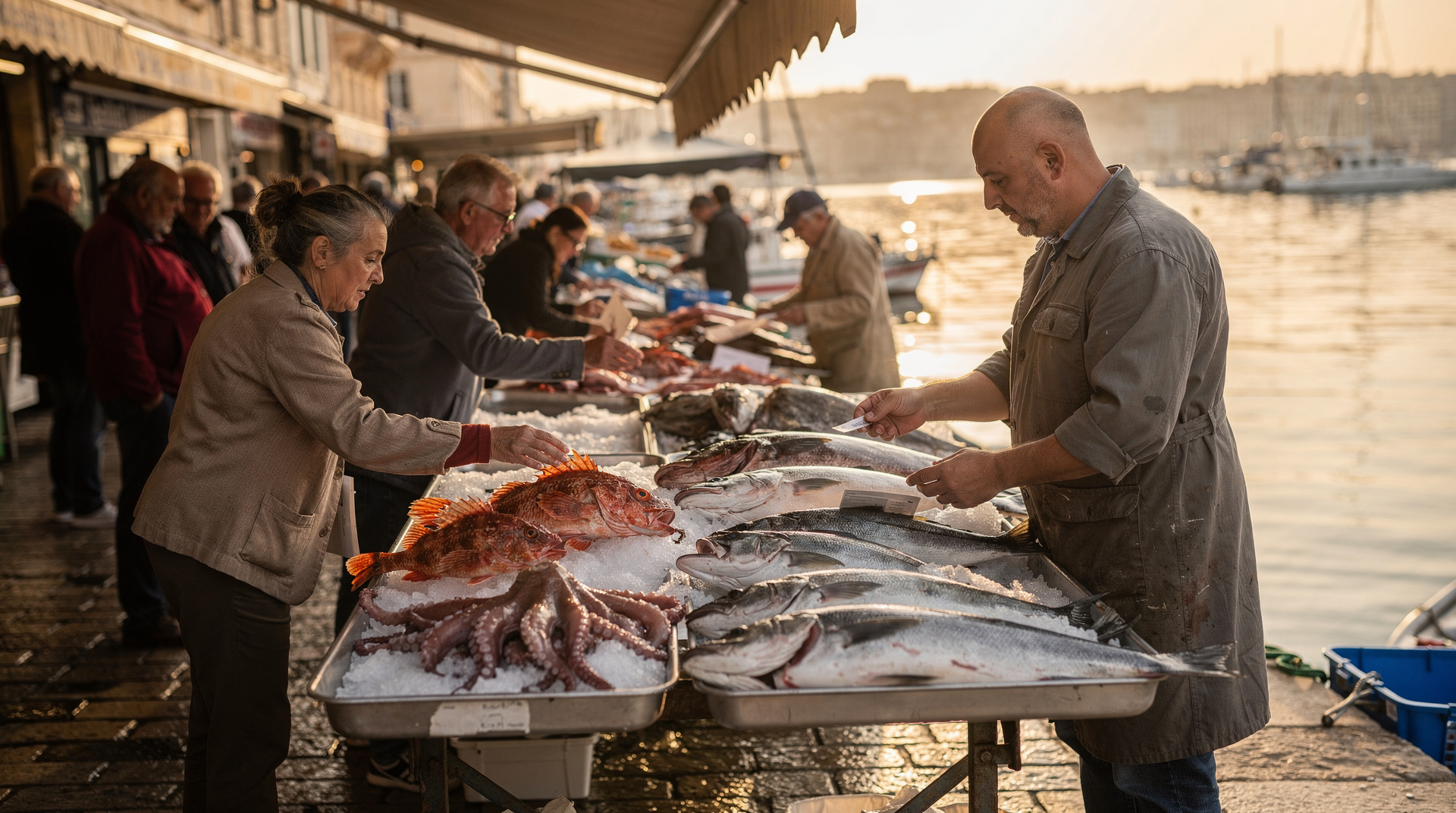
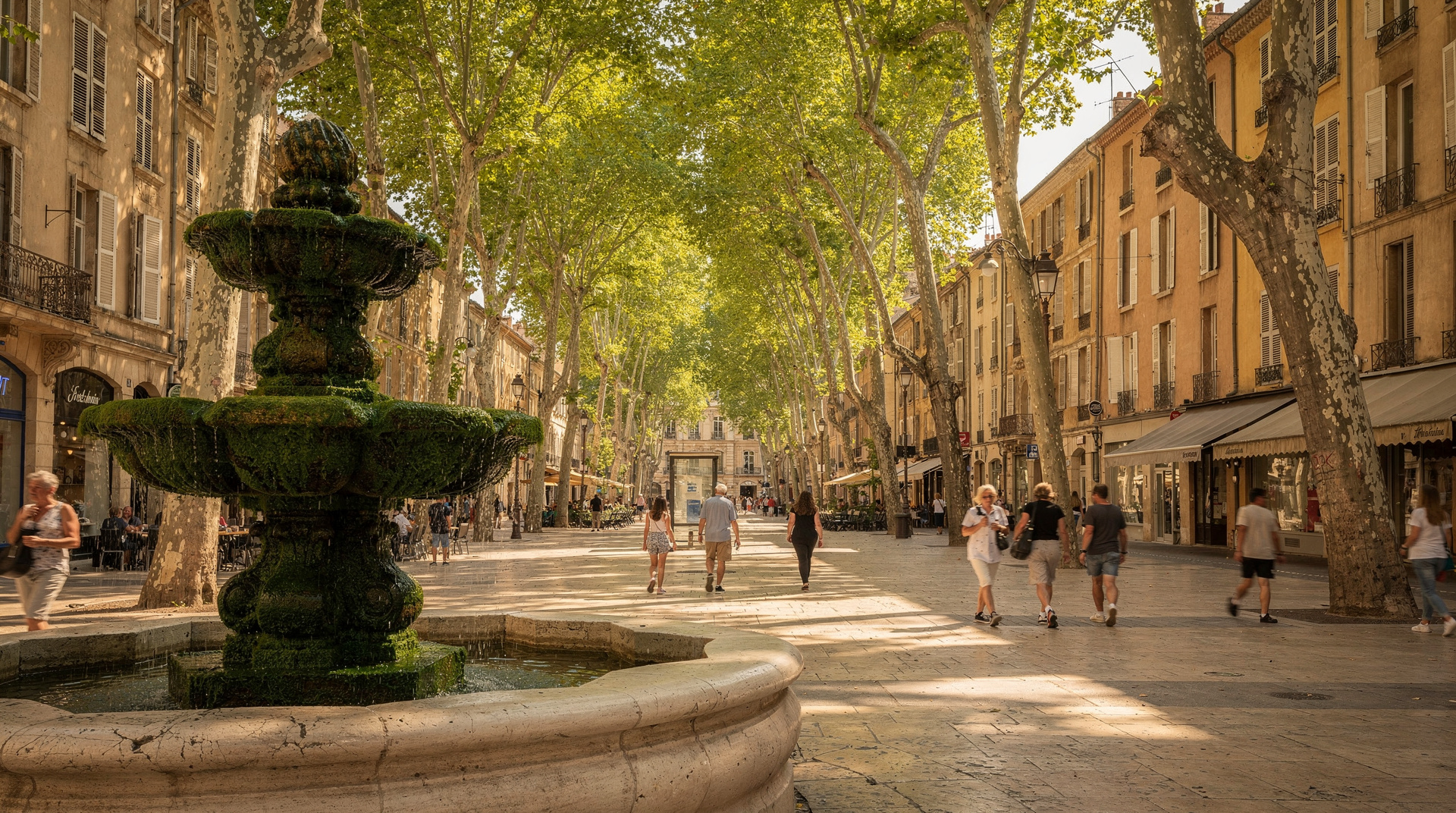
At the market: The Noailles and Aix markets include wine and produce stalls from local producers — not always the top domaines, but often small-production winegrowers who do not have distribution elsewhere. The prices are honest.
How to actually taste at a domaine
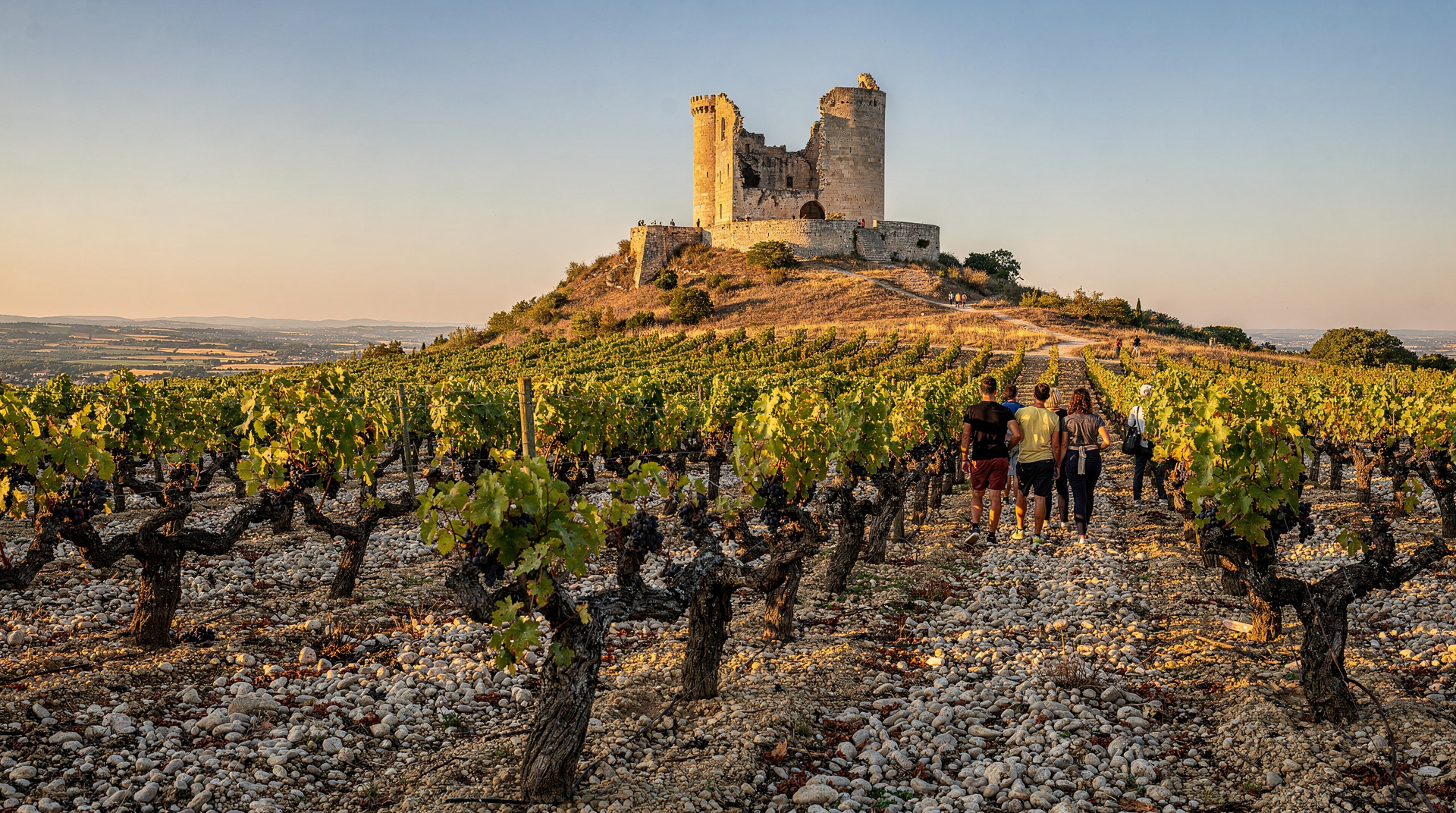
Most domaines around Bandol and Cassis welcome visitors without an appointment in high season, though calling ahead is polite and sometimes necessary in the smaller Luberon operations. Expect a short walk through the cellar or vines, a few pours (typically the entry rosé, a mid-range cuvée, and sometimes the top wine), and a low-pressure sales pitch — Provençal wine culture is not the hard sell of some other regions. Bring cash for the smaller domaines; card readers are not universal. If you are combining tasting with a day out, the Cassis wine guide and Bandol wine guide both cover which domaines are set up for casual drop-in visits versus appointment-only.
Going deeper before you go
If the grape varieties and appellations in this piece raise more questions than they answer, our Provence rosé explained guide walks through the styles and how to read a label. For planning a route that links several estates, Provence wine routes and wine tasting near Marseille are the natural next reads, and the Côtes du Rhône from Marseille guide covers a different wine country if you want to compare.
Rosé is also a summer drink in the most literal sense, so it helps to know what the season is like in the city itself: Marseille in summer explains the heat and the crowds, and the Luberon villages such as Lourmarin are an easy place to pair a domaine visit with a slow lunch.
Turning a tasting into a good day
A tasting works best when it is not the only thing planned. On the coast, a stop in Cassis can combine a domaine visit with time at the harbour — the Cassis day trip guide shows how the day fits together, and getting to Cassis from Marseille covers the transport side. Back in the city, the Cours Julien guide is a good starting point for finding a cave à vins, and the Marseille markets guide helps with the market stalls mentioned above.
For a table to match the bottle, see the best restaurants in Marseille and the Marseille seafood guide. Other stories from our visits sit alongside this one: a perfect day in Cassis, the best bouillabaisse we ever had and Provence markets we love all share the same slow, food-first approach to the region.
Comparing the three regions
| Region | Style | Typical bottle price | Best paired with |
|---|---|---|---|
| Bandol | Structured, Mourvèdre-based, ages well | Around EUR 18-28 | Bouillabaisse, grilled fish |
| Cassis | White (Clairette/Marsanne/Ugni Blanc), mineral | Around EUR 15-25 | Bouillabaisse, seafood |
| Luberon | Light, fresh, everyday drinking | Around EUR 9-15 | Vegetables, casual meals |
The summer’s conclusion
Rosé in Provence in summer is not a discovery. It is a confirmation of something that the region has been doing right for a long time. The discovery, in 2024, was the range within the category: the gap between the best Bandol rosé and the supermarket Provence AOC rosé is as large as the gap between a good Burgundy and a basic Beaujolais. The honest position is that the best Provençal rosé justifies its reputation and its price, and that the Bandol and Cassis whites deserve to be part of the same conversation.
Drink cold. Drink in the shade. Drink with fish.
Frequently asked questions about Best rosé of the summer — Provençal wines tasted that season
Is Provençal rosé always dry? The Provence AOC and Bandol styles are almost always dry. Sweeter rosé exists but is rare from serious producers and not what defines the region’s reputation.
Can you visit Bandol and Cassis domaines without a car? It is difficult. Public transport reaches the towns but not the vineyards themselves, which are spread across the surrounding hills — a hire car or organised tour is the practical option.
Top experiences
Bookable activities with verified prices and instant confirmation on GetYourGuide.