Luberon villages day tour from Marseille: our top pick reviewed
From Marseille: the most beautiful villages of the Luberon
Duration: 8 hours
The villages that made Provence famous
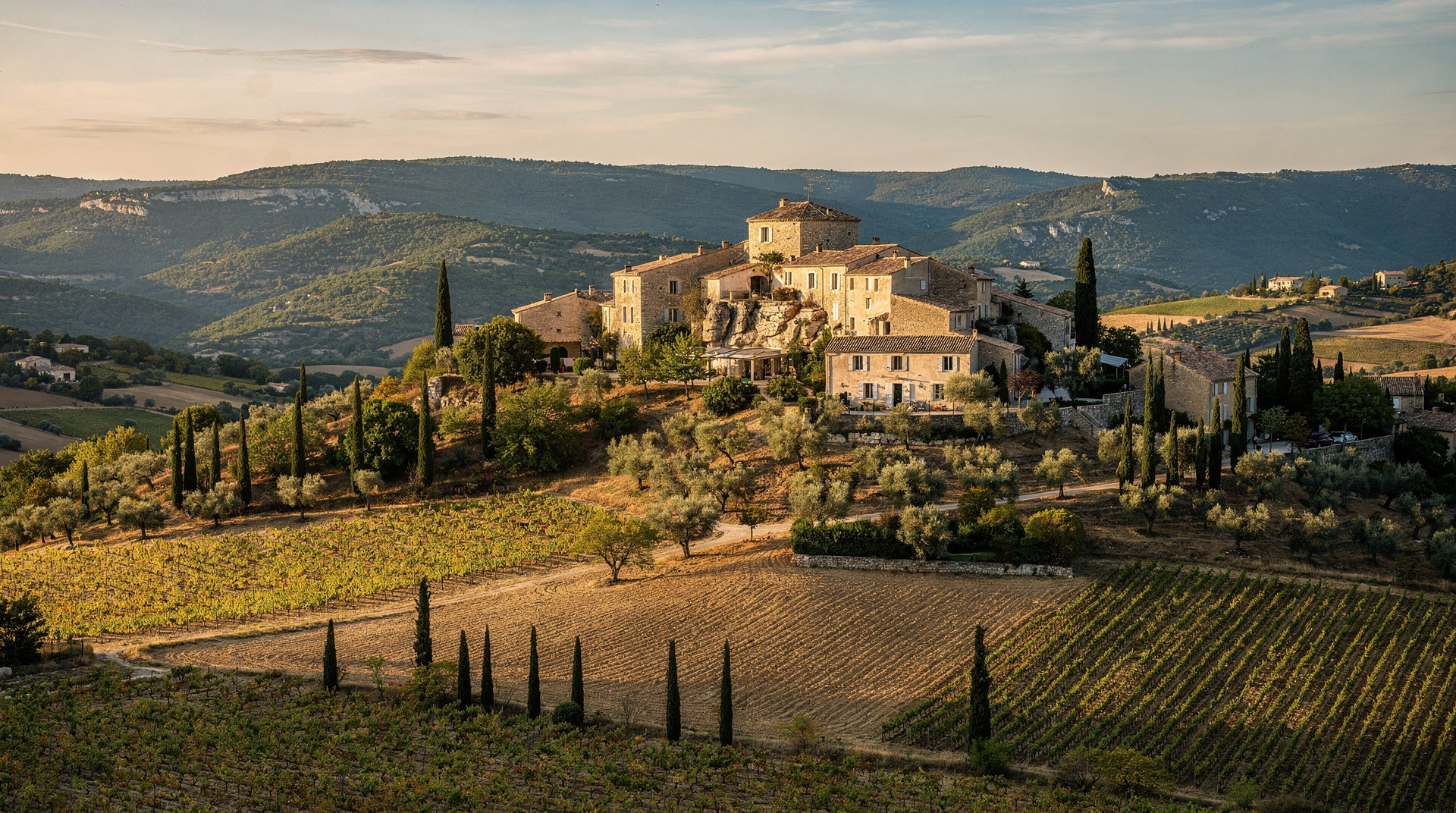
The limestone hilltop villages of the Luberon — Gordes, Ménerbes, Lacoste, Roussillon — are the reason Provence has the reputation it does beyond France. Peter Mayle wrote about them, Ridley Scott filmed them, and millions of visitors come specifically to see the perched stone buildings, ochre cliffs, and lavender-edge landscapes. The question for visitors from Marseille is whether an 8-hour guided day trip delivers enough to be worth the distance.
Verdict: Yes — the Luberon most-beautiful-villages tour is among the best day trips from Marseille for travellers who want the landscape of Provence rather than the coast. The villages are genuinely extraordinary. Go on a weekday if possible, aim for spring or autumn, and adjust your expectations: this is an introduction, not an immersion.
What this tour includes
The day tour departs from Marseille and drives approximately 1h15 into the Luberon massif, visiting a curated selection of villages. Most tours spend 1.5–2 hours in each of two or three key stops.
Duration: 8 hours total including travel.
Typical village stops:
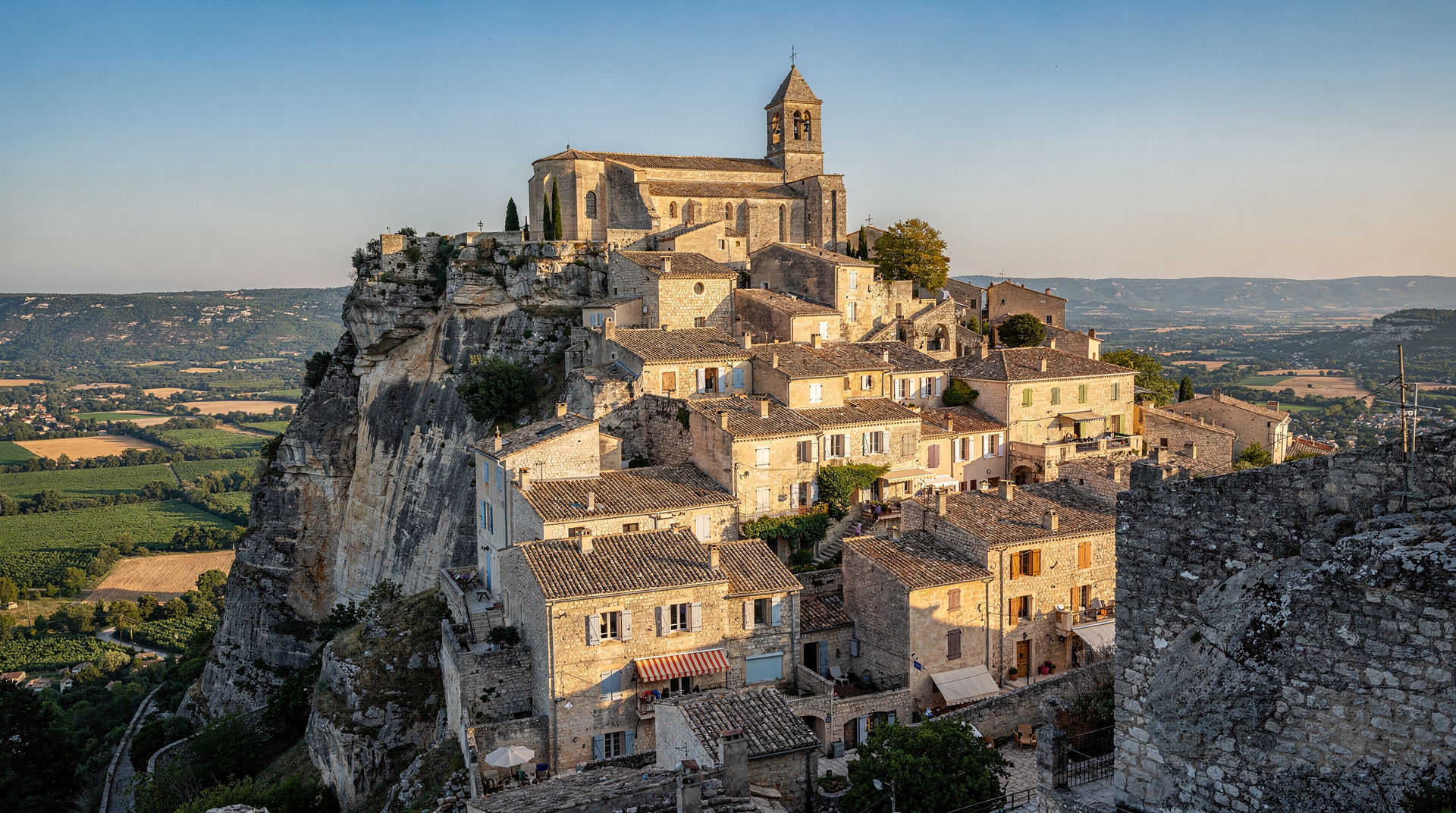
- Gordes: the most spectacular of the Luberon perched villages, medieval streets, abbey of Sénanque nearby
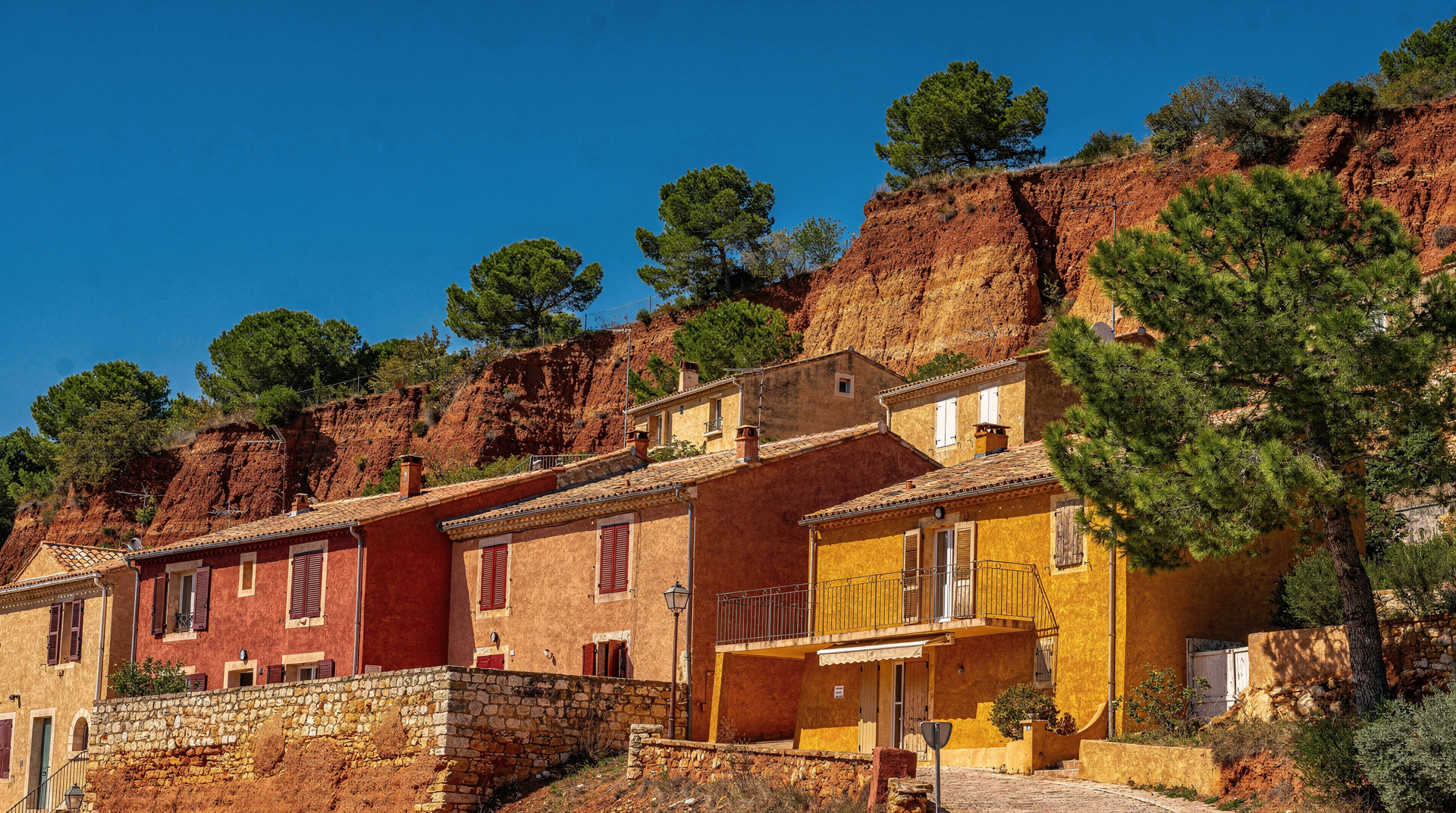
- Roussillon: ochre cliffs and coloured facades, option to walk the Sentier des Ocres
- Les Baux-de-Provence: ruined medieval fortress, panoramic position above the Alpilles (on some tours — check itinerary)
- Fontaine-de-Vaucluse: the mysterious spring source of the Sorgue river (less visually dramatic but historically significant)
What is included:
- Transport from Marseille in air-conditioned vehicle
- English-speaking guide throughout
- Orientation walk in each village
What is not included:
- Entry to the Sentier des Ocres at Roussillon (small fee, worth it)
- Carrières des Lumières at Les Baux (separate ticket, EUR 12–15)
- Meals — lunch stop is typically at a village restaurant at your expense
- Abbey of Sénanque interior (exterior view usually included)
Group size: Small-group format (8–16 passengers) is standard. Some operators use larger coaches — the small group format allows more flexibility at each stop.
Why we recommend it
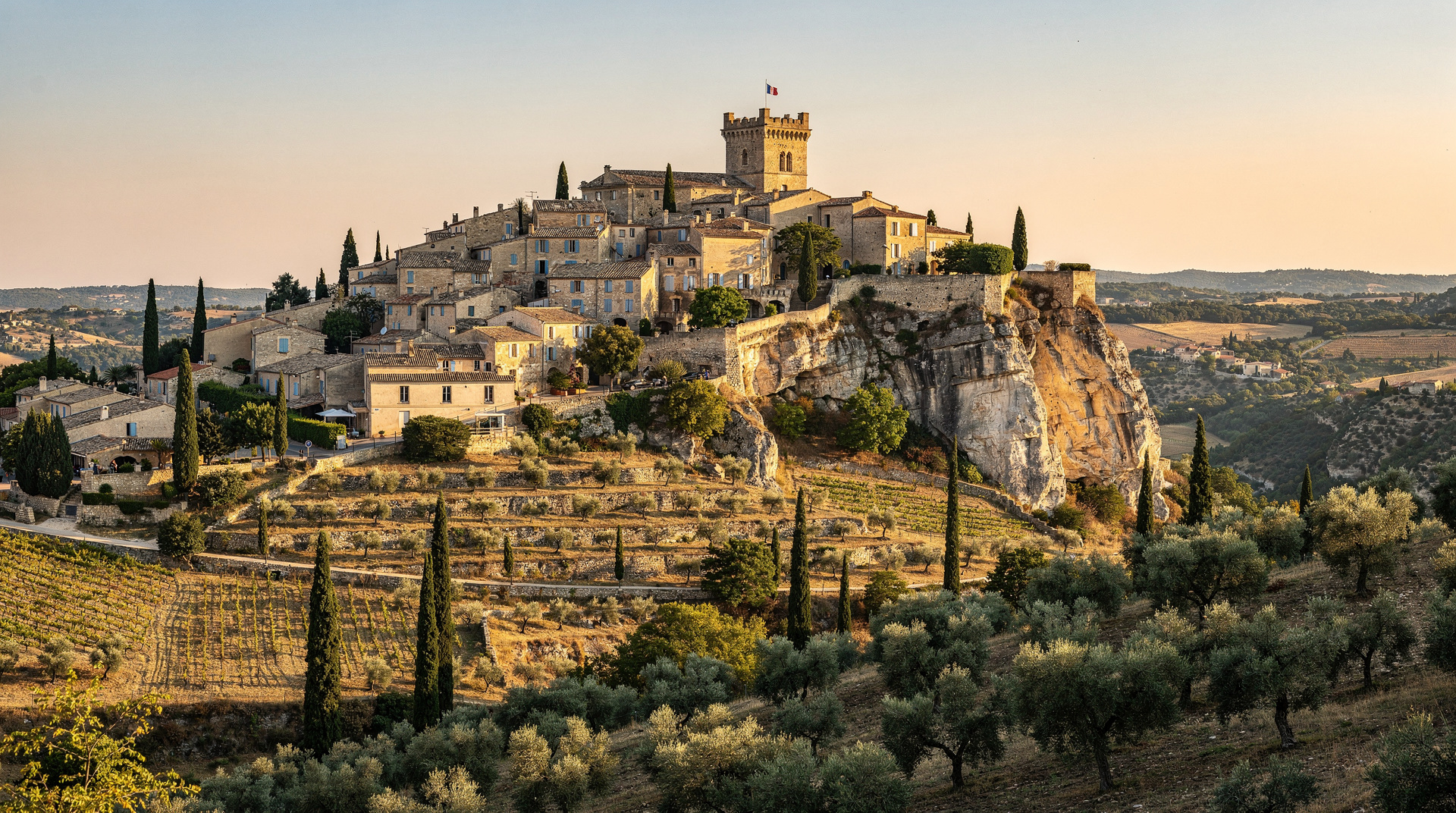
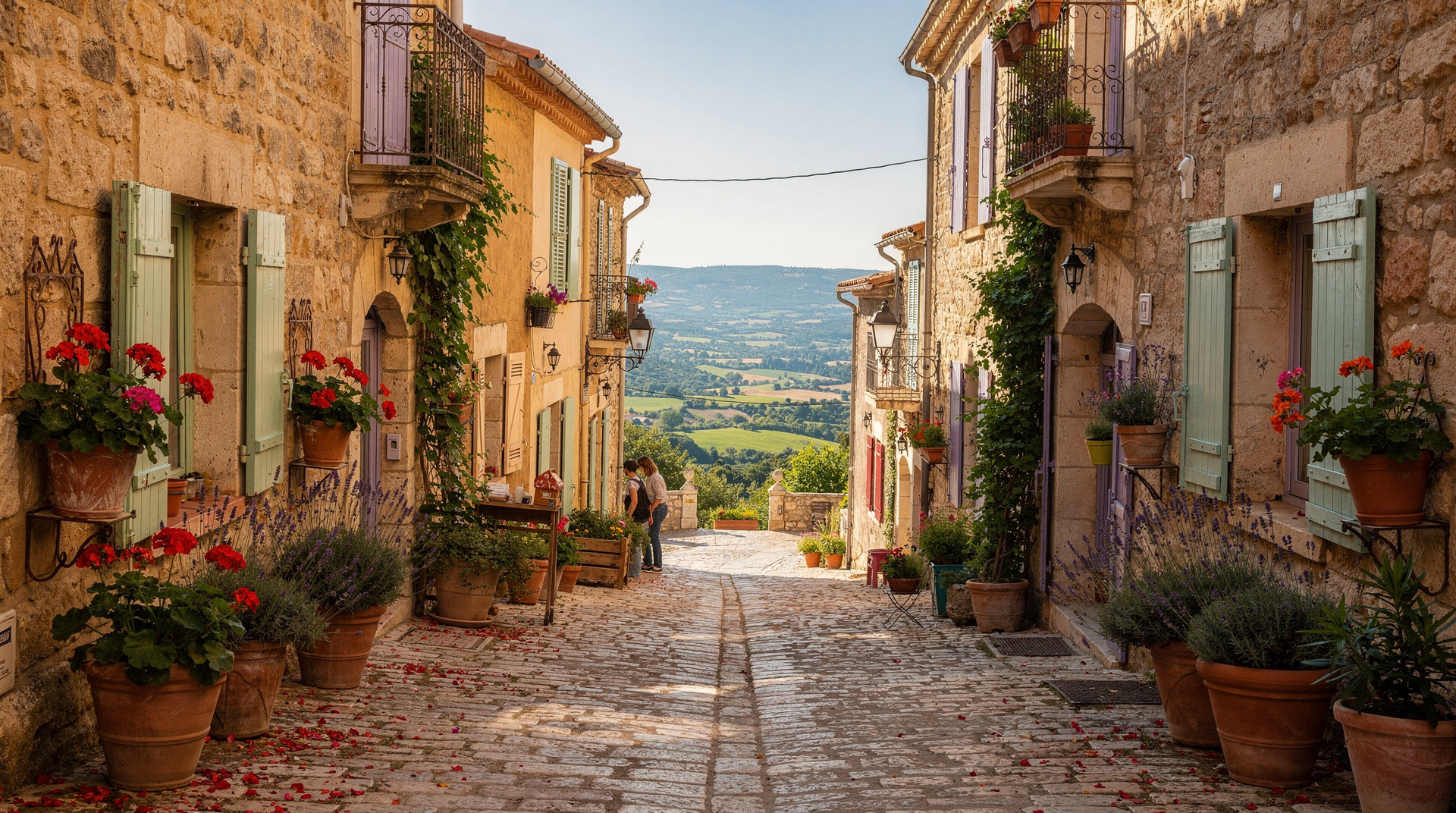
1. Gordes from below is one of the great Provençal views. The approach road to Gordes delivers the classic view: a pyramid of limestone buildings stacked up a hillside with a 12th-century château at the summit. This view is reproduced on approximately half the Provence calendars and guidebook covers produced in the last 50 years. In person, in good light, it is as good as the photographs. Spending time in the village streets behind the façade — narrow lanes, local artisan shops, views down to the Luberon plain — adds substance to the image.
2. Roussillon is unlike anything else in France. No other French village is built in a landscape of this colour. The ochre cliffs behind the village are not a geological backdrop — they are the reason the village exists (the pigment industry ran from the 18th century until the 1950s). The Sentier des Ocres walk through the old quarries takes 30–45 minutes and costs a few euros — it is worth every cent.
3. The guide contextualises the landscape. The Luberon has layers — the Vaudois history, the Wars of Religion, the honey-coloured limestone quarries, the lavender economy, the artists who came in the 20th century. A good guide turns a pretty village into a story. The audio commentary on a self-drive trip cannot replicate this.
4. No logistics. Getting between Gordes, Roussillon, and Fontaine-de-Vaucluse by public transport is essentially impossible. Renting a car from Marseille adds cost and planning. The guided tour handles all of this.
5. Market variant. The markets-and-lavender variant includes a Provençal market stop (typically Tuesday market at Apt or Saturday at Gordes) which adds fresh produce, local fabric, and a genuinely working Provençal market experience to the village tour.
How it compares to alternatives
Luberon markets and lavender tour adds a morning Provençal market stop and times the route to pass lavender fields in bloom season (late June to mid-July). If you visit in that window and care about lavender, this is the better choice. Outside lavender season, the villages-only tour is more focused.
Aix Luberon market and villages day tour departs from Aix-en-Provence rather than Marseille — useful if you are staying in Aix. The itinerary typically covers the same villages but the approach route is different and the guide’s local knowledge reflects the Aix perspective.
Gordes, Roussillon and ochre trail with Fontaine de Vaucluse is a Roussillon-based tour that approaches the ochre trail in depth — a niche option for those specifically interested in the geology and colour landscape. Less wide-ranging than the full Luberon villages tour.
For context on what to expect, see our Luberon villages day trip guide.
Practical info
Drive time from Marseille: 1h15–1h30 each way. This means a full 8-hour day includes 2.5–3 hours of driving — accepted on a day trip, but be aware that the tour is genuinely full-day, not a relaxed half-day.
Honest caveat on summer timing: Gordes in July and August has car parks that fill by 9 am and village lanes that are genuinely congested by 11 am. The guided bus arrives early and parks where private cars cannot — a real advantage. But even with a guided tour, the most popular spots are crowded in peak summer. If you have flexibility, May or September is a materially better experience.
What to bring:
- Comfortable walking shoes (Luberon villages have steep, uneven stone streets)
- Cash for market purchases, Sentier des Ocres entry, and lunch
- Sunscreen and hat (village streets offer limited shade at midday)
- Camera — the light in the Luberon in spring and autumn is exceptional
Lunch: Budget EUR 20–35 for a village restaurant meal at lunch. The guide will recommend options at the lunch stop. Markets sell excellent picnic components (local cheese, bread, olives, charcuterie) for EUR 10–15 if you prefer.
Compare alternative tours
| Tour | Duration | Rating | Price | Highlights | |
|---|---|---|---|---|---|
| From Marseille: the most beautiful villages of the Luberon | 8 hours | — | — | — | Check |
| From Marseille: Provençal markets & lavender in the Luberon | 8 hours | — | — | — | Check |
| From Aix-en-Provence: Luberon market & villages day tour | 8 hours | — | — | — | Check |
| Gordes, Roussillon & ochre trail with Fontaine de Vaucluse | — | — | — | — | Check |
Frequently asked questions about Luberon villages day tour from Marseille
Which villages does the Luberon day tour visit from Marseille?
Typical stops include Gordes (one of France's most beautiful villages, perched limestone buildings), Roussillon (ochre-coloured facades on red-rock cliffs), Les Baux-de-Provence (medieval ruins, panoramic position above the Alpilles), and Fontaine-de-Vaucluse (the mysterious resurgent spring of the Sorgue river). The exact combination depends on the tour — some prioritise hilltop villages, others add the ochre trail at Roussillon.Is the Luberon worth visiting as a day trip from Marseille?
Yes, with realistic expectations. The Luberon is 1h15–1h30 from Marseille by car. A guided day trip gives you 3–4 villages in 8 hours with comfortable travel. It is not enough time to hike or explore deeply, but it is enough to understand why this part of Provence has a reputation. The villages are genuinely extraordinary — Gordes from below at golden hour is one of the most photographed spots in France.What is the best time of year to visit the Luberon villages?
Spring (April–June) and autumn (September–October). In summer, Gordes and Roussillon are very crowded — car parks full by 10 am on weekends, queues at the café terraces. The villages are also hot in July–August. Spring has wildflowers and cooler air; the lavender peaks nearby in late June to mid-July. Autumn has harvest colours and fewer tourists.Is lavender visible on the Luberon village tour?
Lavender fields are not in the Luberon itself — the main lavender plateau is Valensole, which is east of the Luberon (covered by a separate tour). The area around Sault and Roussillon does have some lavender, and if you visit in late June you will pass fields in bloom. For dedicated lavender, see our Valensole lavender tour review.What is so special about Roussillon?
Roussillon is built on and around an ochre cliff — the largest known ochre deposit in the world. The buildings are painted in seventeen shades of yellow, orange, and red, using the local pigment. The Sentier des Ocres (ochre trail) runs through the old quarries behind the village. The combination of colour, light, and landscape is visually unique in France.Can I do the Luberon villages independently from Marseille?
By car, yes — the D973 and D900 routes link the Luberon villages, and self-driving allows you to control timing. By public transport it is very difficult — local buses are infrequent and not designed for tourist itineraries. The guided day trip is the most practical option for visitors without a rental car.Is the Luberon villages tour suitable for elderly visitors or those with limited mobility?
The villages themselves involve uneven cobblestone streets and sometimes steep lanes. Most of the tour can be done comfortably, but the Sentier des Ocres at Roussillon involves a walking trail that is not wheelchair-accessible. The viewpoints over Gordes are accessible by vehicle. Inform the operator of mobility requirements when booking.How many villages will I actually visit in one day?
Most tours visit two or three villages with adequate time at each (1.5–2 hours), plus travel time. A tour claiming to cover five or six Luberon villages in 8 hours is rushing each stop — be sceptical of itineraries that promise too much. Quality over quantity: two villages with real time is better than five villages with 30 minutes each.Should I buy the Sentier des Ocres ticket separately?
The ticket for the Sentier des Ocres at Roussillon costs around EUR 3–5 (it was EUR 3.50 in 2025 — check current pricing). It is worth it — the walk through the red and yellow quarry landscape takes 30–45 minutes and the colour experience is exceptional. Most guides will lead you through the trail if you have the ticket; if not, it is clearly marked and easy to follow independently.Are there restaurants in the Luberon villages for lunch?
Yes — Gordes, Roussillon, and Les Baux all have restaurant options. Prices are higher than in Marseille (EUR 25–35 for a set lunch at a terrace restaurant). The Tour d'Aigues market village has more casual options. Alternatively, buy picnic food at a market stop if the tour includes one.Can I combine the Luberon with a lavender visit?
The Luberon tour does not specifically cover Valensole — the main lavender plateau. However, if you visit in late June to early July, the fields around Sault and Roussillon do have lavender in bloom. For dedicated lavender, the Valensole lavender tour covers the plateau specifically. The two tours can be combined on consecutive days.