Cassis Calanques hike tour: our top pick reviewed
Cassis: half-day Calanques de Cassis hike
The best way to arrive at En-Vau
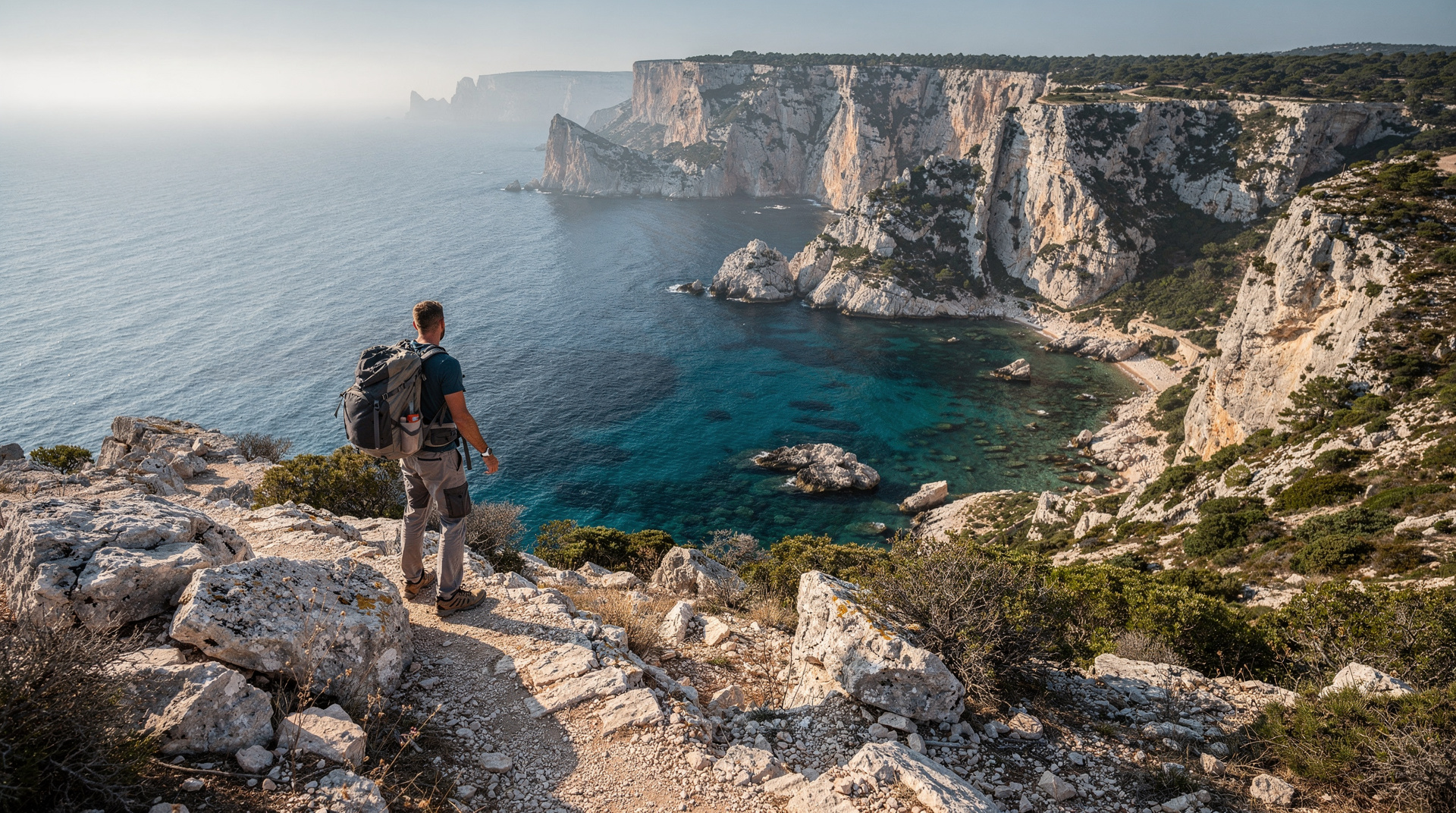
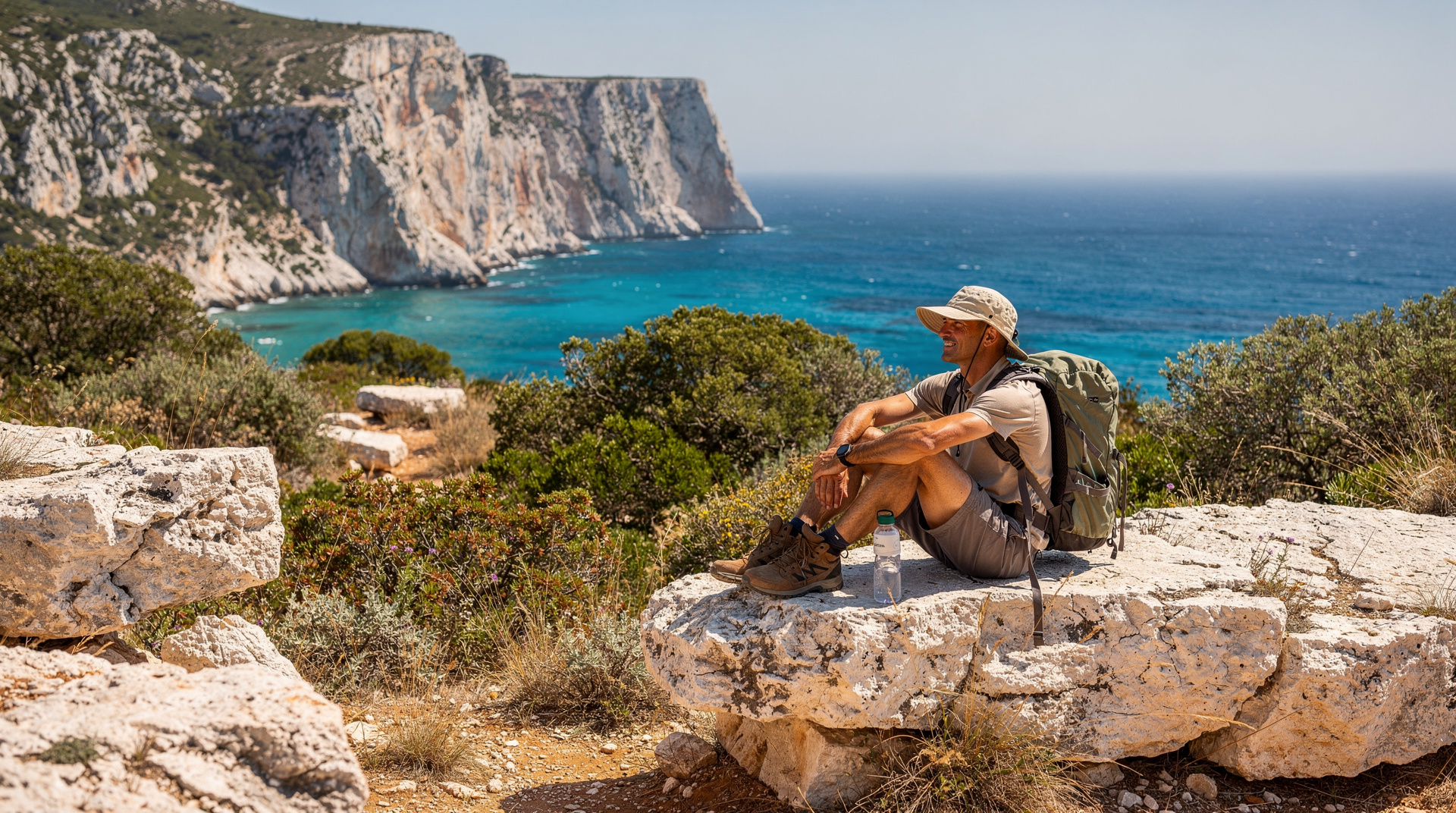
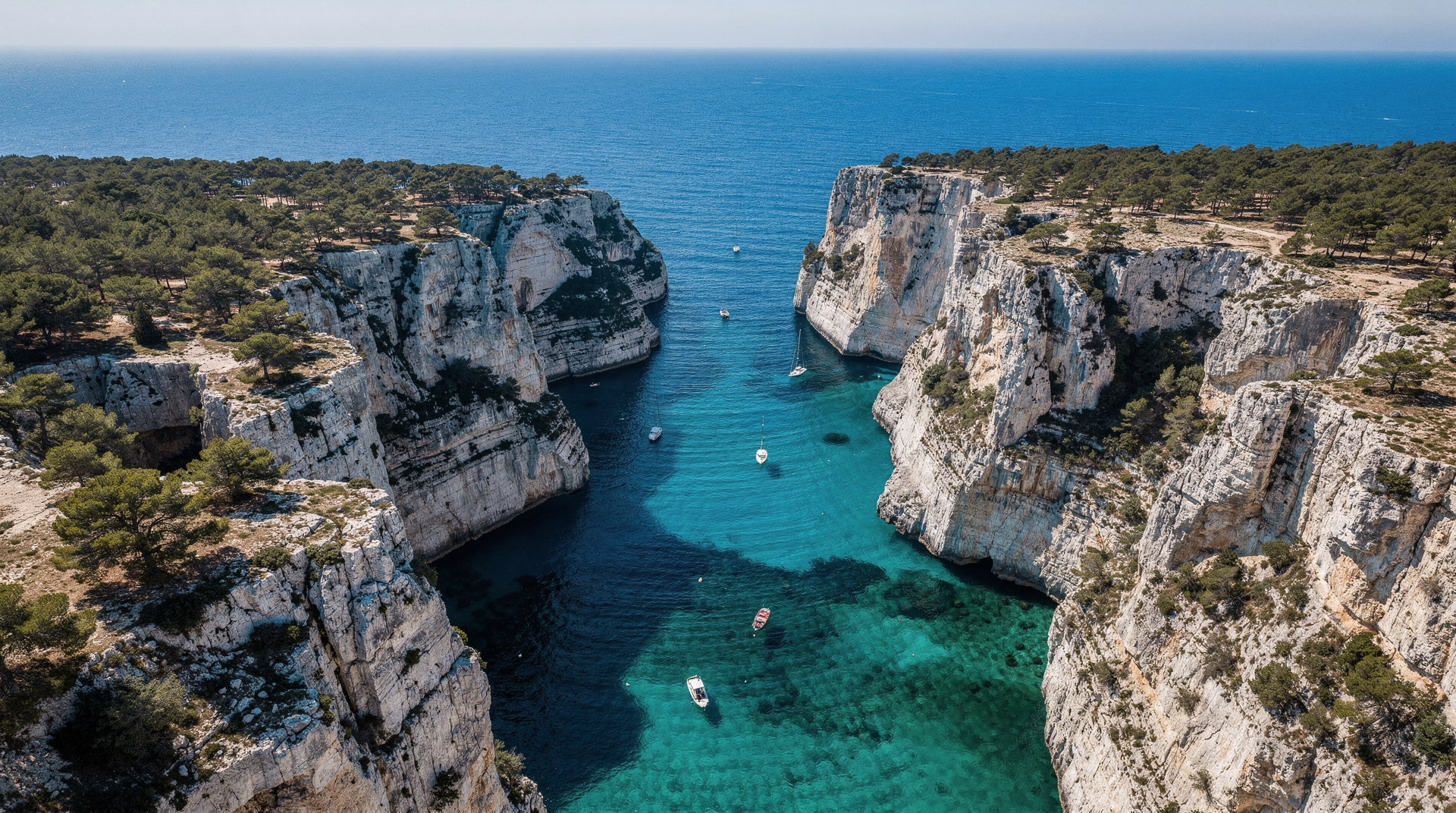
A boat delivers you to the Calanques; a hike earns them. Approaching En-Vau on foot — descending a narrow limestone ravine through fragrant garrigue, hearing the water before you see it, then emerging at the top of the white pebble beach with the 200-metre cliffs rising on three sides — is one of the defining physical experiences in the south of France. The Cassis Calanques half-day hike makes this accessible to fit visitors with a guide who knows the trails, the fire risk protocols, and how to manage a group safely.
Verdict: The best choice for physically active visitors who want the hike-earned perspective on the Calanques. More demanding than the boat tour, more rewarding if you have the fitness and the right footwear. En-Vau by foot is among the great short hikes in France.
What this tour includes
The half-day hike departs from Cassis port and follows the GR98 trail system into the Calanques National Park, visiting Port-Miou, Port-Pin, and (on the full-day variant) En-Vau.
Duration: Half-day (3–4 hours) or full day (6–8 hours) depending on option.
Trail overview:
- Port-Miou: 30 minutes from Cassis — a long, narrow inlet, the most accessible calanque
- Port-Pin: 1.5 hours from Cassis — steep descent, pebble beach, wild and beautiful
- En-Vau: 2.5–3 hours from Cassis — the most dramatic; sheer white walls, emerald water, no road access
What is included:
- Certified guide (French and English)
- Safety briefing on limestone terrain and fire risk protocols
- Trail navigation and wildlife/geology commentary
- Emergency contacts and first aid kit carried by guide
What is not included:
- Hiking poles (bring your own if you use them)
- Packed lunch (required for the full day)
- Transport to Cassis from Marseille
- Swimming equipment (bring swimsuit if the tour includes a swim option)
Group size: 6–15 participants with a certified hiking guide. The national park regulations require guided groups to stay on designated trails.
Why we recommend it
1. En-Vau is the park’s most dramatic calanque — and foot access is the most earned approach. The boat version of En-Vau is good; the hiking version is different in character. You arrive having made the physical commitment — you have smelled the rosemary and thyme on the garrigue, heard the silence of the limestone plateau, and then descended to the water. The experience has context the boat cannot provide.
2. The guide manages the fire risk complexity. Summer access to the Calanques is not straightforward — trail closures happen on short notice based on wind and temperature readings. A guide monitors the daily prefectural orders, has alternative routes prepared, and can adapt the day if conditions change. Attempting this independently requires constant monitoring of official sites and the ability to adapt in real time.
3. The GR98 trail is genuinely interesting. The path through the garrigue is more than a means to an end — the scrubland vegetation (kermes oak, mastic, cistus, wild rosemary) and the limestone geology have their own interest. A good guide explains the calanques formation (drowned river valleys, not fjords), the plant adaptations to limestone and drought, and the maritime heritage visible from the heights.
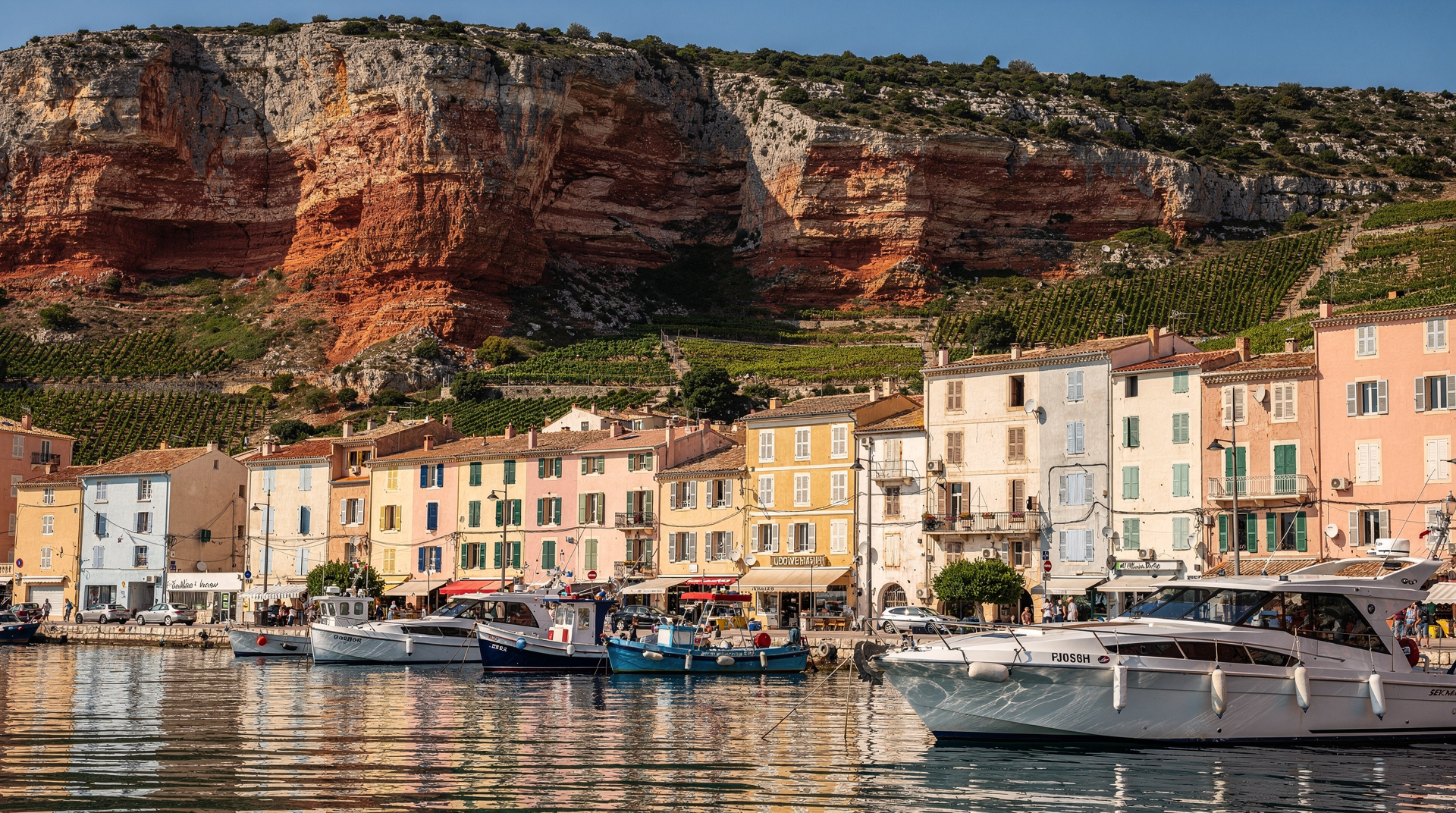
4. Cassis is worth a morning or afternoon. The village of Cassis itself — a small, genuinely charming port with white houses and a backdrop of Cap Canaille (Europe’s highest sea cliff at 394 metres) — warrants time. Arriving early for the hike and spending the afternoon at the port (local white wine, seafood) makes a strong full day from Marseille.
5. Three-calanques swimming variant. The 3-Calanques hike-with-swimming tour specifically times the route to allow swim stops at the calanque beaches. This is the hybrid choice — you hike to the calanques AND swim in them. The best of both worlds, though it requires the full-day format.
How it compares to alternatives
Cassis 3-Calanques hike with swimming extends the standard hike to include planned swim stops and targets all three calanques in sequence. Best choice if you want both hiking and swimming in a single day.
Cassis Calanques hiking day is the full-day format that specifically reaches En-Vau — the 8-hour version that allows proper time at the furthest and most spectacular calanque. For En-Vau on foot, this is the right choice.
Marseille Calanques guided hike departs from Marseille and covers the western calanques (Sugiton, Morgiou, Sormiou). A different set of calanques with longer, less steep approaches. Better for those who want more sustained walking with less dramatic scenery; the Cassis-side wins for drama.
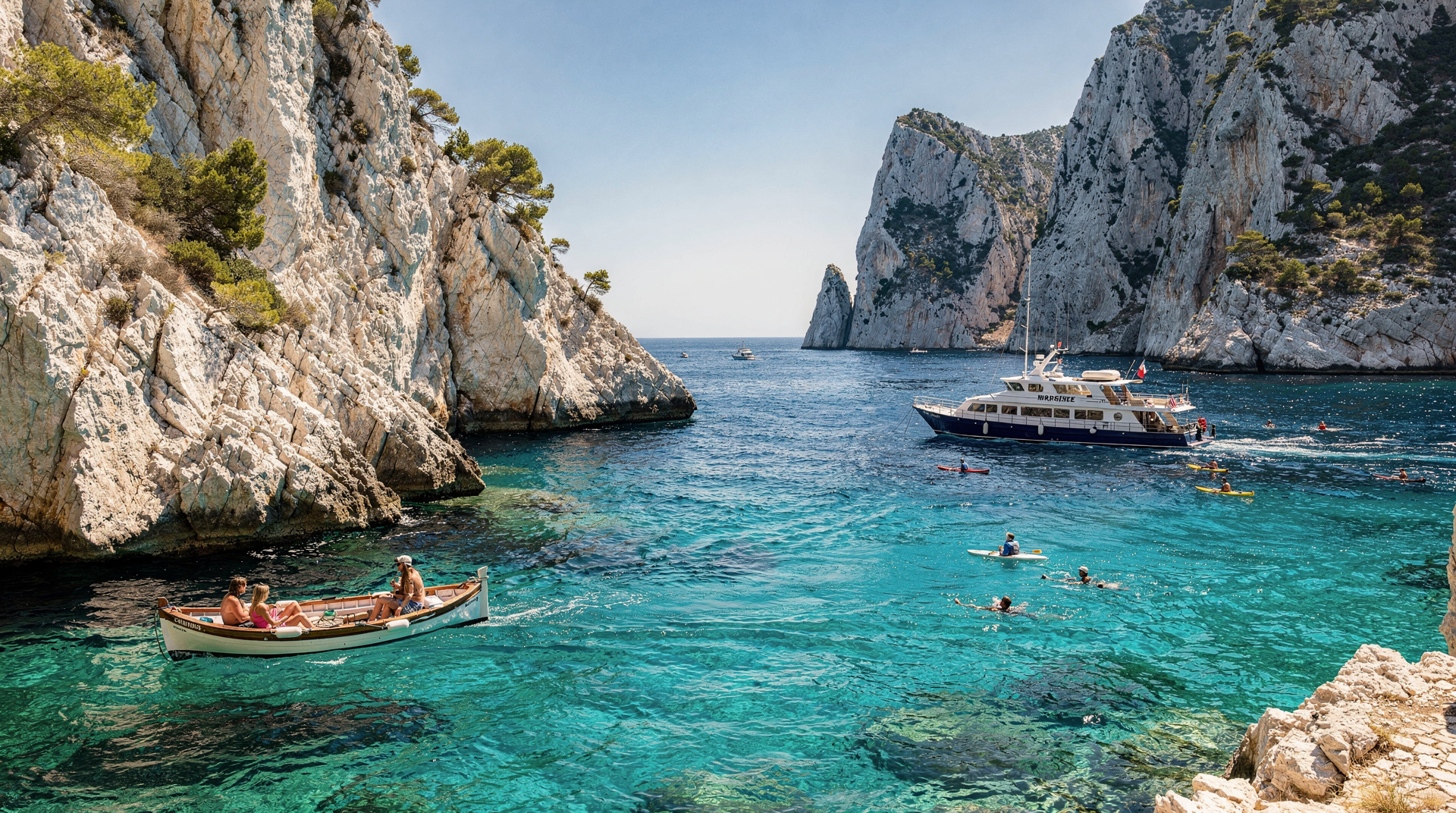
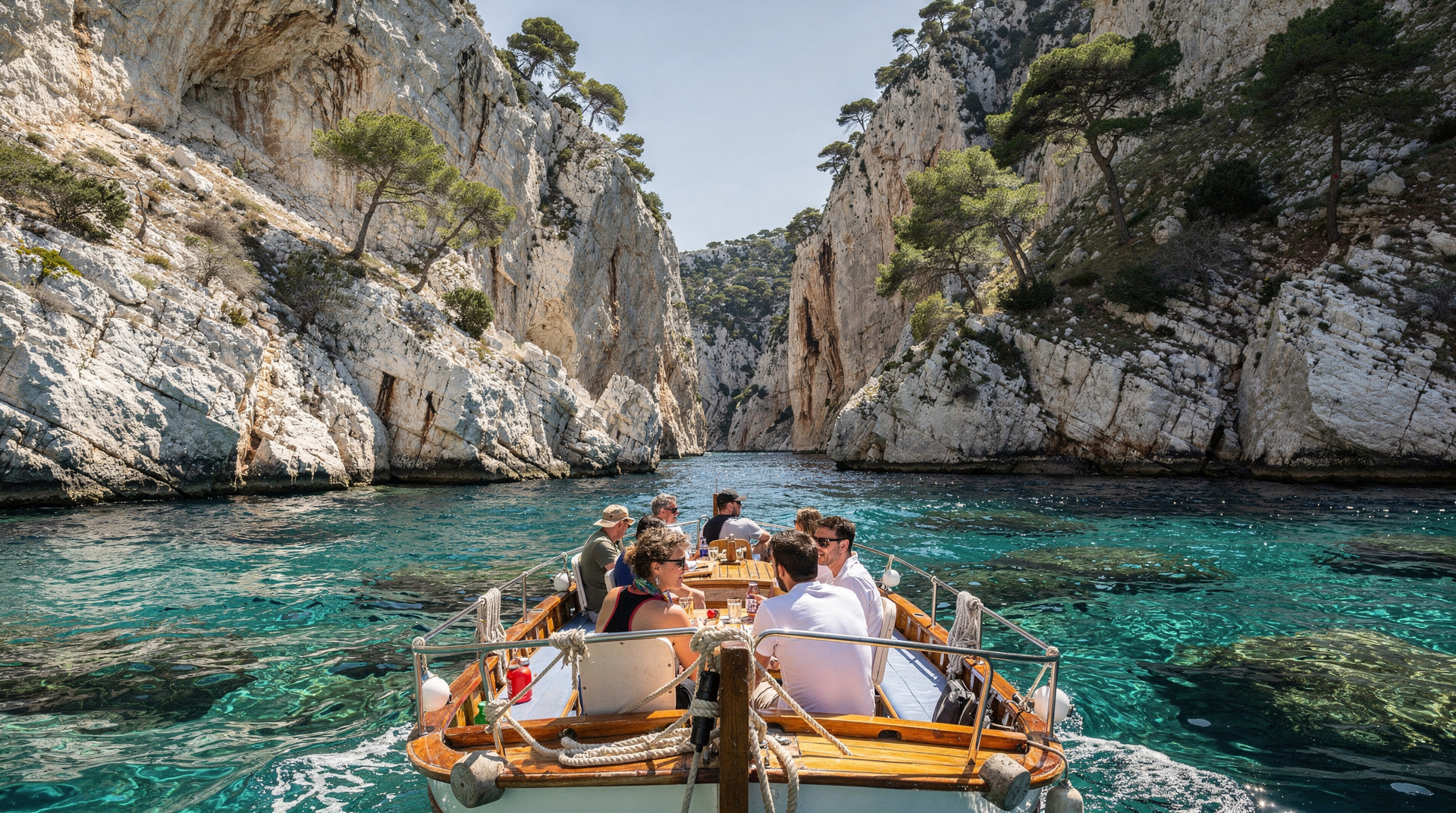
The main alternative to hiking is kayaking — see our Calanques kayak tour review for the comparison. For the boat perspective, see the Calanques boat tour review. Our guide boat vs hike in the Calanques gives the full comparison.
Practical info
The fire risk reality. Between late June and mid-September, trail closures are common and sometimes unexpected. The Calanques National Park issues daily access updates — on high-risk days (Mistral + heat), closures can be total. Guided tour operators have contractual relationships with the park and alternative routes prepared. Solo hikers attempting the same trails can find themselves turned back at a checkpoint. The guided format is genuinely more reliable in summer.
Physical requirements:
- Half-day (Port-Miou and Port-Pin): moderate fitness, no technical experience
- Full day (En-Vau included): good fitness, comfortable with rocky scrambling on descents
- All options: proper hiking footwear with grip and ankle support (non-negotiable)
What to bring:
- Hiking shoes (ankle support and rubber soles with grip)
- 2 litres of water per person (minimum) — more in July–August heat
- Sun protection: hat, sunscreen, UV-protective clothing
- Swimsuit and towel if the tour includes swimming
- Light snack for the half-day; full lunch for the all-day version
- Trekking poles (optional but useful for the descents)
Getting to Cassis: TER train from Marseille Saint-Charles to Cassis station (about 25 minutes), then taxi or shuttle 3 km to the port. Some tour operators include pick-up from Cassis train station — check when booking.
Compare alternative tours
Frequently asked questions about Cassis Calanques hike tour
Which calanques do you visit on the Cassis half-day hike?
The Cassis half-day hike typically visits Port-Miou (the closest, a long narrow inlet that even allows a few small sailboats), Port-Pin (steeper descent, wilder character, no vehicle access), and sometimes En-Vau (the most dramatic — sheer 200-metre white cliffs, emerald water, accessible only on foot or by kayak from Cassis). En-Vau requires the full-day format to reach at a proper walking pace.How difficult is the Calanques hike from Cassis?
The half-day hike is classified as moderate — it involves some steep descents to the water (loose rock, uneven terrain) and the same ascents on the return. Total elevation gain is around 200–400 metres depending on the route. The full-day hike to En-Vau and back involves more sustained climbing and requires good fitness. Trekking poles are useful for the descents.Can I swim during the Calanques hike from Cassis?
On the 3-Calanques hike-with-swimming variant, yes — the route is timed to allow a swim stop at Port-Pin or En-Vau. The half-day hike without the swimming variant may not have sufficient time for an extended swim stop. Check which version you are booking — the swimming component adds significant value in summer.Are the Calanques hiking trails open in summer?
Not always — this is the most important practical point. From late June through mid-September, hiking trails in the Calanques National Park can be closed due to fire risk (arrêté préfectoral de fermeture). The closures operate on a daily basis depending on fire danger level and wind conditions. On days with Mistral wind or extreme heat, even trails to Port-Miou may close. Check the official Calanques National Park website (calanques-parcnational.fr) for daily access status before your tour. Guided tours monitor these closures and will advise if the route changes.What is the difference between hiking from Cassis and hiking from Marseille?
From Cassis, you access the three eastern calanques (Port-Miou, Port-Pin, En-Vau) — the most dramatic in the park. The trails are shorter but steeper. From Marseille (the Luminy or Les Calanques trailheads), you access the western calanques (Sugiton, Morgiou, Sormiou). The Marseille-side is better for longer, flatter approaches; the Cassis-side delivers more dramatic scenery in a shorter distance.Do I need special footwear for the Calanques hike?
Proper hiking shoes with ankle support and grip are strongly recommended — not trainers, and absolutely not flip-flops or sandals. The trails are limestone, which is grippy when dry but slippery when damp. Some sections require hands-on scrambling over rocks. Trekking poles add confidence on descents. Guides will check footwear at the start of the tour.Can I reach En-Vau on the half-day hike?
Generally not — En-Vau is 2.5–3 hours from Cassis at walking pace, meaning a half-day hike gets you to Port-Pin at best before you need to turn back. For En-Vau, book the full-day option. This is not a tour operator limitation — it is geography.Is the hike safe without a guide?
The trails are marked but complex, and the fire risk protocols change daily. Independent hikers do hike the Calanques year-round. In spring and autumn, the risk is lower and independent hiking is entirely feasible with good navigation skills and proper preparation. In summer (July–August), the guided format is significantly safer: guides know which routes are currently open, carry emergency equipment, and can evacuate a group if conditions change rapidly. Our Calanques hiking safety guide covers this in detail.What happens if the trail is closed on my tour day?
A certified guide's response to a trail closure is to offer an alternative route (usually a lower-risk section of the park that remains open) or to reschedule. Tour operators handling multiple groups per day have contingency routes prepared. This is different from an independent hiker who may simply not be aware of the closure until they reach a checkpoint.Are there snakes in the Calanques?
Yes — the Montpellier snake and occasionally Asp vipers are present in the garrigue. Both typically avoid humans and retreat when they hear footsteps. Stay on the marked trails, don't put hands in rocky crevices, and wear long trousers in dense scrubland. Snake encounters are uncommon on guided tours. The guide carries appropriate first aid.What is the Sugiton reservation system?
Sugiton — one of the Marseille-side calanques — requires advance online reservation in summer to limit visitor numbers. This is specific to Sugiton and does not apply to the Cassis-side calanques covered in this tour. The Cassis calanques (Port-Miou, Port-Pin, En-Vau) do not currently require individual advance reservation, though this can change — check current rules on the park website before your visit.