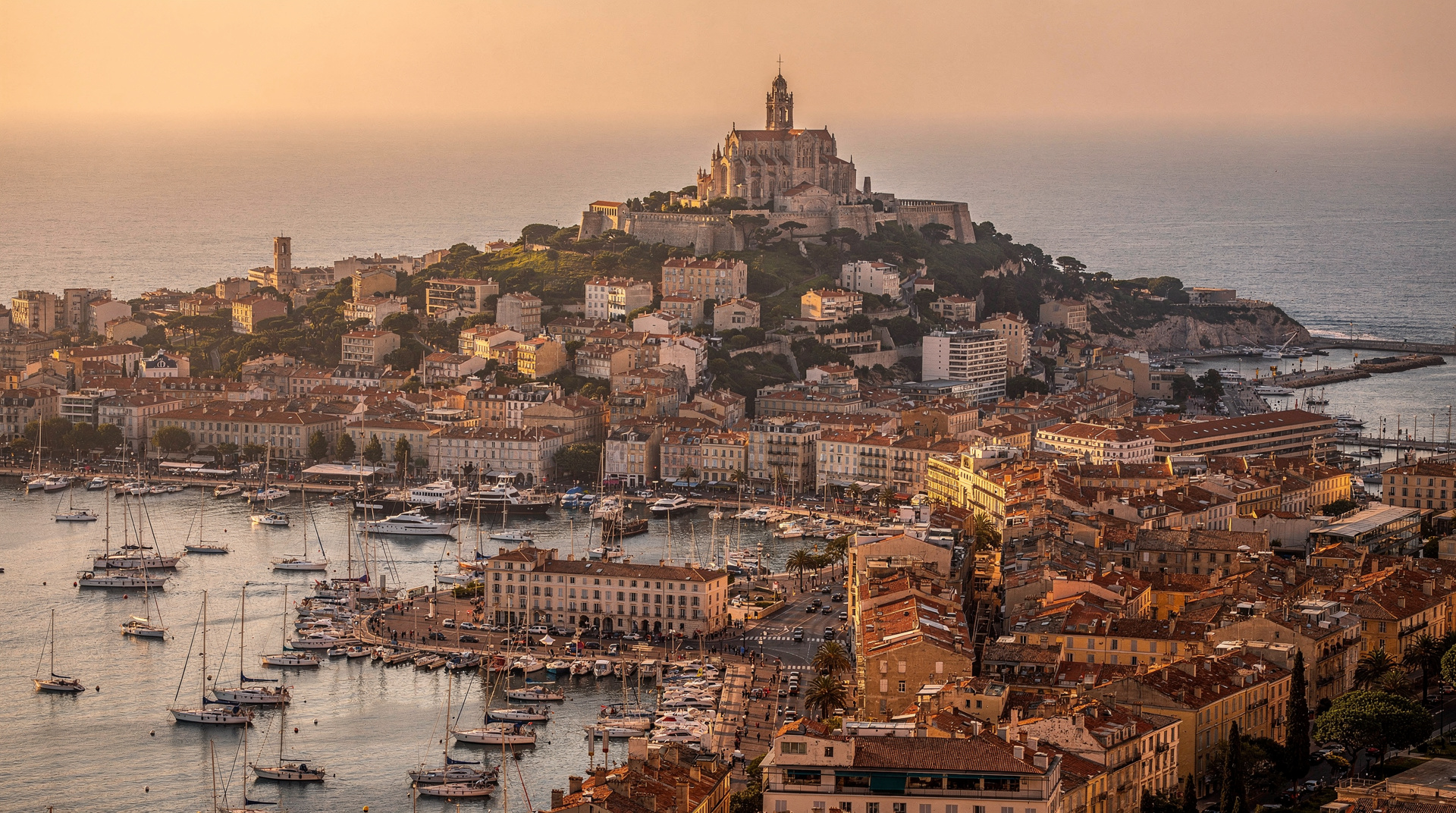
Sormiou and Morgiou hike: access rules, routes, and what to expect
Marseille: guided e-bike tour to Calanque de Sormiou
Can I drive to Sormiou in summer?
No — from June 15 to August 31, the road is closed to non-residents 7:00–19:00 every day. From April 3 to June 14, closed on weekends and public holidays. Access by foot from Luminy (45–60 min), by guided e-bike, or by organised hiking tour.
The calanques most visitors try to reach by car
Sormiou and Morgiou sit 10–12 km south of the Vieux-Port, which looks close on any map. The roads that lead to them are single-lane and narrow. The combination of these two facts has created the most common planning error in the Calanques: visitors arrive by car on a summer morning, find a barrier across the road, and have to turn around.
Knowing the access rules before you plan saves the wasted journey. Sormiou and Morgiou are both genuinely worth visiting — the cabanons community at Sormiou is unlike anything else in the national park, and the water at both calanques is as good as any in the massif. The logistics just require adjustment.
| At a glance | |
|---|---|
| Where | Sormiou and Morgiou calanques, 10–12 km south of the Vieux-Port |
| Cost | Free on foot; guided e-bike or via corda tours typically cost around EUR 50–90 per person |
| Time needed | A half-day for Sormiou alone; 5–6 hours for the full Sormiou–Morgiou loop |
| Getting there | Bus 21J or B1 to Luminy, then 45–80 minutes on foot; e-bike tour or boat as car-free alternatives |
| Best time | April–June or September–October for the full loop; go early to beat both heat and trail closures |
2026 car access restrictions
The road restrictions for vehicles entering the Sormiou, Morgiou, and Callelongue zones are set by prefectural order. For 2026:
April 3 to June 14: The road is closed to non-authorised vehicles on Fridays, Saturdays, Sundays, and public holidays from 07:00 to 19:00.
June 15 to August 31: The road is closed to non-authorised vehicles every day from 07:00 to 19:00.
Who is authorised: Residents of the cabanons and houses within the restricted zone, cabanon permit holders, restaurant patrons with a confirmed reservation at Les Tamaris (Sormiou) or Le Lunch (Morgiou), and boat owners with berths in the calanque. Everyone else — including all normal tourists — is in the non-authorised category.
Outside closure hours (before 07:00 and after 19:00), access is technically possible by car, but parking within the calanques is essentially non-existent. Even at 06:30, the limited parking spots near Sormiou are often occupied by cabanon owners.
September 1 and beyond: Restrictions lift. Access by car becomes possible. Check calanques-parcnational.fr for the precise end date each year — fire-risk trail closures may still apply separately through September even when car restrictions have been lifted.
Getting there without a car
On foot from Luminy
The most practical car-free approach uses bus to the Luminy campus (Bus 21J or B1 from Castellane métro) and the trail through the national park. From the Luminy car park:
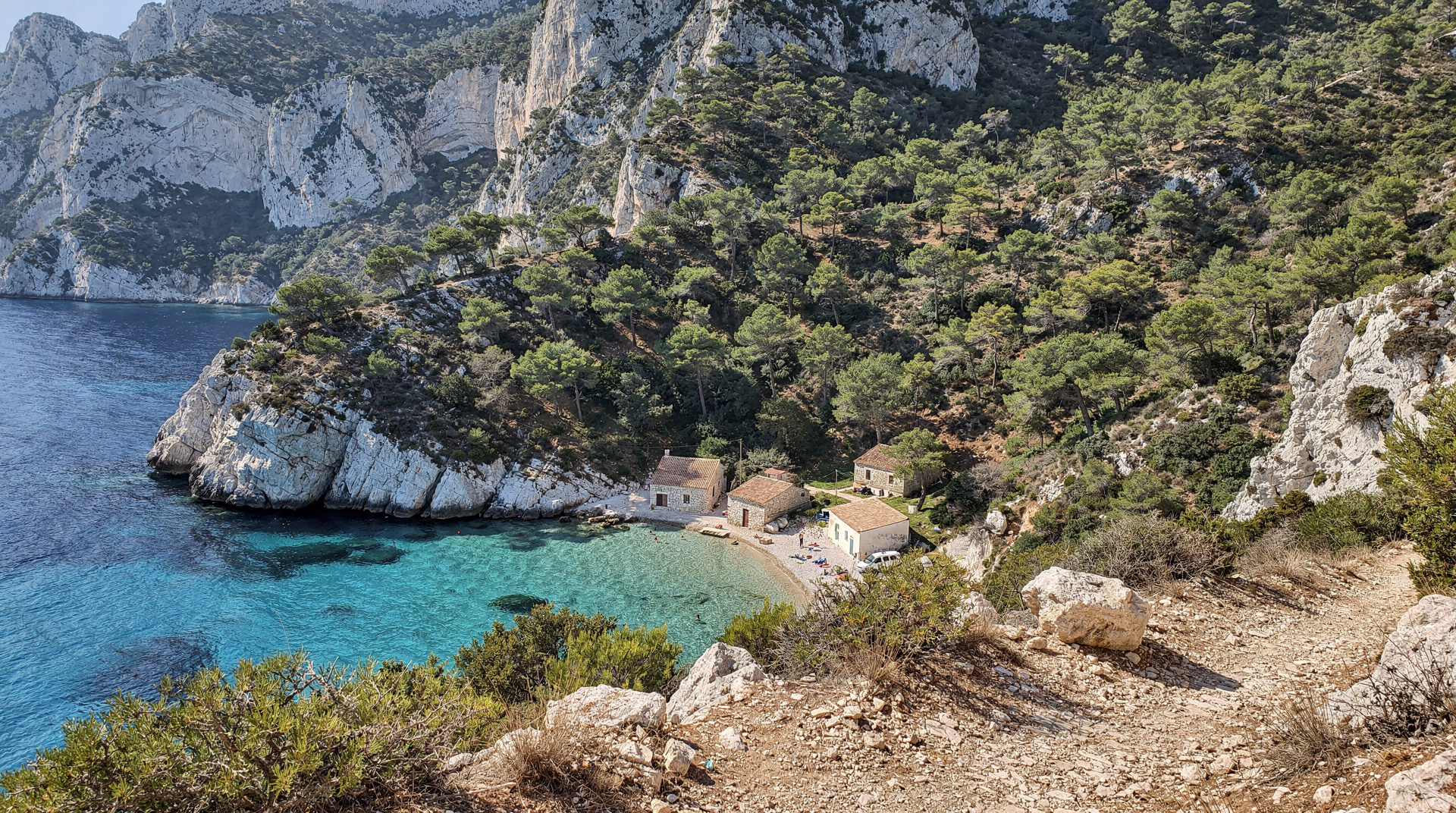
To Sormiou: 45–60 minutes on a marked but rocky trail descending approximately 150 metres to the calanque. The path passes through garrigue and sparse pine, with views opening toward the sea as you descend. The final section into the calanque passes between the cabanon structures, giving you the lived-in quality of the fishing community before you reach the beach.
To Morgiou from Luminy: 60–80 minutes by the Luminy–Belvédère route, slightly longer than Sormiou. The path takes the ridge toward the Belvédère de Morgiou viewpoint before descending into the cove.
The Morgiou loop from Sormiou: From the Sormiou beach, a connecting trail climbs the eastern ridge and descends to Morgiou in approximately 45 minutes. This loop (Luminy–Sormiou–Morgiou–Luminy) covers the two calanques in a 4–5 hour day with good fitness and early start. It is one of the more rewarding day hikes in the Marseille-side massif.
Trail conditions: Rocky, uneven, and exposed limestone throughout. Footwear with grip is essential. Minimal shade. Bring at least 1.5 litres of water per person for a Sormiou return visit; 2+ litres for the Sormiou–Morgiou loop.
Fire-risk trail closures: The Luminy trail is subject to the same daily access protocol as all other Calanques trails. Check calanques-parcnational.fr by 18:00 the evening before your planned visit. On orange or red risk days, the trail is closed — access reverts to boat or e-bike.
By guided e-bike
A guided e-bike tour from Marseille to Sormiou is the most practical car-free access to Sormiou during summer road restrictions. The route uses paths accessible to e-bikes and arrives at Sormiou without triggering the vehicle restriction (which applies to motorised road vehicles). The electric assist handles the significant climb on the approach. Tours typically include time at the calanque for swimming.
See the guided e-bike tours in the options above — they operate year-round subject to fire-risk conditions.
By boat
Boat tours from the Vieux-Port pass Sormiou among their calanque stops and may offer swimming stops in the cove. This is a realistic summer option when both the road and trail are inaccessible. It does not give you the cabanon experience (visible only from land), but it delivers the swimming and the view.
Sormiou: what you find when you arrive
The descent into Sormiou on foot from Luminy brings you through the cabanon community — the traditional stone fishing huts built by Marseille working-class families in the 19th and early 20th centuries. These are private property, some generations old, maintained with care. You pass between them on a narrow lane before reaching the beach.
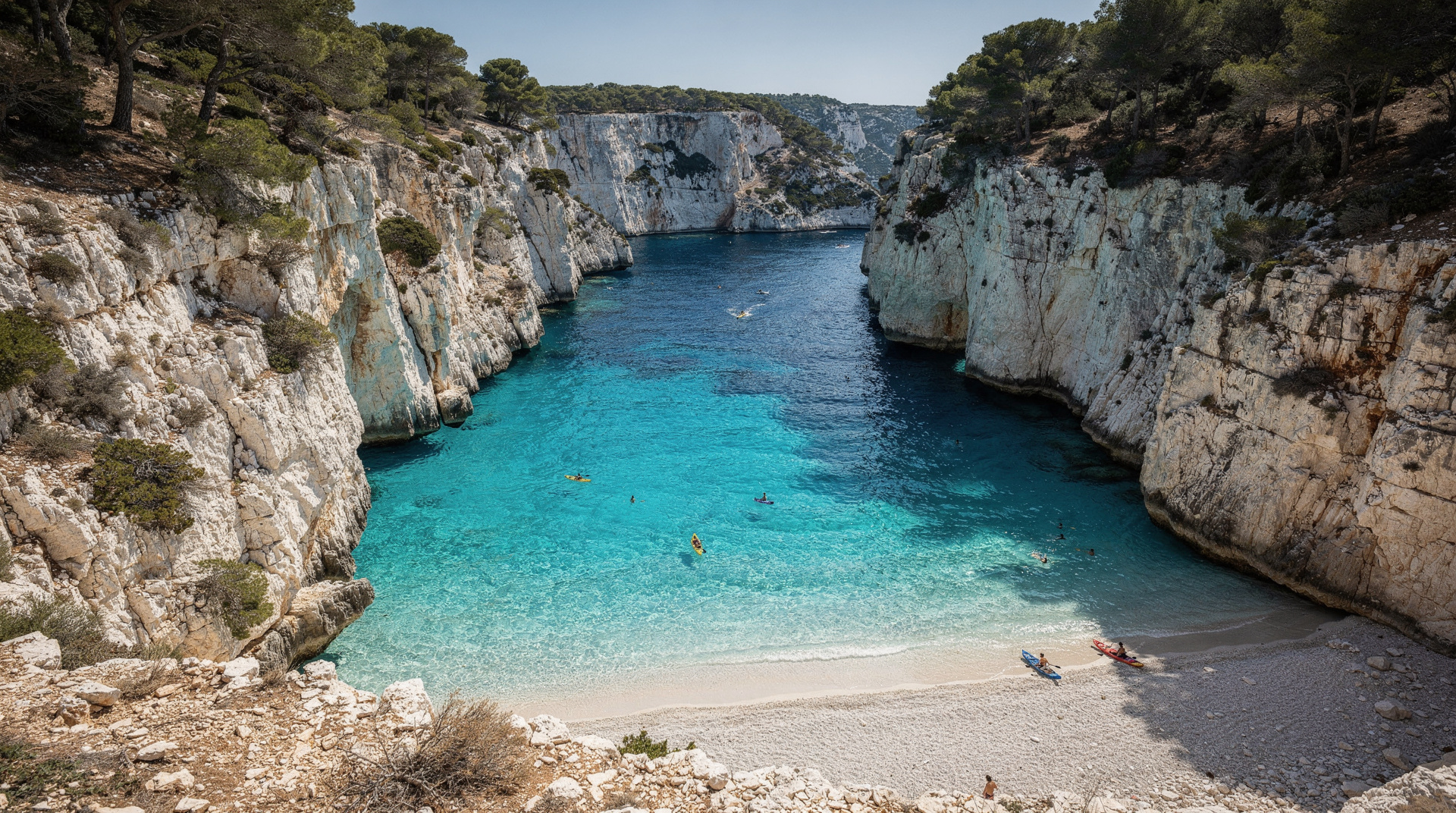
The beach is a crescent of pale sand and pebbles fronting a bay of exceptional water clarity. The limestone walls rise on three sides. The scale is wider than Sugiton — Sormiou is the broadest of the Marseille-side calanques, with a more open sea aspect.
At the water’s edge, one seasonal restaurant operates at the calanque: Les Tamaris. It is accessible by reservation for cabanon permit holders and by boat. If you arrive on foot, reserving in advance gives you vehicle authorisation — making Les Tamaris one of the few legitimate ways to access Sormiou by car in summer.
Swimming at Sormiou: The entry near the beach is sandy-pebble and more gradual than Sugiton or En-Vau — the most forgiving entry of the Marseille-side calanques. Water clarity is excellent in calm conditions. Sea urchins are present on the rocky sections; use the pebble beach entry and you should avoid them. No lifeguards.
The Cosquer Cave context: The famous Paleolithic cave with paintings estimated at 27,000 years old was discovered in 1985 by diver Henri Cosquer beneath the Sormiou headland, accessible only through an underwater passage at 36 metres depth. The cave is not open to visitors. The replica (Cosquer Méditerranée) at the Villa Méditerranée in Marseille port gives full context on the discovery and the art. If you are visiting Sormiou with any interest in prehistory, this context makes the headland itself feel different.
Morgiou: the wilder option
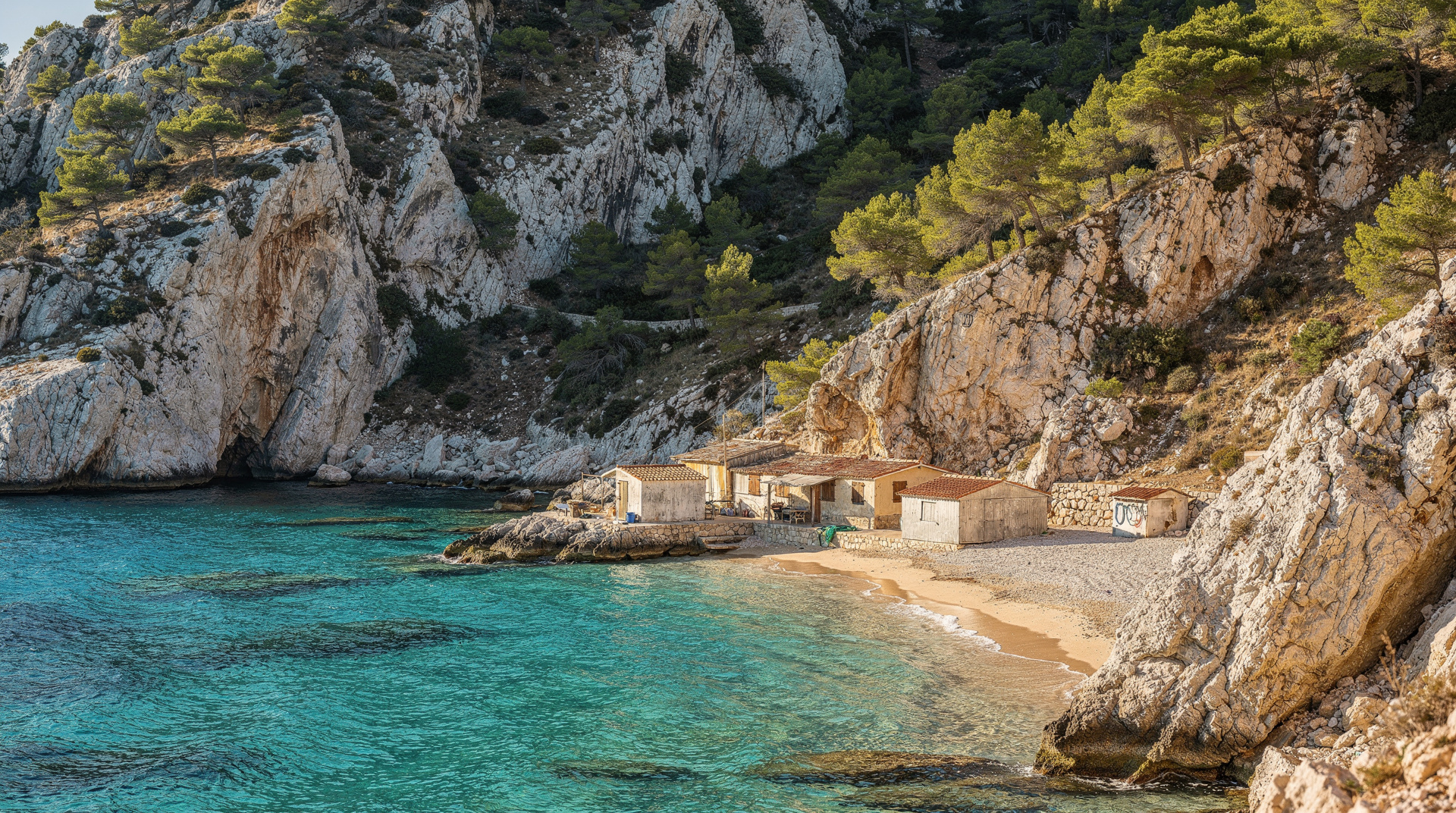
Morgiou is smaller and quieter than Sormiou. The cove is more enclosed, the cliff walls more vertical, and the atmosphere more intimate. Fewer cabanons, a tiny harbour with fishing boats, and a seasonal restaurant (Le Lunch — reservation required for vehicle access) at the water’s edge.
From Sormiou, the connecting trail to Morgiou climbs the eastern ridge and drops into the cove on the far side. The 45-minute trail between the two calanques is one of the more striking sections of the Marseille-side massif — the ridge views extend south to the open sea and east toward Sugiton and the park interior.
Morgiou for divers: The Cosquer Cave’s underwater passage is accessible from Morgiou, and the calanque has historically been a departure point for dives to wreck sites in the marine reserve. Several Marseille dive operators run trips from the Morgiou area. Certification levels for the deeper sites (30m+) are typically minimum Open Water with adventure dive experience, with the deeper wrecks requiring Advanced OWD or equivalent.
The Sormiou–Morgiou loop: the full day
The circuit starting and ending at Luminy that takes in both calanques is one of the better day hikes accessible from the Marseille side. Full route:
- Luminy to Sormiou: 45–60 min
- Time at Sormiou (swimming, lunch): 1.5–2 hours
- Sormiou to Morgiou via ridge trail: 45 min
- Time at Morgiou (swimming): 45 min–1 hour
- Morgiou back to Luminy via Belvédère: 60–80 min
Total: 5–6 hours. Appropriate difficulty for walkers with good fitness and proper footwear. Bring 2+ litres of water per person, as there are no water sources on the loop.
The loop is best done April–June or September–October. In July–August, the trail closures make it impractical on most days; on the few green-level summer days when trails are open, start no later than 07:00 to complete the descent to Sormiou before 09:00.
Via corda at Sormiou
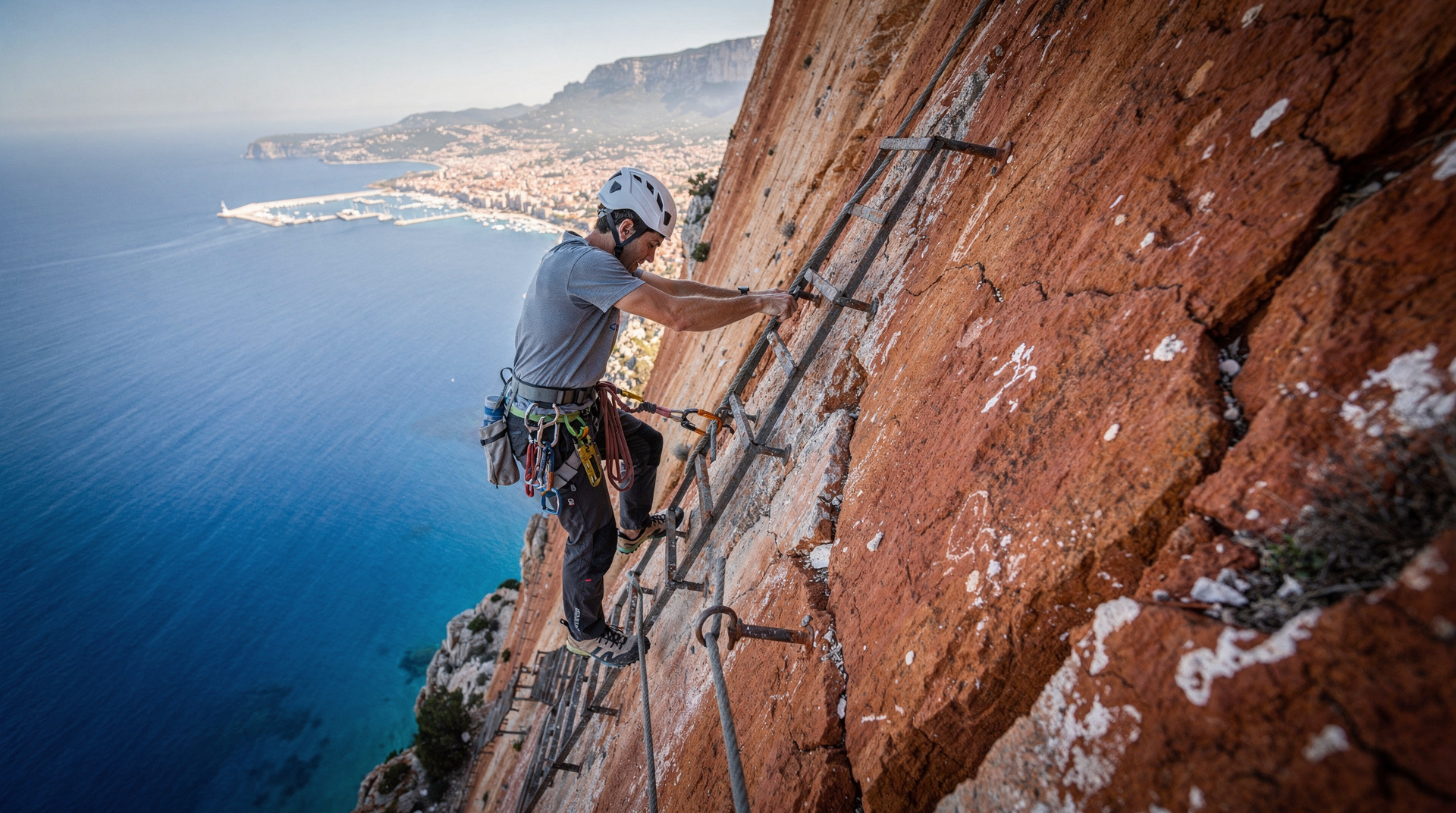
The Sormiou via corda is a fixed-rope adventure route along the cliff face above the calanque — accessible without prior climbing experience and genuinely impressive. The level 1 classification means the exposure is manageable: you move laterally across the cliff with fixed rungs and cables, above the turquoise water, for approximately 4 hours. Equipment (harness, helmet) is provided. Sessions are run by certified guides. See the guided options in the tour listings above.
The geology of Sormiou and Morgiou
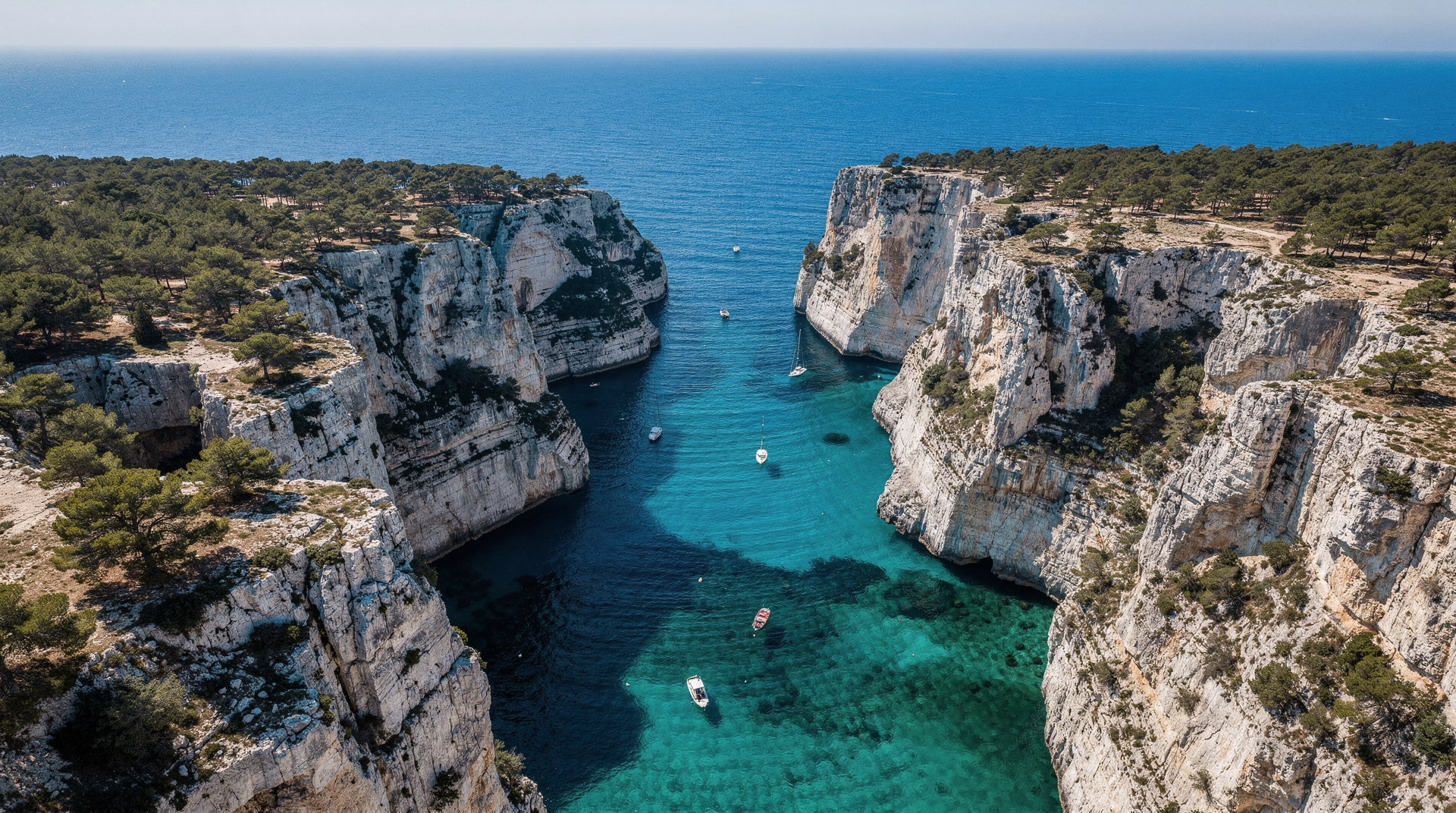
The two calanques share the same geological character as the rest of the Calanques massif — Cretaceous limestone, deposited in a warm shallow sea 100 million years ago, then thrust upward during the Alpine orogeny and subsequently carved by river systems before the sea refilled. The dramatic white cliffs, the turquoise water colour, and the Mediterranean scrub vegetation (garrigue) above are all consequences of the same basic process.
What makes Sormiou specifically interesting geologically is the Cosquer Cave. The Paleolithic painted cave discovered by Henri Cosquer in 1985 is accessible only through an underwater passage that opens at 36 metres depth beneath the Sormiou headland. The cave contains paintings and hand stencils estimated at 19,000–27,000 years old — rhinoceros, horses, aurochs, seals, and jellyfish among the subjects. At the time of the paintings, sea level was significantly lower than today (the end of the last glacial maximum); the passage that now requires a 36-metre scuba dive was then above water level.
The cave itself is accessible only to trained cave divers with appropriate certification and permits — not a tourist experience. The replica (Cosquer Méditerranée) at the Villa Méditerranée in Marseille recreates the interior at full scale and gives non-divers access to the art and the archaeological context. If you visit Sormiou with any awareness of the Cosquer Cave, the headland above the western cliff of the calanque takes on a different quality — you are standing above a Paleolithic site of international significance.
What makes Sormiou different from other calanques
Every calanque in the park offers clear water and white cliffs. Sormiou offers something the others don’t: a lived-in working community that has been there for generations, and the specific atmosphere that creates.
The cabanons — traditional stone fishing huts built along the waterfront — are private and occupied, not a heritage display. On summer weekends, the families who hold the permits are in residence: hanging out laundry, maintaining boats, sitting in front of their huts in the evening. The community atmosphere at Sormiou is authentic in a way that is increasingly rare in Mediterranean coastal tourism.
The restaurant at the water’s edge (Les Tamaris) has operated here for decades. Its position — a table with your feet effectively in the calanque, eating grilled fish and drinking the local wine — is specific to this place. The fact that it requires a reservation to access by car, and thus filters out casual visitors who have not planned ahead, is part of what preserves its character.
Swimming at Sormiou versus the other calanques
Sormiou’s beach is the most accessible entry point for swimming among the Marseille-side calanques:
- Wider pebble-sand beach than Sugiton (which has a narrower rocky entry) or Morgiou (small and rocky)
- Gentler gradient into the water than either Sugiton or En-Vau — the depth increases more gradually from the beach, making it more forgiving for nervous swimmers
- More space for groups — on a mid-week spring day, 20 people can spread out comfortably on the beach; the same number at Sugiton’s narrower cove feels crowded
The trade-off: Sormiou’s wider bay aspect means the water colour, while excellent, is slightly less intensely turquoise than the more enclosed Sugiton or En-Vau, where the depth and cliff reflection creates the most vivid colour. For swimming comfort, Sormiou. For dramatic photography, Sugiton.
Practical gear for the hike
Beyond the standard Calanques kit (water, sun protection, hiking footwear), a few specific additions are worth noting for the Sormiou–Morgiou approach:
Fins or water shoes: The rocky sections at both calanques have sea urchins. Sormiou’s pebble beach is the most forgiving entry point, but the rocky areas around the pebble zone are dense with urchins. Water shoes protect adequately for the beach entry; fins give you mobility in the water. A sea urchin spine in an unprotected foot is painful and occasionally becomes infected.
A dry bag for phone: The descent to Sormiou and the swimming stop mean your phone is at risk from water and sweat. A small dry bag (EUR 5–8 at any outdoor gear shop) is worth carrying.
Insect repellent in spring: The garrigue vegetation in April–May harbours ticks. This is not a major risk in the Calanques compared to some other hiking areas, but applying repellent on the lower legs and checking after the hike is sensible practice.
For the full destination context on both calanques — including their history, the cabanon culture, and the comparison table — see the Sormiou and Morgiou destination guide. For the access rules in the context of all Marseille-side calanques, see the Calanques National Park guide. For hiking safety specifics, see the Calanques hiking safety guide. For those choosing between Sormiou and Sugiton, the difficulty comparison guide breaks down both with exact data.
Sormiou versus the other nearby options
If the road restrictions or the length of the Sormiou–Morgiou loop put you off, a boat with swimming stops is a realistic alternative — see our boat tours with swimming guide. For visitors comparing calanque access methods generally, the Calanques boat vs hike guide lays out the trade-offs beyond Sormiou specifically. Travellers wanting to snorkel at Sormiou rather than just swim should check our snorkelling guide, which covers what gear to bring for the rocky sections.
Planning the rest of your Calanques days
Sormiou rarely works as a stand-alone outing, and it pairs naturally with other coves. If you are still deciding which cove suits you, the which calanque to visit guide sets them side by side. Walkers who want a second hike after this one can compare it with the Sugiton calanque hike, which starts from the same side of the massif. The Calanques from Luminy guide covers the starting point of the trail in more detail.
Timing shapes the whole experience here. The visiting the Calanques by season guide explains how closures and crowds shift through the year, and the Calanques summer access rules page is worth reading before any July or August plan. If crowds put you off, the avoiding crowds in the Calanques guide offers ways to find quieter moments. For a wider look at what the park protects, the Calanques National Park destination page is a good starting point, and the neighbouring port village is described in Les Goudes. If you would rather turn the hike into a weekend, the Marseille and Calanques weekend itinerary shows one way to fit it in.
Frequently asked questions about Sormiou and Morgiou hike
Is the Sormiou hike suitable for children? The 45–60 minute descent from Luminy is manageable for older children in good fitness with proper footwear, but the terrain is rocky and uneven with minimal shade, and there is a real climb back up. Families with younger children may prefer a boat tour with a swimming stop at Sormiou instead of the hike.
Can I combine the Sormiou hike with the via corda in one day? Yes, but it makes for a long day — budget 4 hours for the via corda itself plus the approach and return hike, so most visitors either do the via corda as a dedicated outing or combine it with time at the beach rather than the full Morgiou loop as well.
Top experiences
Bookable activities with verified prices and instant confirmation on GetYourGuide.